New Campbell Hill VK5/ SE-007

My first activation for Wednesday 4th February 2015, was New Campbell Hill, VK5/ SE-007, which is situated about 11km south of Jamestown, and about 206 km north of Adelaide.
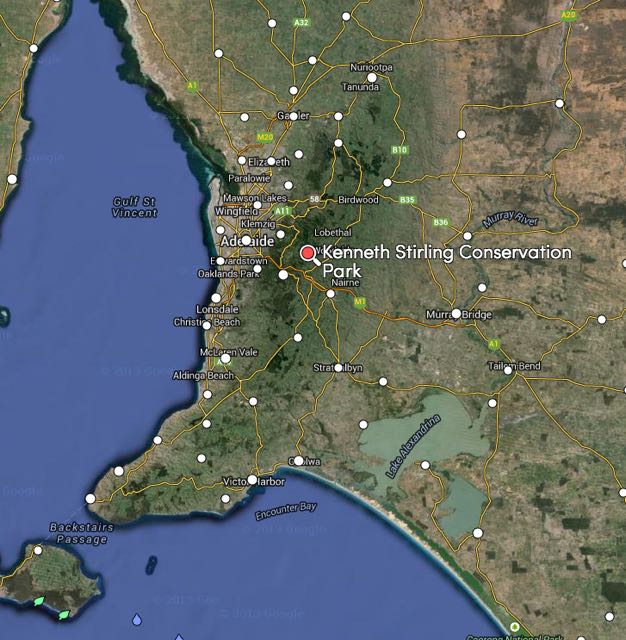
Screenshot 2015-02-07 15.28.56

image courtesy of mapcarta.com

New Campbell Hill is 714 metres above sea level and is worth 4 SOTA points.  It is located in the ‘South East’ Region of the South Australian SOTA Association, and is located in the Bundaleer Forest Reserve.

I have activated this summit once before, with Ian VK5CZ.  For information on that activation please have a look at my previous post at…..

https://vk5pas.org/2013/07/27/new-campbell-hill-vk5-se-007/

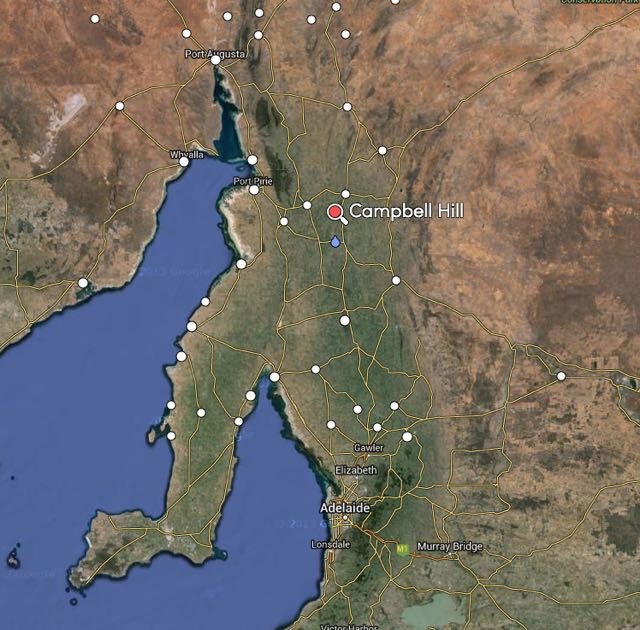
Screenshot 2015-02-07 15.28.06

New Campbell Hill is part of the Campbell Range.  It is not to be confused with Campbell Hill which is located further to the south.

This slideshow requires JavaScript.

I had an early start from Crystal Brook and I headed north along RM Williams Way towards Jamestown.  I turned left onto Bundaleer Gardens Road, and stopped briefly to have a look at the memorial for Pioneers of the Bundaleer District.  I continued on up Bundaleer Gardens Road, and parked the car at Neindorf Road, where I packed my backpack, and commenced the @5 km walk to the summit.

This slideshow requires JavaScript.

Bundaleer is regarded as the birthplace of forestry in Australia.  It covers an area of about 3,200 hectares.  It is still home to Curnow’s Hut, the original residence built for the district’s first nursery worker, William Curnow (see below).  The name Bundaleer is derived from an aboriginal word, meaning ‘stony place’.

Screenshot 2015-02-08 16.51.54

Map courtesy of Forestry SA.

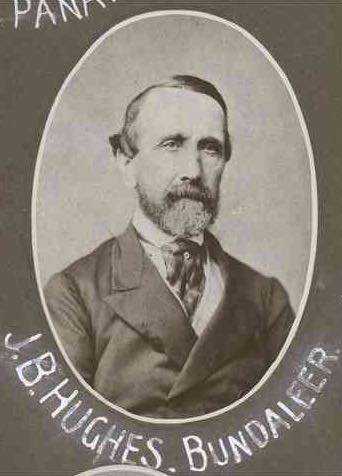
Bundaleer Forest was originally part of the Bundaleer Run, which was a vast pastoral station established in 1844 by John Bristow Hughes (b. 1871 – d. 1881).  Hughes was born in England in 1817 and arrived in South Australia in 1841 aboard the Porter, following his arrival in Tasmania in 1840.  He was married in 1847 in Adelaide, and established Bundaleer shortly after arriving in South Australia, with sheep he had brought across from Tasmania.
Screenshot 2015-02-08 16.36.21

Above: J.B. Hughes.  Image courtesy of http://www.samemory.sa.gov.au

In 1875, a Forest Board was appointed by the South Australian Government, and Forest Reserves were created, mainly in the South East.  However, some sections were created in the north of South Australia.  In c. 1876 the Forest Board commenced work at Bundaleer Springs when a nurseryman, William Curnow was sent to establish a nursery and prepare 400 hectares for lanting.   Curnow commenced planting asmanian Blue gums, local Red gums and Sugar Gums adjacent to the Jamestown to Spalding Road (RM Williams Way).

I followed the Bore Track up to the summit.  The walk starts off very easy, but don’t get too excited.  Worse is to come.  The initial walk took me passed beautiful pine forest, along a very easy access track.  There were quite a few Western Grey kangaroos out, enjoying the morning sunshine.  But unlike last time I activated the summit, I did not see any native deer.

The Bundaleer Forest Reserve was devastated by fire in early 2013.  Around 23,000 hectares of forest and scrubland were destroyed.  Over 30 % of the pine plantations were wiped out.  Leith Cooper, who is a local farmer stated: ‘It was one of the worst fires I’ve ever seen, there were reports that the flames were 100 feet above 50 foot pine trees, it was pretty intense’.  For more information on the fire, including some audio, please have a look at…..

http://www.abc.net.au/news/2013-05-14/charred-bundaleer-forest/4687770

There are some excellent views once you reach the top of the summit.  And the amazing dry stone walls which follow the ridgeline, are really quite a sight.  They are mentioned in a book called ‘those dry-stone walls’ written by Bruce Munday, which I have a copy of.  Many of these old walls were created by Patrick O’Grady (1838-1906), who was a ‘waller’ on Bundaleer Station.  Munday is remembered as bing ‘a little old man with long ringlets who always wore green ribbon in his coat’.  He is buried with his wife Annie at the Jamestown cemetery.  Local photographer, Mary-Anne Young made the following comment: ‘For someone who created such magnificent stone work, it is a disapointing grave’.

This was not one of my most memorable SOTA activations.  After setting up the linked dipole, I discovered that I had a very high VSWR.  Numerous checks were undertaken on the antenna, and this revealed that the likely source of the problem was the coax crimping on the BNC connector.  Not much I could do about it, as I didn’t have the required tools, and I had left the spare antennas back in the car.

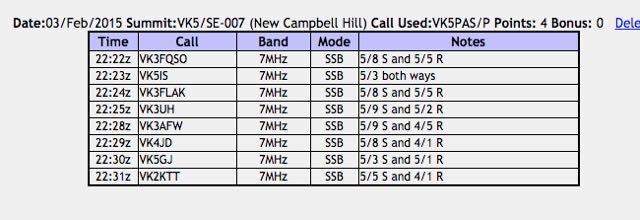
Anyway I pressed on and called CQ on 7.090.  My first contact was with Amanda VK3FQSO (5/8 sent and 5/5 received), followed by Ian VK5IS (5/3 both ways), Bob Vk5FLAK (5/8 sent and 5/5 received), and my fourth and qualifying contact was with VK3UH (5/9 sent and 5/2 received).

Much to my surprise I was called by VK4JD who have me a 4/1 signal report, and Paul VK2KTT who also gave me a 4/1 signal report.

This slideshow requires JavaScript.

So felling very frustrated, I packed the gear up and headed down the hill back to the car.  Just 8 contacts in the log, but thankfully the summit had been qualified.

I think the next time I active this summit I will try parking near Curnows Hut and walking north along the Heysen Trail to the summit.  Easier?  I’m not sure.  At the current time this section of the forest is closed due to restoration work after the 2013 bushfire.

After the activation I headed in to Jamestown, where I went to the Jamestown bakery for a pastie.  Jamestown is a beautiful little town and certainly worth a look.  There is an interpretice centre for RM Williams, who was an Australian bushman and entrepreneur who rose from a swagman, to a millionaire.  Fore more information on RM Williams, please have a look at the following…..

http://en.wikipedia.org/wiki/R._M._Williams

This slideshow requires JavaScript.

For more information on Jamestown, have a look at the following…..

http://www.visitjamestown.com.au/

The following stations were worked:-
Screenshot 2015-02-08 11.34.02


References.

ABC, 2015, <http://www.abc.net.au/news/2013-05-14/charred-bundaleer-forest/4687770&gt;, viewed 8th February 2015.

Government of South Australia, Forestry SA, 2015, Bundaleer Visitor Information brochure, <https://www.forestry.sa.gov.au/Portals/0/Publications/InfoLeaflets/Bundaleer%20Forest.pdf&gt;, viewed 8th February 2015

Government of South Australia, State Libarary, 2015, <http://www.samemory.sa.gov.au/site/page.cfm?u=77&c=5232&gt;, viewed 8th February 2015

Munday; B, 2012, ‘those dry-stone walls’, Wakefield Press.
Illawarra Hill VK5/ SE-014

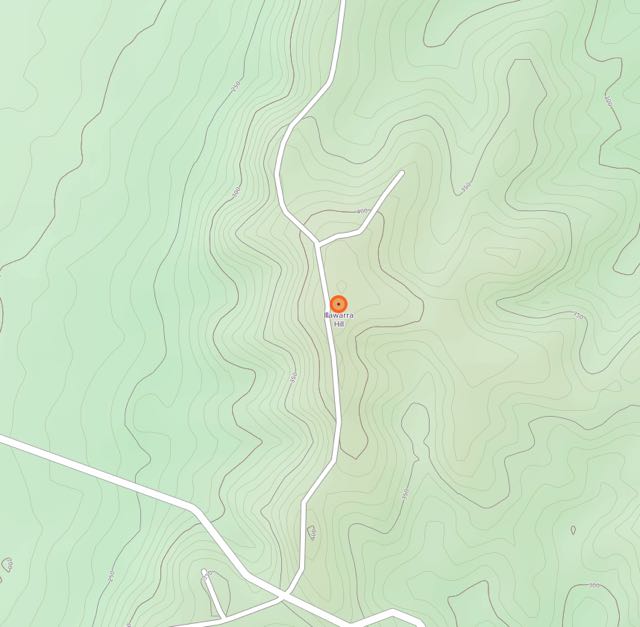
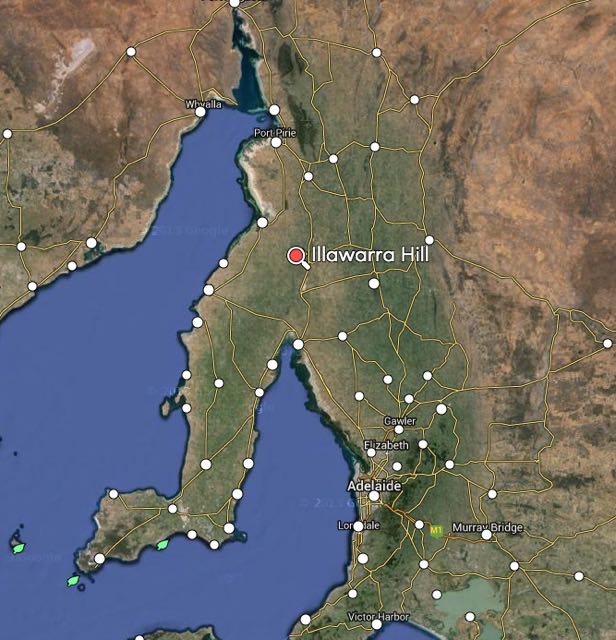
My third and final activation for Tuesday 3rd February, 2015, was Illawarra Hill, VK5/ SE-014, which is located about 11 km by road from the town of Snowtown, and about 155 km north of Adelaide.

Screenshot 2015-02-07 15.24.18

image courtesy of mapcarta.com

Illawarra Hill is 434 metres above sea level, and is worth 1 SOTA point.  It is located in the Barunga Range, west of Snowtown.  The town of Snowtown became infamously known for the Snowtown murders.  This is rather sad, because the vast majority of the murders were not even committed in the town.  However the bodies of many of the victims were stored in barrels in an old bank in the main street.  Snowtown is located in the wheat belt area of the Mid North of South Australia, and has a population of about 500 people.

In 2008, a monument called ‘The Big Blade’ in the form of a 44 metre wind turbine was installed in Snowtown.  There are a number of interpretive signs there, telling you all about the nearby Snowtown wind farm which is situated on the Hummock and Barunga Ranges to the west of the town.  It is well worth a look.

This slideshow requires JavaScript.

The first stage of the Snowtown wind farm was commissioned in September, 2008 with 47 Suzlon S88 2.1 MW turbines.  In 2011, an additional prototype Suzlon S95 2.1 MW turbine was installed and commissioned.  Since 2008, Stage 1 of the Snowtown wind farm has provided reliable electricity into the South Australian electricity network delivering a long term capacity factor of 43%, one of the highest wind farm outputs in Australia.  Final approvals for Stage 2 of the Snowtown Wind Farm were secured in August 2012 to install a further 90 Siemens 3.0 MW turbines, with a combination of 101 metre and 108 metre blade diameters, with an output of up to 270 MW.  With the completion of Snowtown 2, the total output of the combined Snowtown wind farm will be 370.8 MW, making it the biggest single wind farm in South Australia.  Over 230,000 homes can be powered by the Snowtown Wind Farm.

After leaving Snowtown, I headed west along Shadwells Gap Road.  About 5 km along this road, you will reach a gate on your right.  There are a number of signs here including ‘Snowtown Wind Farm Stage II” and ‘Private Property.  Trustpower Windfarm.  Tresspassers Prosecuted’.

This slideshow requires JavaScript.

The summit is located on private property and is situated amongst the windfarm.  I had spoken with the landowner a few days prior, and had sought approval to access the summit.  PLEASE do NOT access the summit without the approval of the land owner.

Screenshot 2015-02-07 15.25.05

image courtesy of http://www.openstreetmap.org/

I drove along the dirt road after entering via the gate and headed north up towards the telecommunications tower and the trig point.  It was a very warm afternoon, so I set up underneath a small sheoak tree and an adjacent dead tree stump.  It was not the most comfortable of ‘shacks’, but it did provide a little bit of shelter from the very hot afternoon sun.  As you would expect, it was extremely windy on the top of the summit.  There aren’t too many other options on a hot day on this summit.  The only over cover are the two rainwater tanks a little closer to the trig point.

For this activation, I used the Yaesu FT-857d and ran 20 watts.  My antenna was the SOTA Beams 40m/20m linked dipole, which I supported on a 7 metre telescopic squid pole.  I secured the squid pole to the squid pole holder with an octopus strap.  Because it was so windy, I used the guying rope which I tied off to a fallen tree limb.

My first contact was with Peter VK3TKK who was mobile, followed by Ian VK5IS at Beetaloo Valley, Col VK5HCF in Mount Gambier, and then Tom VK5EE, also in Mount Gambier. Signals were very good, and there was no man made noise on the summit.

After working 13 stations on 40m, I headed up to 20m hoping to work some DX.  But I was to be sadly disapointed.  I did work a total of 7 Australian stations in VK1, VK2, VK3, VK4, and VK6, but did not have a single European caller.  I have mentioned it before, but I guess we take distances for granted here in Australia.  My contact with Peter VK4JD was over a distance of about 1,900 km.  My contact with John Vk6NU was over a distance of about 2,500 km.  In some parts of the world, this is a DX contact.  But here in Australia we call it a ‘local’ QSO.

I moved back to 40m and placed another CQ call on 7.090, and this was answered by Ray VK3NBL, and then Tony VK3CAT, followed by Ian VK3VIN, and then Andrew VK1NAM.  All had excellent signals.  I went on to work a further 8 VK stations.

This slideshow requires JavaScript.

I decided to try my luck again on 20m, so I again lowered the squid pole and removed the links and tuned across the 20m band.  But sadly, the European signals I was hearing, were low down.  I headed up to 14.156 where I made contact with John EA7BA in Almeria in Spain, Brian VK2JE, and Brian ZL2ASH in Wellington in New Zealand.

I had a total of 35 contacts in the log.  It was time to pack up and get back on the road and head back to Crystal Brook, about 60 km away.

Upon arriving in Crystal Brook I headed to the Crystal Brook Hotel, where I enjoyed a very nice Schnitzel, chips and salad, and a few cold Bundies and coke.  I then returned to the Crystal Brook Caravan Park, where I enjoyed the sunset and the almost full moon.

This slideshow requires JavaScript.

I highly recommend the Crystal Brook Caravan Park.  The caretaker was very friendly and the cabin which I stayed in was very clean & tidy.

This slideshow requires JavaScript.

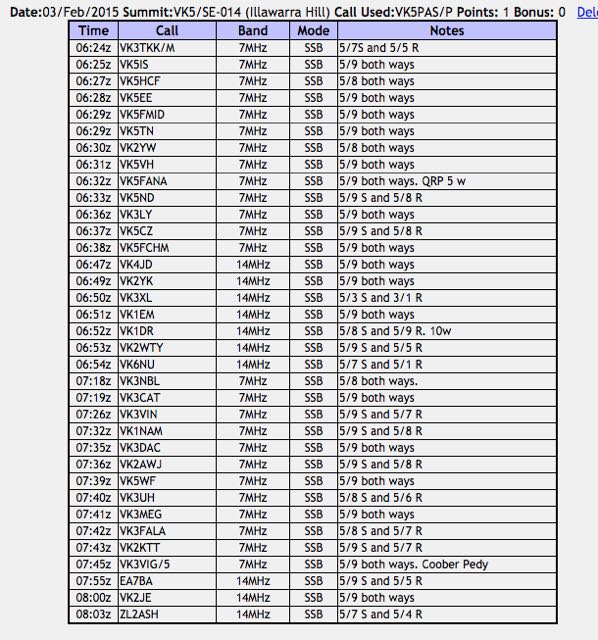
The following stations were worked on Illawarra Hill:-

Screenshot 2015-02-08 11.27.56


References.

Wikipedia, 2015, <http://en.wikipedia.org/wiki/Snowtown,_South_Australia&gt;, viewed 8th February 2015.


Bumbunga Hill VK5/ SE-015

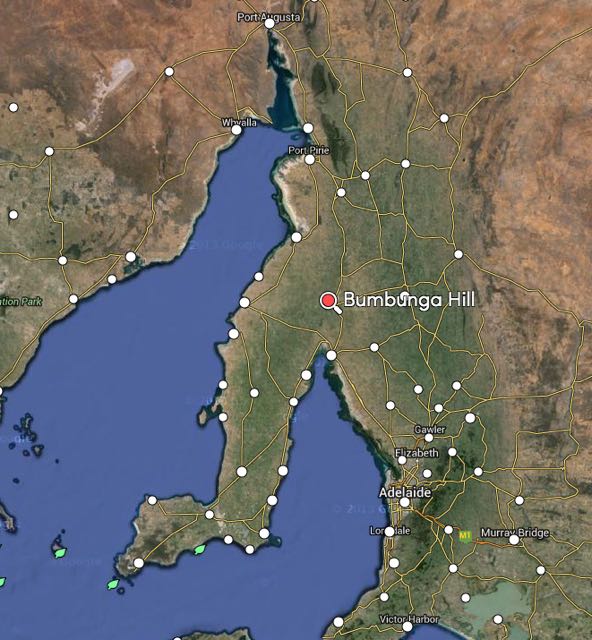
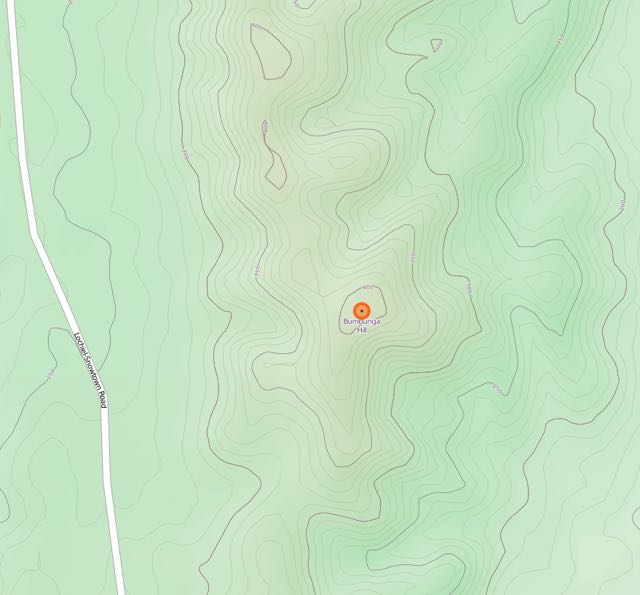
My second activation for Tuesday 3rd February, 2015, was Bumbunga Hill, VK5/ SE-015, which is located about 8 km by road from the little town of Lochiel, and about 141 km north of Adelaide.

Screenshot 2015-02-07 15.20.08

Image courtesy of mapcarta.com

Bumbunga Hill is 413 metres ASL and is worth just 1 SOTA point.  The summit is located on private property.  I had sought permission from the land owner a few days before (contact details can be found on the SOTA database).  Access to the summit is via Landslide Road.

If you are on the A1, take Robert Street at the northern end of the town of Lochiel and travel west.  You will then reach Landslide Road.  Turn right here and travel a few km up Landslide Road.   On your right, you will see some double gates which have numerous locks on them.  Alongside, on both the left and right of these gates, are some ‘cocky’s gates’.  This is where you enter the private property.  PLEASE ensure you have permission prior to entry.  And please close the gates behind you.  You will know that you are in the right spot, because there is a large shed on the right of the main dirt track behind the gates, and a house ruin on the left of the track.

But for me, after leaving South Hummocks, I continued north along Pump Station Road, V. Taylors Road, and then Lochiel Road, until I reached Landslide Road.  It saved me having to travel back to the bitumen.

This slideshow requires JavaScript.

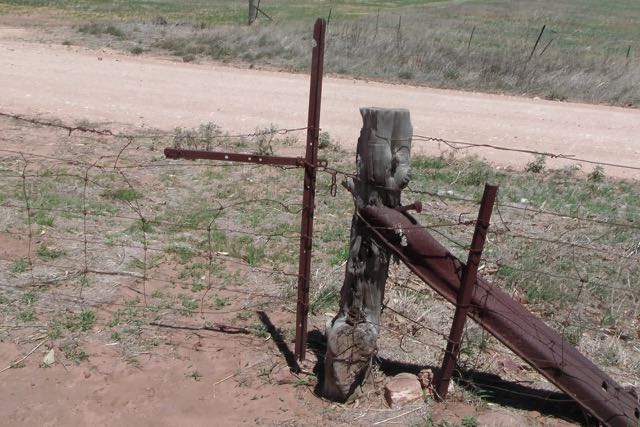
The main double gates were locked.  There is a plethora of padlocks on the gates.  Each stakeholder of the communications tower at the top has a padlock on the gates.  I entered via the ‘cocky’s gate’ on the left, which consisted of a rusty star dropper and some mesh.  The links were quite rusty, and in the end one of them snapped on me.

IMGA0100

I followed the fenceline up passed the dam and stopped for a short time to have a chat to one of the farmhands.  He then pointed out a gate on the other side of the dam, which in turn leads to the track which takes you up to the summit.  Don’t attempt this track in a conventional vehicle.  You will make it to the ridgeline above the shed and ruin, but from there the track is definitely 4WD territory.  It is very rough with lots of washaways and large rocks.

Once you have negotiated the rockiest part of the track, you will reach another gate.  Today, it was closed.  Please leave all of the gates as you find them.  Even before you reach the very top of Bumbunga Hill, you will be rewarded with some excellent views of the surrounding countryside, the little town of Lochiel, and Bumbunga Lake.

This slideshow requires JavaScript.

The dirt track from the top gate to the summit is good from here.  Follow the fenceline until you reach another gate.  On the other side of this gate you will find the telecommunications tower, the Lochiel repeater, and what is left of the trig point.  When I first activated this summit back in April, 2013, the trig point was lying on its side on the ground.  Nowadays it has gone, and the trig is marked with three upright poles, which are painted blue.  They make an excellent anchor point for a squid pole.

Screenshot 2015-02-07 15.22.22

image courtesy of http://www.openstreetmap.org/

The town of Lochiel lies below the summit, just to the south east.  Governor Fergusson named it Lochiel after Lochiel Forest, near Inverness in Scotland.  Lochiel is also the name of one of the titles of the chief of the Cameron Clan, while the Scottish ‘Lochiel’ comes from the Gaelic ial – ‘gleam of sunshine’.  Salt has been mined at nearby Bumbunga Lake since 1912.  A coal mine was also in operation, a few km east of the lake, between the 1980s and 1990s.

The earliest reference to Lake Bumbunga is to be found in a little book entitled ‘Reminicences of a Sojourn in South Australia’ by ‘A Squatter’, published in 1849.  The author talks about a chance meeting with two tired travellers at a camp fire, at the head of St Vincents Gulf, not far from the Lake.  One of the travellers told the squatter that he had come from Lake ‘Bambunga’, which he claimed to have discovered.  The traveller went on to say, ‘The name is one that the natives formerly gave it and, as being the discoverer and licenced occupier, I conceived I had a right to apply what name I pleased to it’.   It appears that name has since elapsed over time into Bumbunga.

According to anthropologist Norman Tindale, the name was derived from the local Parnpangka aboriginal people and means ‘rain water lake’.  However, in 1967, H.M. Cooper of the SA Museum stated that the word Bumbunga meant ‘by, near or at the lake’.

The squatter goes on to say “the ‘Bambunga country’ was carrying 10,000 sheep and eighteen perpetural springs”.  The area was part of Hummocks Run.  Bumbunga was one of two substations for this very large sheep and cattle station, which by 1864 had 70,000 sheep, 200 bullocks and horses.  The Bumbunga station consisted of a pine house, store, men’s kitchen, sleeping rooms, woolshed, yards, sweating shed, fenced paddocks, three wells troughs, and one pump.

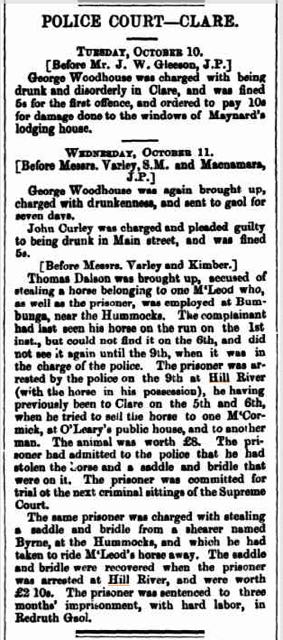
I found the following from the Adelaide Observer, dated Saturday 1st October 1864.

Screenshot 2015-02-07 22.15.10

And also the following from the Northern Argus, Clare, dated Friday the 13th October, 1871.

Screenshot 2015-02-07 22.30.21

I set up at the trig point, and secured the 7 metre squid pole to one of the trig point poles, with two octopus straps.  It was a warm day, but it was also incredibly windy.  And the flies were out in force.  The Aerogard did not seem to be having any affect.  For this activation I ran the Yaesu FT-817 and 5 watts output.

Before calling CQ, I tuned across the 40m band and found  Ian VK3TCX on 7.095 calling CQ from SOTA summit, Mount Cann, VK3/ VG-133, which is located in the East Gippsland area of Victoria.  Ian’s signal was pretty weak, but very readable (5/2).  So I waited a little while for the multitude of callers to slow down, and then gave Ian a call.  We exchanged 5/2 signal reports with each other.  A good start to the activation at Bumbunga Hill….a Summit to Summit contact.

I then went down to 7.090 and put out a CQ call and this was answered by Larry VK5LY in The Riverland, followed by John VK2YW in Wagga Wagga, and Rob VK3EK.  As it was a weekday, I had a steady flow of callers, but certainly not the ‘pile ups’ that can be expected on weekends.

Whilst on Bumbunga Hill, I worked a few QRP stations.  They included Adrian VK5FANA, who was running just 5 watts from the Yorke Peninsula (5/8 sent and 5/9 received).  Thanks to Adrian for spotting me.  Also, Gary VK5FGAZ, running 5 watts, from north of Adelaide (5/8 sent and 5/9 received).

And I also worked a few mobile stations.  The first being Tom VK5EE who was mobile in Mount Gambier, followed by Brian VK3YFL mobile near Kaniva in Western Victoria.

This slideshow requires JavaScript.

After working a total of 16 stations on 40m I lowered the squid pole and removed the links and headed up to 14.310 where I put out a CQ call.  This was immediately answered by Greg VK5LG in the Adelaide Hills, who had been my last contact on 40m and had followed me up here to 20m.  I worked a total of 6 stations on 20m SSB, including another Summit to Summit.  This time with Peter VK3PF/7 who was on Macgregor Peak, VK7/ SC-018, which is also located within the Tasman National Park (5/4 sent and 5/7 received).

I then returned to 40m for a short time where I worked another 5 stations in VK3 & VK5.

Once I got down off the summit, I drove down to Lochiel and found a shady spot under a tree alongside of Bumbunga Lake and had some morning tea.  I then jumped back into the 4WD, and headed north to Crystal Brook.

This slideshow requires JavaScript.

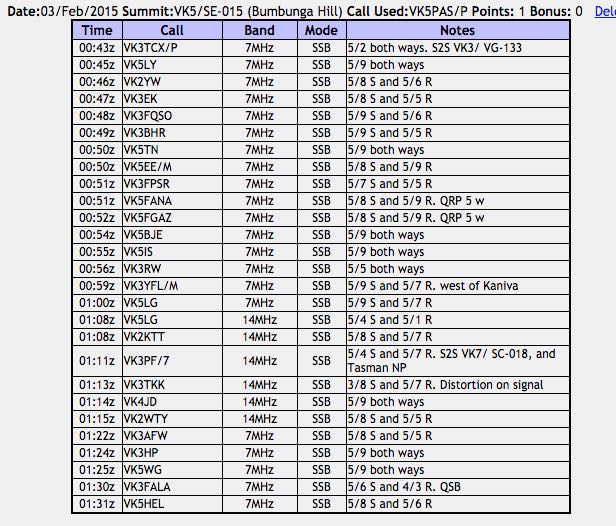
The following stations were worked:-

Screenshot 2015-02-08 11.10.18


References.

Cockburn, S, 1908, ‘South Australia.  What’s in a Name?’

Government of South Australia, State Library, 2015,<http://www.slsa.sa.gov.au/manning/pn/b/b30.htm&gt;, viewed 7th February 2015

Wikipedia, 2015, <http://en.wikipedia.org/wiki/Lake_Bumbunga&gt;, viewed 7th February 2015

Wikipedia, 2015, <http://en.wikipedia.org/wiki/Lochiel,_South_Australia&gt;, viewed 8th February 2015

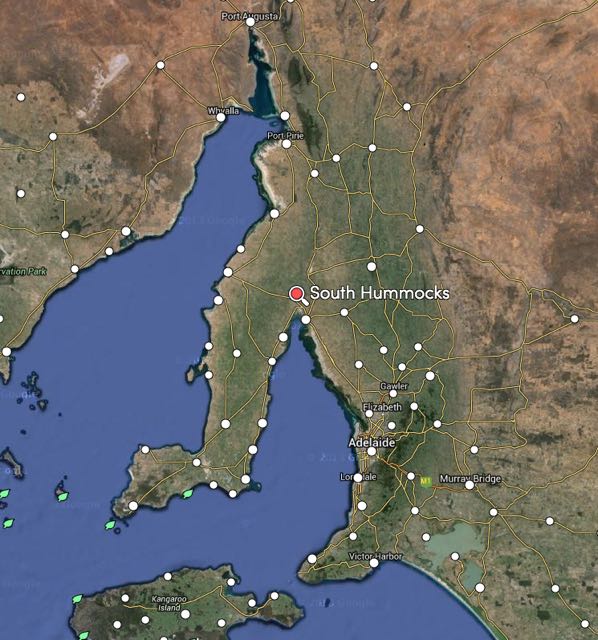
South Hummocks VK5/ SE-017

Early on Tuesday morning (3rd February 2015) I headed north towards Crystal Brook, which is about 200 km north of Adelaide.  I had booked in to stay for 3 nights at the Crystal Brook Caravan Park.  My main reason for heading there was to meet up with a number of the amateurs from the Mid North of South Australia, and deliver a presentation on the VK5 National and Conservation Parks Award and also the World Wide Fora Fauna (WWFF) program.  Along the way on the first day, I had planned to activate three summits for the Summits on the Air (SOTA) program.  The first was South Hummocks, VK5/ SE-017, which is located about 29 km by road from Port Wakefield, and about 126 km north of Adelaide.

Screenshot 2015-02-07 15.12.04

image courtesy of mapcarta.com

South Hummocks is 330 metres above sea level and is worth 1 SOTA point.  The summit is located on private property, so a few days before heading there, I sought approval from the land owner, Colwyn Millard (his contact details can be found in the SOTA database).  The summit is clearly visible as you travel towards Port Wakefield along the Port Wakefield Road (A1).  It may not be the tallest of summits, but it is certainly very prominent after travelling the vast flat plains north of Adelaide, as you head towards Port Wakefield.

This was to be my second activation of South Hummocks.  I first activated the hill back in April, 2013 with Andy VK5AKH.  In fact, South Hummocks was one of my first ever SOTA activations.  For more information on that activation, please have a look at my previous post at…..

https://vk5pas.org/2013/04/14/south-hummocks/

This slideshow requires JavaScript.

The summit is located in the Hummocks Range, which is a range of hills which commence just north of the apex of Gulf St Vincent, near the little settlements of South Hummocks and Kulpara.  The Hummocks Range stretches to its northern end where it merges with the Barunga Range at Barunga Gap, about 10 km west of Snowtown.  The Hummocks and Barunga Ranges form part of a number of low lying ridgelines occurring in the Mid North region of South Australia.

This southern part of the Hummocks Range has not yet been impacted by windfarms.  The Hummocks Range is the primary source of water catchment for Lake Bumbunga, which is located a little further north, near the town of Lochiel.  The primary land use for the surrounding area is stock grazing and cereal cropping.

Although much of the surrounding area has been cleared for grazing and cereal production, there are still patches of scrub to be found.  In fact, quite a bit of remnant scrub remains on the summit itself.  A variety of native animals, birds, and reptiles can be found including Western grey kangaroos, the Flinders Worm lizard, and the Peregrine Falcon.  Whilst I was on the summit I observed a number of Euros, but they were just too quick to catch on camera.  I also observed a Wedge Tailed eagle sailing along the ridgeline, obviously in search of breakfast.

Screenshot 2015-02-07 15.16.16

image courtesy of http://www.openstreetmap.org/

The South Hummocks region has a rich agricultural history, and at one stage had a large population.  Some of the early pastoralists included Charles Burney Young and Edmund Bowman.  South Hummocks had a railway station, and even had its own football team back in the early 20th century.

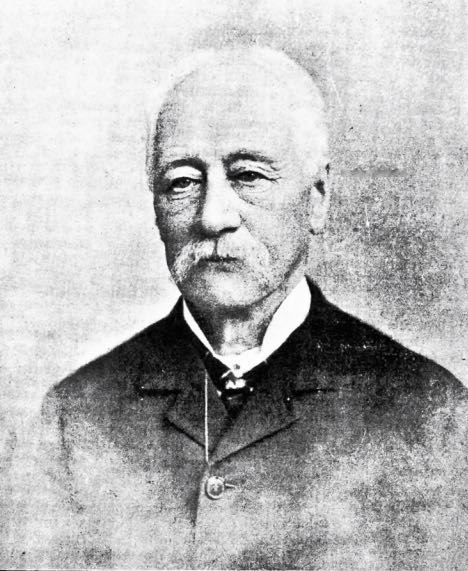
Screenshot 2015-02-07 21.15.35

above:- Charles Burney Young.  Image courtesy of Pastoral Pioneers of South Australia

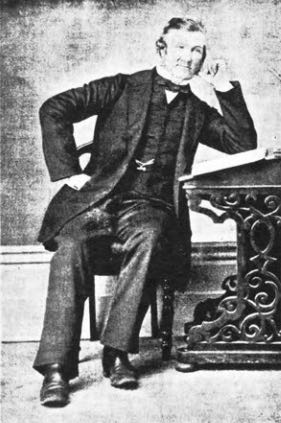
Screenshot 2015-02-07 21.14.25

above:-Edmund Bowman.  Image courtesy of Pastoral Pioneers of South Australia

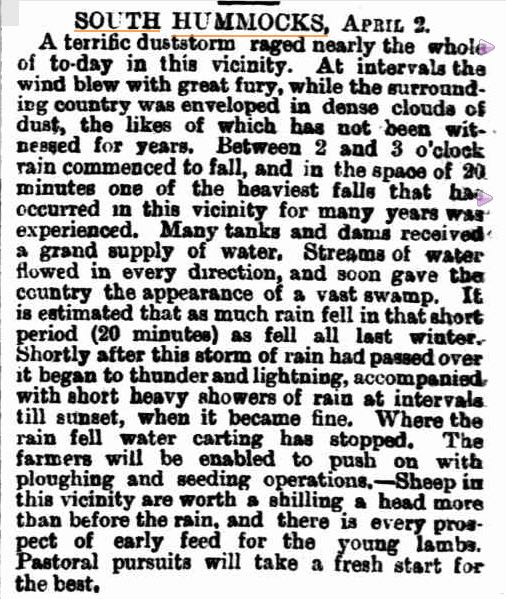
I found the following from the South Australian Weekly Chronicle, dated the 9th April, 1887.

Screenshot 2015-02-07 21.22.46

image courtesy of trove.nla.gov.au

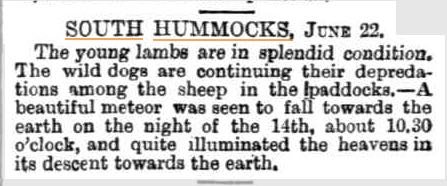
And this one from the South Australian Weekly Chronicle, dated the 2nd day of July 1887.

Screenshot 2015-02-07 21.26.12

How do you get to the summit?  If you are travelling north, enter Port Wakefield, and then after leaving the town, take the turnoff to the Yorke Peninsula just out of town.  This is the Copper Coast Highway.  Continue along the Copper Coast Highway for a number of km, and then turn right onto Balaklava Road.  A short distance up you will reach Pump Station Road.  Turn left here and continue for a number of km north on Pump Station Road.  Before you reach Millards Road (on your left), you will see some double gates on your right.  The gate has ‘Private Sanctuary’ written on it.  This is where you enter the private property.  PLEASE ensure you have permission prior to entry.  And please close the gates behind you if you find them closed.

I followed the fenceline up through the paddock.  The first part of the drive through the paddock can be undertaken using a conventional vehicle.  But you will then reach a sign which says ‘Engaged 4WD only’.  Please take notice of the sign, and engage 4WD if you have it.  You will never make it up the track if you don’t, as it becomes very rocky and slippery.  If you don’t have a 4WD, leave your car here at this point and walk the rest of the way.  It is about a 20 minute walk up the track from here to the trig point.  I continued on up the track and went all the way to the communications tower at the end of the track, where I had a photo stop.  I then drove back down the track and parked the 4WD, and then walked uphill again, over the fenceline and into the scrub to the trig point.

This slideshow requires JavaScript.

You will need to keep a good eye out for the trig point for South Hummocks, as it is not easy to spot.  As you travel north along the track, keep an eye out for a star dropper which is painted blue at the top.  There is also a piece of yellow tape attached to the top strand of barbed wire on the fence at this point, and another piece of yellow tape tied around a nearby tree.

The original trig is no longer at the site.  It was there when I last activated the summit in April 2013, but sadly, as is the case with many trigs around South Australia, it is no longer in existence.  All that remains of the trig are some of the pieces of rusty metal, lying amongst the scrub.  There are two blue poles at the trig site.  There is also a small pile of rocks, no doubt attributed to visitors to the summit.

IMGA0036

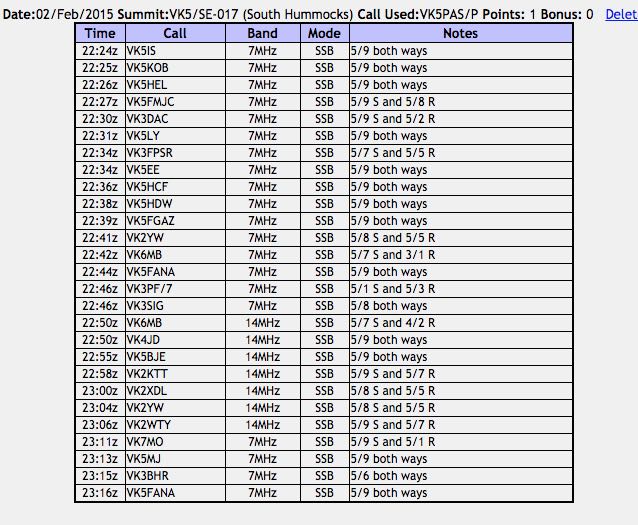
I ran the Yaesu FT-817 and 5 watts for this activation, and the SOTA Beams 40m/20m linked dipole.  By the time I had set up the gear, I was just 20 minutes later than my estimated time of activation of 2200 hours UTC (8.30 a.m.).  I tuned to 7.090, which was my nominated starting point, and called CQ and this was immediately answered by Ian VK5IS in Beetaloo Valley (5/9 both ways), then Jim VK5KOB in Elizabeth (5/9 both ways), and then Geoff VK5HEL in Murray Bridge (5/9 both ways).  My fourth and qualifying contact for the summit, was with John VK5FMJC in Crystal Brook (5/9 sent and 5/8 received).  Propagation locally seemed to be very good.

My next contact, was my first interstate contact for the summit.  It was Fred VK3DAC, north east of Melbourne, who was a good 5/9 signal to South Hummocks.  Fred reciprocated with a 5/2 signal report for me.  I went on to work 16 stations on 40m SSB before heading off to 20m.  Those stations worked were in VK3, VK5, VK6 & VK7.   It was very pleasing to get Mike VK6MB from Perth in the log on 40m (5/7 sent and 4/2 received).  And also John VK2YW in Wagga Wagga (5/8 sent and 5/5 received).  I often struggle with Mike and John on 40m at this time of the day.  But this day we made it easily.  And to top it off, I made contact with Peter VK3PF/7, on holidays down in Tasmania.  Peter was on his way to activate a summit.  Peter was very weak, 5/1, but very readable, due to the non existant man made noise floor on the summit.

I then lowered the squid pole and removed the links in the 40m/20m linked dipole, and called CQ on 14.310.  Larry VK5LY was kind enough to spot me on SOTA Watch before I QSY’d, so by the time I had got to 20m, there were a few stations there waiting for me.  It highlights the benefit of spotting!  My first contact on 20m was with Mike VK6MB.  He was the same signal strength here on 20m (5/7) as he was on the 40m band.  My signal report had also remained the same (4/2), but Mike reported that the 20m band was a lot quieter for him than 40m.  My next caller was Peter VK4JD in Jimboomba with a very strong 5/9 signal, and then to my surprise, John VK5BJE in the Adelaide Hills, who was 5/9.  John gave me a 5/8-9 signal report.  This contact surprised me a bit, as we were only @ 120 km apart, and normally this is far too close for good propagation on 20m.

This slideshow requires JavaScript.

After working 7 stations on 20m SSB in VK2, VK4, VK5, & VK6, I moved back to 40m where I put out a few final CQ calls.  My first taker upon returning to 40m was Rex VK7MO, with a very nice 5/9 signal from near Hobart in Tasmania.  This was followed by Mal VK5MJ in The Riverland, Phil VK3BHR and finally Adrian VK5FANA on the lower Yorke Peninsula, running QRP 5 watts (5/9 both ways).

After activating the summit for about 45 minutes, I had a total of 27 contacts in the log on 40m SSB and 20m SSB.  It was time to pack up and head off to my next summit, Bumbunga Hill.

Although South Hummocks is worth just 1 SOTA point, for me the summit highlights the fun that SOTA is.  South Hummocks is an easy summit to access, and despite being only 330m ASL, it offers sensational views of the surrounding countryside.  The wildlife is also well worth the trip.

The following stations were worked:-

Screenshot 2015-02-07 18.37.25


References.

Aldersley, D, 1923, ‘Pastoral Pioneers of South Australia’.

Wikipedia, 2015, <http://en.wikipedia.org/wiki/Hummocks_Range&gt;, viewed 7th February 2015

Wind Prospect Pty Ltd, 2003, ‘Environmental Statement, Proposed Barunga Wind Farm Hummocks & Barunga Ranges’.

Monarto CP and the 2nd activation afternoon

Late yesterday afternoon (Friday 30th January 2015) I ventured up to the Monarto Conservation Park (CP) for the second Summer afternoon/evening activation event for the VK5 National and Conservation Parks Award.  I have activated Monarto a number of times previously, but it is close to home, just 30 km east of my home qth in the Adelaide Hills.  So access time to the park is good.  And it is a great park for night time activation, as there is a good carpark off the road, and some good options for setting up a table and chairs and stretching out the dipole.

Screenshot 2015-01-31 09.22.29

map courtesy of mapcarta.com

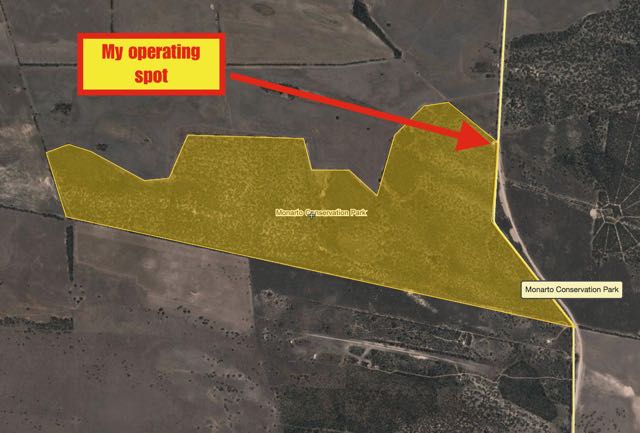
I set up in my usual spot, which is the carpark in the north eastern corner of the park, just off Ferries McDonald Road.  You need to keep a close eye out for the park sign as you travel south, as it can be easily missed.  The entrance is a few km from the South Eastern Freeway Monarto interchange.  As I’ve mentioned, this is a great little spot to set up, and if you are inclined, there is a fantastic ring route around the park, that you can walk from this location, to get a feel for the park and its many native fauna inhabitants.

Screenshot 2015-01-31 09.24.15

image courtesy of wikimapia

Monarto CP is a typical mallee park and contains some gums, sheoaks, and  native pines.  A number of native orchids can be found in the park.  The best time to see the native plants out in flower is late Winter and Spring.

The park is home to the vulnerable Mallefowl (or Lowan).  For more information on Malleefowl in the Monarto area, please have a look at the Malleefowl Monarto website at…..

http://www.malleefowlmonarto.org/

For this activation, I used the regular equipment…..my Yaesu FT-857d, 40 watts, and the 40m/20m linked dipole supported on the 7 metre squid pole.  I used the permapine fence in the carpark as an anchor point for the squid pole, which I secured with 2 octopus straps, as it was a little windy at times.

Prior to calling CQ I had a quick look around the 40m band to see if I could find some of the other park activators.  There were a planned 8 parks to be activated around South Australia that afternoon/evening (as it turned out there were 9).  It wasn’t long before I heard Arno VK5ZAR, calling CQ on 7.100.  Arno was my first contact and a ‘park to park’ to boot.  Signal reports of 5/8 were exchanged both ways.  I then found Col VK5HCF in QSO with a VK3 station, on 7.085, with a lovely 5/9 signal from the Naracoorte Caves National Park, VKFF-380.   Col was my second contact (5/9 both ways).  Two parks down.

But at this point I didn’t hear any other park activators, so I moved up to 7.105 where I put out a CQ call and this was immediately answered by Jim VK5TR with his normal 5/9 + signal, and this was followed by Terry VK3UP and then David VK5LSB.  There was quite a pile up of stations calling, so I thought I would take a break from the general home callers, and I asked for any QRP, mobile, or portable stations, and this call was answered by Les VK5KLV who was portable in The Dutchmans Stern Conservation Park near Port Augusta in the north of South Australia.  Although Les was running QRP, he was an excellent 5/8-9 signal to Monarto.  This was followed by another ‘park to park’ QSO.  This time with David VK5NQP, who was portable in the Sandy Creek Conservation Park, north of Adelaide.  David’s signal was very strong, 5/9 +.  This was followed by a third ‘park to park’ contact, and this time it was John VK5BJE, who was portable in the Scott Creek Conservation Park.

I then called CQ again for any QRP, mobile, and portable, and this was answered by Greg VK5GJ at Meadows, running his usual QRP, and then Bernard VK3AV who was mobile in the Kinglake National Park in Victoria.

I then went back to calling CQ for general callers.  I always try to give the QRP, mobiles, and portables a shot.  I know how hard it is sometimes to break through the plethora of callers running higher power in generally ideal conditions from the comfort of home.

I worked a number of other home stations in VK3 & VK5, and then again called for any QRP, mobile and portable, and that call was answered by Greg VK5ZGY who was mobile in the South East of South Australia, with a nice 5/8 signal.  I then worked Derek VK3FAFC who was running QRP, just 2.5 watts.  Derek was portable in western Victoria, and although was low down (5/1), was very readable in Monarto.

This was followed by a contact with Ian VK5IS in Beetaloo Valley in the Mid North who was running just 5 watts.  This was followed by a contact with Peter VK3TKK who was mobile.  This was a real struggle for Peter who was copying me just 4/1.  However, with the non existant man made noise in the park, I was able to hear Peter very well.  A few QSOs later I worked another mobile station.  This time it was Robin VK5TN, who was mobile at Mount Gambier in the South East, running a 1/4 wave loaded whip on the front of his car.

My next caller was Larry VK5LY, who was operating portable in the Cooltong Conservation Park in the Riverland region of South Australia.  Larry had with him, Peter VK5FLEX, who was out and about for his first ever park activation.  Larry and Peter had terrific 5/9 signals.  Congratulations Peter.  Welcome to the world of portable operation.

A few QSOs later I was called by Bob VK5FO who was operating portable in the Morialta Conservation Park in the Adelaide Hills.  Bob had a very nice 5/8 signal to the Murray Mallee.

My last QSO before heading over to 20m was with Colin VK3ZZS, who was portable at Moe in a motor home, using a long wire antenna.  I have often been called whilst in a park or on a summit, by Colin in his journeys around eastern Australia.  It wasn’t worth pursuing things on that frequency on 40m, as some VK4’s had moved in to 7.106, just 1 kc above me, for an apparent sched.  Two were very strong, and how they couldn’t hear the other stations that were working me is beyond me.  Perhaps they did, and just didn’t bother.  It seems to be a bit of a pattern with some scheds, that they are not prepared to move despite who might be operating close by.

This slideshow requires JavaScript.

I then QSYd to 20m, and tried for 14.310, my nominated operating frequency.  But this was going to be impossible.  There were the regular German speaking nets, Over the Horizon Radar, and a station operating on LSB.  Absolutely no point calling CQ there, so I had a quick listen across the band.  Although there were some Europeans and Japanese present on the bands, signals were still a little low.  The local time was coming up to 6.30 p.m., so long path Europeans signals were still building.  I put out a few CQ calls on 14.263, but no takers, sadly.

I headed to 14.156 where the normal daily sched is held between a number of VK’s, ZL’s and G’s.  The group is generally run by John EA7BA, who lives in Almeria in Spain.  John was there, and his signal was very good (5/9).  It took me two goes, but I managed to book in.  Some people are incredibly quick on the mic and don’t leave pauses between overs, which makes it difficult to chime in, particularly if you are not running high power.  But I made it, and had a chat to John who gave me a 5/8 signal report.  Alain F4GHB gave me a 5/5 signal report from France.

I then tuned across the band and spoke with EA3BDE in Spain (5/9 sent and 5/5 received), Fred IK4JPK in Italy (5/9 sent and 5/7 received), Hardy DL2HRT (5/8 sent and 5/2 received), and Michael IZ4ZZB (5/9 sent and 5/6 received).  I even managed a QSO with my very good friend Marnix OP7M (5/7 sent and 4/5 received).

I then went back to 40m as I had received an SMS message from Andy VK5AKH to say that he was out and about, portbale.  I found Andy on 7.090 calling CQ with a very nice 5/9 signal from the Horsnell Gully Conservation Park.  This made number 8 park, and my 9th park to park contact for this activation.  I was very pleased to get all of the park activators in the log.

I then called CQ on 7130 until just before 0930 UTC when the 7130 DX Net commenced.  During that 20 minute period I made a total of 11 QSOs into VK2, VK3, VK5, & ZL.  I stuck around for one round on the 7130 DX Net and worked Roy VK7ROY (Net control), William FO5JV in French Polynesia, Adrian ZL1GBG and Caleb ZL2ML.

I then moved up to 7.155 where I called CQ and this was answered by Bill ZL2BGX in Alexandra in New Zealand.  Bill had a very strong 5/9 signal and I received a 5/8 signal report from the South Island.  I was also called by Maurice ZL2MF mobile, about 120 km south of Auckland (5/8 both ways).  I also spoke with Andrew VK5MR who was mobile near Mount Bryan in the Mid North of South Australia, using an IC7000 and a Terlin antenna.  Andrew activated a few parks last year for the 1st anniversary of the VK5 Parks Award, and we spoke about his improved portable operating set up, and the fact that he was going to activate some parks again this year for the 2nd year anniversary.  Great stuff Andrew.

It was about this time that Jeff VK5HEL arrived.  Jeff lives just down the road at Murray Bridge, and until recently lived in Tasmania.  Jeff and I had spoken on 40m a little earlier in the night, with Jeff indicating that he might pop out.  It was good to catch up with Jeff and put a face to the name, and show him my operating conditions.  I got Jeff behind the mic just once.  And that was to talk to his old mate from Tasmania, Greg VK7FGGT.  Otherwise, Jeff sat back, and had a listen while I worked the park hunters.

I worked a few more QRP hunters including Nev VK5WG, Matt VK3FORD running 5 watts, and Tony VK3CAB running 8 watts from a Chinese transceiver.  I also spoke with Craig VK6VCK mobile in Western Australia, and my old mate Ted VK6NTE.  I made the mistake of telling Ted I was a bit hungry and thirsty.  Ted went on to tell me that he was sipping on a nice cold beer and had just finished a mixed grill.  Thanks Ted!  My last contact for the evening was with Peter VK4PQ in Townsville in Far North Queensland (5/9 both ways).

The band was in excellent shapr, but it was getting late.  In fact 10.00 p.m.  So I packed up the gear and got back on the road, heading for home, after saying ‘see ya later’ to Jeff.  I was very pleased with a total of 79 contacts in the log.  This was another great Summer afternoon/activation event.  The next fortnightly event will be held on FRIDAY 13th FEBRUARY 2015.

The following stations were worked on 40m SSB:-

  1. Arno VK5ZAR/p (Black Hill CP)
  2. Col VK5HCF/p (Naracoorte Caves NP)
  3. Jim VK5TR
  4. Terry VK3UP
  5. David VK5LSB
  6. Fred VK3DAC
  7. Peter VK3ZPF
  8. Les VK5KLV/p (The Dutchmans Stern CP)
  9. David VK5NQP/p (Sandy Creek CP)
  10. John VK5bJE/p (Belair NP)
  11. Greg VK5GJ
  12. Bernard VK3AV/m
  13. Adrian VK5FANA
  14. John VK5FMJC
  15. Mick VK3FAFK
  16. Derek VK3FAFC/p
  17. Jeff VK5JK
  18. Tony VK3CAT
  19. Greg VK5ZGY/m
  20. Andy VK2FBAC
  21. Ian VK5IS
  22. Peter VK3TKK/m
  23. Amanda VK3FQSO
  24. Daniel VK5DF
  25. Keith VK5OQ
  26. Damien VK5FDEC
  27. Robin VK5TN/m
  28. Larry VK5LY/p (Cooltong CP)
  29. Peter VK5FLEX/p (Cooltong CP)
  30. Peter VK5KPR
  31. Brett VK3FLCS
  32. Bob VK5FO/p (Morialta CP)
  33. Tony VK5FTVR
  34. Colin VK3ZZS/p
  35. Andy VK5AKH/p (Horsnell Gully CP)
  36. Errol VK5FEKH
  37. Tim VK5AV
  38. Doug VK2FMIS
  39. Jeff VK5HEL
  40. Rob VK4FFAB
  41. Owen VK4FADW
  42. Gordon VK5GY/m
  43. Gavin VK3MLU
  44. Brian ZL2ASH
  45. Tom VK5FTRG/3
  46. Brian VK5FMID
  47. Roy VK7ROY
  48. William FO5JV
  49. Adrian ZL1GBG
  50. Caleb ZL2ML
  51. Bill ZL2BGX
  52. Oscar VK4BOV
  53. John VK3HJD
  54. John VK5FTCT
  55. Andrew VK5MR/m
  56. Maurice ZL2MF/m
  57. Steve VK5ST
  58. Tony VK5KAT
  59. George VK4GSF
  60. Leigh VK5KLT
  61. Greg VK7FGGT
  62. Paul VK7CC
  63. Peter VK3NAD
  64. Adam VK7VAZ
  65. Nev VK%WG
  66. Matt VK3FORD
  67. Tony VK3CAB
  68. Cleeve VK2MOR
  69. Craig VK6VCK/m
  70. Ted VK6NTE
  71. Russell VK2VK
  72. Peter VK4PQ

The following stations were worked on 20m SSB:-

  1. John EA7BAAlain F4GHB
  2. Sal EA3BDE
  3. Fred IK4JPK
  4. Marnix OP7M
  5. Hardy DL2HRT
  6. Michael IZ4ZZB

Below is a video of the activation which I have placed on You Tube…..


Exciting news about parksnpeaks

There is some very exciting news about the parksnpeaks site.  It now features an audible tone when someone is ‘spotted’ on the site, either as a SOTA activator, a parks activator, QRP, etc.  The current sound is that of a goat bleating (as per SOTAWatch).  However, Allen is working on a unique sound for non SOTA spots.

I am sure that everyone is aware of parksnpeaks.  It is the creation of Allen VK3HRA and is a spotting and alert facility for VK SOTA, Parks, QRP Activators and Chasers/Hunters.

There is an excellent ‘Help’ page on Allen’s site which describes the background and history of parksnpeaks, and also describes the various portable activities.  It can be found at…..

http://www.parksnpeaks.org/ParksnPeaksHelp.php

So now, if you’re in the shack, and you are logged in to parksnpeaks, and an activator is spotted, you will hear the audible alert.  A fantastic addition of an already excellent site.  This will greatly help park activators and hunters.

Screenshot 2015-01-29 10.41.10

Andrew VK3ARR also has an ‘Android’ app.  Andrew is working on another sound for the parks ‘spots’.  At this stage the sound of a Kookaburra singing, appears to be the favourite.  More information can be found at Andrew’s WordPress site at…..

https://vk3arr.wordpress.com/2014/09/22/introducing-parks-n-peaks-for-android/

I have mentioned this many times on the VK5 Parks Yahoo group, the WWFF Yahoo group, here on my WordPress site, and in the Out & About newsletter, but PLEASE…….

SPOT ACTIVATORS!!!!!!

There continues to be a trend amongst many park hunters in particular, to work the park activator and then move on.  Why?  I don’t know why?

By spotting the activator, you are not only helping the activator, but also helping your fellow chasers/hunters.

Many of the National Park activators are trying to reach the 44 QSO threshold for the WWFF global awards.  So any contact is precious.  And by you spotting the activator, you may just drum up that 44th QSO for them.

But spotting is also done for the consideration of other chasers/hunters.

You may also want to spot the activator on the DX Cluster.  What is the DX cluster?  Well in essence it is a ‘chatroom’ or node, into which hams can post information about stations that have either worked or heard.  The DX cluster is a worldwide network of connected computers that collect, store and disseminate information that amateurs send to it. There are thousands of nodes around the world, connected together via the internet or radio.  Below are some links to some of the various clusters…..

http://www.dxwatch.com/

http://www.dxsummit.fi/

http://www.dxfuncluster.com/

Screenshot 2015-01-29 10.34.21

So come on chasers & hunters.  Don’t just work the activator and move on.  Have some consideration for the activator and your fellow chasers and hunters.  It only takes a few minutes to place a spot.  And your actions will certainly be appreciated by both the activator and the many chasers/hunters.


References.

parksnpeaks, 2015, <http://www.parksnpeaks.org/&gt;, viewed 29th January 2015

Wiki <http://www.amateur-radio-wiki.net/index.php?title=What_is_a_DX_cluster%3F&gt;, viewed 29th January 2015


Mount George Conservation Park

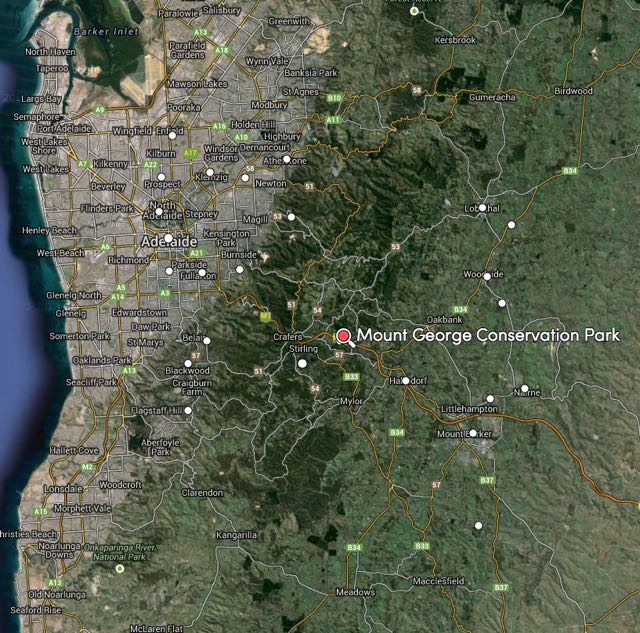
After getting home in the afternoon from the Fleurieu Peninsula, I decided to head out after tea, to do a ‘twilight’ activation at the Mount George Conservation Park.  This is just a short 10 minute drive from home, a little further to the west, along the South Eastern Freeway.

Screenshot 2015-01-28 13.02.06

map courtesy of mapcarta.com

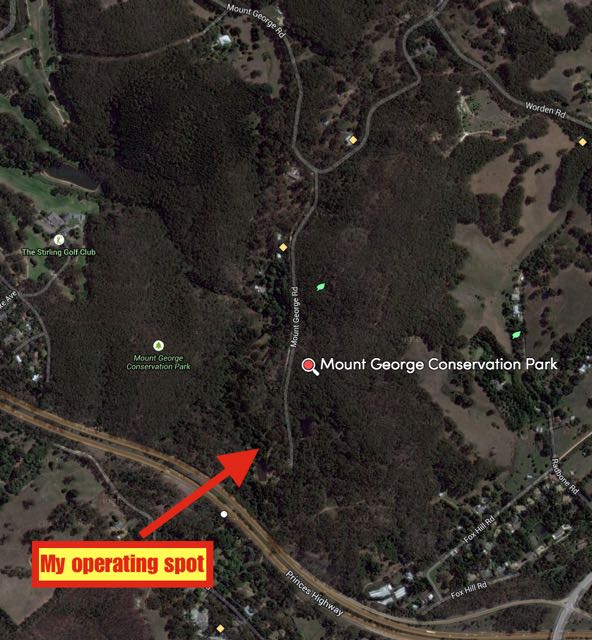
Screenshot 2015-01-28 13.03.27

image courtesy of mapcarta.com

I set up at the end of Mount George Road.  No need for my fold up table and deck chair, as there was an already provided wooden table and bench for me.  For this activation I ran the Yaesu Ft857d, 40 watts and the 40m/20m linked dipole.

After setting up I booked in to the 7130 DX Net on 40m where I worked a total of 11 stations.  This included a little bit of DX: William FO5JV 5/9 sent and 5/5 received), and Brian ZL2ASH (5/9 both ways).  I also made contact with Chris (VK3FY) operating the special event call of AX16AC for the Asian Cup Soccer tournament (or football for the purists).  And also Adrian, DL1ADI/VK3 in the Grampians National Park.

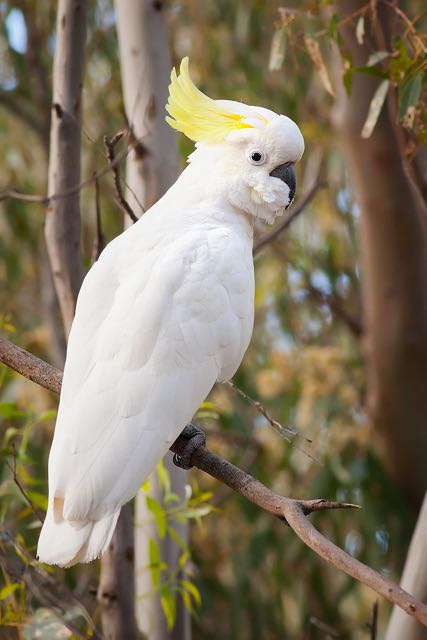
The sulphur crested cockatoos were creating a hell of a noise whilst I was on the net.  It was starting to get dark, when they become very active.  A few people on the net, commented that they could hear them in the background.

800px-Sulphur_Crested_Cockatoo_Nov10

Photo courtesy of wikipedia.

I then left the net and moved up to 7.150 where I put out a CQ call, and this was answered by Steve AX5SFA who was 5/9 ++.  I went on to work a total of 30 stations on 7.150 in VK2, VK3, VK4, VK5, VK6, & VK7.  The band was in very good shape.  However, there were a few static crashes present, and sadly at times, the very loud Over the Horizon radar.  I would love to know where that originates from?  There are a lot of theories.

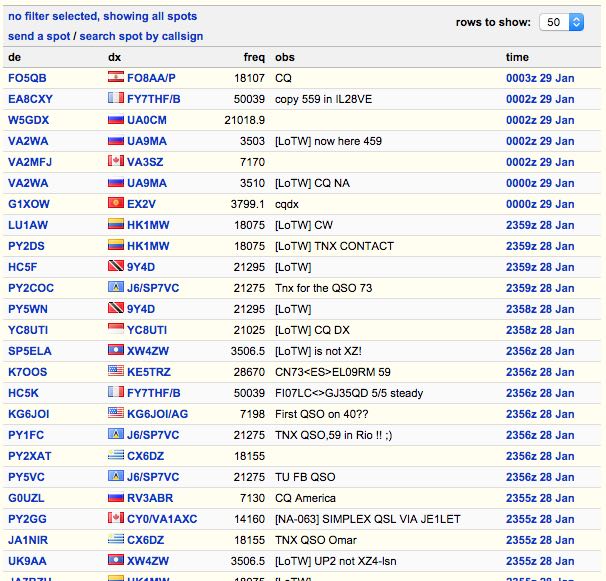
Thanks to Rob VK4FFAB who spotted me on the parksnpeaks site, and also the Amateur Radio (HAM) Australia Facebook site.  I’m sure this brought in a lot of callers.

http://www.parksnpeaks.org/

Screenshot 2015-01-28 13.32.07

This slideshow requires JavaScript.

Prior to packing up I decided to have a quick listen on 20m.  Specifically the Southern Cross DX Net on 14.2385.  This is held daily, at 1130 UTC and Net Control is Jack W1FDY.  Jack was coming in quite well, with a 5/9 signal and he reciprocated with a 5/6 signal report.  Not bad for 40 watts and my very basic linked dipole.  I also spoke with my good friend Bill W1OW in Massachussetts (5/5 both ways), Peter AX3CFA in western Victoria, and Andy (E51AND) in the South Cook Islands, using the special call of E50A to celebrate the 50th Anniversary of Self Governance in the Cook Islands.

It was starting to get cold and late (10.45 p.m.) so it was time to pack up and head home.  I had a total of 45 contacts in the log.

The following stations were worked on 40m SSB:-

  1. William FO5JV
  2. Brian ZL2ASH
  3. George VK4GSF
  4. Rod AX3OB
  5. Chris VK2UW
  6. Paul VK7CC
  7. Phil VK2MCB
  8. Chris AX16AC
  9. Gavin VK3MLU
  10. Mal VK6MJ
  11. DL1ADI/VK3 (Grampians National Park)
  12. Steve AX5SFA
  13. Stephen VK7PSJ
  14. Jeff VK5HEL
  15. Peter AX3KCD
  16. Tony VK3FMRC
  17. Ron VK3JP
  18. Andy VK2FBAC
  19. Steve VK2FISN
  20. Nev VK5WG
  21. Bryan VK3FACT
  22. Paul AX5FZZ
  23. Rob VK4FFAB
  24. Peter VK3FPSR
  25. Ray VK3HSR
  26. Tony VK3AAT
  27. John AX6WC
  28. Ray AX3ACR
  29. David VK5NQP
  30. Tom VK5FTRG
  31. Shaun AX3VLY
  32. Oscar VK4BOV
  33. Errol VK5FEKH
  34. Chris VK6FDKR
  35. Chris AX2BOZ
  36. John VK5NJ
  37. Doug AX2FMIA/p
  38. Peter VK5FLRX
  39. Ian AX3VIG/5
  40. AX3VJG/5
  41. Peter VK3ZPF

The following stations were worked on 20m SSB:-

  1. Jack W1FDY
  2. Bill W1OW
  3. Peter AX3CFA
  4. Andy E50A


Talisker Conservation Park

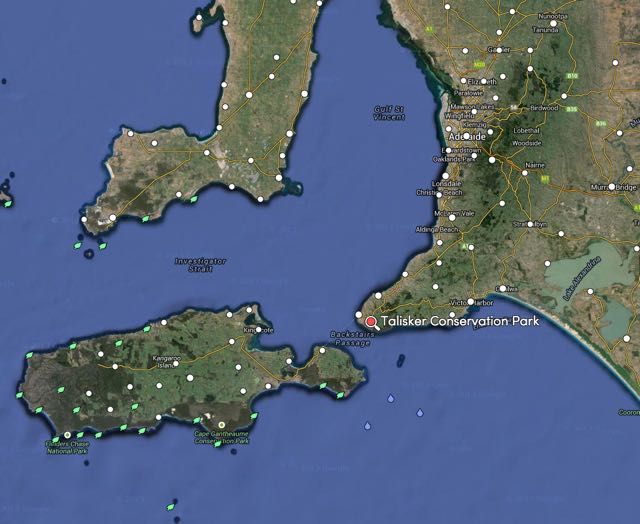
Without a shadow of a doubt, one of my favourite parks in South Australia, is the Talisker Conservation Park (CP), situated on the Fleurieu Peninsula, about 100 km south of Adelaide.  This was my second activation for Australia Day 2015.

Screenshot 2015-01-28 10.07.54

Map courtesy of mapcarta.com

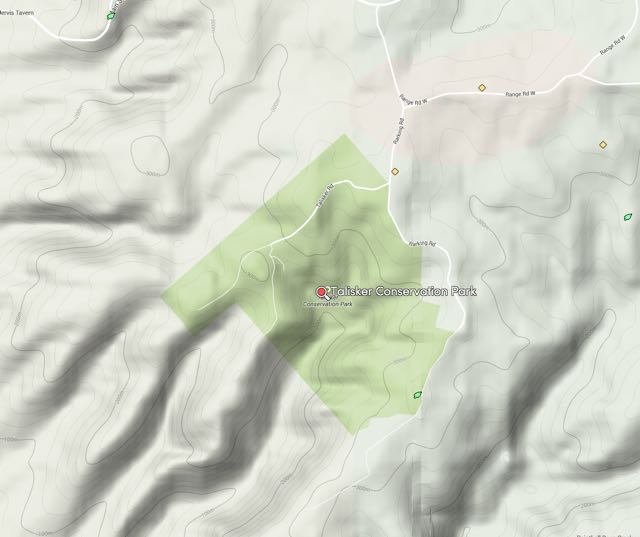
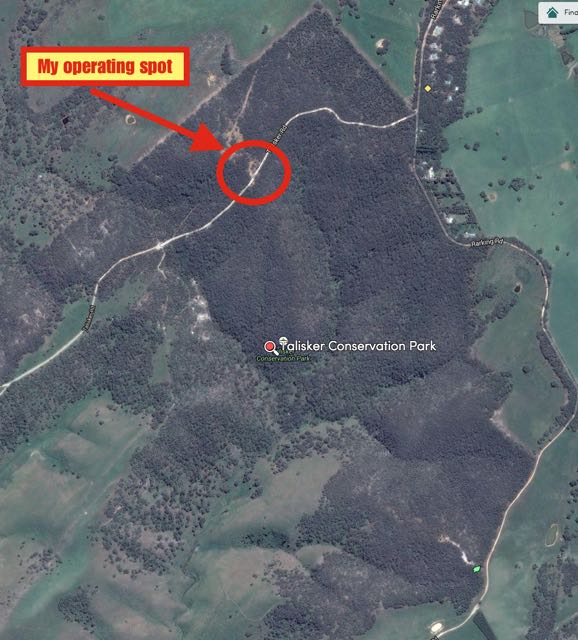
The park is just a short drive from Black Bullock Hill, VK5/ SE-016 (my SOTA activation).  I travelled back up Tent Rock Road and turned left onto Three Bridges Road and headed west until I reached Range Road West, where I turned left.  About 1.5 km further up you will reach Rarkang Road.  There are some signs here indicating the old Talisker Mine.  Turn left into Rarkang Road.  Travel another @1 km south along Rarkang Road, and you will reach the intersection with Talisker Road.  You can continue south along Rarkang Road (it becomes a dead end – to private property) and follow the eastern boundary of the park, but your options along there to set up are limited.  The scrub is very thick and there is nowhere really for you to park your car.  Plus, there are a number of holiday homes on the western side of the road, which may throw off some noise on the bands.  So I took Talisker Road and headed south west.  Talisker Road cuts right through the heart of the park.

This slideshow requires JavaScript.

This is very pretty scenery through here.  The terrain is quite steep and the scrub is very thick.  There are some sensational views of nearby Kangaroo Island.  If you are in a conventional vehicle, take it a little easy, as although the dirt road is in good condition, it is quite steep in sections and can be a little slippery undertoe.

Screenshot 2015-01-28 10.07.17

Map courtesy of mapcarta.com 

Talisker CP is about 212 hectares in size and preserves some very beautiful native scrub.  The park was established in 1985 and contains remnants of Fleurieu Peninsula scrub, some steep walking tracks and the heritage-listed remains of a nineteenth century silver and lead mine.  The park had been the scene of intermittent mining activity until it was gazetted on 28th November 1985 as a Conservation Park (Wikipedia and other sites state 1976).

The park is home to a large variety of wildlife including Western Grey kangaroos, Southern Brown bandicoots, and Short-beaked echidnas.  It was alive with birdlife whilst I was there, including Superb Blue Wrens and Yellow tailed black cockatoos.  And again, the native flowers were out, attracting a huge number of butterflys.

I have activated Talisker CP once before, back in April 2014.  For more information on that activation, please have a look at my previous post…..

https://vk5pas.wordpress.com/2014/04/18/talisker-conservation-park/

This slideshow requires JavaScript.

I set up on the north western side of Talisker Road at the old camping ground area.  Unfortunately, the track leading to the cleared area is now blocked off for vehicles.  But there is a carpark here and you can walk a short distance to this area and the toilet block.  I set up my little fold up table and deck chair.  However, if I had looked a bit closer, there is a wooden table and benches on the other side of the scrub, under some beautiful shady trees.  Just perfect for an activation.

For this park activation I used my Yaesu FT-857d, ran 40 watts output, and the 40m/20m linked dipole.  The ground was way too hard for me to use the  squid pole holder, so I improvised and used a small sapling to secure the squid pole, with an octopus strap.  Not ideal, but it worked.

Screenshot 2015-01-28 10.06.57

image courtesy of mapcarta.com

Again, for this activation, I used the special call of AX5PAS, as it was AUSTRALIA DAY.  We only get to use that special prefix three times a year, so I thought I would put it to good use.  I found 7.095 to be clear, which was my nominated operating frequency.  I aksed if the frequency was in use and was immediately greeted by my old mate, Larry VK5LY in The Riverland.  Larry was a beautiful 5/9 and he returned me the compliment and gave me a 5/9 signal report.  This was followed by a contact with Greg VK5GJ at Meadows in the Adelaide Hills, running QRP, just 4 watts (5/4 sent & 5/9 received).  Another good mate then called in, Dave AX3VCE in north western Victoria, followed by Amanda VK3FQSO, running QRP again.  And again this time, just 500 milliwatts, with an excellent 5/5 signal from Wedderburn.

About 8 QSOs later, I received a call from Marshall AX3MRG who was portable in the Lake Eildon National Park, which qualifies for both the Keith Roget Memorial National Parks Award and the World Wide Flora Fauna (WWFF) program.  Marshall had a good 5/4 signal coming into Talisker.  Two QSO’s later, I spoke with Andrew VK1DA who was portable on SOTA peak, Mount Mundoonen, VK2/ ST-053, east of Yass.  Andrew had a good 5/4 signal into the Fleurieu.  And then a few QSOs later I was called by Tony AX3CAT who was on SOTA peak Britannia Range, VK3/ VC-011, east of Melbourne (5/7 both ways).
I continued to work the VK stations, including some QRP and mobile stations.  This included Peter VK3TKK running just 5 watts (5/5 both ways), Andrew AX3ARR also running 5 watts (5/9 both ways), Ian VK5CZ mobile 20 km north of Clare (5/8 sent & 5/9 received), and then Greg VK5ZGY who was mobile in the South East.

And then to my surprise I received a call from Mark VK6BSA near Esperance in Western Australia.  Mark was a good strong 5/8 signal and gave me a 5/3 signal report in return.  It is not very often that I’ve worked into VK6 on 40m, at this time of the day whilst portable.

A few QSOs later I was called by Tom AX5AA and Col VK5HCF, both portable in the Dingley Dell Conservation Park.  They were coming in well, with 5/9 signals from the South East.  A lot better than we had experienced earlier whilst I was on Black Bullock Hill.  It was great to get Tom and Col in the log, and have a VK5 ‘park to park’ contact for the VK5 Parks Award.

And then a few QSOs later I received a call from Tony AX3CMZ at an Australia Day event near Bendigo.  Tony was struggling to hear me a bit, as there was lots of man made noise QRN at his end, at the event which had about 2,000 people in attendance.  I then worked another QRP station.  This time, Nev VK5WG running just 5 watts from his little X1M transceiver (5/9 both ways).

When the activity on 40 m had slowed, I took the opportunity of lowering the squid pole and removing the links in the dipole, and trying my luck on the 20 m band.  I put out a CQ call and this was answered by Frank VK3GFS/2, portable at his son Adam VK2YK’s house near Newcastle.  Frank was a fantastic 5/9 plus signal.  I also spoke with Adam VK2YK (had spoken with him a little earlier on 40m).   But during one of Adam’s overs on 20m, a signficant ‘whooshiing’ sound came onto the frequency and lasted for about 20 seconds.  It was very loud and very pronounced.  I thought that maybe something was wrong with the antenna, so I quickly tuned down the band, only to find that the noise was across the portion of the 20m band that I listened to.  And Adam’s signal had dropped from 5/9 plus to about 5/8, and there was lots of noise on the frequency.  Adam then handed it back to me, and I informed Adam of what I had just heard on the band.  When I handed it back to Adam, he reported that the noise floor had also increased significantly and my signal had dropped dramatically as well.  We both came to the conclusion that it was most likely due to a solar flare or Coronal Mass Ejection (CME).  Anyway I pushed on, and called CQ again, and this was answered by Nigel VK6NI, near Denmark in Western Australia.  Nigel was my final contact in the park (5/8 sent and 5/3 received).

This slideshow requires JavaScript.

Following my activation and packing up the gear, I decided to go for a look at the old mining area.  The park incorporates the old Talisker silver-lead mine, which is of significant heritage value.  Silver was discovered in 1862 by John McLeod.  The area was named after a locality on the Isle of Skye in Scotland.  Below are some photographs of Talisker in Scotland.

Images courtesy of wikipedia.org

I highly recommend taking the walk down to the mine.  It is a little steep, but the walk is graded as ‘moderate’.  Take your time.  It is worth the effort.  There are interpretive signs along the way, with some magnificent ruins still in tact.  Lots of history there to be seen.

The Talisker mine employed Cornish miners and supported a nearby township called Silverton.  The population of Silverton grew to 3000 at its peak in 1870.  The Talisker Mining Company worked the mine until falling ore grades and a lack of finance, forced the mine’s closure in 1872.  Between 1917 to 1920, the mine was worked again, mainly for arsenic.

The former Postcards television program, visited the area some years ago.  Here is a link….

http://www.postcards-sa.com.au/features/talisker_mine.html

And there is also an excellent brochure on the history of the mine, written by Mines & Energy South Australia.  Here is a link…..

Click to access talisker-mine-broch-red.pdf

This slideshow requires JavaScript.

Below are some photographs of the mine from the South Australian State Library online collection….

http://encore.slsa.sa.gov.au/

This slideshow requires JavaScript.

After having a look around the mining area, I walked up to the lookout area.  This is just a short 10 minute walk from the carpark, and again, well worth the effort.  You will be rewarded with some spectacular views of Kangaroo Island, the surrounding countryside including the Starfish Hill windfarm, and the mining area.

This slideshow requires JavaScript.

I found the photos below on the State Library site.  Thought people might like to see the ‘then and now’ photographs….

This slideshow requires JavaScript.


This slideshow requires JavaScript.

After I had finished walking around the mining area, I drove a little further south west along Talisker Road.  The road becomes a dead end and unfortunately there is no access to the coast, as the land becomes private property.  However, it is well worth going to for a look as there are some spectacular views across Backstairs Passage to Kangaroo Island.  You will also be able to view the south western side of the park.

This slideshow requires JavaScript.

This was a very enjoyable activation, with a total of 43 contacts in the log over an hour & 20 minute period.  This included two SOTA contacts, one Victorian National Park, and one South Australian Conservation Park.

The following stations were worked:-

  1. Larry VK5LY
  2. Greg VK5GJ(qrp)
  3. Dave AX3VCE
  4. Amanda VK3FQSO (qrp)
  5. Les VK5KLV
  6. Tim VK5AV
  7. John VK2AWJ
  8. Julie VK3FOWL
  9. Fred AX3DAC
  10. Adrian VK5FANA
  11. Nigel AX5NIG
  12. Marshall AX3MRG/p (Lake Eildon NP)
  13. David VK5NQP
  14. Andrew VK1DA/p (SOTA)
  15. Peter VK3TKK (qrp)
  16. Tony AX3CAT/p (SOTA)
  17. Joe VK3YSP/p
  18. Andrew AX3ARR (qrp)
  19. Richard VK5ZRY
  20. Ian VK5CZ/m
  21. David AX5KC
  22. Greg VK5ZGY/m
  23. Roy AX5NRG
  24. Barry AX5KBJ
  25. Tom VK5FTRG
  26. Mark VK6BSA
  27. Peter AX3CFA
  28. Richard VK2BO
  29. Tom AX5AA/p (Dingley Dell CP)
  30. Col VK5HCF/p (Dingley Dell CP)
  31. Chris VK5FCHM
  32. Tony VK3CMZ/p
  33. Nev VK5WG (qrp)
  34. Brian VK5FMID
  35. Gary VK5ZK
  36. Adam VK2YK
  37. VK3ZZS/p
  38. Mark AX5QI/p
  39. Andy AX5AKH
  40. John VK2FALL

The following stations were worked on 20m SSB:-

  1. Frank VK3GFS/2
  2. Adam VK2YK
  3. Nigel VK6NI


References.

Department of Environment and Natural Resources, ‘Parks of the Fleurieu Peninusla’, June 2011

Natural Resources Adelaide and Mt Lofty Ranges, ‘Deep Creek and Talisker Bushwalking Guide’, 2014.

Wikipedia, 2015, <http://en.wikipedia.org/wiki/Talisker_Conservation_Park&gt;, viewed 28th January 2015

Black Bullock Hill VK5/ SE-016

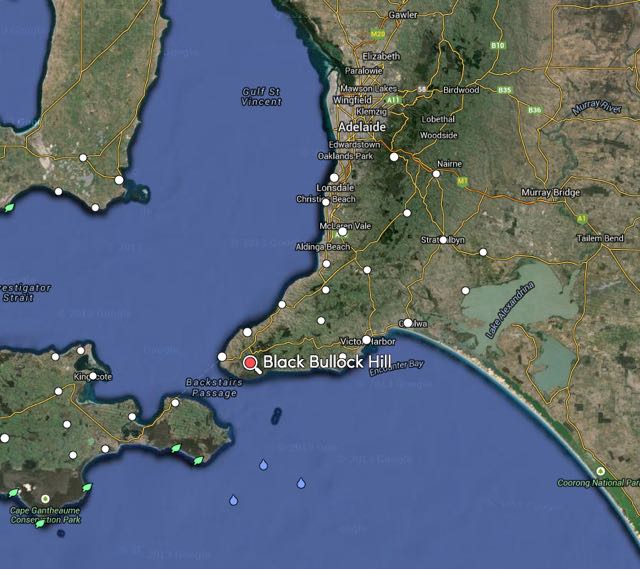
For Australia Day (Monday 26th January 2015) I headed down to the Fleurieu Peninsula, south of Adelaide, where I activated Black Bullock Hill, VK5/ SE-016 as part of the Summits on the Air (SOTA) program.  The summit is the highest point of the Fleurieu Peninusla, and is located near the little town of Delamere, about 100 km south of Adelaide.

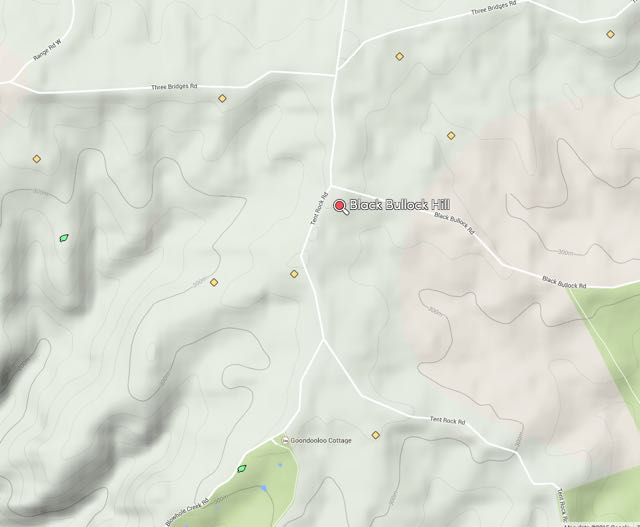
Screenshot 2015-01-27 20.54.23

Map courtesy of mapcarta.com

This is not a ‘traditional’ summit, in that it is not a hill or mountain.  But it is the highest point on the Fleurieu Peninusla, and qualifies for the SOTA program under the 150 prominence rule.

I have activated the summit two times previously.  In fact it was my first ever SOTA activation, way back in March, 2013.  For more information on those activations, please have a look at my previous posts…..

https://vk5pas.wordpress.com/2013/03/03/vk5se-034/

https://vk5pas.wordpress.com/2013/10/08/vk5-se-016-and-the-1-year-vk5-sota-anniversary/

Screenshot 2015-01-27 20.53.44

map courtesy of mapcarta.com

It is a beautiful drive from my home in the Adelaide Hills, down to the summit.  I got up early though to miserable weather.  It was raining, and I was worried that I might have to cancel the activation.  This was weather that we are certainly not used to on Australia Day in the middle of Summer.

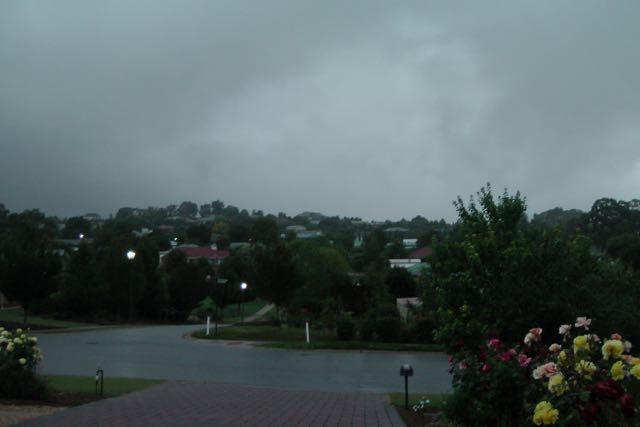
IMGA0001

Above- the view from my front yard, first thing in the morning.  Not good!

Anyway I packed the car and headed off through Echunga, on to Meadows, and then on to Willunga via Brookman Road, travelling passed the beautiful pine forests.  They were still packing up the marquees at the top of Willunga Hill where they held the King of the Mountain for the Tour Down Under cycling event.  From there I cut across to Myponga through Pages Flat, and then travelled south until I reached the towns of Yankalilla and Normanville.  I then travelled south along the Main South Road, following the coastline and the amazing views, until heading back inland to Second Valley.  This is truly, very beautiful countryside.  From there I reached the little town of Delamere, where I turned left onto Range Road and headed east.  Once I reached Three Bridges Road I turned right and headed south until I reached the intersection of Three Bridges Road, Dog Trap Road, and Tent Rock Road.  The summit is located on the south eastern corner of this intersection.  I encountered numerous kangaroos along the way, so it was slow going.  This resulted in me, having to pull over and amend my alert on SOTAWatch, delaying the activation by one hour.

This slideshow requires JavaScript.

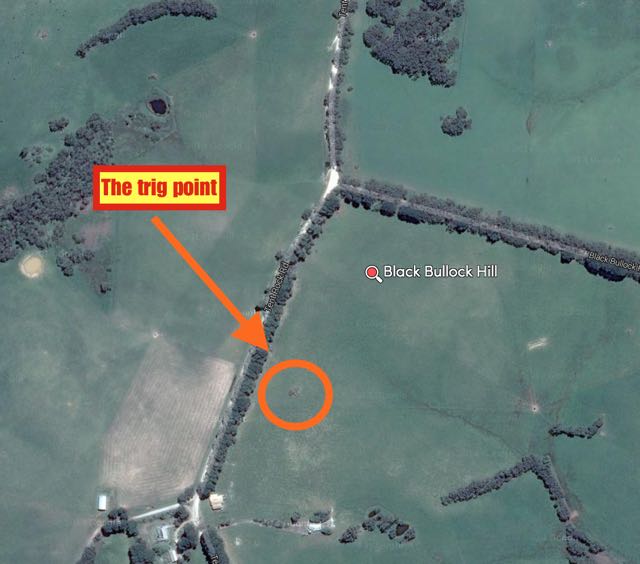
As I had sought approval from the land owner prior to heading to the summit, I parked my car down Dog Trap Road, and walked up to the summit, and with some care, climbed the electric fence and approached the trig point, which is just a short distance inside the fenceline.  It is hidden a little by the thick scrub on the eastern side of the road.  It was here at the trig point, that I set up my equipment.  For this activation I used my Yaesu FT-817nd, 5 watts output power, and the 40m/20m linked dipole supported on a 7 metre telescopic squid pole.  I powered the radio with a 12 volt 4 ah SLAB battery.  I secured the squid pole to a squid pole holder, with the assistance of an octopus strap.  And for this activation, I used the special AX prefix to celebrate Australia Day.

No creature comforts here at the summit.  I sat alongside the trig point, with my back propped up against the trig.  At home, amongst the ants and the other creepy crawlies.  And the weather was miserable.  Although it had stopped raining, it was freezing cold.  The Southern Ocean was in sight, and the breeze off there was very chilly.  The nearest land to the south is Antarctica, so no wonder it is a cold spot.  Unfortunately, the issue of no rain was not to last.  And as I found out during the activation, there were a few times I had to seek shelter underneath my bothy bag.

Screenshot 2015-01-27 20.54.12

Image courtesy of mapcarta.com

Prior to calling CQ I had a quick look around the band and soon found Col VK5HCF calling CQ from the Piccanninie Ponds Conservation Park in the South East of South Australia.  I was aware that Col and Tom VK5EE were going to venture out that morning for the activation, and I was hoping to get them in the log for the VK5 National and Conservation Parks Award.  Only trouble was, Col was virtually unreadable.  He was so low down and faint, that I didn’t even bother calling because I didn’t think I would get through.  This was very disapointing, as I was hoping to work Col whilst he was in the Conservation Park.  But things were to only get worse.

I then found John VK5BJE, calling CQ from the Belair National Park in the Adelaide Hills.  John was the second VK5 Parks activator that I knew as going to be out and about that morning.  And he too was so low down, that again I didn’t bother even trying to make the contact.  In fact, John’s signal was even lower than Col’s.  This was not a good start to the morning’s proceedings.

So with a fair degree of disapointment, I found 7.105 to be clear and put out a CQ call.  This was immediately answered by Amanda VK3FQSO with a nice strong 5/8 signal from Wedderburn.  And this was followed by Julie VK3FOWL, also 5/8, and then Bandor AX3FKSA who was also 5/8.  Three Foundation call,s running 10 watts, with excellent signals.  It appeared that the further afield stations were coming in well.  But there was no close in propagation.  My fourth qualifying contact for the summit, was with John, AX2YW in Wagga Wagga who was a very strong 5/9.

My 7th contact in the log, was Mike, VK6MB in Perth, Western Australia, who was a very nice 5/8 signal, some 2,700 km away.  Mike gave me a 4/4 signal report from my 5 watts.  Not great, but we still made the contact on 40m, which is not always possible at such great distance.  It is always a challenge to get the VK6 boys on 40m.

A few QSOs later I was called my Peter AX3PF/7 who was portable in Narawntapu National Park in northern Tasmania.  Peter was a nice strong 5/8 signal from his portable set up.  And then a few QSOs later I had another National Park in the log.  This time it was Marshall AX3MRG who was portable in the Lake Eildon National Park in central Victoria (5/5 sent and 5/6 received).

When things started to slow down a little on 7.105, I took the opportunity of tuning around the band,  and I was very pleased I did, because I found Col VK5HCF on 7.100, calling CQ.  And this time he was readable.  Not a lot better.  But at least readable from Piccanninie Ponds Conservation Park.  Col and I exchanged 5/1 signal reports.  Not strong signals, but one of the benefits of working portable.  You can ‘hear a pin drop’ so you can generally work the weakest of signals.  If only it was like that at home!

I then went to 7.090 and called CQ and worked a further 19 stations in VK1, VK3, VK5, & VK7.  This included my first summit to summit of the morning.  This was with Ian VK1DI who was portable on SOTA peak, Mount Majura, VK1/ AC-034 (5/3 both ways).  A few QSOs later I was called by Tony VK3CAT/p, who was portable on SOTA summit, Mount Bride, VK3/ VC-009, near Warburton (5/7 both ways).

This slideshow requires JavaScript.

Again, when things slowed down on 7.090, I took the opportunity of having a look around the 40m band again.  And again, I was rewarded with doing this, because I found John VK5BJE calling CQ from the Belair National Park.  And not only had John’s signal improved.  It had improved dramaticlally.  It had gone from being virtually undetectable, to now a good strong 5/8.  John and I were so happy to make the contact (5/8 sent and 5/9 received).

I then worked Tom AX5AA (VK5EE) in the Piccanninie Ponds Conservation Park, on 7.100.  Again, Tom’s signal had gone from being very faint, to a good strong 5/8.  The 40m band was certainly doing some peculiar things.

I then found Reuben VK7FREU, calling CQ on 7.080 from SOTA summit Mount Wellington, VK7/ SC-001.  After working Reuben, I also spoke to his Dad, Justin VK7TW, who was on the summit with Reuben.  Again, not strong signals.  But very comfortable contacts, due to non existant man made noise floor.

I then went to 7.085 and worked a further 8 stations in VK3, VK3, & VK5 before the UTC rollover, including Gerard AX2IO who was mobile.  The 40m band was certainly behaving peculiarly, but was still allowing for some very good contacts into the eastern states.

After the UTC rollover I called CQ on 7.090 and worked a total of 20 stations in VK3 & VK5.  This included Peter VK3PF/7 in the Narawntapu National Park, Tony AX3CAT on VK3/ VC-009, Marshall AX3MRG at Horseshoe Bend in the Lake Eildon National Park, and Tom AX5AA & Col VK5HCF, both in the Ewens Ponds Conservation Park.

Another highlight was working Amanda VK3FQSO who was running QRP on just 500 milliwatts.  Amanda was a very nice 5/5 signal despite the very low power.

I also gave 20m a quick shot and worked a total of 5 stations there in VK2, VK4, & VK6.  This included Gerard AX2IO who was mobile.

So, after 2 and a half hours on the summit, I had a total of 74 contacts in the log, including one South Australian National Park, two South Australian Conservation Parks, one Victorian National Park, one Tasmanian National Park, and three Summit to Summit contacts.  I was very happy.  It was time to pack up, and head off to my next activation, which was the Talisker Conservation Park.

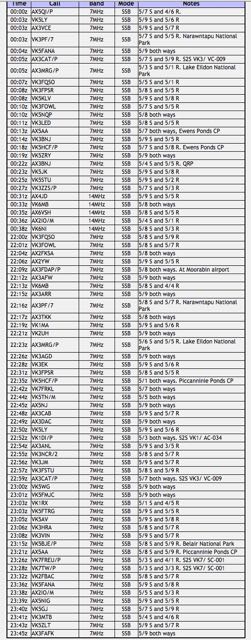
The following stations were worked:-

Screenshot 2015-01-27 18.15.34

Kenneth Stirling Conservation Park

Yesterday afternoon/evening (Friday 23rd January, 2015, I activated the Kenneth Stirling Conservation Park, in the ‘Adelaide Hills’ Mount Lofty Ranges.  The park is situated about 16 km east of Adelaide, and is close to the little town of Carey Gully.  It just a short drive from home.

Screenshot 2015-01-24 10.55.36

map courtesy of mapcarta.com

I have activated this park previously on 2 occasions (2013 and 2014).  For details on those activations and more information on the park, please have a look at…..

https://vk5pas.wordpress.com/2013/05/10/kenneth-stirling-conservation-park/

https://vk5pas.wordpress.com/2014/07/11/kenneth-stirling-conservation-park-2/

I have talked about the history of this park previously.  But it is extremely interesting and is well worth mentioning again.  The park is named in honour of Kenneth George Stirling, who was an accountant and benefactor.  He died suddenly in 1973, of heart disease, aged just 38.  Stirling earnt considerable wealth due to shareholding in mining interests, and apparently this paper value embarrassed him.  According to his wife, ‘he believed he hadn’t earned the money the mining boom brought him’ and ‘his main concern was to use it for the good of the community’.  He was a member of the Nature Conservation Society of South Australia and other organisations and over the years made several  anonymous gifts including $200,000 to the Australian Conservation Foundation (ACF) to establish national parks in South Australia. The money he gave to the A.C.F. helped to establish national parks at Montacute and Mount Scott, both near Adelaide, and in the extension of existing reserves at Scott Creek, in the Mount Lofty Ranges, and Warrenben, on Yorke Peninsula.  In 1990 the State government acquired land in the Adelaide Hills for the Kenneth Stirling Conservation Park.

He sounds like a very humble and fascinating fellow.  And it is to his credit, that we now have some beautiful conservation parks in South Australia.  For more information on Stirling, please have a look at…..

http://adb.anu.edu.au/biography/stirling-kenneth-george-11773

The park is unique in that it is separated into four autonomous sections: Wotton Scrub, Filsell Hill, White Scrub, and Burdett Scrub.  The largest section being Filsell Hill.

As I had activated the Wotton Scrub Section previously, I tried to get into some of the other sections.  Firstly, I went to the ‘Filsell Hill’ section.  I travelled down Ostigh Road off Greenhill Road and saw the park on my right.  But the scrub was very thick and very difficult for portable operation.  As I travelled north, I reached a ‘dead end’ and an entrance to private property.  However, Google maps shows Ostigh Road continuing to the north.   It doesn’t!

I then went to the White Scrub section on Greenhill Road, negotiating all of the bicycle riders that were returning to Adelaide, after the world famous Tour Down Under cycling event.  The Tour Down Under brings out the best and worst in some bike riders.  Including some guys over 50 that should never wear lycra!  Anyway, I got to the park and again, found that signposting was very poor and access was difficult.

As I was running out of time, I decided to play it safe and I headed to the Wotton Scrub section of the park, which can be easily accessed off Gum Flat Road.  There is a small carpark here, off the Gum Flat Road, and a nice cleared area (access track) which allows you to string out a dipole.

Screenshot 2015-01-24 10.56.19

map courtesy of mapcarta.com

As the Kandos Group was still running on 7.093, I headed to 7.098 where I put out a number of CQ calls, with no answers.  Was something wrong?  No, there was nothing wrong with the antenna.  The stations on the Kandos Net were coming in very well.  So back to 7.098 and some more CQ calls.  Again, no takers.  I then sent out an SMS message and as a result, David VK5KC gave me a shout with an excellent 5/9 plus signal.  This was followed by David VK5NQP, Col VK5HCF and John VK5BJE.  It appeared that I had finally stirred up the park hunters.  Some of the more interesting contacts here were with Amanda VK3FQSO who was 5/7-9 on just 1 watt, and Greg who was 5/8 also running QRP with 5 watts.

I ended up with a bit of a mini pile up and went on to work a total of 17 stations during this period, in VK3 & VK5.  But it then slowed again, so I decided this was an excellent opportunity to try out my new 15m dipole.  So down came the 7 metre squid pole, off with the 40m/20m linked dipole, and up with the 15m dipole.

I tuned around the 15m band but could not hear a lot of activity, except for the very big pile up high in the band, where EP6T in Iran, was operating split frequency.  However I did hear Ken JG2MQM speaking with VKs and ZLs on 21.263.  So I patiently waited for Ken to finish his QSO and I gave him a call.  Although not a booming signal (Ken was 5/8), I did manage to make contact.  Ken gave me a 5/6 signal report in return.  I then went up a little higher to 21.270 and put out a CQ call and this was answered by Peter ZL1BRL, at Auckland in New Zealand, who was running 100 watts and a Delta loop.  Both Peter and I were experiencing lots of QSB on each others signals.  But  at least my antenna worked.  And these were my first ever 15m contacts whilst operating portable in a park, so I was very happy.

The goat had bleated on my SOTA Goat app on my iphone, and I saw a spot for Rob VK2QR, who was on a SOTA peak in New South Wales, as part of the Summits on the Air (SOTA) program.  So I quickly replaced the 15m antenna, with the linked dipole again, and tuned to 7.090 where I head Rob with a very nice 5/9 signal from Gurkeroo Ridge, VK2/ SW-051, south of Tumut in the Bago State Forest.  Surprisingly, Rob was not all that busy and I managed to make contact after just the one call.  I would also like to congratulate Rob, who made ‘Mountain Goat’ yesterday.  Well done Rob for reaching the 1,000 point mark as an activator.

Unfortunately I had missed Rod, VK2TWR, who had also been on a summit in New South Wales, but had to go clear due to the rain.

This slideshow requires JavaScript.

I then moved up the band to 7.105 and put out a CQ call and this was answered by the ever keen Peter VK3PF with a nice strong signal.  And this was followed by another very active park activator and hunter, Joe VK3YSP (and later followed by Joe’s wife, Julie VK3FOWL).  I went on to work a further 14 stations after Joe in VK3, VK5 & ZL.  This included Jerry VK3MEK who was running QRP 6 watts from an oval in Melbourne, and Allen VK3HRA running QRP 5 watts, trying out a new end fed antenna in his backyard.

The New Zealand contact was with Rob ZL2BTQ who was maritime mobile in Queen Charlotte Sound, near Picton.  What a beautiful part of the world.  Marija and I travelled to New Zealand for 4 weeks back in 2010 for our honeymoon, and travelled through the Queen Charlotte Sound.  I was very pleased to get Rob in the log.  Below are some photos I took whilst in that area back in 2010.

This slideshow requires JavaScript.

I then tried my luck on 20m, but I had left things a little too late.  There were not a lot of strong signals coming in from Europe.  However, I did work John EA7BA in Spain and Steve GJ7DNI in the Channel Islands, on 14.156.  The Channel Islands was a new DXCC for me, whilst operating portable.  I then put out a few CQ calls on 14.214, and finally got a call from my mate, Ted VK6NTE with his normal 5/9 plus plus signal.  And then Caleb ZL2ML in Gisborne in New Zealand.  I normally work Caleb on 40m on the 7130 DX Net.  Caleb had a very strong 5/9 plus signal here on 20m.

It was now 8.30 p.m. so I headed back to 40m and checked in to the 7130 DX Net.  My first 4 contacts here, were with Andy VK4TH near Kingaroy in Queensland, William FO5JV in French Polynesia, Brian ZL2ASH in Wellington New Zealand, and Tony VK2RI who was operating portable, on the shores of Botany Bay, with a very nice signal.

During the net, I quickly tuned up and down the 40m band, and found Pedro NP4A in Puerto Rico, calling CQ.  So I gave Pedro a call and exchanged genuine 5/9 signal reports with him.  This was the second time in the past week that I have worked Pedro, whilst out portable in a park.  I then returned back to the 7130 DX Net and worked a further 4 stations in VK1, VK2, VK5 & VK7.

At the conclusion of the net, I put out a few CQ calls on 7.150 and these were answered by Roald VK1FIVE.  However, a few minutes into our QSO, a USA station came up alongside of us calling CQ on 7.152.  This wasn’t too much of an issue, until a VK2 called him, and that was the end of my QSO with Roald.  There was far too much bleed over for us to continue.  I have heard n the recent past, a particular amateur ‘complain’ that Australian amateurs are operating above 7.100 in the evenings, thus encroaching on the DX stations operating in that part of the 40m band.  However, to try operating below 7.100 during the evenings, is almost impossible, with all of the South East Asian activity.

So, after my contact with Roald, I headed up to 7.160 and put out a CQ call, and this was answered by Roald, who had followed me up the band.  I worked a further 12 stations here, including my old mate, Bill W1OW in Massachusetts.  Bill was 5/8 and he gave me a 4/4 signal report.  Not bad, with my 40 watts and a simple dipole.  I was also called by Oscar VK4BOV who was running just 10 watts from an Anam QRP Software defined radio.

When things slowed down a little on 40m, I headed off to 20m to have a quick listen on the Southern Cross DX Net.  However, signals from the USA were very low down.  My last contact on 40m, Jim VK3VBC, who is a regular check in to the Southern Cross DX Net, had warned me that signals were poor.  Most of the activity on 20m was focussed around 14.183 with the EP6T station in Iran, working split.

It was time to head home.  Local time was 10.45 p.m.  I had a total of 61 contacts in the log, including some very interesting contacts.

The following stations were worked on 40m SSB:-

  1. VK5KC
  2. David VK5NQP
  3. Col VK5HCF
  4. John VK5BJE
  5. Brian VK5FMID
  6. Peter VK3TKK
  7. Tom VK5EE
  8. Ivan VK5HS
  9. Tom VK5FTRG
  10. Peter VK5KPR
  11. Mick VK3FAFK
  12. Les VK5KLV
  13. Giles VK5FFAA
  14. Amanda VK3FQSO (qrp)
  15. Greg VK5GJ (qrp)
  16. Jeff VK5JK
  17. Brett VK3FLCS
  18. Rob VK2QR/p (SOTA)
  19. Peter VK3PF
  20. Joe VK3YSP
  21. Robin VK5TN
  22. Adrian VK5FANA
  23. Nev VK5WG
  24. Jim VK5JW
  25. Bob VK3BWZ/p
  26. Tim VK3TJK
  27. Julie VK3FOWL
  28. David VK3NGD
  29. Bob VK2OD
  30. Rob ZL2BTQ/mm
  31. Jerry VK3MEK/p
  32. Allen VK3HRA
  33. Doug VK2FMIA
  34. Dave VK5DHC
  35. Andy VK4TH
  36. William FO5JV
  37. Brian ZL2ASH
  38. Tony VK2RI/p
  39. Pedro NP4A
  40. Mal VK5MJ
  41. Adam VK7VAZ
  42. John VK2FALL
  43. Roald VK1FIVE
  44. Dennis VK5LDM
  45. Oscar VK4BOV (qrp)
  46. Ian VK3VIN
  47. Steve VK5SFA
  48. Damien VK5FDEC
  49. Bill W1OW
  50. Mick VK4GMH
  51. John VK5NJ
  52. Peter VK5JP
  53. Tony VK5FTVR
  54. Geoff VK5HEL
  55. Jim VK3VBC

The following stations were worked on 15m SSB:-

  1. Ken JG2MQM
  2. Peter ZL1BRL

The following stations were worked on 20m SSB:-

  1. John EA7BA
  2. Steve GJ7DNI
  3. Ted VK6NTE
  4. Caleb ZL2ML


References.

Australian Dictionary of Biography, 2015, <http://adb.anu.edu.au/biography/stirling-kenneth-george-11773&gt;, viewed 24th January 2015