Mark Oliphant Conservation Park

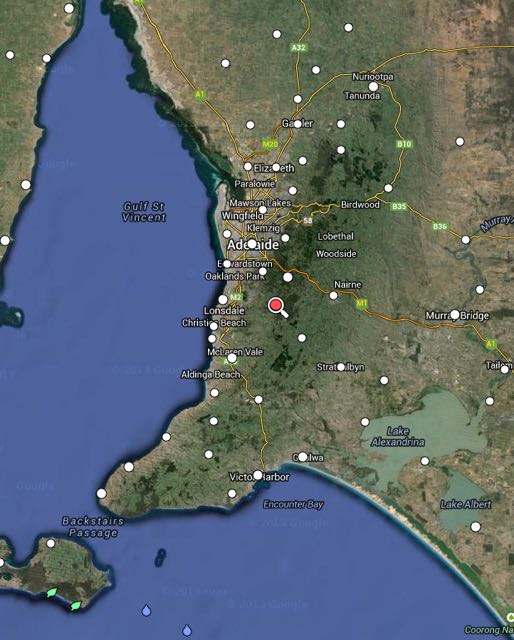
After the Scott Creek Conservation park, I travelled to the Mark Oliphant Conservation Park, which is located about 14 km south east of Adelaide in the Heathfield/Ironbank area of the Mount Lofty Ranges ‘Adelaide Hills.
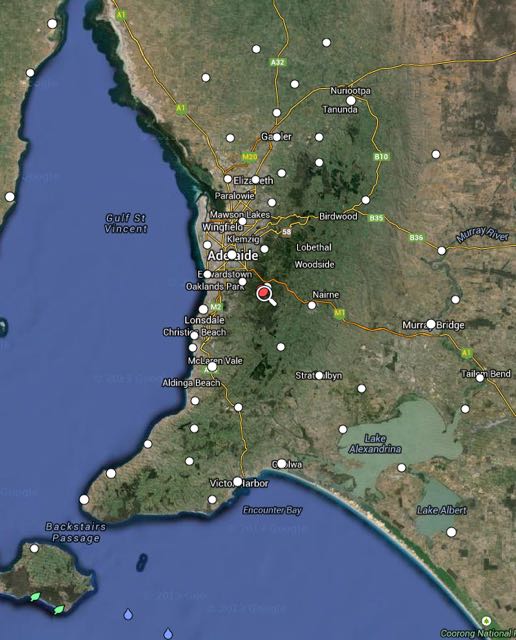
Screenshot 2014-11-12 09.20.21

Map courtesy of mapcarta.com

I last activated this park in July 2013.  For information on my prior activation and information on the park, please see my precious post at…..

https://vk5pas.wordpress.com/2013/07/12/mark-oliphant-conservation-park/

This park was originally known as the Loftia Recreation Park.  It was renamed in honour of former state Governor Sir Mark Oliphant’s contribution to conservation, and to reflect the conservation status of the land.  It contains a small remnant parcel of high quality forest that is characteristic of the native vegetation of the higher rainfall areas of the Mount Lofty Ranges ‘Adelaide Hills’.  The park is about 178 hectares in size.

I have fond memories of this park.  A number of years ago I worked at Stirling for many years, and we often would hold our annual Christmas show here in the park.  A section of the park was leased as a recreation area.  There was a beautiful oval, BBQ facilities, tennis courts, and a kiosk.  However, this no longer appears to be the case.

Sir_Mark_Oliphant

photo courtesy of wikipedia

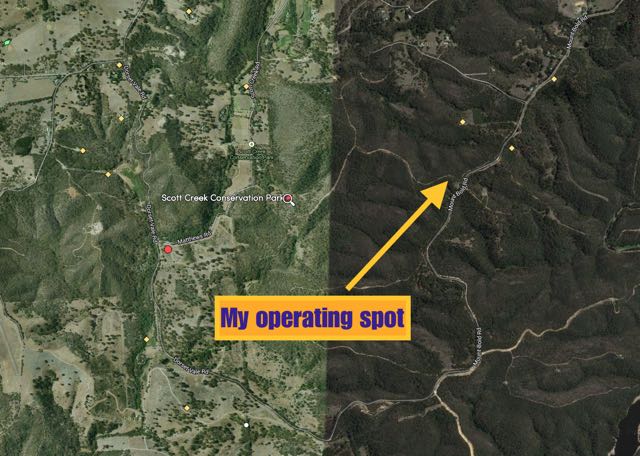
For my last activation I set up off one of the walking tracks off Evans Drive.  This time I set up off Scott Creek Road in the old Recreation area.  Sadly, this area appears to have gone to rack and ruins.  The former oval is no more and the area was quite run down.
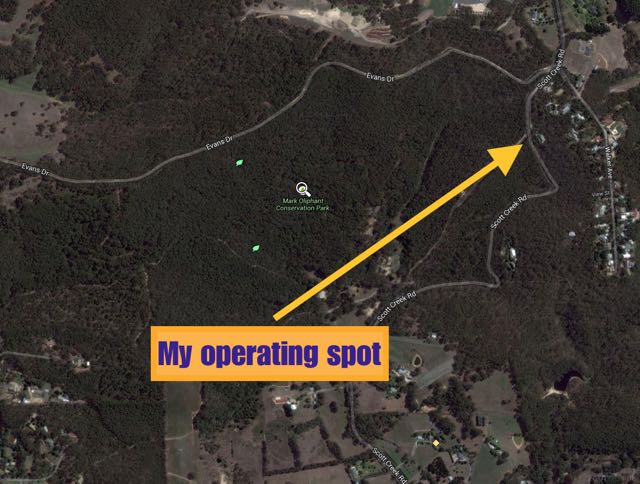
Screenshot 2014-11-12 09.20.06

Map courtesy of mapcarta.com 

My first taker on 40m was Greg VK5GJ, again operating QRP 5 watts with his home brew transceiver.  This was followed by Peter VK3YE who was operating portable from Chelsea Beach with a 1/4 wave vertical antenna.  I again had a number of QRP callers including Les VK5KLV/p at Blanche Harbour with 5 watts, Nick VK3ANL/p running 5 watts, Peter VK3TKK also running 5 watts, Reuben VK7FREU/p running 5 watts, Peter VK3PF running just 1 watt, and Amanda VK3FQSO on just 1/2 watt (5/7-9 QSB).  The strongest caller of the day was Peter VK5NAQ from the Mid North of South Australia with a 30/9 signal.

There was quite a bit of QRM on the frequency with some very strong signals coming in from Europe.  It was noticeable that the noise level on 40m was much lower than normal.  It was extremely quiet.  That combined with the non existant man made noise floor from the park, made conditions on 40m: EXCELLENT.

This slideshow requires JavaScript.

After operating on 40m ssb for about an hour and ssecuring 26 contacts in the log, I ventured over to 20m and put out a number of CQ calls.  However, my only taker was Adam VK2YK.  I tuned across the 20m band but there were not too many strong European signals.  And those that I did hear calling, were calling CQ contest for the JIDX contest.  So I decided to pack up and head home for my roast lamb.  I had a total of 27 contacts in the log from VK2, VK3, VK5, & VK7.

The following stations were worked on 40m SSB:-

  1. Greg VK5GJ/qrp
  2. Peter VK3YE/p/qrp
  3. Peter VK5KPR
  4. Andrew VK3ARR
  5. Brian VK5FMID
  6. Rod VK5VRB
  7. Les VK5KLV/p/qrp
  8. Nick VK3ANL/p/qrp
  9. Peter VK3TKK/qrp
  10. Nev VK5WG
  11. Allen VK3HRA
  12. Reuben VK7FREU/p
  13. Justin VK7TW/p
  14. Tony VK3AJW
  15. Peter VK3PF/qrp
  16. Grant VK2LX
  17. Amanda VK3FQSO
  18. Chuck VK2SS/p
  19. Ian VK3VIN
  20. Shaun VK5FAKV
  21. Matt VK3FORD
  22. Phil VK3BHR
  23. Paul VK7CC
  24. Andrew VK2UH
  25. Peter VK5NAQ
  26. Adam VK2YK

The following station was worked on 20m SSB:-

  1. Adam VK2YK


References

National Parks South Australia, 2014, <http://www.environment.sa.gov.au/parks/Find_a_Park/Browse_by_region/Adelaide_Hills/Mark_Oliphant_Conservation_Park&gt;, viewed 12th November 2014
Scott Creek Conservation Park

Last Sunday (9th November, 2014) I headed out to the Scott Creek Conservation Park (CP), which is situated about 30 km south of Adelaide.

Screenshot 2014-11-12 08.32.22

map courtesy of mapcarta.com

I last activated this park in September, 2013.  For full details on that activation and lots of information on the park, please have a look at my previous post.  The park has a very interesting history, and my previous post is well worth a read….

https://vk5pas.wordpress.com/2013/09/29/scott-creek-conservation-park/

The last time I activated the park, I operated from the old Almanda silver mining area.  This time, I headed to the high part of the park, off Mount Bold Road.  This is a beautiful drive through this area, with the thick scrub of Mount Bold Reservoir on one side of the road, and the Scot Creek CP on the other side.  I parked the car at one of the entry gates, and walked about 30 metres down Cup Gum Track and set up my fold up table and deck chair under the shade of some large gum trees.

Screenshot 2014-11-12 08.33.50

map courtesy of mapcarta.com

I set up the linked dipole for 40m and tuned to my promised frequency of 7.095.  However, this was in use, so I slipped down to 7.090 and started calling CQ.  I was almost immediately greeted by Amanda VK3FQSO with a beautiful 5/9 signal.  This was followed by Peter VK3PF who was runnign QRP, with just 1 watt.  Peter was a good 5/5 signal and was easily readible with the non existent man made noise floor within the park.

A number of other stations called me using QRP during this activation.  They included Les VK5KLV who was portable at Blanche Harbour near Port Augusta.  Les was running his Yaesu FT-817, 5 watts and a linked dipole, and had a very nice 5/9 signal.  Regular QRP park hunter, Greg also called in, using just 5 watts from his home brew transceiver, with a good 5/8 signal.  Andrew VK3ARR running QRP 5 watts also called me, with a good 5/8 signal.  And then Nick VK3ANL, also running QRP 5 watts, from the backyard of his house, doing some antenna experimentations.

I was also fortunate to get one park to park contact during this activation, with Gordon VK5GY, who was operating from the Bullock Hill Conservation Park on the Fleurieu Peninsula.

This slideshow requires JavaScript.

After working 20 stations on 40m in VK2, VK3, and VK5, I qsy’d to 20m and put out some CQ calls on 14.310 mhz on 20m.  My first caller was Manuel CU3BL in the Azores Islands.  Manuel was an excellent 5/9 signal and I received a 5/7 from him with my 40 watts.  My only other caller on 20m was Dave VK6SG operating from a Mens shed in Western Australia.

So, after just a little over an hour in the park I had a total of 22 contacts in the log.  It was time to head off to the Mark Oliphant Conservation Park, just a short distance away.

The following stations were worked on 40m SSB:-

  1. Amanda VK3FQSO
  2. Peter VK3PF/qrp
  3. Nev VK5WG
  4. Les VK5KLV/p/qrp
  5. Gordon VK5GY/p (Bullock Hill CP)
  6. Greg VK5LG
  7. Phil VK3BHR
  8. Greg VK5GJ/qrp
  9. Peter VK5KPR
  10. Andrew VK3ARR/qrp
  11. Brian VK5FMID
  12. Tom VK5FTRG
  13. Stuart VK5STU
  14. Nick VK3ANL/qrp
  15. Chris VK2SR
  16. Kevin VK3VEK
  17. Steve VK3VM
  18. Peter VK3TKK
  19. Peter VK2NEO
  20. Ivan VK5HS

The following stations were worked on 20m SSB:-

  1. Manuel CU3BL
  2. Dave VK6SG

parksnpeaks

Allen VK3HRA, the developer of the parksnpeaks site has now deployed codes to allow SMS of activation spots.

You need to send your spots to 0447 568 667.

You simply key in the spot as a text message using the format below, and then send as an SMS message.  The format is:

Callsign, Class, location, frequency, mode, and any comments.

e.g.

VK5PAS/p SANPCPA 5NP-001 7.090 SSB enjoying the sunshine.

The class area = SANPCPA, WWFF, or KRMNPA.

Each VK5 National park and Conservation Park has a unique identification code, e.g. Aberdare Conservation Park is 5CP-001.  The VKFF reference numbers apply to the National Parks in the WWFF scheme.  And each of the National Parks for the Keith Roget Memorial National Parks Award (KRMNPA) have also been issued with unique id code, e.g. Alfred National Park is 3NP-001.

The location id can be entered with, or without the hyphen.

A list of the unique identification codes can be located at…..

http://parksnpeaks.org/showReports.php

Prior to using this new feature, you will need to add the mobile phone number that you intend to use and send the SMS message from.  This prevents abuse of the system.  All you need to do is simply add your number via the ‘Edit user data’ area on the parksnpeaks site.  You will need to add your number as +61 followed by your mobile (excluding the leading 0).

Thanks to Allen for all his work on the parksnpeaks site.

Please note, that at this stage, the use of the unique codes for VK5 Parks and KRMNPA parks only applies to this SMS spotting facility.  They have not yet been adopted for award purposes.

AHARS Buy and Sell 2014

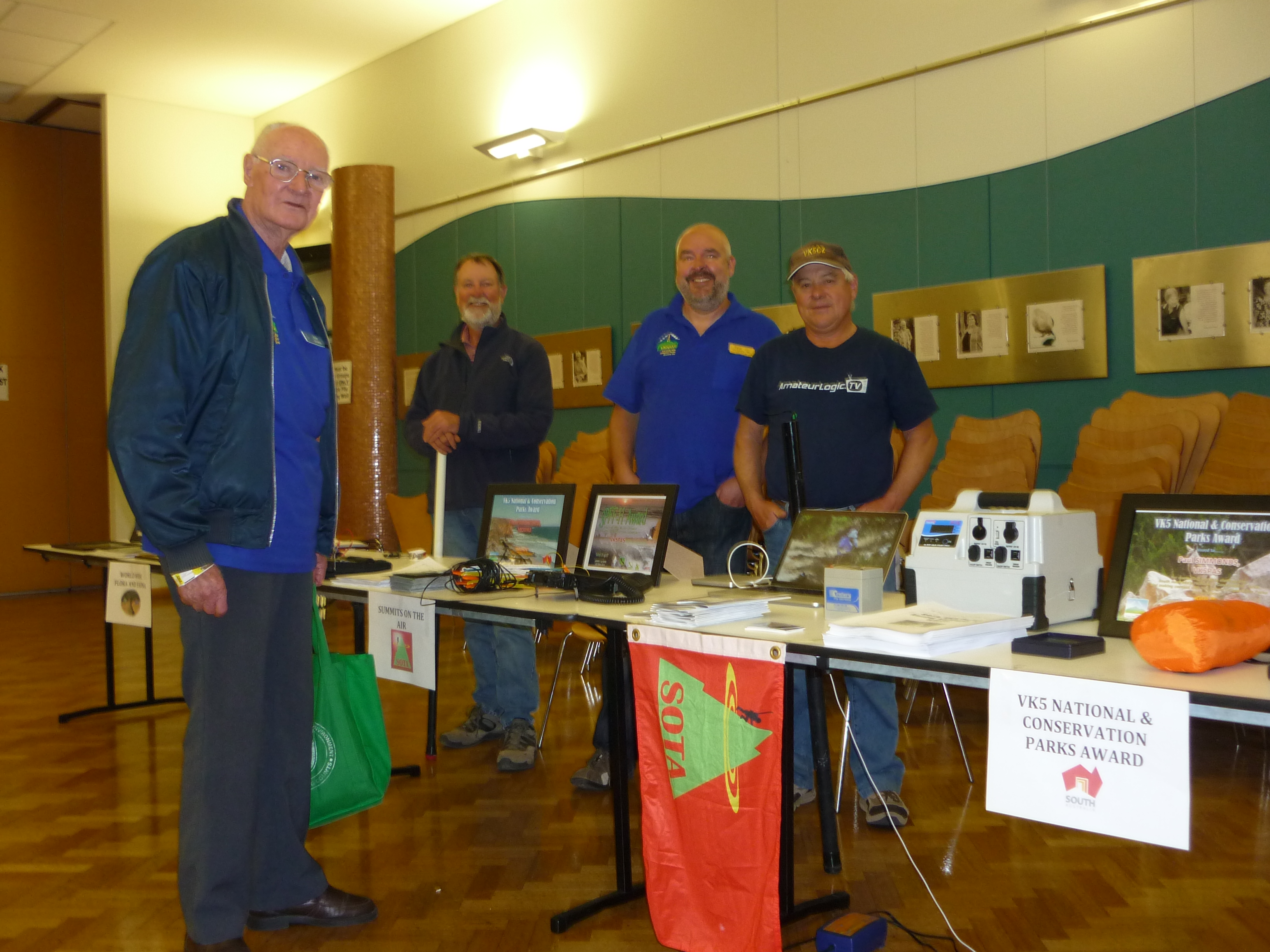
Yesterday (Sunday 2nd November, 2014) was the annual Adelaide Hills Amateur Radio Society (AHARS) Buy and Sell, held at the Goodwood Community Hall, Rosa Street Goodwood.

As per last year, myself and Ian VK5CZ set up a display for:

  • Summits on the Air (SOTA)
  • VK5 National & Conservation Parks Award
  • World Wide Flora Fauna (WWFF)

This year we were ably assisted by Hugh VK5NHG.

During the day we had numerous people come up to the display, who were very keen on becoming involved with one or all of the programs.  Maybe we had an impact, as Ross from Strictly Ham who was at the buy and sell, sold out of Yaesu FT-817nd’s in the first 30 minutes.

On display at the table we had a Yaesu FT-817nd, an Elecraft KX3, numerous portable antennas (including home brew and commercial), various batteries (SLAB & LiFePo), my 44 amp hour power pack, tuners for portable use, various accessories including squid poles & bothy bag, various award certificates, and promotional brochures for all 3 programs.

AHARS 008

Above: Rob VK5RG in the foreground.  Rear L-R Hugh VK5NHG, Paul VK5PAS, & Ian VK5CZ

All in all, it was a great day, with lots of interest shown and plenty of stories shared with many activators, chasers/hunters, and future program participants.

Summary of my portable activities

Last evening, I added all my contacts that I have had whilst operating portable, to the Logbook of the World (LOTW) and Clublog systems.  As a result I was able to find out the total number of QSO’s I had attained whilst either sitting in a park or on a peak for the Summits on the Air (SOTA) program.  I also checked off on my spreadsheets, those South Australian National Parks and Conservation Parks that I had activated, and also National Parks for both the Keith Roget Memorial National Parks Award (KRMNPA) and the World Wide Flora Fauna (WWFF) program.  Here’s what I found….

VK5 National and Conservation Parks Award.

  • I have activated 10 of the 21 SA National Parks.
  • I have activated 80 of the 266 SA Conservation Parks.
  • I have activated a total of 90 VK5 parks (combined National Parks & Conservation Parks).
  • I have had a total of 126 South Australian park activations (as some of those parks I have visited twice)
  • My most activated park is Belair NP.
    • not surprising really considering it is just a short distance from my home.

IMG_1475

Keith Roget Memorial National Parks Award (KRMNPA)

  • I have activated 4 Victorian National Parks:
    • Grampians NP, Little Desert NP, Murray Sunset NP, and Wyperfeld NP.
  • I have worked 42 of the 45 Victorian National Parks
    • I need Erinundra NP, Lind NP, & Snowy River NP.

IMGA0037_2

World Wide Flora Fauna (WWFF).

  • I have activated a total of 15 WWFF parks
  • I have activated parks in three separate countries:
    • Australia, Belgium, & Germany
  • I have worked 172 WWFF parks around the world from 26 different DXCC entities.
    • the majority of those being from Australia (237), followed by Germany (17) and Italy (17).

IMGA0047_4

Summits on the Air (SOTA).

  • I have a total of 75 activations and 183 activator points.
  • I have activated summits in4 different Associations in 3 different countries.
    • DM (Germany)
    • ON (Belgium)
    • VK3
    • VK5
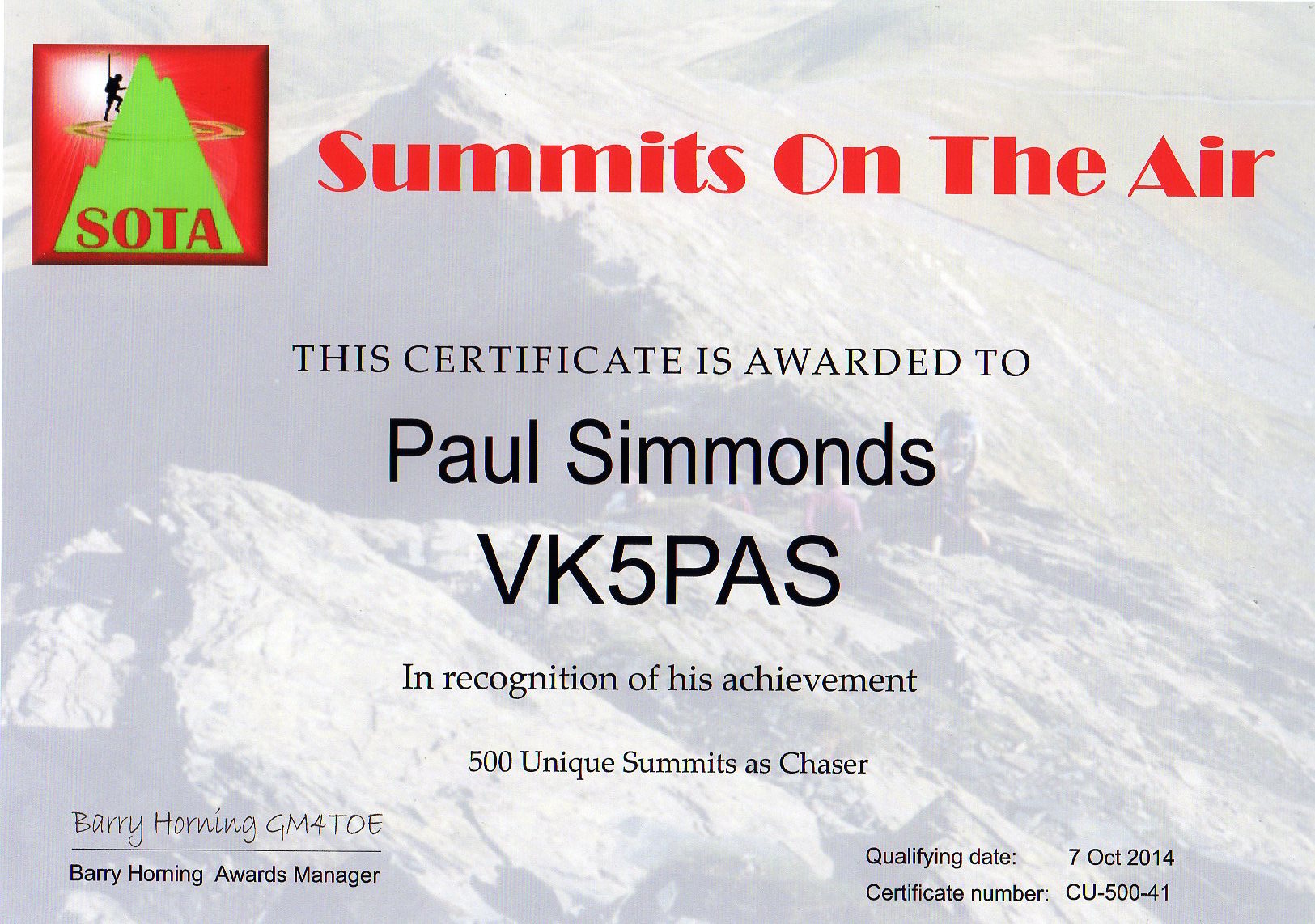
  • I have worked 1,271 activators and have 5,804 chaser points
  • I have worked 503 unique summits

IMGA0067

Other info.

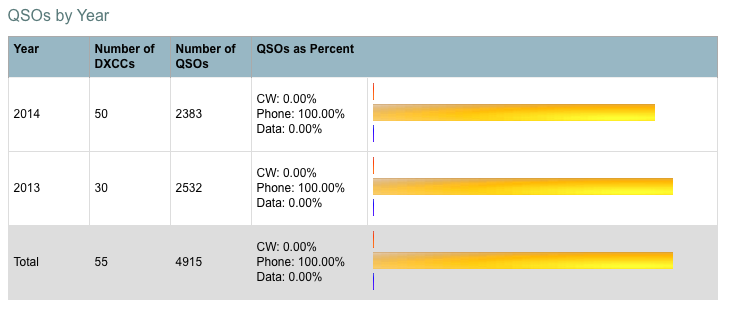
I have had nearly 5,000 QSO’s whilst operating portable.  As you can see from the table below, I am 149 QSOs less than last year, with about 2 months remaining in 2014.

Screenshot 2014-10-29 15.14.01

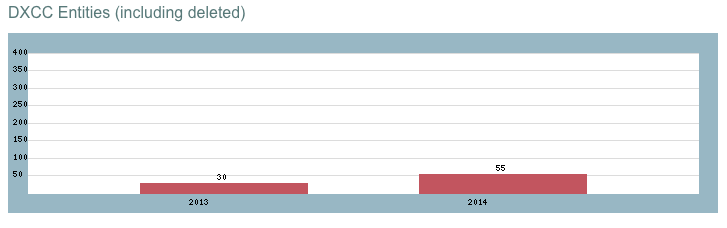
I have worked 50 DXCC entities this year, compared to 2013 when I worked 30.

Screenshot 2014-10-29 15.18.46

I have worked a total of 52 DXCC entities whilst operating portable.  I have worked 52 DXCC entities on 20m SSB, and 8 on 40m SSB.  The vast majority of those has been whilst operating QRP with just 5 watts.

Here is a list of the DXCC entities I’ve worked whilst portable.  I’m only half way to ‘portable’ DXCC.

  1. Asiatic Russia
  2. Australia
  3. Austria
  4. Azores Islands
  5. Baeleric Islands
  6. Belarus
  7. Belgium
  8. Brazil
  9. Canary Islands
  10. Chatham Islands
  11. Costa Rica
  12. Croatia
  13. Czech Republic
  14. Denmark
  15. Ecuador
  16. England
  17. Estonia
  18. European Russia
  19. Federal Republic of Germany
  20. Finland
  21. France
  22. French Polynesia
  23. Greece
  24. Hawaii
  25. Hungary
  26. Ireland
  27. Italy
  28. Japan
  29. Lithuania
  30. Lord Howe Island
  31. Luxembourg
  32. Netherlands
  33. New Caledonia
  34. New Zealand
  35. Norfolk Island
  36. Northern Ireland
  37. Papua New Guinea
  38. Poland
  39. Portugal
  40. Puerto Rico
  41. Republic of Korea
  42. Romania
  43. Saint Helena
  44. Scotland
  45. Serbia
  46. Slovak Republic
  47. Slovenia
  48. Solomon Islands
  49. South Cook Islands
  50. Spain
  51. Sweden
  52. Switzerland
  53. Ukraine
  54. United States of America
  55. Wales

My first ever portable activity was a SOTA activation (VK5/ SE-016) in March, 2013.


Spring Mount Conservation Park

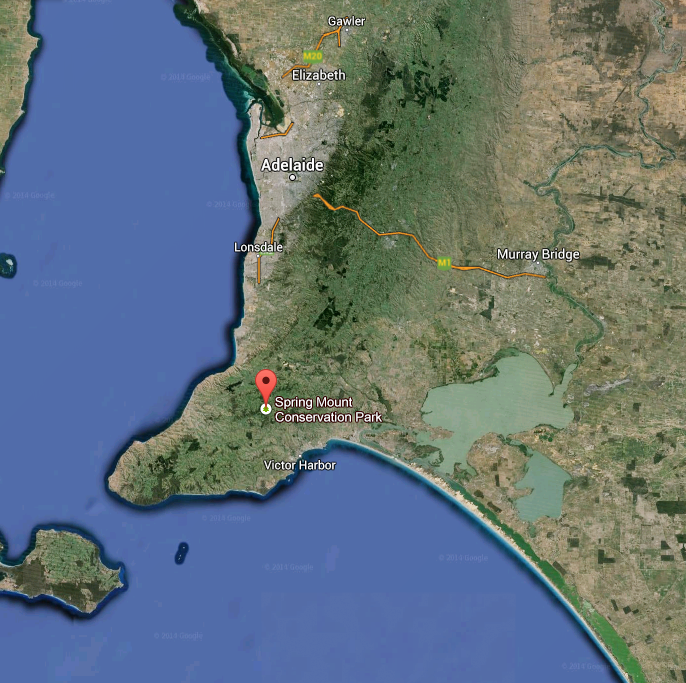
My third and final park activation for Saturday was the Spring Mount Conservation Park, which is located about 71 km south of Adelaide, and about 20 km north west of the seaside town of Victor Harbor.

Screenshot 2014-10-27 20.28.14

Map courtesy of mapcarta.com

I last activated this park in December, 2013, whilst my wife Marija and I were staying at nearby Victor Harbor.  For more detailed information on the park, please refer to my December 2013 post at…..

https://vk5pas.wordpress.com/2013/12/29/spring-mount-conservation-park/

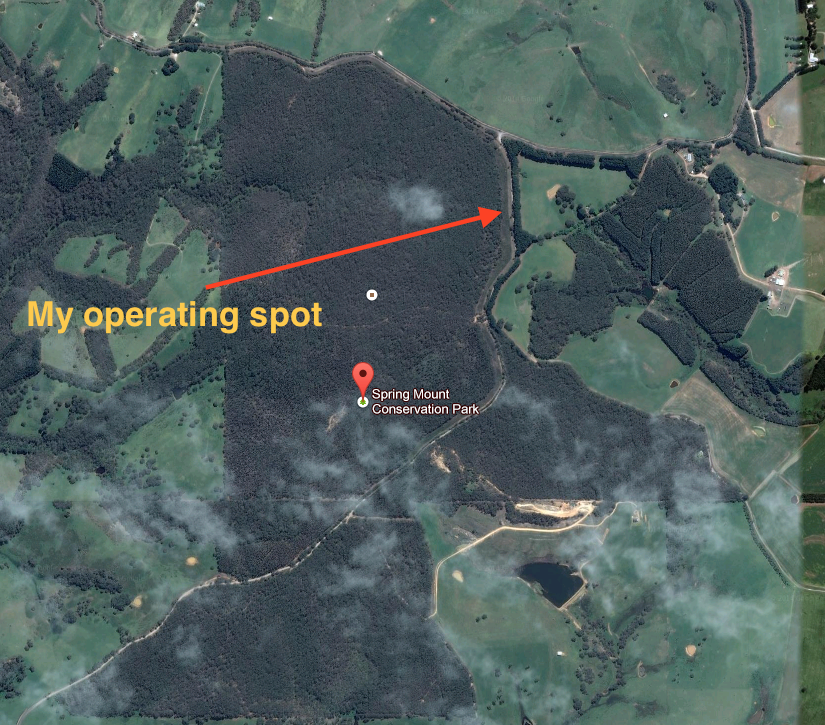
As soon as I approached the park, I encountered my first kangaroo, a Western Grey.  He/she allowed me to get quite close, before they scampered off into the thick bush.  I operated from the same spot as last year, which was on the eastern side of the park, off Mount Alma Road.  There is a nice cleared break between the park boundary fence line and the start of the thick scrub.  So there is plenty of room to string out a dipole.  I used a permapine post forming part of the fenceline to secure my squid pole with some octopus straps, and ran out the legs of the dipole, also securing them to the fence., so they were about 1.5 metres off the ground.

Screenshot 2014-10-27 20.28.01

Map courtesy of mapcarta.com

Again for this activation I only operated on 40m SSB.  I figured that the 20m band was going to be just too busy with the CQ WW DX Contest, to event attempt to operate from that band.  And again, I used the Yaesu FT-450, 40 watts and the 20m/40m linked dipole (inverted vee)

I had nominated that I was going to operate on 7.095, however when I tuned to that frequency, I found that there were some very strong Europeans already there.  So I tuned down to 7.090, and although there were some European signals there as well, they were a little weaker.  I only put out one CQ call on 7.090 and was immediately greeted by Scott VK7NWT from North West Tasmania with a very strong 5/9 plus signal.  This was followed by Peter VK3PF running QRP 5 watts, and then park stalwart Brian VK5FMID in Mount Gambier.  I was pleasantly surprised when I was called by Wolfgang VK2LKW who was operating portable from the Burrowa Pine Mountain National Park in Victoria.  Wolfgang had a beautiful 5/9 plus signal (20/9) with his G5RV inverted vee antenna.  This park qualifies for both the Keith Roget Memorial National Parks Award and the World Wide Flora Fauna (WWFF) program.

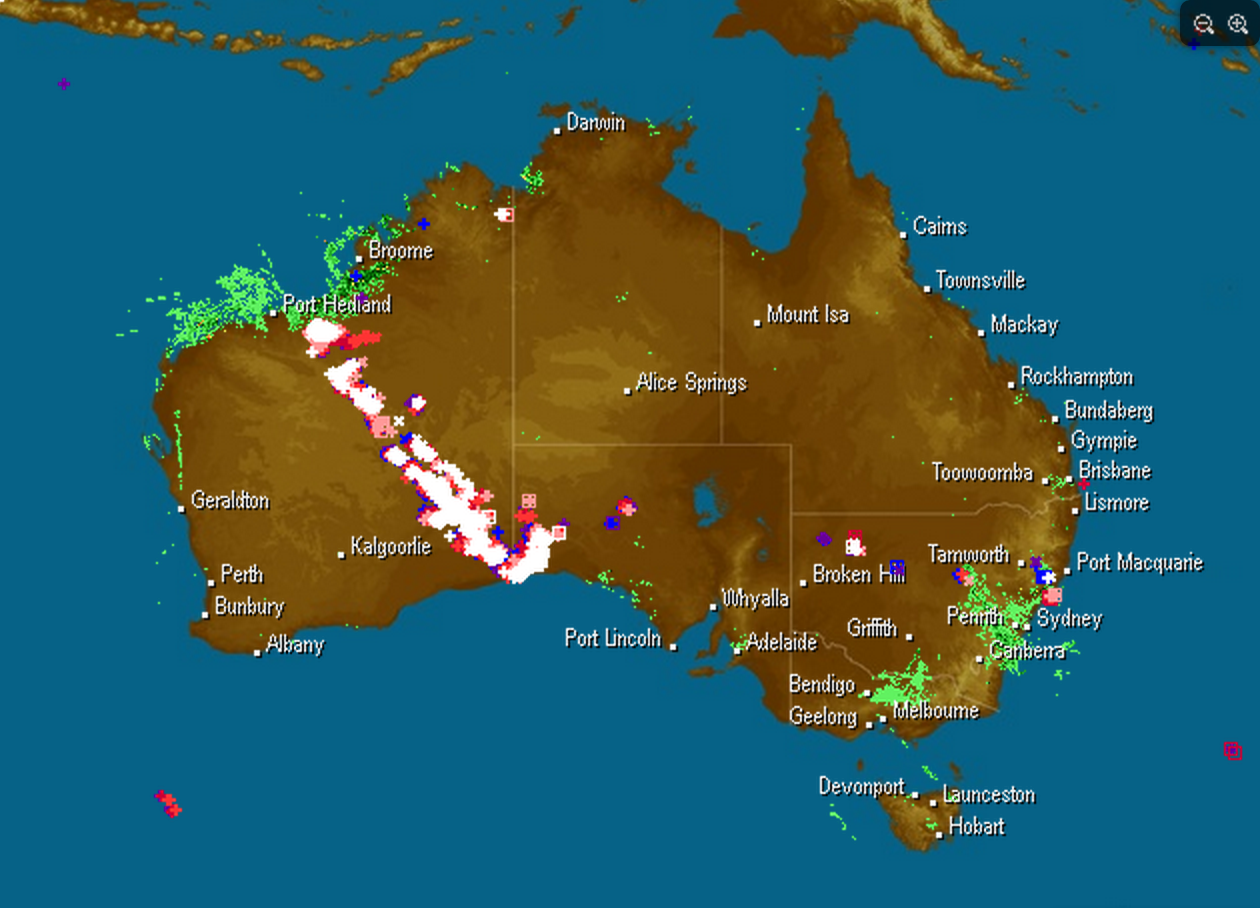
Conditions on 40m SSB were excellent.  There were some static crashes on the band, but they were not severe, and the man made noise floor within the park was non existent.  Here’s where the static crashes were coming from (a severe storm approaching South Australia, from Western Australia)…..

Screenshot 2014-10-25 22.23.46  Image courtesy of weatherzone.com.au

I had a steady flow of callers from VK2, VK3, VK5, VK6, and VK7.  And some of those stations had extremely strong signals, with many between 20/9 to 40/9.  Many were using QRP, including Peter VK3PF on 5 watts, Damien VK5FDEC using 5 watts, Wolf VK5WF again on his home brew QRP transceiver, and Ian VK5IS in the Mid North of South Australia, using just 5 watts.

It was nice to get a few VK7’s in the log this time.  As mentioned my first contact was with Scott VK7NWT.  But I also had a good chat to John VK7JB who had a lovely signal coming in from Sandy Bay near Hobart.  t was also pleasing to get a contact with Bruce VK2FBJM.  I was Bruce’s first ever contact to VK5.  And my last contact of the night was with Daniel VK6LCK at Cottesloe in Western Australia.  Daniel was my only VK6 for this activation.

This slideshow requires JavaScript.

Whilst I was operating, a couple of Western Grey kangaroos emerged from the scrub and were feeding on the grass in the break between the fenceline and the scrub.  At one point, they got within 50 metres of me and didn’t seem at all preturbed by the noise from the radio. That was until a passing car on Mount Alma Road, and off they went into the scrub.  But they soon re-emerged.

It was starting to get very chilly, and getting dark, and I had a long drive home.  I had also left my jacket at home!  So I decided to ‘pull stumps’ and head off home for some dinner and a nice bottle of red.  A shame really, because band conditions were very good, and there were still some people calling when I went QRT.  After an hour and 10 minutes in the park, I had a total of 29 contacts in the log from VK2, VK3, VK5, VK6, and VK7.

The following stations were worked on 40m SSB:-

Scott VK7NWT; Peter VK3PF; Brian VK5FMID; Nev VK5WG; Damien VK5FDEC; Ian VK5CZ; Bruce VK3NDM; Wolfgang VK2LKW/p (Burrowa Pine Mountain NP); John VK2FALL; Les VK5KLV/p; Ivan VK5HS; Nigel VK5NIG; Wolf VK5WF; Garry VK3FREQ; Connor VK2FCAC; John VK5FMJC; Grant VK3GMV; Bruce VK2FBJM; John VK7JB; Frank VK3GFS; Tim VK5AV; Amanda VK3FQSO; Peter VK5NAQ; Ian VK5IS; Colin VK3ZZS/p; Graham VK5KGP; Peter VK5JP; Ron VK3JP; and Daniel VK6LCK.

Yulti Conservation Park

After my activation at the Stipiturus Conservation Park, I headed off to the Yulti Conservation Park, which is located about 60 km south of Adelaide and about 3 km south east of Myponga.

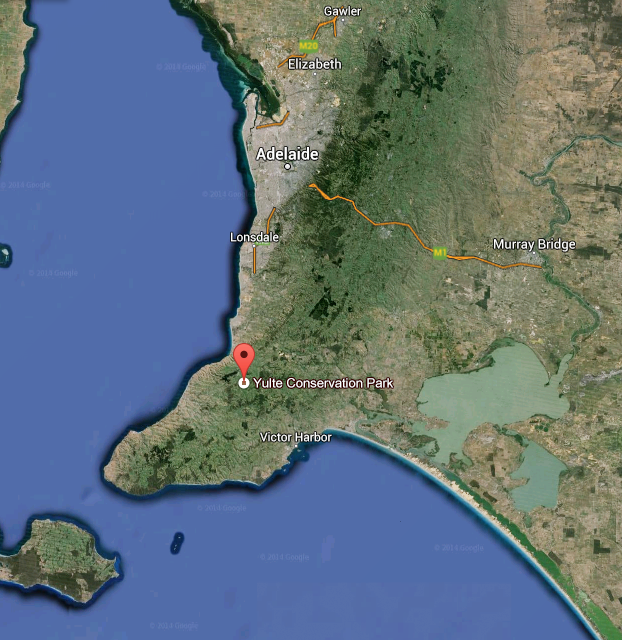
Screenshot 2014-10-27 19.14.04Map courtesy of mapcarta.com

Again, I had activated this park in October, 2013, so this new activation was awarded another one point for the VK5 National and Conservation Parks Award.  Yulti Conservation Park is also referred to as Yulte Conservation Park.  As I mentioned in my 2013 post, the DEWNR website records the spelling as Yulte, and yet the sign in the park shows the spelling to be Yulti.  The road leading to the park is spelt as Yulte.  Since my last activation, I’ve located some information which suggests that the park derives its name from the Kaurna aboriginal word ‘yulti’ meaning stringybark.

For more detailed information on this park, please see my 2013 post…..

https://vk5pas.wordpress.com/2013/10/14/yulti-conservation-park/

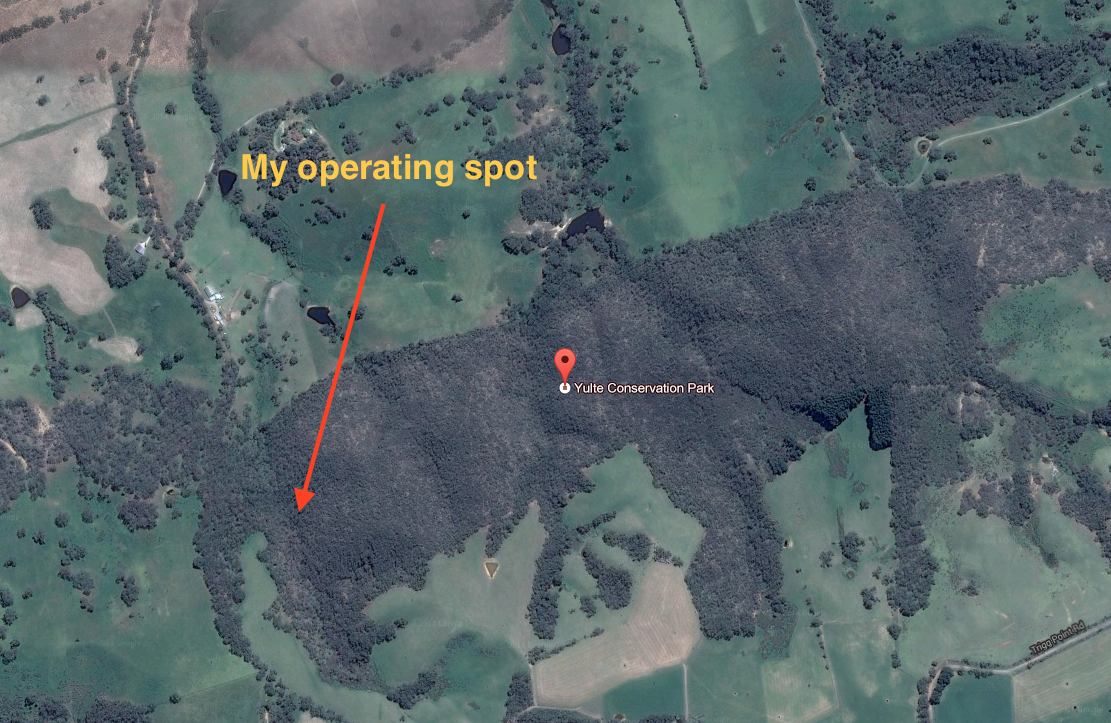
I set up int he same spot as last year, which was at the end of the dirt track on Yulte Road.

Screenshot 2014-10-27 19.14.34

Map courtesy of mapcarta.com

Again I used the Yaesu FT-450, 40 watts, and my 40m/20m linked dipole, supported on the 7 metre squid pole.  I started off on 7.095 mhz on 40m, and first station in the log was Dave VK3VCE at Bamawm near Echuca in northern Victoria.  This was followed by regular park hunter, Nev VK5WG at Crytal Brook, and then Les VK5KLV who was portable near Port Augusta.

As per the last activation, the conditions on 40m SSB seemed very good, with some very strong signals coming in from VK3 and VK5.  It was again pleasing to get some calls from QRP operators including Ian VK5CZ running 5 watts from the Clare Valley, Peter VK3PF running about 1 watt from his software defined radio, Wolf VK5WF running 5 watts from his home brew transceiver, and Greg VK2FGJW also running just 5 watts.

This slideshow requires JavaScript.

I did ‘t bother trying 20m for this activation, as the band would have been just too busy with the CQ WW DX contest.  So sadly I didn’t get any VK4’s or VK6’s in the log for this activation.  However, I did attain a total of 22 contacts into VK2, VK3, and VK5 after operating in the park for about 45 minutes.

The following stations were worked on 40m SSB:-

Dave VK3VCE; Nev VK5WG; Les VK5KLV/p; Amanda VK3FQSO; Bruce VK5BMC; John VK5FTCT; Terry VK5ATN; Bill VK5WCC; Brian VK3MCD; Peter VK3TKK; Tim VK5AV; John VK5NJ; Col VK5HCF; Brenton VK3CM; Peter VK3ZPF; Brian VK5FMID; Ian VK5CZ; Peter VK3PF; Wolf VK5WF; Greg VK2FGJW; Peter VK5NAQ; and Connor VK2FCAC.


References

Tiechelmann, C.G. and Schurmann, C.W. 1840, ‘Outlines of A Grammar, Vocabulary, and Phraseology of the Aboiriginal language‘.

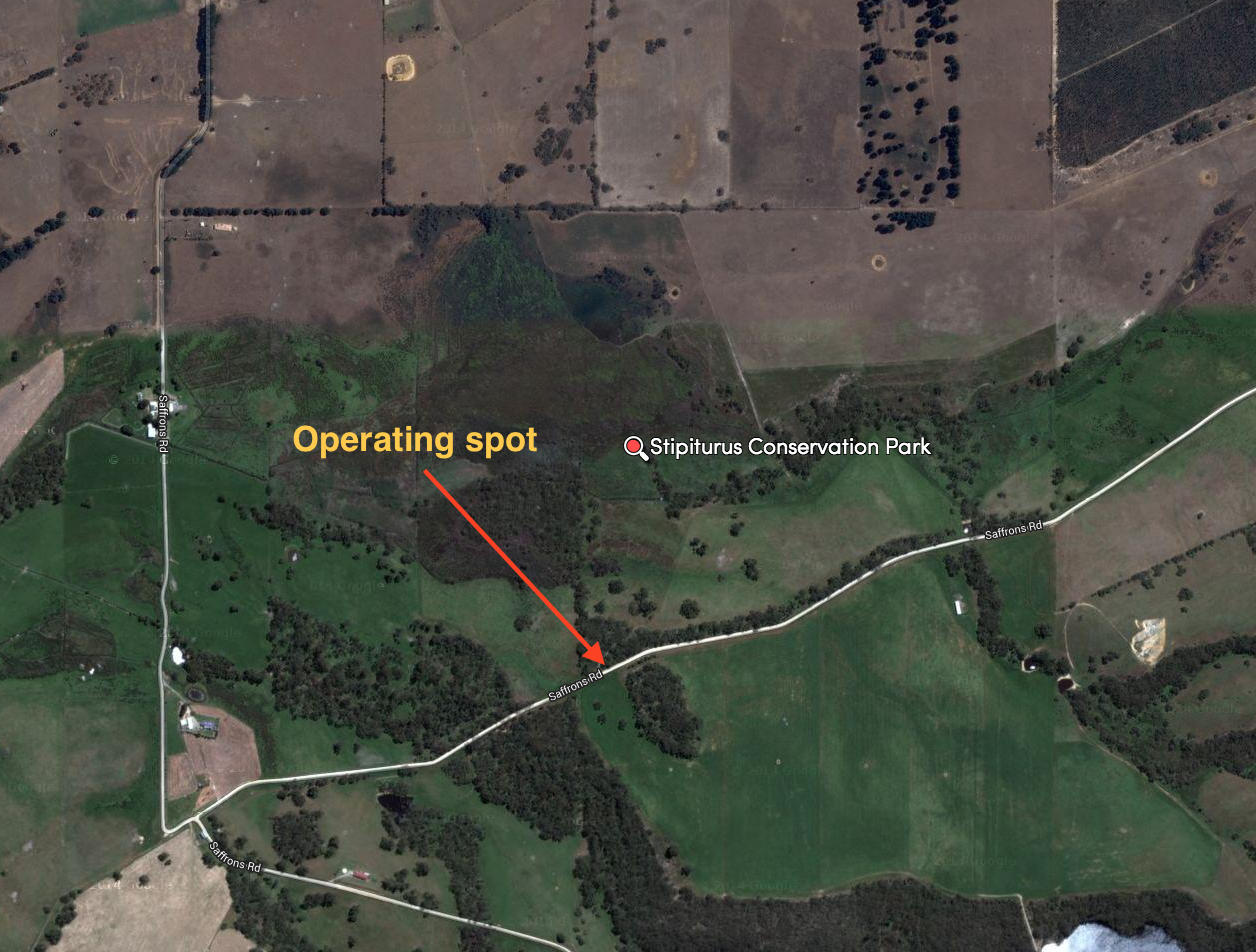
Stipiturus Conservation Park

On Saturday 25th October, 2014, I ventured down to the Fleurieu Peninsula, south of Adelaide, where I activated three Conservation Parks.  The first being the Stipiturus Conservation Park, which is located about 58 km south of Adelaide, and about 6 km south west of the little town of Mount Compass.

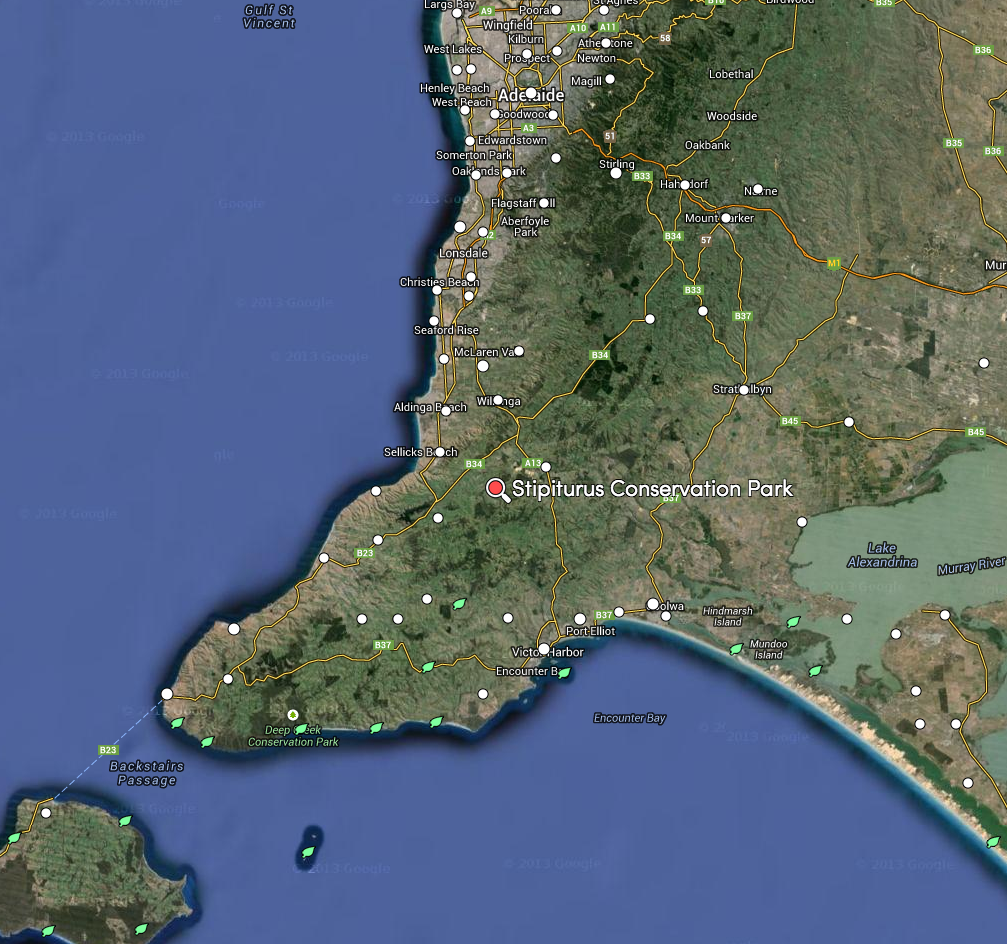
Screenshot 2014-10-26 20.45.40

Map courtesy of mapcarta.com

I had activated this park in October, 2013.  But as this was a new calendar year, I could pick up another point towards the VK5 National and Conservation Parks award.  Please have a read of my previous post for some interesting facts about the park…..

https://vk5pas.wordpress.com/2013/10/13/stipiturus-conservation-park/

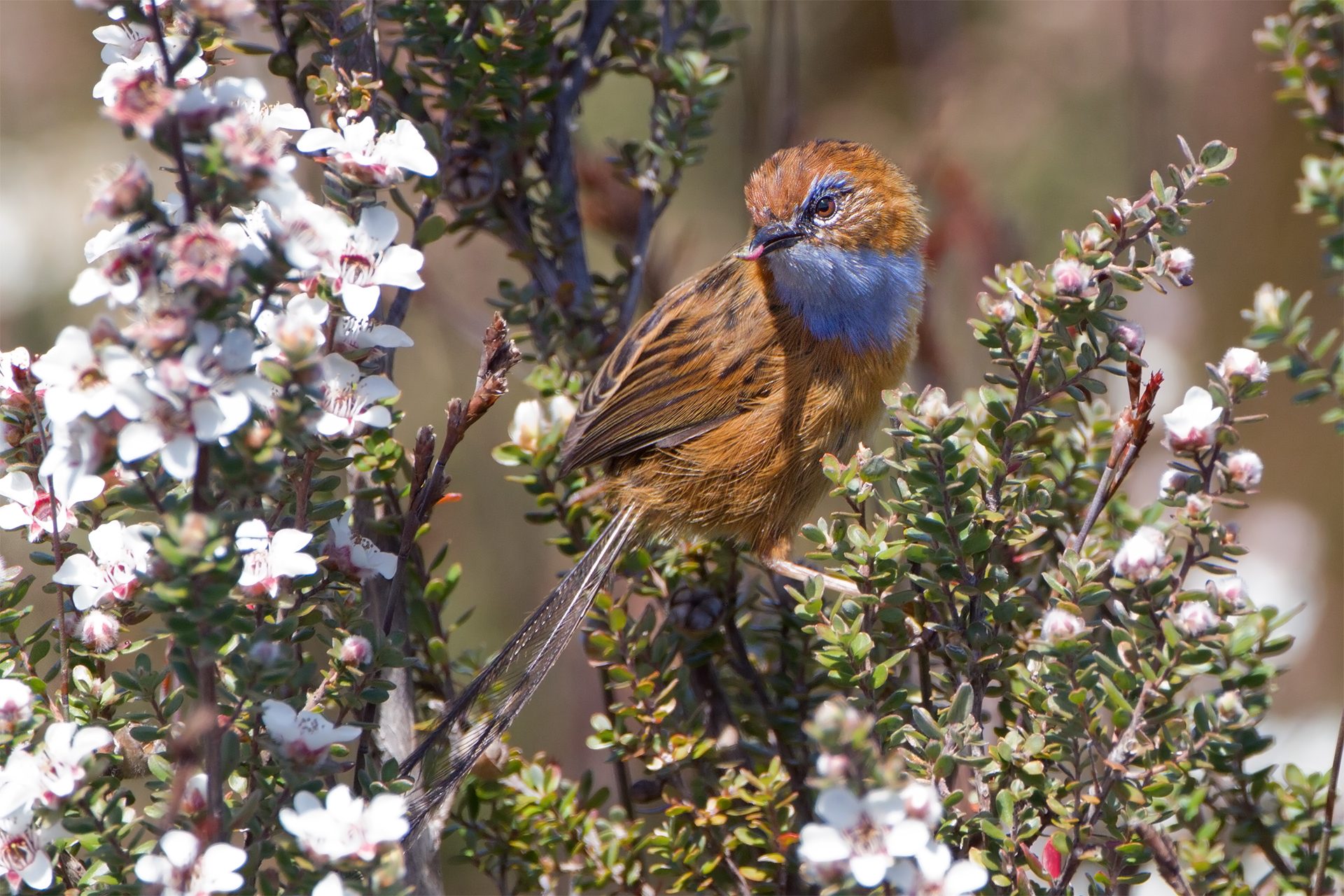
The park is home to one of the largest known swamp-based population of the nationally endangered Mount Lofty Ranges Southern Emu-wren (Stipiturus malachurus intermedius), after which the park was named.  Below you can see a photograph of this beautiful little bird.  I did see a few whilst in the park, along with many Superb Blue wrens, and a variety of other birdlife including rosellas and wattlebirds.

Stipiturus_malachurus_-_Southwest_National_Park

Image courtesy of wikipedia.com

I accessed the park by travelling west along Lanacoona Road from Mount Compass, and then south along Saffrons Road.  As you travel south along Saffrons Road you will reach a sharp left hand bend.  Once you’ve passed the bend, continue east along Saffrons Road, and you will see the park on your left after a few hundred metres.  It is well sign posted.  There is a locked gate on the south western corner of the park.  To access the park you need to climb over the gate or the fence.  Careful of the barbed wire.  I can understand DEWNR’s reasoning for locking the gate to keep the ‘trouble makers’ out.  However, what it also does is keep the good people out as well.  I’ve encountered this quite a bit with a number of Conservation Parks as I’ve travelled around South Australia….having locked gates.  My own personal experience is that the ‘bad element’ will get into places if they really want to, no matter what the security measures are.  I am sure that there are a lot of less nimble people that don’t bother going in these parks once they see they have to scramble over fences.  You need ‘good’ people around these parks, to prevent the ‘bad’ people.  Just my opinion.

Screenshot 2014-10-26 20.40.46

Map courtesy of mapcarta.com

After setting up the deck chair and fold up table just off the small dirt track which traverses the park, I erected the 7 metre squid pole and attached the 40m/20m linked dipole.  I ran out one leg of the dipole, and then the other, and noticed that one of the leads to the crocodile clip had broken off.  Fortunately I had another dipole in the car, so I retrieved that and erected it on top of the squid pole.  For this activation I ran the Yaesu FT-450 and 40 watts output, with the radio powered by my 44 amp hour power pack.

I tuned to 7.095 and asked if the frequency was in use, and was immediately greeted by Larry VK5LY from The Riverland with a very strong 5/9 plus signal.  This was followed by Brian VK5FMID in Mount Gambier, and then Robin VK5TN, also in Mount Gambier.  Fortunately the band appeared to be in far better shape than last Sunday when I was in the Aldinga Scrub Conservation Park, right in the middle of a Coronal Mass Ejection (CME).

A good steady flow of callers gave me a shout from VK3 and VK5.  This included a few amateurs running QRP, including Les VK5KLV operating portable from Blanche Harbor, south of Port Augusta.  Les was running 5 watts from his little Yaesu FT-817 into a linked dipole.  Amanda VK3FQSO also called in, running QRP, 2.5 watts with a nice 5/9 signal.  This was followed by a call from Wolf VK5WF using his home brew transceiver and 5 watts, and then Ian VK5CZ also running just 5 watts.  I also worked a couple of mobile stations….Jesse VK3FJPM mobile, followed by Peter VK3FPSR.  Both had good 5/5 signals and were easily readable from the park due to the low noise floor.

This slideshow requires JavaScript.

At one point I had a VK2 come up on frequency and start calling another station without asking if the frequency was in use.  Thanks to the various stations, including Dave VK3VCE, who repeatedly reminded him that the frequency was in use.  Eventually he got the message and moved on.

After operating on 40m SSB for about 55 minutes, I lowered the squid pole and removed the links in the dipole, and tuned to 14.328 and put out a number of CQ calls.  The band was very busy with the CQ WW DX Contest, and it took some time to find a clear frequency.  Unfortunately my nominated frequency of 14.310 was busy.  I only managed one contact on 20m SSB and that was with VK6SMK.

After an hour in the park I had a total of 27 contacts in the log.  I was already running behind time, so I quickly packed up my gear and headed off to the next park, the Yulti Conservation Park.

The following stations were worked on 40m SSB:-

Larry VK5LY; Brian VK5FMID; Robin VK5TN; Greg VK5LG; Nev VK5WG; Les VK5KLV/p; Nigel VK5NIG; Art VK3OZI/p; David VK5HYZ; Bill VK3WCC; Terry VK5ATN; Amanda VK3FQSO; Wolf VK5WF; Ian VK5CZ; Col VK5HCF; Tony VK5KAT; Marshall VK3MRG/p; Jesse VK3FJPM/m; Dave VK3VCE; Tim VK5AV; Ron VK3JP; David VK5NQP; John VK5FTCT; Peter VK3FPSR/m; Basil, VK5BK; and Doug VK3FJAE.

The following station was worked on 20m SSB:-

Steven, VK6SMK.

Talk at SCARC

On Thursday 23rd October, 2014 I ventured down to the Seaford Meadows clubrooms of the South Coast Amateur Radio Club (SCARC) and delivered a presentation on the VK5 Parks National and Conservation Parks Award, the World Wide Flora Fauna (WWFF) program, and equipment used for portable operation.

A very keen group of about 20 amateurs attended.

I spoke about the basics of the VK5 Parks award and WWFF program.  And I also spoke briefly about various transceivers that can be used for portable operation, portable power sources, and antennas for portable use.  I brought along some of my portable gear including the Yaesu FT-817nd, my 44 amp hour power pack, various antennas, bothy bag, etc.

Thanks to Peter VK5PET for asking me to come down to SCARC.

image_1_hires