Birdcage Flora and Fauna Reserve VKFF-2268

After packing up at the Sheepwash Flora Reserve Marija and I travelled back to the Western Highway and headed towards the town of Jeparit.  We had briefly visited Jeparit a few weeks earlier and we were keen to have a better look at the town and the Wimmera Mallee Pioneer Museum.

We travelled passed the Kiata Wind Farm which is one of a number of wind farms in the Wimmera district of Victoria.

DSC_6396

We soon reached the town of Jeparit which is situated on the Wimmera River about 350 km north-west of Melbourne.  The name Jeparit is believed to be derived from a Gromiluk aboriginal word meaning “home of small birds”.  European settlement in the area commenced in the 1880s when Lutheran immigrants from the Kingdom of Prussia began to settle and grow wheat.  The town was surveyed in 1883 and gazetted in 1889.

IMG_2391

We headed to the Wimmera Mallee Pioneer Museum on the eastern side of the town.  I had read about this little museum on the internet and it looked well worth the visit to discover a little bit of the history of the Wimmera district of Victoria.

DSC_6461

The museum features the Albacutya Homestead which was originally built on Albacutya Run, the region’s first sheep station.  The homestead and log cabins were gifted to the museum in 1969.

There is quite a bit to see here, so allow yourself a few hours to wander around the four-hectare grounds of the museum.

There are numerous buildings which contain various artefacts from the pioneering days of the Wimmera.

I even found a few old radios, including a 1926 Astor Five Valve Family Receiver.  The Astor Radio Corporation commenced operating in 1926.  It was the largest Australian electronics manufacturer, manufacturing across the retail sector of products from Washing Machines to Radio.

In another building, I found some more radios including an Alf Traeger transceiver.  Alfred Traeger was born in 1895 and died in July 1980.  He was an electrical engineer and was asked by John Flynn of the Australian Inland Mission to design a Pedal Operated Radio Transceiver.  The first transmitter was installed in a church as Cloncurry in 1928.  The person who operated the transmitter had to pedal the machine to generate electrical current so that one could transmit by morse code up to a distance of approximately 300 miles.  Later the sets were equipped with batteries and microphones replaced morse code.

The museum also contains two old jails, including the old Heywood jail which dates back to April 1870.

You can also find the old Methodist church from Woorak West which dates back to 1886, the old Detpa State School, a chemist, blacksmith shop, and various other buildings.

The museum has an extensive collection of old cars, trucks, tractors and machinery.  Many are in working order and are demonstrated at the Annual Vintage Rally which is held each year on the Queens Birthday Long Weekend.

This slideshow requires JavaScript.

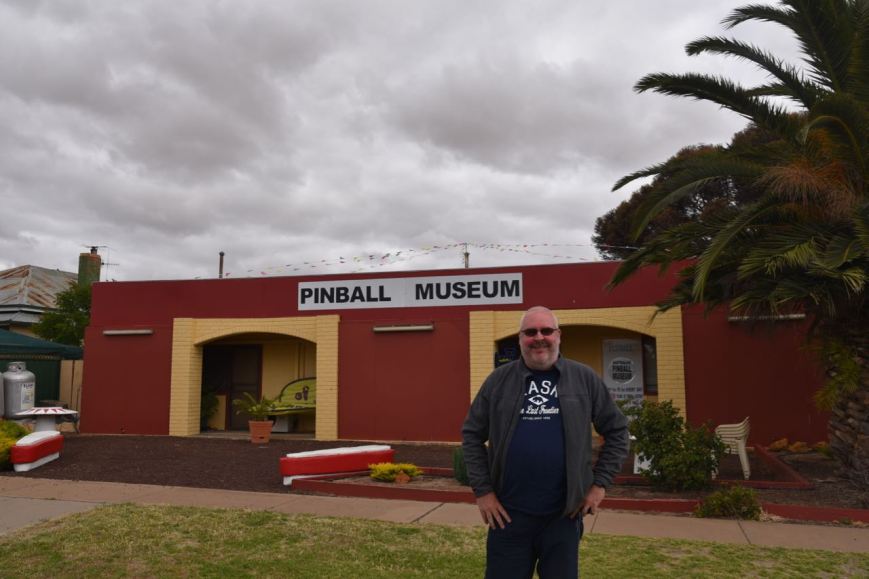
After leaving the museum we had a look at Menzies Square.  The town of Jeparit is the birthplace of Sir Robert Menzies, Australia’s longest-serving Prime Minister.  Menzies was born in Jeparit in 1894.  His father was a local shopkeeper.  Sadly neither Menzies’ home or his father’s shop remains.  One was burnt down while the other was demolished.  Menzies Square features a number of information boards detailing the like of Menzies.

There is also a large outdoor chess set featuring Australian Prime Ministers and Menzies-era politicians.

We then headed west out of town, stopping briefly to have a look at the old wooden bridge spanning the Wimmera River.   The bridge was built in 1891 and was opened in 1892.  It is one of Victoria’s oldest surviving timber road bridges.

We then stopped at Lake Hindmarsh, a eutrophic lake, meaning that it is rich in nutrients and so supporting a dense plant population, the decomposition of which kills animal life by depriving it of oxygen.  The lake is Victoria’s largest natural freshwater lake.  Unfortunately at the time of our visit, the lake was bone dry.

In October 2009, water from the Wimmera River trickled into Lake Hindmarsh for the first time in thirteen years.  After more than a decade of drought, in early 2011 the lake filled as a result of flooding in the region.

Due to a lack of recent rain, the lake is again dry.

In 1838, the explorer, Edward Eyre, camped at Lake Hindmarsh whilst searching for an overland route between Melbourne and Adelaide.  He named the lake after the Governor of South Australia, John Hindmarsh.

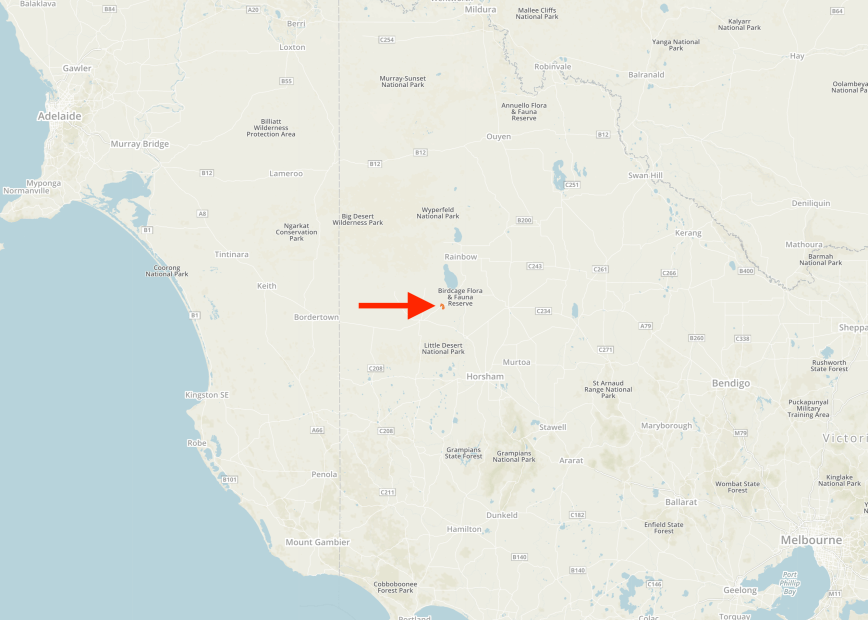
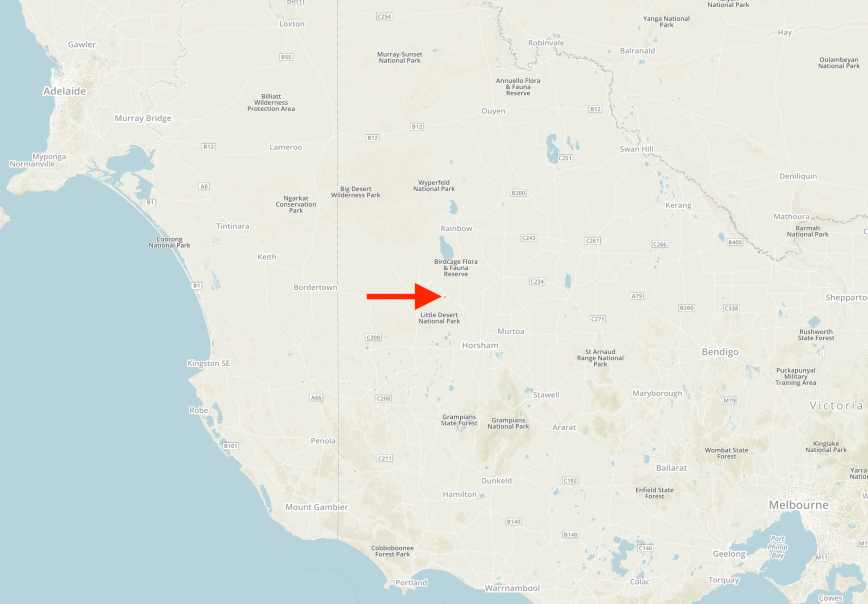
We then drove north on the Rainbow-Nhill Road to our second park of the day, the Birdcage Flora and Fauna Reserve VKFF-2268.  The park is located about 410 km northwest of Melbourne and about 21 km southwest of the town of Rainbow.

Screen Shot 2019-12-05 at 9.07.57 am.png

Above:- Map showing the location of the Birdcage Flora & Fauna Reserve.  Map courtesy of Protected Planet.

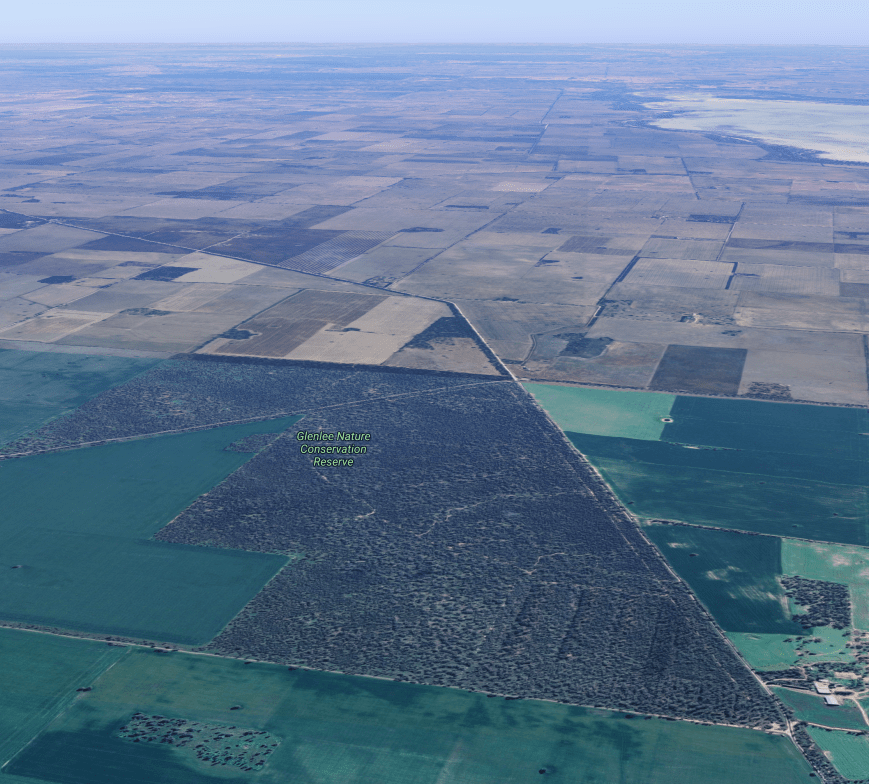
The park is located at the northwestern tip of Lake Hindmarsh.  Just to the northwest of the park is the very large Wyperfeld National Park.

Screen Shot 2019-12-04 at 2.08.06 pm.png

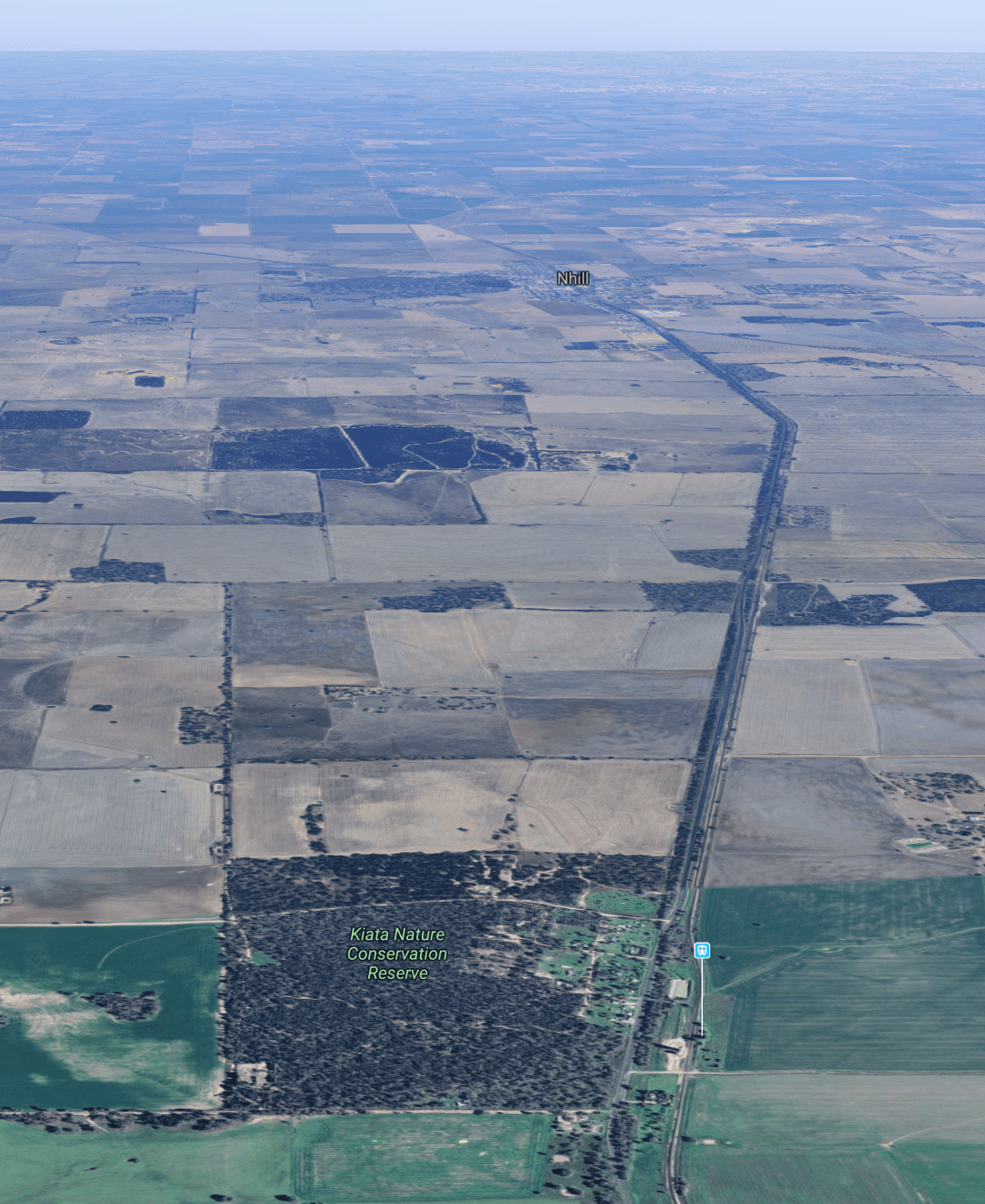
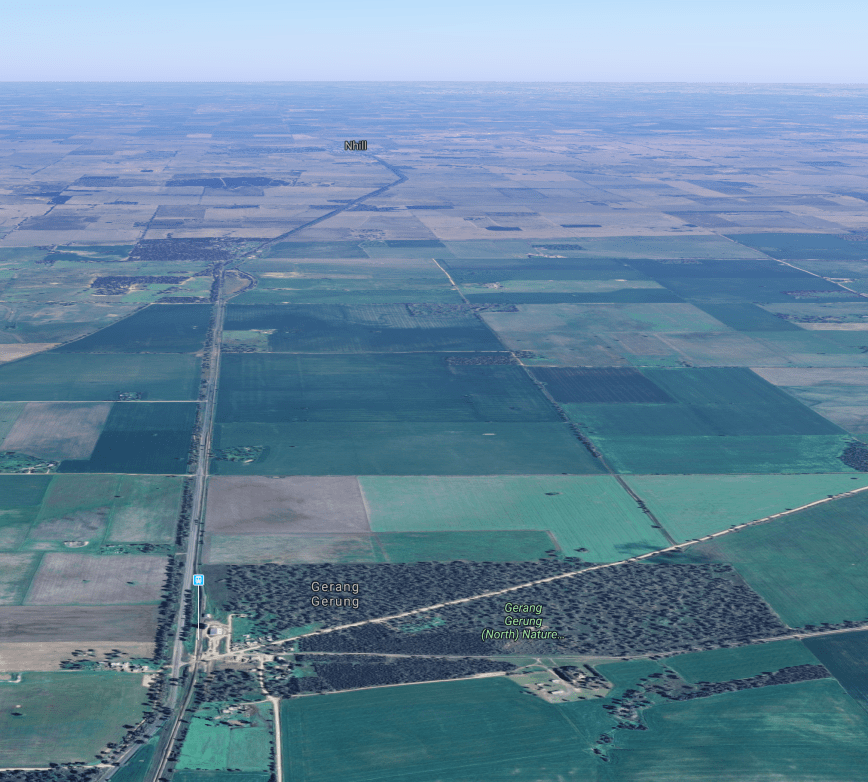
Above:- An aerial view of the Birdcage Flora & Fauna Reserve looking south towards Dimboola.  Lake Hindmarsh is clearly visible.  Image courtesy of Google maps.

The park is about 6,533 acres in size.  The name of the park derives from the number of Mallee birds which are contained within the reserve’s floodplain and Big Desert communities.  The park contains Black Box, Yellow Gum and Slender Cypress Pine.

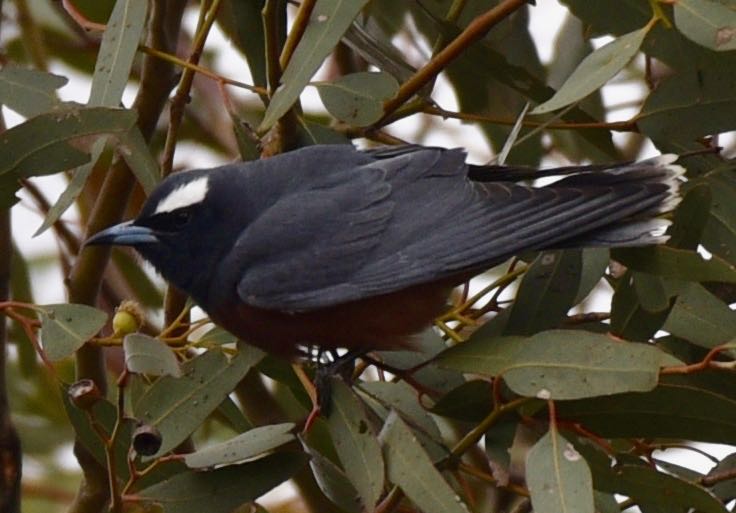
The park was certainly alive with wildlife during our visit, particularly wrens.  Other birds which are known to call the park home include honeyeaters, robins, parrots, Curlew and Gilbert’s Whistler.

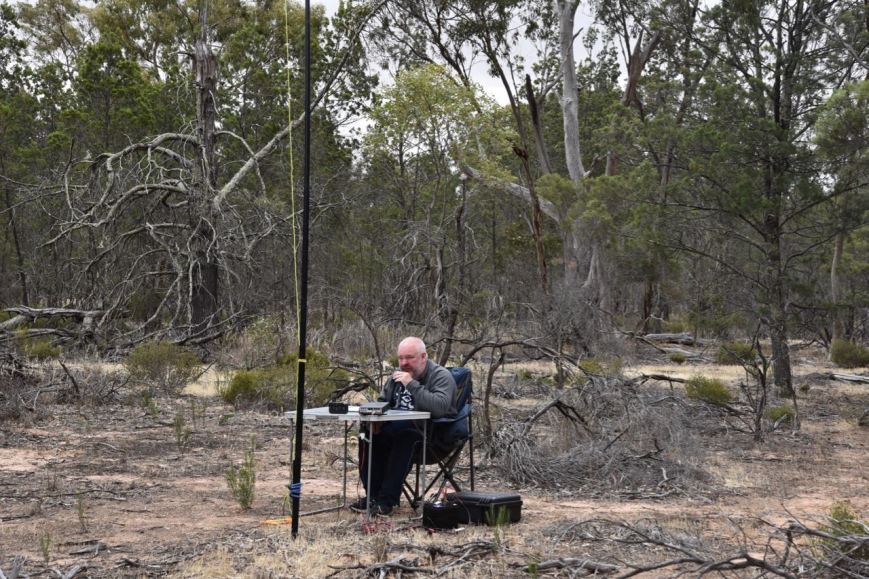
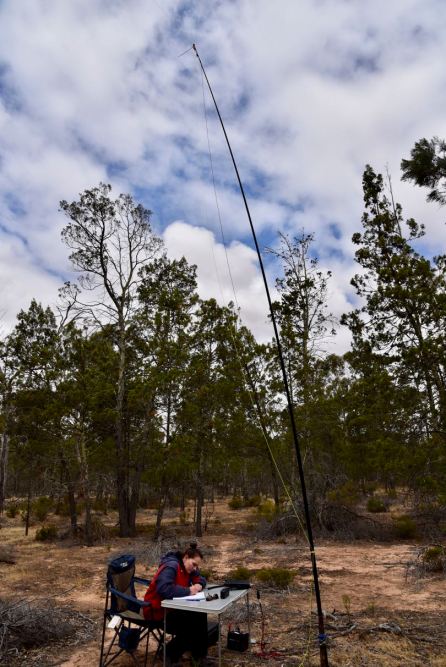
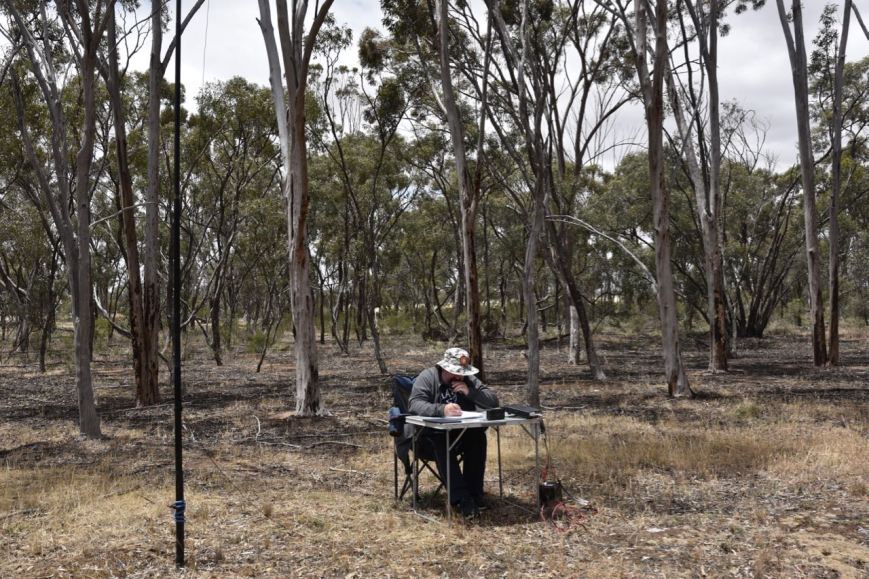
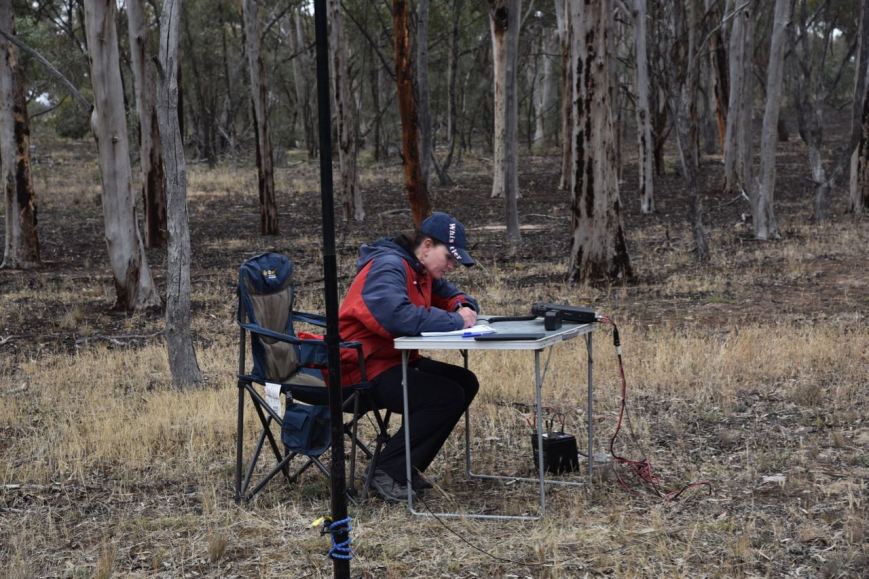
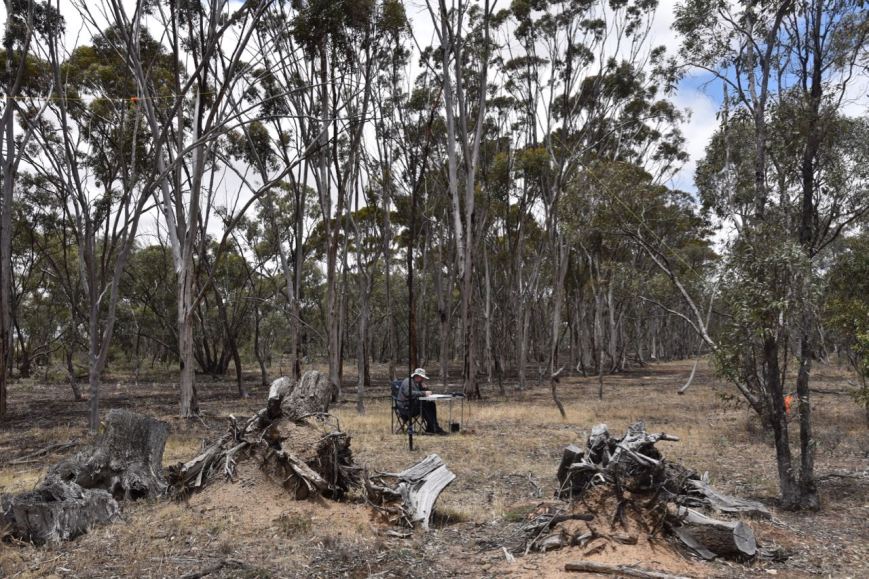
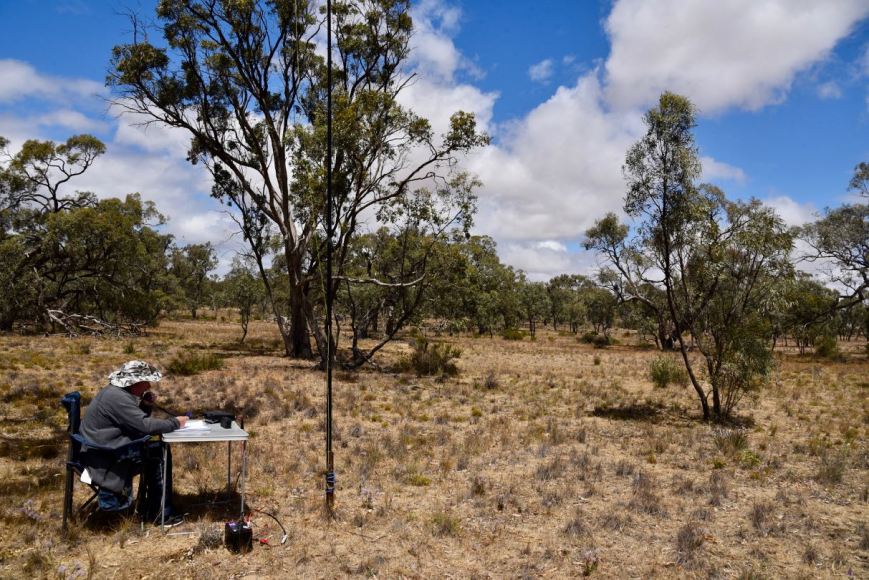
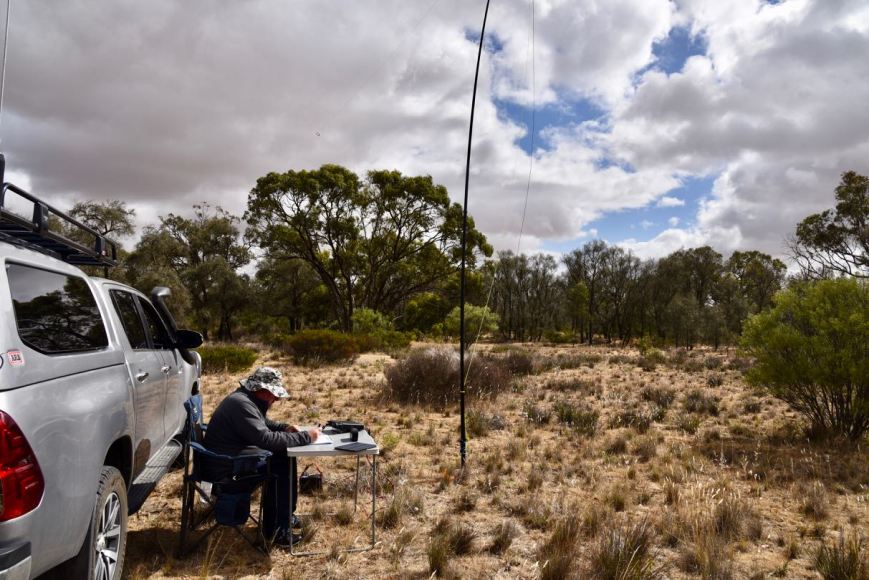
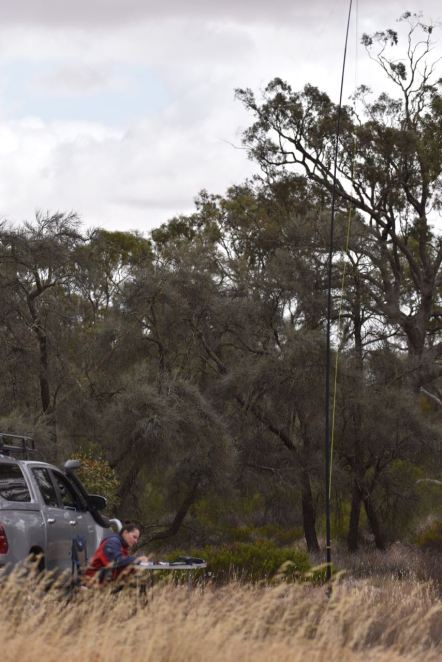
We set up in a clearing amongst the scrub off a dirt track which ran off the Rainbow-Nhill Road.  Equipment used for this activation was the Yaesu FT-857d and the 20/40/80m linked dipole supported by the 7-metre telescopic squid pole.

This would be a first-time activation of this park for the World Wide Flora Fauna (WWFF) program.
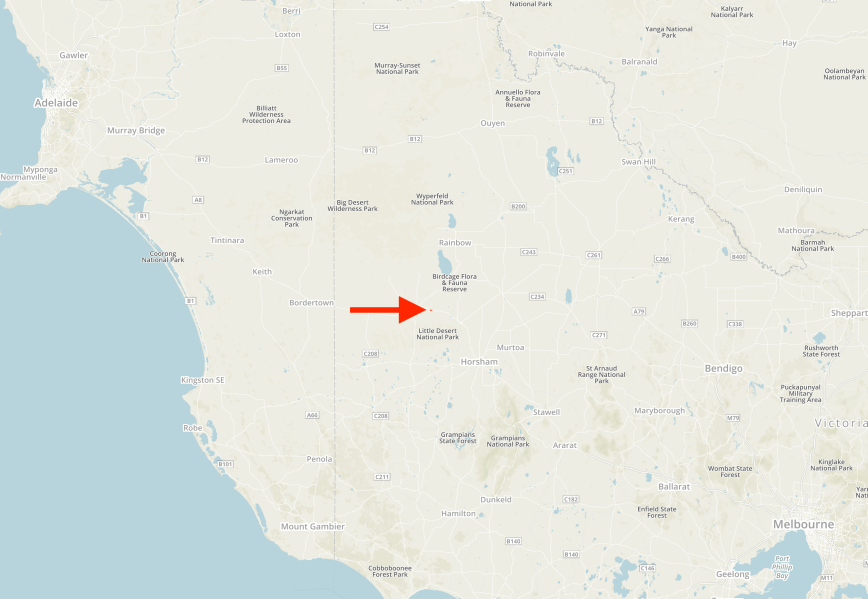
Screen Shot 2019-12-05 at 9.07.39 am

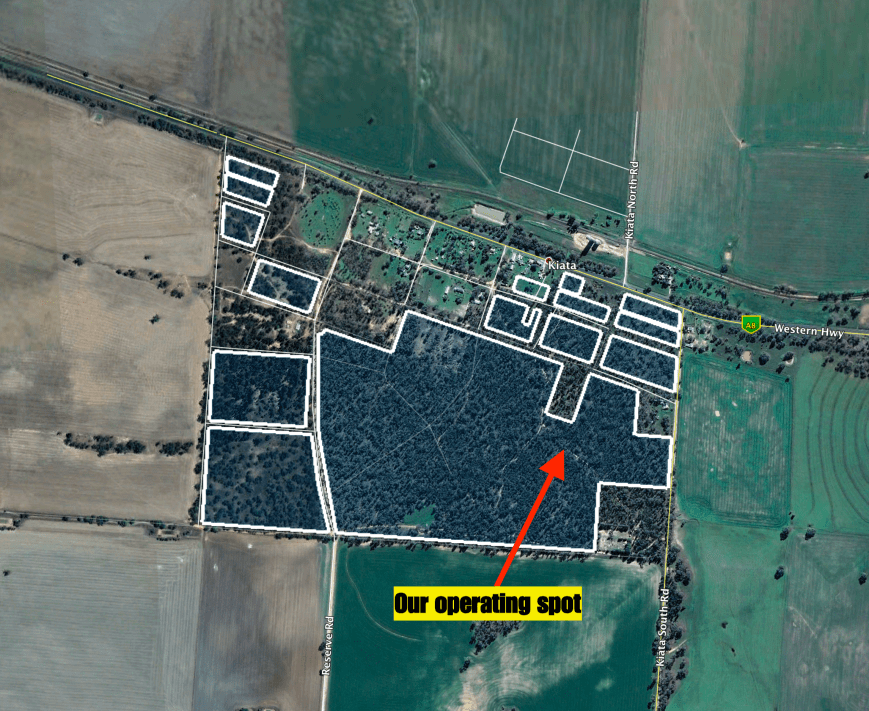
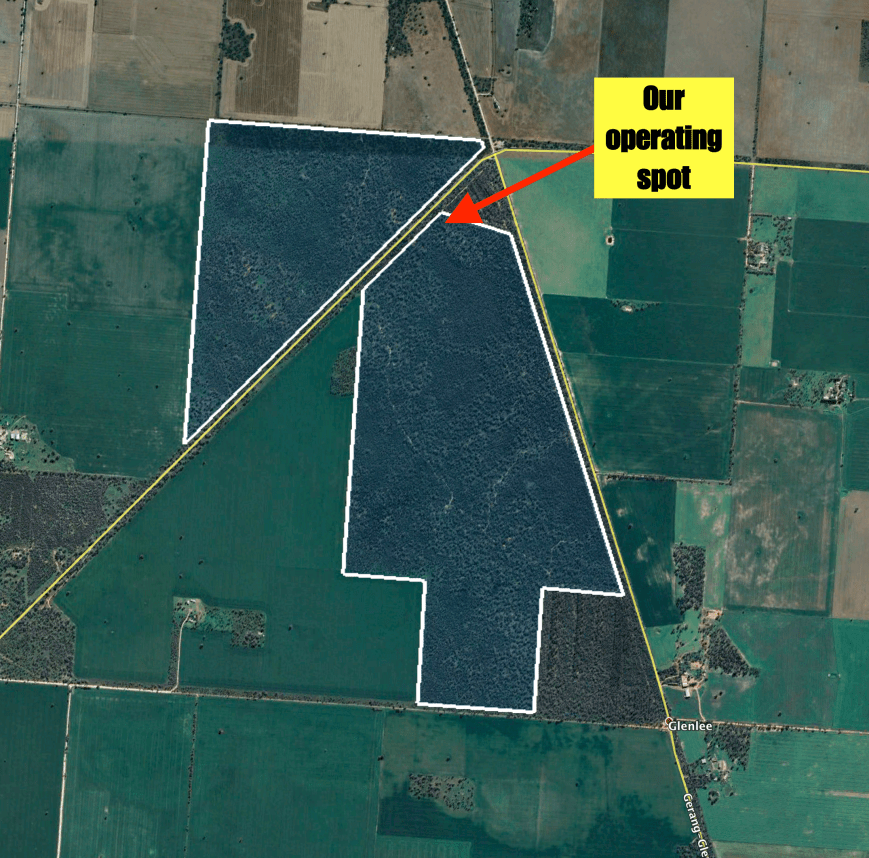
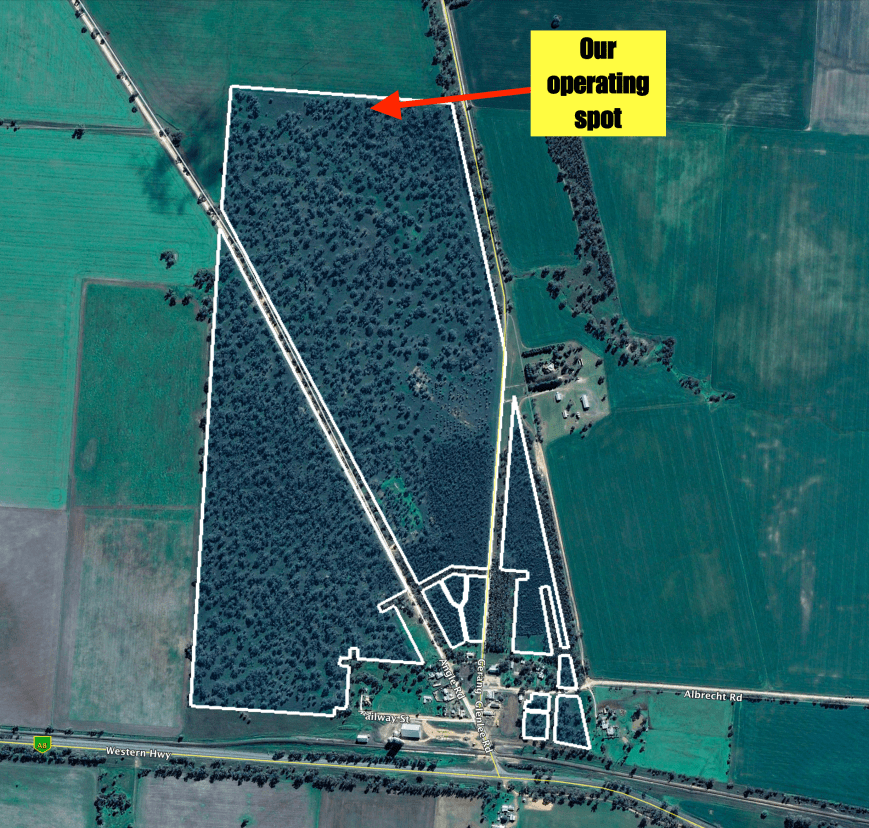
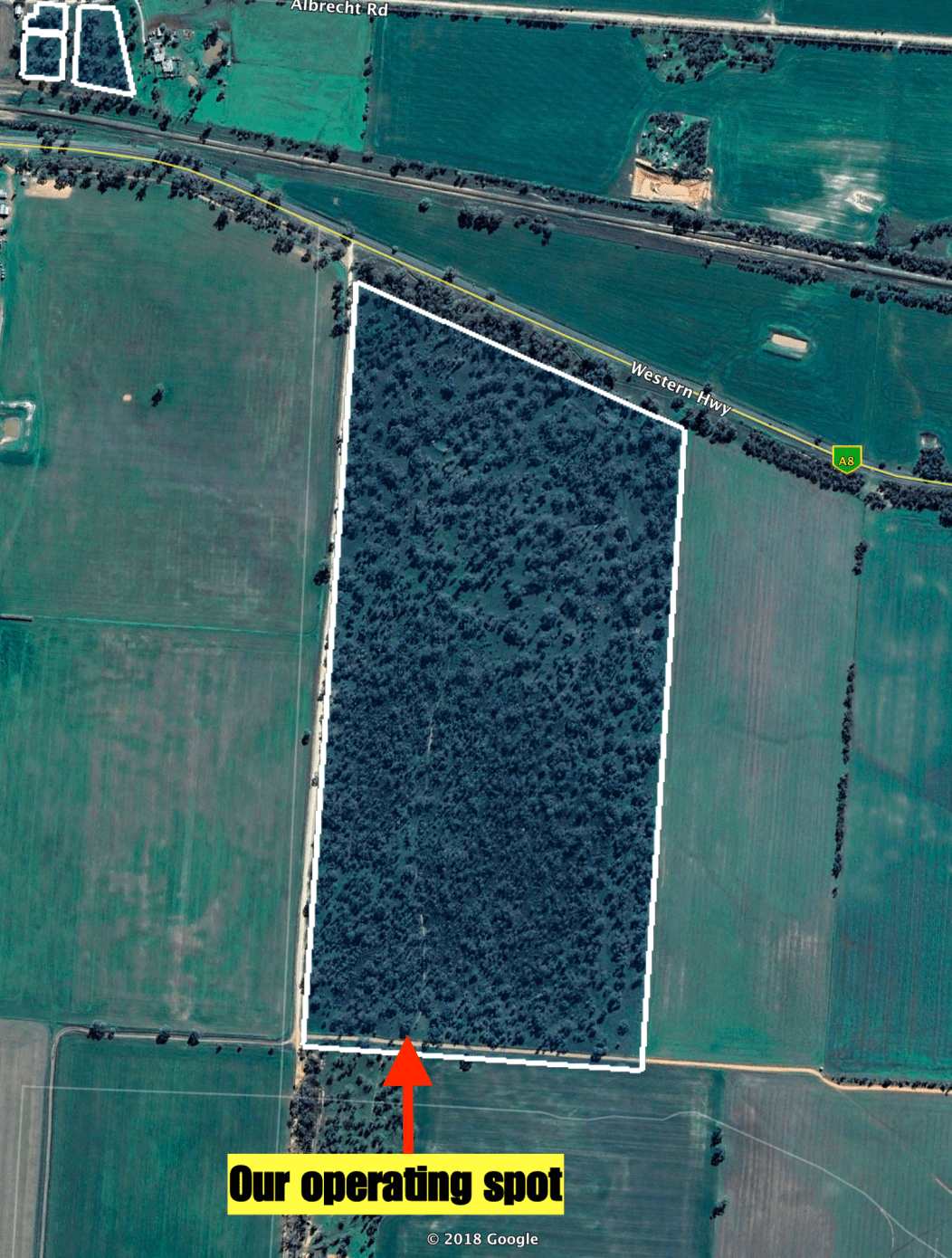
Above:- Map of the Birdcage Flora & Fauna Reserve showing our operating spot.  Map courtesy of Protected Planet.

We were set up and ready to go by around 4.00 p.m. local time.  After a spot being placed up on parksnpeaks by Marija, I headed to 7.144 and called CQ.  First in the log was regular park hunter Peter VK3PF with a beautiful 5/9 signal.  This was followed by another regular Brett VK2VW, Nev VK5WG and then Dennis VK2HHA.

Within 8 minutes I had qualified the park with ten contacts in the log.  Contact number ten was with John VK4TJ who is a very avid park hunter.

I went on to work a total of 38 stations before the callers dried up, so we decided to swap positions in the operator’s chair.  I had logged stations from VK2, VK3, VK4, and VK5.  As this was later afternoon, band conditions on 40m were very good, with some very strong signals.

DSC_6487

Marija’s first contact was with Peter VK3PF, followed by Lee VK2LEE, and then Ivan VK5HS.  It took Marija just 6 minutes to get contact number ten in the log, a QSO with Ray VK4NH.

Marija logged a total of 17 stations from VK2, VK3, VK4, and VK5, before we once again swapped the mic.

I was now just a handful of contacts away from 44 QSOs.  I started calling CQ again and this was answered by John VK5BJE, followed by Andy VK4KY and then Roy VK7ROY.  It wasn’t long and I had contact number 44 in the log, a QSO with David VK5LSB.

I logged a further 3 stations on 40m before heading up to the 20m band where I called CQ on 14.310.  I logged 4 stations on 20m from VK2, VK3, VK4, and VK6.

To conclude the activation I moved down to 3.610 on the 80m band and logged 5 stations from VK3 and VK5.

DSC_6490

It was time to pack up and head off to Dimboola and book into our accommodation.  Between us, we had a total of 73 contacts in the log from the Birdcage.

Marija worked the following stations on 40m SSB:-

  1. VK3PF
  2. VK2LEE
  3. VK5HS
  4. VK2LUV/p
  5. VK5FANA
  6. VK4RF
  7. VK4HA
  8. VK2VH
  9. VK4AAC/2
  10. VK4NH
  11. VK4DXA
  12. ZL4TY/VK4
  13. VK2HHA
  14. VK2IWU
  15. VK5BJE
  16. VK5LSB
  17. VK4FDJL/5

I worked the following stations on 40m SSB:-

  1. VK3PF
  2. VK2VW
  3. VK5WG
  4. VK2HHA
  5. VK5GJ
  6. VK2PKT
  7. VK3AHRD
  8. VK2YK
  9. VK5FANA
  10. VK4TJ
  11. VK4/AC8WN
  12. VK4/VE6XT
  13. VK4SSN
  14. VK5HS
  15. VK2IO
  16. VK2LUV/p
  17. VK7FJFD
  18. VK2LEE
  19. VK4NH
  20. VK4DXA
  21. ZL4TY/VK4
  22. VK3CM
  23. VK3OHM
  24. VK2VH
  25. VK4AAC/2
  26. VK3TKK/m
  27. VK2HBO
  28. VK3ADM/m
  29. VK5TW
  30. VK4FDJL/5
  31. VK5FRSM
  32. VK4FARR
  33. VK2KNV
  34. VK3UH
  35. VK5AR/m
  36. VK3ARH/m
  37. VK3MKE
  38. VK3FCMC
  39. VK5BJE
  40. VK4KY
  41. VK7ROY
  42. VK3PWG
  43. VK3KAI
  44. VK5LSB
  45. VK3CBP
  46. VK3VJP
  47. VK3MCK

I worked the following stations on 20m SSB:-

  1. VK2LEE
  2. VK3PWG
  3. VK4TJ
  4. VK6TU

I worked the following stations on 80m SSB:-

  1. VK3PWG
  2. VK5HS
  3. VK3CBP
  4. VK5BJE
  5. VK3VEK

After packing up we drove into the town of Rainbow and then headed south on the Rainbow-Dimboola Road.  We stopped briefly at the little town of Antwerp which takes its name from Antwerp in Belgium.  In 1846 Horation Ellerman arrived in Victoria and successfully applied for 130,000 acres which he named ‘Antwerp’ after the city in which he was born.

Today very little remains in Antwerp.  You can find a monument which commemorates the settlement of the Antwerp Station.

There is also a monument for the Antwerp State School which opened in May 1891 and was closed in 1982.

We continued south on the Rainbow-Dimboola Road passing through cropping lands.  Many of the farmers were busy in the harvesting of their crops.

DSC_6529

We then turned off to head to the Ebenezer Mission.  In 1858 Brother Hagenauer and Brother Spieseke, two Moravian missionaries, arrived in Victoria to work with local aborigines.  By 1859 they had moved to the Wimmera district and chose a site about 3 km south of Antwerp Station.  A total of 1,897 acres was provided by the Government for the establishment of the Ebenezer Mission Station.

Sadly, the site was closed and has a large fence around it.  After speaking with locals, apparently, the site has been closed for a number of years.  We left feeling rather disappointed as we were very keen to explore the site.

We continued south and soon reached the town of Dimboola which takes its name from the Singhalese word ‘Dimbula’ meaning ‘land of figs’.  We booked into our accommodation, the Motel Dimboola.  We then headed out for tea to the local hotel.  Unfortunately, it was extremely busy and there was a 45-minute wait for meals, so we headed to the local cafe and got some takeaway and headed back to the motel room.

DSC_6540


References.

Aussie Towns, 2019, <https://www.aussietowns.com.au/town/jeparit-vic>, viewed 4th December 2019

Aussie Towns, 2019, <http://www.aussietowns.com.au/town/rainbow-vic>, viewed 5th December 2019

Aussie Towns, 2019, <https://www.aussietowns.com.au/town/antwerp-vic>, viewed 5th December 2019

Heritage Council Victoria, 2019,<https://vhd.heritagecouncil.vic.gov.au/places/68607>, viewed 4th December 2019

The Sydney Morning Herald, 2019, <https://www.smh.com.au/lifestyle/rainbow-20040208-gdkqwc.html>, viewed 5th December 2019

Wikipedia, 2019, <https://en.wikipedia.org/wiki/Jeparit>, viewed 4th December 2019

Wikipedia, 2019, <https://en.wikipedia.org/wiki/Lake_Hindmarsh>, viewed 4th December 2019

Wikipedia, 2019, <https://en.wikipedia.org/wiki/Astor_Radio_Corporation>, viewed 5th December 2019

Sheepwash Flora Reserve VKFF-2436

Marija and I made a bright and early start on Friday morning (29th November 2019).  We were on the road by 6.30 a.m. local time and commenced our journey east to the town of Dimboola where we had booked in to stay for 3 nights.  We had a 358 km road trip ahead of us to get to Dimboola.

Screen Shot 2019-12-04 at 8.50.07 am.png

Above:- Map showing our route to Dimboola in western Victoria.  Map courtesy of Google maps.

Our first stop of the day was at Coonalpyn where we stopped at the Silo Cafe for a coffee and a bacon & egg roll.  We continued along the Dukes Highway (the main road between Adelaide and Melbourne), passing through the towns of Culburra, Tintinara, Keith and Bordertown, and then reached the state border of South Australia and Victoria.  This is where the Dukes Highway becomes the Western Highway.

We then passed through the Victorian towns of Lillimur and Kaniva and then Nhill.  As we were travelling along Marija and I booked into the 10m Net on 7.097 which was being run by Ron VK3AHR.

At Nhill we took Winiam East Road and headed towards our first park for the day, the Sheepwash Flora Reserve VKFF-2436.  This was to be the first time that the park had been activated for the World Wide Flora Fauna (WWFF) program.

Screen Shot 2019-12-03 at 8.57.59 pm.png

Above:- Map showing the location of the Sheepwash Flora Reserve in western Victoria.  Map courtesy of Protected Planet.

The Sheepwash Flora Reserve is also known as the Winiam Flora Reserve.  The park sign which has the Parks Victoria logo on it, has the park name as Winiam Flora Reserve.  Google maps shows the park as Sheepwash Nature Conservation Reserve, while Protected Planet shows the park name as Sheepwash Flora Reserve.

Screen Shot 2019-12-04 at 9.11.27 am.png

Above:- An aerial view of the Sheepwash Flora Reserve, looking north towards the town of Nhill.  Image courtesy of Google maps.

The park is about 66 acres in size and is a small piece of remnant scrub surrounded by cleared farming land.  It is located just to the north of the Little Desert National Park.  It is not to be confused with the Sheepwash/Charam Wildlife Reserve which is also located in western Victoria.

During our visit to the park, we observed a large number of Red-rumped parrots and White-plumed Honeyeaters.  I snapped the photos below.

We pulled off a dirt track in the park and set up our station, the Yaesu FT-857d, and the 20/40/80m linked dipole.

Screen Shot 2019-12-03 at 8.57.42 pm.png

Above:- An aerial view of the park showing our operating spot.  Image courtesy of Protected Planet.

I kicked off the activation by logging Ron VK3AHR on the 10am Net, informing the group that we were going to head up to 7.144.  I then headed there, while Marija placed up a spot on parksnpeaks.  First in the log on 7.144 was Mike Vk5FMWW mobile, followed by Peter VK3PF/p who was activating a park, the Traralgon South Flora Reserve VKFF-2465.  Marija also logged Peter for the Park to Park contact.

Within 10 minutes I had ten contacts in the log, and the park was qualified for VKFF.  Contact ten was with regular park hunter John VK4TJ.

I went on to log a total of 21 stations on 40m from VK2, VK3, VK4, and VK5, before swapping the mic with Marija.

DSC_6359

Marija logged Adrian VK5FANA, Ken VK3UH, and then Les VK7OT, all who had strong signals into western Victoria.  As Marija was running 10 watts PEP, it took her a little longer to get her ten contacts in the log.  QSO number ten was with Allen VK3ARH.  It was pleasing to see that 40m was open around VK3.  In recent times the 40m band hasn’t been performing well for the close-in contacts.

With Marija having qualified the park for VKFF, I jumped back into the operator’s chair hoping to get my 44 QSOs to qualify the park for the global WWFF program.

I called CQ and this was answered by Deryck VK4FDJL/5, followed by Peter VK3PF/p who was now in the Traralgon South Flora & Fauna Reserve VKFF-2464 for another Park to Park contact.  Marija also logged Peter for the Park to Park contact.

I logged a further 25 stations on 40m from VK2, VK3, VK4, VK5, and VK7.  Contact number 44 came about 45 minutes into the activation and was with Robert VK2YMU.

I then moved to the 20m band and started calling CQ on 14.310 while Marija spotted me on parksnpeaks.  Much to my surprise by first caller was Greg VK5GJ in the Adelaide Hills with a strong 5/8 signal.  This was followed by Nev VK5WG with a 5/9 signal from the Mid North of South Australia.  The 20m band was open for relatively close-in contacts.

I then logged Shane VK2LUV in New South Wales and then Ron VK5AKR in the Barossa Valley about 350 km away with 5/9 signal reports exchanged.  Next was Geoff VK3SQ in Beechworth, and then Ivan VK5HS in the Riverland about 350 km away, with 5/9 signal reports exchanged.  The 20m band was certainly behaving strangely.

I logged a total of 10 contacts on 20m into VK2, VK4, and VK5.

I then headed down to the 80m band where I logged a total of 4 stations from VK3 and VK5.

To conclude the activation I put out a CQ call on 28.480 and this was answered by John VK4TJ (5/3 both ways), followed by Rob VK7VZ (5/8 sent and 5/7 received), Clem VK4XCS (5/8 sent and 5/7 received), and then Peter VK3PF/p who was in the Callignee Wildlife Reserve VKFF-2287 (5/7 both ways).  It was terrific to be able to get some contacts on 10m.

DSC_6361.jpg

We had both qualified the park for VKFF, and I had been lucky during a weekday to get my 44, and it was time to head off to DImboola.  Between us, we had 85 QSOs in the log, including 6 Park to Park contacts.

Marija worked the following stations on 40m SSB:-

  1. VK3PF/p (Traralgon South Flora Reserve VKFF-2465)
  2. VK5FANA
  3. VK3UH
  4. VK7OT
  5. Vk2LUV
  6. VK3SQ
  7. VK5HS
  8. VK5NNT
  9. VK2VW
  10. VK3ARH
  11. VK4TJ
  12. VK4/AC8WN
  13. VK4/VE6XT
  14. VK4SSN
  15. VK3PF/p (Traralgon South Flora & Fauna Reserve VKFF-2464)
  16. VK3PF/p (Callignee Wildlife Reserve VKFF-2287)

I worked the following stations on 40m SSB:-

  1. VK3AHR
  2. VK5FMWW/m
  3. VK3PF/p (Traralgon South Flora Reserve VKFF-2465)
  4. VK5AYL
  5. VK3ZMD
  6. VK5FANA
  7. VK3SQ
  8. VK3BCM
  9. VK3ARH
  10. VK4TJ
  11. VK4/AC8WN
  12. VK4/VE6XT
  13. VK4SSN
  14. VK3HRA
  15. VK3FCMC
  16. VK2IO
  17. VK3CBP
  18. VK5HS
  19. VK3EIR
  20. VK3UH
  21. VK2VW
  22. VK4FDJL/5
  23. VK3PF/p (Traralgon South Flora & Fauna Reserve VKFF-2464)
  24. VK7OT
  25. VK3KRH
  26. VK5NJ
  27. VK5GJ
  28. VK5MRD
  29. VK3MCK
  30. VK4NH
  31. VK4DXA
  32. ZL4TY/VK4
  33. VK7ME
  34. VK2PKT
  35. VK2VK
  36. VK2HHA
  37. VK5AKR
  38. VK3BGE
  39. VK7FRJG
  40. VK2XSE/m
  41. VK5WG
  42. VK3MKE
  43. VK5AUS
  44. VK2YMU
  45. VK2KNV/m
  46. VK3BEB
  47. VK3JP
  48. VK5JP

I worked the following stations on 20m SSB:-

  1. VK5GJ
  2. VK5WG
  3. VK2LUV/p
  4. VK5AKR
  5. VK3SQ
  6. VK5HS
  7. VK4TJ
  8. VK4/AC8WN
  9. VK4/VE6XT
  10. VK4SSN

I worked the following stations on 80m SSB:-

  1. VK5GJ
  2. VK5HS
  3. VK3JP
  4. VK3CA

I worked the following stations on 10m SSB:-

  1. VK4TJ
  2. VK4/AC8WN
  3. VK4/VE6XT
  4. VK4SSN
  5. VK7VZ
  6. VK4XCS
  7. VK3PF/p (Callignee Wildlife Reserve VKFF-2287)


References.

Protected Planet, 2019, <https://www.protectedplanet.net/sheepwash-f-r-nature-conservation-reserve>, viewed 4th December 2019

Trip to VK3 for the 2019 VKFF Activation Weekend

Last Friday (29th November 2019) Marija VK5FMAZ and I travelled to western Victoria for the 2019 VKFF Activation Weekend.  We stayed at Dimboola for 3 nights.

Our stats from the 4 days away:-

  • 14 parks activated
  • 1,177 QSOs
  • 167 Park to Park contacts

A breakdown of the individual parks is as follows:-

  • Sheepwash Flora Reserve VKFF-2436
    • 85 QSOs
    • 6 Park to Park
  • Birdcage Flora & Fauna Reserve VKFF-2268
    • 73 QSOs
    • NIL Park to Park
  • Dimboola Flora & Fauna Reserve VKFF-2308
    • 128 QSOs
    • 41 Park to Park
  • Barrett Flora & Fauna Reserve VKFF-2264
    • 142 QSOs
    • 50 Park to Park
  • Verandah Swamp Flora & Fauna Reserve VKFF-2468
    • 67 QSOs
    • 9 Park to Park
  • Little Desert National Park VKFF-0291
    • 57 QSOs
    • 1 Park to Park
  • West Wail Flora & Fauna Reserve VKFF-2484
    • 117 QSOs
    • 28 Park to Park
  • Olivers Lake Flora & Fauna Reserve VKFF-2418
    • 94 QSOs
    • 25 Park to Park
  • Mitre Lake Flora & Fauna Reserve VKFF-2389
    • 80 QSOs
    • 4 Park to Park
  • Grassflat Swamp Flora & Fauna Reserve VKFF-2326
    • 54 QSOs
    • 3 Park to Park
  • Gerang Gerung South Flora & Fauna Reserve VKFF-2320
    • 82 QSOs
    • NIL Park to Park
  • Gerang Gerung North Flora & Fauna Reserve VKFF-2319
    • 59 QSOs
    • NIL Park to Park
  • Glenlee Flora & Fauna Reserve VKFF-2323
    • 79 QSOs
    • NIL Park to Park
  • Kiata Flora & Fauna Reserve VKFF-2347
    • 60 QSOs
    • NIL Park to Park

THANK YOU to everyone who called us.

This slideshow requires JavaScript.

DX World Award from QRZ.com

Back in early October, I decided to apply for one of the many award certificates which are on offer from QRZ.com.

I applied for the DX World Award, which is awarded to any QRZ member whose Logbook on QRZ.com contains at least one confirmed contact from each of at least 100 distinct DXCC entities.

I received the certificate from the USA very promptly and it was backdated to September 2016 when I qualified for 10m/15m/20m Mixed DXCC.

The awards are issued for free.  When you achieve an award, your callsign page will show an “Awards” tab, as well as the award badges next to your profile picture at no charge whatsoever.

If however, you would like a lithographed and numbered certificate with QRZ’s signature holographic seal of authenticity, you may order them directly from your callsign page. These certificates are free for QRZ Life Members and QRZ Platinum Members (one certificate per year).  Of for QRZ subscribers such as myself, you pay $19.94 each.  Or for Non-subscribers, the lithographed and numbered certificates cost $24.94.

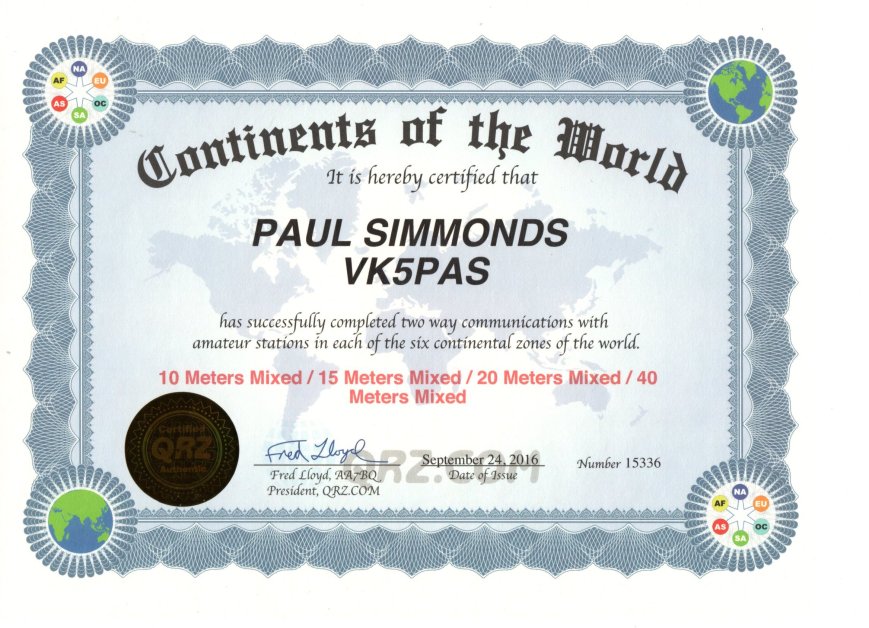
DX World Award QRZ.com

More information on the QRZ.com Operating Awards can be found at…….

https://www.qrz.com/awards

Results of the 2019 VKFF Team Championship

The 2019 VKFF Team Championship was held on Saturday 26th October 2019.

A total of seven Teams took part…….

  • ‘The Tassie Devils’ – Helen VK7FOLK and Jonathan VK7JON.
  • ‘The VK4WIPeouts’ – Mark VK4SMA & Murray VK4MWB.
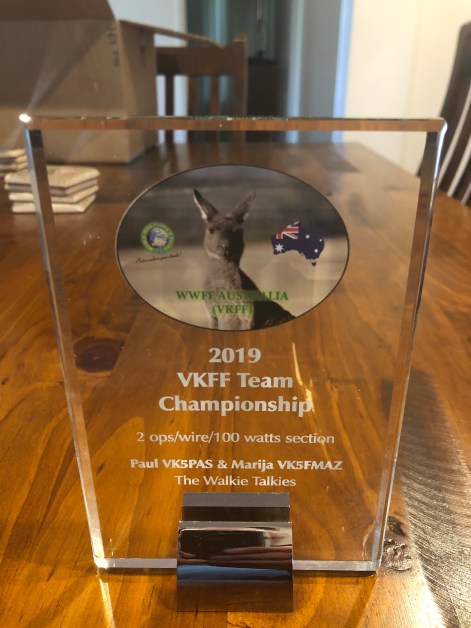
  • ‘The Walky Talkies’ – Paul VK5PAS and Marija VK5FMAZ.​
  • ‘QRS Dot Dash’ – Ian VK5CZ and David VK5PL.
  • ‘The VK4midables’ – Rob VK4SYD and Scott VK4CZ.
  • ‘TechoGeeks’ – Sue VK5AYL and Richard VK5ZNC.
  • ‘QRParktivators’ – Gerard VK2IO and Alan VK2MG.

Marija and I activated three parks for the event…….

  • Marne Valley Conservation Park VKFF-0906
  • Ridley Conservation Park  VKFF-0932
  • Swan Reach Conservation Park VKFF-0832

Everybody who took part as an activator received a participation certificate.

Screen Shot 2019-11-17 at 7.16.24 pm.png

The results are as follows…….

General Section.

Two teams entered this category…….

  • ‘The Tassie Devils’ – Helen VK7FOLK and Jonathan VK7JON – 17 QSOs
  • ‘The VK4WIPeouts’ – Mark VK4SMA & Murray VK4MWB – 49 QSOs

The winners of the General Section were ‘The VK4WIPeouts’.

VK4SMA.png

QRP Section.

Just the one Team entered this category…….

  • ‘QRParktivators’ – Gerard VK2IO and Alan VK2MG – 82 QSOs

The winners of the QRP Section were the ‘QRParktivators’.

VK2MG.png

2 ops/single tx/40 & 80m/wire antenna/100 watts or less Section.

Four teams entered this category…….

  • ‘The Walky Talkies’ – Paul VK5PAS and Marija VK5FMAZ. – 157 QSOs
  • ‘QRS Dot Dash’ – Ian VK5CZ and David VK5PL – 70 QSOs
  • ‘The VK4midables’ – Rob VK4SYD and Scott VK4CZ – 69 QSOs
  • ‘TechoGeeks’ – Sue VK5AYL and Richard VK5ZNC – 25 QSOs

The winners of the 40/80m Section were ‘The Walky Talkies’ comprising Marija VK5FMAZ and myself.

Screen Shot 2019-11-17 at 7.35.57 pm.png

I would like to throw out a huge THANKS to those people who donated $$$ towards this year’s event.  Without your support, trophies would not be possible.

Unfortunately, this years event was not sponsored by our normal businesses as I did not get sufficient time to organise due to my overseas trip and work commitments.

Thank you to everyone who took part, both activators and hunters.

More information on the 2019 VKFF Team Championship can be found on the WWFF Australia website at……

https://www.wwffaustralia.com/2019-results.html

Are the bands improving?

Last night I had a tune across the 20m band and found there was quite a bit of activity coming out of Europe on the short path.  Many of those stations were participating in the LZ DX Contest.

I worked a number of those stations, but what was really exciting last night was that I was hearing some of the European WWFF & SOTA activators.

My equipment:-

  • Yaesu FT-2000
  • 100 watts
  • 5 element yagi @ about 15 metres from the ground

The first European portable station in the log was Pit YP1WFF who was activating Coridorul Ialomitei YOFF-0485 in Romania.

SIGLA YOFF 2016.jpg

Next was YU1OS Kosutnjak YUFF-0058 in Serbia.  Kosutnjaks a park-forest and urban neighbourhood of Belgrade, the capital of Serbia.

My next European portable activator logged was SV2RUJ/p who was activating SOTA peak SV/ MC-025 in Greece.  This un-named SOTA summit is 1,558 metres in height and is worth 6 SOTA points.

Screen Shot 2019-11-17 at 10.21.36 am.png

Above:- Map of Greece showing the location of SV/ MC-025.  Map courtesy of Google maps

After logging these stations I decided to prop on a frequency and put out a CQ call.  I ended up with a pile-up from Europe and the Middle East.  By 1.30 a.m. I was getting really tired and decided to go QRT, with many stations still calling.  All up I logged about 60 European, Middle Eastern and South-East Asian stations.

Hopefully, this is a sign that the band conditions are improving.


References.

Wikipedia, 2019, <https://en.wikipedia.org/wiki/Ko%C5%A1utnjak>, viewed 17th November 2019

Ni Ni Flora and Fauna Reserve VKFF-2413

Our final park for our three-day trip away was the Ni Ni Flora & Fauna Reserve VKFF-2413.  This was to be another first-time activation for the World Wide Flora & Fauna (WWFF) program.
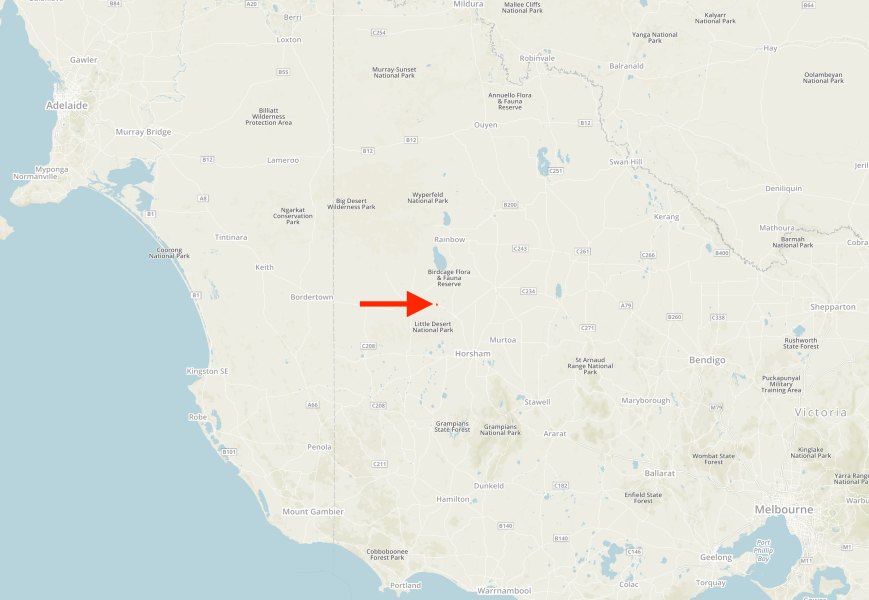
The park is located about 382 km north-west of the city of Melbourne, and about 10 km south-west of the town of Jeparit.

Screen Shot 2019-11-14 at 7.56.50 pm.png

Above:- Map showing the location of the Ni Ni Flora and Fauna Reserve.  Map courtesy of Protected Planet.

After leaving the Hindmarsh Flora and Fauna Reserve we drove south on the DImboola-Rainbow Road and soon reached the little town of Jeparit.  It is believed that Jeparit is a corruption of a local Aboriginal word (a Gromiluk word) meaning “the home of small birds”.  The town is famous due to it being the birthplace of the founder of the Liberal Party, and former Australian Prime Minister Robert Gordon Menzies.  There is quite a bit to see in the town and sadly we had very little time.  It will be another return trip to have a much better look around.

We continued south out of Jeparit in the Dimboola-Rainbow Road and then turned right onto Flavel Road.  We soon reached the Ni Ni Flora & Fauna Reserve.  The park is also referred to on maps as the Ni Ni Nature Conservation Reserve.  Interestingly Protected Planet also has it as the Babatchio Bushland Reserve.

Screen Shot 2019-11-14 at 8.00.48 pm.png

Above:- An aerial view of the Ni Ni Flora and Fauna Reserve with Lake Hindmarsh in the background.  Image courtesy of Google maps

The park is about 10 acres in size and was established in 1990.  It is surrounded by cleared farming land and is located on the southwestern corner of Flavel Road and Pumpa Road.

A short distance from the park you can view the cairn marking the location of the Allanby State School (Hindmarsh South) which operated from 1889-1926.

We parked the car on Flavel Road and climbed the fence and set up in the north-eastern corner of the park.

Screen Shot 2019-11-14 at 7.56.33 pm.png

Above:- An aerial view of the Ni Ni Flora & Fauna Reserve showing our operating spot.  Image courtesy of Protected Planet.

I called CQ on 7.140 and first in the log was park regular (both activator and hunter) Rob VK2VH, followed by two other regulars, Grant VK2LX, and Adrian VK5FANA.  Within five minutes I had ten contacts in the log and the park qualified for VKFF.  QSO number ten was with Steve VK3MPR.

Two contacts later I was very surprised to be called by Theo OT4A in Belgium, in amongst the VK stations that were calling.  Theo was 5/8 and gave me a 5/5 signal report into Europe.

I logged a total of 26 stations on 40m before swapping the mic with Marija.

DSC_6350

Marija’s first contact was with Rob VK2VH, followed by Geoff VK3SQ, and then Adrian VK5FANA.  It took Marija just 5 minutes to qualify the park for VKFF.  Her tenth contact was with Scott VK3MCL/p.

Although we were pushed very much for time, Marija encouraged me to get back on the mic to see if I could get my 44 contacts.  I logged a further 6 stations on 40m from VK3, VK5, and New Zealand, before callers completely dried up.  I now had 32 contacts in the log and was 12 short of the target.

I moved to 20m where I picked up a further 14 stations which got me to 43 contacts, just one short of the 44 QSO threshold.  Contacts on 20m were into VK4, VK6, and France.

I headed off the 80m band where I logged 3 stations from VK4 and VK5.  Contact number 44 was with Adrian VK5FANA.

DSC_6352

It was now about 6.00 p.m. local time and we still had about 3 & 1/2 hours to get home.  We packed up and hit the road, stopping at Nhill in western Victoria for a bite to eat.

On the way home I joined the 7130 DX Net from the mobile and logged 10 stations.  This included Gary ZL3SV in New Zealand who gave me a 10/9 signal.  The highlight of the net was working David HC5DX in Ecuador in South America.  Even Dave was surprised that I was mobile.  The Codan 9350 works very well.

THANKYOU to everyone who called us on our 3 day trip to Victoria.  We activated eleven parks, with many of those being first-time activations.  We made a total of 635 QSOs which included 78 Park to Park contacts.


References.

Aussie Towns, 2019, <https://www.aussietowns.com.au/town/jeparit-vic>, viewed 14th November 2019

Protected Planet, 2019, <https://www.protectedplanet.net/ni-ni-f-r-nature-conservation-reserve>, viewed 14th November 2019

Hindmarsh Flora and Fauna Reserve VKFF-2331

Our fourth planned park for Sunday (11th November 2019) was the Hindmarsh Flora & Fauna Reserve VKFF-2331.  This would be the first time that the park had been activated for the World Wide Flora & Fauna (WWFF) program.

The park is located about 400 km north-west of the city of Melbourne and about 14 km south of the town of Rainbow.

Screen Shot 2019-11-14 at 6.46.32 pm.png

Above:- Map showing the location of the Hindmarsh Flora & Fauna Reserve.  Map courtesy of Protected Planet.

After leaving the Wathe Flora & Fauna Reserve we headed into the little town of Lascelles.  The town was named after Edward Lascelles (1847-1917) who was a passionate supporter of the district.  Lascelles promoted closer settlement, was involved in water management in the area, built a large home and was a promoter of the idea that the Wimmera Mallee would be excellent grain-growing country.

Little remains in the town now.  The centrepiece is the impressive hotel which was built in 1905.  The pub looked very inviting, but we were a bit pressed for time.  Both Marija and I agreed that we would need to come back here sometime to check it out.

The main attraction in Lascelles is the silos which are part of the Victorian Silo Art Trail.  The two images of local farming couple Geoff and Merrilyn Horman were painted by Melbourne artist Rone.  The work on the 1939 built silos was completed in 2017.

We then turned off the Sunraysia Highway onto the Henty Highway which is named in honour of the Henty brothers who were the first permanent land-based settlers in Victoria, taking up land at Portland in 1834.

We soon reached the town of Hopetoun where we planned to stop for lunch.  Hopetoun was named after the 7th Earl of Hopetoun, the Governor of Victoria from 1899 to 1895, and later the first Governor-General of Australia.  It is a beautiful little town located on the shores of Lake Lascelles.

We bought some lunch from one of the local cafes and headed down to Lake Lascelles and enjoyed some of the beautiful afternoon sun.

After lunch, we had a quick look at Corrong Homestead in Hopetoun.  Unfortunately, the homestead was closed but we did have a quick look around the grounds.  In 1846 Peter McGinnis guided by a friendly aboriginal followed what is now known as the Yarriambiack Creek from Horsham to Lake Corrong looking for unoccupied land for sheep grazing. He was the first European pastoralist to settle in the Mallee. He was joined by his wife, family and partner George Bell and established the Lake Corrong Run.

This slideshow requires JavaScript.

We continued south on the Henty Highway to the little town of Roseberry.  The town was named after Archibald Philip Primrose, 5th Earl of Rosebery who toured Australia from September 1883 to January 1884, and became the British Prime Minister from 1894-1895.

There is another impressive piece of silo art in this town.  The Roseberry mural was painted by Melbourne artist Kaff-eine.  The two images are of a young female farmer in a work shirt, jeans and cowboy boots.  The other is of a horseman in an Akubra hat, bogs boots and an oilskin vest, with his horse.

We continued south and out next stop was the town of Beaulah.  Isaiah 62:4 in the Bible was the inspiration the McKenzie family, devout local Presbyterians, took when they named this tiny town Beulah in 1891.

“Thou shalt no more be termed Forsaken; neither shall thy land any more be termed Desolate: but thou shalt be called Hephzibah, and thy land Beulah: for the Lord delighteth in thee, and thy land shall be married.”

We continued further south on the Henty Highway until we reach Galaquil.  There is a cairn here which commemorates the construction of the dog netting fence which crossed the highway at this point.  The fence was erected in 1885 from Tyntynder to the South Australian border to prevent dingoes and rabbits overrunning and devastating pastoral and agricultural land to the south.

Our next stop was the town of Brim to have a look at their silo art mural.  It is believed that Brim is a local Aboriginal word meaning “a spring” or “a well”.  The images of four farmers were painted on the disused Brim silos in 2015 by Guido van Helten.

An interesting stop in the town of Brim is the solitary grave of James Simson, formerly a Commander in the Honourable East India Company Service.  He died in 1858 as a result of being gored by a bullock.  His grave, which can now be located in Simson Street, is the only defined grave left of the Brim Station Cemetery.

DSC_6324

We then drove back north along the Henty Highway and turned left onto the Birchip-Rainbow Road.  Our next stop was the town of Rainbow which was named after a property in the area called ‘Rainbow Rise’ which, in turn, had been named because it was located near a crescent-shaped ridge which in spring was ablaze with multicoloured wildflowers.

This looked like a great little town to explore and it was our first time there.  Sadly we were running short of time.  This was placed on our ‘must return to’ list.

This slideshow requires JavaScript.

We headed south out of Rainbow on the Dimboola-Rainbow Road and soon reached the Hindmarsh Flora and Fauna Reserve.  The reserve is about 472 acres in size and is located just to the east of Lake Hindmarsh.

This was not an overly easy park to access.  The only access point we could find was off the Dimboola-Rainbow Road.  There is a small section of scrub which abuts the road.  But, this is not part of the park.  We had to drag the gear through this little bit of scrub and into the park.  It was a hot day and we weren’t keen on tramping through the long grass.

Screen Shot 2019-11-14 at 6.46.15 pm.png

Above:- An aerial view of the Hindmarsh Flora & Fauna Reserve showing our operating spot.  Image courtesy of Protected Planet.

Marija and I decided that this was going to be a very quick 40m activation and then hit the road.  I called CQ on 7.150 and logged Rob VK2VH, followed by Ray VK4NH, and then Lee VK2LEE.  It took me just 5 minutes to get the required 10 contacts to qualify the park for VKFF.  Contact number ten was with Peter VK3PF/p who was activating the Baranduda Regional Park VKFF-0959.

DSC_6334

I then swapped the mic with Marija, who also logged the Park to Park contact with Peter VK3PF/p.  Marija’s next contact was with Lee VK2LEE, followed by Linda VK7QP, and then Rob VK2VH.  It took just 7 minutes for Marija to have her 10th contact in the log, a contact with Ray ZL4TY/VK4.

We were really pushed for time and hoped to squeeze in one more park activation, so we packed up and headed off to the next park.  We apologise to anyone who did not get this park in the log.  We will return at some time in the near future.

Marija worked the following stations on 40m SSB:-

  1. VK3PF/m (Baranduda Regional Park VKFF-0959)
  2. VK2LEE
  3. VK7QP
  4. VK2VH
  5. VK4AAC/2
  6. VK2LX
  7. VK4HNS
  8. VK4NH
  9. VK4DXA
  10. ZL4TY/VK4

I worked the following stations on 40m SSB:-

  1. VK2VH
  2. VK4AAC/2
  3. VK4NH
  4. VK4DXA
  5. ZL4TY/VK4
  6. VK2LEE
  7. VK7QP
  8. VK2LX
  9. VK4MWB
  10. VK2YK
  11. VK3PF/p (Baranduda Regional Park VKFF-0959)
  12. VK3SQ
  13. VK4HNS
  14. VK2IO
  15. ZL1TM


References.

Aussie Towns, 2019, <http://www.aussietowns.com.au/town/lascelles-vic>, viewed 14th November 2019

Aussie Towns, 2019, <https://www.aussietowns.com.au/town/rosebery-vic>, viewed 14th November 2019

Aussie Towns, 2019, <https://www.aussietowns.com.au/town/beulah-vic>, viewed 14th November 2019

Aussie Towns, 2019, <https://www.aussietowns.com.au/town/brim-vic>, viewed 14th November 2019

Aussie Towns, 2019, <http://www.aussietowns.com.au/town/rainbow-vic>, viewed 14th November 2019

Protected Planet, 2019, <https://www.protectedplanet.net/search?q=hindmarsh>, viewed 14th November 2019

Wikipedia, 2019, <https://en.wikipedia.org/wiki/Hopetoun,_Victoria>, viewed 14th November 2019

Yarriambiack Shire Council, 2019, <https://yarriambiack.vic.gov.au/tourism/hopetoun/>, viewed 14th November 2019

Yarriambiack Shire Council, 2019, <https://yarriambiack.vic.gov.au/tourism/brim/>, viewed 14th November 2019

Wathe Flora and Fauna Reserve VKFF-2480

Our third park for Sunday (11th November 2019) was the Wathe Flora & Fauna Reserve VKFF-2480.  This would be only the second time that the park has been activated for the World Wide Flora Fauna (WWFF) program, and the first time that it had been activated by Marija and me.

The park is located about 40 km north-west of the city of Melbourne.

Screen Shot 2019-11-13 at 9.30.12 pm.png

Above:- Map showing the location of the Wathe Flora and Fauna Reserve.  Map courtesy of Protected Planet.

We accessed the park via Wathe Reserve Road which runs off the Sunraysia Highway.  This ‘road’ travels through farmers paddocks to the park boundary where you will find a set of unlocked gates.

You can continue on the other side of the gates.  Depending on which maps you look at, the sandy track is either referred to as Wathe Reserve Road or Clay Road.  It was a hot day and the track was very sandy and boggy.  We decided not to go deep into the park.

DSC_6261

Above:- Clay Road (or Wathe Reserve Road) which dissects the park.

This is a large park consisting of 14,816 acres of remnant mallee country.  The reserve was established in 1979.

The reserve is surrounded by cleared farming land.

Screen Shot 2019-11-13 at 9.43.43 pm.png

Above:- An aerial shot of the park looking north.  Image courtesy of Google maps.

During our visit to the park, we spotted some Songlarks (I think) and White-fronted Chats.

We set up on the northern side of Clay Road on the western boundary of the park.  There was plenty of room here to string out the 20/40/80 m linked dipole and just enough shade to get out of the hot sun.

Screen Shot 2019-11-13 at 9.30.02 pm.png

Above:- An aerial shot of the Wathe Flora & Fauna Reserve showing our operating spot in the eastern section of the park.  Image courtesy of Protected Planet.

For this activation, Marija and I decided to stay to her 10 watts PEP Foundation level and swap the mic as we logged stations.  We called CQ on 7.135 and first in the log was Adrian VK5FANA, followed by Linda VK7QP, and then Ray VK4NH.  It took us about 10 minutes for each of us to get 10 contacts in the log, thus qualifying the park for VKFF.  Contact number ten was with Grant VK2LX with his big 5/9 signal.

DSC_6279

I logged 14 stations on 40m, whilst Marija logged 11 stations.  This included Park to Park contacts with David VK5DG/3 (and Vk3TUN) in the Errinundra National Park VKFF-0158.

I then moved to 14.310 on the 20m band where much to my surprise I logged a total of 14 stations from VK2, VK4, and VK7.  We also put out some calls on the 80m band on 3.610 but had no takers.

DSC_6258

So, with another park qualified for VKFF, and our tummies rumbling, we headed off for some lunch in Hopetoun.

Marija worked the following stations on 40m SSB:-

  1. VK5FANA
  2. VK7QP
  3. VK4NH
  4. VK4DXA
  5. ZL4TY/VK4
  6. VK2IO
  7. VK3PF/m
  8. VK5DG/3 (Errinundra National Park VKFF-0158)
  9. VK3TUN/p (Errinundra National Park VKFF-0158)
  10. VK2LX
  11. VK3SQ

I worked the following stations on 40m SSB:-

  1. VK5FANA
  2. VK7QP
  3. VK4NH
  4. VK4DXA
  5. ZL4TY/VK4
  6. VK2IO
  7. VK3PF/m
  8. VK5DG/3 (Errinundra National Park VKFF-0158)
  9. VK3TUN/p (Errinundra National Park VKFF-0158)
  10. VK2LX
  11. VK3SQ
  12. VK7VZ
  13. VK3NIC
  14. VK7FJFD

I worked the following stations on 20m SSB:-

  1. VK7VZ
  2. VK7QP
  3. VK4TJ
  4. VK4/AC8WN
  5. VK4/VE6XT
  6. VK4SSN
  7. VK2YK
  8. VK2VW
  9. VK2SOL
  10. VK4HNS
  11. VK4ME
  12. VK4MWB
  13. VK2KAW/m
  14. VK6MMB


References.

Protected Planet, 2019, <https://www.protectedplanet.net/wathe-f-f-r-nature-conservation-reserve>, viewed 14th November 2019