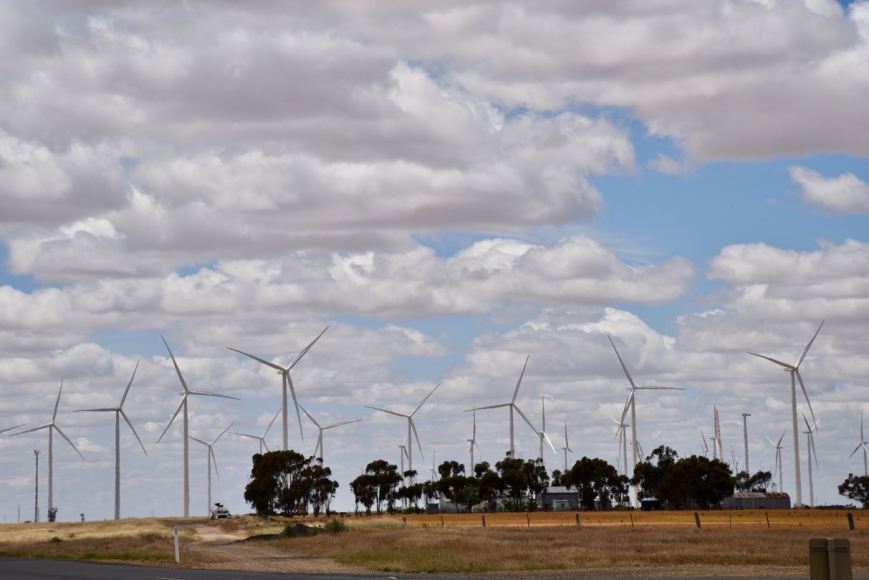
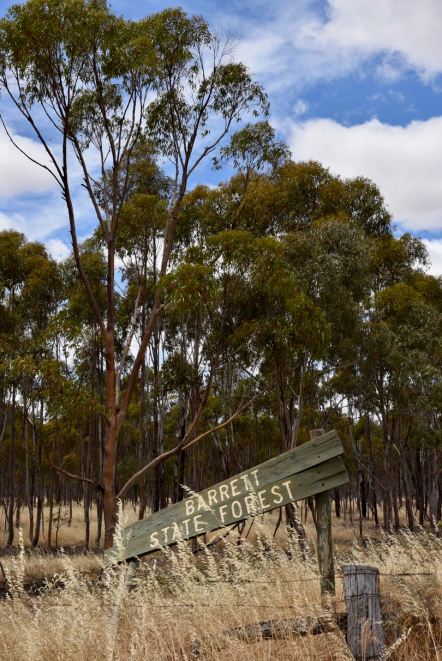
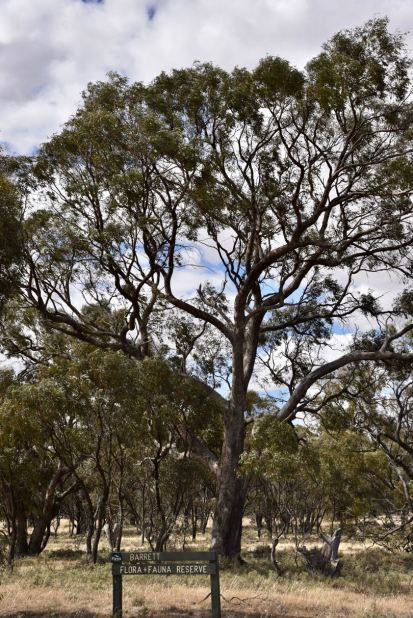
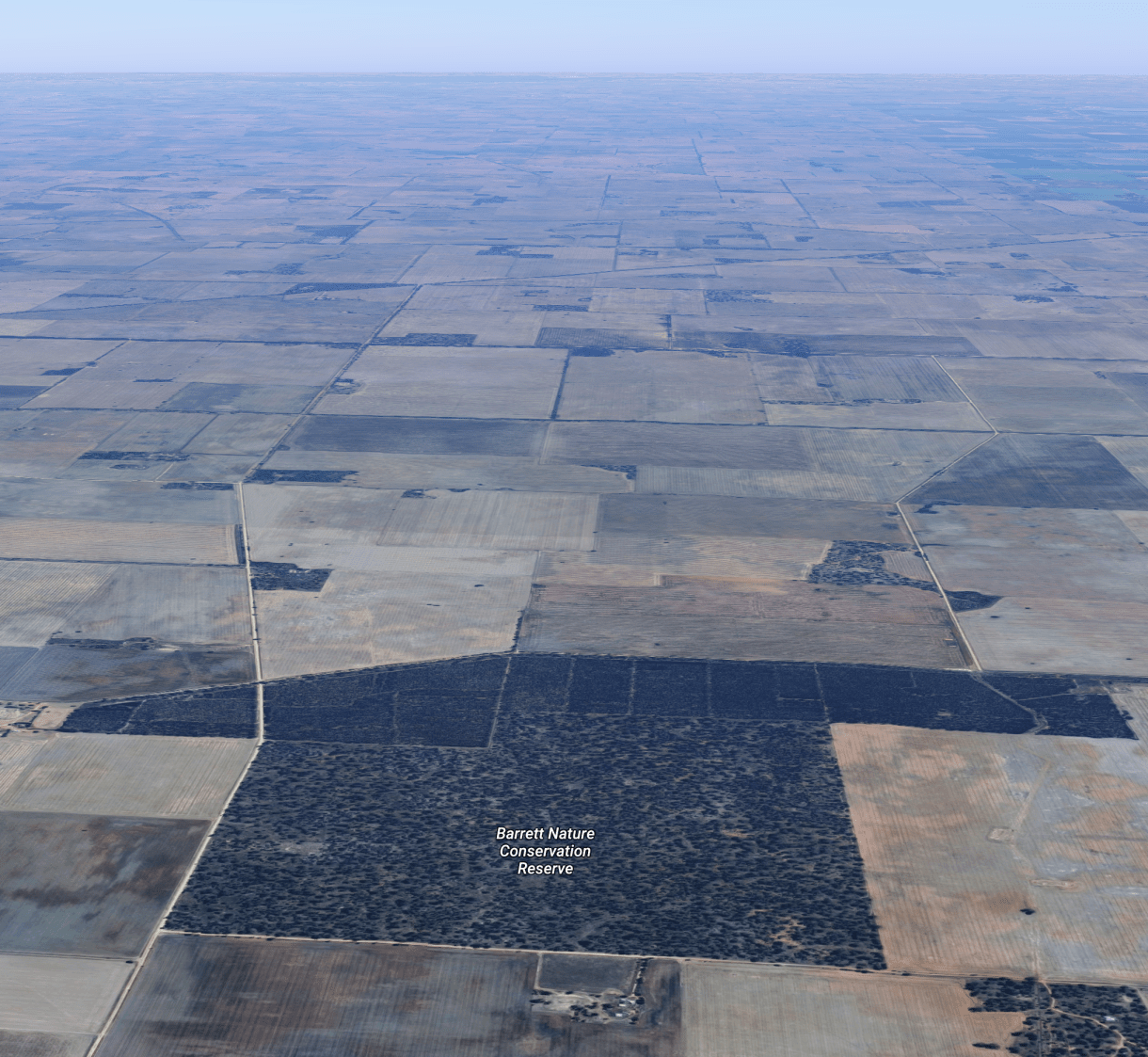
Sandy Creek Conservation Park 5CP-204 and VKFF-0933

My final park for Tuesday 13th August 2019 was the Sandy Creek Conservation Park 5CP-204 & VKFF-0933.  This is another park which I have previously activated and qualified.

The park is located about 56 km north of the city of Adelaide and about 3 km west of the town of Lyndoch in the southern Barossa Valley.

Screen Shot 2019-08-15 at 8.12.23 pm.png

Above:- Map showing the location of the Sandy Creek Conservation Park.  Map courtesy of Protected Planet.

The Sandy Creek Conservation Park is about 142 hectares in size and was established on the 7th day of October 1965.  It is one of the few remaining tracts of undisturbed and undeveloped native bushland in the Barossa Valley.  As a result, it plays a vital role in providing habitat for various native wildlife and birds.  The park is surrounded by sand quarries, cleared farmland and vineyards.

The park is located in the localities of Lyndoch and Sandy Creek.  Nearby Cockatoo Valley is named for the flocks of corellas.  The park takes its name from the nearby town of Sandy Creek just a few km down the road.  The settlement of Sandy Creek grew around the Irish Harp Hotel which was built c. 1850.  It takes its name from the soil in the area which is deep, loose sand.

Screen Shot 2019-08-15 at 8.16.51 pm.png

Above:- An aerial view of the Sandy Creek CP looking north towards the wine-growing region of the Barossa Valley.  Image courtesy of Google maps.

On the 7th day of October 1965 Section 72 of the Hundred of Barossa was proclaimed as a Wildlife-Reserve.  Further sections of land were added on the 25th day of May 1967 and the park was gazetted as the Sandy Creek National Park.  It was re-proclaimed as Sandy Creek Conservation Park on the 27th day of April 1972.  Further parcels of land were added to the park in 1991, 1994, and 2006.

During the first half of the 1900s much of the Sandy Creek Conservation Park was cleared and planted with vines.  The vineyards were subsequently abandoned due to low soil fertility.  Sections of the park were named after life-long ornithologists and conservationists, Cecil Rix and Mark Bonnin who identified many native bird species in the area.

Cecil Rix was a former Commissioner of the National Parks Commission.   The following is taken from his obituary:-

“One of the many parks that Cecil sought to be dedicated, I must tell you of Sandy Creek in 1962.  It was a nasty hot day with a north wind and Cecil was working in the Barossa area.  He drove down a narrow lane into some shady scrub to east his lunch.  At once he discovered the beautiful bushland to be a haven of numerous species of birds.  A delight for Cecil.  He sought to get Sandy Creek purchased as a Park, but treasury would not provide the money.  At the end of the year, the Minister of Lands, Mr Quirke, officially thanked Cecil on behalf of the Premier Tom Playford for all of his good work during the year.  Cecil, never stuck for a quick reply said; ‘Tell Tom that if he wants to thank me he could buy Sandy Creek land for a national Park’.  Next day, at a meeting of the Cabinet, Mr QUirke passed on Cecil’s words to the Premier.  At 2 p.m. Cecil’s phone rang. The caller said, ‘Quirke here.  We’ve bought your birds.'”

Today many areas that Cecil Rix identified have become National Parks and Conservation Parks.  This includes Sandy Creek, Para Wirra, Innes, Spring Gully, Cape Gantheaume, Ngarkat, Hambidge, Hincks, Mount Remarkable, Coorong, Coffin Bat, Canunda, and Cox Scrub.  In 1938 there were just three National Parks in South Australia.  But by 1972, when Rix retired from the National Parks Commission, there were 109 parks.

Screen Shot 2019-08-16 at 10.19.43 am.png

Above:- Plaque in the park to commemorate Cecil Rix.

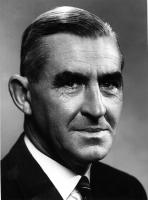
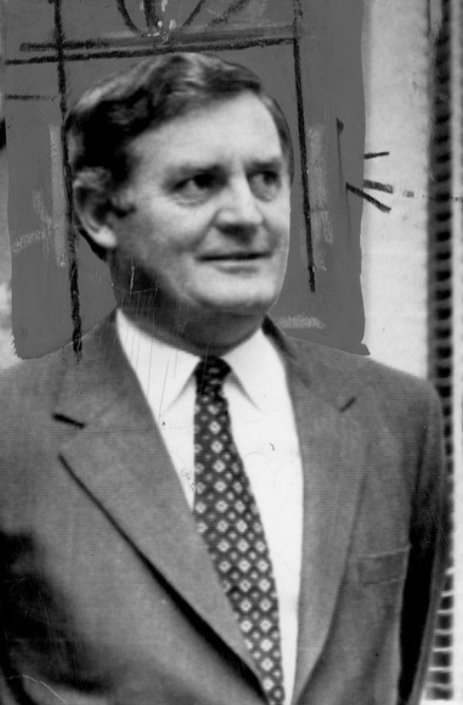
The Sir Keith Wilson section of the Sandy Creek Conservation Park was a gift from the Wilson family and the Nature Foundation of SA Inc.  Sir Keith Cameron Wilson (3 September 1900 – 28 September 1987) was an Australian lawyer and politician.

Keith_Wilson-1950-an23530385.jpg

Above:- Sir Keith Cameron Wilson.  Image courtesy of Wikipedia.

The park conserves a rare patch of plains/valley vegetation.  It is dominated by stands of native Southern Cypress-pine and Pink Gum.  Blue Gums and Peppermint Box also provide a canopy to a rich variety of shrubs such as Silver Broom, Guinea Flower and Sticky Hopbush.

There are two walks in the park: the Wren Walk which is a 3.5 km loop, and the Boundary Walk which is a 4 km loop.

Birds SA have recorded about 45 species of bird in the park including Peaceful Dove, Common Bronzewing, Superb Fairywren, Yellow-rumped Thornbill, Yellow Thornbill, Black-winged Currawong, Willie Wagtail, Diamond Dove, Brush Bronzewing, Australian Owlet-nightjar, Chestnut-rumped Thornbill, White-winged Triller, and Zebra Finch.

A number of native animals call the park home including Echidnas and Western Grey kangaroos.  The kangaroos were out in force enjoying the afternoon sun during my visit.

DSC_0054

The park can be accessed via Pimpala Road (southern section of the park) or via Conservation Park Road (northern section of the park).  I accessed the park from the north and parked in the carpark at the end of Conservation Park Road.  It was just a  short walk from the vehicle through the park gate to where I set up.

I ran the Yaesu FT-857d and the 20/40/80m linked dipole for this activation.  Power output was just 20 watts.

Screen Shot 2019-08-15 at 8.09.57 pm.png

Above:- Aerial shot of the Sandy Creek Conservation Park showing my operating spot.  Image courtesy of Protected Planet.

I was set up and ready to go by around 0645 UTC, 4.15 p.m. South Australian local time.  It was starting to get a bit cool now with the temperature dropping to around 12 deg C.  The sun was also starting to go down and the 40m band had really opened up to Europe.  As a result, it was quite hard to find a clear spot on the band.

I started calling CQ on 7.145 and it didn’t take long for one of the park regulars to give me a shout.  It was Rick VK4RF/VK4HA with a strong 5/9 signal from Queensland.  Peter Vk3PF was next, followed by Rob VK2MZ and then Glen VK4FARR.

Contact number ten came 7 minutes into the activation.  It was Andrei ZL1TM in New Zealand who is a regular park hunter.  I continued on and eventually logged a total of 20 stations on 40m from VK1, VK2, VK3, VK4, VK5, VK6, VK7, and New Zealand.

DSC_0055

I then moved down to the 80m band and started calling CQ on 3.610.  There was quite a little pile up waiting for me.  First in the log on 80m was Lee VK2LEE, followed by John VK5BJE, Adrian VK5FANA, and then John VK5FLEA/p who was activating the Mark Oliphant Conservation Park VKFF-0782.

In the end, I logged a very pleasing total of 16 stations on 80m from VK2, VK3, and VK5.

DSC_0056

As it approached 5.30 p.m. local time I made the decision to pack up and head home.  I had qualified the park for VKFF which was my main goal, and I now had 5 South Australian parks activated during the month of August.  This meant that I had qualified for the special National Parks & Wildlife Award.

Screen Shot 2019-08-13 at 8.15.26 pm

Megan VK3AAK provided this short piece of audio of me operating…..

I worked the following stations on 40m SSB:-

  1. VK4RF
  2. VK4HA
  3. VK3PF
  4. VK2MZ
  5. VK4FARR
  6. VK6JES
  7. VK4TJ
  8. VK4/AC8WN
  9. VK4/VE6XT
  10. ZL1TM
  11. VK3MPR
  12. VK3YW
  13. VK2UXO
  14. VK7OT/p
  15. VK4FDJL/6
  16. VK7MMT/p
  17. VK3UH
  18. VK7VZ
  19. VK1DI
  20. VK5CB

I worked the following stations on 80m SSB:-

  1. VK2LEE
  2. VK5BJE
  3. VK5FANA
  4. VK5FLEA/p (Mark Oliphant Conservation Park VKFF-0782)
  5. VK3BBB
  6. VK5SFA/m
  7. VK5IJ
  8. VK5DO
  9. VK3PF
  10. VK5CB
  11. VK2SLB
  12. VK5CZ
  13. VK5JW
  14. VK3UH
  15. VK2HRX
  16. VK5PL

As I drove home I was rewarded with a magnificent sunset.

DSC_0065


References.

Birds SA, 2019, <https://birdssa.asn.au/location/sandy-creek-conservation-park/>, viewed 16th August 2019

Birds SA, 2019, <https://birdssa.asn.au/images/saopdfs/Volume33/1998V33P031.pdf>, viewed 16th August 2019

Department of Environment and Natural Resources, 2010, ‘Sandy Creek Conservation Park’ brochure.

State Library South Australia, 2019, <http://www.slsa.ha.sa.gov.au/digitalpubs/placenamesofsouthaustralia/S.pdf>, viewed 16th August 2019

Wikipedia, 2019, <https://en.wikipedia.org/wiki/Sandy_Creek_Conservation_Park>, viewed 15th August 2019

Wikipedia, 2019, <https://en.wikipedia.org/wiki/Sandy_Creek,_South_Australia>, viewed 16th August 2019

Wikipedia, 2019, <https://en.wikipedia.org/wiki/Keith_Wilson_(South_Australian_politician)>, viewed 16th August 2019

Para Wirra Conservation Park 5CP-275 and VKFF-1739

My third park for Tuesday 13th August 2019 was the Para Wirra Conservation Park 5CP-275 & VKFF-1739.  I have activated and qualified this park previously.

Para Wirra is located about 38 km northeast of the city of Adelaide and about `12 km (by road) south-west of the town of Williamstown.

Screen Shot 2019-08-14 at 9.10.50 pm.png

Above:- Map showing the location of the Para Wirra Conservation Park.  Map courtesy of Protected Planet.

The Para Wirra Conservation Park is 1,417 hectares (3,500 acres) in size and was established on the 21st day of June 1962.  It is located in the foothills of the Mount Lofty Ranges at the corner end of the Adelaide metropolitan area.  The conservation park is part of a larger, 2,573-hectare (6,360-acre) block of contiguous native vegetation, the remainder of which is owned by Forestry SA, SA Water and private landholders.   Only 26% of the Mount Lofty Ranges remains uncleared.

The conservation park takes its name from the Aboriginal words, Para meaning “river” and Wirra meaning “forest”.

Screen Shot 2019-08-15 at 7.46.49 pm.png

Above:- Map of the Para Wirra Conservation Park.  Map courtesy of National Parks & Wildlife Service.

The park is predominately covered in eucalyptus; however, there is a wide variety of vegetation types including Woodland – Open Woodland (low open woodland) – Low open forest – Closed scrub – Eucalyptus open scrub – open scrub – Melaleuca uncinata closed heath.

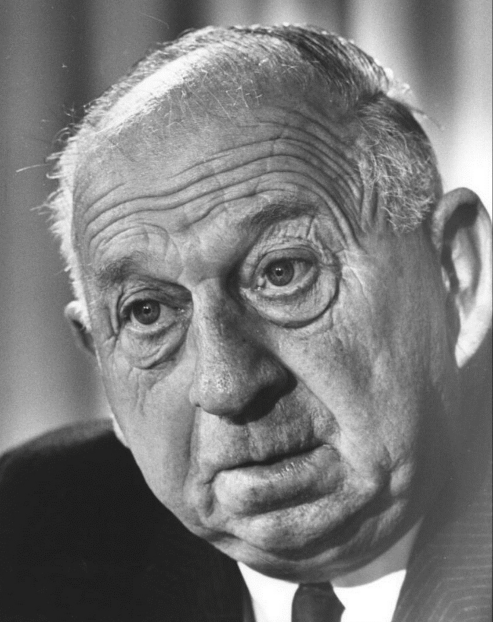
On the 21st day of June 1962, the park was proclaimed under the Crown Lands Act 1929 as the Para Wirra National Park.  The national park was officially opened on 24th September 1963 by the then Premier of South Australia, Sir Thomas Playford.  It was the second reserve in the State of Australia to be proclaimed as a National Park.  On the 27th day of April 1972, the national park was reconstituted as a recreation park.  This reconstitution reflected the park’s role as a natural area catering to a wide range of recreational activities.  On the 2nd day of November 2015, Environment Minister Ian Hunter announced that to better recognise and protect the recreation park’s natural and heritage values, it would be upgraded to Conservation Park status.  The recreation park was abolished on 19 May 2016 and on the same day, its landholding was constituted as the Para Wirra Conservation Park.

Playford_1956.jpg

Above:- Sir Thomas Playford, c. 1956.  Image courtesy of wikipedia

Numerous native mammals can be found in the park including Western Grey kangaroos, Euros,  Yellow-footed antechinus,  Short-beaked Echidna, the Common ringtail possum and the Brushtail possum.

Over 120 species of birds have been recorded in the conservation park including the emu which was introduced into the park in 1967.  Other native birds include White-faced heron, White-browned Babbler, Black-chinned honeyeater, Scarlet Robin, Laughing Kookaburra and Red-rumped parrot.

A total of 38 recorded reptiles and amphibians can be found in the park including the long-necked tortoise, Bearded Dragon, Brown tree frog, Yellow-faced whip snake and Red-bellied black snake.

I set up on a track at the East gate on Humbug Scrub Road.  There were two locked gates here so I could not travel into the park along Wirra Road.  However, there was a small car parking area, and a dirt track leading to a water tank.

DSC_0039

Above:- the locked gates at the East gate entrance.

For this activation I ran the Yaesu FT-857d, 20 watts output and the 20/40/80m linked dipole, inverted vee, supported by the 7-metre telescopic squid pole.

Screen Shot 2019-08-14 at 9.10.37 pm.png

Above:- An aerial view of the Para Wirra Conservation Park showing my operating spot.  Image courtesy of Protected Planet.

As it was starting to get a little late in the afternoon, the 40m band had opened up into Europe, so I was unable to get onto 7.144.  I dropped down the band a little to 7.140 and started calling CQ.  Ian VK3BUF mobile came back to my call.  Ian had a strong 5/9 signal from about 40 km north of Wagga.  Next in the log were some of the park regulars, Geoff VK3SQ, David VK5PL, Peter VK3PF, and Ken VK3UH.

Unfortunately, it didn’t take long for a strong European station to pop up on my frequency.  They were a good 5/7 signal and I just couldn’t compete, so with 9 contacts in the log, I moved down the band to 7.130.

John VK5BJE had followed me down and was logged.  John was 5/5 from the Adelaide Hills and gave me a 5/1 signal report.  I then logged Lee and Robbie VK5FRSM in the Adelaide Hills who was very low down.  Next was Neil VK3VZE.  I was Neil’s first SSB contact in many years.

DSC_0041

Next in the log was Perrin VK3XPT who was using an old Wagner transceiver which was a former State Emergency Services transceiver.  My last contact on 40m was with Rick VK5VCR in the Adelaide Hills.

I then moved down to 3.610 on 80m and started calling CQ.  John VK5BJE had followed me down from 40m and was first in the log on that band, followed by Rick VK5VCR, David VK5LSB, and Perrin VK3XPT.

To complete the activation I called CQ on 14.310 on the 20m band.  I logged Rick VK4RF/VK4HA and Andrei ZL1TM in New Zealand.

69233636_10156129038597234_1053070348267814912_o.jpg

Above:- Perrin VK3XPT’s old Wagner transceiver.  Image courtesy of VK3XPT.

With 22 contacts in the log, it was time to pack up and head off to my final park for the day, the Sandy Creek Conservation Park.

I worked the following stations on 40m SSB:-

  1. VK3BUF/m
  2. VK3SQ
  3. VK5PL
  4. VK3PF
  5. VK3UH
  6. VK4FARR
  7. VK4TJ
  8. VK4/AC8WN
  9. VK4/VE6XT
  10. VK5BJE
  11. VK2LEE
  12. VK5FRSM
  13. VK3ZVE
  14. VK3XPT
  15. VK5VCR

I worked the following stations on 80m SSB:-

  1. VK5BJE
  2. VK5VCR
  3. VK5LSB
  4. VK3XPT

I worked the following stations on 20m SSB:-

  1. VK4RF
  2. VK4HA
  3. ZL1TM


References.

Wikipedia, 2019, <https://en.wikipedia.org/wiki/Para_Wirra_Conservation_Park>, viewed 15th August 2019

Hale Conservation Park 5CP-086 and VKFF-0889

My second park for Tuesday 13th August 2019 was the Hale Conservation Park 5CP-086 & VKFF-0889.  I have activated and qualified this park previously.

Hale is located about 52 km northeast of Adelaide and about 3km southeast of the town of Williamstown which is regarded as the southern gateway to the winegrowing region of the Barossa Valley.

Screen Shot 2019-08-14 at 5.46.56 pm.png

Above:- Map showing the location of the Hale Conservation Park.  Map courtesy of Protected Planet.

The Hale Conservation Park is and was established on the 9th of January 1964.  The park is well signposted on Warren Road.

The park is located in rugged hills country of the north-central Mount Lofty Ranges.    The park habitat is mostly Woodland comprised of Long-leaf Box, Pink Gum and Messmate Stringybark over Golden Wattle and Yacca.

The park contains old mica diggings.  Mica is used in the electrical industry due to its unusual ability to act as a thermal conductor and electrical insulator at the same time.

There is a 4km circuit in the park which is rated as moderate in difficulty.

Screen Shot 2019-08-14 at 9.03.26 pm.png

Above:- The walking trail in the Hale CP.  Map courtesy of Walking SA.

Various native mammals can be found in the park including Western Grey kangaroo and echidna.

Birds SA have recorded about 87 species of bird in the park including Superb Fairywren, Eastern Spinebill, New Holland Honeyeater, Crescent Honeyeater, Yellow-faced Honeyeater, Australian Golden Whistler, Black-winged Currawong, Painted Buttonquail, Tawny-crowned Honeyeater, Little Wattlebird, Noisy Miner, Black-capped Sittella, and Black-faced Cuckooshrike.

The park first gained protected status as a Wild-Life Reserve on 9th January 1964 under the Crown Lands Act 1929.  Additional land was added n 4th January 1965 and the park was proclaimed as the Hale Wild-Life Reserve.  On 9th November 1967, the park was proclaimed under the National Parks Act 1966 as the Hale National Park.  The park was re-proclaimed under the National Parks and Wildlife Act 1972 as the Hale Conservation Park on 27th April 1972.

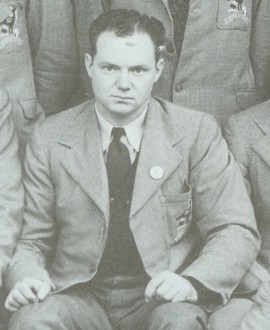
The park is named in honour of Herbert Mathew Hale who was the Director of the South Australian Museum from 1931 to 1960.  He took part in numerous South Australian Museum Expeditions as well as the Board for Anthropological Research expeditions.  During these trips, he participated in anthropological research, took motion picture film, still photography, phonographic recordings, as well as conducting zoological studies.  Hale was a prominent member of many societies and associations including the Royal Society of South Australia; the Royal Zoological Society of South Australia, the Anthropological Society of South Australia, and was secretary (1928-1956) to the Board for Anthropological Research.

Screen Shot 2019-08-13 at 10.03.12 pm

Above:- Herbert Mathew Hale.  Image c/o Trove

I parked the 4WD in the small carpark on Warren Road and set up on the edge of the walking track in the park.  I ran the Yaesu FT-857d, 20 watts, and the 20/40/80m linked dipole for this activation.

Screen Shot 2019-08-14 at 5.48.45 pm.png

Above:- An aerial shot of the Hale Conservation Park.  Image courtesy of Protected Planet.

After setting up I turned on the transceiver and tuned to 7.144 and heard Ian VK5CZ/p calling CQ from Mokota Conservation Park VKFF-1062.  After logging Ian Park to Park I moved down to 7.139, and after placing a spot on parksnpeaks, I started calling CQ.  Park regular Peter VK3PF came back to my call, followed by another park regular John VK4TJ and then Geoff VK3SQ who is another committed park hunter.

Band conditions were still quite poor with lots of deep fading noticed on most signals.  It took me a little longer to get the required 10 QSOs in the log for VKFF qualification.  Contact number ten came 14 minutes into the activation and was with Steve VK3HK.

I logged 13 stations on 40m and then moved to 3.610, calling CQ after placing a self spot on parksnpeaks.  First in the log was Hans VK5YX with a strong 5/9 signal, followed by John VK5BJE in the Adelaide Hills who had a strong 5/9 signal.

To complete the activation I called CQ on 14.310 on the 20m, logging only John VK4TJ and his USA and Canadian calls.

I had qualified another park for VKFF and now had 3 VK5 parks for the month of August.  Just 2 more to go to qualify for the National Parks and Wildlife Service Award.

DSC_0032

Above:- My shack in the Hale CP.

I worked the following stations on 40m SSB:-

  1. VK5CZ/p (Mokota Conservation Park VKFF-1062)
  2. VK3PF
  3. VK4TJ
  4. VK4/AC8WN
  5. VK4/VE6XT
  6. VK3SQ
  7. VK3MKE
  8. VK4PZZ
  9. VK5PL
  10. VK3HK
  11. Vk2ON
  12. VK7NWT
  13. VK5BJE

I worked the following stations on 80m SSB:-

  1. VK5YX
  2. VK5BJE

I worked the following stations on 20m SSB:-

  1. VK4TJ
  2. VK4/AC8WN
  3. VK4/VE6XT


References.

Birds SA, 2019, <https://birdssa.asn.au/location/hale-conservation-park/>, viewed 14th August 2019

South Australian Museum, 2019, <http://www.samuseum.sa.gov.au/collections/information-resources/archives/hale-herbert-matthew-aa-124>, viewed 13th August 2019

Walking SA, 2019, <https://www.walkingsa.org.au/walk/find-a-place-to-walk/hale-conservation-park-loop/>, viewed 14th August 2019

Wikipedia, 2019, <https://en.wikipedia.org/wiki/Hale_Conservation_Park>, viewed 14th August 2019

Warren Conservation Park 5CP-247 and VKFF-0941

Today (Tuesday 13th August 2019) I activated four parks.  My intention was to activate the 4 parks and get 10 contacts in each.  These 4 parks would go towards the special South Australia National Parks and Wildlife certificate which is on offer in August 2019 by the VKFF program.

My first park was the Warren Conservation Park 5CP-247 & VKFF-0941.  I have activated and qualified the park previously.

The park is located about 36 km northeast of the city of Adelaide and about 10 km southeast of the town of Williamstown.  It is located in the lower section of the Barossa Valley.

Screen Shot 2019-08-13 at 8.56.33 pm.png

Above:- Map showing the location of the Warren Conservation Park.  Map courtesy of Protected Planet.

The Warren Conservation Park is 364 hectares in size and was established on the 14th July 1966.  The park is well signposted on the corner of South Para Road and Watts Gully Road.  The park itself also has a sign on Watts Gully Road.

The best access to the park is via the Watts Gully trailhead on Watts Gully Road.  There is a small car parking area here and a pedestrian entrance to a boardwalk into the park.  Otherwise, you can hike into the park from other points including the walking track from the nearby Hale Conservation Park or the Tower Track through Mount Crawford Forest.

The park is situated in rugged hilly country in the Mount Lofty Ranges.  The major habitat in the park is Woodland with Pink Gum and Long-leaf Box.

The park has four challenging walking trails, including a section of the long-distance Heysen Trail. The tracks are steep and difficult and should be used by experienced bushwalkers only.

The park first gained protected area status as a wildlife reserve proclaimed under the Crown Lands Act 1929 on the 14th July 1966.  On the 9th November 1967, the land in the wildlife reserve was proclaimed under the National Parks Act 1966 as the Warren National Park.  On the 27th November 1969, section 321 was added to the national park. On the 27th April 1972, the national park was reconstituted as the Warren Conservation Park upon the proclamation of the National Parks and Wildlife Act 1972.   In 1980, it was listed on the now-defunct Register of the National Estate.

The park is named after the Hundred of Warren, which in turn was named in honour of John Warren (1830-1914), who was an Australian pastoralist and politician.

john_warren_mha.jpg

Above:- The Hon. John Warren.  Image courtesy of wikipedia.

There is a wide variety of native animals found in the park including Western Grey kangaroos, koalas, Southern Brown bandicoots, and echidnas.

Birds SA have recorded about 75 species of bird in the park including Superb Fairywren, New Holland Honeyeater,  Crescent Honeyeater, Striated Thornbill, Australian Golden Whistler, Grey Fantail, Peaceful Dove, Brown Treecreeper, Black-chinned Honeyeater, Yellow-rumped Thornbill, Buff-rumped Thornbill, and White-winged Chough.

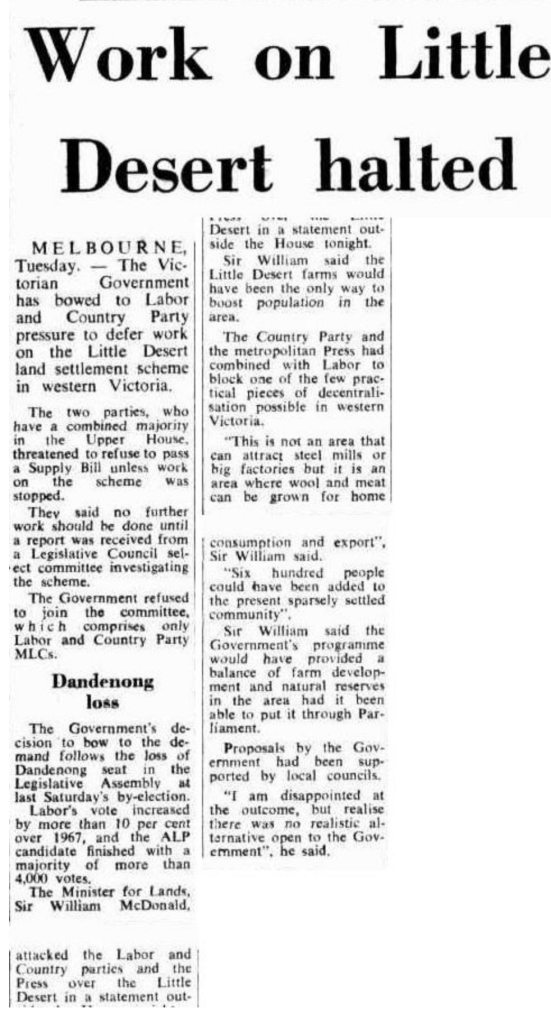
In 1884, gold was found by John Watts in nearby Watts Gully, near the current day Warren Conservation Park.  In fact, it was Watts Gully Road that I was headed for.  The area yielded gold nuggets as large as 14 ounces.  As a result, Forreston boomed as a little town.  From articles I have read on TROVE, it appears the area’s population swelled, with around 350-400 persons working on the diggings.

screen-shot-2017-01-21-at-2-13-22-pm-1.png

Above: – Article from the ‘Evening News’ dated Sat 20 June 1885.  Courtesy of Trove.

I drove along Watts Gully Road and set up just off the boardwalk.  I ran the Yaesu FT-857d, 20 watts, and the 20/40/80m linked dipole for this activation.

Screen Shot 2019-08-13 at 8.56.53 pm.png

Above:- The Warren Conservation Park showing my operating spot in the southern section of the park.  Image courtesy of Protected Planet.

I commenced calling CQ on 7.144 and this was soon answered by Ian VK3FIAN with a good strong 5/8 signal.  This was followed by a Park to Park contact with Ian VK5CZ/p who was activating the Mokota Conservation Park VKFF-1062 in the mid-north of South Australia.  Peter VK3PF followed, then Terry VK6ATM in Western Australia, and then Owen VK7OR.  Next in the log was Ken VK3UH who kindly spotted me on parksnpeaks.

Within about 13 minutes I had contact number ten in the log, with a QSO with John VK5BJE in the Adelaide Hills.  This was followed by Deryck VK4FDJL/6 who was in the Mangkili Claypan Nature Reserve VKFF-2941.

Band conditions were quite poor, with lots of fading noted on most signals.  Signals from Victorian stations were well down compared to normal.  My last station logged on 40m was Liz VK2XSE/m who kindly placed a spot up for me on parksnpeaks.

With 20 contacts in the log I headed off to the 80m band.  I placed a self spot on parksnpeaks and started calling CQ on 3.610.  Unfortunately, I logged just the two stations: John VK5BJE, and Ian VK5CZ in the Mokota Conservation Park for a second band.

To complete the activation I moved to the 20m band after putting up a spot on parksnpeaks, and called CQ on 14.310.  I logged John VK4TJ, along with his USA and Canadian callsigns.

With 25 contacts in the log, including 3 Park to Park contacts, it was time to pack up and head off to my next park, the Hale Conservation Park.

I worked the following stations on 40m SSB:-

  1. VK3FIAN
  2. VK5CZ/p (Mokota Conservation Park VKFF-1062)
  3. VK3PF
  4. VK6ATM
  5. VK7OR
  6. VK3UH
  7. VK5BQ
  8. VK3SQ
  9. VK1TX
  10. VK5BJE
  11. VK4FDJL/6 (Mangkili Claypan Nature Reserve VKFF-2941)
  12. VK2KNV/m
  13. VK5FBIC
  14. VK7OT/p
  15. VK2UXO
  16. VK4TJ
  17. VK4/AC8WN
  18. VK4/VE6XT
  19. VK7MMT/p
  20. VK2XSE/m

I worked the following stations on 80m SSB:-

  1. VK5BJE
  2. VK5CZ/p (Mokota Conservation Park VKFF-1062)

I worked the following stations on 20m SSB:-

  1. VK4TJ
  2. VK4/AC8WN
  3. VK4/VE6XT


References.

Birds SA, 2019, <https://birdssa.asn.au/location/warren-conservation-park/>, viewed 13th August 2019

National Parks and Wildlife Service, 2019, <https://www.parks.sa.gov.au/find-a-park/Browse_by_region/Adelaide_Hills/warren-conservation-park>, viewed 13th August 2019

Wikipedia, 2019, <https://en.wikipedia.org/wiki/Warren_Conservation_Park>, viewed 13th August 2019

Wikipedia, 2017, <https://en.wikipedia.org/wiki/John_Warren_(Australian_politician)&gt;, viewed 13th August 2019

NPWS certificate

Today I activated four South Australian Conservation Parks to bring my tally of VK5 parks activated in August to five.

As a result, I have qualified for the special National Parks & Wildlife Service South Australia certificate.

This special certificate is on offer during August for anyone who activates or works at least five different South Australian VKFF references during August.  More information can be found on the WWFF Australia website at…….

https://www.wwffaustralia.com/national-parks–wildlife-service-vk5.html

Thanks to everyone who called me.

Screen Shot 2019-08-13 at 8.15.26 pm.png

2019 John Moyle Memorial Field Day

I took part in the 6 hour portable category of the 2019 John Moyle Memorial Field Day.  I activated the Coorong National Park.

I made a total of 187 QSOs with a score of 374 points.

There were 14 amateurs who entered this category in the Field Day.

I came first in this category.  Peter VK3ZPF came in 2nd position, followed by Tony VK3XV in third.

JMMFD 2019.jpg

Hardings Springs Conservation Reserve VKFF-1714

Our final intended park activation for our 2 days away was the Hardings Springs Conservation Reserve VKFF-1714.  This was the first time that Marija and I had activated the park.

The park is located about 35 km by road north of Bordertown and about 260 km southeast of the city of Adelaide.

Screen Shot 2019-08-07 at 12.39.25 pm.png

Above:- Map showing the location of the Hardings Springs Conservation Reserve.  Map courtesy of Protected Planet.

To get to the park we travelled northwest on the Dukes Highway and turned right onto the Ngarkat Highway and headed north towards Pinnaroo.  The Highway takes its name from the Ngarkat (Ngargad) who were an indigenous Australian people of the state of South Australia, now believed to be extinct.

The park is located about 24 km north of the Dukes Highway and Ngarkat Highway junction.  The park is well signposted.

The Hardings Springs Conservation Reserve is 7 hectares in size and is located on the western side of the Ngarkat Highway in the locality of Sherwood.  The park was established on the 24th day of April 1997.  It takes its name from the natural soak or spring located in the park.

The area was originally part of the ‘Tatiara Station’.  The park was named after William Harding (ca.1824-1874), an early pastoralist.  Hardings Springs was first used by surveyors in the late 1800s.  It was then called ‘175 Mile Camp’ referring to its distance from Adelaide.

In about 1909 Fred Lampert took up land around the soak and farmed it until about 1928 when falling wheat prices made is unviable.  Lampert planted the tall sugar gums in 1911 as a narrow gateway to his property for a horse and cart.  The water in the soak provided enough water for domestic use, a modest vegetable garden and for two horses each day, all carried by bucket.  Today the soak is usually dry, the water level probably lowered by the roots of the trees,

500px-Harding-2927

Above:- William HARDING.  Image courtesy of Wikitree

The park has an active Friends of the Parks group.  An information board can be found in the park, along with a nature trail to the natural soak located in the park, a picnic table, and also a bird hide.  A brochure can be found in the park pointing out interesting spots along the walking trail.

Numerous native birds can be found in the park including Yellow-rumped Thornbill, Shy Heath-wren, White-browned Babbler, Rufous Whistler, Misstleoebird, Red Wattlebird, Eastern Rosella, and Brown Falcon.  Some of the birds I spotted during our visit can be seen in the photographs below.

We parked in the carpark off the Ngarkat Highway and set up just inside the park boundary.  Again we ran the Yaesu FT-857d and the 20/40/80m linked dipole for this activation

Screen Shot 2019-08-07 at 12.37.15 pm.png

Above:- An aerial view of the Hardings Springs Conservation Reserve showing our operating spot.  Image courtesy of Protected Planet.

We had no internet coverage in the park so we were unable to self spot.  I started calling CQ on 7.139 and this was answered by Greg VK2GJC, followed by Kevin VK2HMV.  Matt VK1MA then called in and was kind enough to spot me on parksnpeaks.  As a result, a number of the regular park hunters then called in.

Within ten minutes I had qualified the park, with contact number ten being with Andrei ZL1TM in New Zealand.

I logged a total of 16 stations on 40m from VK1, VK2, VK4, VK7, and New Zealand.  This included Rob VK4SYD/p who was activating the Kurwongbah Nature Reserve VKFF-2868.

DSC_9978

After logging Rob VK4SYD and bagging the park for VKFF, Marija jumped into the operator’s chair and also spoke with Rob whilst I went for a bit of walk through the park.  Next in the log for Marija was Cliff VK2NP who spotted Marija on parksnpeaks, followed by Robert VK2XXL and then Ray VK4NH.

It only took 7 minutes for Marija to qualify the park for VKFF.  Contact number 10 was a QSO with Greg VK4VXX/p who was activating the Albinia National Park VKFF-0661.

When I came back from my short walk Marija was very quick to point out that she had worked Max IK1GPG in Italy.  This was Marija’s first-ever contact into Italy.

DSC_9980

We then moved down to the 80m band and I started calling CQ on 3.615.  First in the log was John VK5BJE, followed by Ian VK5CZ/p who was activating the Mimbara Conservation Park VKFF-1060.  Marija also logged Ian for a Park to Park.

I logged a total of 7 stations on 80m including a further Park to Park, with Brett VK3FLCS/p who was activating the Whroo Nature Conservation Reserve VKFF-2229.  Marija also jumped in to get the Park to Park with Brett.

I then moved up to the 20m band.  Mark VK4SMA had spotted me on parksnpeaks to advise that I would be on this frequency.  I logged Anthony VK6MAC, Andrei ZL1TM, and Paul VK2HDX/4 who was on Cape York in Far North Queensland.

I now had 29 QSOs in the log and required a few more to get to my 44.  I moved back to 7.144 on 40m and logged a further 19 stations.  Contact number 44 was a QSO with Murray VK4MWB.  I also logged Andrew VK1AD/p who activating SOTA peak Mount Stromlo VK1/ AC-043, looking for some European Summit to Summit contacts.

It was now 4.30 p.m. and we still had more than a 2-hour drive to get home, so we packed up and hit the road.

Marija worked the following stations on 40m SSB:-

  1. VK4SYD/p (Kurwongbah Nature Reserve VKFF-2868)
  2. VK2NP
  3. VK2XXL
  4. VK4NH
  5. VK4DXA
  6. ZL4TY/VK4
  7. VK4SMA
  8. VK2GJC
  9. IK1GPG
  10. VK4VXX (Albinia National Park VKFF-0661)

Marija worked the following stations on 80m SSB:-

  1. VK5CZ/p (Mimbara Conservation Park VKFF-1060)
  2. VK3FLCS/p (Whroo Nature Conservation Reserve VKFF-2229)

I worked the following stations on 40m SSB:-

  1. VK2GJC
  2. VK2HMV
  3. VK1MA
  4. VK1AT
  5. VK2RSB
  6. VK7OT
  7. VK2RU/4
  8. VK2IPK
  9. VK7OR
  10. ZL1TM
  11. VK4NH
  12. VK4DXA
  13. ZL4TY/VK4
  14. VK2NP
  15. VK4SMA
  16. VK4SYD/p (Kurwongbah Nature Reserve VKFF-2868)
  17. VK4VXX/p (Albinia National Park VKFF-0661)
  18. VK7KW
  19. VK2FABE
  20. VK2QM
  21. VK2LEE
  22. VK2LX
  23. VK7TU
  24. VK1AD/p (SOTA VK1/ AC-043)
  25. VK4CZ
  26. VK2YK
  27. VK2IO/5
  28. Vk2ISO
  29. VK2VW
  30. VK4PDX
  31. VK4TJ
  32. VK4/AC8WN
  33. VK4/VE6XT
  34. VK4MWB
  35. VK4RF
  36. VK4HA
  37. VK4HNS
  38. VK3UH

I worked the following stations on 80m SSB:-

  1. VK5BJE
  2. VK5CZ/p (Mimbara Conservation Park VKFF-1060)
  3. VK3PF
  4. VK5PL
  5. VK5FANA
  6. VK3FLCS/p (Whroo Nature Conservation Reserve VKFF-2229)
  7. VK3SQ

I worked the following stations on 20m SSB:-

  1. VK6MAC
  2. ZL1TM
  3. VK2HDX/4

It soon started to get dark and we enjoyed a magnificent sunset as we headed west along the Dukes Highway.

On the way home, we stopped off at the Riverside Hotel at Tailem Bend.  It is always a great meal here and a regular watering hole for Marija and me.

IMG_2393.JPG

We arrived home about 45 minutes after leaving Tailem Bend.  It had been a great 2 days away.  We had activated a total of eight (8) parks and made a total of 518 QSOs on 20, 40, & 80m SSB into VK1, VK2, VK3, VK4, VK5, VK6, VK7, New Zealand, Italy, & the Canary Islands.  This included 35 Park to Park contacts.  Seven of the eight parks were first time activations.


References.

Bordertown Field Naturalists, ‘Harding Springs Nature Track’ brochure

State Library South Australia, 2019, <http://www.slsa.ha.sa.gov.au/digitalpubs/placenamesofsouthaustralia/H.pdf>, viewed 7th August 2019

Wikipedia, 2019, <https://en.wikipedia.org/wiki/Conservation_reserves_of_South_Australia>, viewed 7th August 2019

Wikipedia, 2019, <https://en.wikipedia.org/wiki/Ngarkat>, viewed 7th August 2019

Red Bluff Nature Conservation Reserve VKFF-2426

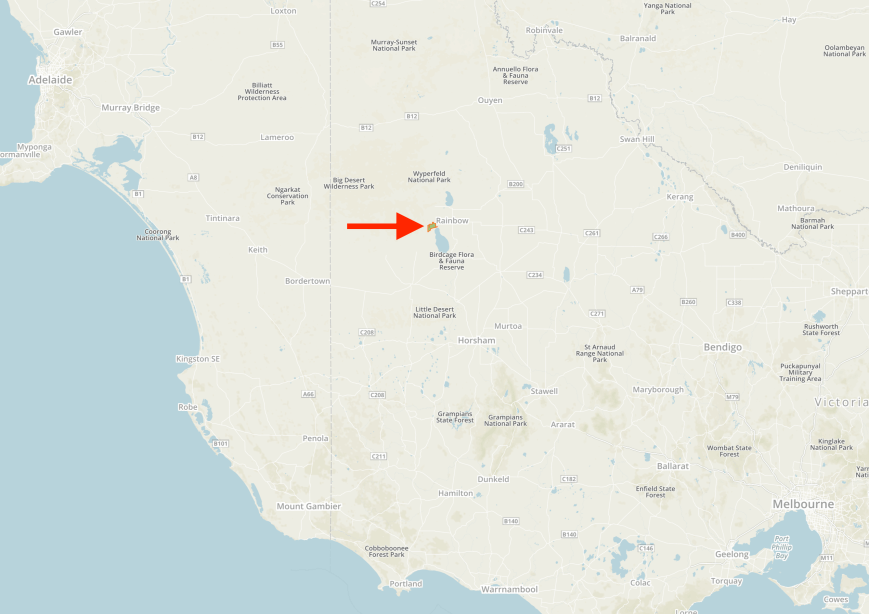
Our second intended park activation for Sunday 4th August 2019 was the Red Bluff Nature Conservation Reserve VKFF-2426.  I had researched the park before leaving home and saw that it was quite remote and to get into it there was going to be a fair bit of ‘bushbashing’.  This would be the first time that the park had been activated.

The park is located about 90km by road from the town of Kaniva in western Victoria.

Screen Shot 2019-08-07 at 10.00.40 am.png

Above:- Map showing the location of the Red Bluff Nature Conservation Reserve.  Map courtesy of Protected Planet. 

The Red Bluff Nature Conservation Reserve is about 3,900 hectares in size.  The park’s western boundary abuts the Victoria/South Australia State border, while its northern boundary abuts the Big Desert Wilderness Area.  Just over the State border to the north west of the park is the 270,000 hectare Ngarkat Conservation Park located in South Australia.

In 2014, Red Bluff Flora and Fauna Reserve and the Big Desert Wilderness Park were affected by large-scale fires.

To get to the park we travelled north on Taylors Road until we reached Red Bluff Firebreak Track.  We turned right onto the track.  Don’t turn left.  This will not take you to the park, but to the Border Track on the State border.

The track is absolutely 4WD only.  It is sandy and narrow and takes you through spectacular country.  There was a bit of water on the track in parts where we observed emus coming in for a drink.

After travelling some distance along the Red Bluff Firebreak Track we turned left onto the Red Bluff Track and travelled west.  We soon entered the track.  The terrain was starting to get a bit hilly, and as we were travelling on our own I did not want to get bogged.  So I did a 10 point turn and turned the 4WD around to face the way we came in.

DSC_9951

Marija and I ran the Yaesu FT-857d and the 20/40/80m linked dipole for this activation.  I ran 30 watts output whilst Marija ran 10 watts.

Screen Shot 2019-08-07 at 10.51.01 am.png

Above:- Map showing our operating spot in the park.  Map courtesy of Protected Planet.

This was a remote location and as such there was no internet coverage.  We were unable to place a self spot on parksnpeaks.  After setting up we tuned across the band and found Neil VK4HNS/p on 7.144 calling CQ from the Pooh Corner Nature Reserve VKFF-2878 in Queensland.

I then propped on 7.139 and called CQ.  This was answered by Peter VK3PF who informed me that Ian VK5CZ was up the band in a park.  Marija and I quickly tuned up to 7.154 and could hear Ian in there, albeit very light.  But due to the lack of man-made noise in both parks, we were able to work each other quite easily and logged Ian who was in the Caroona Creek Conservation Park VKFF-0875.

I then moved back down to 7.139 and called CQ, logging Cliff VK2NP and then Gerard VK2IO/5 who was activating the Flinders Rangers National Park VKFF-0176.  Marija also logged Gerard.

DSC_9971

I continued calling CQ on 40m and ended up logging a total of 37 stations from VK1, VK2, VK3, VK4, VK5, and VK7.  This included Nigel VK5NIG/p who was activating SOTA peak Mount Gawler VK5/ SE-013.  This almost became an invalid contact as Nigel was very low down to me and somebody came up to relay Nigel’s callsign.  Unfortunately, this makes the contact invalid.  But Nigel persisted and I was able to legitimately copy his callsign and a signal report was also exchanged making the QSO valid.

I was just about to head to the 80m band when I was called by Jonathan VK7JON who was activating the Peggs Beach Conservation Area VKFF-2913 in Tasmania with his wife Helen VK7FOLK/p.  Both Marija and I logged Jonathan and Helen, and then left the frequency with them and we moved down to 80m.

I called CQ on 3.610.  Peter VK3PF had been very kind and had spotted my move to this band.  First in the log was David VK5PL, followed by John VK5BJE, and then Nev VK5WG.  Appropriately contact number 44 was with Peter VK3PF.  Contact number 45 was with Ian VK5CZ/p in the Caroona Creek Conservation Park VKFF-0875 for a second band.

DSC_9950

I had now qualified the park for the global WWFF program and it was time for Marija to pick up her remaining 5 contacts to qualify the park for VKFF.  Marija called CQ on 3.610 and logged Brian VK3BBB mobile, followed by Geoff VK3SQ, Adrian VK5FANA, Andy VK5LA, and then Hans VK5YX.

Marija had now qualified the park and went on to work a further 7 stations from VK2, VK3, and VK5, including Ian VK5CZ/p in the Caroona Creek Conservation Park VKFF-0875.

DSC_9960

I then put out 5 minutes of CQ calls on 14.310 on the 20m band but had no takers.  To conclude the activation I moved back to 7.144 on 40m and called CQ, logging a further 2 stations from VK2.

It was time to pack up and make the journey back along the tracks and back to the Western Highway and our final park for the day, the Hardings Springs Conservation Reserve over the border in South Australia.

Marija worked the following stations on 40m SSB:-

  1. VK4HNS/p (Pooh Corner Nature Reserve VKFF-2878)
  2. VK5CZ/p (Caroona Creek Conservation Park VKFF-0875)
  3. VK2IO/5 (Flinders Ranges National Park VKFF-0176)
  4. VK7FOLK/p (Peggs Beach Conservation Area VKFF-2913)
  5. VK7JON/p (Peggs Beach Conservation Area VKFF-2913)

Marija worked the following stations on 80m SSB:-

  1. VK3BBB/m
  2. VK3SQ
  3. VK5FANA
  4. VK5LA
  5. VK5YX
  6. VK5AYL
  7. VK5BJE
  8. VK3PF
  9. VK6MB/3
  10. VK3ZNK
  11. VK2KJJ
  12. VK5CZ/p (Caroona Creek Conservation Park VKFF-0875)

I worked the following stations on 40m SSB:-

  1. VK4HNS/p (Pooh Corner Nature Reserve VKFF-2878)
  2. VK3PF
  3. VK5CZ/p (Caroona Creek Conservation Park VKFF-0875)
  4. VK2NP
  5. VK2IO/5 (Flinders Ranges National Park VKFF-0176)
  6. VK4CZ
  7. VK2LSB
  8. VK3UH
  9. VK2UH
  10. VK4SMA
  11. VK2FADV
  12. VK1MIC
  13. VK1MA
  14. VK2LEE
  15. VK4NH
  16. VK4DXA
  17. ZL4TY/VK4
  18. VK7OT
  19. VK2RSB
  20. VK2TMO
  21. VK2AB
  22. VK1AT
  23. VK4RF
  24. VK4HA
  25. VK1VIC
  26. VK4TJ
  27. VK4/AC8WN
  28. VK4/VE6XT
  29. VK2UXO
  30. VK7KW
  31. VK2ABK
  32. VK7KT
  33. VK2PBC
  34. VK5NIG/p (SOTA Mount Gawler VK5/ SE-013)
  35. VK2LX
  36. VK7FOLK/p (Peggs Beach Conservation Area VKFF-2913)
  37. VK7JON/p (Peggs Beach Conservation Area VKFF-2913)
  38. VK2VW
  39. VK2KJJ

I worked the following stations on 80m SSB:-

  1. VK5PL
  2. VK5BJE
  3. VK5WG
  4. VK5LA
  5. VK3BBB
  6. VK5FANA
  7. VK3PF
  8. VK5CZ/p (Caroona Creek Conservation Park VKFF-1875)


References.

Bonzle, 2019, <http://www.bonzle.com>, viewed 7th August 2019

Parks Victoria, 2019, <https://www.facebook.com/ParksVictoria/posts/1199652090094748>, viewed 7th August 2019

Yarrangook Flora and Fauna Reserve VKFF-2497

Marija and I hit the road on Sunday morning (4th August 2019) at around 8.30 a.m. local time and headed down the main street of Bordertown for a morning coffee.  We then filled up with diesel and had a look at a few of the local attractions.

The first was the childhood home of former Australian Prime Minister (PM) Robert James Lee ‘Bob’ Hawke.  He was the Australian PM from 1983 to 1990.  Hawke was born on the 9th December 1929 in Bordertown and lived in the town until 1935.  The building was built by the National Bank in 1884 and conducted business there until the branch closed in June 1885.  It was purchased by the Congregational Church as a manse in 1897.  Clem A Hawke was the Minister from 1928 to 1935.  It ceased to be a manse in 1976.

Bordertown is also famous for its white kangaroos which can be seen at the Bordertown Wildlife Park.  A mob of White Kangaroos that are a genetic strain of the Western Grey can be seen in the park.

We then left Bordertown and drove over the South Australian/Victorian State border into VK3 for our first park of the day, the Yarrangook Flora and Fauna Reserve VKFF-2497.

The park is located about 58 km north-west of the town of Kaniva.


Screen Shot 2019-08-06 at 9.09.49 pm.png

Above:- Map showing the location of the Yarrangook Flora & Fauna Reserve in western Victoria.  Map courtesy of Protected Planet.

Just after crossing the State border we turned left onto the Serviceton North-Telopea Downs Road and headed north.  This road runs parallel to the State border.  The road is sealed for a number of km but then turns to dirt and becomes Taylors Road.

DSC_9931

We continued along Taylors Road and about 44 km after leaving the Wimmera Highway we reached the southwestern corner of the Yarrangook Flora & Fauna Reserve which is well signposted.

DSC_9930

The Yarrangook Flora and Fauna Reserve is 1,525 hectares in size and consists of five areas of undisturbed mallee-broom bush scrub.  The westernmost section is located on Taylors Road about 44 km north of the Western Highway.  Two other sections are located on Chappel Road.  While the two eastern sections of the park are located on Murrawong North Road.

Screen Shot 2019-08-06 at 9.16.37 pm.png

Above:- The five sections of the Yarrangook Flora and Fauna Reserve.  Map courtesy of Protected Planet.

The name Yarrangook comes from the aboriginal words yarran meaning acacia, and ook meaning water.  Thus acacia growing by water.  The mallee—broom bush vegetation in the park is interspersed with areas of open heath and brown stringybark scrub.

DSC_9940

The park provides an important refuge for the Australian Bustard, a large ground bird which is often referred to as the Plains Turkey or Bush Turkey.  The male is up to 1.2 metres tall with a 2.3-metre wingspan.  Unfortunately, we did not see any during our visit to the park.

Australian_Bustard_-_Kingfisher_Park_-_Queensland.jpg

Above:- the Australian Bustard.  Image courtesy of wikipedia.

The park is surrounded by cleared farming land.

DSC_9937

We found a gate to a paddock on the western side of Taylors Road and parked the 4WD there and carried the gear across the road to the park.  We set up in a small clearing in amongst the scrub.

Screen Shot 2019-08-06 at 9.13.39 pm.png

Above:- An aerial shot of the westernmost section of park and our operating spot.  Image courtesy of Google maps

This was quite a remote location and we had internet coverage in the park so we were unable to place a self spot up on parksnpeaks.  The 40m band was busy with the broadcasts from the Wireless Institute of Australia, so we were unable to get onto the frequency of 7.144.  I found 7.130 to be clear and started calling CQ hoping that some of the park regulars would find me and then place a spot up for me.

First in the log was Paul VK7PAL, followed by Matt VK3FORD/2, Haucke VK1HW and then Peter VK3ZPF.  I had been lucky.  Peter VK3ZPF who is a regular park hunter and activator and is the VK3 State rep, placed a spot up for me on parksnpeaks.  This resulted in a steady flow of callers.  Thanks Peter.

A few QSOs later I was called by Gerard VK2IO/5 who was activating the Bunkers Conservation Reserve VKFF-1692.  Marija also logged Gerard.  This was a new park for both of us as hunters.

I logged 23 stations on 40m before the callers dried up.  I then called CQ on 3.610, unable to self spot.  Fortunately, John VK4TJ had kept listening on 40m and spotted me on parksnpeaks when I announced that I was moving to 80m.  First, in the log, was Adrian VK5FANA, followed by Gerard VK2IO/5 in the Bunkers Conservation Reserve VKFF-1692 for a second band for both Marija and me.  Conditions were quite good on 80m and I ended up logging a total of 7 stations there from VK3 and VK5.

DSC_9934

I had 30 contacts in the log and it was time for Marija to get on the air and qualify the park for VKFF.  We decided to remain on the 80m band.  Marija called CQ and this was answered by David VK5PL, followed by Peter VK3PF, Ken VK2KYO, John VK5BJE, and then Geoff VK3SQ.  But a further 5 minutes of CQ calls went unanswered so we decided to move back to the 40m band, with Marija requiring just 3 more contacts for her 10.

Marija called CQ on 7.144 and this was answered by Peter VK3PF who spotted Marija on parksnpeaks.  Geoff VK3SQ then called in, followed by contact number ten with Ken VK2KYO.  Marija logged a further 3 station before callers once again dried up.

It was an opportune tune to move to the 20m band.  Peter VK3PF kindly placed a spot up for me to advise that I would soon be on 14.310.  Marija and I lowered the squid pole and removed the links for the 20m and then headed for 14.310.  I called CQ and Ray VK4NH responded, followed by John VK4TJ.  Both Ray and John have other callsigns, so 2 contacts became 6.  I then logged Peter VK6RZ with a strong 5/9 signal from across the other side of Australia in Western Australia.

I now had 37 contacts in the log and needed a further 7 to qualify the park for WWFF.  So it was back to 7.144 on the 40m band.  Rob VK4AAC/2 came back to my CQ call, followed by Peter VK2OQ mobile and then Geoff VK3SQ.  Contact 44 followed soon after with Chris VK1CT.

I ended up logging a total of 54 stations including 2 Park to Park contacts.  Marija logged 13 stations including 2 Park to Park contacts.

THANK YOU to those who took the time to spot us on either parksnpeaks and/or Facebook.

DSC_9933

Marija worked the following stations on 40m SSB:-

  1. VK2IO/5 (Bunkers Conservation Reserve VKFF-1692)
  2. VK3PF
  3. VK3SQ
  4. VK2KYO
  5. VK4AAC/2
  6. VK2VH
  7. VK5FANA

Marija worked the following stations on 80m SSB:-

  1. VK2IO/5 (Bunkers Conservation Reserve VKFF-1692)
  2. VK5PL
  3. VK3PF
  4. VK2KYO
  5. VK5BJE
  6. VK3SQ

I worked the following stations on 40m SSB:-

  1. VK7PAL
  2. VK3FORD/2
  3. VK1HW
  4. VK3ZPF
  5. VK7OT
  6. VK2IO/5 (Bunkers Conservation Reserve VKFF-1692)
  7. VK1NP
  8. VK1MA
  9. VK4CZ
  10. VK4RF
  11. VK4HA
  12. VK4NH
  13. VK4DXA
  14. ZL4TY/VK4
  15. VK2VW
  16. VK3PF
  17. VK2PKT
  18. VK2EXA
  19. VK4TJ
  20. VK4/AC8WN
  21. VK4/VE6XT
  22. VK2ADB
  23. VK2LEE
  24. VK4AAC/2
  25. VK2VH
  26. VK2OQ/m
  27. VK3SQ
  28. VK7KT
  29. VK4SMA
  30. VK1CT
  31. VK3UH
  32. VK2TTL
  33. VK3BD
  34. VK2KNV/m
  35. VK2LIS/m
  36. VK5KLV
  37. VK3ARH
  38. VK1AT
  39. VK1DI
  40. VK7ALH

I worked the following stations on 80m SSB:-

  1. VK5FANA
  2. VK2IO/5 (Bunkers Conservation Reserve VKFF-1692)
  3. VK5BJE
  4. VK3SQ
  5. VK3MCK
  6. VK3PF
  7. VK2KYO

I worked the following stations on 20m SSB:-

  1. VK4NH
  2. VK4DXA
  3. ZL4TY/VK4
  4. VK4TJ
  5. VK4/AC8WN
  6. VK4/VE6XT
  7. VK6RZ


References.

Land Conservation Council, 1986, Wimmera Area Final Recommendations.

Wikipedia, 2019, <https://en.wikipedia.org/wiki/Australian_bustard>, viewed 6th August 2019

Wimmera Place Names, 2019, <https://swiftconsortium.org.au/client/en_AU/search/asset/243363>, viewed 6th August 2019

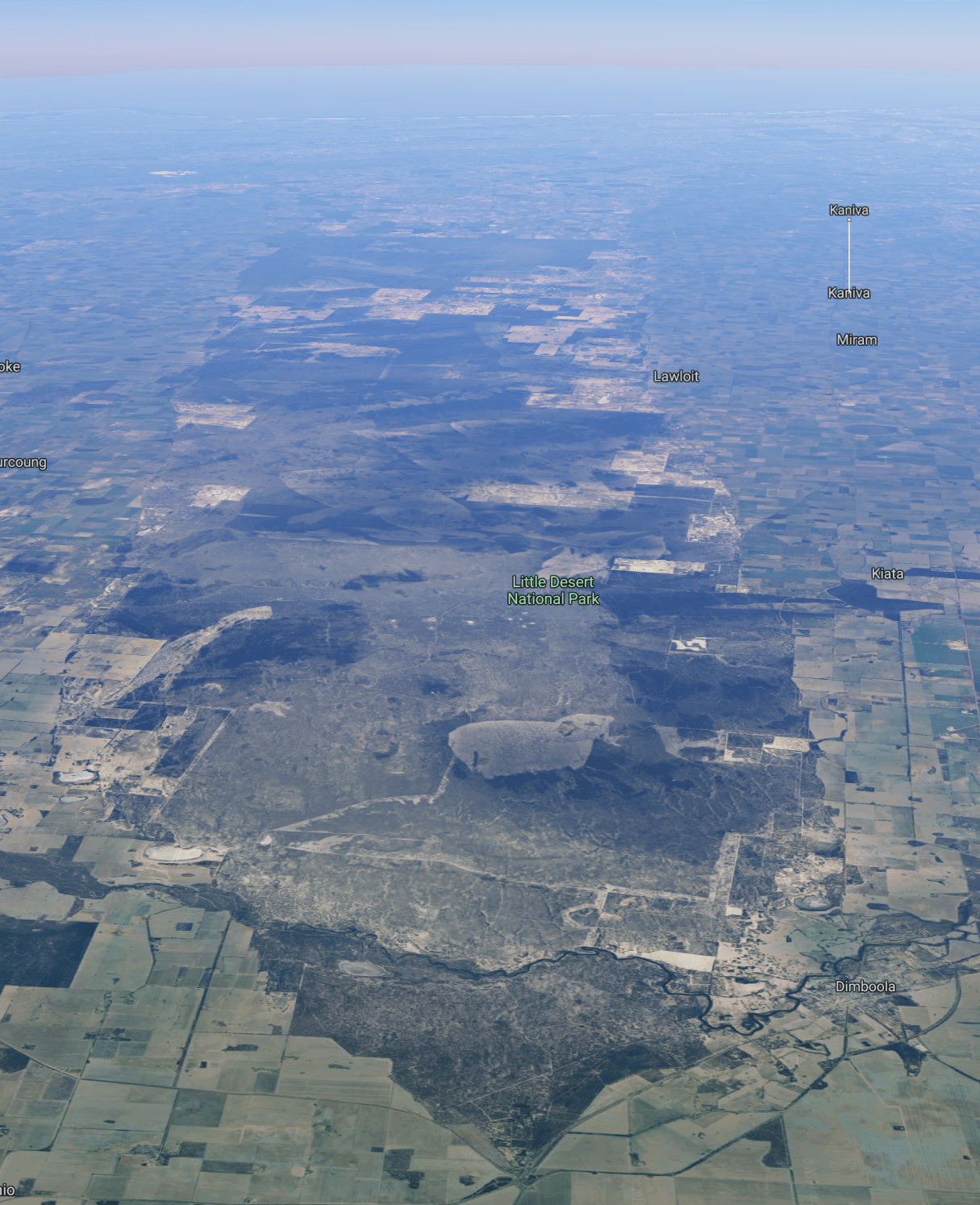
Jumping Jack Wattle Nature Conservation Reserve VKFF-2120

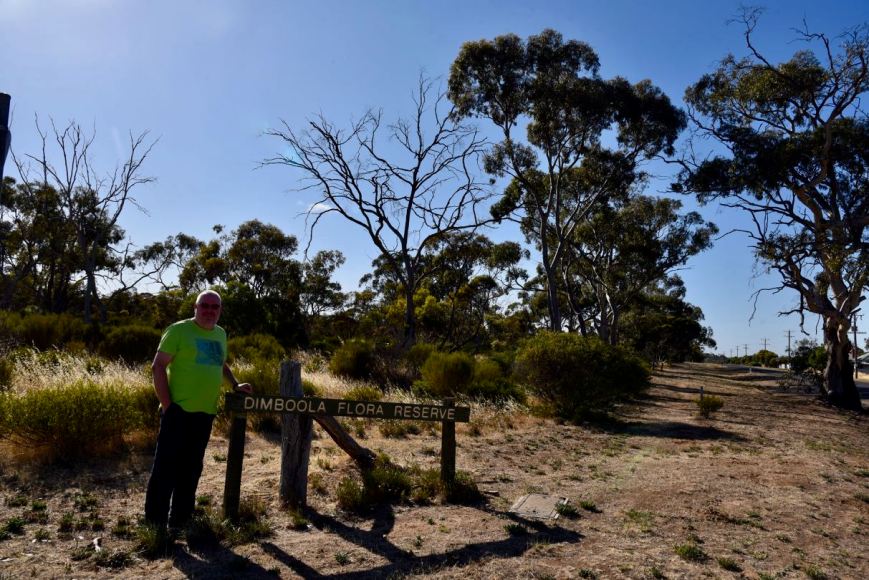
Our final park for Saturday 3rd August 2019, was the Jumping Jack Wattle Nature Conservation Reserve VKFF-2120.  The park is located about 18 km west of the town of Nhill in western Victoria.

This was to be a first-time activation of the park.

Screen Shot 2019-08-06 at 8.22.36 pm.png

Above:- Map showing the location of the Jumping Jack Wattle Nature Conservation Reserve.  Map courtesy of Protected Planet.

The park is officially called the Jumping Jack Wattle Nature Conservation Reserve but is still signposted as the Diapur Flora Reserve.  The park is located on the Nhill-Diapur Road at the intersection with Lawloit-Diapur Road.  Diapur is situated on the Melbourne-Adelaide railway line and is the halfway point of the journey.

George Coles, whose son Sir George James Coles, the founder of the Coles empire, lived at Diapur in the late 1800s.  He built a store, a blacksmiths shop and a hotel here.

The park is home to Jumping-jack Wattle Acacia enterocarpa which is listed as Threatened in Victoria and Endangered in South Australia.

Screen Shot 2019-08-06 at 8.48.47 pm.png

Above:- Jumping-jack Wattle.  Image c/o Peter Tucker, flickr.

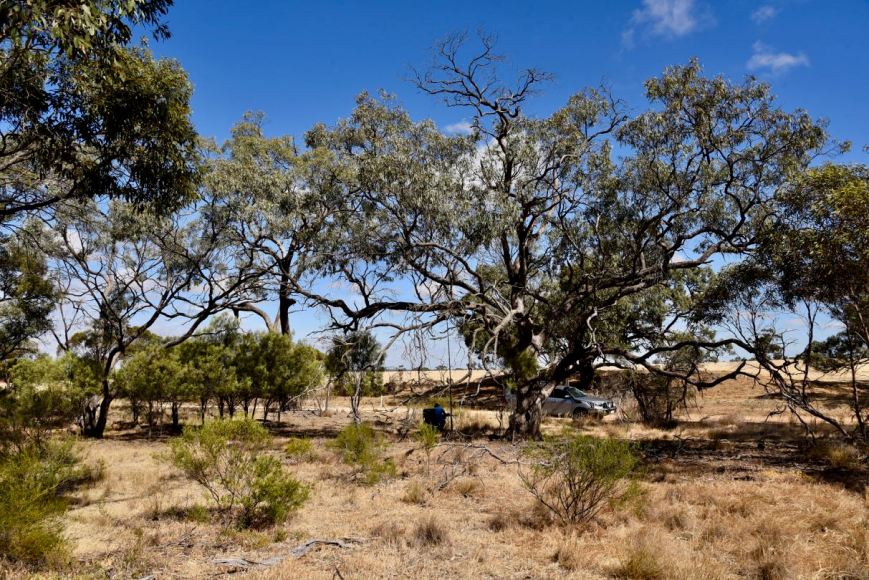
We pulled up on the side of the road and strung out the 20/40/80m dipole.  There was barely enough room to stretch it out due to the scrub in the park.

Screen Shot 2019-08-06 at 8.25.29 pm.png

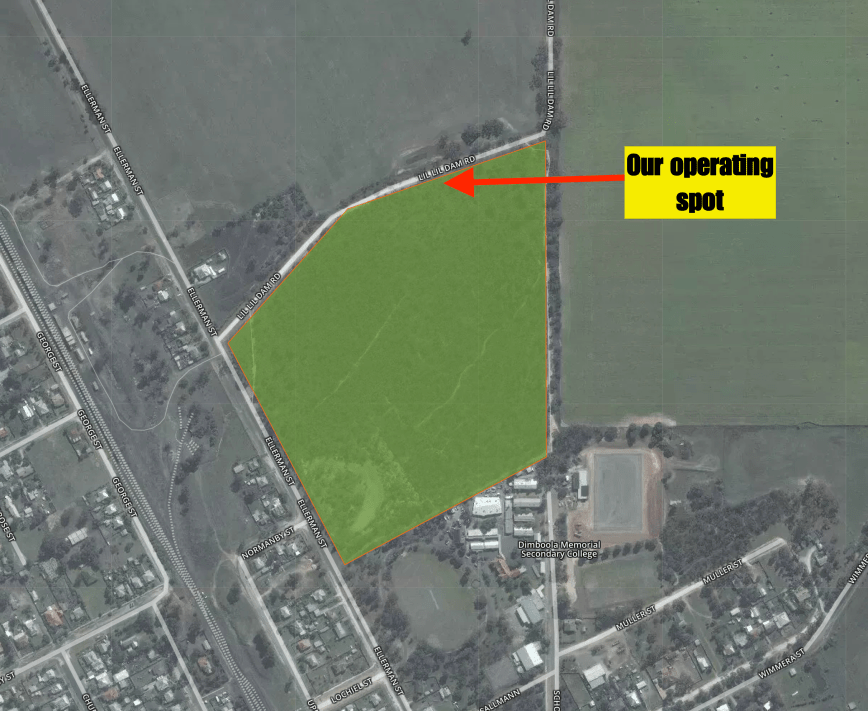
Above:- An aerial view of the park showing our operating spot.  Image courtesy of Google maps

We were in the park just before dark so we decided to kick off the activation 80m.  And as it turned out that is where we stayed for the duration of the activation.

First in the log was Peter VK3PF, followed by Nick VK3ANL, Scott VK4CZ and then David VK5PL.  Within just 6 minutes I had qualified the park for VKFF with 10 contacts in the log.  QSO number 10 was with Adam VK2YK.

I logged a total of 33 stations on 80m before swapping the mic with Marija.

DSC_9914

Marija’s first contact was with John VK5BJE, followed by Peter VK3PF, and then Geoff VK3SQ.  Marija’s tenth contact came 6 minutes into her activation, with QSO number ten being with Nik VK3ZNK.

Once Marija had logged her 10th contact I got back on air and was hoping to pick up my 44 QSOs as quickly as possible as it was starting to get late and we needed to be back at Bordertown to book into our accommodation by 8.00 p.m.

DSC_9920

It took me just another 12 minutes to pick up my remaining 12 contacts.  My final contact was with Paul VK3DA mobile.

As we had qualified the park on 80m and we were pushed for time, we did not operate on 40m or 20m for this activation.

DSC_9919

Marija worked the following stations on 80m SSB:-

  1. VK5BJE
  2. VK3PF
  3. VK3SQ
  4. VK3CRG
  5. VK4TJ
  6. VK4/AC8WN
  7. VK4/VE6XT
  8. VK3DBP
  9. VK5YX
  10. VK3ZNK

I worked the following stations on 80m SSB:-

  1. VK3PF
  2. VK3ANL
  3. VK4CZ
  4. VK5PL
  5. VK5WG
  6. VK2HRX
  7. VK4NH
  8. VK4DXA
  9. ZL4TY/VK4
  10. VK2YK
  11. VK5FILL
  12. VK2MOP
  13. VK4MWB
  14. VK2LEE
  15. VK4TJ
  16. Vk4/AC8WN
  17. VK4/VE6XT
  18. VK3SQ
  19. VK4SMA
  20. VK3MPR
  21. VK3MKE
  22. VK7BEN
  23. VK5AYL
  24. VK5BJE
  25. VK5FD
  26. VK2VW
  27. VK3CRG
  28. VK3CIB
  29. Vk3DBP
  30. VK3ZNK
  31. VK2FALL
  32. VK7ROY
  33. ZL1TM
  34. VK2LPF
  35. VK5YX
  36. VK5FANA
  37. VK2EME
  38. VK5KLV
  39. VK3VEK
  40. VK2POW
  41. VK5LJ
  42. VK2UMA
  43. VK3UFO
  44. VK4CAN
  45. VK3DA/m

Marija and I drove back across the Victorian/South Australian State Border into VK5.  We booked into our motel and then headed to the Bordertown Hotel for a meal and a few beverages.

IMG_2392.JPG


References.

The Wimmera Mail Times, 2019, <https://www.mailtimes.com.au/story/968911/diapur-launched-dynasty/>, viewed 6th August 2019

Wikipedia, 2019, <https://en.wikipedia.org/wiki/Diapur,_Victoria>, viewed 6th August 2019