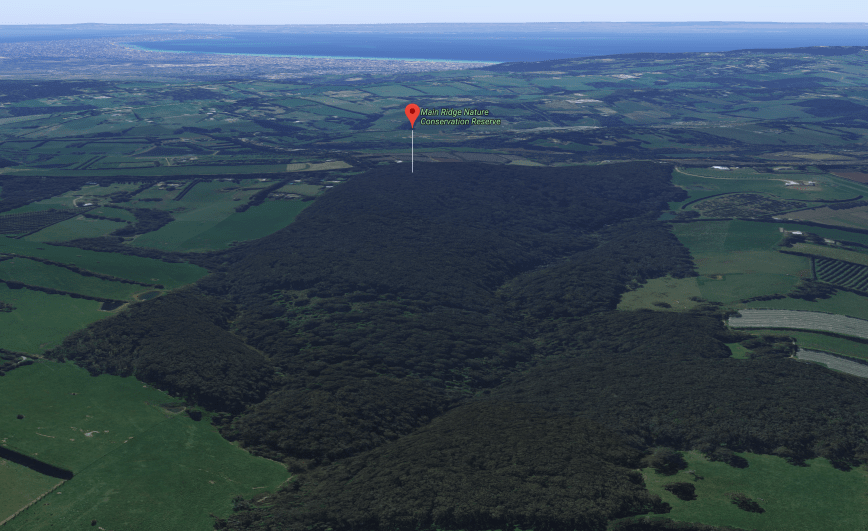
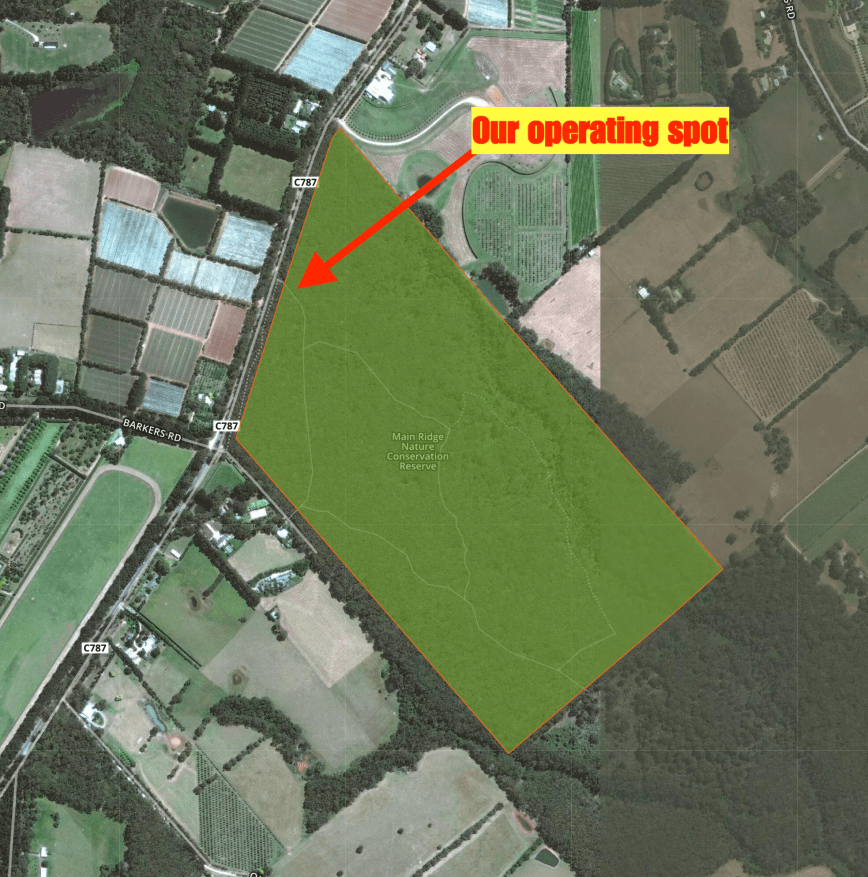
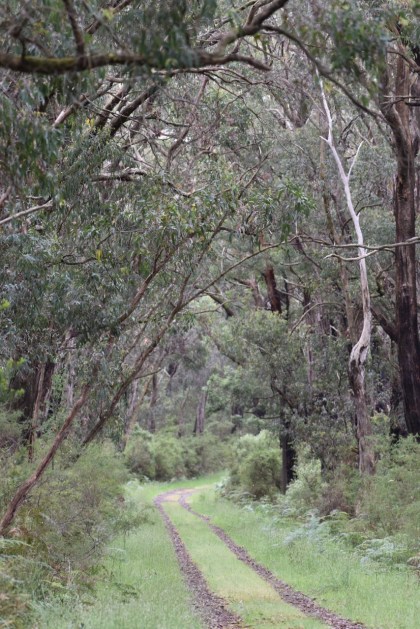
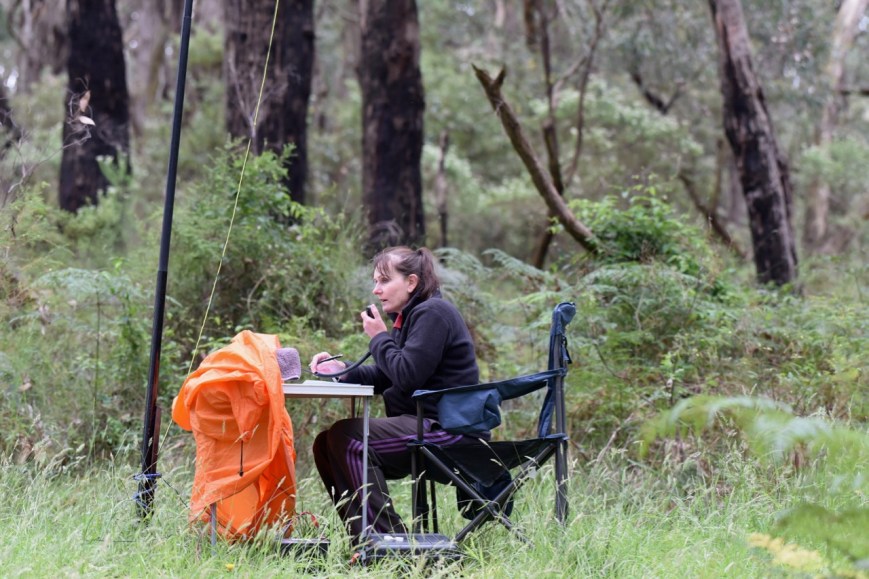
Day fourteen, Inverleigh Nature Conservation Reserve VKFF-2336

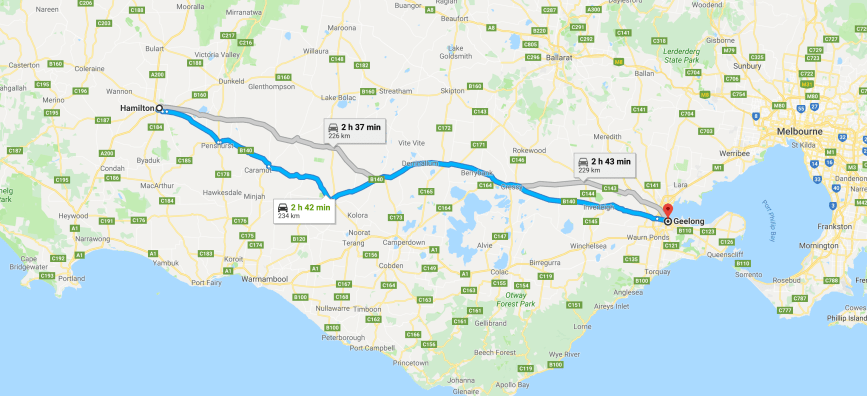
It was day fourteen (Thursday 29th November 2018) and time for us to leave Geelong and head to Hamilton in western Victoria.  This involved a drive of about 234 km, with a number of intended park activations along the way.

Screen Shot 2018-12-22 at 10.28.22 am.png

Above:- Map showing the route between Geelong and Hamilton.  Map courtesy of google maps.

After leaving the motel we headed to ‘GMHBA’ Stadium, otherwise known as Kardinia Park, which is the home to the AFL footy club Geelong.  I have been to the Melbourne Cricket Ground (MCG) and the Docklands Stadium, but I had never seen Kardinia Park, except on television.

We then stopped off to have a look at St Mary of the Angels Parish Church in Geelong.  In 1846 the foundations for a stone church were laid on the present site of the cathedral.  In 1854 the foundation stone of the current church was laid and in 1872 St Mary of the Angels was officially opened by Bishop Goold.

The church has the tallest bluestone spire in Australia at 150 feet and it has the 4th tallest no cathedral spire in Australia.  It is the tallest building in Geelong.

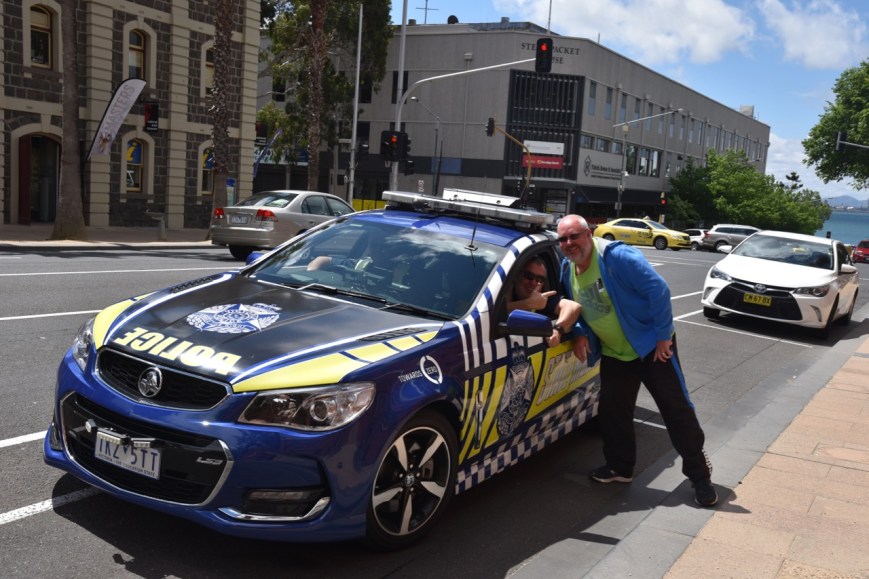
We then headed down to the Corio Bay foreshore at Geelong, where there was some sort of car rally taking place.  We stopped off at one of the cafes for a cooked breakfast.

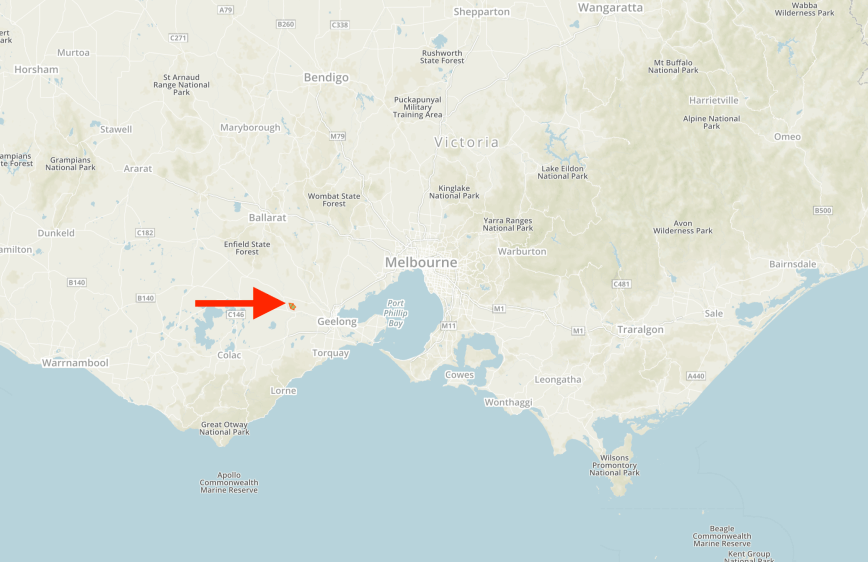
We then headed out of Geelong on the Western Highway.  Our next intended stop was to be the Inverleigh Nature Conservation Reserve VKFF-2336, which is about 30 km west of Geelong.

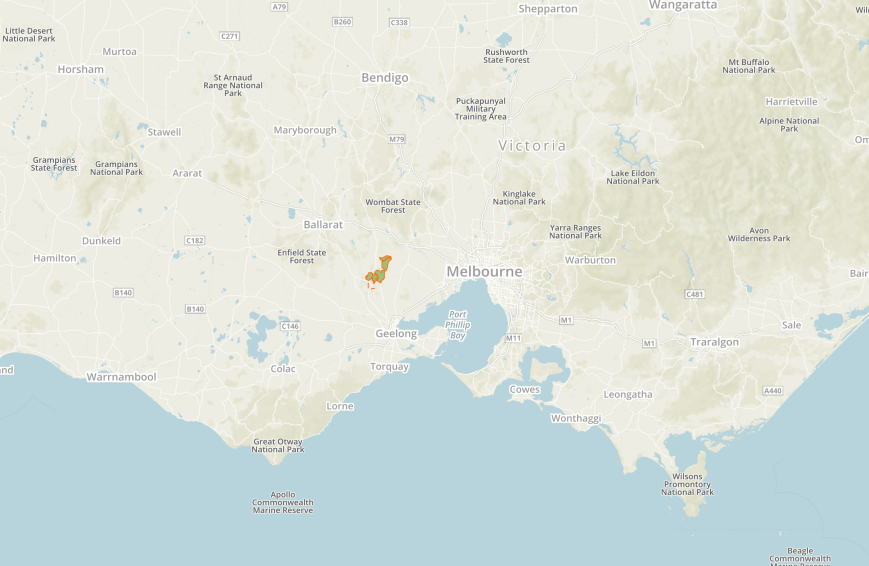
Screen Shot 2018-12-21 at 9.36.18 pm.png

Above:- Map showing the location of the Inverleigh Nature Conservation Reserve.  Map courtesy of Protected Planet

On the way out of Geelong we stopped to have a look at the silo art on the former Geelong Cement Works site.  The artwork on the silos is the work of a street artist known as Rone, who has worked in London, New York and Berlin.  The three images are those of Corrina Eccles, a descendent of the queen of the Wadawurrung and traditional owner, Cor Horsten, who has had a 35-year career at the Geelong Cement Works, and Kelly Cartwright, a dual Paralympic gold medal-winner.

Sadly, we could not find a viewing spot close to the silos.  They appeared to be fenced off.  The track leading towards the silos was littered with rubbish and used syringes/needles, so we viewed the silos at a distance.

DSC_5778.jpg

We drove in to the town of Inverleigh and then along Common Road, passing the local golf club.  We then took Links Track and drove into the park.

The Inverleigh Nature Conservation Reserve is about 1,050 hectares in size and contains remnant grassy woodland.  The reserve is surrounded by farmland and provides a living example of the landscape that existed in the dry southern inland areas prior to European settlement.

The park contains 507 species of native flora and fauna, representing 37% of all species recorded in the Victorian Volcanic Plains Bioregion.  During spring the park is alive with wildflowers and nearly 50 species of native orchids.

Native animals that call the park home include the Eastern Grey Kangaroo, Black Wallaby, Koala and Echidna.  More than 130 species of birds can be found in the park including the Eastern Rosella, White-browned Woodswallow, Diamond Firetail, Wedge-tailed Eagle and Australian Owlet-nightjar.

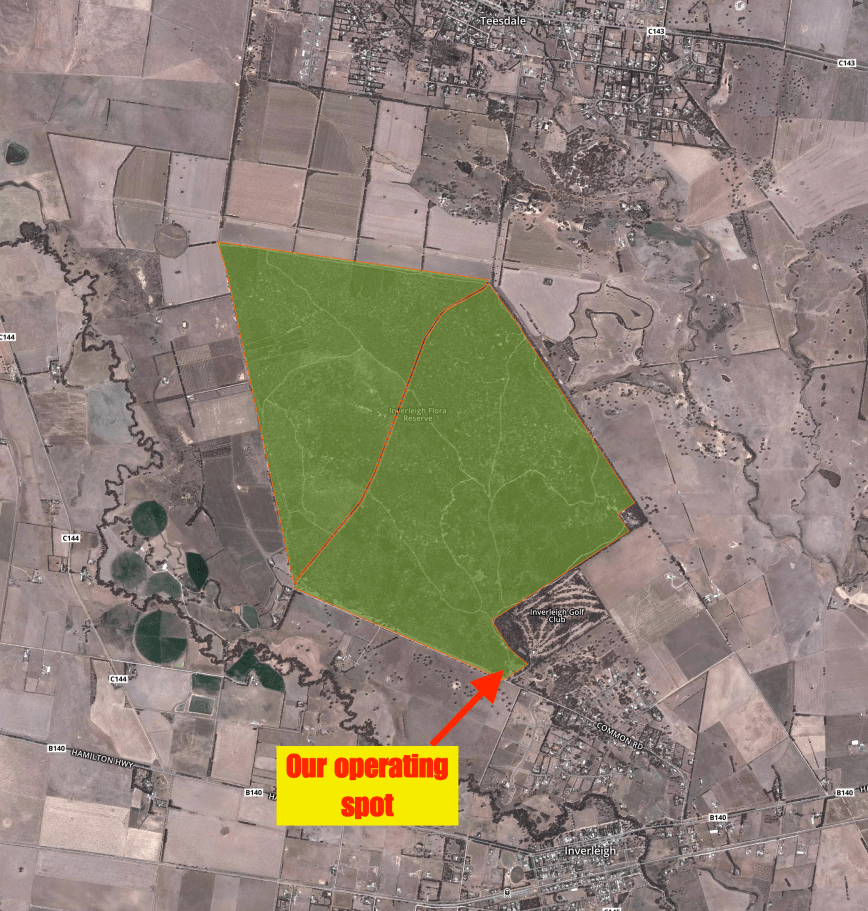
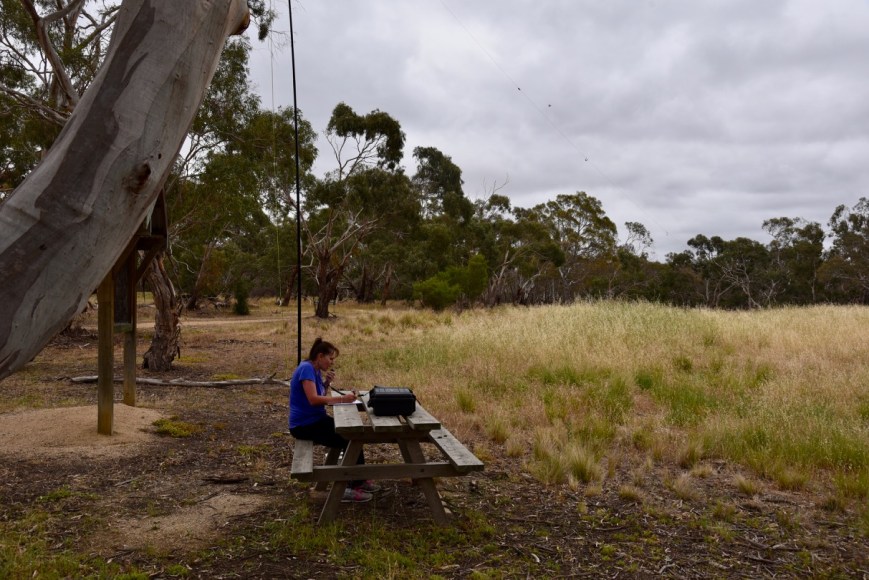
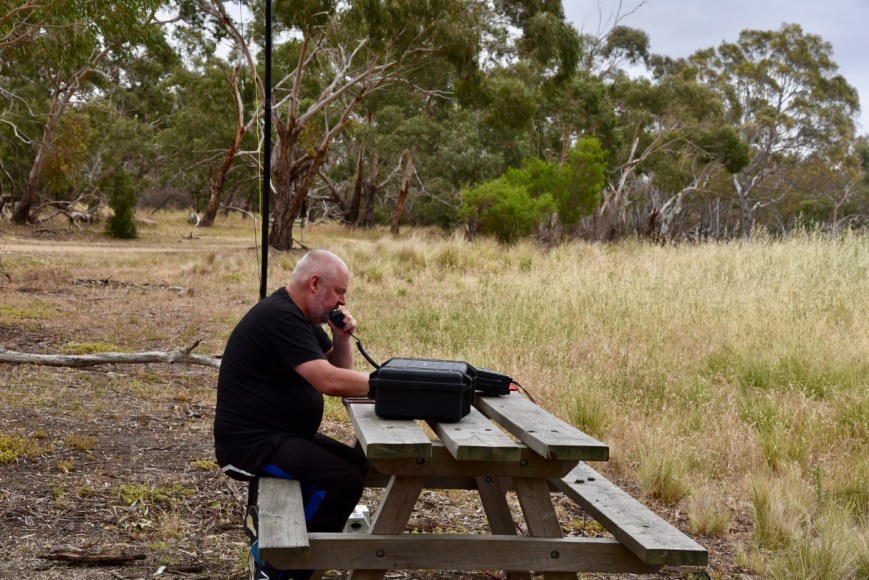
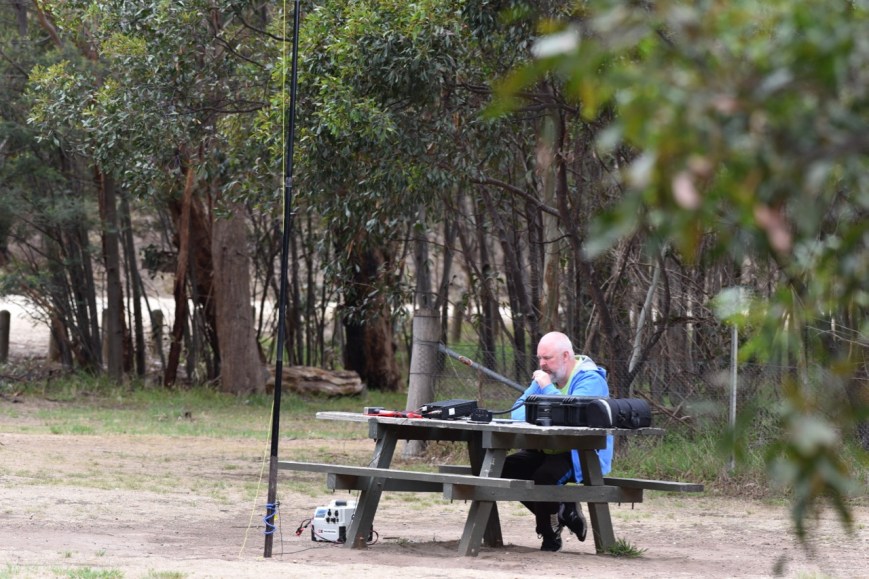
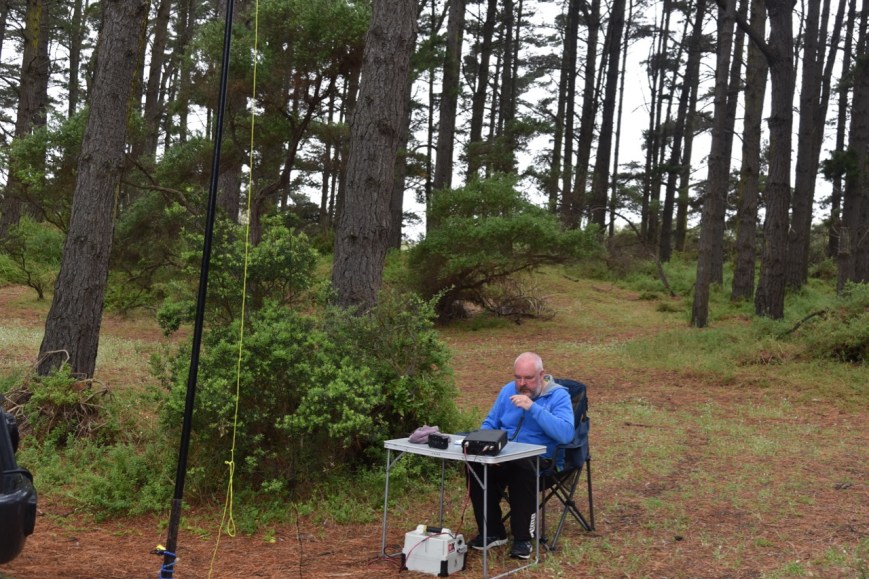
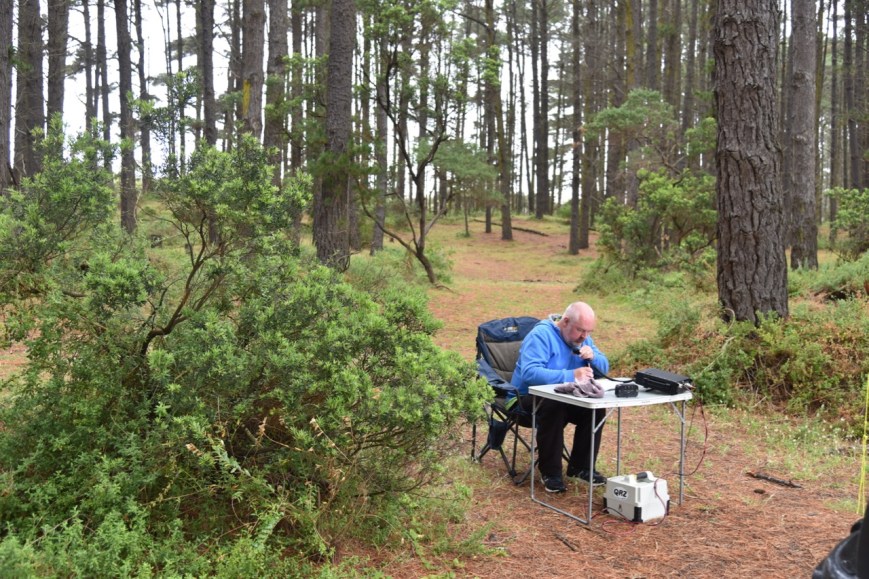
We had the park all to ourselves, and there was plenty of room here to string out the 20/40/80m linked dipole.  We set up right alongside of the information board on Links Track.

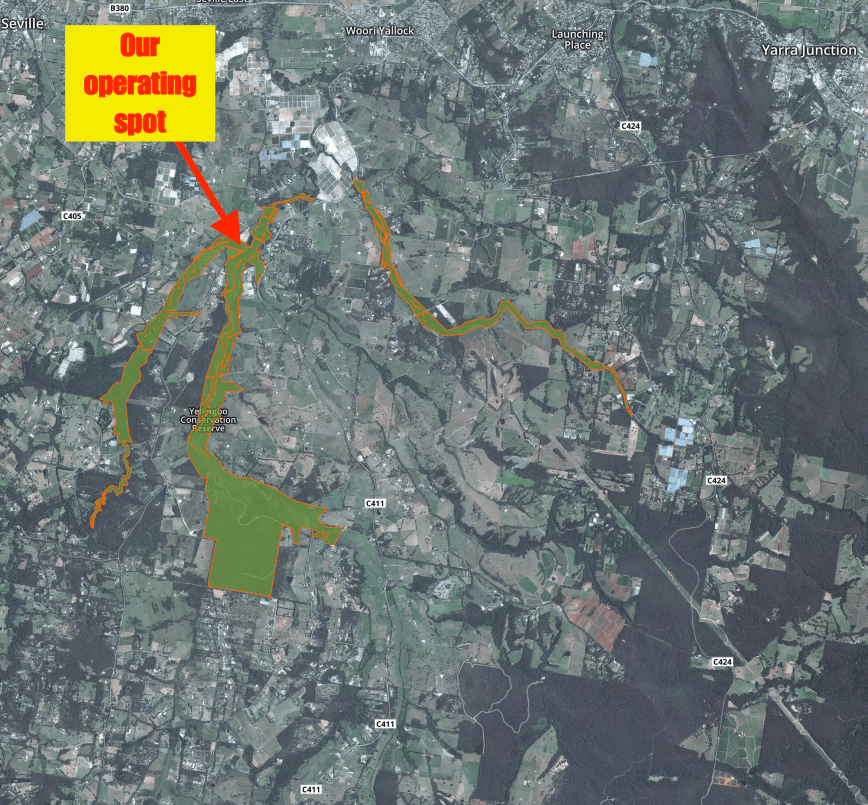
Screen Shot 2018-12-21 at 9.36.03 pm.png

Above:- An aerial shot of the Inverleigh Nature Conservation Reserve, showing our operating spot

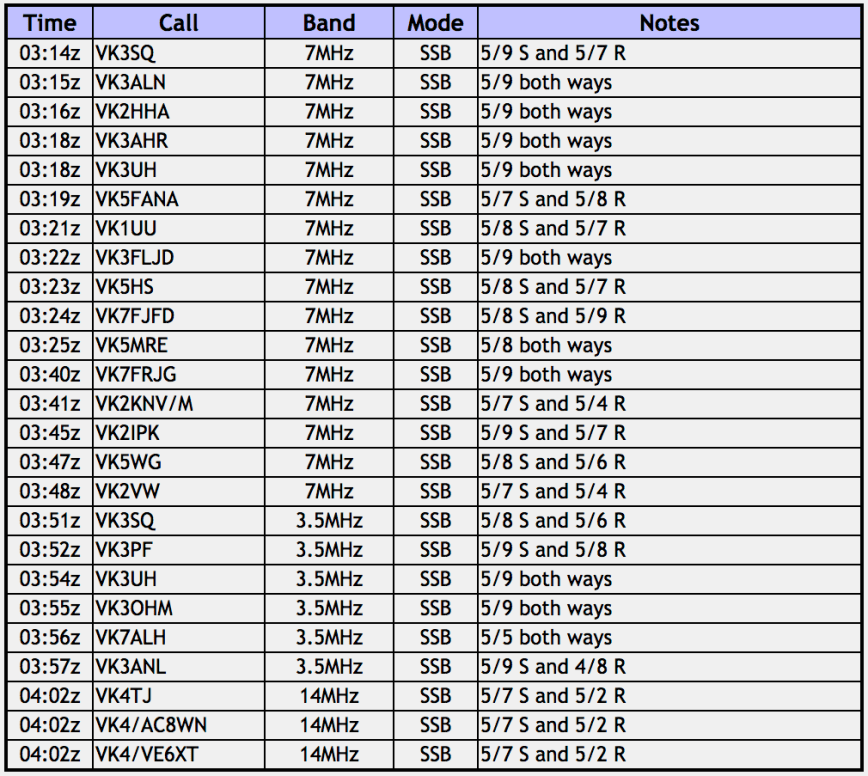
Prior to calling CQ I booked in quickly to a net on 7.095 and worked the net control Ron VK3AHR.  I then moved up to 7.144 and started calling CQ.  Rod VK7FRJG came back to my call, followed by Ivan VK5HS, Peter VK3TKK mobile, and then Hans VK5YX.  The 40m band appeared to be in good shape, with most signals being very strong.  I logged a total of 15 stations on 40m from VK2, VK3, VK4, and VK5.

Marija then took charge of the microphone and started calling CQ.  First in the log for Marija was Geoff VK3SQ, followed by Nev VK5WG, Dennis VK2HHA and Peter VK3PF.  It took Marija just 8 minutes to qualify the park for VKFF.  Marija’s 10th contact was with Ken VK2KYO.

DSC_5784

I was keen to try to get my 44 QSOs and qualify the park for the global WWFF program, so once Marija had qualifed the park for VKFF, I jumped back onto the mic and called CQ on 3.610 on the 80m band.  Geoff VK3SQ was first in the log.  Ivan VK5HS then gave me a call, but despite being able to hear Ivan well, he was struggling with me, and we were unable to successfully exchange signal reports, so it was a negative contact.  I then logged Peter VK3PF and Dennis VK2HHA.

With 18 contacts in the log, it was time to try 20m.  I called CQ on 14.310 and logged John VK4TJ, along with his USA and Canadian calls.  I then moved back to 40m where I logged a total of 10 further stations from VK2, VK3, VK4, and VK5.  But the callers soon dried up, so we packed up.

DSC_5782

Marija worked the following stations on 40m SSB:-

  1. VK3SQ
  2. VK5WG
  3. VK2HHA
  4. VK3PF
  5. VK5HS
  6. VK5YX
  7. VK4TJ
  8. VK4/AC8WN
  9. VK4/VE6XT
  10. VK2KYO

I worked the following stations on 40m SSB:-

  1. VK3AHR
  2. VK7FRJG
  3. VK5HS
  4. VK3TKK/m
  5. VK5YX
  6. VK5MJ
  7. VK3SQ
  8. VK3UH
  9. VK2HHA
  10. VK2IO
  11. VK5WG
  12. VK4NH
  13. VK4DXA
  14. ZL4TY/VK4
  15. VK3PF
  16. VK5FANA
  17. VK3SQ
  18. VK4TJ
  19. VK4/AC8WN
  20. VK4/VE6XT
  21. VK3UH
  22. VK2BL
  23. VK2VIC
  24. VK1VIC/2
  25. VK5KLV

I worked the following stations on 80m SSB:-

  1. VK3SQ
  2. VK3PF
  3. VK2HHA

I worked the following stations on 20m SSB:-

  1. VK4TJ
  2. VK4/AC8WN
  3. VK4/VE6XT

We drove in to the town of Inverleigh for some morning tea.  We also had a look at the historic Inverleigh Hotel, a magnificent bluestone building which was built in 1856.

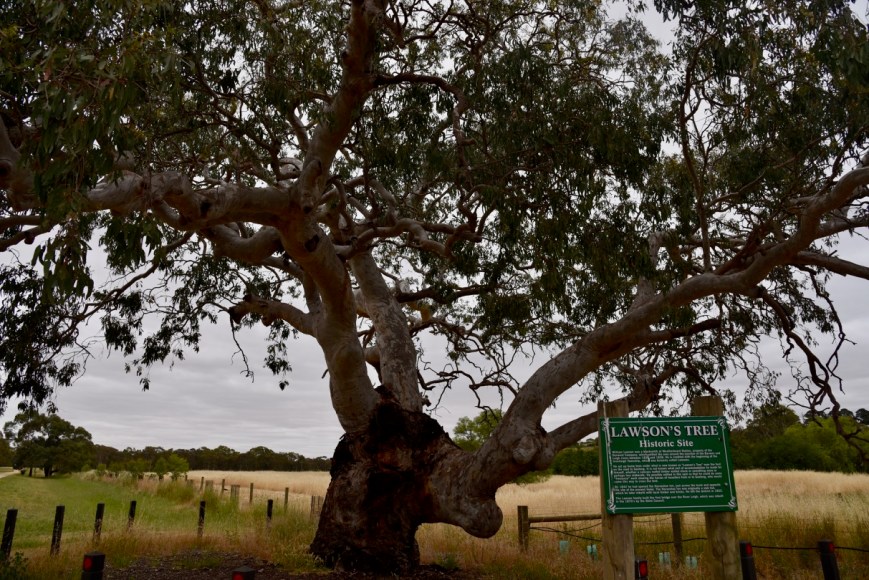
We also had a look at Lawsons Tree.  William Lawson, who is credited with the beginning of the township of Inverleigh which was originally called Lawsons.  He set up home under what is now known as Lawsons Tree.  By 1842 he had opened the Horeshoe Inn, just across the track and opposite the site of the present day hotel.

DSC_5793


References.

St Marys Catholic Parish Geelong, 2018, <http://www.stmarysgeelong.com.au/history.html>, viewed 22nd December 2018

Wikipedia, 2018, <https://en.wikipedia.org/wiki/St_Mary_of_the_Angels_Basilica,_Geelong>, viewed 22nd December 2018

Day thirteen, Brisbane Ranges National Park VKFF-0055

Day thirteen (Wednesday 28th November 2018) was upon us.  We only had one planned park activation for the day, with quite a bit of sightseeing around Geelong in today’s schedule.  Our intended park was the Brisbane Ranges National Park VKFF-0055, which was to be a new park for both Marija and I in both the WWFF and the KRMNPA programs.

Prior to activating the park, Marija and I planned on visiting the historic town of Steiglitz.  We headed north west out of Geelong on the Steiglitz Road.  Our first stop of the day was the Bunjil Lookout at Maude.  The lookout was opened on the 27th February 2015, with a traditional smoking ceremony.  The design of the lookout takes its inspiration from the aboriginal indigeneous story of the Great Creator Ancestor Spirit, Bunjil, the Wedge-Tailed Eagle, who was the creator of the Kulin land and its people.  The lookout, which represents a wedge tailed eagle in flight, overlooks the Moorabool River valley.

We continued on for a few more kms and soon reached Steiglitz which is located along the banks of the Sutherlands Creek.  It was so named after the Von Stieglitz family who were early pioneers in the district during the 1830’s.  No, that isn’t a typo with the spelling of Von Stieglitz and town as Steiglitz.  For some reason this is the way the town name is spelt.  Stieglitz in German translates to Goldfinch.

Gold was discovered in the area during the 1850’s.  By May 1856, about 750 ounces of gold per week, increasing to 900 ounces per week by July.  This resulted in the population of Steiglitz increasing to over 1,000.  At its peak, Steiglitz had over 6 hotels, a doctor, a bank, a butcher, a cobbler, blacksmiths, a race club, a tennis club and numerous other services.

By the 1860’s gold was in decline in the area.  It was reported though that the quality of the gold from Steiglitz was superior to that of Ballarat.  Right up until 1941 gold was mined in the area, until the closure of the mines and operations.

Nowadays, there are only about 10 residents in Steiglitz, but there are a number of historic buildings to be viewed.  It is a very interesting place to visit.

This slideshow requires JavaScript.

We then headed to the Brisbane Ranges National Park, which are located about 82 km east of the city of Melbourne.

Screen Shot 2018-12-20 at 9.33.31 pm

Above:- Map showing the location of the Brisbane Ranges National Park.  Map courtesy of Protected Planet.

The park is  7,718-hectare (19,070-acre) in size and was established on the 15th day of August 1973.  The key feature of the park is the Brisbane Ranges, a series of low hills forming an undulating plateau.  Almost one sixth of Victoria’s plant species have been recorded within the park.  Twenty six of those are listed as rare, threatened or significant in Victoria.

In 1918 the Field Naturalists Club of Victoria proposed the reserve of the Brisbane Ranges as a National Park, but nothing eventuated.  In 1956, Cr. H.A. Boardman of the Barwon Regional Commission embarked on a campaign for a national park.  It was strongly supported by the Victorian National Parks Association and the Country Women’s Association, along with a number of prominent persons including Professor John Turner of the University of Melbourne, and J.H. Willis of the National Herbarium.

Three years later in 1959, the Geelong Water and Sewerage Trust offered large areas of its reserves as a national park, with the area covered including parts of the present park.  One year later in 1960 the National Parks Authority entered into discussions with the Forests Commission of Victoria, who were prepared to cut about 1,100 acres of State Forest along Anakie Gorge Road.  The Lands Department at the same time offered an area of about 273 acres.

In September 1963 the National Parks Authority discussed the proposal to create the Brisbane Ranges National Park, with a recommendation made to the Minister for State Development in early 1964.  Despite ministerial endorsement in 1964, it would take another nine years before the park was proclaimed in 1973.  Over the years, additional areas of land have been added to the park.

The park was alive with birdlife during our visit.  Below are some of the photographs I took whilst in the Brisbane Ranges.

We decided upon the Anakie Gorge Picnic Area.  The name is believed to be derived from ‘Anakie Youang’, an expression in one of the local Australian Aboriginal languages, meaning ‘little hill’ or ‘twin hills’.

Screen Shot 2018-12-20 at 9.34.02 pm.png

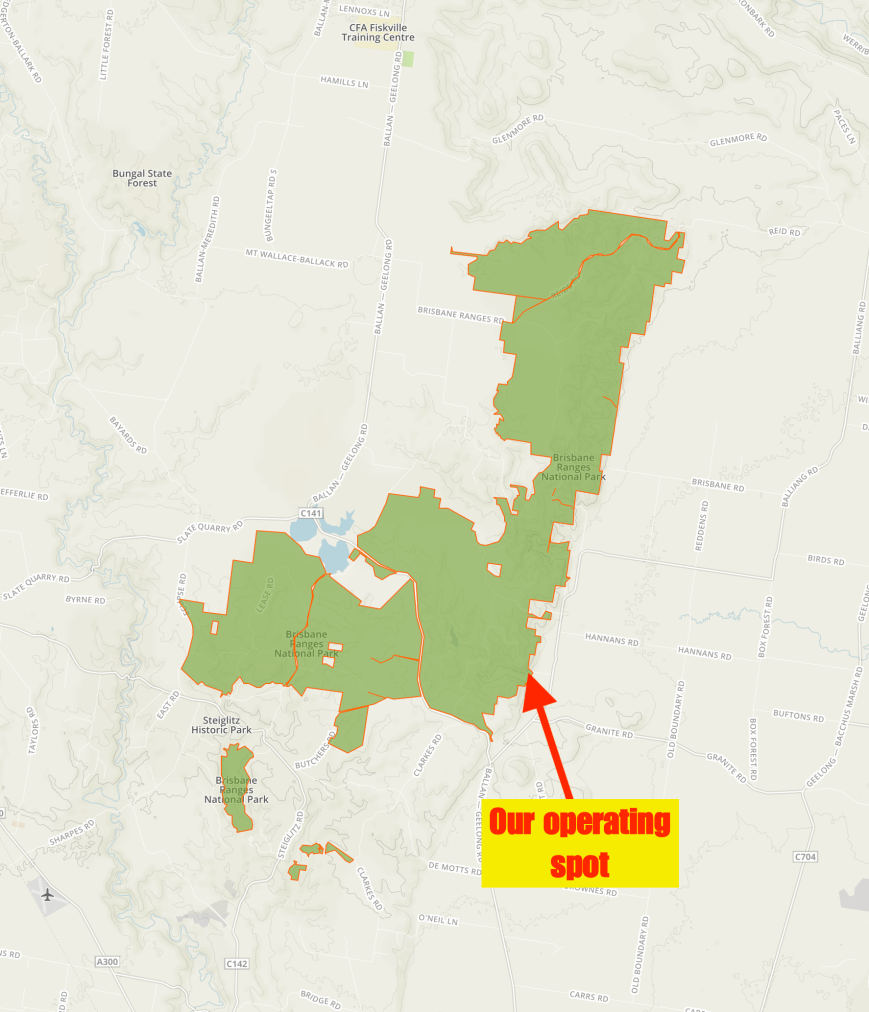
Above:- Map of the Brisbane Ranges National Park, showing our operating spot.  Map courtesy of Protected Planet.

This was to be one of the most difficult activations undertaken by Marija and I.  Nothing to do with access to the park, but rather, poor band conditions and a real struggle to get the 10 required contacts to qualify the park for VKFF.  It was DIFFICULT!

I called CQ on 7.144 for around 5 minutes, competing with the very loud static crashes.  Nev VK5WG was first in the log, followed by Peter VK3TKK mobile, and then Ivan VK5HS.  But that was it.  Callers completely dried up.

DSC_5623

So it was time for Marija to call CQ, and hopefully her more pleasing voice might attract some callers.  First in the log for Marija was Ivan VK5HS, followed by Ian VK5HS, and then John VK4TJ.  Marija was doing a little better than me, and ended up logging a total of 10 stations on 40m, qualifying the park for VKFF.

I called CQ again on 7.144 and logged Keith VK2PKT and Ian VK5CZ.  But that was it.  I had hit a brick wall again, with just 5 contacts in the log.  I moved down the band to the 10am Smoko Net where I logged Scott VK7NWT and Ron VK5MRE.

With just 7 contacts in the log, I headed down to 3.610 on the 80m band, hoping to get a few of the Victorian park die hards in the log.  But I was to be disappointed, with just 3 contacts there.  Thanks to Peter VK3PF, using his second call of VK3KAI, to get me to 10 contacts.

To conclude the activation I called CQ on 14.310 on the 20m band, and logged just the one contact there, Gerard VK2IO mobile.

So, feeling rather frustrated Marija and I packed up.  We had fallen way short of the 44 QSOs required to qualify the park for the global WWFF program, but we had both qualified the park for VKFF and the KRMNPA.

Marija worked the following stations on 40m SSB:-

  1. VK5HS
  2. VK5IS
  3. VK4TJ
  4. VK4/AC8WN
  5. VK4/VE6XT
  6. VK7FJFD
  7. VK2HPN
  8. VK7FRJG
  9. VK2PKT
  10. VK2QA

I worked the following stations on 40m SSB:-

  1. VK5WG
  2. VK3TKK/m
  3. VK5HS
  4. VK2PKT
  5. VK5CZ
  6. VK7NWT
  7. VK5MRE

I worked the following stations on 80m SSB:-

  1. VK3PF
  2. VK2KYO
  3. VK3KAI

I worked the following station on 20m SSB:-

  1. VK2IO/m

After packing up Marija and I took about a 20 minute walk along the Anakie Gorge walking track, which follows.   The walk is 3 km (1 way).  We were a bit pressed for time, and would like to come back here to do the full walk.  It is quite spectacular in the gorge.

This slideshow requires JavaScript.

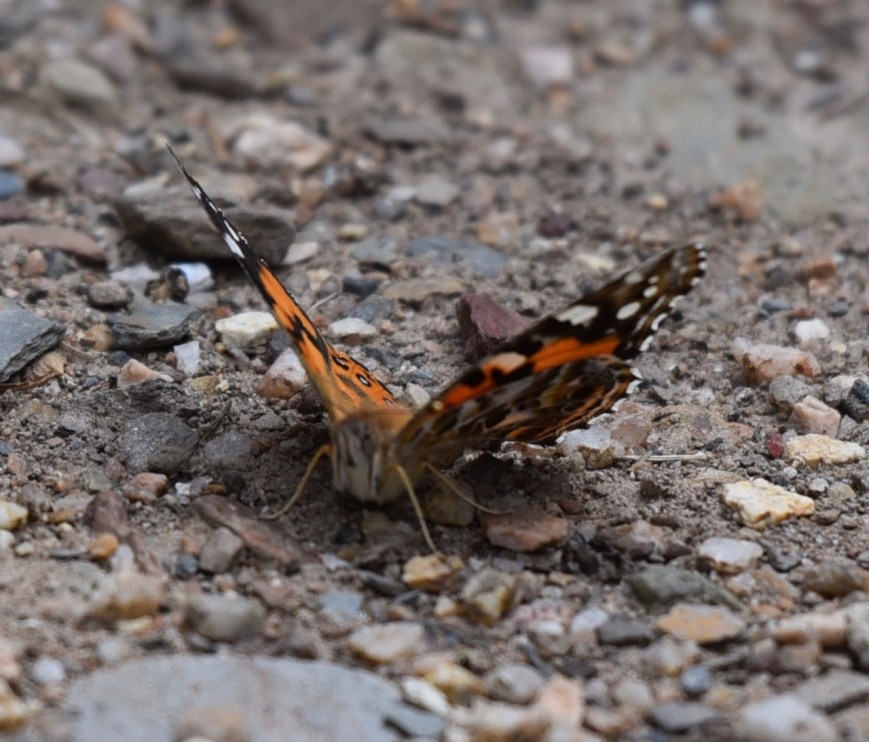
The gorge was absolutely alive with butterflies.

DSC_5672

We then headed back towards Geelong, but on the way we stopped off at the Anakie General Store for lunch.  I enjoyed a magnificent steak sandwich.  The staff here were very friendly.

We then visited the National Wool Museum in Geelong.  It is set in an 1872 bluestone woolstore and tells the Australian story of wool.  Sheep farming commenced in Geelong in 1835 and the first of many woollen mills in Geelong opened in 1868.  The museum was opened in 1988 and there are three floors to explore.

This slideshow requires JavaScript.

We then talk a walk along the waterfront, having a look at the Jan Lennard bollard sculptures which were commissioned by the City of Geelong in 1995.

I then said g’day to some of my Victorian colleagues.

DSC_5707

We then visited the old Geelong Gaol.  Unfortunately it was not open, but we did get to walk around the outside of the gaol to view the historic buildings.  The first prisoners were admitted here in 1853, with the prison closing in 1991.

This slideshow requires JavaScript.

Our next stop was the Little Creatures Brewery in Geelong.  The brewery is located in the Old Mill complex.

Prior to going to Little Creatures, we popped in to the White Rabbit brewery which originally commenced its life in Healesville.  One of the features of the brewery are the many barrels with are filled with aging ales.  We had some tasting samples and walked away with a few ales.

We then went next door to the Little Creatures brewery where we sat down to enjoy a few cleansing ales.

We had planned to go out for tea that night with Rod VK3OB, and we still had a little bit of time on our hands, so we headed out to the Geelong Botanical Gardens and enjoyed some nice views of the city of Geelong.

We then drove out to Bannockburn and enjoyed a sensational night with Rod VK3OB and his wife Noeline, and Dallas VK3DJ.

We even checked in briefly to the 71130 DX Net to say hi to some of the regulars.

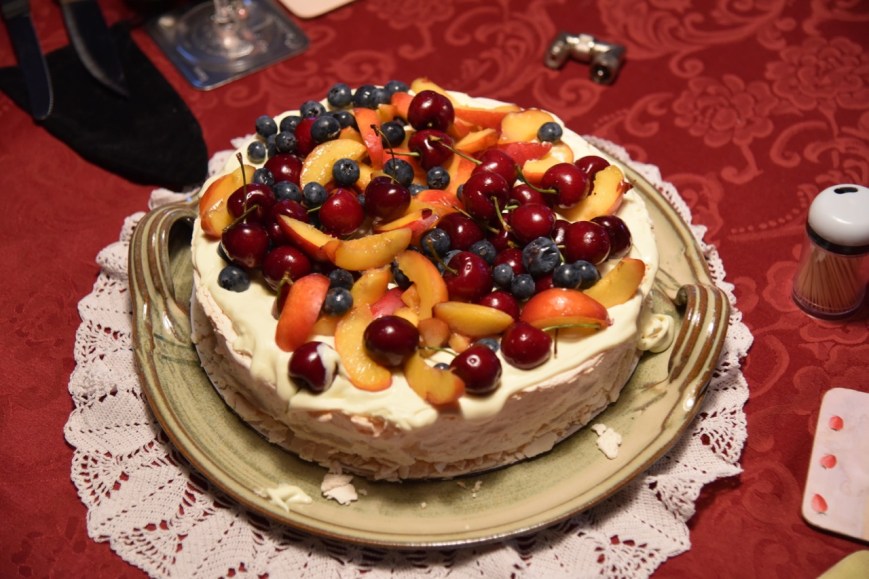
Below is our dessert.  Calories were not a concern!

DSC_5735

This was a most enjoyable night and we were really pleased to meet Rod, Noeline and Dallas.


References.

City of Greater Geelong, 2018, <https://www.geelongaustralia.com.au/nwm/default.aspx>, viewed 21st December 2018

The Old Geelong Gaol, 2018, <http://www.geelonggaol.org.au/>, viewed 21st December 2018

Maud/She Oaks/Steiglitz Communities, 2018, <https://www.maudedistrict.com/bunjils-lookout—maude.html>, viewed 21st December 2018

Maud/She Oaks/Steiglitz Communities, 2018, <https://www.maudedistrict.com/steiglitz.html>, viewed 21st December 2018

Parks Victoria, ‘Victoria’s Heritage, Brisbane Ranges National Park’

Parks Victoria, 1997, ‘Brisbane Ranges National Park Management Plan’.

White Rabbit Beer, 2018, <https://whiterabbitbeer.com.au/>, viewed 21st December 2018

Wikipedia, 2018, <https://en.wikipedia.org/wiki/Brisbane_Ranges_National_Park>, viewed 21st December 2018

Wikipedia, 2018, <https://en.wikipedia.org/wiki/Anakie,_Victoria>, viewed 21st December 2018

Point Cook Coastal Park VKFF-1875


After leaving Williamstown, Marija and I drove west along Koroit Creek Road and then along the Princes Freeway.  We then took the Point Cook Road, with our next stop being the Royal Australian Air Force (RAAF) Base Museum at Point Cook.

The museum is located on RAAF Base at Williamstown, so we stopped at the checkpoint and received some visitor cards.  The base serves as the headquarters to both the Air Combat Group and the Surveillance and Response Group of the RAAF.  This is the birthplace of the Australian Flying Corps and the Royal Australian Air Force.  We were under strict instructions to only take photos of the museum and not other parts of the base.

The museum is open Tuesday-Friday from 10.00 a.m. to 3.00 p.m.  Entry is free, but a donation is the right thing to do.  The museum houses an extensive collection of memorabillia and aircraft, and we highly recommend a visit here if you are in Williamstown.

The RAAF Museum was formed in 1952 at the direction of Air Marshall Sir George Jones.  It is currently overseen by the RAAF’s Air Training Wing.  You can literally spend hours here looking at all of the displays.

This slideshow requires JavaScript.

The museum displays aircraft of significance to the RAAF from its inception as the Australian Flying Corps, all the way through to present day.  The aircraft are within the museum and also on display in a number of hangars, some of which were unfortunately closed during our visit.

This slideshow requires JavaScript.

Every Tuesday, Thursday and Sunday at 1.00 p.m. there are interactive flying displays, and we were fortunate enough to experience one.

Outdoors you can view a Lockheed Hercules, a Caribou, and various other aircraft.

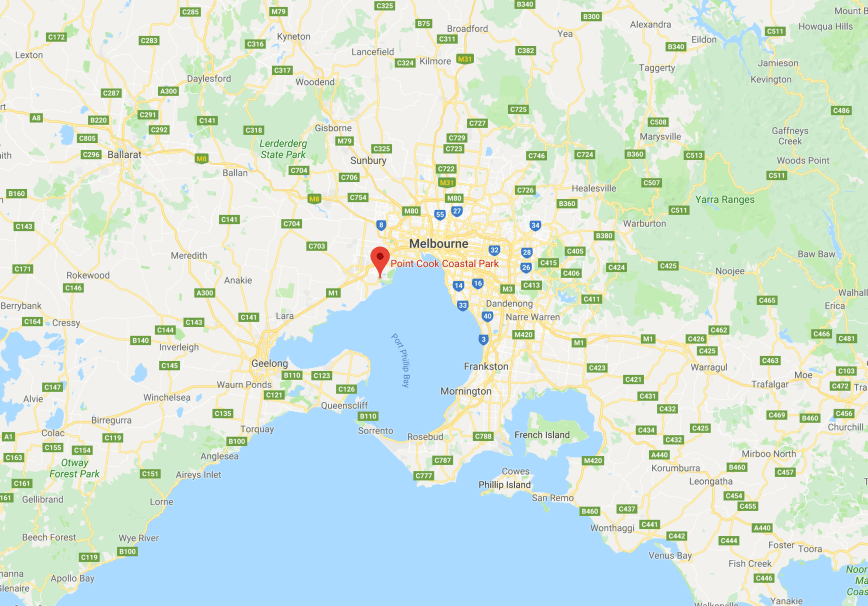
We left the museum and drove the short distance to the adjacent Point Cook Coastal Park VKFF-1875.  This was to be another unique park for Marija and I as activators in the World Wide Flora Fauna (WWFF) program.

Screen Shot 2018-12-20 at 8.05.51 pm.png

Above:- Map showing the location of the Point Cook Coastal Park.  Map courtesy of google maps.

The Point Cook Coastal Park is about 863 hectares (2,130 acres) in size and was established in 1978.  The park extends from the RAAF base northeast along the coast fo the Laverton Creek, and includes the Cheetham Wetlands which are 420 hectares of artificial and natural lagoons created on an old salt works.  The park is primarily used for recreational purposes however it has areas of high conservation significance such as Spectacle Lake and the RAMSAR listed wetlands.

Screen Shot 2018-12-20 at 8.05.33 pm.png

The park is adjoined by the Point Cook Marine Sanctuary which covers nearly 300 hectares and was declared in 2004.

The park supports 22 Victorian threatened flora species, two of which are considered endangered.

More than 200 species of birds have been recorded in the park.  A total of 34 of these are covered by international migratory agreements.  This includes the China-Australia Migratory Bird Agreement, and the Japan-Australia Migratory Bird Agreement.  Each year the park is visited by thousands of migratory birds which come from as far awat as Siberia and Japan.

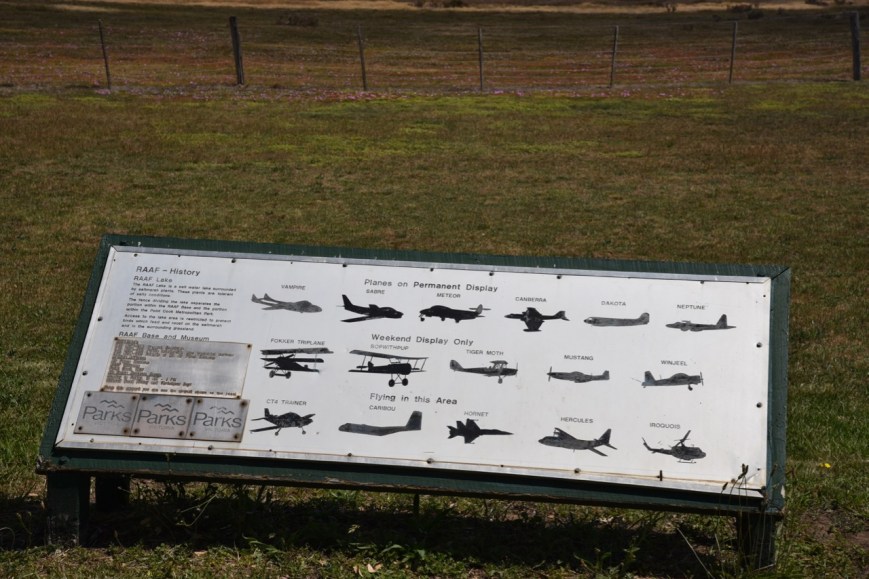
As we entered the park we passed the plane spotting site in the park which contains an information board on various aircraft which can be seen in the air from the nearby RAAF base.

DSC_5517

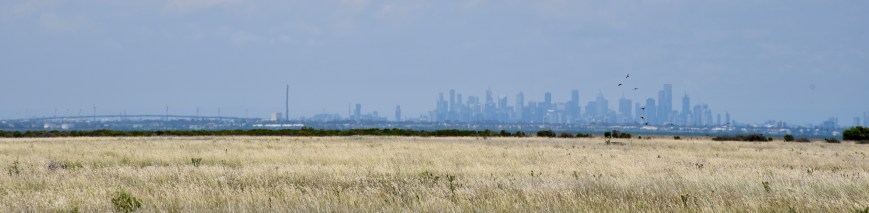
Across the grasslands there are some nice views of Melbourne off in the distance.

DSC_5518

We drove down Main Drive and then Side Entrance Drive, down to the Beach Recreation Area.

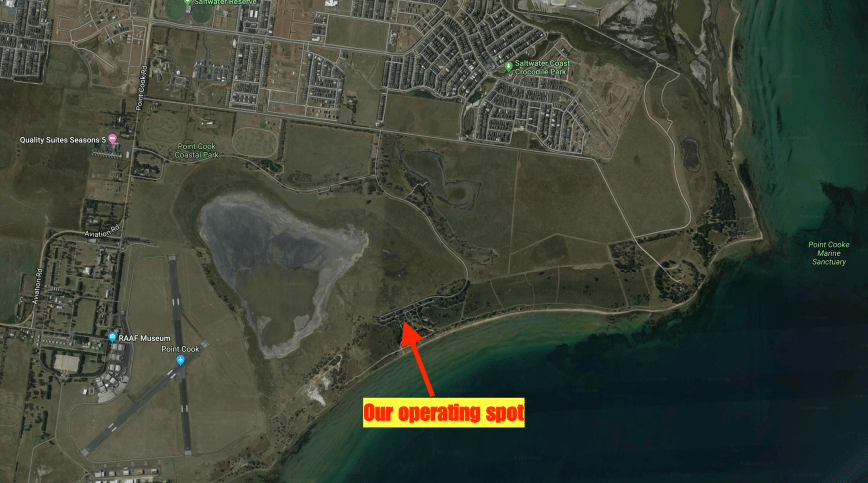
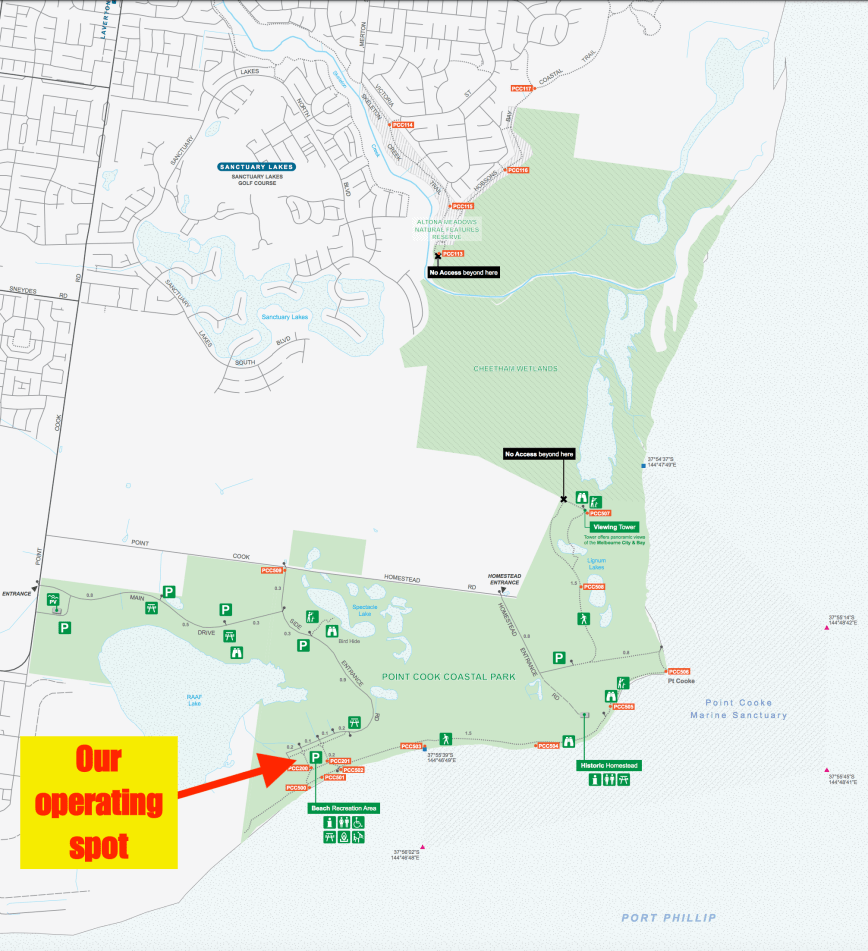
Screen Shot 2018-12-20 at 8.01.35 pm.png

Above:- Map of the Point Cook Coastal Park, showing our operating spot.  Map courtesy of Protected Planet.

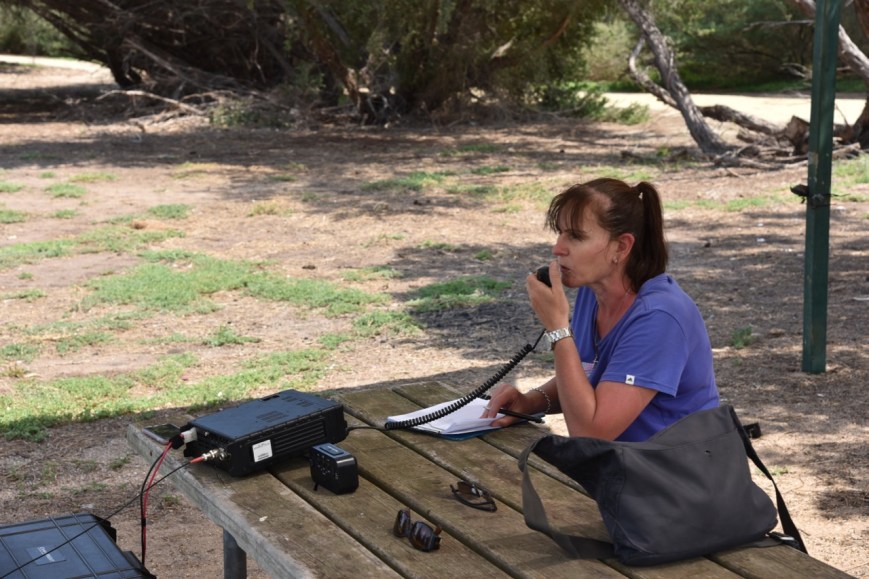
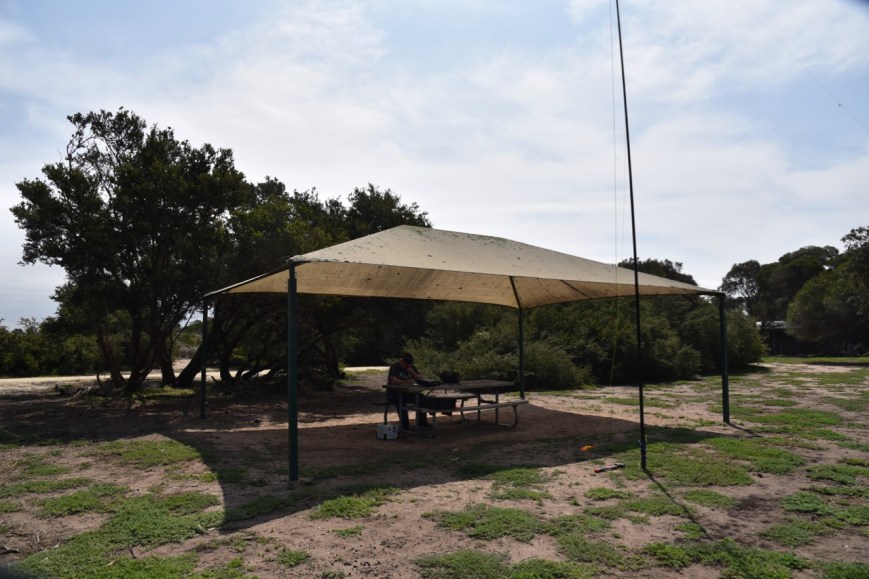
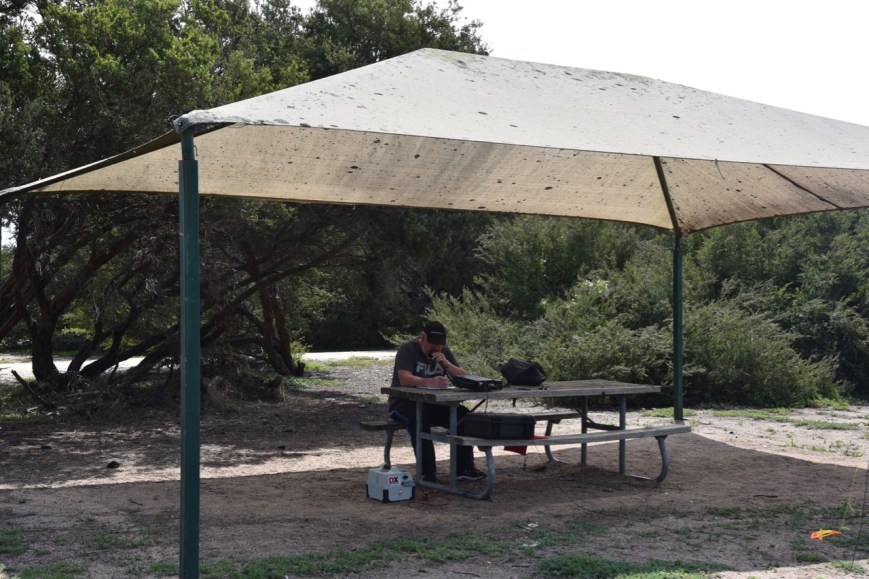
There were a number of different operating options here.  We chose a table and bench which had a shadecloth covering over the top.  It was an ideal spot to operate from, with plenty of room to stretch out the 20/40/80m linked dipole.

Marija kicked off the activation by calling CQ on 7.144.  And it wasn’t long before contact number one was in the log.  It was a QSO with James VK2HFC/p who was activating the Yellomundee Regional Park VKFF-0558.  It was a great way to start the activation with a Park to Park.  I also logged James.

Next for Marija was John VK4TJ, and his associated two calls, and then Joseph VK5WU, followed by Steve VK5KSW.  Marija’s 10th contact was Adrian VK5FANA.  Marija logged a further 2 stations before we swapped the mic.

DSC_5520

I called CQ and this was answered by Adrian VK5FANA, followed by Bob VK3XP, and then Gerard VK2IO.  Contact number ten, qualifying the park for me for VKFF, was Ray ZL4TY/VK4.  It was a great time of the day to be out and about, with the 40m band in very good shape.  I had a steady flow of callers and within about 40 minutes I had 37 contacts in the log on 40m.

When callers slowed down I lowered the squid pole and removed the links, allowing me to operate on the 20m band.  I called CQ for a short time on 14.310 but had no callers, so I headed down the band to 14.183 and booked in to the ANZA DX Net.  I there logged Steve VK4KUS and Antoine 3D2AG in Fiji.

DSC_5527

I then moved back to 14.310, and with a fresh spot placed on parksnpeaks by Marija, I started calling CQ.  I logged a total of 6 stations from VK3, VK4, VK5, and VK6.  This included Peter VK3TKK who was mobile, having just left work, and on his way to visit us in the park.

I then saw a spot come up for Greg VK4VXX/6 on 14.315, so I moved up to that frequency and logged a Park to Park contact with Greg who was in the Walyunga National Park VKFF-0516.

I then tried my luck on 3.610 on the 80m band, and loffed just the 2 stations there, Ken VK3UH and Geoff VK3SQ.

To conclude the activation I moved back to 40m and tuned across the band.  I heard the Kandos Net just starting to wrap up and worked Ron VK5MRE, Mal VK5MJ, and Darren VK2NNN.

DSC_5528.jpg

In the meantime Peter VK3TKK had arrived at the park.  This was the second time I have met Peter, and it was great to catch up again, albeit a quick g’day.

DSC_5566

Marija worked the following stations on 40m SSB:-

  1. VK2HFC/p (Yellomundee Regional Park VKFF-0558)
  2. VK4TJ
  3. VK4/AC8WN
  4. VK4/VE6XT
  5. VK5WU
  6. VK5KSW
  7. VK4NH
  8. VK4DXA
  9. ZL4TY/VK4
  10. VK5FANA
  11. VK3TKK/m
  12. VK2VW

I worked the following stations on 40m SSB:-

  1. VK2HFC/p (Yellomundee Regional Park VKFF-0558)
  2. VK5FANA
  3. VK3XP
  4. VK2IO
  5. VK5HS
  6. VK7FRJG
  7. VK4HAT
  8. VK4NH
  9. VK4DXA
  10. ZL4TY/VK4
  11. VK5YP
  12. VK4BYE
  13. VK5KSW
  14. VK4TJ
  15. VK4/AC8WN
  16. VK4/VE6XT
  17. VK2BHO
  18. VK2NSS
  19. VK5TS
  20. VK3NBL
  21. VK3PF/m
  22. VK5DW
  23. VK2FADV
  24. VK2KF
  25. VK2FNYN/m
  26. VK5XY
  27. VK5KLV
  28. VK2MKE
  29. VK2SLB
  30. VK3ZZS
  31. VK2IJS
  32. VK5FERS
  33. VK3TKK/m
  34. VK2AWJ
  35. VK2FVG
  36. VK2ISO
  37. VK3FQJ
  38. VK5MRE
  39. VK5MJ
  40. VK2NNN

I worked the following stations on 20m SSB:-

  1. VK4KUS
  2. 3D2AG
  3. VK5KLV
  4. VK6NTE
  5. VK4NH
  6. VK4DXA
  7. ZL4TY/VK4
  8. VK3TKK/m
  9. VK4VXX/6 (Walyunga National Park VKFF-0516)

I worked the following stations on 80m SSB:-

  1. VK3UH
  2. VK3SQ

We then drove in to Geelong and booked in to our accomodation, the Best Western Admiralty Motor Inn.

DSC_5567

We freshened up and headed out for tea to the Geelong Hotel.  It was a very enjoyable meal, with the hotel staff very friendly.  We can highly recommend this hotel.


References.

Parks Victoria, ‘Point Cook Coastal Park and Cheetham Wetlands Visitor Guide’

Wikipedia, 2018, <https://en.wikipedia.org/wiki/RAAF_Base_Williamtown>, viewed 20th December 2018

Wikipedia, 2018, <https://en.wikipedia.org/wiki/Cheetham_Wetlands>, viewed 20th December 2018

Wikipedia, 2018, <https://en.wikipedia.org/wiki/Point_Cook_Coastal_Park>, viewed 20th December 2018

Day twelve, Jawbone Flora and Fauna Reserve VKFF-2339

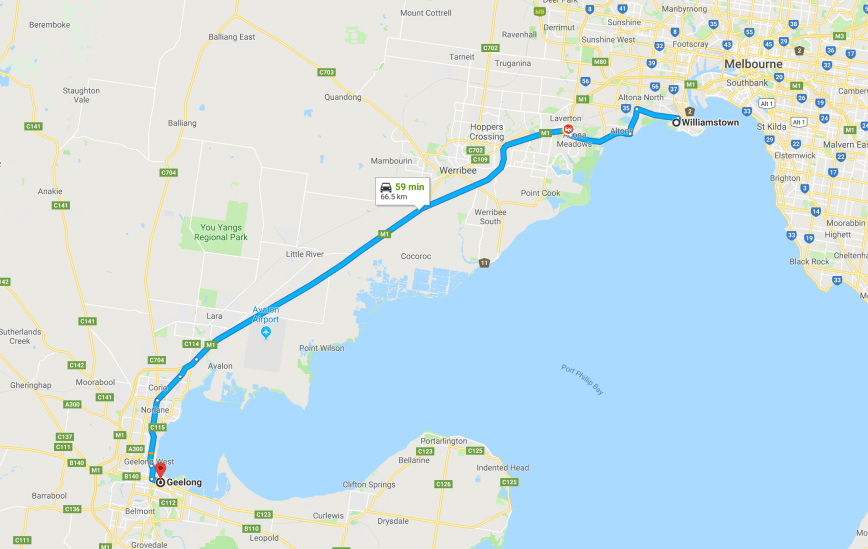
Day twelve was now upon us (Tuesday 27th November 2018) and it was time for us to travel from Williamstown to Geelong.  It was just a short 66 km drive, but we had planned a few things to do during the day, so the short drive down the road was most welcome compared to a few hours on the road.

Screen Shot 2018-12-20 at 5.26.57 pm.png

Above:- Map showing the route between Williamstown and Geelong.  Map courtesy of google maps

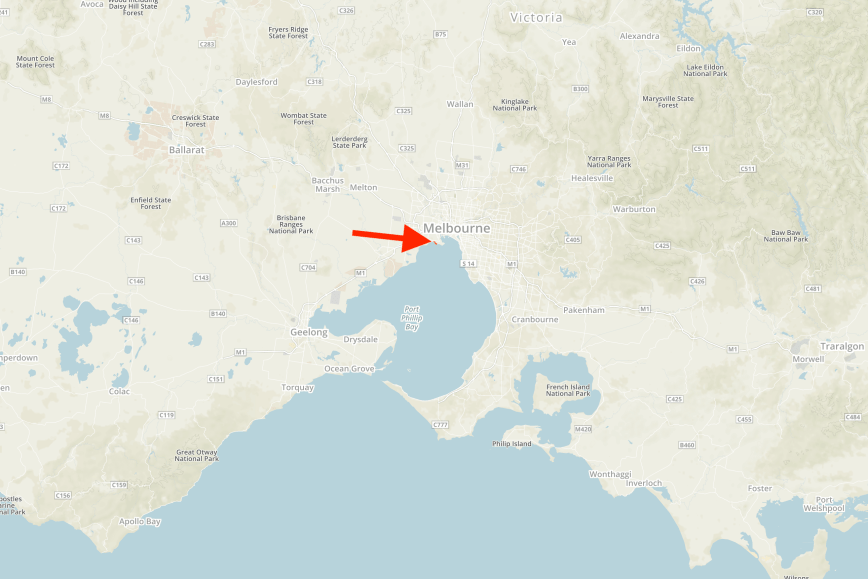
We kicked off the day with an activation of the Jawbone Flora & Fauna Reserve VKFF-2339.  This is not to be confused with the Jawbone Marine Sanctuary, which currently does not qualify for VKFF/WWFF.  The park is located at Williamstown, about 15 km by road from the Melbourne Central Business District.  The park takes its name from a small promontory known as ‘The Jawbone’.

Screen Shot 2018-12-19 at 8.14.48 pm.png

Above:- Map showing the location of the Jawbone Flora & Fauna Reserve at Williamstown in Victoria.  Map courtesy of Protected Planet.

The Jawbone Flora and Fauna Reserve consists of 50 acres of wetlands, open grasslands, a saltmarsh, and a mangrove area.  It is located alongside the Jawbone Marine Sanctuary, a 30 hectare area, which is the closest marine protected area to the Melbourne Central Business District.

The eastern boundary of the park starts near the Williamstown High School on Bayview Street, with the north western boundary near the rear of the Quest Apartments and Maddox Road.

Screen Shot 2018-12-19 at 8.14.35 pm.png

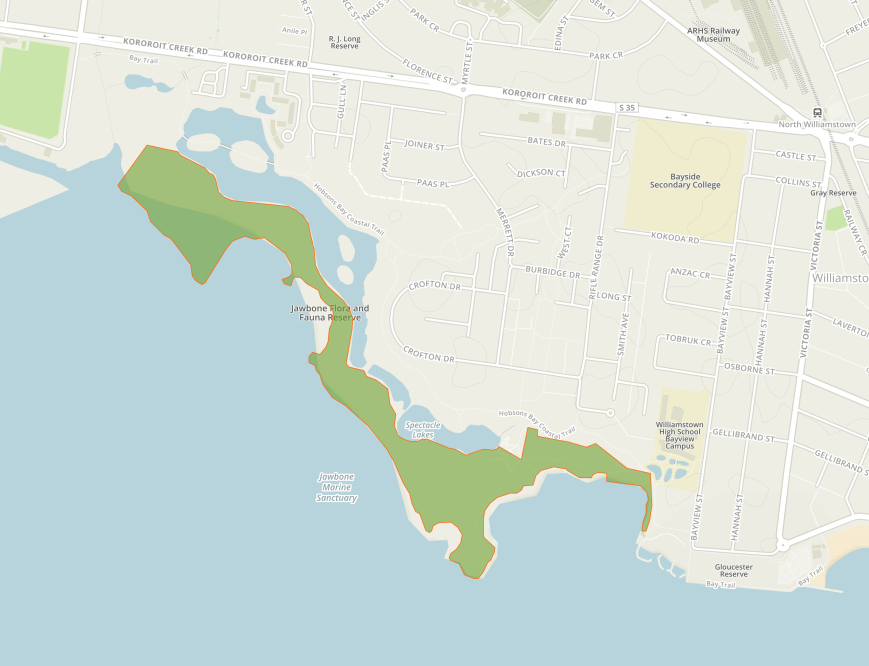
Above:- Map showing the Jawbone Flora & Fauna Reserve.  Map courtesy of Protected Planet.

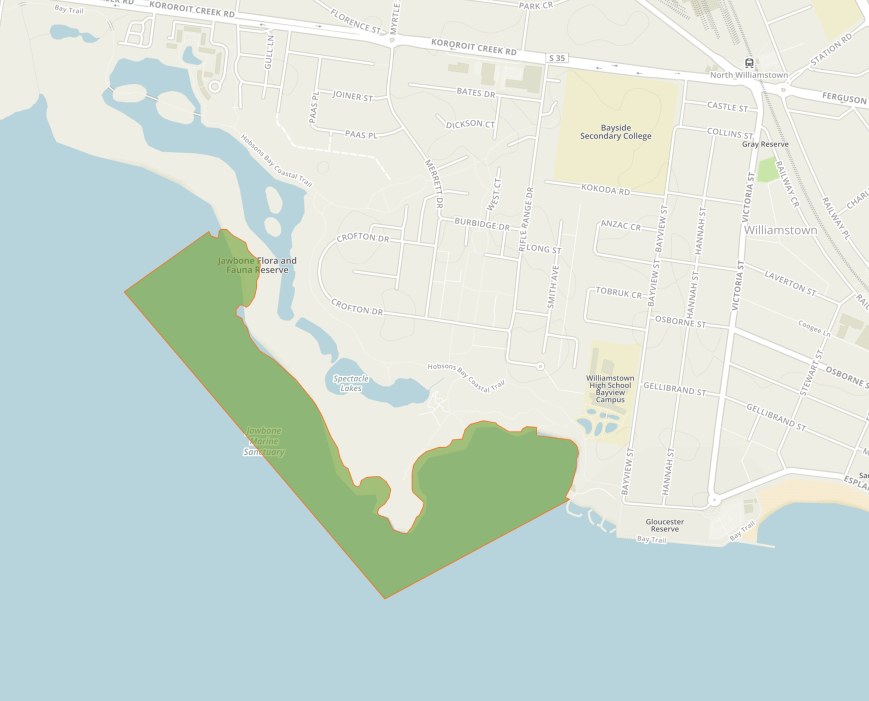
The map below shows the adjacent Jawbone Marine Sanctuary.

Screen Shot 2018-12-20 at 5.33.42 pm.png

Above:- the Jawbone Marine Sanctuary.  Map courtesy of Protected Planet

This was once a highly degraded site, but it has been transformed into a haven for wildlife and a place of enjoyment for the community.  A large area of the reserve was once a rifle range which was established in 1877 and later named after Major C.E. Merrett, a member of the Australian Shooting team of 1912.  The range was a training ground for soldiers and later used by police and civillians.  In 1956 for the Melbourne Olympic Games, the range was used as the rifle shooting venue.  It was closed in 1990 due to the sale of land for a housing estate.

DSC_5280

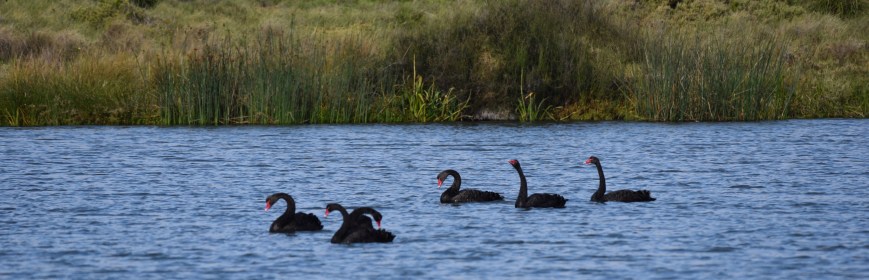
The park provides an ideal habitat for up to 120 species of birds, including ducks, coots, moorhens, cormorants, grebes, swans, herons, stilts, spoonbills and pelicans.  Some of those birds that call the park home feature in the photos below which I took in the park.

This slideshow requires JavaScript.

We drove down to Bayview Street near the Williamstown High School.  We then walked about 50 metres along the Bay Trail until we reached the eastern boundary of the park, where we climbed a metal railing fence, and set up.  We ran the Yaesu FT-897 and the 20/40/80m linked dipole for this activation.

Screen Shot 2018-12-19 at 8.15.49 pm.png

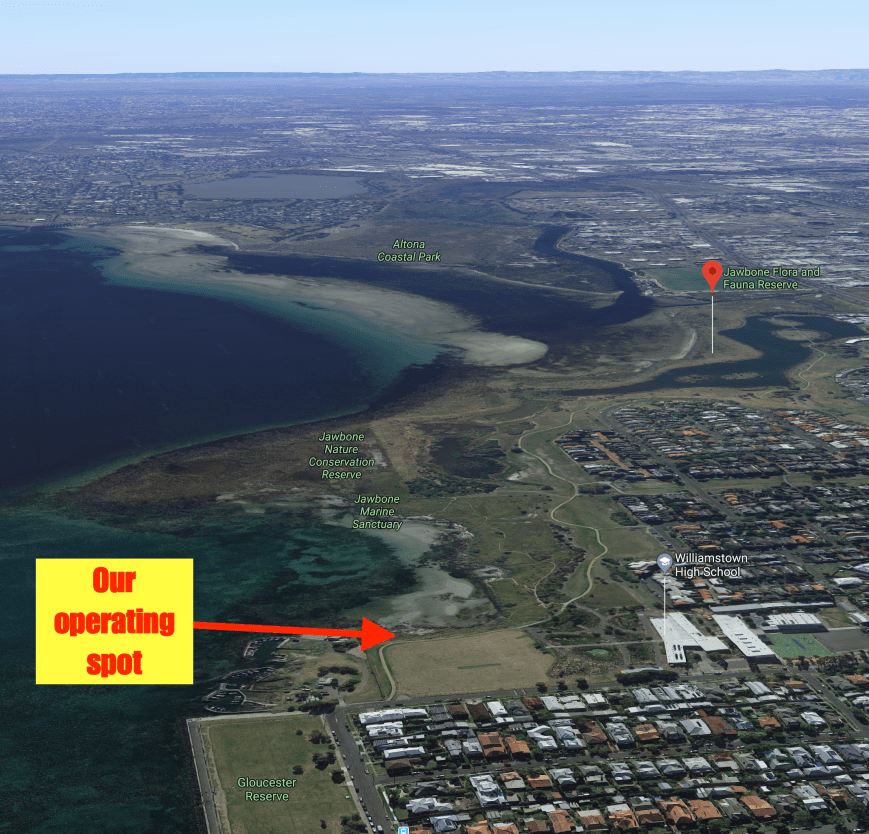
Above:- An aerial shot of the Jawbone Flora & Fauna Reserve, showing our operating spot.  Image courtesy of google maps

This area of the park faces out towards Jawbone Bay and the large Port Philllip Bay.

DSC_5343

The Bay Trail was very busy with walkers, joggers and cyclists, and we received a number of interesting looks during the activation.

DSC_5345

We had made quite an early start, so we were set up and ready to go by just after 9.00 a.m. local time.  I called CQ on 7.144 after Marija had placed a spot for me on parksnpeaks.  James VK2HFC was to be number one in the log, followed by Peter VK3TKK mobile, and then Gerard VK2IO.  It was a weekday and it was quite slow going, but within 13 minutes I had qualified the park for VKFF, with a QSO with John VK4/AC8WN.

I then swapped the mic with Marija so she could qualify the park.  Marija’s first contact was with John VK4TJ, followed by James VK2HFC, and then Alan VK3ALN.  But with the power lowered down to just 10 watts PEP for Marija, it was much harder going.

So it was down to 3.610 on the 80m band, with 5 contacts in the log for Marija, and another 5 to go.  Marija logged just 2 stations on 80m, Geoff Vk3SQ and Ken VK2KYO.  We lowered the squid pole again and removed the 80m links and it was back to 7.144 for Marija.  Contact number 10 came soon after, with a QSO with John VK7FJFD.  Marija logged a further 3 stations before I gave 80m one final go.  I logged just the 1 station, Peter VK3PF.

We then decided to call it quits and packed up, with both of us qualifying the park for the VKFF program.

DSC_5336

Marija worked the following stations on 40m SSB:-

  1. VK4TJ
  2. VK4/AC8WN
  3. VK4/VE6XT
  4. VK2HFC
  5. VK3ALN/p
  6. VK3SQ
  7. VK3TKK/m
  8. VK7FJFD
  9. VK4NH
  10. VK4DXA
  11. ZL4TY/VK4

Marija worked the following stations on 80m SSB:-

  1. VK3SQ
  2. VK2KYO

I worked the following stations on 40m SSB:-

  1. VK2HFC
  2. VK3TKK/m
  3. VK2IO
  4. VK3ALN/p
  5. VK7PSJ
  6. VK4NH
  7. VK4DXA
  8. ZL4TY/VK4
  9. VK4TJ
  10. VK4/AC8WN
  11. VK4/VE6XT

I worked the following station on 80m SSB:-

  1. VK3PF

At the end of the activation we had a quick look (through the fence) at Fort Gellibrand, which was built in 1855 during the Crimean War to guard against a possible Russian invasion.

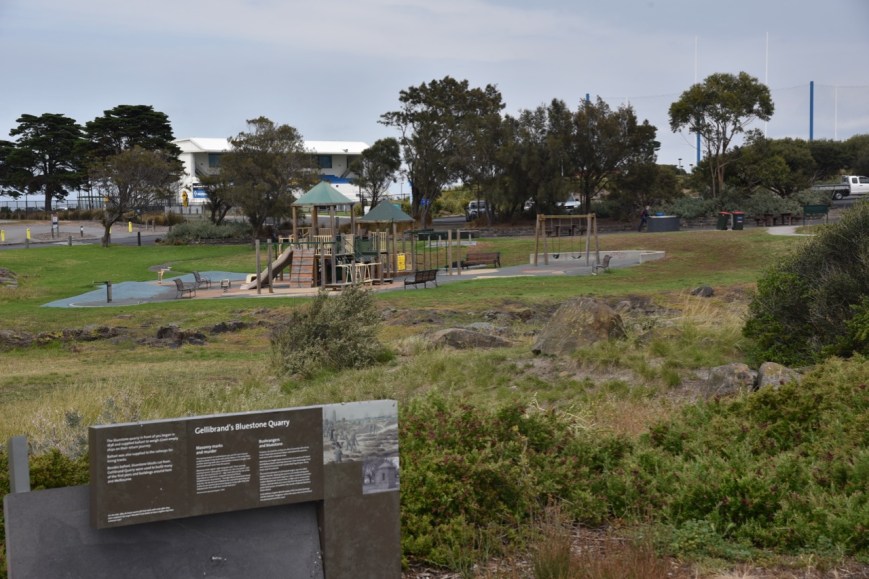
Opposite is the site of Gellibrands Bluestone Quarry, which commenced in 1838.  It supplied ballast to weigh down empty ships on their return journey.  Ballast was also supplied to the railways for lining tracks.  Other than ballast, bluestone blocks cut from the quarry were used to construct many of the first piers and buildings in Williamstown and Melbourne.

DSC_5350

We then drove in to the historic heart of Williamstown.  It was named William’s Town in 1837 after King William IV, the English monarch.  There are numerous heritage buildings and sites in Williamstown.

DSC_5359

We took a walk along the waterfront where you can get excellent vies of the City of Melbourne, Port Phillip Bay, and the mouth of the Yarra River.

Moored at Gem Pier is HMAS Castlemaine, a World War Two mine sweeper which was built at the local shipyards.  It is now used as a Maritime Museum.

We stopped for some morning tea at one of the local cafes, and then headed to the RAAF Museum at Point Cook.

DSC_5358 (1)


References.

Parks Victoria, 2018, <https://parkweb.vic.gov.au/explore/parks/jawbone-f.f.r.>, viewed 20th December 2018

Parks Victoria, 2013, ‘Jawbone Flora and Fauna Reserve Visitor Guide’

Wild Melbourne, 2018, <http://wildmelbourne.org/bush-beats/jawbone-flora-and-fauna-reserve>, viewed 20th December 2018

Day eleven, Arthurs Seat State Park VKFF-0750 and Arthurs Seat VK3/ VC-031

Day eleven (Monday 26th November 2018) was now upon us.  Our three nights in Sorrento had absolutely flown by, and it was time for us to leave the Mornington Peninsula and travel to Williamstown on the south western side of Melbourne.  We had around a 118 km drive ahead of us, and had planned to stay one night in Williamstown so we could catch up with some friends.
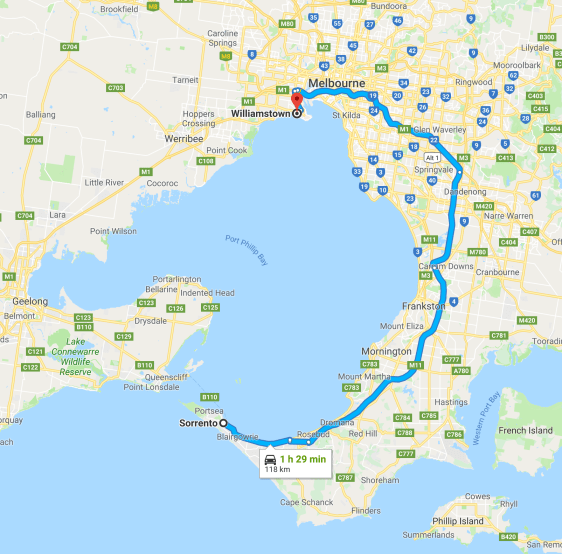
Screen Shot 2018-12-18 at 8.47.12 pm.png

Above:- Map showing the route between Sorrento and Williamstown.  Map courtesy of google maps.

We kicked off the day by heading down the main street of Sorrento for a cooked breakfast at Mr. Sticksenbones.  After breakfast we strolled down to ‘Just Fine Food’, as we were told by a friend that they produced a magnificent Vanilla slice.  And I am partial to a Vanilla slice, so Marija did not have to twist my arm.
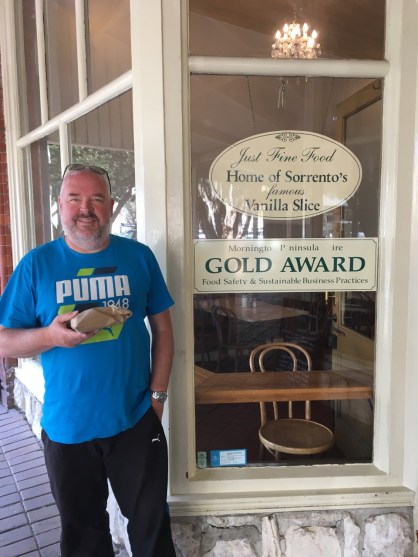
IMG_1480

Above:- A very satisfied me at the Sorrento bakery.

We then headed down Point Nepean Road at Sorrento and stopped at the site of the 1803 Collins Settlement.  It was here in October 1803, that the first British colonists landed seeking a suitable site to establish a settlement.  The colony was short lived and relocated by the end of May 1804 to Van Dieman’s Land (Tasmania).  It was a beautiful morning and there were some great views along the coast.

We travelled a short distance down the road to Sullivan Bay.  It was here, at Sorrento in October 1803, that the first British colony was established thirty two years before Melbourne was founded.  There are a number of information boards here telling you all about this very historic site.

In October 1803, two ships from England, HMS Calcutta and the Ocean, anchored in the sheltered waters of nearby Camerons Bight.  On the 14th day of October, unloading of the ships commenced, with the settlers walking across the foreshore to Sullivan Bay.  It became an open air gaol for 300 convicts, guarded by 50 marines and administered by 11 public servants.  There were 55 free settlers.  The demographics were 383 men, 38 women, 20 boys, and 16 girls.

We also had a look at the Bicentennial Monument (1803-2003) which records details of the 1803 Collins Settlement, including the names of the Garrison members, the settlers, and the convicts.

There is an 1803 Settlement Centre here, but unfortunately it was closed.  But out the front of the centre there are a number of information boards which detail the indigeneous and European history of the area.

We then took a short walk to the JP Fawkner Lookout which overlooks the coast including Camerons Bight.  Who was JP Fawkner?  John Pascoe Fawkner was amongst the convict children to arrive at the Collins Settlement.  He was just 11 years old, and had arrived with his convict father, his mother, and his young sister.

With the other Collins settlers, he and his family moved to Van Diemans Land in 1804, where he grew up.  He was convicted for helping convicts escape during this time.  He later married and became a businessman in Launceston.  In 1835 he purchased the schooner Enterprise to cross Bass Strait and settle on the Yarra River.  Fawkner became known as the ‘Father of Melbourne’.  An amazing life of a man who had arrived in the colony as the son of a convict.

William_Strutt,_Portrait_of_John_Pascoe_Fawkner,_founder_of_Melbourne,_1856.jpg

Above:- John Pascoe Fawkner.  Image courtesy of wikipedia

Nearby are four grave sites of early settlers.  The graves were moved to their present position a number of years ago due to a concern that erosion would result in their toppling into the bay.  There were about 28 deaths amongst the settlers who arrived on the Calcutta and the Ocean.  Drowning and scurvy were common causes of death, and it is believed that six convicts tried to escape and perished in the bush.

Marija and I were keen to head back out to the Point Nepean National Park to have a look at Fort Nepean, which we had not had time to do the day before.

Point Nepean is an unusual park in that visitors to the park can only go so far in their vehicle before reaching a locked gate.  From that point, visitors either need to walk or ride out to Point Nepean, or catch a shuttle bus.  Unfortunately for us, the shuttle bus was not going out to Point Nepean today due to asbestos work, and was only going to travel to Fort Pearce.  Despite that, we jumped on the bus and within a few minutes we had reached Fort Pearce.  It was a beautiful day after some wet weather in the preceding days, and Marija and I enjoyed some great views of the park and the coastline.
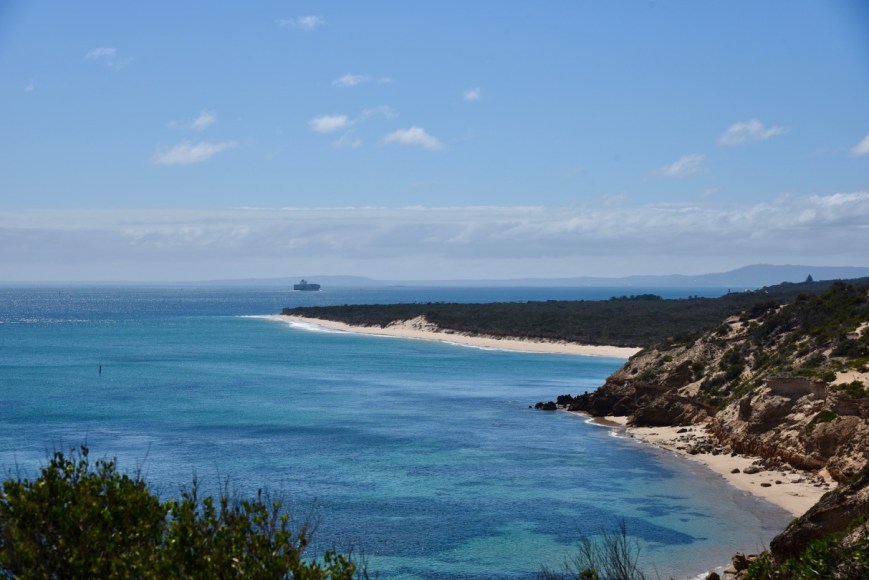
DSC_5019

The northern coast of the park

Fort Pearce is a former defensive facility, and was part of a network of fortifications, commanded from Fort Queenscliff, protecting the narrow entrance to Port Phillip.  The fortifications were constructed between 1910 and 1916.  In 1911 two open concrete gun pits for Mk VII guns were constructed with a large underground magazine between the pits.  During WW1 Royal Australian Garrison Artillery and Royal Australian Engineers were posted here.

During the First World War additional barracks were constructed at Fort Pearce and were named Pearce Barracks.  Additional huts, a fuel store and a larger ablutions block were constructed at Pearce Barracks in 1939–1940.
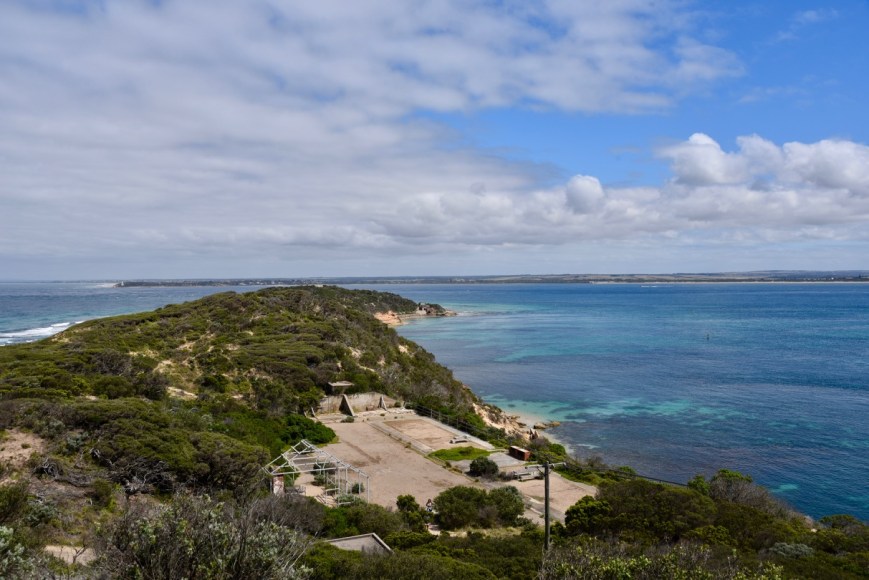
DSC_5020

Looking north west towards Fort Nepean.  The old Pearce Barracks are in the foreground.

The images below (courtesy of wikipedia) show Pearce Barracks in 1946, with Fort Nepean in the background, and ‘C’ Company 5th Battalion Volunteer Defence Corps at Cheviot Hill.  Study the photo above with the black and white photo below of Pearce Barracks.

Although we were still some distance away from Fort Nepean, we were still able to get a good view to the fort.  Due to the asbestos works we could not get out there, so it will be a return trip to this park so we can explore Fort Nepean.
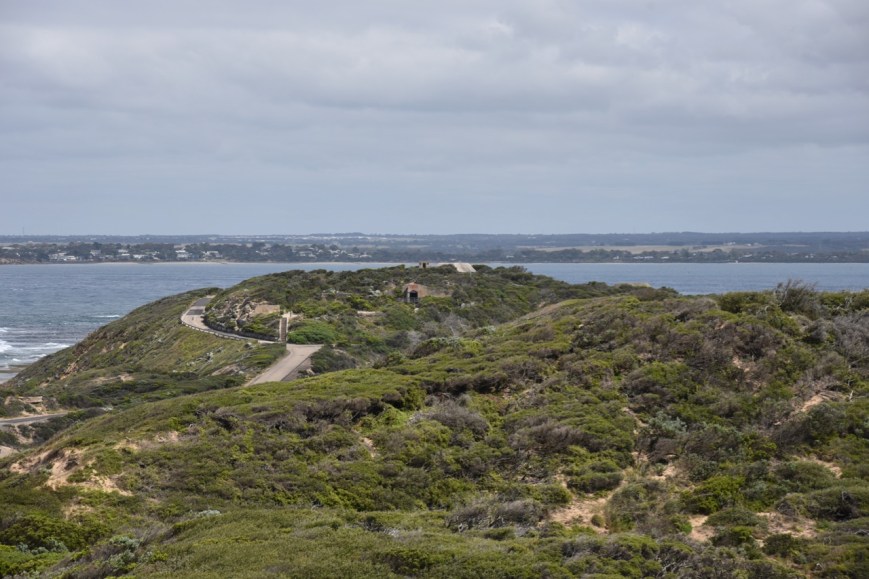
DSC_5025

Above:- Looking towards Fort Nepean.

DSC_5021

Above:- a view of the Engine House at Fort Nepean

Fortifications and barracks were built on Point Nepean from 1873 and gun batteries were installed in 1886.  From 1911 the fort was manned by the newly renamed Royal Australian Garrison Artillery and the Royal Australian Engineers. With war in Europe looming, longer range 6 inch Mk VII guns replaced the 9.2 inch guns.  Light anti-aircraft guns were deployed at the fort in 1939.

The photos below show Fort Nepean (courtesy of Wikipedia).

There were some terrific views here of the Point Nepean National Park and the coastline.

Fort Pearce was constructed in 1911 and once boasted two 6 inch Mark V11 guns which had a 12.5 km firing range.  There are a number of old bunkers and buildings here to explore.

We then took a short stroll to Eagles Nest, which is the former site of Australia’s largest disappearing gun.  Eagles Nest was built in 1889 and had a 10 inch breech loading gun, which was the largest hydro-pneumatic gun in Australia.  Its prominent location allowed a 270 degree arc of fire.  The gun had a range of 10,800 yards (9.9 kms) and a charge could penetrate armour up to 20.8 inches (53 cms) thick.  When 6 inch Mark VII Guns were introduced to Point Nepean in about 1911, this gun emplacement was abandoned.

The views below from The Eagles Nest bunker give some idea of what it must have been like for the soldiers who manned their posts within the bunkers.

Referring to the Eagles Nest ugn, the Bendigo Advertiser on the 19th day of November 1889 stated:-

“The gun is the largest piece of ordnance in the colonies…..a full charge weighs 250 lbs of brown prismatic powder, and when a projectile of 500 lbs is added to this, our readers will know what’s the matter when they hear the gun go off”.

Extensive seaworks were undertaken more than 100 years ago to protected the fortifications., and some of those are still visible today.

Although we didn’t get out to Fort Nepean, there was still a lot to see and explore at Fort Pearce.

Marija then consulted the map and we decided to go for a ‘short’ walk to Cheviot Hill.  The map and signs said it was just a short 800 metre walk.  But that turned out to be totally incorrect, and in the hot sun we ended up enduring quite a walk up and down dale.  But I need the exercise.

Along the way we observed numerous container ships entering into busy Port Phillip.

The views of the Bay and the park were quite brilliant along the path, with many of the local native plants also in flower.

We finally made it to Cheviot Hill.  I suspect a few kilos lighter.

DSC_5093

In hindsight, I’m glad we did the walk.  We were rewarded with some magnificent views.  At 54 metres above sea level, this is the highest point in the Point Nepean National Park.

Cheviot Hill gained its name after a disastrous shipwreck that took place on the 19th day of October 1887.  The passenger steamer SS Cheviot was leaving Port Phillip at night during heavy seas, when its propellor broke and the ship was stranded on the coastal reef.  Tragically 35 passengers and crew drowned, whilst 24 survived.  Soldiers stationed at Fort Nepean assisted the Queenscliff lifeboat crew in rescuing the survivors.

In 1942, two gun emplacements, a Battery Observation Post, and a living quarters were built at Cheviot Hill, as vulnerability to air attack on the more exposed Fort Peace became apparent.  Cheviot Hill’s emplacements were equipped with steel protective canopies and camouflage nets overhead.

We walked back down the hill and visited to the Point Nepean cemetery which was established in 1854.  It replaced the Quarantine Station Cemetery after beach erosion had unearthed burials.  The location of this cemetery was outside the boundary of the Quarantine Station so that visitors and local burials would not be subject to quarantine restrictions.  The gravestones within the cemetery mark the resting places of quarantine deaths, early settlers, shipwreck victims, sailors and defence personnel.  Up to 300 people are believed to be buried here.

This slideshow requires JavaScript.

We then took a short stroll to Gunners Cottage, which was originally located on the south side of Eagles Nest on the Bass Strait side of Defence Road.  It was lived in and occupied by many people throughout the time that members of the Royal Australian Artillery were stationed at Fort Nepean.  This included Ernest William Bird who lived in the cottage in 1933, along with his wife Victoria and their five children.  He was the Army cook and stationed at Fort Nepean.  His fifth child, Joy was the last born in the cottage.

We left the park, and visited Police Point Shire Park.  It is named Police Point, as police were stationed here to enforce quarantine detention and serve the Southern Mornington Peninsula.  It was an important part of the operation of the Point Nepean Quarantine Station, and later the Army Cadet School right up until 1988.

This slideshow requires JavaScript.

We then headed to the SOTA peak Arthurs Seat VK3/ VC-031 which is located within the Arthurs Seat State Park VKFF-0750.  The summit/park is located about 89 km south of the city of Melbourne.

Screen Shot 2018-12-18 at 2.09.20 pm.png

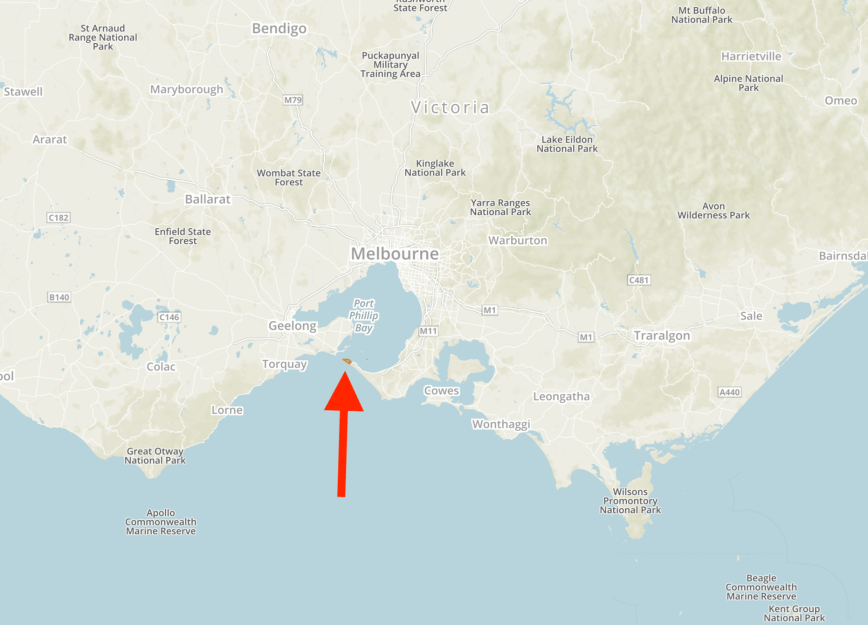
Above:- Map showing the location of Arthurs Seat on the Mornington Peninsula.  Map courtesy of Open Topo maps.

The SOTA summit Arthurs Seat is 305 metres above sea level and is worth just 1 point for the Summits on the Air (SOTA) program.  As it is in close proximity to Melbourne, and access is very easy, it is not surprising that the summit had been activated 55 times before out visit.  It was first activated by Wayne VK3WAM in April 2012.

Screen Shot 2018-12-18 at 2.10.33 pm.png

Above:- An aerial shot showing Arthurs Seat on the Mornington Peninsula.  Image courtesy of google maps

Lieutenant John Murray named the summit, Arthurs Seat, in February 1802.  His journal dated Sunday February 14th 1802 read as follows…..

“…… Away to the eastward at the distance of 20 miles the land is mountainous, in particular there is one very high mountain which in the meantime I named Arthur’s Seat from its resemblance to a mountain of that name a few miles from Edinburgh….”

The summit was first climbed by Captain Matthew Flinders on 27th April 1802.  His log noted:-

“The Bluff Mountain on the eastward I estimated at over 1000 feet high, and being near the waterside, possessed a favourable station for observation purposes. I ascend the hill and took an extensive set of bearings from the cleared place to be found on the north western bluff part of the hill.”

Screen Shot 2018-12-18 at 9.58.12 pm.png

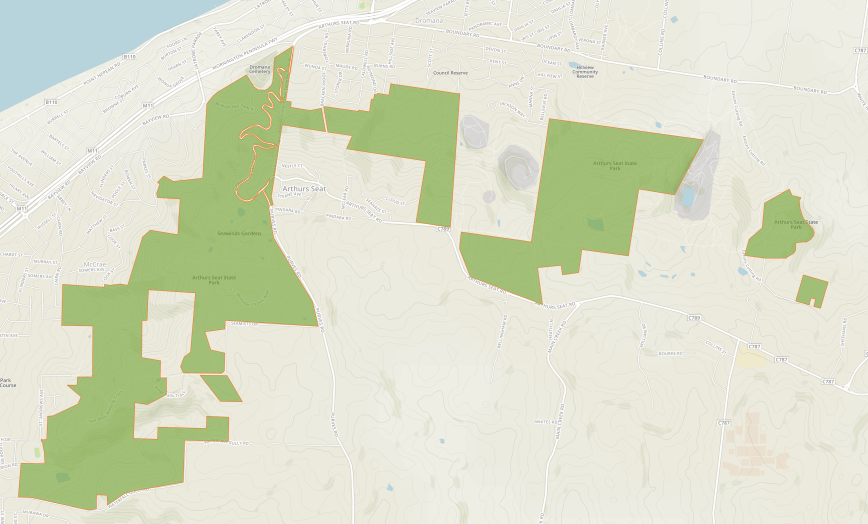
Above:- Map showing the Arthurs Seat State Park.  Map courtesy of Protected Planet.

It was incredibly busy with tourists near the Arthurs Seat Eagle (cable car), which is what the maps from the SOTA site showed us to be the actual summit.  So we drove a short distance down the road to Seawinds Gardens, which we were assured was within the activation zone, and also within the Arthurs Seat State Park.

It was a warm day, so we set up underneath the shade of some trees.  And as this was an easy drive up summit, we only had a short distance to walk, so we had the creature comforts of a chair and table.

Screen Shot 2018-12-18 at 2.09.46 pm.png

Above:- An aerial shot of the area surrounding Arthurs Seat, showing our operating spot.  Image courtesy of google maps

I started calling CQ on 7.144 and this was soon answered by Geoff VK3SQ, followed by Alan VK3ALN, Dennis VK2HHA and Ron VK3AHR.  I had qualified the SOTA summit with 4 contacts.  Now to get 10 to qualify the park for VKFF.  Within 10 minutes of setting up and calling CQ, I had contact number ten in the log, a QSO with John VK7FJFD.  I then logged Ron VK5MRE and decided to swap the mic with Marija so she could qualify the summit and the park.
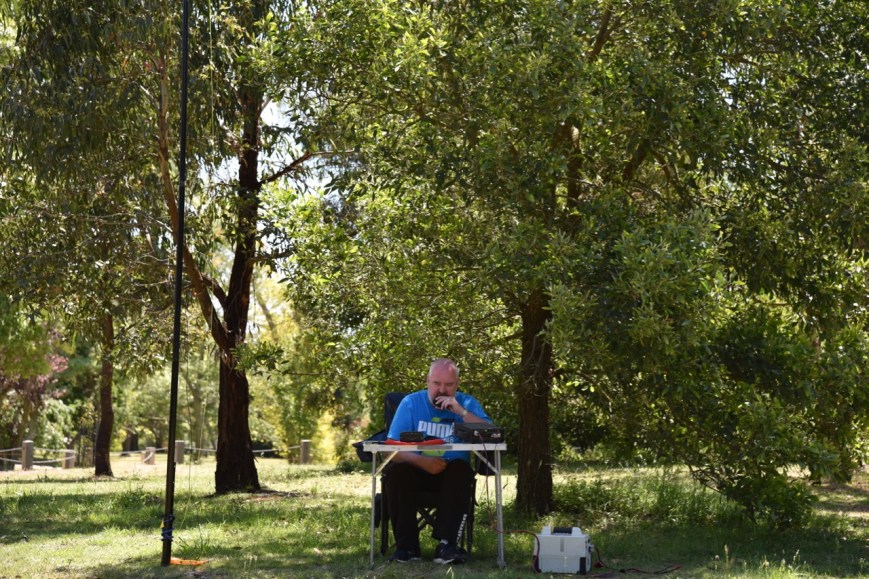
DSC_5152

Marija’s first contact was with Geoff VK3SQ, followed by Ivan VK5HS, Ron VK3AHR, and then Ron VK5MRE.  Marija had qualified the summit.  Marija pushed on and soon had qualified the park for VKFF, with her tenth contact with Gerard VK2IO.  After logging a further two stations, Rod VK7FRJG and Dennis VK2HHA, Marija handed the mic back to me.

I called CQ again on 7.144 and logged a further 5 stations from VK2, VK5, and VK7.  I then moved down to 3.610 on the 80m band where I logged 6 stations from VK3 and VK7.  To conclude the activatiton I called CQ on 14.310 on the 20m band.  John VK4TJ, also using his other two calls was my only taker on that band.  Sadly the Over The Horizon Radar was present again and was very strong.

So with 37 contacts in the log between the two of us, it was time to hit the road again and head off to Williamstown.

Marija worked the following stations:-
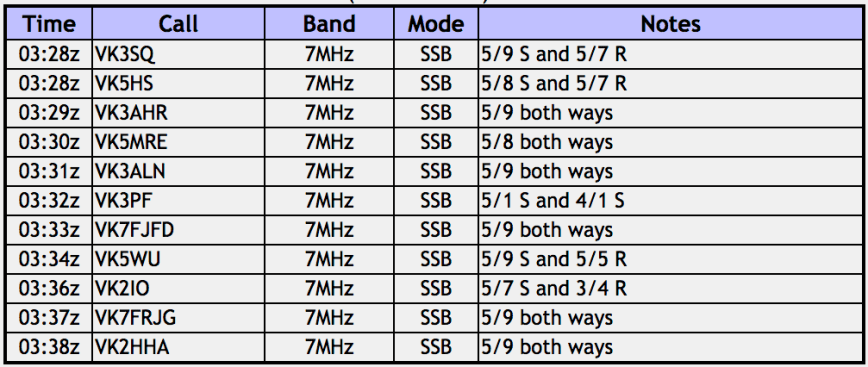
Screen Shot 2018-12-18 at 9.50.01 pm.png

I worked the following stations:-

Screen Shot 2018-12-18 at 9.49.48 pm.png

At the end of the activation we decided to head back to the main carpark near the Arthurs Seat Eagle.  There is a monument here for the crew of a RAAF Beaufort aircraft which crashed into Arthurs Seat on the 12th day of July 1942, and the crew of a Avro Anson which crashed into the north western face of Arthurs Seat on 10th August 1938.

There is also a plaque to mark the bi-centenary of the birth of the explorer and navigator, Captan Matthew Flinders.  He was born on the 16th day of March 1774.

We enjoyed the sensational views from the lookout and watched the Arthurs Seat Eagle cable cars travelling up and down the mountain.

We pondered for a short time as to whether to do the Arthurs Seat Eagle, and with some encouragement, Marija agreed that we would take a ride.  Marija was a bit apprehensive at first, but once we were on board, all had calmed down.

We enjoyed a ride down the mountain and back up again, enjoying the absolutely magnificent views of the Mornington Peninsula.

On the way back down we stopped briefly at Murrays Lookout to admire the views of the Mornington Peninsula.

We then headed into Melbourne, and it didn’t take long for me to work out why I like visiting Melbourne, but could never live there.  The traffic!
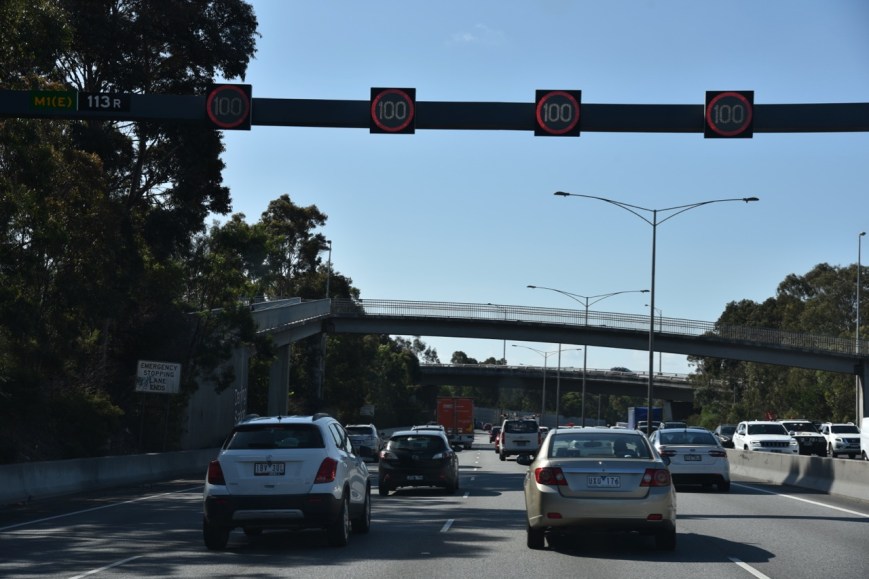
DSC_5201

We safely negotiated the city traffic and soon reached our accomodation at the Quest Williamstown North on Koroit Creek Road.  And what a bonus….it backed on the Jawbone Flora & Fauna Reserve which qualified for VKFF/WWFF.

That night we dined in at the unit, spending a very enjoyable night with our friends Jacqui and Des.


References.

Summits on the Air, 2018, <https://www.sota.org.uk/Summit/VK3/VC-031>, viewed 18th December 2018

Wikipedia, 2018, <https://en.wikipedia.org/wiki/Fort_Pearce>, viewed 18th December 2018

Wikipedia, 2018, <https://en.wikipedia.org/wiki/Arthurs_Seat,_Victoria>, viewed 18th December 2018

Point Nepean National Park VKFF-0628

After leaving the Sorrento Museum, Marija and I headed to our next park, the Point Nepean National Park VKFF-0628, which is about 111 km (by road) south of the city of Melbourne.  This was to be another unique park for Marija and I as activators for both the World Wide Flora Fauna (WWFF) program, and the Keith Roget Memorial National Parks Award (KRMNPA).  And it was to be our final park for the 2018 VKFF Activation Weekend.

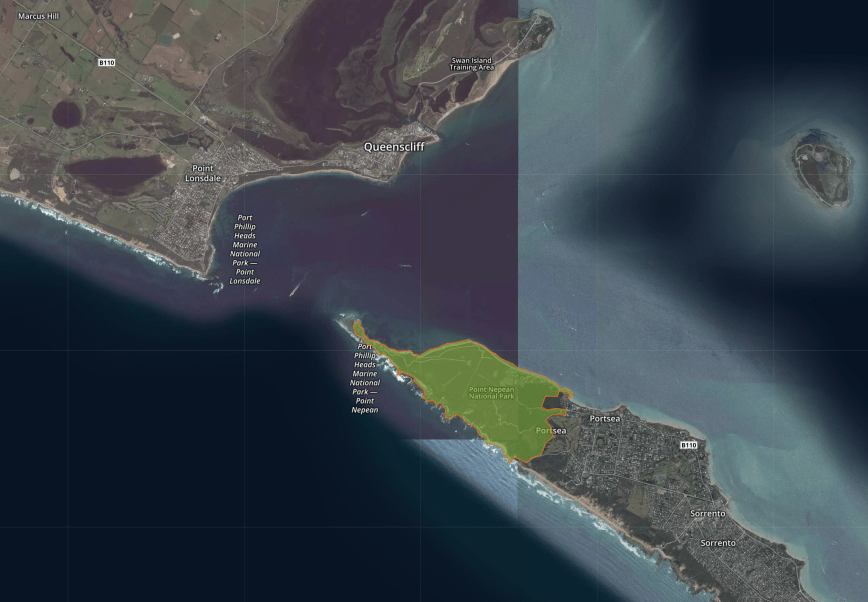
Screen Shot 2018-12-18 at 11.51.55 am.png

Above:- Map showing the location of the Point Nepean National Park.  Map courtesy of Protected Planet.

The Point Nepean National Park is a narrow strip of land on the Mornington Peninsula, located between Bass Strait and Port Phillip, comprising 560 hectares.  It is Victoria’s most visited National Park.  The park’s adjacent waters have been protected since 1975 and in 2002 were proclaimed as part of the Port Phillip Heads Marine National Park.  Point Nepean National Park includes South Channel Fort, the former Quarantine Station, various fortifications, Wilsons Folly conservation area, Defence Road and the former Range Area.

Screen Shot 2018-12-18 at 11.51.40 am

Above:- Aerial shot of the Point Nepean National Park.  Image courtesy of Protected Planet.

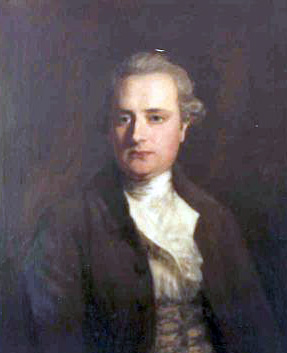
The park takes its name from the British politician and colonial administrator, Sir Evan Nepean.  Explorer John Murray named Point Nepean in 1802 during his journey through the area aboard the Lady Nelson.

SirEvanNepean.jpg

Above:- Sir Evan Nepean (1752-1822).  Image courtesy of wikipedia

The park contains beaches, cliffs, flats and sand dunes.  Vegetation includes coastal scrub, grassland and shrubland.


The traditional owners of the land are the Kulin aboriginal people.  In 1802 European navigators arrived in the area.  Between 1840-1855, limestone from Point Nepean’s dunes was burned for the manufacture of mortar to be used with the bluestone of early Melbourne.  In 1852 the Quarantine Station was established at Point Nepean, following the arrival of the Ticonderoga in 1852.  The Quarantine Station ran continuously until 1980.  By 1878, forts commenced at Point Nepean.  The Eagles Nest was established in 1889 and Fort Pearce in 1911.  They were used during both the First and Second World Wars.

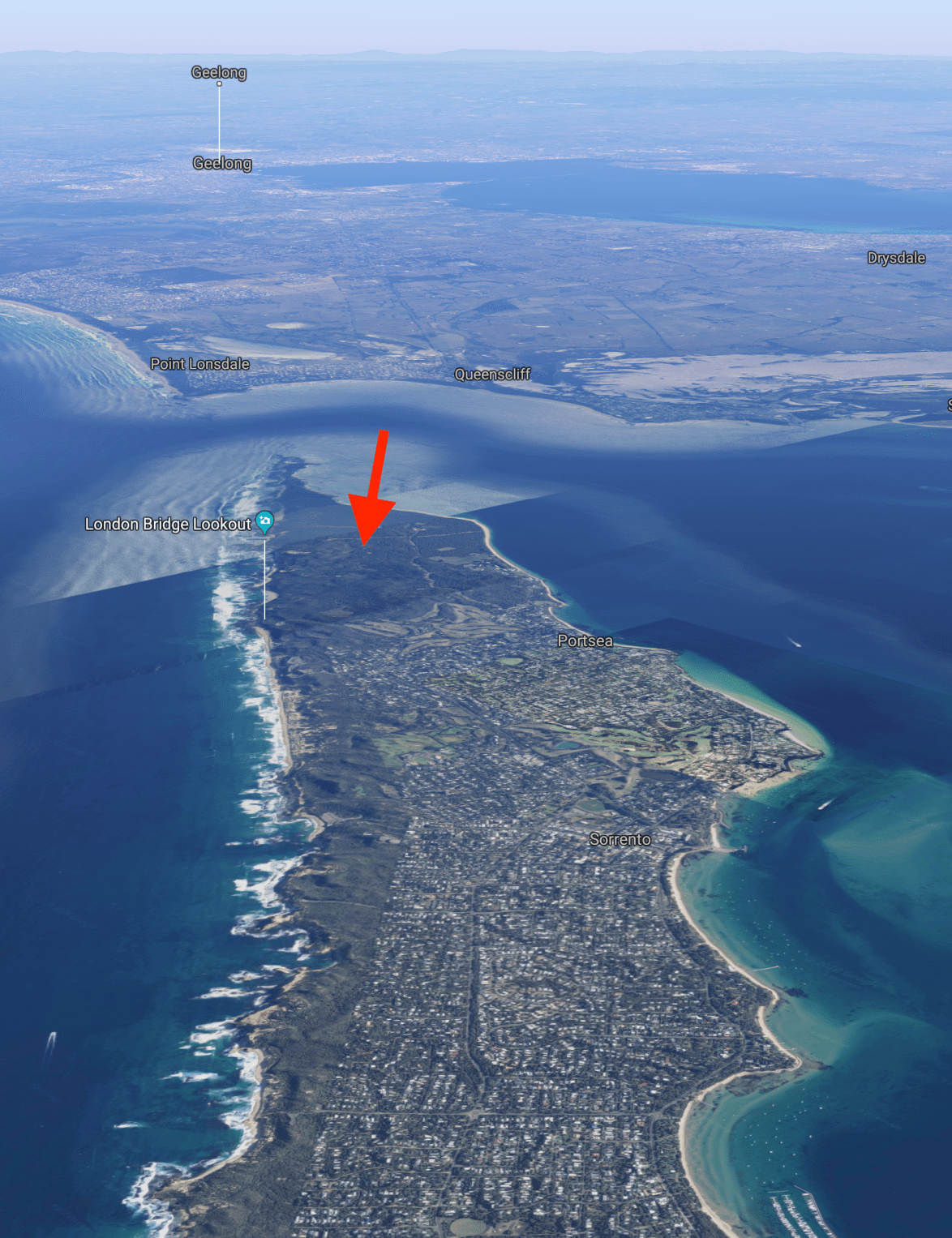
Screen Shot 2018-12-18 at 11.57.31 am.png

Above: An aerial view of the Point Nepean National Park, looking north west towards Point Lonsdale and Geelong.  Image courtesy of google maps

We first headed to the London Bridge Lookout carpark, as Peter VK3ZPF had given us some local knowledge re an operating spot.  Unfortunately this was a very busy spot during our visit, and it was not possible to operate from here.  But we were pleased we did visit, as it offered sensational views of the coastline.  There were a number of para gliders enjoying the great conditions.  We also had a look at The London Bridge, a sandstone formation which has been formed through the weathering action of wind, rain and sea.

Alan VK3ALN had warned us that there was a market this afternoon at the park near the Quaratntine Station, but we decided to roll the dice and head there to see if we could find an operating spot.  Unfortunately the main oval was closed, but we did find a spot on the lawn a few hundred metres away from the visitor centre.  It was just far enough away, that we were not encroaching on anybody elses enjoyment of the park, and just enough room to stretch out the 20/40/80m linked dipole.

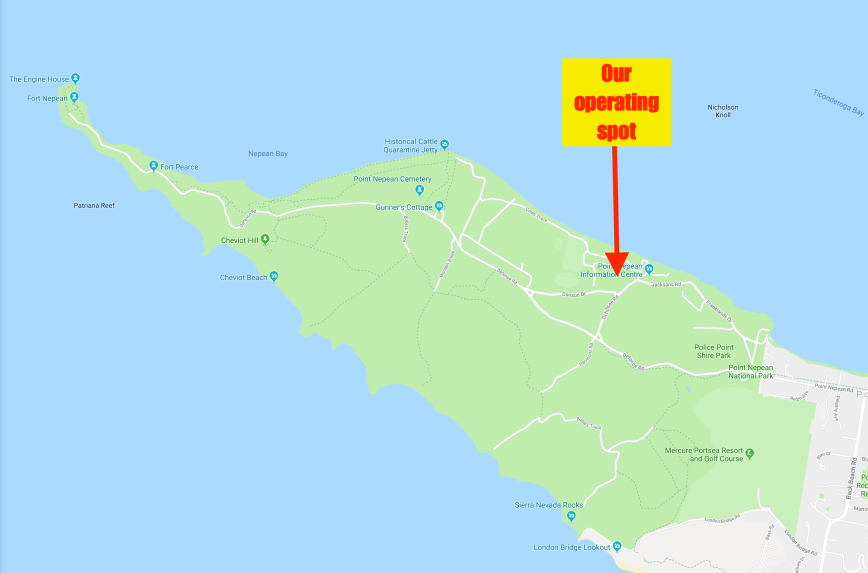
Screen Shot 2018-12-18 at 1.09.22 pm.png

Above:- Map of the Point Nepean National Park, showing our operating spot.  Map courtesy of google maps

I kicked off the activation, while Marija went for a walk through the many historic buildings at the Quarantine Station.

This slideshow requires JavaScript.

Prior to calling CQ I tuned across the 40m band and found Chris VK1CT/p on 7.138 calling CQ from Bruce Ridge Nature Reserve VKFF-0835.  It was a nice way to start the activation with a Park to Park contact.

I then moved down to 7.133 and started calling CQ.  First in the log was Jim VK2FADV, followed by another Park to Park, with Ian VK1DI/p in the Farrer Ridge Nature Reserve VKFF-0840.  The 40m band had opened up very nicely, with good strong signals and lots of callers.

Contact number ten came 13 minutes into the activation, with a QSO with Cliff VK2NP.  I went on to work a total of 44 stations on 40m.  Contact number 44 was with Paul VK3HP.  This included the following Park to Park contacts:-

  • Chris VK1CT/p in the Bruce Ridge Nature Reserve VKFF-0835
  • Ian VK1DI/p in the Farrer Ridge Nature Reserve VKFF-0840
  • Gerard VK2IO/p in the Agnes Banks Nature Reserve VKFF-1881
  • Rob VK4AAC/p in the Freshwater National Park VKFF-0187
  • Alan VK2MG/p in the Munmorah State Conservation Area VKFF-1361
  • Peter VK3ZPF/p in the Langwarrin Flora & Fauna Reserve VKFF-2031
  • Andy VK5LA/p in the Moorook Game Reserve VKFF-1729

Marija returned from her walk and jumped into the operators chair.  Her first contact was with Compton VK2HRX, followed by Stephen VK5FETS, and then Andy VK5LA/p in the Moorook Game Reserve VKFF-1729.  Marija’s tenth contact was with Andrew VK2PEZ.  A further 5 stations were logged by Marija on 40m including a Park to Park with Gerard VK2IO/p in the Agnes Banks Nature Reserve VKFF-1881.

To complete the activation we headed down to the 80m band and logged Peter VK3PF/p who was in the Bruthen Flora Reserve VKFF-2282.  Unfortunately we did not have time to try 20m as I wanted to have a look at some of the Quarantine buildings and then head into Rye and head out for tea with Alan VK3ALN and his wife Robyn.

Marija worked the following stations on 40m SSB:-

  1. VK2HRX
  2. VK5FETS
  3. VK5LA
  4. VK4NH
  5. VK4DXA
  6. ZL4TY/VK4
  7. VK2PKT
  8. VK5HS
  9. VK2DRB
  10. VK2PEZ
  11. VK2ZEP
  12. VK2IO/p (VKFF-1881)
  13. Vk7QP
  14. VK7FOXX
  15. VK7FJFD

Marija worked the following station on 80m SSB:-

  1. VK3PF/p (VKFF-2282)

I worked the following stations on 40m SSB:-

  1. VK1CT/p (Bruce Ridge Nature Reserve VKFF-0835)
  2. VK2FADV
  3. VK1DI/p (Farrer Ridge Nature Reserve VKFF-0840)
  4. VK2FTDX
  5. VK2IO/p (Agnes Banks Nature Reserve VKFF-1881)
  6. VK2LX
  7. VK4AAC/p (Freshwater National Park VKFF-0187)
  8. VK5GJ
  9. VK3SQ
  10. VK2NP
  11. VK4NH
  12. VK4DXA
  13. ZL4TY/VK4
  14. VK5FMLO
  15. VK2GZ
  16. VK4CZ
  17. VK2MG/p (Munmorah State Conservation Area VKFF-1361)
  18. VK5PE
  19. VK5HS
  20. VK2HBO
  21. VK5CZ
  22. VK3ZZS
  23. VK7FJFD
  24. VK5PL
  25. VK3ZPF/p (Langwarrin Flora & Fauna Reserve VKFF-2031)
  26. VK7ZGK
  27. VK3MB
  28. VK2KNV/m
  29. VK2XSE/m
  30. VK2BHO
  31. VK5LA/p (Moorook Game Reserve VKFF-1729)
  32. VK2PKT
  33. VK5FETS
  34. VK7QP
  35. VK2YK
  36. VK2HMV
  37. VK7FTAS
  38. VK3FORD
  39. VK2VW
  40. VK3NLK
  41. VK3OY
  42. VK3BAP
  43. VK2MKE
  44. VK3HP

I worked the following station on 80m SSB;-

  1. VK3PF/p (Bruthen Flora Reserve VKFF-2282)

This is a major shipping channel, with overseas ships travelling through the narrow inlet between Point Nepean and Point Lonsdale into Port Phillip Bay and on to Melbourne.

Unfortunately I had left it a little too late, and many of the buildings which Marija had looked through, were now closed.  I will have to come back here another time.  But we did spend about 30 minutes walking around the old Quarantine Station.

This slideshow requires JavaScript.

We had a little bit of time up our sleeve before heading out for tea with Alan and Robyn, so we took a walk up the main street of Sorrento, admiring many of the town’s historic buildings.

We also took a walk along the foreshore.  The Sorrento Pier was essential to Sorrento’s development.  It was built in 1870 and served the paddle steamers carrying passengers from Melbourne, right up until 1942.   The largest, the Weeroona, carried 1,927 passengers.  They were met by horse drawn cabs, wagonettes, or they could climb steps and cross the bridge to the train terminus and travel direct to the back beach, or ‘Ocean Ampitheatre’.  The steam tramway started in 1889 and continued until 1921.

We then headed to the Rye Hotel and enjoyed a very nice meal with Alan and Robyn.


References.

Parks Victoria, 2017, ‘Point Nepean National Park Master Plan 2017’

Wikipedia, 2018, <https://en.wikipedia.org/wiki/Point_Nepean>, viewed 18th December 2018

Day ten, Mount Martha Nature Conservation Reserve VKFF-2152

Day ten of our two week trip was now here (Sunday 25th November 2018), and it was the second day of the 2018 VKFF Activation Weekend.  After breakfast we headed out to our first park, the Mount Martha Nature Conservation Reserve VKFF-2152.

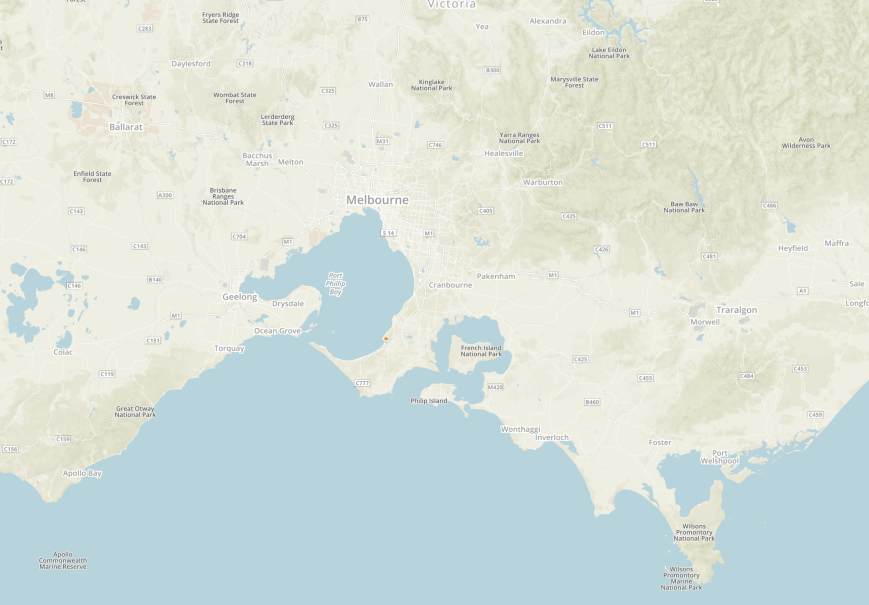
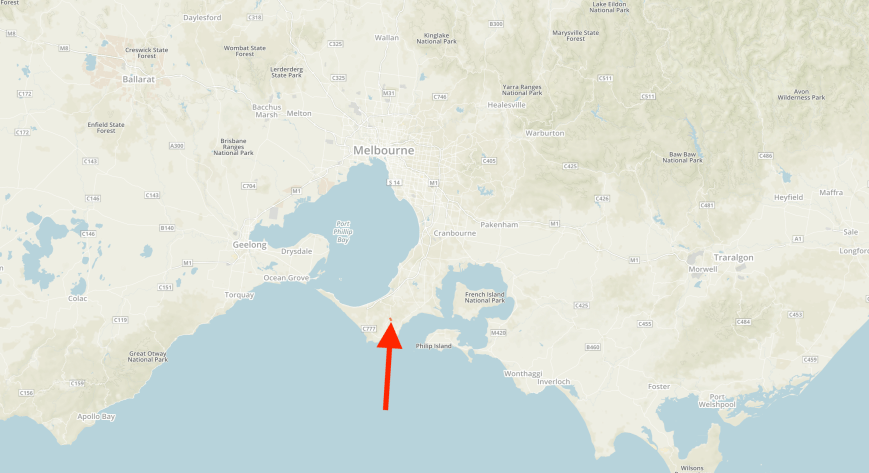
Screen Shot 2018-12-18 at 10.29.02 am.png

Above:- Map showing the location of the Mount Martha Nature Conservation Reserve.  Map courtesy of Protected Planet.

This was another park which I was able to find very little about on the internet.  The park takes its named from the seaside town of Mount Martha, which was named in 1836 by Captain William Hobson, commander of HMS Rattlesnake, after Martha Lonsdale (Smythe). Martha Lonsdale was the wife of Captain Lonsdale, Port Phillip’s first Police Magistrate.

Mount Martha Nature Conservation Reserve is 50 hectares in size and includes the summit of Mount Martha which is 166 metres above sea level.  Sadly Mount Martha is not a SOTA summit, as it does not have the required 150 metres of prominence.

Mount Martha was originally the land of the Boonerwurrung aboriginal people.  Bythe early 1900’s most of the Mount Martha area had been totally cleared by the Europeans who had settled in the area.  This was initially by sheep grazers, and then for timber which was used in the bakeries in Melbourne and local lime kilns.

Mount Martha was first reserved as a public park during the 1940’s, with the concept of a ‘community forest’ being initiated in 1947.  Over the following 20 years replanting took place, including a pine forest and an Australian Native Plant Arboretum.  The pine trees were removed in 1985 and replaced with native plants.  Today, Mount Martha supports one of the few large intact remnants of Lowland Snowgum Grassy Woodland in Victoria.

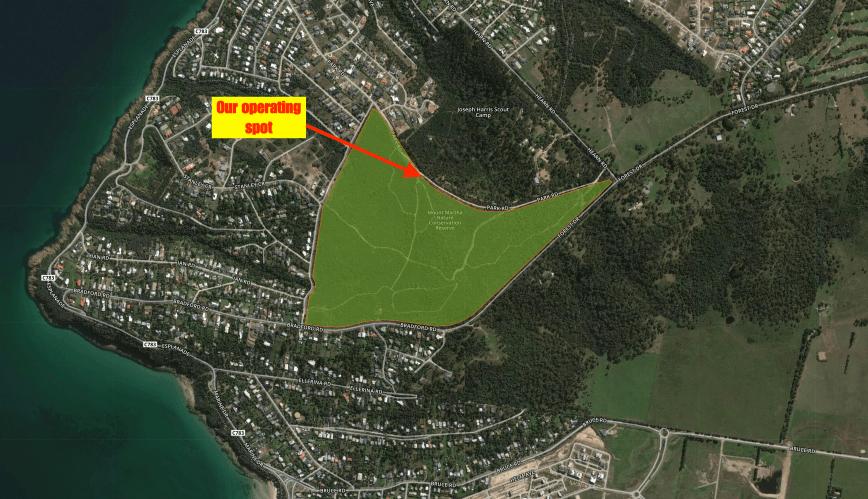
We drove along the southern boundary of the park on Bradford Road and then the western boundary on Churchill Road.  But there were houses opposite the park at these locations.  We continued along Churchill Road and then turned on to Park Road to follow the northern boundary of the park.  This looked more promising, with the Joseph Harris Park on the opposite side of Park Road.  We parked the vehicle and walked about 100 metres down a walking track.

Screen Shot 2018-12-18 at 10.28.47 am.png

Above:- An aerial view of the Mount Martha Nature Conservation Reserve, showing our operating spot.  Image courtesy of Protected Planet.

There was plenty of room here to stretch out the 20/40/80m linked dipole without encroaching on other park users.

Marija kicked off the activation by calling CQ on 7.115.  We normally operate higher in the band, around 7.144, but being a Sunday morning, the 40m band was busy with the weekly news broadcasts from the Wireless Institute of Australia.  Marija’s first contact was a Park to Park with Gerard VK2IO/p who was activating the Yellomundee Regional Park VKFF-0558.  This was followed by Ray VK4NH, and then some more Park to Park contacts, with Peter VK2KNV/p and Liz VK2XSE/p in the Langtree Nature Reserve VKFF-2642.

We then had an unexpected visitor.  It was Peter VK3ZPF.  I had seen Peter walking down the track and initially thought he was a bushwalker, but once closer I recognised Peter.  It was great to see him.

Marija logged a total of 10 stations on 40m, qualifying the park for the VKFF program.

I then jumped into the operators chair, and Peter and I decided to swap the mic for each QSO.  First in the log was Mike VK5FMWW.  I soon had the park qualified for VKFF, with a contact with Andrew VK7DW in Tasmania.

Peter and I logged a total of 34 stations on 40m including the following Park to Park contacts:-

  • Gerard VK2IO/p in the Yellomundee Regional ParkVKFF-0558
  • Liz VK2XSE/p in the Langtree Nature Reserve VKFF-2642
  • Rob VK2QR/5 in the Gum Lagoon Conservation Park VKFF-0886
  • Peter VK3PF/p in the Holey Plains State Park VKFF-0758
  • Fred VK3DAC/p in the Bunurong Marine National Park VKFF-0945
  • Phil VK3BHR/p in the Greater Bendigo National Park VKFF-0623
  • Neil VK4HNS/p in the Boomi West Nature Reserve VKFF-2537
  • Tony VK3XV/p in the Rokewood Common Nature Conservation Reserve VKFF-2182

We then headed down to the 80m band and I called CQ on 3.610.  I didn’t take too long, and I had contact number 44 in the log, a Park to Park contact with Rob VK2QR/5 in the Gum Lagoon Conservation Park VKFF-0886.  This was followed by another Park to Park, with Malcolm VK3OAK/p in the Lake Rosine Wildlife Reserve VKFF-2362.

With the park qualified for WWFF, I then called CQ on 14.310 where I logged 5 stations including Andrei ZL1TM in New Zealand.  To complete the activation we headed back to 40m to see if there were any park activators about.  I logged Neil VK4HNS/p who was activating the Boomi West Nature Reserve VKFF-2537, and then Tony VK3XV/p in the Rokewood Common Nature Conservation Reserve VKFF-2182.

It was time to park up and head back into Sorrento for some lunch and a visit to the Sorrento Museum.  Marija and I had 64 contacts in the log between the 2 of us from Mount Martha, including 17 Park to Park contacts.

Marija worked the following stations on 40m SSB:-

  1. VK2IO/p (Yellomundee Regional Park VKFF-0558)
  2. VK4NH
  3. VK4DXA
  4. ZL4TY/VK4
  5. VK2KNV/p (Langtree Nature Reserve VKFF-2642)
  6. VK2XSE/p (Langtree Nature Reserve VKFF-2642)
  7. VI2WG50/p (Langtree Nature Reserve VKFF-2642)
  8. VK5FMWW
  9. VK7ME
  10. VK5PL
  11. VK3PF/p (Holey Plains State Park VKFF-0758)
  12. VK3XV/p (Rokewood Common Nature Conservation Reserve VKFF-2182)

I worked the following stations on 40m SSB:-

  1. VK2IO/p (Yellomundee Regional ParkVKFF-0558)
  2. VK2XSE/p (Langtree Nature Reserve VKFF-2642)
  3. VK5FMWW
  4. VK5TRM
  5. VK5MJ
  6. VK2QR/5 (Gum Lagoon Conservation Park VKFF-0886)
  7. VK4CZ
  8. VK4HAT
  9. VK2LEE
  10. VK7DW
  11. VK4NH
  12. VK4DXA
  13. ZL4TY/VK4
  14. VK5VGC
  15. VK5YX
  16. VK2XXM
  17. VK5PL
  18. VK3PF/p (Holey Plains State Park VKFF-0758)
  19. VK5LA
  20. VK2LX
  21. VK2NP
  22. VK2PKT
  23. VK3DAC/p (Bunurong Marine National Park VKFF-0945)
  24. VK7BEN
  25. VK1HW
  26. VK1TX
  27. VK5MRT
  28. VK7KR
  29. VK2IO/p (Yellomundee Regional Park VKFF-0558)
  30. VK2KYO
  31. VK3BHR/p (Greater Bendigo National Park VKFF-0623)
  32. VK5KSW
  33. VK5LA
  34. VK5FANA
  35. VK5PE/m
  36. VK5HS/m
  37. VK4HNS/p (Boomi West Nature Reserve VKFF-2537)
  38. VK3XV/p (Rokewood Common Nature Conservation Reserve VKFF-2182)

I worked the following stations on 80m SSB:-

  1. VK3YB
  2. VK3TNL
  3. VK3MPT
  4. VK3PAT
  5. VK2KYO
  6. VK3ARH
  7. VK3UH
  8. VK2QR/5 (Gum Lagoon Conservation Park VKFF-0886)
  9. VK3OAK/p (Lake Rosine Wildlife Reserve VKFF-2362)

I worked the following stations on 20m SSB:-

  1. ZL1TM
  2. VK4NH
  3. VK4DXA
  4. ZL4TY/VK4
  5. VK2LEE

After packing up we drove east on Park Road and found that there was a major parking area and picnic area near the Park Road and Forest Drive intersection.  We stopped there briefly to have a look at the information boards at this location.

We drove back to Sorrento via The Esplanade, through Safety Beach, admiring some terrific views of the western coastline of the Mornington Peninsula.

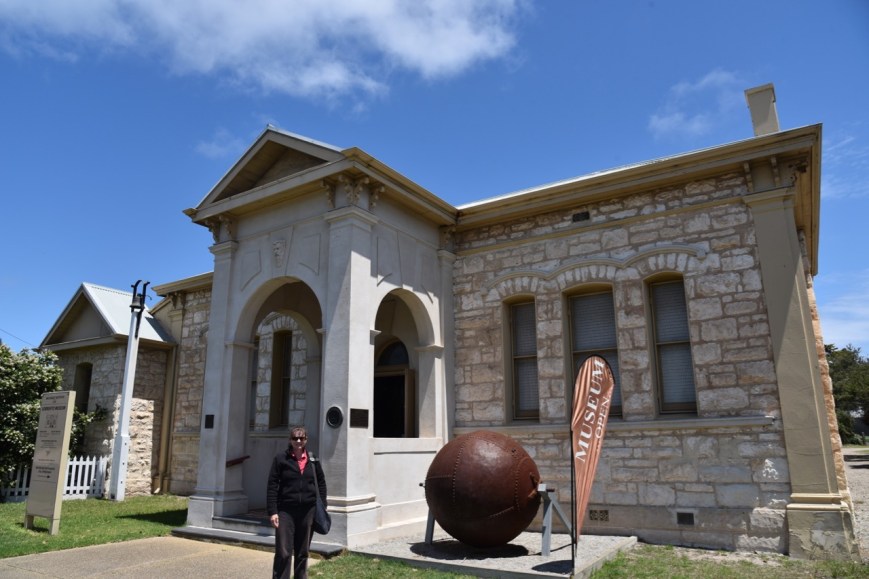
Once back in Sorrento we had a quick bite to eat, whilst waiting for the Sorrento Museum to open up at 1.30 p.m. local time.  The museum is located in the National Trust classified old Mechanics Institute, a limestone building built during the 1870’s.  The museum first opened in 1967.

DSC_4875

We can highly recommend a visit here to the museum which is run by the Nepean Historical Society.  For just a meager $5.00 admission fee, there is an excellent display of local history.  It includes local aboriginal history and artefacts, an original water cask from the 1803 Sullivan Bay settlement, a maritime display, costumes and household items, and information on William Buckley, a convict who escaped from the settlement and lived with the local aborigines for 33 years.

This slideshow requires JavaScript.

Part of the museum is Watts Cottage, also known as Ilfracombe, a wattle and daub limeburners home which was built in 1869-1870.  It was the home of Sorrento pioneers John Francis Watts and his wife Jenny ‘Jane’.  They had nine children, seven of whom whilst they were living at Ilfracombe.  It is a fine example of the type of home built by early Sorrento settlers.

After leaving the museum we headed out to our next park activation at the Point Nepean National Park.


References.

Victorian Places, 2018, <https://www.victorianplaces.com.au/mount-martha>, viewed 18th December 2018

Main Ridge Flora Reserve VKFF-2135

Our second planned park for the 2018 VKFF Activation Weekend was to be the Point Nepean National Park, but we chose to alter our plans and head to the Main Ridge Flora Reserve VKFF-2135.  Main Ridge is located about 105 km south of Melbourne on the Mornington Peninsula.  This was to be a first time activation for both Marija and I.

Screen Shot 2018-12-17 at 8.19.41 pm.png

Above:- Map showing the location of the Main Ridge Flora Reserve.  Map courtesy of Protected Planet.

The Main Ridge Flora Reserve is about 158 acres in size.  It is located in relatively close proximity to the Greens Bush section of the Mornington Peninsula National Park.  I was unable to locate much information about this park on the internet.  The Parks Victoria website only contains 3 photos and a map, with no further detail.

The park is one of the last remaining remnant pieces of bushland on the Mornington Peninsula.  The park takes its name from the locality of Main Ridge, which was originally known as Main Creek.

Screen Shot 2018-12-17 at 8.16.06 pm.png

Above:- An aerial view of the Main Ridge Flora Reserve.  Image courtesy of google maps

The park was alive with birdlife during our visit, including Kookaburras, Crimson Rosellas, Superb Fairy Wrens, White-throated Treecreepers, Eastern Yellow Robins, and  Grey Fantails.  Some of those appear in the photos below which I snapped during my visit to the park.

We accessed the park via the Mornington-Flinders Road.  There was a small area out the front where we parked out vehicle, and we walked a short distance down the walking trail and set up.  We ran the Yaesu FT-897 and the 20/40/80m linked dipole for this activation.  Power output for me was 40 watts, and 10 watts PEP for Marija.

Screen Shot 2018-12-17 at 8.19.28 pm.png

Above:- Aerial shot of the Main Ridge Flora Reserve, showing our operating spot.  Image courtesy of Protected Planet.

We had the park all to ourselves, so we were able to use the walking trail to our advantage, by stringing out the linked dipole.

DSC_4818

Above:- the walking trail through the park

Prior to calling CQ, Marija and I tuned across the band to see if we could log some other park activators.  We found Mark VK4SMA/p, Ade VK4SOE/p, and Steve VK4FNOR.p on 7.144.  Mark was in the Giraween National Park VKFF-0198, whilst Ade & Steve were activating the Bald Rock National Park VKFF-0011.

After speaking with Mark, Ade & Steve, I headed down the band to 7.135 and started calling CQ.  This was answered by Ray VK4NH, who was also keen to log Marija, so we swapped the mic after lowering the power for Marija.  We decided it was too hard going in and out of the menu, so Marija continued to operate.  Andy VK5LA/p then called in, who was activating the Murray River National Park VKFF-0372, followed by Linda VK7QP.  This was followed by Ian VK1DI/p in the Urambi Hill Nature Reserve VKFF-0864.  I also logged Ian, Park to Park.

DSC_4784

But it was very slow going on the band, and Marija logged just 2 further stations on 40m, Grant VK2LX, and Rod VK7FRJG.  So I jumped back on the mic, ramping the power back up to 40 watts.  It had started to drizzle again with rain, so Marija headed back to the vehicle for shelter, while I huddled underneath the bothy bag.  I logged a further 20 stations on 40 m including the following Park to Park contacts:-

  • Ian VK1DI/p in the Urambi Hill Nature Reserve VKFF-0864
  • Alan VK2MG/p in the Watagans National Park VKFF-0522
  • Liz VK2XSE/p in the Loughnan Nature Reserve VKFF-2651
  • Gerard VK2IO/p on SOTA peak VK2/ CT-032 in the Blue Mountains National Park VKFF-0041
  • Nik VK3NLK/p in the The Pines Flora & Fauna Reserve VKFF-2451
  • Alan VK3ALN/p in the Point Nepean National Park VKFF-0628
  • Les VK5KLV/p in the Munyaroo Conservation Park VKFF-0920
  • Steve VK5MSD/p in the Munyaroo Conservation Park VKFF-0920
  • Rob VK4AAC/p in the Bunyaville Conservation Park VKFF-1493

I then moved to the 80m band and started calling CQ on 3.610 after placing a spot on parksnpeaks.  Sadly my only taker on 80m was Geoff VK3SQ in Beechworth.

I then headed to 14.310 on the 20m band where I logged a total of 4 stations from VK4 and New Zealand.  I decided to have a tune across the 20m band before heading back to 40m, and I am very pleased I did.  I managed to log A35EU in Tonga on 14.185.  This was a new DXCC entity for me whilst being portable.  I am trying to get my DXCC from operating portable, and I am slowly getting there, being in the high 80’s now.

I then moved back to 40m and tuned across the band hoping to find some park activators.  I found Rob VK2QR/3 on 7.135 calling CQ from the Lonsdale Nature Conservation Reserve VKFF-2132.  I shouted out to Marija and she jumped out of the vehicle to also log Rob Park to Park.

I then moved up to 7.155 and called CQ.  I logged 5 stations including some more Park to Park contacts: Adam VK2YK/p in the Port Stephens/Great Lakes Marine Park VKFF-1410, and Peter VK2KNV/p in the Loughnan Nature Reserve VKFF-2651.

Marija and I saw a spot pop up for Peter VK3PF/p on 3.615, so we lowered the squid pole and inserted the 80m sections of the antenna and headed to 3.615.  We both logged Peter who was in the Crossover Regional Park VKFF-0965.  Peter became my 44th contact, qualifying the park for me for WWFF, so I encouraged Marija to get back on the mic whilst I headed off for a walk to take some more photographs.

But Marija found conditions difficult, logging just a further 2 stations on 40m, Mike VK5FMWW and Lee VK2LEE.

We packed up with a total of 61 contacts in the log between the 2 of us, including 27 Park to Park contacts.

Marija worked the following stations on 40m SSB:-

  1. VK4SMA/p (Girraween National Park VKFF-0198)
  2. VK4SOE/p (Bald Rock National Park VKFF-0011)
  3. VK4FNOR/p (Bald Rock National Park VKFF-0011)
  4. VK4NH
  5. VK4DXA
  6. ZL4TY/VK4
  7. VK5LA/p (Murray River National ParkVKFF-0372)
  8. VK7QP
  9. VK1DI/p (Urambi Hill Nature Reserve VKFF-0864)
  10. VK2LX
  11. VK7FRJG
  12. VK2QR/3 (Lonsdale Nature Conservation Reserve VKFF-2132)
  13. VK5FMWW
  14. VK2LEE

Marija worked the following station on 80m SSB:-

  1. VK3PF/p (Crossover Regional Park VKFF-0965)

I worked the following stations on 40m SSB:-

  1. VK4SOE/p (Bald Rock National Park VKFF-0011)
  2. VK4FNOR/p (Bald Rock National Park VKFF-0011)
  3. VK4SMA/p (Girraween National Park VKFF-0198)
  4. VK4NH
  5. VK4DXA
  6. ZL4TY/VK4
  7. VK5LA/p (Murray River National ParkVKFF-0372)
  8. VK1DI/p (Urambi Hill Nature Reserve VKFF-0864)
  9. VK7FRJG
  10. VK2LX
  11. VK2BY
  12. VK2MG/p (Watagans National Park VKFF-0522)
  13. VK2XSE/p (Loughnan Nature Reserve VKFF-2651)
  14. VK2IO/p (SOTA VK2/ CT-032 & Blue Mountains National Park VKFF-0041)
  15. VK3NLK/p (The Pines Flora & Fauna Reserve VKFF-2451)
  16. VK3ALN/p (Point Nepean National Park VKFF-0628)
  17. VK5HS
  18. VK2PKT
  19. VK2LEE
  20. VK5PL
  21. VK5KLV/p (Munyaroo Conservation Park VKFF-0920)
  22. VK5MSD/p (Munyaroo Conservation Park VKFF-0920)
  23. VK5FANA
  24. VK7QP
  25. VK4AAC/p (Bunyaville Conservation Park VKFF-1493)
  26. VK3SX
  27. VK5LG
  28. VK2FMNW
  29. VK2QR/3 (Lonsdale Nature Conservation Reserve VKFF-2132)
  30. VK2YK/p (Port Stephens/Great Lakes Marine Park VKFF-1410)
  31. VK2HRX
  32. VK7BEN
  33. VK2KNV/p (Loughnan Nature Reserve VKFF-2651)
  34. VI2WG50/p (Loughnan Nature Reserve VKFF-2651)
  35. VK5FMWW

I worked the following station on 80m SSB:-

  1. VK3SQ
  2. VK3PF/p (Crossover Regional Park VKFF-0965)
  3. VK3KAI/p (Crossover Regional Park VKFF-0965)
  4. VK3GV/p (Crossover Regional Park VKFF-0965)
  5. VK3ANL

I worked the following stations on 20m SSB:-

  1. VK4NH
  2. VK4DXA
  3. ZL4TY/VK4
  4. ZL1TM
  5. A35EU

We headed back down the Mornington Peninsula and stopped at Rye to catch up with Alan VK3ALN and hsi wife Robyn.  We enjoyed a nice coffee at Alan and Robyn’s motorhome, and arranged to catch up for tea the next night.

DSC_4847

We then headed back into Sorrento and ordered some Chinese take away.  Whilst waiting for the food we had a quick drive around Rye.  The weather had cleared up quite nicely compared to the dull and overcast conditions the day before.  We then headed back to the motel room for a relatively early night.


References.

Wikipedia, 2018, <https://en.wikipedia.org/wiki/Main_Ridge,_Victoria>, viewed 18th December 2018

Day nine, the VKFF Activation Weekend, and the Mornington Peninsula National Park VKFF-0333

Day nine (Saturday 24th November 2018) had rolled around very quickly, and it was now the first day of the 2018 VKFF Activation Weekend.  Our first intended activation for the day was the Mornington Peninsula National Park VKFF-0333.

Screen Shot 2018-12-17 at 6.53.53 pm.png

Above:- Map showing the location of the Mornington Peninsula National Park.  Map courtesy of Protected Planet. 

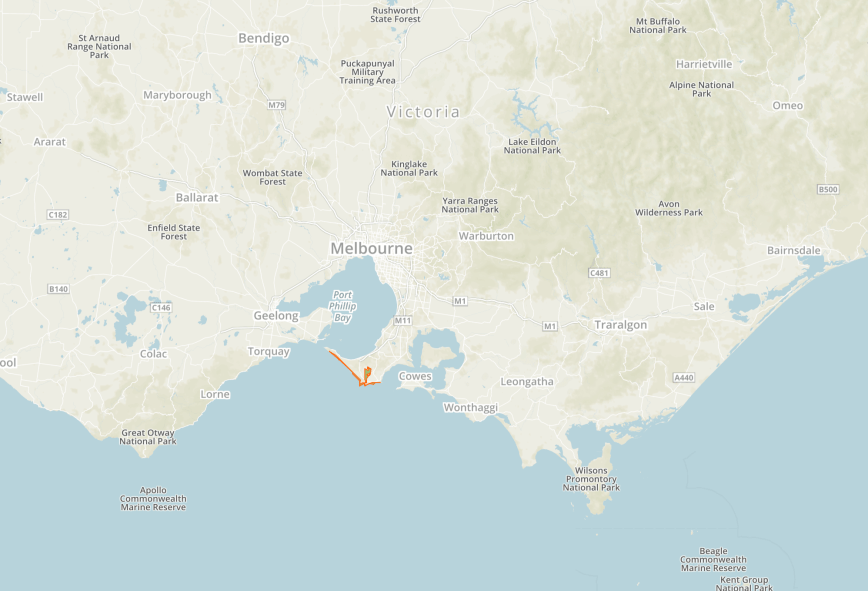
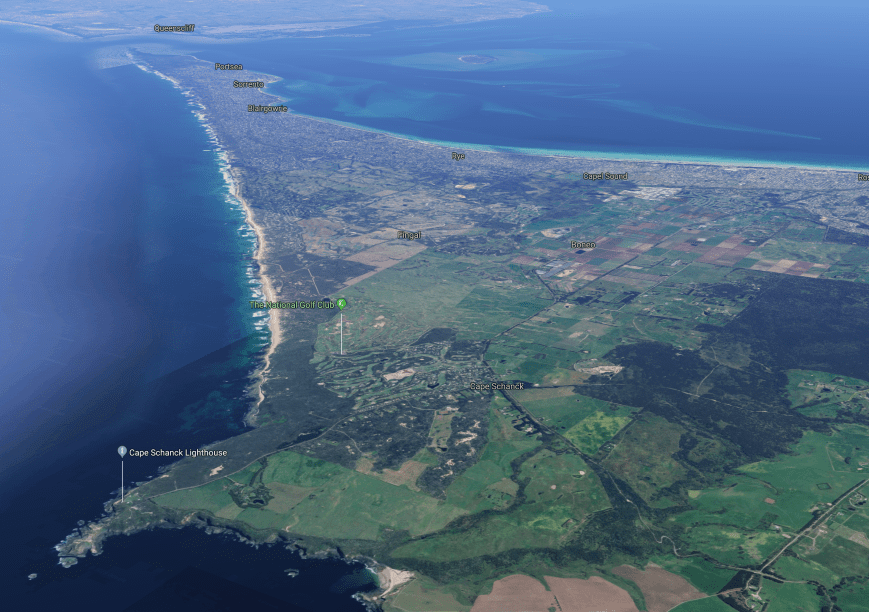
The Mornington Peninsula National Park is a large park, comprising 2,686-hectares (6,640-acres).  The park was declared on 1st December 1975.   The park follows the coastline from near Portsea to Cape Schank, and also an inland area known as Greens Bush, which is the largest remnant of bushland on the Mornington Peninsula.

The first European settlement on the Mornington Peninsula, was also the first settlement in Victoria.  This was at Sullivans Bay, now Sorenton, where a penal colony was established in 1803.  This was 30 years prior to the establishment of Melbourne.  At this time the majority of the peninsula was covered with she-oak forests, however these were quickly cleared and subsequently planted with fruit orchards.

Screen Shot 2018-12-17 at 7.57.20 pm.png

Above:- An aerial view of the Mornington Peninsula National Park.  Image courtesy of google maps.

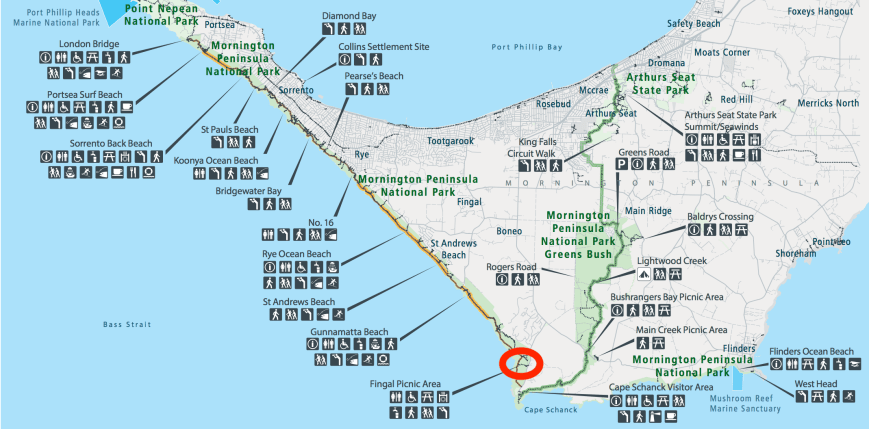
Marija and I were not exactly sure where in the park we were going to activate from.  We first tried Sorrento Back Beach, but found that there wasn’t enough room here to stretch out the dipole, without encroaching on other park users.  So we decided to head to Fingal Picnic Area further along the coastline.  Along the way we detoured to Gunnamatta Beach to admire the views of the coast.

We travelled along Cape Schank Road and soon reached the Fingal Picnic Area, about 2 km north of Cape Schank.  This area was subdivided for housing but was re- purchased by the government from 1974 to 1977.

There was plenty of room here for us to set up without interfering with others in the park.  Our operating spot was amongst some pine trees.

Screen Shot 2018-12-17 at 7.04.08 pm.png

Above:- Map of the Mornington Peninsula National Park, showing our operating spot.  Map courtesy of Parks Victoria.

We were set up and read to go by about 10.30 a.m.  We ran the Yaesu FT-897 and the 20/40/80m linked dipole for this activation.  Marija placed a spot up for me on parksnpeaks and I started calling CQ.  The first station in the log for us for the 2018 VKFF Activation Weekend was Ray VK4NH, followed by Rob VK4SYD, Nev VK5WG, and then Murray VK1UU.  But it was very slow going, and it took me 24 minutes to get contact number 10 in the log, a QSO with Pete VK2FPAR.

I logged a total of 11 stations on 40m before the UTC rollover, and afurther 7 after the UTC rollover.  This included five Park to Park contacts:

  • Alan VK2MG/p in the Watagans National Park VKFF-0522
  • Johnno VK3FMPB/p who was also in the Mornington Peninsula National Park.
  • Liz VK2XSE/p in the Lachlan Valley National Park VKFF-0255
  • Mark VK4SMA/p in the Girraween National Park VKFF-0198
  • Gerard VK2IO/p in the Blue Mountains National Park VKFF-0041

Unfortunately Johnno had not advised he was going to be in the same park as us, and we experienced a lot of bleed over across the band during the morning, so I apologise to any of the weaker stations that may have been calling us.

DSC_4720

The UTC rollover had just passed, and Marija jumped on the mic.  Marija’s first contact after calling CQ, was a Park to Park with Liz VK2XSE/p in the Lachlan Valley National Park VKFF-0255.  This was followed by another Park to Park with Peter VK2KNV/p who was also in VKFF-0255 with Liz.  Marija had soon qualified the park for VKFF with 10 contacts.  Her 10th contact was with Ray VK4NH.  Marija logged 12 stations on 40m including further Park to Park contacts with Mark VK4SMA/p, and Gerard VK2IO/p.

I then took charge of the microphone again and continued to call CQ on 7.144.  I logged just 6 further contacts before callers dried up.  So Marija and I lowered the squid pole and inserted the 80m legs of the dipole, and headed off to 3.610 on the 80m band.  I there logged 5 stations including a Park to Park with Tony VK3XV/p who was in the Dereel Lagoon Wildlife Reserve VKFF-2306.  Marija also logged Tony, Park to Park.

I now had 24 contacts in the log, and had just 20 more to go to qualify the park for the global WWFF program.  I called CQ on 14.310 and this was answered by Scott VK4CZ.  Unfortunately he was my only contact on that band.

So I headed back to 40m and called CQ on 7.145 where I logged a total of 8 stations, including a Park to Park with Alan VK3ALN/p, also in the Mornington Peninsula National Park.  Callers dried up very quickly, so I took the opportunity of tuning across the band, hoping to hear some other park activators.  Marija and I logged Steve VK4FNOR/2 who was on 7.140 activating the Bald Rock National Park VKFF-0011.  But Steve was the only activator we heard.  So it was back to 7.145.

It didn’t take long and I had contact number 44 in the log, a QSO with Ron VK3AHR.  I logged a total of 19 stations on 7.145 including the following Park to Park contacts:-

  • Peter VK2KNV/p in the Lachlan Valley National Park VKFF-0255
  • Les VK5KLV/p in the Munyaroo Conservation Park VKFF-0920
  • Steve VK5MSD/p in the Munyaroo Conservation Park VKFF-0920
  • David VK5PL/p in the Adelaide Dolphin Sanctuary VKFF-1880
  • Alan VK3ALN/p in the Point Nepean National Park VKFF-0628
  • Neil VK4HNS/p in the Dthinnawan Nature Reserve VKFF-2590
  • Rob VK2QR/3 in the Lonsdale Nature Conservation Reserve VKFF-2132
  • John VK5FLEA/p in the Montacute Conservation Park VKFF-0910

DSC_4721.jpg

The time had raced away to nearly 1.00 p.m., so we packed up and headed off to have a look at the Cape Schank lighthouse.  Marija and I had both qualified the park for VKFF & the KRMNPA, and I had qualified the park for WWFF.  Between us we had 78 contacts in the log, including 29 Park to Park contacts.

Marija worked the following stations on 40m SSB:-

  1. VK2MG/p (Watagans National Park VKFF-0522)
  2. VK2XSE/p (Lachlan Valley National Park VKFF-0255)
  3. VK2KNV/p (Lachlan Valley National Park VKFF-0255)
  4. VK2LX
  5. VK5HS
  6. VK4SMA/p (Girraween National Park VKFF-0198)
  7. VK2IO/p (SOTA VK2/ CT-032 & Blue Mountains National Park VKFF-0041)
  8. VK7QP
  9. VK5KLV/m
  10. VK4NH
  11. VK4DXA
  12. ZL4TY/VK4
  13. VK4FNOR/2 (Bald Rock National Park VKFF-0011)
  14. VK5MSD/p (Munyaroo Conservation ParkVKFF-0920
  15. VK5KLV/p (Munyaroo Conservation Park VKFF-0920)
  16. VK5PL/p (Adelaide Dolphin Sanctuary VKFF-1880)
  17. VK4HNS/p (Dthinnawan Nature Reserve VKFF-2590)
  18. VK2QR/3 (Lonsdale Nature Conservation Reserve VKFF-2132)
  19. VK5FLEA/p (Montacute Conservation Park VKFF-0910)

Marija worked the following stations on 80m SSB:-

  1. VK3XV/p (Dereel Lagoon Wildlife Reserve VKFF-2306)

I worked the following stations on 40m SSB before the UTC rollover:-

  1. VK4NH
  2. VK4DXA
  3. ZL4TY/VK4
  4. VK4SYD
  5. VK5WG
  6. VK1UU
  7. VK2BAI
  8. VK5NJ
  9. VK2MG/p (Watagans National Park VKFF-0522)
  10. VK2FPAR
  11. VK3FMPB/p (Mornington Peninsula National Park VKFF-0333)

I worked the following stations on 40m SSB after the UTC rollover:-

  1. VK2MTC
  2. VK5KLV/m
  3. VK5HS
  4. VK2lX
  5. VK2XSE/p (Lachlan Valley National Park VKFF-0255)
  6. VK4SMA/p (Girraween National Park VKFF-0198)
  7. VK2IO/p (SOTA VK2/ CT-032 & Blue Mountains National Park VKFF-0041)
  8. VK4NH
  9. VK4DXA
  10. ZL4TY/VK4
  11. VK2RP/m
  12. VK2BDR/m
  13. VK7DW
  14. VK2YK
  15. VK5LA
  16. VK3ALN/p (Mornington Peninsula National Park VKFF-0333)
  17. VK5AYL
  18. VK2PEZ
  19. VK2ZEP
  20. VK5AYD
  21. VK5FNVT
  22. VK4FNOR/2 (Bald Rock National Park VKFF-0011)
  23. VK5FAKV
  24. VK5FANA
  25. VK5FMWW
  26. VK5MRE
  27. VK3AHR
  28. VK2KNV/p (Lachlan Valley National Park VKFF-0255)
  29. VK5FMLO
  30. VK5KLV/p (Munyaroo Conservation Park VKFF-0920)
  31. VK5MSD/p (Munyaroo Conservation ParkVKFF-0920
  32. VK5PL/p (Adelaide Dolphin Sanctuary VKFF-1880)
  33. VK5IS
  34. VK5NBQ
  35. VK3ALN/p (Point Nepean National Park VKFF-0628)
  36. VK7EE
  37. VK4HNS/p (Dthinnawan Nature Reserve VKFF-2590)
  38. VK2QR/3 (Lonsdale Nature Conservation Reserve VKFF-2132)
  39. VK5FLEA/p (Montacute Conservation Park VKFF-0910)
  40. VK2MNR
  41. VK7FMAC

I worked the following stations on 80m SSB:-

  1. VK3XV/p (Dereel Lagoon Wildlife Reserve VKFF-2306)
  2. VK3ZPF
  3. VK3TNL
  4. VK3ANL
  5. VK3OHM

I worked the following station on 20m SSB:-

  1. VK4CZ

After packing up, we drove the short distance down Cape Schank Road until we reached the Cape Schank lighthouse, which was built in 1859 as the second coastal lighthouse in Victoria.  The lighthouse is 21 metres in height and is constructed of limestone.  The lighthouse is still operational.

There are some nice walks within the lighthouse reserve, dependant on your level of fitness.  We took a short walk, admiring the spectacular coastline.

We then attended the lighthouse museum which is located in one of the old assistants quarters.

We then took a tour of the lighthouse itself.  We were the only ones on this particular tour, so we had the tour guide all to ourselves.

The views from the balcony of the surrounding countryside and coast were quite amazing, despite it being a gloomy day.

We then headed off to our next park, the Main Ridge Nature Conservation Reserve.


References.

Parks Victoria, 2018, <https://parkweb.vic.gov.au/explore/parks/mornington-peninsula-national-park>, viewed 17th December 2018
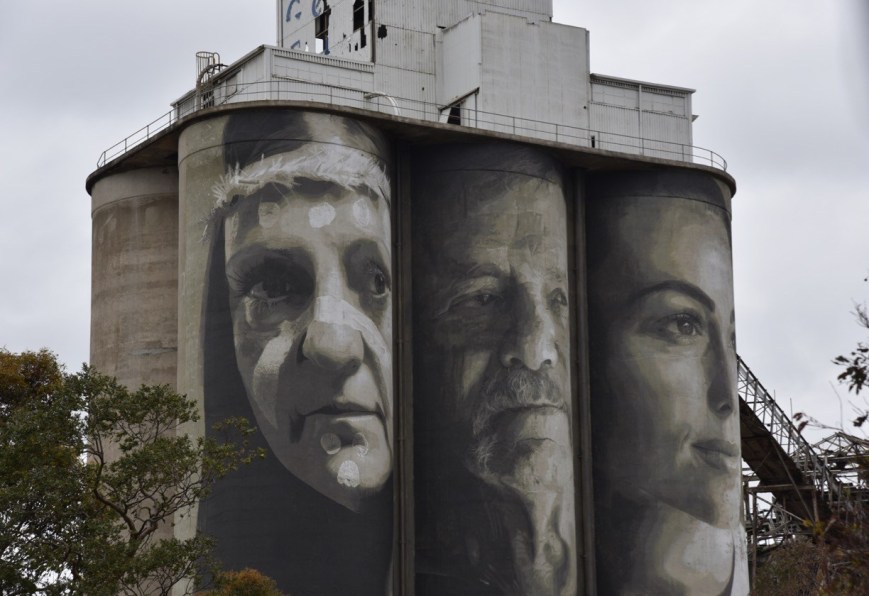
Wikipedia, 2018, <https://en.wikipedia.org/wiki/Cape_Schanck_Lighthouse>, viewed 17th December 2018

Wikipedia, 2018, <https://en.wikipedia.org/wiki/Mornington_Peninsula_National_Park>, viewed 17th December 2018

Yellingbo Nature Conservation Reserve VKFF-2244

After leaving Warramate Hills Marija and I drove in to Lilydale and quickly called in to the home of Tony VK3AN, to pick up an antenna.  Tony had kindly given me a shortened whip for the Codan 9350 for the back of my Toyota Hi Lux.  After leaving Tony’s house we decided to activate the Yellingbo Nature Conservation Reserve VKFF-2244, which is located about 63 km east of Melbourne.

Screen Shot 2018-12-17 at 5.03.50 pm.png

Above:- Map showing the location of the Yellingbo Nature Conservation Reserve.  Map courtesy of Protected Planet.

The Yellingbo Nature Conservation Reserve is 590 hectares in size and was established in 1965.  It is located near the towns of Yellingbo, Launching Place, Yarra Junction, Hoddles Creek, Cockatoo, Emerald, Monbulk and Seville.  It is a narrow riparian (interface between land and a river or stream) reserve with stream frontage land along the Woori Yalloc, Shepherd, Cockatoo, Macclesfield and Sheep Station Creeks.  The name Yellingbo imeans ‘today’ in the Woiwurrung aboriginal language.

About 285 native flora species have been recorded in the park, along with 230 native animals and birds.  The park is home to the Helmeted Honeyeater, a critically endangered bird, which exists in the wild only in a tiny relict population in Victoria.  Yellingbo is the only location where all of Victoria’s State terrestrial emblems can be found in the one place, the Helmeted Honeyeater, Leadbeater’s Possum, and Pink Heath.

Captively_bred_Helmeted_Honeyeater_at_the_Healesville_Sanctuary_in_Healesville,_Victoria,_Australia

Above:- Helmeted Honeyeater.  Image courtesy of Wikipedia.

We parked in a car park off the Macclesfield Road, near the Woori Yallock Creek.  As it was drizzling with rain, we operated from the vehicle for this activation.

Screen Shot 2018-12-17 at 5.03.38 pm.png

Above:- An aerial shot of the park showing our operating spot.  Image courtesy of Protected Planet

Marija placed up a spot for me on parksnpeaks and I started calling CQ on 7.144.  Liz VK2XSE/p was the first to call in.  It was a great way to start to the activation with a Park to Park.  Liz was in the Langtree Nature Reserve VKFF-2642.  Next up was Peter VK2UXO with his normal booming signal, and then Andy VK5LA.

Unfortunately a buzzing noise came up on the frequency, so I moved up to 7.148 and called CQ again.  This was answered by Ray VK4NH.  I logged a further 4 stations on 40m, before swapping the microphone with Marija.

Marija logged a total of 8 stations on 40m from VK2, VK3, VK4 and VK5, until callers dried up.  We then moved down to 3.610 on the 80m band where we logged Peter VK3PF/VK3KAI.

We had both qualified the park for the VKFF program and the local time was now approaching 4.00 p.m. local time.  So we hit the road again and headed off to Sorrento.

DSC_4693

Marija worked the following stations on 40m SSB:-

  1. VK2XSE/p (Langtree Nature Reserve VKFF-2642)
  2. VK3SQ
  3. VK2IO
  4. VK2MG
  5. VK5FANA
  6. VK4NH
  7. VK4DXA
  8. ZL4TY/VK4

Marija worked the following stations on 80m SSB:-

  1. VK3PF
  2. VK3KAI

I worked the following stations on 40m SSB:-

  1. VK2XSE/p (Langtree Nature Reserve VKFF-2642)
  2. VK2UXO
  3. VK5LA
  4. VK4NH
  5. VK4DXA
  6. ZL4TY/VK4
  7. VK5FANA
  8. VK5MAS
  9. VK2IO
  10. VK2MG

I worked the following station on 80m SSB:-

  1. VK3PF

We made our way down onto the Mornington Peninsula and into the town of Sorrento, which is located on the shores of Port Phillip.  It is believed that the town was named back in the 1870’s after Sorrento in Italy.

We booked in to our accomodation, the Sorrento Beach Motel, which we were very impressed with.  After freshening up we headed out for tea to the Itali.co restaurant.  The food was brilliant.

DSC_4987.jpg


References.

Wikipedia, 2018, <https://en.wikipedia.org/wiki/Helmeted_honeyeater>, viewed 17th December 2018

Wikipedia, 2018, <https://en.wikipedia.org/wiki/Yellingbo_Nature_Conservation_Reserve>, viewed 17th December 2018