Cudlee Creek Conservation Park VKFF-1023 and 5CP-050

We had been forecast some very average weather today (Saturday 23rd July 2016), but fortunately it held off nicely for me to head out to the Cudlee Creek Conservation Park VKFF-1023 and 5CP-050.  The last time I had been to this park was way back in July 2013, so this was to be a unique park activation for me for the World Wide Flora Fauna (WWFF) program.

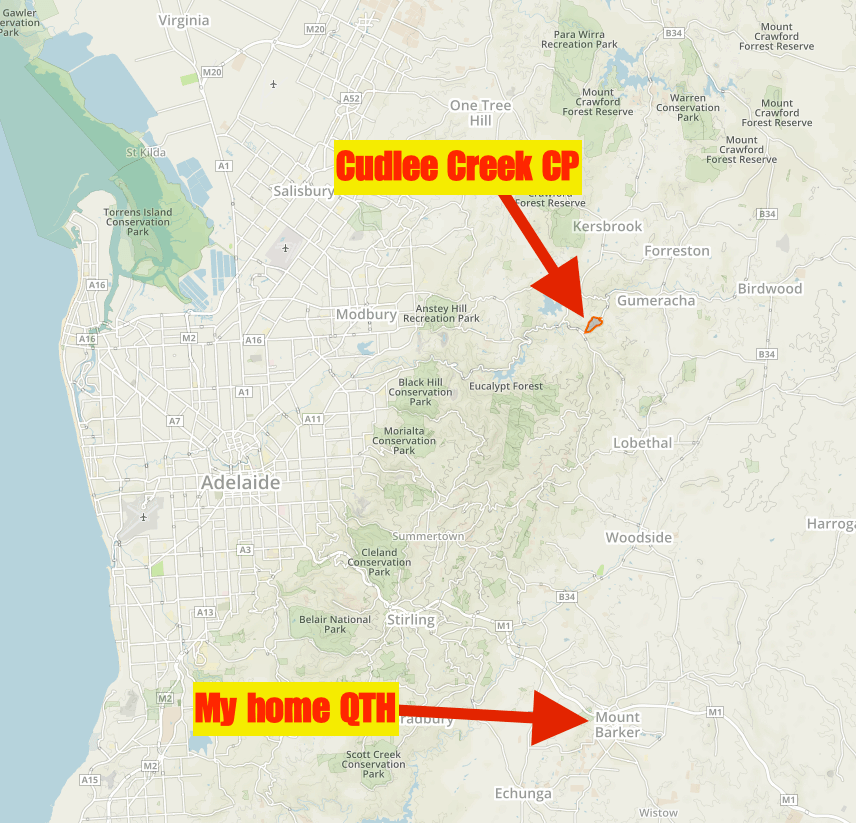
Screen Shot 2016-07-23 at 5.03.48 PM.png

Above:- Map showing the location of the Cudlee Creek Conservation Park.  Image courtesy of Protected Planet.

The park is situated just to the east of the little town of Cudlee Creek in the Mount Lofty Ranges ‘Adelaide Hills’, about 33 km north east of Adelaide.  The name Cudlee Creek is believed to be local aboriginal for Dingo’s Creek or wild dog crossing.  The first European inhabitants of Cudlee Creek settled in the area in 1838, just 2 years after the settlement of the State of South Australia.  William Kelly, from the Isle of Man, settled in the area and established the Sulby Glen Estate which was well know for its cheese making.  Cudlee Creek also became an exporter of fruit, in particular apples and pears.  A coldstore and packing shed was built in the town in 1922.

Today the population of Cudlee Creek is around 450 people.  The Gorge Wildlife Park, one of the largest privately owned animal parks in Australia is located at Cudlee Creek.  The old icecreamery in Cudlee Creek has now been converted into a cafe/restaurant and this was very busy as I passed through the town.

The River Torrens passes through the town.  The Torrens is the most significant river of the Adelaide Plains and was one of the reasons Adelaide was sited where it is today.  It flows about 85 km through the Adelaide Hills to its mouth between Henley Beach and West Beach.  The historic Union bridge crosses the Torrens at Cudlee Creek.  The original timber bridge was built in 1871 and was known as ‘Ledgards Bridge, and in 1917 was replaced with the current steel and concrete arched bridge.


The Cudlee Creek Conservation Park was proclaimed in 1971 and is home to a variety of native birds and animals who live in the woodlands on the steep hillsides.  Native animals that are found in the park include Western Grey kangaroos, and echidnas.  The River Torrens passes through the park on its southern border and after the recent rain was flowing very well.

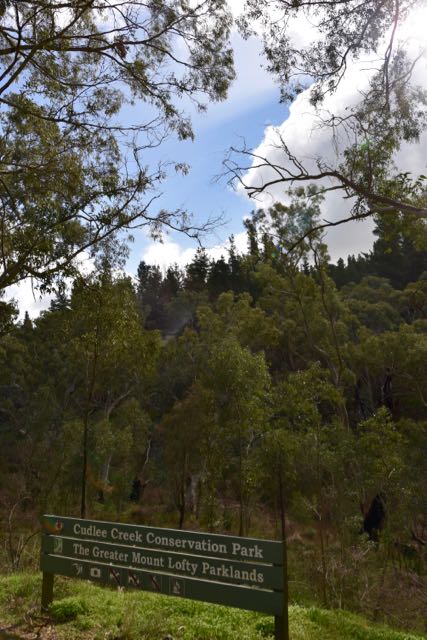
Access to the park is limited.  There is no access to the north of the park.  I first approached the park from its western side (from Cudlee Creek township).  There is a small parking area near the park’s sign, so you can get your vehicle off Gorge Road.

DSC_1460

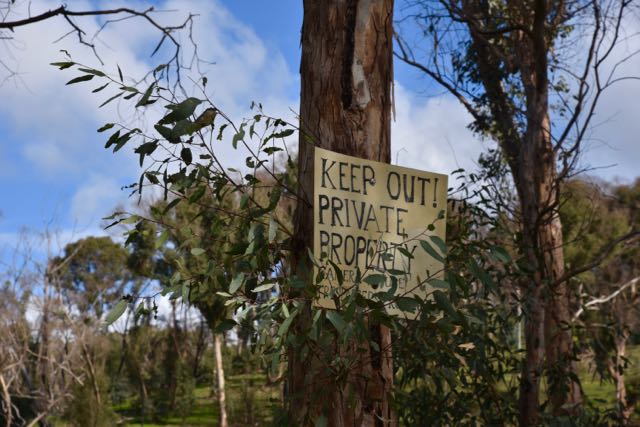
But I decided to continue east on Gorge Road towards North East Road, hoping that I would find another possible operating spot.  At the north eastern corner of the park I saw a small cleared area with a track leading down towards the river.  I was a bit confused as my GPS was showing that this was inside of the park, but there was a ‘Keep Out’ sign here.  I saw a 4WD ute parked down near the river so I drove down the track and found a fella down on the banks of the river.  As it turned out he was panning/screening for gold.  I asked him if he was the owner or if he knew that this area was private property.  He replied that he wasn’t the owner but that he believed it was private property as the owner had told him and his friends to leave on previous occasions.  I decided it wasn’t worth staying in this spot, and headed back towards the parking area further back along Gorge Road.

DSC_1466

The Cudlee Creek Conservation Park was devastated during the Sampson Flat bushfire in January 2015.  The fire destroyed 27 houses and burnt more than 20,000 hectares (49,000 acres) of land.  The park was closed for a significant period of time following the fire.  I was very pleased to see that although there were still visible signs of the fire, much of the bush had started to regenerate.

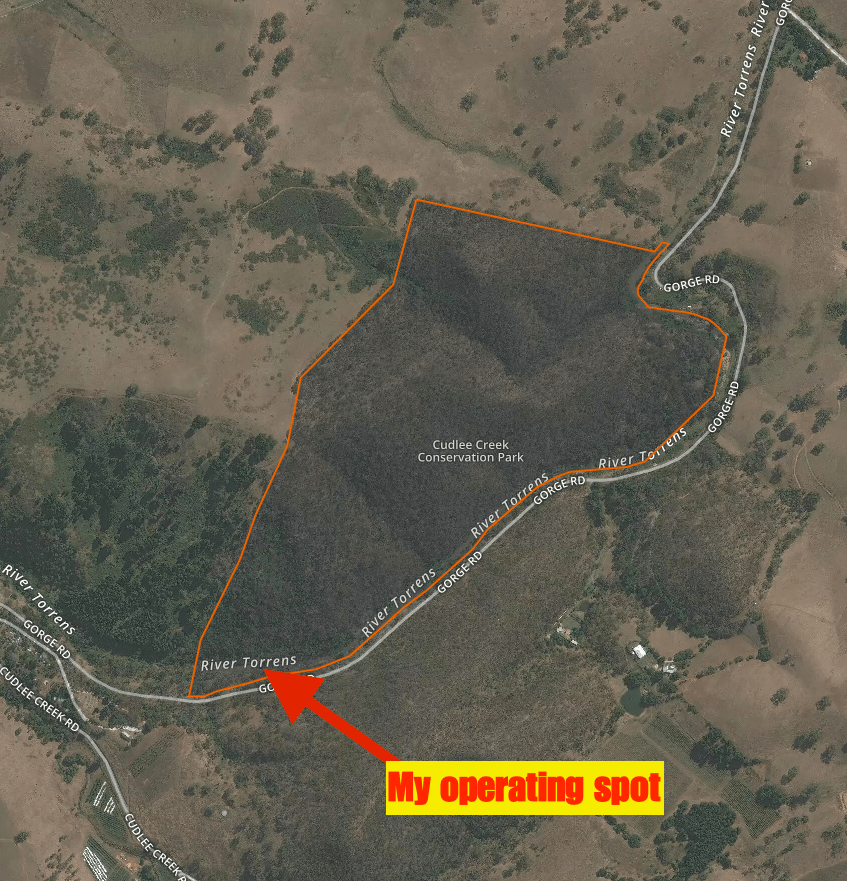
I set up in the south western corner of the park just off Gorge Road.  This was a picturesque spot and overlooked the River Torrens.  I used the park sign to secure the 7 metre squid pole, with the assistance of the always handy octopus straps.  I set up and deck chair, fold up table and Yaesu FT-857d and got to work.

Screen Shot 2016-07-23 at 5.02.18 PM.png

Above:- Map showing the location of my operating spot in the Cudlee Creek Conservation Park.  Image courtesy of Protected Planet.

I was set and up and ready to go by just after 0400 UTC (1.30 p.m.) which was the time I had posted on parksnpeaks and Facebook as my starting time in the park.  I headed to 7.144 and asked if the frequency was in use and the familiar voice of Dennis VK2HHA came back to let me know it was clear.  So Dennis was my first contact, followed by Marc VK3OHM, Greg VK5GJ at Meadows running just 4 watts, and then Damien VK5FDEC at Elizabeth running 5 watts.

Band conditions on 40m appeared to be quite good but it was noticeable that there were not as many callers as I’ve experienced during recent activations.  Conditions must have been good as I made contact again with Mike VK6MB in the middle of the day on 40m.  Although the busy Gorge Road was in close proximity to my operating spot, traffic was fairly light and it was fairly quiet.  All except for the occasional ‘weekend warrior’ on their motorcycle.  The Gorge Road is notorious for motorcycle riders and there have been a number of fatalities on Gorge Road over the years.  Not surprising when you see how some of these guys ride along that section of road.

After working a total of 43 stations on 40m from VK1, VK2, VK3, VK5, VK6, and VK7, I headed over to 20m.  This included a Park to Park contact with Neil VK4HNS who was operating portable in theBorder Ranges National Park VKFF-0047.  I first checked out the ANZA DX Net on 14.183 and was very concerned to hear signals very low down.  John VK4LJ who normally pounds in was extremely low.  So I headed up to 14.310 and started calling CQ and this was answered by Rick VK4RF/VK4HA, followed by Mike VK6MB.  But that was it for callers on 20m.  So it was down with the 40m/20m linked dipole and up with the 15m dipole.

I called CQ on 15m on 21.244 and this was answered by Mike VK6MB.  Despite the fact that signals were quite good (5/7 both ways), Mike was my only contact on 15m despite numerous CQ calls and a self spot on parksnpeaks.

The weather was moving in rapidly from the west and I was getting a few drops of rain, so it was an opportune time to pack up and head home.  I was content with 47 contacts in the log and another unique park qualified.

The following stations were worked on 40m SSB:-

  1. VK2HHA
  2. VK3OHM
  3. VK5GJ (QRP)
  4. VK5FDEC (QRP)
  5. VK3GGG
  6. VK3PMG
  7. VK3SIM
  8. VK3TKK
  9. VK5BJE
  10. VK3IO
  11. VK3GYH
  12. VK4AAC/3
  13. VK5KLV
  14. VK7CW
  15. VK6MB
  16. VK5TN
  17. VK3MCK
  18. VK5FMID
  19. VK2IO
  20. VK5ZEA
  21. VK2IF
  22. VK3BL
  23. VK3ZPF
  24. VK5FANA/m
  25. VK2YK
  26. VK3ANL
  27. VK3ELH
  28. VK5FD
  29. VK3FIRM
  30. VK2KYO
  31. VK4CPS
  32. VK5FAKV
  33. VK3PF
  34. VK1DI
  35. VK2PKT
  36. VK4HNS/2 (Border Ranges National Park VKFF-0047)
  37. VK2EXA
  38. VK3MRH
  39. VK6JON/7
  40. VK4FAAS
  41. VK3FPSR
  42. VK3KRH
  43. VK3NE

The following stations were worked on 20m SSB:-

  1. VK4RF
  2. VK4HA
  3. VK6MB

The following stations were worked on 15m SSB:-

  1. VK6MB


References.

Wikipedia, 2016, <https://en.wikipedia.org/wiki/Cudlee_Creek&gt;, viewed 17th July 2016

Wikipedia, 2016, <https://en.wikipedia.org/wiki/2015_Sampson_Flat_bushfires&gt;, viewed 17th July 2016

Weekend Notes, 2016, <http://www.weekendnotes.com/cudlee-creek-walk/&gt;, viewed 17th July 2016

The Gummeracha & District History Centre Inc, <http://www.gumeracha.com.au/otherPages/history/&gt;, viewed 17th July 2016


Talk at Elizabeth ARC

Last Wednesday night (2oth July 2016) I headed out to the Elizabeth Amateur Radio Club and delivered a presentation on operating portable, with specific content relating to the World Wide Flora Fauna (WWFF) program and the VK5 National & Conservation Parks Award.

Other than ‘death by powerpoint’, I had a number of transceivers, antennas, power sources, and other gear on display.

I will be heading back there in coming months to deliver a presentation on the WIA.

Thanks to the Elizabeth ARC for the invite.


Mowantjie Willauwar Conservation Park 5CP-152 and VKFF-0919 and the Trans Taman

On the way home from the Coorong I talked Marija into a quick stop off at the Mowantjie Willauwar Conservation Park, 5CP-152 and VKFF-0919.  The reason for the inpromptu activation was to spend an hour or two competing in the Trans Tasman Low Band Contest.  The contest has an aim to encourage Low Band activity trans Tasman, that is between VK and ZL, on the 160, 80 and 40m bands.

Mowantjie Willauwar Conservation Park was proclaimed on the 2nd June 2005, and conserves nearly 143 hectares of Southern Cyprus Pine Forest.  It is situated about 6 km south west of Tailem Bend.  Mowantjie is the aboriginal name for the native pine found in the park, while Willauwar is a plural word meaning ‘forest of species’.  Therefore the name Mowantjie Willauwar means ‘Native Pine Forest’, and this is a very accurate description of the park.  The park was originally known as the Tailem Bend Forest and still appears on Google maps as such.

I set up for around 90 minutes in the park and made a total of 90 contacts with 28 of those being on 40m SSB and 62 on 80m SSB.

For this activation I ran the Yaesu FT-857d, 40 watts and a 20m/40m/80m linked dipole which I supported with the 7m heavy duty squid pole.

This park always seems to be frequented by very hungry mosquitos and that combined with the freezing temperatures of just 1 degree C, did not persuade me to stay any longer than the 90 minutes.

Thanks to everyone who called.  I even picked up another two Park to Park contacts….with Gerard VK2IO in Dharug National Park VKFF-0139 and Marcus VK5WTF in Morialta Conservation Park 5CP-142 and VKFF-0783.

I contacted the following stations on 40m SSB:-

  1. ZL3VZ
  2. VK2ACH/p
  3. VK2PX
  4. VK2IO/p (VKFF-0139)
  5. VK2DEK
  6. VK6WE
  7. VK2ACD
  8. VK2MRX
  9. VK2ZK
  10. VK2HPN
  11. VK2BOB
  12. VK2SK
  13. ZM1W
  14. VK6DW
  15. VK7VH
  16. VK2MOR
  17. VK2AWX
  18. ZL2GD
  19. VK2ATZ
  20. VK6TKR
  21. ZL2CE
  22. VK4BZ/2
  23. VK6VCK/m
  24. VK2ZMT
  25. VK5FUZZ
  26. ZL1NAY
  27. VK2EFM
  28. ZL1YE

I contacted the following stations on 80m SSB:-

  1. VK2MT
  2. VK3XV
  3. VK3MBW
  4. VK4RF
  5. VK4HA
  6. VK5AW
  7. VK3PF
  8. VK3YE
  9. VK3ERA
  10. VK5CV
  11. VK2FAIB
  12. VK5NM
  13. VK2LDN
  14. VK7VAZ
  15. VK5SFA
  16. VK3TWO
  17. VK7GG
  18. VK3BF
  19. VK3HSB
  20. VK3LSD
  21. VK2PX
  22. VK7XDM
  23. VK5WTF/p (VKFF-0783)
  24. VK6FMON/3
  25. VK3PMG
  26. VK3GGG
  27. VK5BJE
  28. VK5CZ
  29. VK3ALB
  30. VK3PMG
  31. VK3GGG
  32. VK3UH
  33. VK2HPN
  34. VK2PX
  35. VK4FAAS
  36. VK4ICE
  37. VK4BZ/2
  38. VK3PF
  39. VK6POP
  40. VK2IG
  41. ZL1AAW
  42. VK3ERA
  43. VK6AS
  44. VK2ZK
  45. VK7VH
  46. VK3XV
  47. VK7PAL
  48. VK3YE
  49. VK2IO/p (VKFF-0139)
  50. VK3HAK
  51. VK5ST
  52. VK3ANL
  53. VK5FANA
  54. VK3BF
  55. VK5MCB
  56. VK3MBW
  57. VK4SN
  58. VK3GK
  59. VK2WG
  60. VK4FW
  61. VK2ATZ
  62. VK2EFM

Coorong National Park 5NP-005 and VKFF-0115

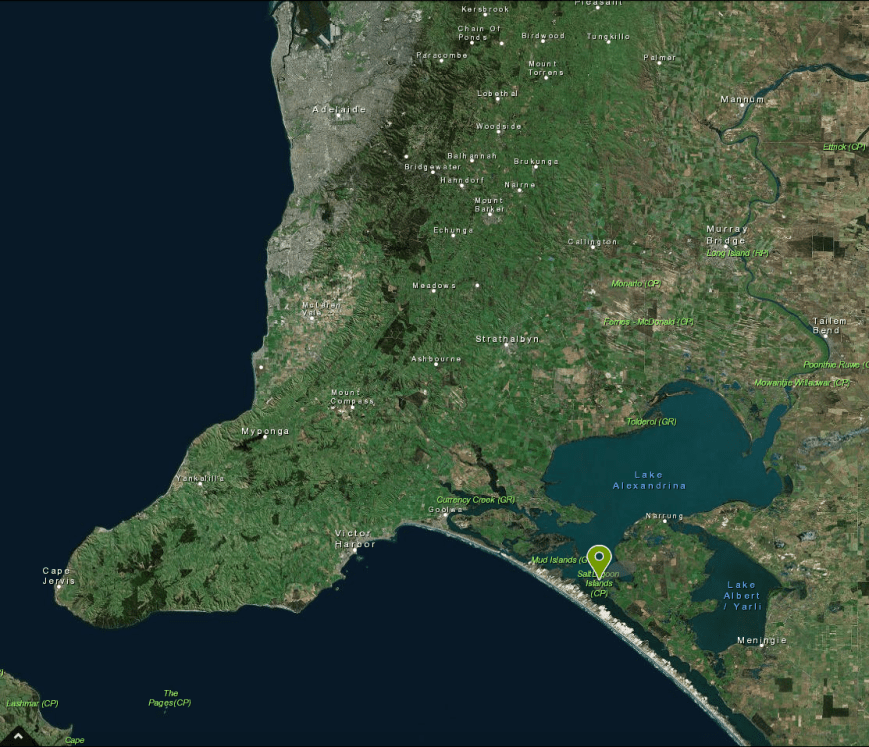
Yesterday (Saturday 16th July 2016), my wife Marija VK5FMAZ, and I headed down to the Coorong with the intention of activating a brand new park, the Salt Lagoon Islands Conservation Park, 5CP-203 and VKFF-1092.  However we were not entirely sure that we could gain access to the park, so our fall back plan was the adjacent Coorong National Park 5NP-005 and VKFF-0115.  Aerial maps showed a track towards the end of Pelican Point Road but we were not sure what we would encounter there.  A gate perhaps?  Information on the internet was less than helpful with regards to this park.
Screen Shot 2016-07-17 at 7.01.33 PM.png

Above:- Map showing the location of the Salt Lagoon Islands Conservation Park.  Image courtesy of Location SA Map Viewer.

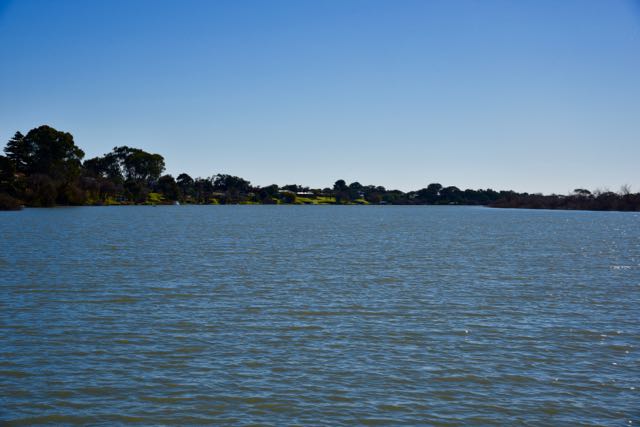
Rather than travelling down the South Eastern Freeway to Murray Bridge and Tailem Bend, Marija and I drove down through the beautiful wine growing region of Langhorne Creek and then on to Wellington which is situated on the Murray River.  Wellington is just upstream of the Murray where it empties into Lake Alexandrina.  Wellington was the original crossing of the Murray River for people, livestock, and goods travelling overland between Adelaide and Melbourne, until a bridge was built at Murray Bridge in 1879.  But there are no such luxuries of a bridge at Wellington.  We boarded the ferry here and travelled across the river.
DSC_1322

Above:- Crossing the Murray River at Wellington.

After crossing the mighty Murray River we continued south on the Princes Highway until we reached Pottaloch Road and headed towards Port Malcolm.  The Pottaloch Road follows the southern boundary of Lake Alexandrina, which is a large freshwater lake comprising 1,061,469 km2.  The lake was named after Princess Alexandrina, the niece and successor of King William IV of Great Britain and Ireland.  We stopped for a short look at the Port Malcolm lighthouse, also known as Mundoo Light.  It is Australia’s only inland light station, with the concrete tower also being Australia’s smallest lighthouse.  The lighthouse operated between 1878 and 1931 to mark the narrow passage between Lake Albert and Lake Alexandrina.

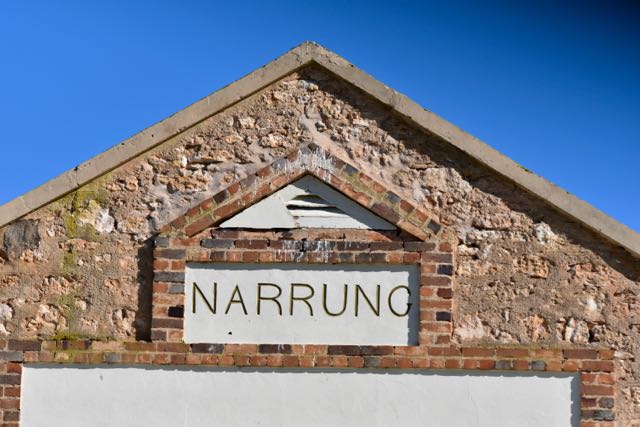
We then crossed the ferry at Port Malcolm and on to Narrung which is located at the northern end of the Narrung Peninsula, which separates The Coorong from Lake Albert, adjacent to The Narrows, which separates Lake Albert from the larger Lake Alexandrina.  Lake Albert was named after Prince Albert, the Consort of Queen Victoria, by the South Australian Governor, George Gawler.

Narrung is a tiny place with a population of only around 275 people.  A little further on is the small settlement of Raukkan which is an indigenous aboriginal community.  It is the birthplace of David Unaipon, the inventor and author, whose image appears on the $50.00 note.
DSC_1354.jpg

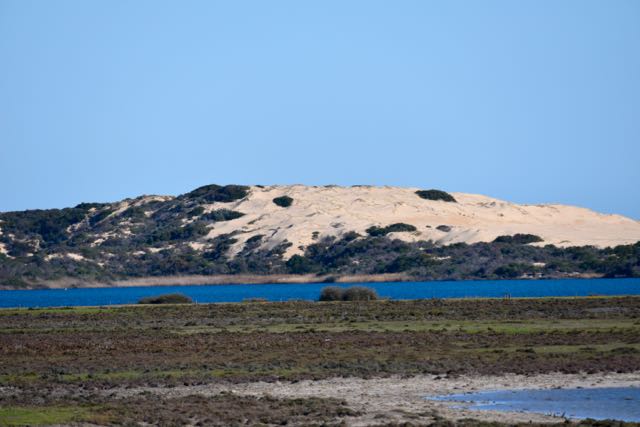
We left Narrung and drove south along Loveday Bay Road, and it wasn’t long before the impressive sand dunes of the Coorong soon came in to view.
DSC_1358.jpg

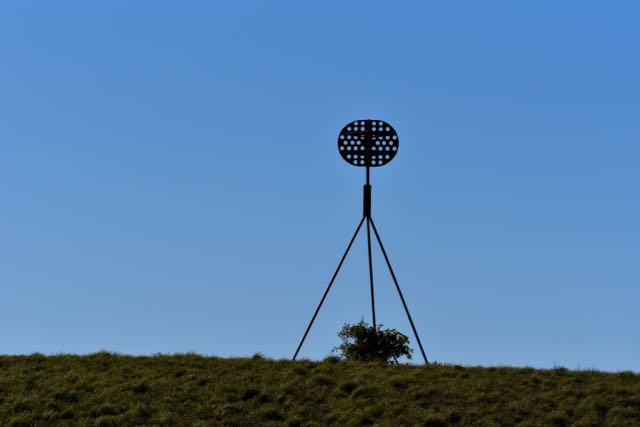
We then drove north west along Pelican Point Road, with the impressive Coorong to our left.  In the distance we could see a trig point situated on one of the high points on the northern side of Pelican Point Road.  But alas, no SOTA summit here!
DSC_1396.jpg

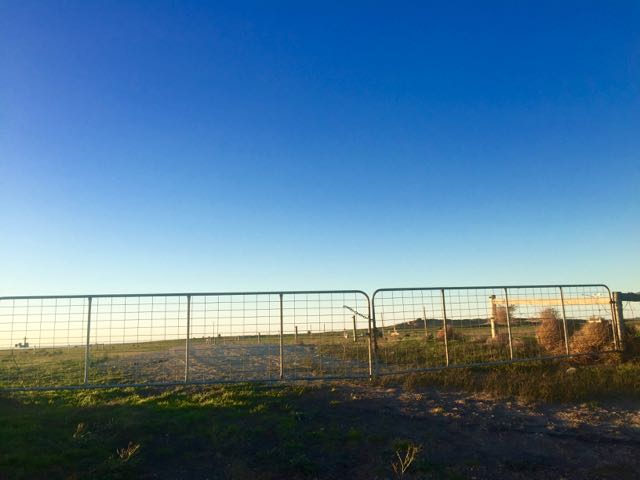
We kept our eyes peeled for a possible entrance to the Salt Lagoon Islands Conservation Park, and soon came across the track we believed we had spotted on the maps.  Sadly there as a gate here.  And although it was not locked and there were no signs, I wasn’t prepared to enter until I had confirmed that I could legally do so.  We did bump into some Fisheries officers, but sadly they had no local knowledge of the park.  We also tried calling the after hours number for the Department of Environment Water and Natural Resources (DEWNR) but they were also unable to assist.
IMG_2532

So it was time to implement Plan B, the Coorong National Park.  The Coorong is a lagoon ecosystem and is an amazing place.  It was alive with various waterbirds as you can see from the photographs below.

This slideshow requires JavaScript.

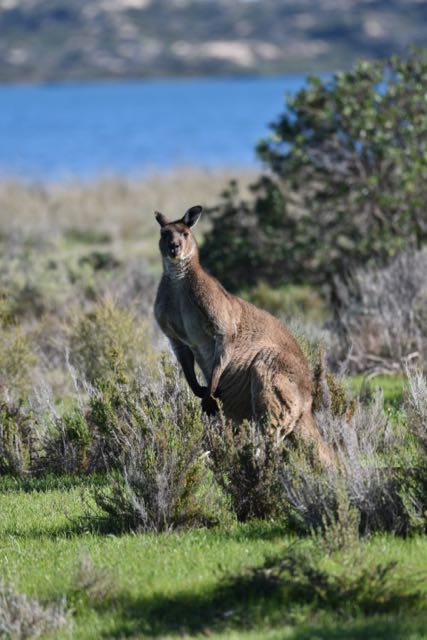
We even came across this guy, a Western Grey kangaroo.  Emus are also often seen in the park, but we didn’t sight any of those on this occasion.
DSC_1384

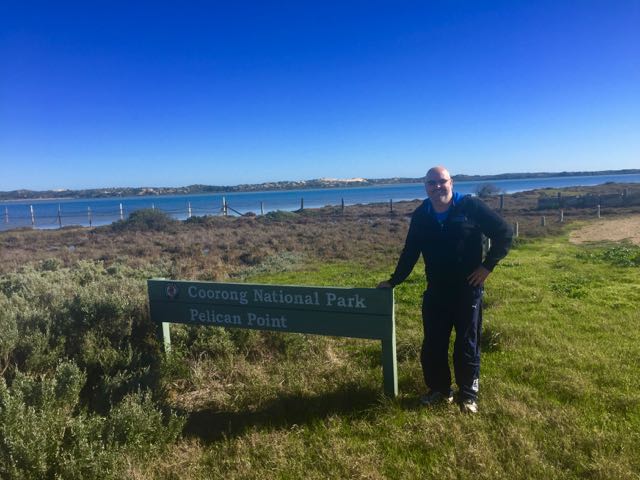
Prior to setting up we drove to the end of Pelican Point Road to Pelican Point itself.  You cannot travel any further from this point.  There is a locked gate which takes you on to Tauwitchere Barrage and Ewe Island Barrage.  The main purpose of the barrages is to maintain the freshness of the River Murray as far downstream as Wellington.
IMG_2523.jpg

The name Coorong is believed to be a corruption of the local Aboriginal word kurangh, meaning “long neck”; a reference to the shape of the lagoon system.  The name is also thought to be from the Aboriginal word Coorang, “sand dune”, a reference to the sand dunes that form the Younghusband Peninsula which separates the Coorong from Encounter Bay in the Southern Ocean.  The park is 467 km2 and was established in 1966 as a sanctuary for numerous bird species.

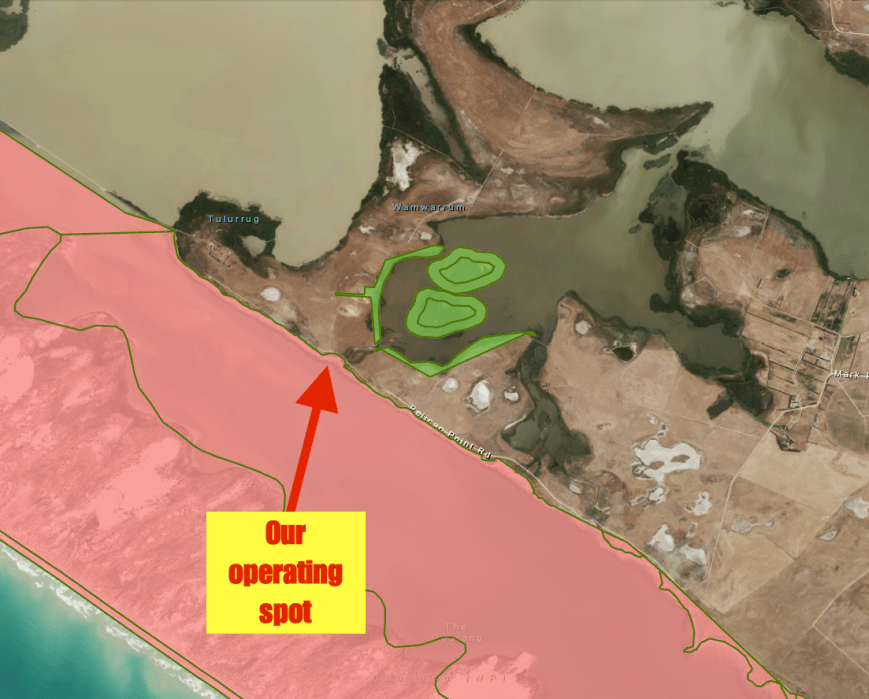
We set up just opposite the Salt Lagoon Islands Conservation Park.  It was very frustrating being that close, but not close enough.  We set up the fold up table and deck chair just a few metres from the water, and used the Yaesu FT-857d and the 40m/20m linked dipole for the activation.
Screen Shot 2016-07-16 at 8.25.07 AM.png

Above:- Map showing our operating spot.  The green highlighted area is the Salt Lagoon Islands CP.  The pink highlighted area is the Coorong NP.  Map courtesy of Location SA Map Viewer.

As I had been to the Coorong many times before and well and truly qualified the park, Marija started off first.  The first contact in the log was with Rob VK4AAC/3 who was portable in the Mitchell River National Park VKFF-0321.  Marija then headed to 7.144 and commenced to call CQ and this was answered by Col VK5HCF in Mount Gambier with a beautiful 5/9 signal.  This was followed by Dennis VK2HHA, Mick VK3GGG, and then Les VK5KLV.  It wasn’t long before Marija had a little pile up going, and considering she is a brand new ham, I thought she did a splendid job.  The band was in very good shape and it wasn’t long before Marija had qualified the park with 44 contacts.

This included a Park to Park contact with Adam VK2YK who was portable in the Arakoon National Park VKFF-0578 and then later Hat Head National Park VKFF-0230, and also Gerard VK2IO who was portable in the Dharug National Park VKFF-0139.  This was the very first time that Dharug had been activated.

After Marija had fulfilled her quota, I jumped on to 40m, but my voice was far less appealing, and I scraped up 16 hunters on 40m.  I then headed to 20m and called CQ on 14.310 and this was answered by Mr. Reliable, Rick VK4RF/VK4HA.  This was followed by Greg VK8GM.  Greg and Rick kindly spotted me on the DX Cluster, parksnpeaks, and Facebook, and this no doubt resulted in a few calls from Europe.  But it was 4.00 p.m. local time and I think we had left our run on 20m a little too late.  I did manage to work Scott MM0LID in Scotland, Danny ON4VT and Luc ON4BB in Belgium.  Along with Martin VK6RC and John VK6NU.

I also tried my luck on 21.250 on 15m, but did not get any takers to my 5 minutes of CQ calls and a self spot on parksnpeaks.

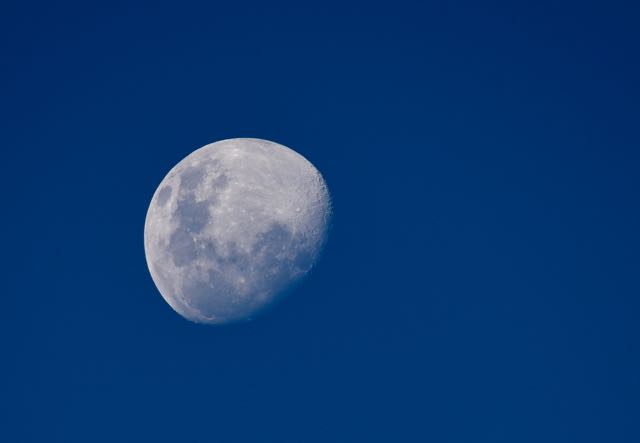
Despite the fact that we could not gain access to Salt Lagoon Islands Conservation Park, it had been a beautiful Saturday afternoon out in the sun, on the banks of the Coorong lagoon.  There was not a cloud in the sky and we were blessed with moon which was shining brightly in the afternoon sky.
DSC_1422.jpg

The sun was starting to set so we packed up and headed back towards Narrung.

After crossing the ferry at Narrung, we took some time out to enjoy the sunset and the amazing views across Lake Alexandrina.  We could see the Mount Barker summit off in the distance (we live close to the summit).

Marija ended up with a total of 46 contacts on 40m.

I made a total of 25 contacts.

I worked the following stations on 40m SSB:-

  1. VK4AAC/3 (VKFF-0321)
  2. VK2YK/p (VKFF-0578
  3. VK2YK/p (VKFF-0230)
  4. VK5MRT
  5. VK5HS
  6. VK3GGG
  7. VK3PMG
  8. VK2HHA
  9. VK3FOTO/m
  10. VK5KLV
  11. VK4RF
  12. VK4HA
  13. VK2CX
  14. VK3MCX
  15. VK3FADM
  16. VK2KYO

I worked the following stations on 20m SSB:-

  1. VK4RF
  2. VK4HA
  3. VK8GM
  4. MM0LID
  5. ON4VT
  6. VK4SMA
  7. ON4BB
  8. VK6RC
  9. VK6NU


References.

Wikipedia, 2016, <https://en.wikipedia.org/wiki/Coorong_National_Park&gt;, viewed 17th July 2016

What is the CAPAD?

For the World WideFlora Fauna (WWFF) program, one of my main references for researching parks is the CAPAD data.  I’ve been asked quite a bit, ‘What is the CAPAD?’  So here’s a little bit of information explaining what it is all about.

What is the CAPAD?

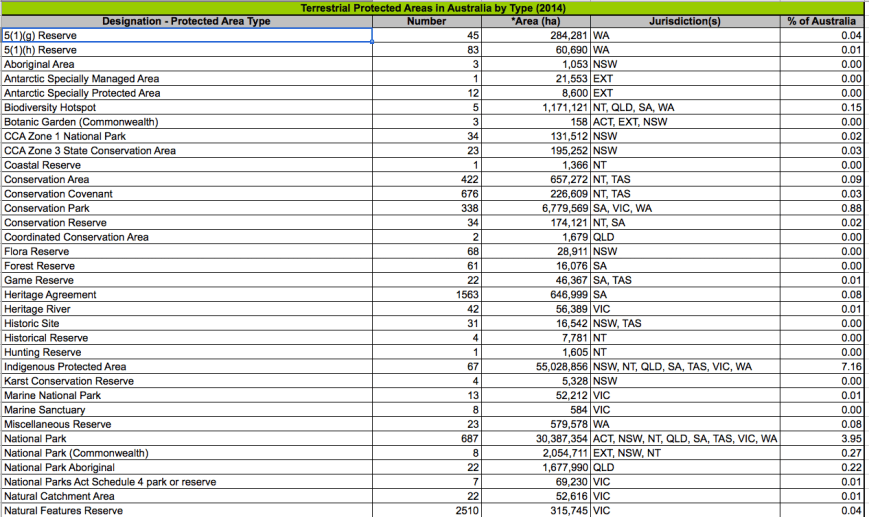
The Collaborative Australian Protected Areas Database (CAPAD) , released by the Department of the Environment, Australian Government, provides both spatial and text information about government, indigenous and privately protected areas for continental Australia.   State and Territory conservation agencies supply data and this in turn is compiled and published in the CAPAD.  The ninth version of the CAPAD database was released in 2014, with previous versions released in 1997, 2000, 2002, 2004, 2006, 2008, 2010 and 2012.

logo

The Department also publishes protected areas data for the marine environment.  This  contains spatial and text information about offshore protected areas, for both State and Commonwealth waters.  The most recent version was released in 2014, with previous versions of CAPAD marine information having been published in 1997, 2002, 2004, 2008, 2010 and 2012.

Screen Shot 2016-07-14 at 8.30.27 AM.png

When and where can I find the CAPAD?

The department publishes a summary of the CAPAD data biennially on its website at http://www.environment.gov.au/capad/

What is spatial data?

Spatial data, also known as geospatial data or geographic information, is date or information that identifies the geographic location of features and boundaries on Earth, such as natural or constructed features, oceans, and more.  Spatial data is usually stored as coordinates and topology, and is data that can be mapped.

What is found in the CAPAD?

The CAPAD provides a snapshot of protected areas that meet the International Union for Conservation of Nature (IUCN) definition of a protected area:

“A protected area is an area of land and/or sea especially dedicated to the protection and maintenance of biological diversity, and of natural and associated cultural resources, and managed through legal or other effective means” (IUCN 1994).

CAPAD provides information at a national, state and territory level. For each grouping CAPAD includes information about the following:

  • List of all protected areas. This list includes information on IUCN category, location (latitude and longitude of mid-point (centroid)), area (hectares) and gazettal date (the year an area was declared a protected area).
  • Protected areas classified according to reservation type designations eg National Park, Conservation Covenant, Indigenous Protected Area.
  • Protected areas classified according to IUCN management categories eg. Number of designated Category III protected areas in NSW.
  • Protected areas classified according to type designations as a proportion of Australia’s bioregions (known as IBRA). For example, the number of type designations within the Victorian Midlands (VM) IBRA region in Victoria and the percentage of those types of Protected Areas within that region.
  • Protected areas classified according to IUCN management categories as a proportion of IBRA region eg. Number of Category II protected areas in Queensland and the percentage of those IUCN categories within the Queensland IBRA regions.
  • The level of protection of IBRA regions.
  • The level of protection of IBRA subregions.
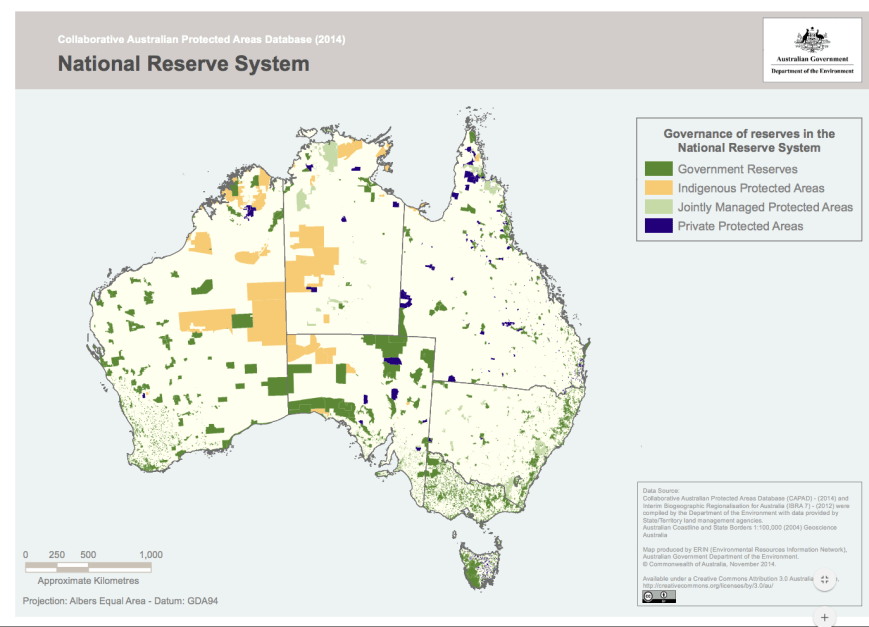
  • Protected Areas classified according to governance e.g. government, joint, indigenous and private.

Screen Shot 2016-07-13 at 6.47.59 PM.png

IUCN Protected Areas Categories System

IUCN protected area management categories classify protected areas according to their management objectives. The categories are recognised by international bodies such as the United Nations and by many national governments as the global standard for defining and recording protected areas and as such are increasingly being incorporated into government legislation.

a Strict Nature Reserve: Category Ia are strictly protected areas set aside to protect biodiversity and also possibly geological/geomorphical features, where human visitation, use and impacts are strictly controlled and limited to ensure protection of the conservation values.

Ib Wilderness Area: Category Ib protected areas are usually large unmodified or slightly modified areas, retaining their natural character and influence without permanent or significant human habitation, which are protected and managed so as to preserve their natural condition.

Ib Wilderness Area: Category Ib protected areas are usually large unmodified or slightly modified areas, retaining their natural character and influence without permanent or significant human habitation, which are protected and managed so as to preserve their natural condition.

III Natural Monument or Feature: Category III protected areas are set aside to protect a specific natural monument, which can be a landform, sea mount, submarine cavern, geological feature such as a cave or even a living feature such as an ancient grove. They are generally quite small protected areas and often have high visitor value.

IV Habitat/Species Management Area: Category IV protected areas aim to protect particular species or habitats and management reflects this priority. Many Category IV protected areas will need regular, active interventions to address the requirements of particular species or to maintain habitats, but this is not a requirement of the category.

V Protected Landscape/ Seascape: A protected area where the interaction of people and nature over time has produced an area of distinct charcter with significant, ecological, biological, cultural and scenic value: and where safeguarding the integrity of this interaction is vital to protecting and sustaining the area and its associated nature conservation and other values.

VI Protected area with sustainable use of natural resources: Category VI protected areas conserve ecosystems and habitats together with associated cultural values and traditional natural resource management systems. They are generally large, with most of the area in a natural condition, where a proportion is under sustainable natural resource management and where low-level non-industrial use of natural resources compatible with nature conservation is seen as one of the main aims of the area.

What is IBRA?

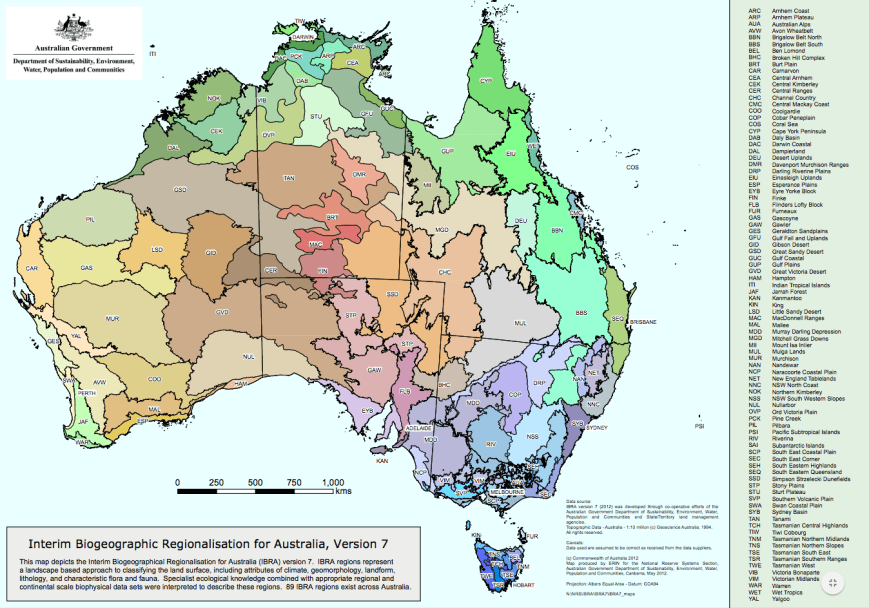
The Interim Biographic Regionalisation for Australia (IBRA) was developed in 1993-94 and is endorsed by all levels of government as a key tool for identifying land for conservation.  The latest version, IBRA7, classifies Australia’s landscapes into 89 large geographically distinct bioregions based in common climate, geology, landform, native vegetation and species information, e.g. Australian Alps, the Nullabor Plain, the Wet Tropics, etc.
Screen Shot 2016-07-14 at 9.03.23 AM.png


References.

Australian Government, Department of the Environment, <https://www.environment.gov.au/land/nrs/science/capad/2014&gt;, viewed 13th July 016

International Union for Conservation of Nature, <http://www.iucn.org/theme/protected-areas/about/categories&gt;, viewed 13th July 2016

WWFF Park to Park 132 certificate

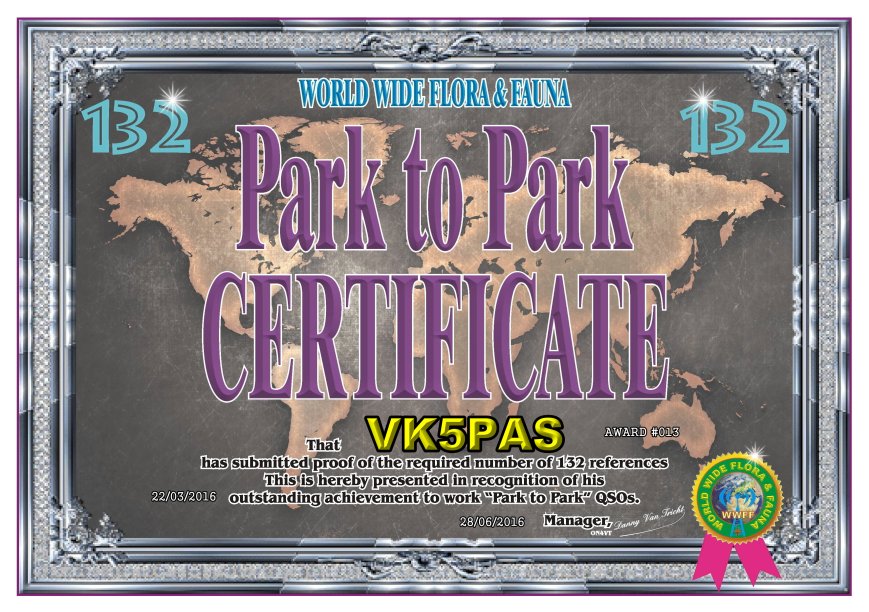
Here’s my latest Park to Park certificate for the World Wide Flora Fauna (WWFF) program.  Issued for making 132 Park to Park (P2P) contacts since the inception of the P2P Award earlier this year.
 
WWFF Logsearch is showing that I have had 227 P2P contacts, but unfortunately only 155 of those count, as the remainder have not been accurately reflected in the other activator’s log. Please ensure that you include your P2P contacts in your logs.
013_P2P132_VK5PAS.jpg
 

Ettrick Conservation Park 5CP-267 and VKFF-1029 and Freeze Your Butt Off (FYBO)

This morning (Sunday 26th June 2016) I headed out to the Ettrick Conservation Park 5CP-267 and VKFF-1029 to take part in the inaugural Freeze Your Butt Off (FYBO) Contest.  I had been out to Ettrick once before, back in January 2016 and had qualified the park for the VK5 Parks Award and the World Wide Flora Fauna (WWFF) program.  So this activation was just for some fun for FYBO.

For more info on my previous activation at Ettrick please see…..

https://vk5pas.org/2016/01/16/ettrick-conservation-park-vkff-1029/

It was a very chilly start to the morning and I must admit I rolled over in bed thinking that I wasn’t going to be bothered.  I’d been out to tea the night before with John VK5BJE and Ray VK4NH, and our wives, and had consumed a little too much red wine.  But I made the effort and jumped out of bed and was on the road a little after 8.30 a.m. South Australian local time.  It was only 6 degrees C at that time.

Ettrick Conservation Park is around a one hour drive from home, which takes me along the South Eastern Freeway to Murray Bridge and across the mighty Murray River at the Swanport Bridge.  I then travelled north towards Mannum along the Burdett Road.

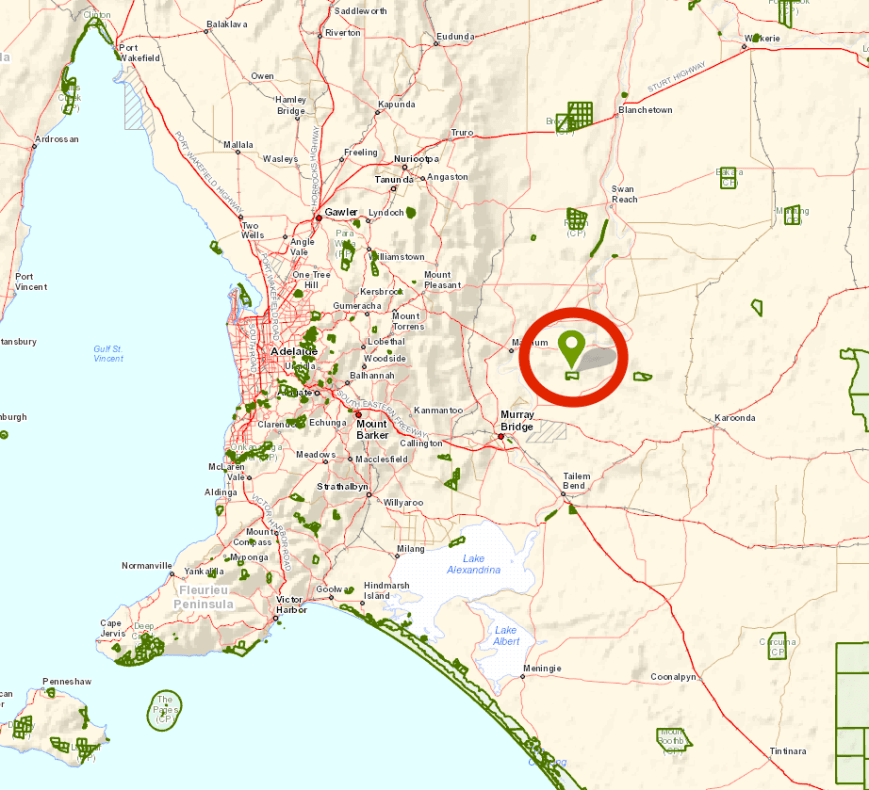
Screen Shot 2016-06-26 at 5.42.11 PM

Above:- Map showing the location of the Ettrick Conservaiton Park in the Murray Mallee region of South Australia.  Image courtesy of Location SA Map Viewer.

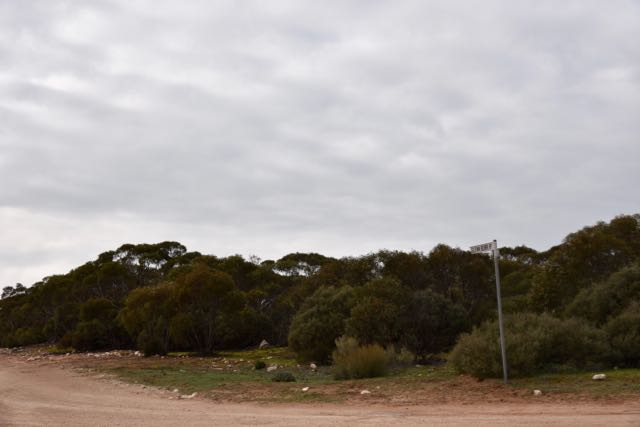
I travelled through the little area of Burdett with the Murray River clearly visible at times to my left.  About 3 km south of Mannum I reached Glenburr Road and turned right here.  There is no park sign and the Glenburr Road sign is very small, so keep your eyes peeled!

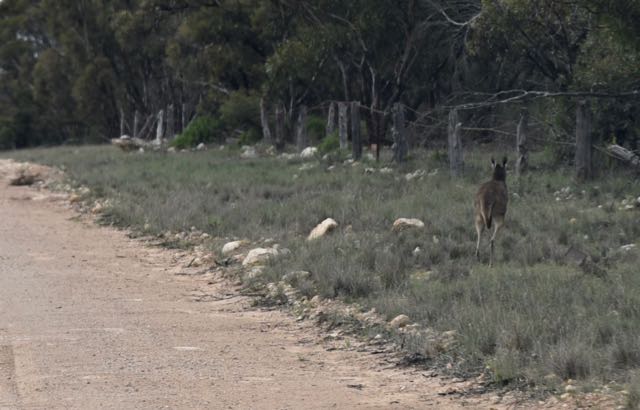
It was slow going along Glenburr Road as it was alive with kangaroos.  There was even a fox or two.

DSC_1293

I soon reached the north western corner of the park which is located at the junction of Glenburr Road and Boundary Road.  There is no sign for the park, so just remember that this is where the park starts and it continues on the southern side of Glenburr Road, all the way up to close to the intersection with Jackson Road.  I strongly recommend that you check maps prior to leaving home as this park is not signposted and there is a lot of scrub in the area which could easily be mistaken for the park.

DSC_1294

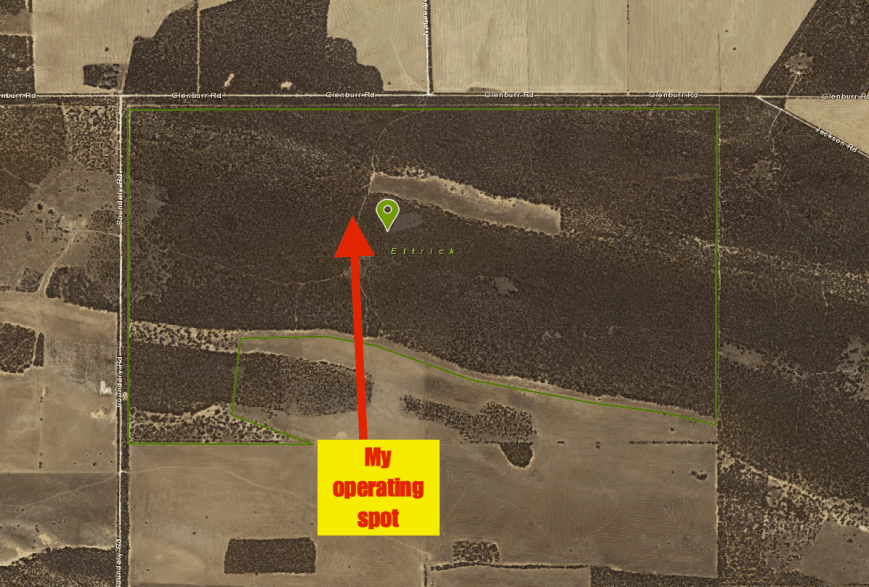
I entered the park via a 4WD track which is opposite Native Vegetation Road.  There is an open gateway at this location.  I drove a few km into the park and found a clearing in the scrub and set up.

Screen Shot 2016-06-26 at 5.40.18 PM.png

Above:- Aerial shot showing my operating spot in the Ettrick Conservation Park.  Image courtesy of Location SA Map Viewer.

Ettrick CP is situated about 112 km east of Adelaide and about 32 km north east of Murray Bridge.  It is a newly formed park, and was proclaimed on 31st October 2013.  The park is about 484 hectares in size and predominantly comprises open mallee and several species of eucalypt.  It also contains some of the few remaining examples of tussock grassland in the Murray Darling Basin.  A number of vulnerable South Australian birds call the park home, including the malleefowl, Shy Heathwren, Hooded robin, White winged cough, Jacky Winter, Restless flycatcher, Painted Button quail, and the Regent parrot.

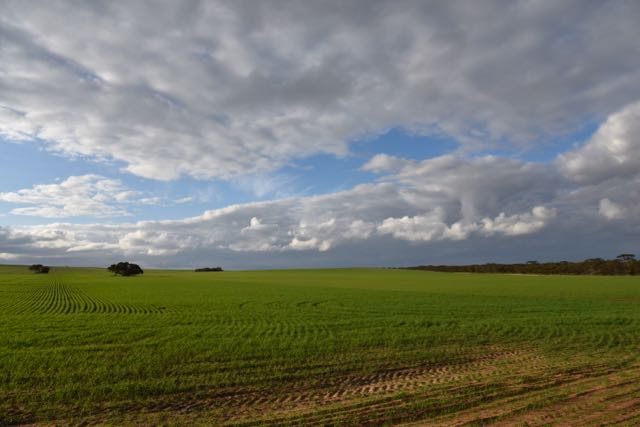
The park is surrounded by a lot of cleared farming land which has been taken up for sheep grazing and cropping.

DSC_1303

I was set up in the park by around 10.00 a.m. local time and it was just 8 degrees C.  For this activation I set up the deck chair and fold up table, and ran the Yaesu FT-857d, 40 watts, and the 40m/20m linked dipole supported on the 7m heavy duty squid pole.

I headed for 7.144 and was about to ask if the frequency was in use when I heard Peter VK3ZPF call Les VK5KLV who was portable in the Mount Brown Conservation Park.  Peter was nice and strong, but I could not hear a peep from Les.  So I headed down the band to 7.095 and I started calling CQ Contest a little after 10.30 a.m. local time (0100 UTC).  First in the log was Geoff VK3SQ, followed by Chris VK3PAT, Ian VK5IS, and then Amanda VK3FQSO.  Ian VK5IS in Beetaloo Valley was very low down, so this was not a good sign of things to come with regards to working the VK5’s.

I remained on 7.095 working a steady flow of callers from VK1, VK2, VK3, VK4, VK5, and VK7 until about 0319 UTC when things started to really slow down.  I worked a number of SOTA activators including Bernard VK2IB/3 on VK3/ VE-241, Andrew VK1MBE on VK1/ AC-040, Andrew VK3JBL/p on VK3/ VC-003, Compton VK2HRX/p on VK2/ CT-003, Tony VK3XV/p on Mount Zero VK3/ VW-020, Gerard VK2IO/p on VK2/ CT-007, and Malcolm VK3MEL/p on VK3/ VC-018.  And also a number of park activators including Stef VK5HSX/4 in Camooweal Caves National Park VKFF-0073, Michael VK3FCMC/p in French Island National Park VKFF-0622, Tony VK3XV/p in the Grampians National Park VKFF-0213, Rob VK4AAC/3 in Churchill National Park VKFF-0261, Julie VK3FOWL/p in Churchill National Park VKFF-0261, Les VK5KLVp in Mount Brown Conservation Park VKFF-0914, Peter VK5KPR/p in Mount Brown Conservation Park VKFF-0914, and Joe VK3YSP/p in Churchill National Park VKFF-0261.

I also spoke with Peter VK3YE/p running just 4 watts from his home brew SSB transceiver (5/7 sent and 5/8 received), and Nick VK3ANL who was portable on Phillip Island OC-136.

Band conditions on 40m were down significantly compared to previous weeks with lots of very noticeable deep QSB.  I have found that in the past couple of months that the 40m band tends to open up locally around 10.30 a.m. but that did not happen on this day with very few VK5’s featuring in my log.

When callers dried up I had a look around the band and found Bernard VK2IB/3 on 7.090 on SOTA summit VK3/VE-241.  As it had been one hour since I last worked Bernard, contest rules allowed me to call him again.  After working Bernard I headed back to 7.095 and called CQ contest again.  This was answered by Tom VK3NXT, followed by Amanda VK3FQSO, Mark VK3FOTO mobile, and then Mike VK3FIRM.  The band conditions on 40m were average, with lots of very deep QSB, and very litle close in propagation.  However it had opened up to Mount Gambier and I logged a few stations from that part of South Australia.  I was also hearing the Europeans coming through on 40m with very good signals.

Portable stations worked were Les VK5KLV in the Mount Brown Conservation Park, Compton VK2HRX/p on VK2/ CT-003, and Mike VK6MB in the Sir James Mitchell National Park VKFF-0452 (5/5 both ways).

By about 0330 UTC the weather was moving in very fast from the west.  It was extremely black out there and I had real concerns that I would not reach the 0600 UTC finish time for the contest.  Rain had been predicted.  After working a total of 116 stations on 40m I lowered the squid pole and removed the links in the 40m/20m linked dipole and headed to 14.310 on 20m.  I could not get onto that frequency as there was already a North American station there calling CQ Field Day.  In fact it was pretty difficult to find a clear spot as other than the Field Day there also appeared to be another Contest which the European stations were taking part in.  But I eventually did find a clear spot, and sadly only managed 2 contacts on 20m.  They being with Albert S58AL in Slovenia (who is a very dedicated park hunter), and John VK6NU who was on SOTA summit VK6/ SW-039.  So it was back to 40m for me.

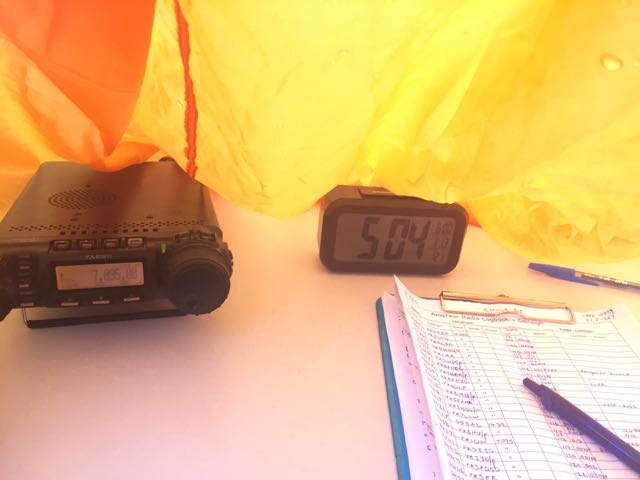
And it wasn’t long before the rain hit.  It was a quick dash back to the 4WD and the bothy bag was deployed.  The rain was so heavy that drops of water were seeping through the bothy bag.

IMG_2489

Band conditions also changed and I soon started to experience very strong QRM from a Spanish station on 7.095 so I QSYd up the band, only to experience the same.  Fortunately this was at the end of the contest and just before 0600 UTC I called it quits with a total of 151 contacts in the log.  My last contact was at 0554 UTC with Peter VK3ZPF.

At the end of the activation I went for a drive a little further into the park along the 4WD track.  I had seen on the maps that there was a ruin, so I wanted to do a little bit of 4WDing and exploring.

This was a really fun day despite the chilly and wet conditions, and the rather poor band conditions.  There were long periods of calling CQ Contest with no takers.  I ended up with a total of 151 contacts.  151 X 300 minutes = 451.  451 X 50 dupe QSOs= 22,550 points.

I will definitely be taking part in the Freeze Your Butt Off Contest again next year.  Well done to Ian VK5CZ for organising the event.