After a very enjoyable 2 nights in Renmark it was time to head home. I had ‘strict instructions’ that I was allowed to operate from one park on the way home. So we headed south out through Berri, and on to Loxton. And then along the Karoona Highway to the little town of Alawoona. We continued south from Alawoona on the Alawoona-Lameroo Road, which disects the Billiatt Conservation Park.
The park, which is about 18 km south of Alawoona, is 593 km 2 in size and consists of sand dunes and mallee scrub. The ecological value of the area was first formally recognised in 1940, when the Billiatt and Peebinga flora and fauna reserves were dedicated. Following the acquisition of additional land in 1979, Billiatt Conservation Park was formally proclaimed under the National Parks and Wildlife Act, 1972.
More recently, the majority of Billiatt Conservation Park was recommended for protection under the Wilderness Protection Act,1992, following formal assessment by the South Australian Wilderness Advisory Committee. The Billiatt Wilderness Protection Area was subsequently proclaimed in 2008, with a small area remaining as Billiatt Conservation Park.
Although left largely uncleared, some attempts at farming the land within the reserves were made between the 1870s and 1930s. Some relics of earlier pastoral activity still exist, including old wells, bores and ruins. The Pankina Well and ruins in Billiatt Wilderness Protection Area are remnants of Pankina Station, a pastoral lease which existed over the land until 1979. A small area of vegetation was cleared as part of this development for sheep grazing, but is now naturally regenerating. A trigonometric point also exists in the southern section of the wilderness protection area.
The Park is home to a total of 93 different native mammals including the Common Dunnart, Mitchell’s Hopping Mouse, Western Grey kangaroo, and the rare Western Pygmy possum. About 18 species of reptile are also found in the Park. The Park has been identified by BirdLife International as an Important Bird Area due to the fact that it contains small but globally important populations of Malleefowl, Mallee Emu-wren, and Purple-gaped Honeyeaters, as well as the rare Western Whipbird and Red-lored Whistler.
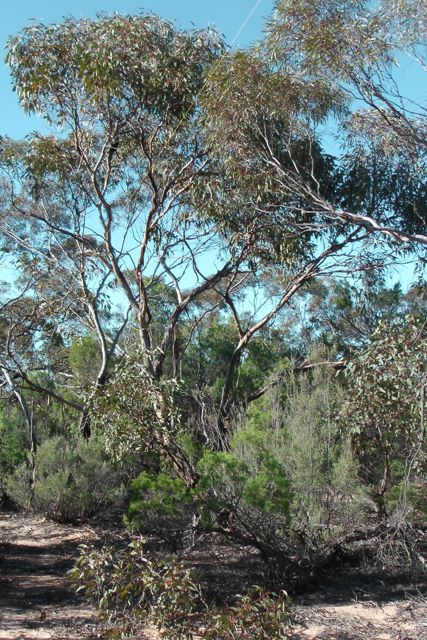
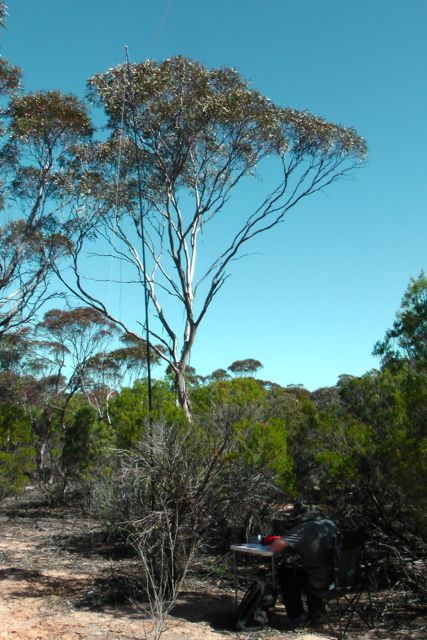
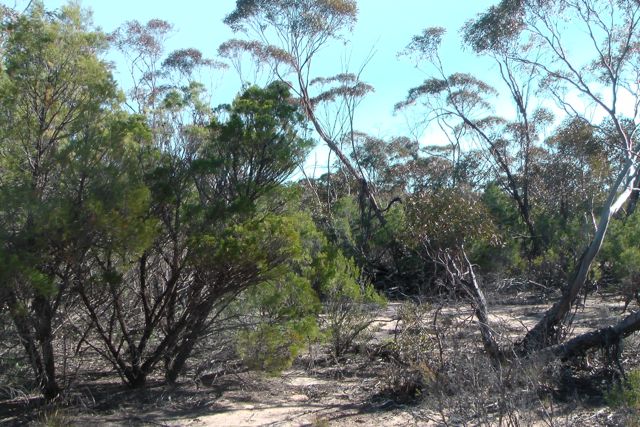
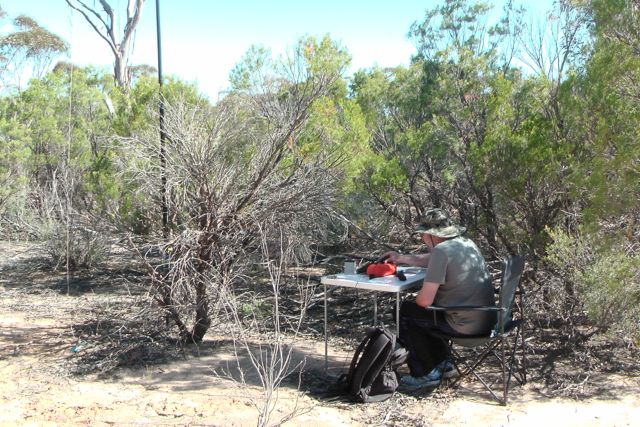
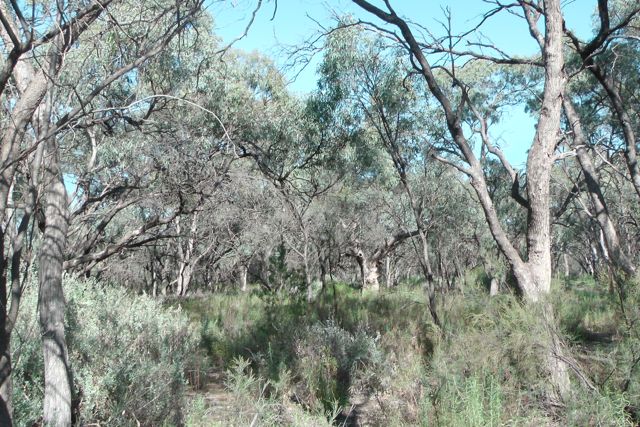
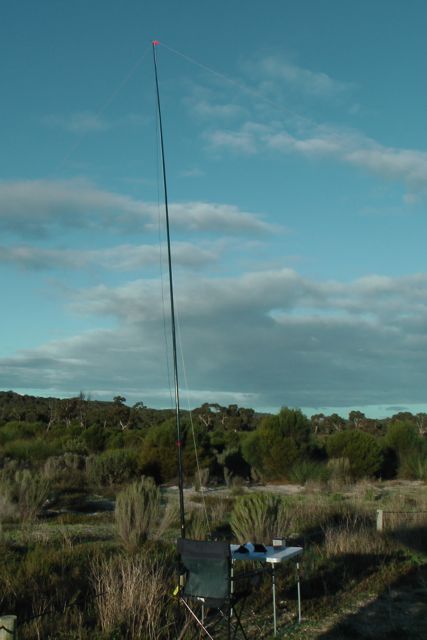
My wife Marija and I set up in a little clearing on the western side of the bitumen road, amongst the mallee scrub. I used the normal equipment…the Yaesu FT-817nd and the 40m/20m linked dipole. There was no shortage of trees and shrubs here to secure squid poles and the ends of the dipole. It was a warm day, so I set up the fold up table and deck chair as close as I could to some shade.
My first contact was with Larry VK5LY, and this was followed by Marshall VK3MRG who was operating portable from Yarra Park in Melbourne. Marshall had a terrific 5/8 signal with his qrp 2.5 watt signal. My 3rd contact was with David VK5KC who was portable in the Brookfield Conservation Park near Blanchetown. David and his wife Joy were also on their way home from the Riverland. It was great to work David, and bag another ‘Park to Park’ QSO. Ivan, VK5HS was my fourth contact with a booming signal.
I was then called by Andrew VK2ONZ who was operating from the top of Mount Lambie, VK2/ CT-007, in the Central Tablelands of New South Wales. Andrew’s signal was up and down dramatically. He sometimes peaked at 5/6 but then totally disappeared on me, despite the noise floor being virtually non existant.
I also managed another SOTA contact, and that was with Kevin VK3KAB who was portable on Bill Head, VK3/ VN-004.
Again it was good to hear from a number of stations operating QRP. They included Marshall VK3MRG/p, David VK5KC/p, Andrew VK2ONZ/p, Peter VK3PF, Ron VK3AFW, and Col VK5HCF. All had great signals and were very readable despite the fact that they were running with low power.
I decided to have a quick listen on 20m and I was glad I did. There were some excellent signals coming in from Europe. I managed 3 DX contacts into Austria, Russia and Italy, with good signal reports given for my little 5 watt signal.
The afternoon was getting on, and we still had a 2 hour drive to get home, so it was time to pack up. It was the end of a great weekend. I had a total of 22 QSO’s in the notebook from Billiatt CP, including 1 VK5 Park, 2 SOTA contacts, and 3 DX stations, so I was very happy.
The following stations were worked:-
Larry VK5LY; Marshall VK3MRG/p; David VK5KC/p; Ivan VK5HS; Andrew VK2ONZ/p; Kas VK5ZKT; Tim VK5AV; Andy VK5LA; Graham VK5KGP; Nick VK3ANL; Kevin VK3KAB/p; Matt VK1MA; Roy VK5NRG; Peter VK3PF/qrp; Ron VK3AFW/qrp; Jim VK2TWY; Col VK5HCF/qrp; Rod VK5FTTC; Shaun VK5FAKV; Ivan OE3DIA; Oleg RY3D; Diego and IW2MZX.
I have posted a video of this activation on You Tube.
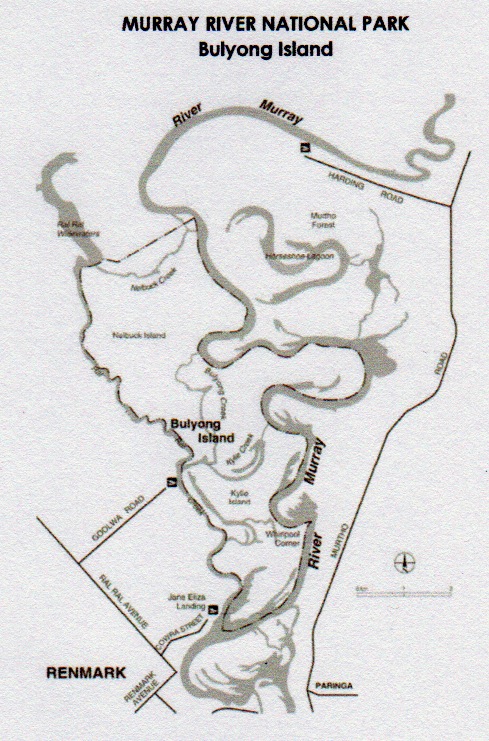
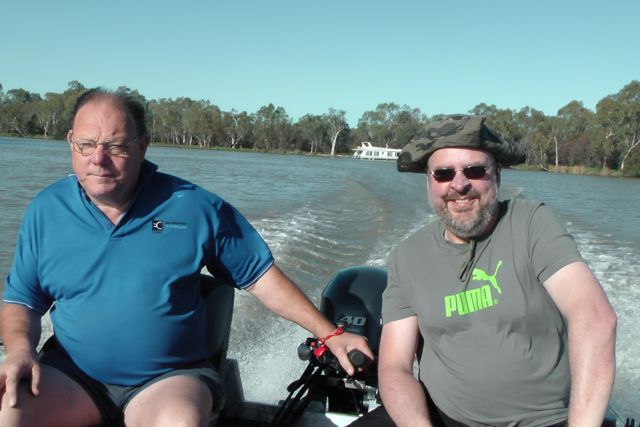
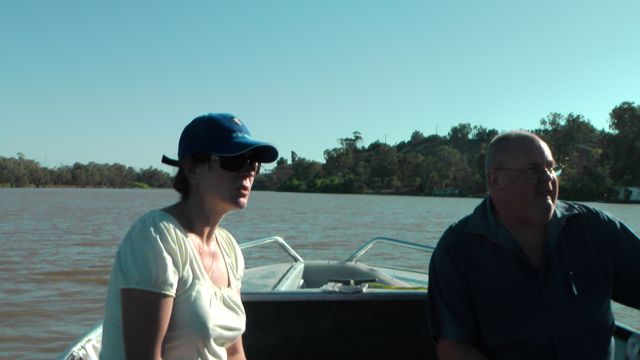
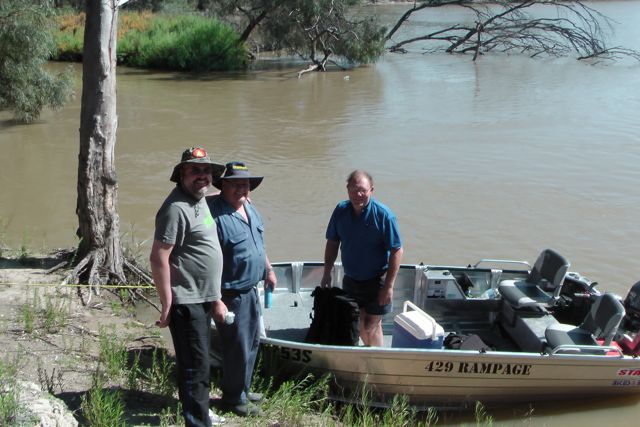
On Sunday morning, 22nd September, 2013, myself, my wife Marija, Larry VK5LY, & Ivan VK5HS, launched Ivan’s boat from Renmark and travelled upstream to Bulyong Island, part of the Murray River National Park. Larry and Ivan had told me they had always wanted to activate the island, so my visit to Renmark gave them an opportunity to do so.
The Murray River National Park is located in the Riverland region of South Australia, about 240 km north east of Adelaide. The Park covers an area of about 13,000 hectares and consists of three separate sections of land – Katarapko, Lyrup Flats, and Bulyong Island. It was proclaimed in 1991 to conserve the unique Murray wetlands and their flora and fauna, which includes the threatened Regent Parrot, Golden Bell Frog, Murray Cod, and Murray Darling Carpet Python.
The area was originally home to the Erwirung aboriginal people who were a relatively small Aboriginal group that lived on the fertile plains of the Murray. By 1851, the land surrounding Renmark was held under Pastoral Lease No. 95 by A.B. Cator. In July 1859, a portion of this lease was taken by William Finke and was subsequently divided into 2 properties named ‘Bookmark’ and ‘Chowilla’. During the 1860’s and 1870’s the leases transferred hands on a number of occasions. In 1887 the land was acquired from Bookmark Station by the Commissioner of Crown Lands for the establishment of the Renmark Irrigation Trust by the Chaffey Brothers. The Chaffey Brothers Irrigation Works Act, 1887, gave the legal right to develop 200,000 acres of land from Spring Cart Gully to the border for irrigation purposes.
At the conclustion of World War One, Bulyong Island was leased by the Returned Serviceman’s League (RSL) as part of its returned soldier repatriation program. Primarily it was used for agisting horses while they were not being used for agricultural work. During the mid 1960’s the Renmark Irrigation Trust entered into negotiations with the RSL to obtain the northern portion of the Island for use as an evaporation basin. The RSL acceded to these moves and by the late 1960’s a series of embankments and an inlet/outlet structure had been established. On the 20th June, 1991, the island was established as part of the Murray River National Park.
The Murray River NP has an abundance of wildlife including kangaroos, echidnas, sand goannas, emus, and brushtail possums. Over 140 species of birds can be located within the Park. It is a valuable breeding and refuge area for numerous birds including the Australian Reed Warbler, Little Grassbird, Superb Fairy Wren, and the threatened Regent Parrot.
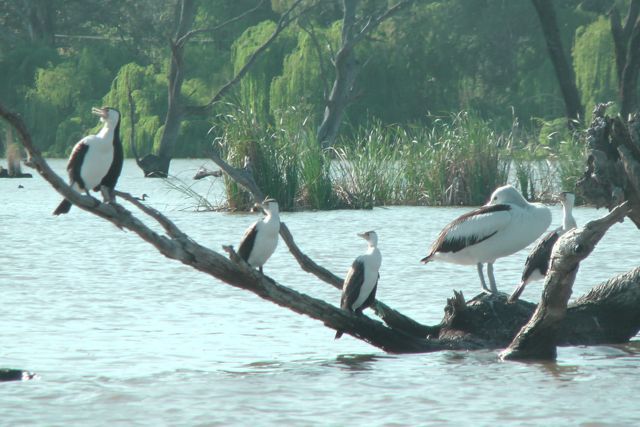
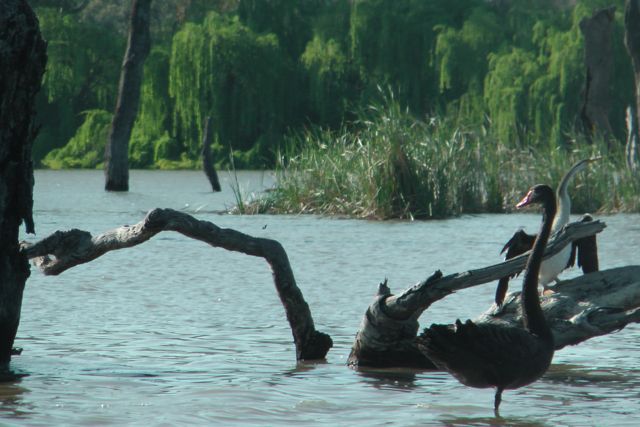
During our trip up river we certainly saw a huge array of birdlife including Pelicans, rosellas, Black Swans, Cormorants, Herons, Dusky Moorhens, and Grebes.
The park’s woodlands are dominated by mallee with an understorey of saltbush and bluebush, while the flood plain and swamp areas feature River Red Gums with a tangled under storey of Lignum.
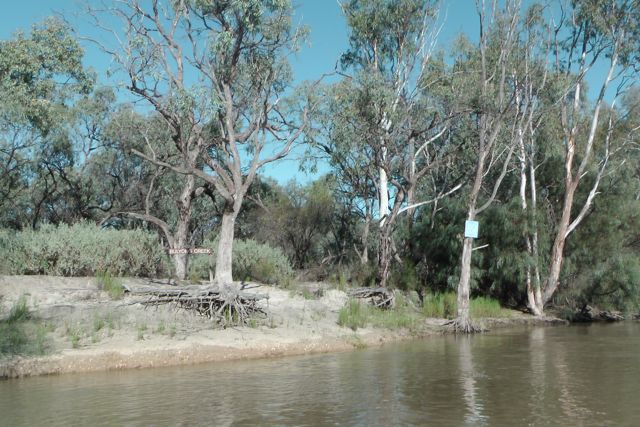
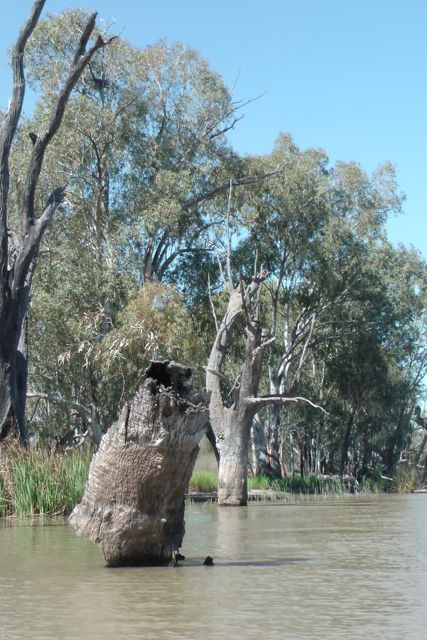
We boated upstream from Renmark to the mouth of the Bulyong Creek. Access to this Section of the Murray River NP can only be reached via boat. The Bulyong Creek is a little tributory of the Murray River. It was a beautiful day, with not a cloud in the sky and an expected top temperature in the high 20’s, so short sleeves and even shorts were in order.
We moored at Bulyong Creek and stepped onto the island which is separated from the mainland by the Ral Ral Creek. Because it was such a sunny day, we kept an ever alert vigil for snakes. There are at least 12 species of snake located here including some dangerous snakes including the King Brown. So we made as much noise as possible, hoping that this might scare any unwanted visitors off into the scrub.
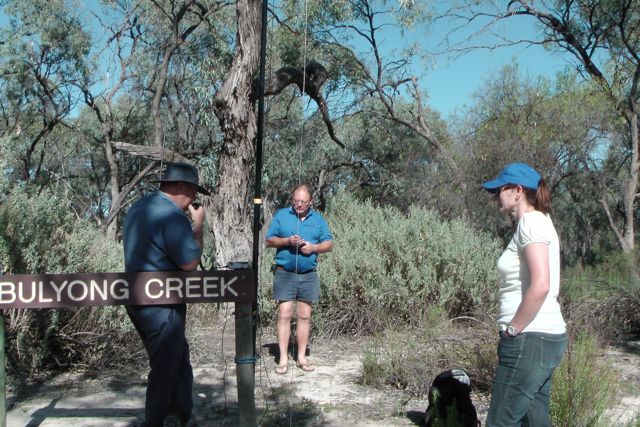
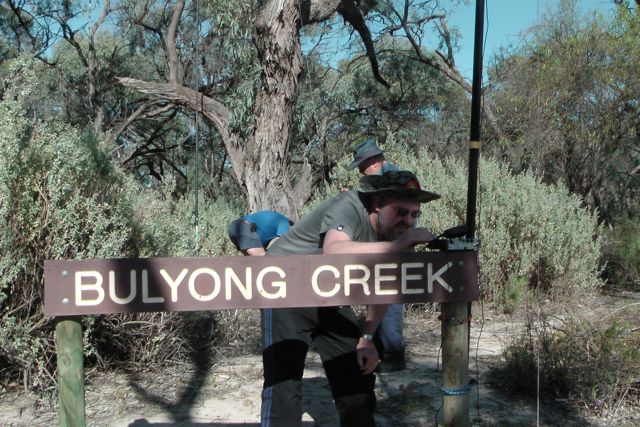
We set up my 20m/40m linked dipole in an inverted vee configuration, supported by a 7m squid pole. We secured the squid pole to a ‘Bulyong Creek’ sign using some octopus straps. We rested the Yaesu FT-817nd on the Bulyong Creek sign. Ivan also set up his end fed and Codan HF transceiver.
The first contact from the park was with John VK5BJE who had a very strong signal. This was followed by Andy VK5LA, Brian VK5FMID, and Nev VK5W, all of whom had good signals. But callers were few and far between so we often took a breather and enjoyed the views whilst listening to the WIA broadcast.
Whilst on the island we had 2 Summits on the Air (SOTA) contacts. The first was with Andrew VK1NAM/p who was portable on South Black Range, VK2/ ST-006. And our second SOTA contact was with Mitch VK3FMDV who was on Flinders Peak, VK3/ VC-030.
Unfortunately we did not have as many callers as usual. This was despite the band conditions being good. Perhaps everyone was enjoying a Sunday morning sleep in.
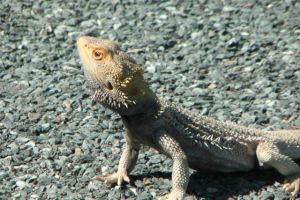
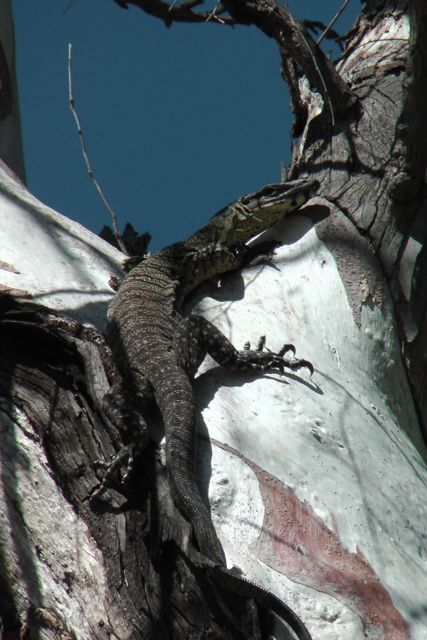
After the activation we headed down the Bulyong Creek, and then back out onto the Murray. The Bulyong Creek was something special, and the seclusion was only spoiled by the occasional passing boat. The bird life along the Creek was amazing. Eagles, hawks, a variety of water birds, rosellas, cockatoos, and parrots, were all out enjoying the morning sun. We also saw a couple of kangaroos taking a drink on the banks of the creek, who quickly jumped back into the scrub as we approached. We also spotted a goanna just starting to scramble up a nearby gum tree, so we moored the boat and I jumped off the boat to get a photo. But the goanna was camera shy, so ever time I walked around to one side of the gum tree to take a photo, he/she decided they would crawl around to the other side. Much to the amusement of Marija, Ivan, & Larry !
We travelled further downstream along the Murray and travelled passed the Renmark foreshore, and onto Paringa and the lock, before turning back and heading back passed Renmark. Our only drama of the morning was Larry loosing his hat overboard, which was quickly retrieved.
This was a great morning & a huge thanks goes out to Ivan VK5HS and Larry VK5LY.
The following stations were worked:-
John VK5BJE; Andy VK5LA; Brian VK5FMID; Nev VK5WG; Colin VK3UBY; Andrew VK1NAM/p; Ian VK5CZ; Tony VK5ZAI; Sandra VK3LSD; Mitch, VK3FMDV; Allen Vk3HRA; Ron VK3AFW; Mike VK3XL; and Rik VK3KAN.
I have posted a video on You Tube of the activation…..
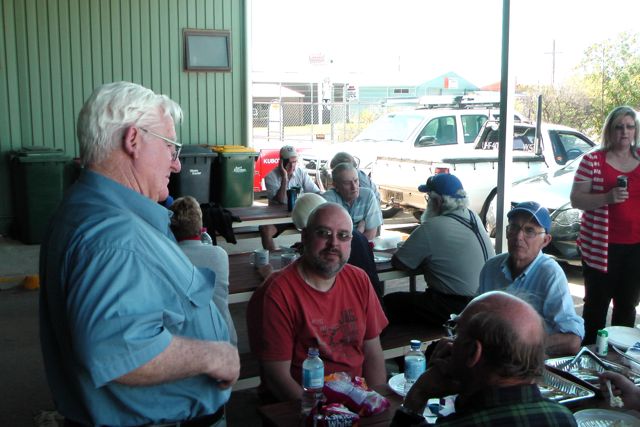
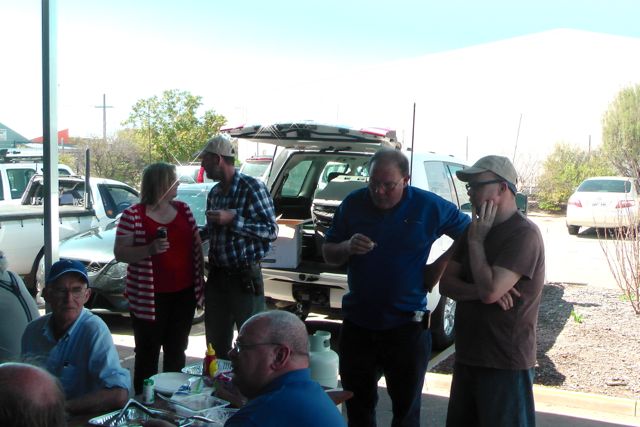
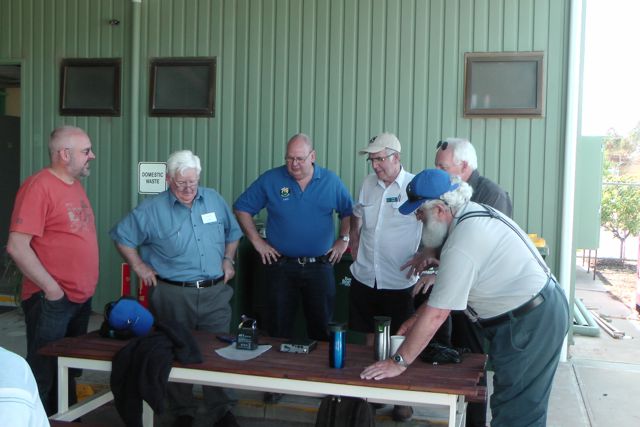
On Saturday morning, 21st September, 2013, I gave a presentation to the Riverland Radio Club, on SOTA, the VK5 Parks Award, KRMNPA, & WWFF. The talk was held at the SES Headquarters at Berri, and a total of 17 people attended. What was really pleasing was that some members of the Sunraysia Radio Group travelled across the border for the talk.
It was great to catch up with lots of people I have spoken to on the radio, but never met in person. That included some active SOTA Chasers & Parks Hunters including Colin VK3UBY from Mildura, Andy VK5LA, Larry VK5LY, & Ivan VK5HS.
David VK5KC & wife Joy also travelled up to the Riverland for the talk, and activated a park or 2 on the way home on the Sunday.
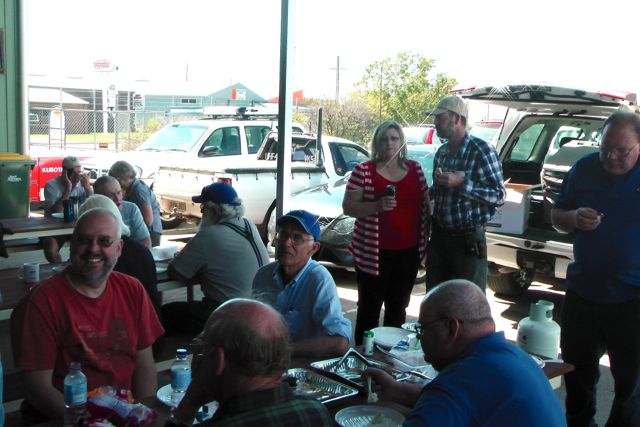
Following the talk we had a BBQ and a good ‘chinwag’. It was a terrific morning & afternoon. A big thankyou to Larry VK5LY & Ivan VK5HS who organised everything.
On the Friday night prior to the talk, a group of us went out for tea at the Renmark Hotel and had a very enjoyable meal. On The Saturday night a small group of us went out for tea at a local Italian restaurant, and again the food was great.
Many thanks to Larry VK5LY and his wife Di, for their hospitality and allowing my wife Marija and I to stay at their house on Friday & Saturday night. They made us feel really welcome.
The Riverland Radio Group has a website and it can be found at…..
Last night, Thursday 19th September 2013, I attended the South Coast Amateur Radio Club at Seaford Meadows, and delivered a presentation on SOTA, the VK5 Parks Award, KRMNPA, & WWFF.
It was attended by a small but very interested group who hopefully will become involved in either one, or maybe all of these portable activities.
A bonus of the evening, was to bump into an old mate who I had not seen in over 10 years. I was not even aware that he was an amateur, not was he aware that I had obtained my licence either.
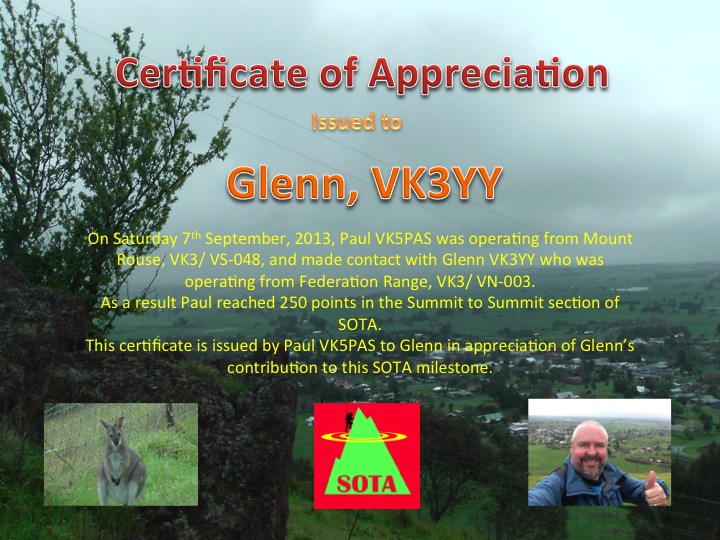
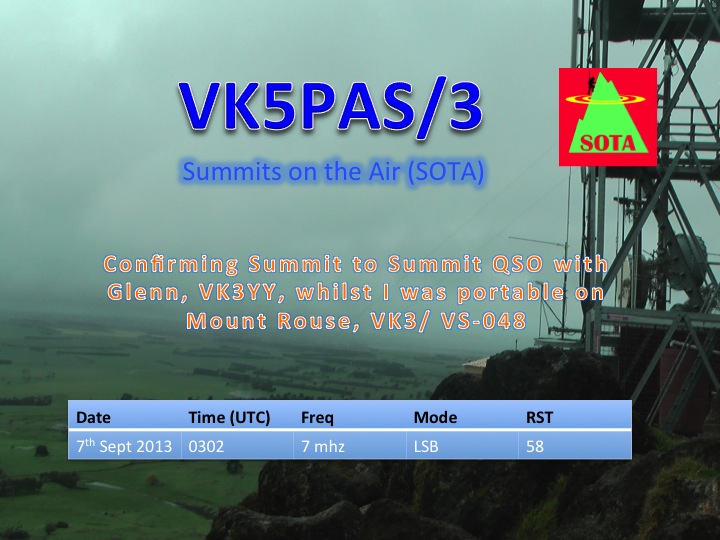
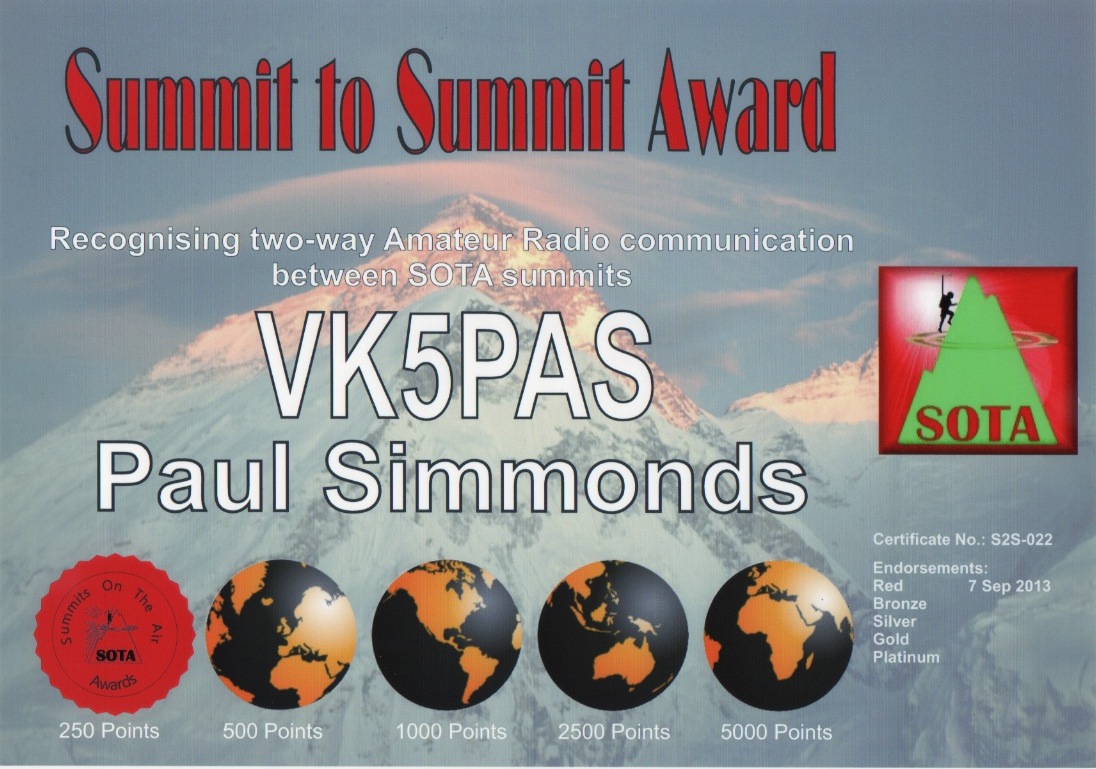
As I mentioned in a previous post, during my trip to Victoria, I managed to go over the 250 point mark for Summit to Summit contacts. I have printed out this certificate & QSL card for Glenn VK3YY, who was my S2S contact who allowed me to pass the 250 point mark.
The web site is aimed primarily at Radio Amateurs who participate in programmes such as Summitsbase HuMPs Awards (HEMA) or S2S Awards, Summits on the Air (SOTA), Wainwrights on the Air (WOTA), etc.
The website contains a large amount of information including Summits Spots & Alerts, equipment info & reviews, tips on chasing, etc.
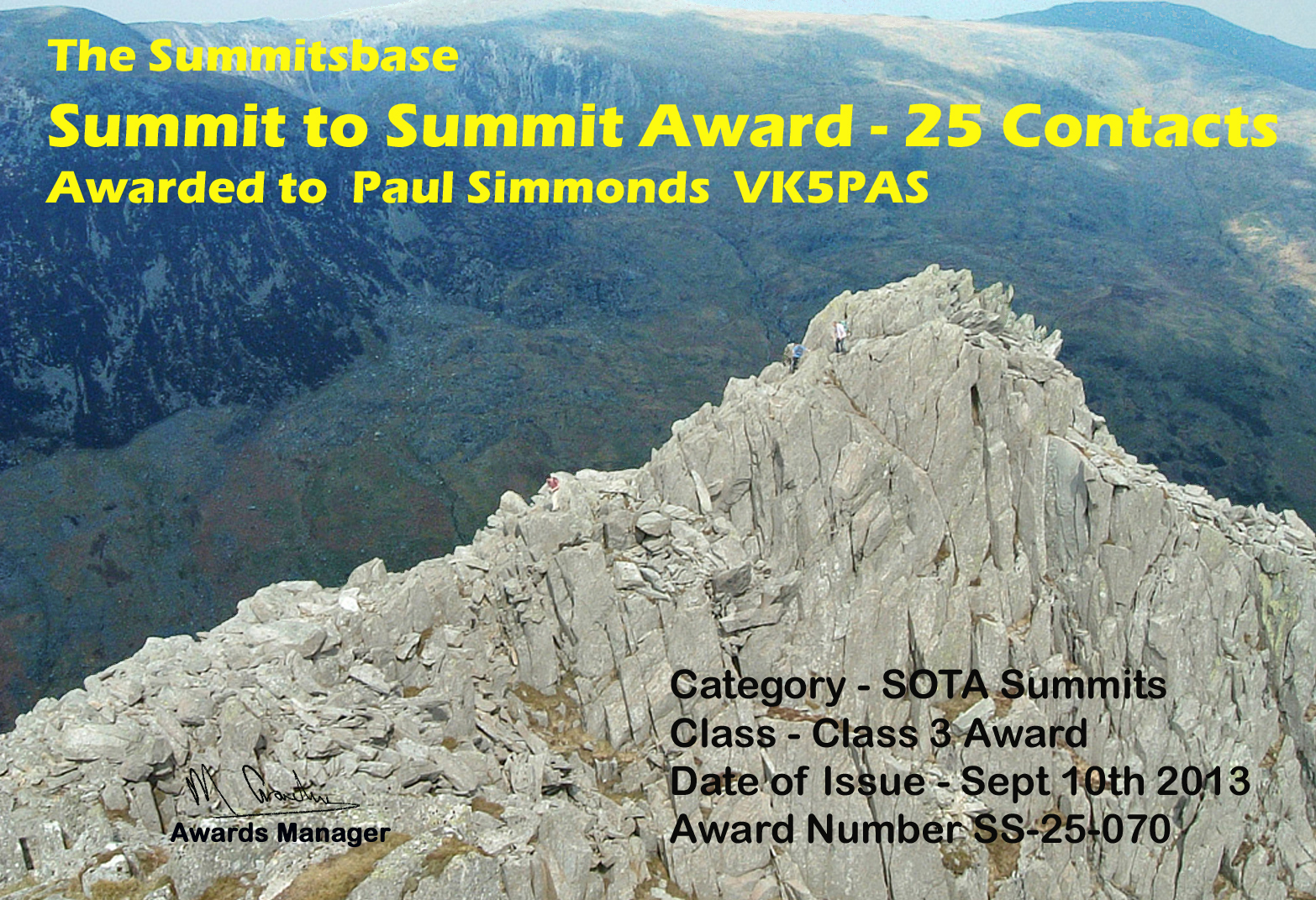
They also offer some awards. Below is the Summit to Summit Award I recently obtained…..
I received my Summit to Summit certificate (250 points) today.
I notched up a large number of Summit to Summit contacts during my recent week away to SE South Australia & western Victoria. In fact it was my contact with Glen VK3YY on the 7th September, that pushed me over the 250 point mark. I was on Mount Rouse, VK3/ VS-048 in south western Victoria, and Glen was on Federation Range, VK3/ VN-003.
I will be sending Glen a certificate & a special QSL card, to thank him for the contact.
I have only been involved in SOTA since March, and have thoroughly enjoyed the last 6 months. Every S2S contact is always a real pleasure.
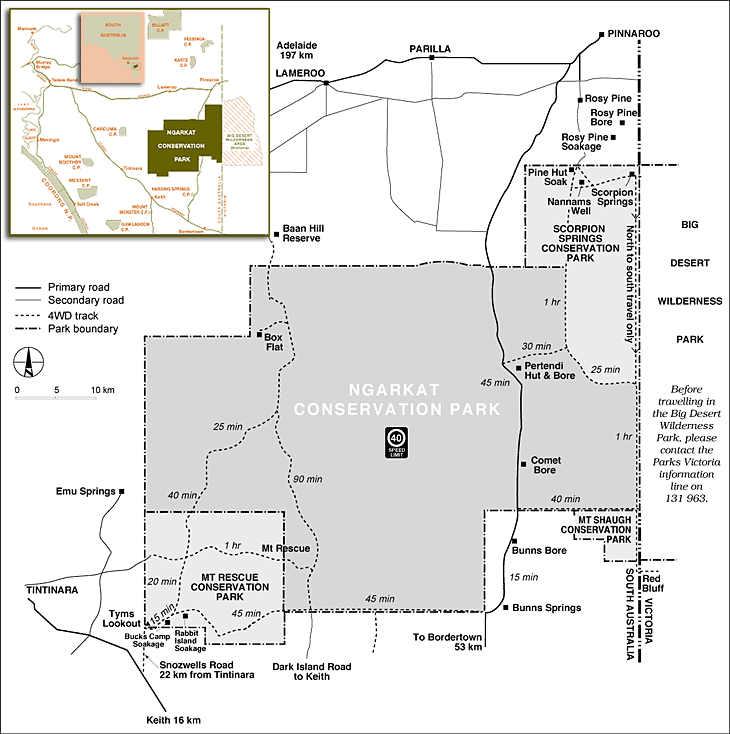
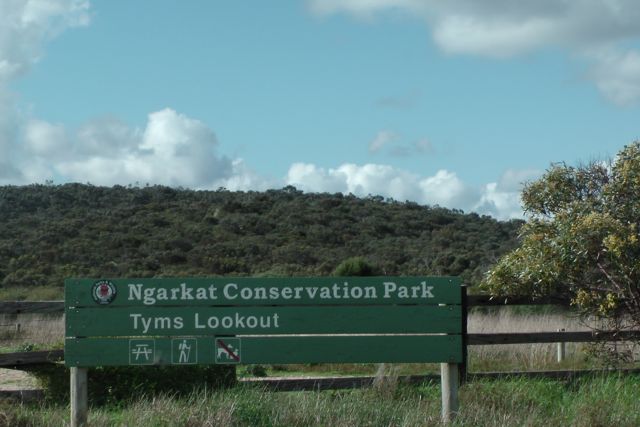
My last planned activation for Wednesday 11th September, 2013, was the Ngarkat Conservation Park, just over the border in South Australia. So after activating Little Desert National Park I drove west towards S.A. and into the town of Keith. Just north west of Keith I turned off the Dukes Highway onto Snoswells Road and followed this for a few km north until I reached the park, and an area called Tyms Lookout. There is a carpark at the end of Snoswells Road, and this is where I set up my gear.
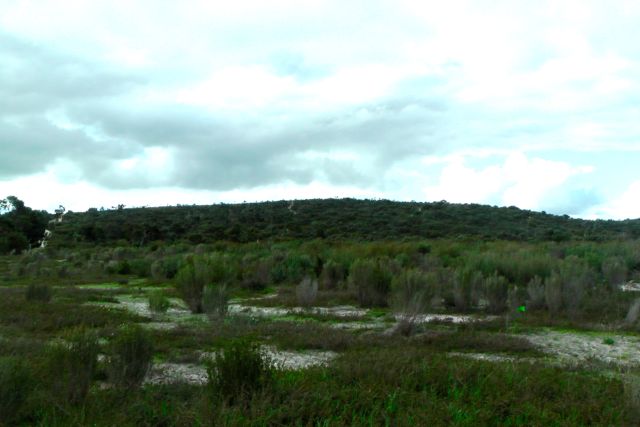
Ngarkat Conservation Park is large park. In fact it is one of the largest mallee parks in South Australia. Its total area is 270,000 hectares which consists of vegetated sand dunes, mallee and heath. It is located about 209 km south east of Adelaide, 34 km south of Pinaroo, and 5 km north of Keith. It was named after a tribe of Aboriginals who previously inhabited the area. The park abounds with wildlife including Western Grey kangaroos and emus. Over 120 species of birds including the rare Malleefowl have been recorded. There are a number of walking trails and it is home to the legendary Border Track. The the park has a popular 4WD track.
I started off on 40m and my first contact was with John VK5BJE who had a very strong 5/9 signal. This was followed by Larry VK5LY who was patiently waiting in the Murray River National Park. Signal reports of 5/9 both ways were exchanged with Larry. Another Park to Park contact for the log ! Another Park to Park contact was made with Tony VK3VTH/5 who was portable in the Karte Conservation Park (5/9 both ways). When things got a little quiet I decided to tune around the band & I heard 2 gentlemen on Lord Howe Island talking to each other. After about 5 minutes they were signing off, so I decided to give them a call, and much to my surprise they replied. Dick VK9LH, and Des VK9FLHI were both 5/8 signals and I received a 5/1 signal report back from both of them. I could also hear some European signals coming through, including Jose EA2KC, who had a good strong signal. I tried calling him but unfortunately I could not get through.
Time was starting to get away from me, but I decided to go to 20m and have a quick listen. I am glad that I did because I made 2 DX contacts and 1 contact over to my good mate Jess VK6JES in Western Australia. The 2 DX contacts were with Jose EA2KC (5/9 sent and 5/6 received), and then Jara DL1YD (5/9 sent and 5/5 received). I was really pleased to have 2 good DX contacts with just 5 watts, and it was now time to pack up and head home. After all I still had a 2 hour drive to get back to the home qth.
The following stations were worked:-
John VK5BJE; Larry VK5LY/p; Ron VK3AFW; Tony VK3CAT; Dale Vk5FSCK; Brian VK5FMID; Graham VK5KGP; Nick VK3NAL; Tony VK5ZAI; Tony VK3VTH/5; David VK3MIJ; Colin VK3UBY/m; Charles VK5FBAC; Paul VK4CPS; Paul VK4PAR; Dick VK9LH; Des VK9FLHI; David VK5KC; Peter VK3PF; Peter VK3TKK/m; Jose EA2KC; Jara DL1YD; & Jess, VK6JES.
I have placed a video of this activation on You Tube…..
Little Desert National Park in Victoria, was my last intended activation for Tuesday 10th September, but unfortunately I ran out of time, as I had spent longer on Mount Langi Ghiran than expected. Ed VK2JI had told me that Andrew VK2ONZ was going to be up on air on a summit shortly. Sure enough I checked SOTA Goat and saw that they had posted an alert. So I patiently waited for an hour but sadly they did not appear. So off the summit I headed, a little later than planned.
So after activating Mount Arapiles, I drove back along the Western Highway into Horsham, and after picking up some Subway for lunch, I continued back along the Highway to Dimboola. From there I headed out along Horeshoe Bend Road, south of Dimboola.
The Little Desert NP which covers an area of about 32,000 hectares, is renowned for its unmodified ‘desert’ landscapes and its conservation values. Features of special note in the park include the presence of endangered Mallefowl, the Wimmera River, and colourful wildflower displays during spring.
The park’s beginnings started in 1955 when 217 hectares were reserved as the Kiata Lowan Sanctuary, primarily for the protection of Malleefowl. In 1968, plans were announced to develop the area for agriculture. There was enormous public outcry over this, and as a result the area was increased to 945 hectares. By 1969 the Park was expanded to 35,300 hectares with the addition of the majority of the block between the Wimmera River and the Nhill Harrow Road. In 1991, further land was added to the park.
There are numerous native animals to be found in the park including Western Grey Kangaroos, Western Pygmy-possum, Swamp wallaby, & Silky mouse. There have also been some sightings of the platypus in the Wimmera River. A total of 229 native bird species have been recorded in the park. Of these, five are endangered, three vulnerable, and nine rare.
I entered into the Little Desert National Park and set up at Horeshoe Bend near the banks of the Wimmera River. This was a really idealic setting. The weather was beautiful and the view from my fold up table & deck chair was fantastic. I had noted when I arrived that there was a school bus parked nearby, and sure enough, after about 10 minutes on air, the silence was broken by a group of high school kids walking along the banks of the Wimmera, returning to the bus. I certainly got a few strange looks from the children and their teacher as they walked by.
I operated for about 30 minutes and then decided that it was time to head off over the border into South Australia. I still had a 2 hour drive ahead of me before reaching my final activation, the Ngarkat Conservation Park. But I was happy. The park was activated, and 11 stations were in the log on 40m SSB from VK3, VK5 & VK7.
The following stations were worked:-
Tony VK5ZAI; Ron VK3AFW; John VK5BJE; Dale VK5FSCK; Albert VK3KLB; Ivan VK5HS; Col VK5HCF/qrp; Brian VK5FMID; Larry VK5LY/m; Greg VK3UT; and Eric VK7EK.




 VK5PAS