Mount Monster Conservation Park 5CP-149 & VKFF-0800

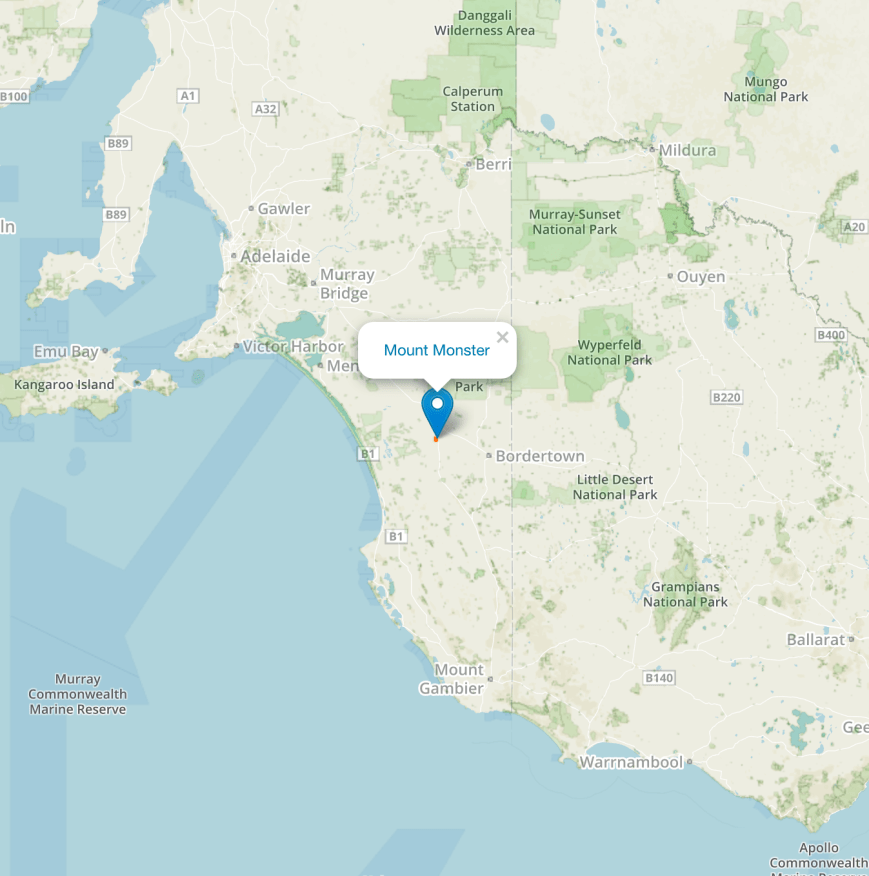
After packing up at Mount Buangor I headed in to Stawell and caught up with Mick VK3GGG at his home.  Mick served me up a nice pastie and a very welcome hot cup of coffee.  We chatted for about 45 minutes and I had a look at Mick’s shack.  I then hit the road and started heading west towards the Victorian/South Australian State border.  After speaking on the phone with my wife Marija, I decided to call in to the Mount Monster Conservation Park 5CP-149 & VKFF-0800.  Mount Monster is situated about 240 km south east of Adelaide, and about 13 km south of the town of Keith.
Screen Shot 2017-04-17 at 6.02.36 pm

Map showing the location of the Mount Monster Conservation Park to the south east of Adelaide.  Map courtesy of Protected Planet.

I last activated Mount Monster in October 2016, with Andrew VK6AS, on our road trip to VK3.  On that occasion I made a total of 18 contacts, falling well short of the required 44 QSOs to qualify the park for the global World Wide Flora Fauna (WWFF) program.

For more information on that activation, please have a look at my previous post…..

https://vk5pas.org/2016/10/13/a-trip-to-the-south-east-and-mount-monster/

I also activated Mount Monster back in November 2014, but this was prior to the park being placed in the WWFF Directory.  That particular activation was for the VK5 National & Conservation Parks Award.

https://vk5pas.org/2014/11/29/mount-monster-conservation-park/

The park is well signposted from the Riddoch Highway.

I accessed the park via Mount Monster Road and set up in the main carpark area, where the walking trail leads to the Mount Monster summit.

Screen Shot 2017-04-17 at 6.00.25 pm.png

Aerial shot of the park showing my operating spot.  Image courtesy of Protected Planet.

Mount Monster Conservation Park is about 93 hectares in size and was dedicated as a Conservation Park in September 1976 as a gift from three surrounding land owners, including the Buddle and Ellis families in memory of pioneers Malcolm and Mercy Crooks of ‘Maroona’. The park is dominated by steep rocky outcrops separated by narrow, deep gullies, producing a wide range of gradients and a number of sheer cliff faces. These rocky outcrops are dominated by an unusual granite, found in only one other location in South Australia. The park includes the Mount Monster summit, known as Joyce’s Plateau, named in honour of Joyce Buddle. Although only having a low profile, the summit dominates the countryside for many kilometres.

Prior to European settlement the area around Keith was part of the lands occupied by the Ngarranjeri aboriginal people.  Within the park is the old Gold Escort Route.  This is the famous route which brought gold into South Australia from the Victorian goldfields during the 1850’s.  In fact, between March 1852 and December 1853, a total of 528 509 ounces of gold were brought into South Australia from the Victorian gold fields.

About 176 different plant species have been identified in the park, 30 of those are orchids.  Some of these, including the Cradle of Incense, and the Monarto Mint Bush, are considered endangered nationally.  Numerous mammals can be located in the park including kangaroos and echidnas.  The park is also home to a large variety of birdlife, including red rumped parrots (I saw numerous) and honeyeaters (again I saw numerous feeding on the flowering natives).

The agricultural land surrounding Mount Monster is recognised as one of the major Lucerne seed producing areas in Australia.  During the summer period, the fields are stocked with beehives for the pollination of the crops.

Screen Shot 2017-04-17 at 6.10.01 pm.png

Aerial shot showing the park and the surround countryside, with the town of Keith in the background.  Image courtesy of Google maps.

Prior to getting into the park I had contacted Adrian VK5FANA who had kindly spotted me.  It was fitting then, that Adrian was my first contact at Mount Monster, with an excellent 5/9 signal.  Park regular Rick VK4RF then called in, also 5/9, followed by another park regular Peter VK3PF who was also 5/9.  The 40m band appeared to be in excellent condition.

I was keen to qualify the park and get back on the road, so I was pleased to have a steady flow of callers.  Propagation around South Australia was brief.  Contact number ten qualifying the park for VKFF was with Nev, followed soon after by my lovely wife Marija VK5FMAZ.  Contact number 14 was with Charlie VK5KDK who started off at 5/9, but within a few minutes had almost vanished.  This was followed by a call from Peter VK5KX who was also initially strong, but also faded with the QSB.

I worked a total of 30 stations on 40m and then QSYd to 14.310 on the 20m band.  There I worked Gavin VK3MLU, followed by Steve VK3MPR and then Phil VK2HPN.  I then logged my first DX for the activation, with Tadashi JA1VRY.  I logged a further 5 stations on 20m including Hideto JO7RLF and Minoru JH1BXR.

I then moved to 3.610 on the 80m band where I logged a total of 11 stations from VK2, VK3, VK4, and VK5.

With 50 contacts in the log, it was time to get back on the road, as I still had a 2 hour drive to get home.

I worked the following stations on 40m SSB:-

  1. VK5FANA
  2. VK4RF
  3. VK4HA
  4. VK3PF
  5. VK3TKK/m
  6. VK4SMA
  7. VK2SVN
  8. VK4FFAB
  9. VK3FSLG
  10. VK5WG
  11. VK7JON
  12. VK5FMAZ
  13. VK3EY/2
  14. VK5KDK
  15. VK5KX
  16. VK3TFD
  17. VK3MCD
  18. VK3OHM
  19. VK6LGF
  20. VK2QA
  21. VK3KRH
  22. VK7ZGK
  23. VK2XZ
  24. VK3FSPG
  25. VK3MPR
  26. VK3ALA/7
  27. VK3MLU
  28. VK4TJ
  29. VK4/AC8WN
  30. VK4/VE6XT

I worked the following stations on 20m SSB:-

  1. VK3MLU
  2. VK3MPR
  3. VK2HPN
  4. JA1VRY
  5. VK2IO
  6. JO7RLF
  7. JH1BXR
  8. VK6ZDJ
  9. VK3HSB

I worked the following stations on 90m SSB:-

  1. VK3GGG
  2. VK3PMG
  3. VK4HNS
  4. VK3SQ
  5. VK2IO
  6. VK4FW
  7. VK5HS/m
  8. VK5FANA
  9. VK4ARW
  10. VK5PE/m
  11. VK3MAB

I stopped off at the roadhouse at Tintinara for a steak sandwich.  You always know you are going to have a good meal when you see a lot of trucks parked outside.

DSC_6338


References.

Department of Environment and Natural Resources, `997, ‘Aberdour and Mount Monster Conservation Parks, Desert Camp Conservation Reserve and Poocher Swamp Game Reserve Management Plans’.

Friends of Scott Creek Conservation Park, 2014, <www.users.on.net.au> viewed 24th November 2014.

Friends of the Upper South East Parks Volunteers Working for Conservation, ‘The Gwen Ellis Walking Trail, Mount Monster Conservation Park’.

Sydney Morning Herald, 2014, <http://www.smh.com.au/news/South-Australia/Keith/2005/02/17/1108500204330.html&gt;, viewed 29th November 2014

Mount Buangor State Park VKFF-0766

On Monday morning (10th April 2017) I left a very cold Ballarat….6 degrees C and drizzle…..and headed west on the Western Highway.  I had one planned activation for the day, that being the Mount Buangor State Park, VKFF-0766, which is located about 192 km west of Melbourne, and 30 km east of the town of Ararat.

Screen Shot 2017-04-16 at 11.32.31 am.png

Map showing the location of Mount Buangor State Park.  Map courtesy of Protected Planet.

On the way I stopped off at the historic town of Beaufort for a sausage roll and a nice hot cup of coffee from the bakery.  Beaufort has a rich history, as gold was discovered here in 1852, and again in 1854 at nearby Fiery Creek.  The population of the gold fields reportedly reached about 100,000 people at its height in the late 1850’s and produced about 450,000 ounces of gold over a 2 year period.  Today, Beaufort’s population is around 1,1100 people.  There are many historic buildings in the town.

I continued on westward bound, until I reached the turn off for the Mount Buangor State Park, which is well signposted on the Western Highway.  The summit itself was shrouded in cloud.  I have climbed the summit back in 2013.  For information on that activation, please see my previous post at…..

Mount Buangor, VK3/ VS-003

Although I have activated the summit, this was before the park came onto the list for the World Wide Flora Fauna (WWFF) program, so this was to be a unique park for me.  I was hoping to get 44 contacts to qualify the park.

I travelled out along Ferntree Gully Road and stopped to have a look at a memorial plaque in a paddock on the western side of the road.  It commemorates the Jess family from Ireland who settled in the area in the 1860’s.

I soon reached the entrance to the park and continued on until I reached the Middle Creek camp ground area.

DSC_6307

Mount Buangor State Park was established in October 1989 and covers an area of 2,400 hectares.  The local Beeripmo balug (Aboriginal people) belonged to the larger Djab Wurrung language speaking community and they knew the forest as ‘Beereep-Beereep’ meaning ‘wild mount’.

The park and nearby forest protect diverse ecosystems alive with more than 130 species of birds, mammals, reptiles, amphibians and insects.  Of the 324 known plant species there are 119 species that are of significance.  Spring wildflowers abound.

A range of animals and birds can be found during daylight such as Eastern Grek kangaroos, koalas, echidnas, Swamp wallabies, Red-necked wallabies, gliders, bats, Wedge-tailed Eagles, Crimson Rosellas and kookaburra’s.

The Middle Creek camping area is set in a eucalyptus forest with creek flats, waterfalls and spectacular views of the surrounding countryside including the summit, Mount Buangor which rises to 987 metres above sea level.  The summit was formally known as Flagstaff Hill which originated from a rock cairn and flagpole that is reported to have been erected by Major Thomas Mitchell during his exploration of the area in the 1830’s.

Screen Shot 2017-04-16 at 11.32.21 am.png

Map showing my operating spot in the park.  Map courtesy of Protected Planet.

As it was a bleak morning I set up in ‘Charlie’s Hut’ which is dedicated to Charles ‘Charlie’ Whittaker.  He was born in Warnambool in 1921 and grew up in the Ararat district.  He passed away in 2008.  His love of the Middle Creek area is honoured, with the shelter named after him.

DSC_6309

The Middle Creek campground area

I was set up and ready to go just after 2355 UTC (10.00 a.m. Victorian local time).  It was a chilly morning, with the temperature being 8 deg C.  There was an open fireplace in the shelter, which I was very tempted to light.  I called CQ on 7.144 and this was answered by Rod VK7FRJG who had a terrific signal with his home brew Moxon beam.  I was pleasantly surprised to log Greg VK5ZGY next, who was portable in the Mount Remarkable National Park VKFF-0360.  Greg also had a strong 5/9 signal.  Next up was Ivan VK5HS who has become quite a regular park hunter, followed by Adrian VK5FANA on the Yorke Peninsula.

Contact number 10, qualifying the park for VKFF, was with VK4WID in Queensland, being operated by John VK4TJ.  During contact number 13, with Rick VK4RF, KA1PM from the USA came onto the frequency and started calling CQ.  He was about 5/5 to me, but sadly he could not hear my signal, and I suspect could not hear the VK’s calling me, who were running much higher power than me.

After a relatively slow start, callers started to pick up and I reached contact number 44, wit Paul VK5FUZZ, just under 90 minutes into the activation.  I went on to work a total of 59 stations on 40m from VK1, VK2, VK3, VK4, VK5, and VK7.  This included Damien VK5FDEC who was running QRP 2.5 watts (5/5 sent and 5/8 received), and Lou VK3AQZ who was running QRP 5 watts with a home brew transceiver (5/8 sent and 5/9 received).

I then moved off to 3.610 on the 80m band where I logged a total of 8 stations.  All VK3’s bar Greg VK5GJ: VK3SQ, VK3GGG, VK3PMG, VK3FLAK, VK5GJ, VK3KAI, & VK3FSLG.  Despite it being late morning, Greg VK5GJ was coming in very well, 5/7, from the Adelaide Hills.

I then tried my luck on 14.310 on the 20m band, calling CQ.  This was answered by John ZL1BYZ in New Zealand who was a good 5/9 signal.  Mike VK4MY and Alex VK4TE followed.

I was freezing, I had a total of 70 contacts in the log, and another park qualified.  Mick VK3GGG had dinner in the oven for me and a hot cup of coffee waiting at Stawell.

I worked the following stations on 40m SSB:-

  1. VK7FRJG
  2. VK5ZGY/p (Mount Remarkable National Park VKFF-0360)
  3. VK5HS
  4. VK5FANA
  5. VK2GKA
  6. VK2IO
  7. VK4TJ
  8. VK4/ AC8WN
  9. VK4/VE6XT
  10. VK4WID
  11. VK2VW
  12. VK5MRT
  13. VK4RF
  14. VK4HA
  15. VK5BJE
  16. VK3PF
  17. VK4AAC/p
  18. VK2DSG
  19. VK7PRN
  20. VK5HCF
  21. VK2NZ
  22. VK5NFT/m
  23. VK2DLF
  24. VK3QB
  25. VK5FDEC
  26. VK2NWB
  27. VK5WA
  28. VK2EXA
  29. VK1AT
  30. VK2CJC
  31. VK5DJ
  32. VK3HBG
  33. VK5WG
  34. VK5KLV
  35. VK5FCLK
  36. VK3OHM
  37. VK3IF
  38. VK3SQ
  39. VK2EME
  40. VK7PAL
  41. VK4HNS/p
  42. VK3FLJD
  43. VK3VIN
  44. VK5FUZZ
  45. VK2HHA
  46. VK5GI
  47. VK3GGG
  48. VK3PMG
  49. VK2SK
  50. VK5FCHM

References.

Parks Victoria, 2017, ‘Mount Buangor State Park’ brochure.

Wikipedia, 2017, <https://en.wikipedia.org/wiki/Beaufort,_Victoria&gt;, viewed 17th April 2017

Creswick Regional Park VKFF-0964

Sunday morning (9th April 2017) I was awoken by a huge clap of thunder.   And I mean huge.   It shook the house.  It was also pouring with rain.  As I lay in the warm bed in the spare room at the home of Chris VK3QB, I thought of the poor souls who were camping out at Antennapalooza on the property next door.  Particularly Marshall VK3MRG who I knew was sleeping in a swag.

After a shower and some breakfast Chris and I headed down to the campsite.  The rain had cleared a little and we were surprised to see a lot of activity under the marquee and the campfire was still burning with a few brave souls standing around it.

After everyone had arisen from their slumber, Joe VK3YSP gave a very interesting presentation on operating portable.  This was followed by a presentation by Ian VK3BUF on auxillary power for your vehicle.

Just after midday local time I left Foster and headed for Ballarat.  I had enjoyed two terrific nights at Foster and I will certainly be doing my best to return to Antennapalooza next year.  I had one planned park activation for the day, the Creswick Regional Park VKFF-0964.  I had activated the park back in February 2017 during outr trip to Ballarat, but I hadn’t reached the required 44 QSOs to qualify the park for the World Wide Flora Fauna (WWFF) program.  I had fallen short with 32 contacts.

Screen Shot 2017-04-15 at 11.10.15 pm

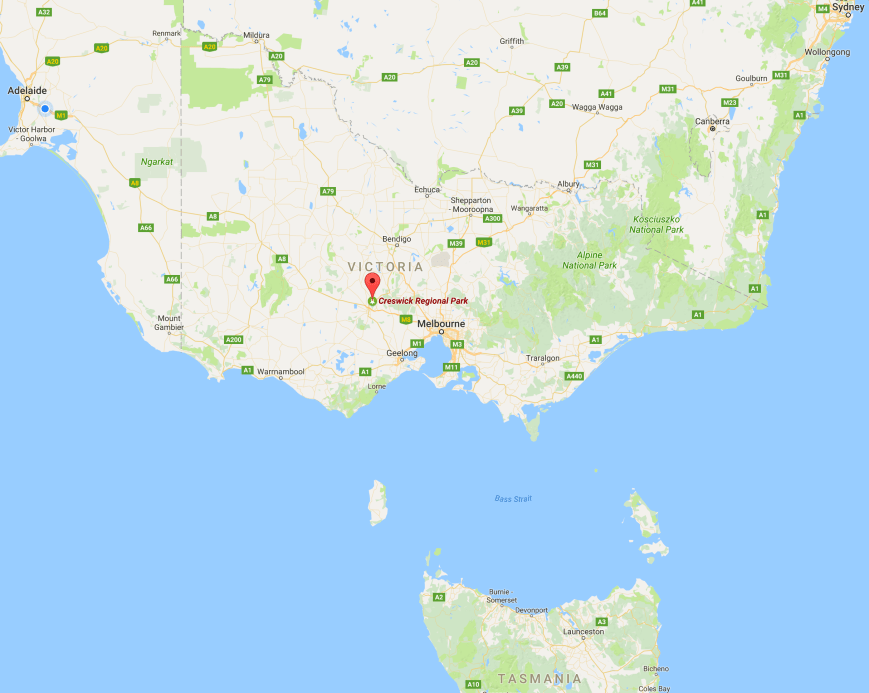
Above:- Map showing the location of the Creswick Regional Park, north west of Melbourne.  Map courtesy of google maps

After leaving Foster I stopped briefly at the Foster North lookout on the South Gippsland Highway and enjoyed some terrific views of the surrounding countryside, all the way down to Wilsons Promontory.

I then negotiated my way through Melbourne.  Even though it was a Sunday, it was incredibly slow going on the M1 Highway.  I finally got out of Melbourne and continued west through Melton, Bachus Marsh and on to Ballarat.  I arrived in Ballarat at around 4.00 p.m. local time and it was raining consistently and was 7 deg C.  A miserable afternoon.  After booking in to the motel I pondered on whether I should head out to Creswick.  In the end I decided I had come a long way and after all I only needed 12 contacts.

The little town of Creswick is about 18 km north of Ballarat.  It has a population of around 3,500 people.  The pioneer European settlers in this area were brothers Henry, Charles, and John Creswick, who established a large sheep station in 1842.  The town itself, was established in the 1850’s due to the gold rush in the area.  It was originally known as Creswick Creek until about 1857.  At the peak of the gold rush, the population was around 25,000.  The town has a number of historic buildings.


Creswick was the site of the New Australasian Mine disaster on the 12th day of December 1882.  This was Australia’s worst mining disaster in which 22 men drowned.  It was 4.45 a.m. when 29 miners became trapped underground by flood waters which came from the flooded parallel sunk Number 1 mine shaft.  Of those, only 5 survived and made it to the surface.  Many of the trapped mens crawled last notes to their loved ones on billy cans before they perished.

The school of Foresstry was established in 1910 by the Department of Forestry to train and acredit young foresters.  It is now part of the University of Melbourne.

I made my way out to St Georges Lake in the park, with the rain not easing at all.  It was a very cold, bleak, and wet day.

Creswick Regional Park was established in November 1983 and comprises 1,275 hectares of native scrub including Messmate, Manna Gum, Scent-bark, Broad-leaved Peppermint and Narrow-leaved Peppermint.  Candlebarks also grow in the gullies in the park.  The Common Heath, Victoria’s floral emblem is frequently found growing under eucalpyts.

Numerous birds can be seen in the park including Grey Currawongs, Crimson Rosellas, White-throated Tree-creepers, Grey Fantails, Thornbills, Robins, and honeyeaters.  Two migratory species found in the park ar the Rufous Fantail and Satin Flycatcher.  The only birds I saw during the activation were ducks.  Not surprising!

Various native mammals call the park home, including Koals, kangaroos and Black Wallabies.

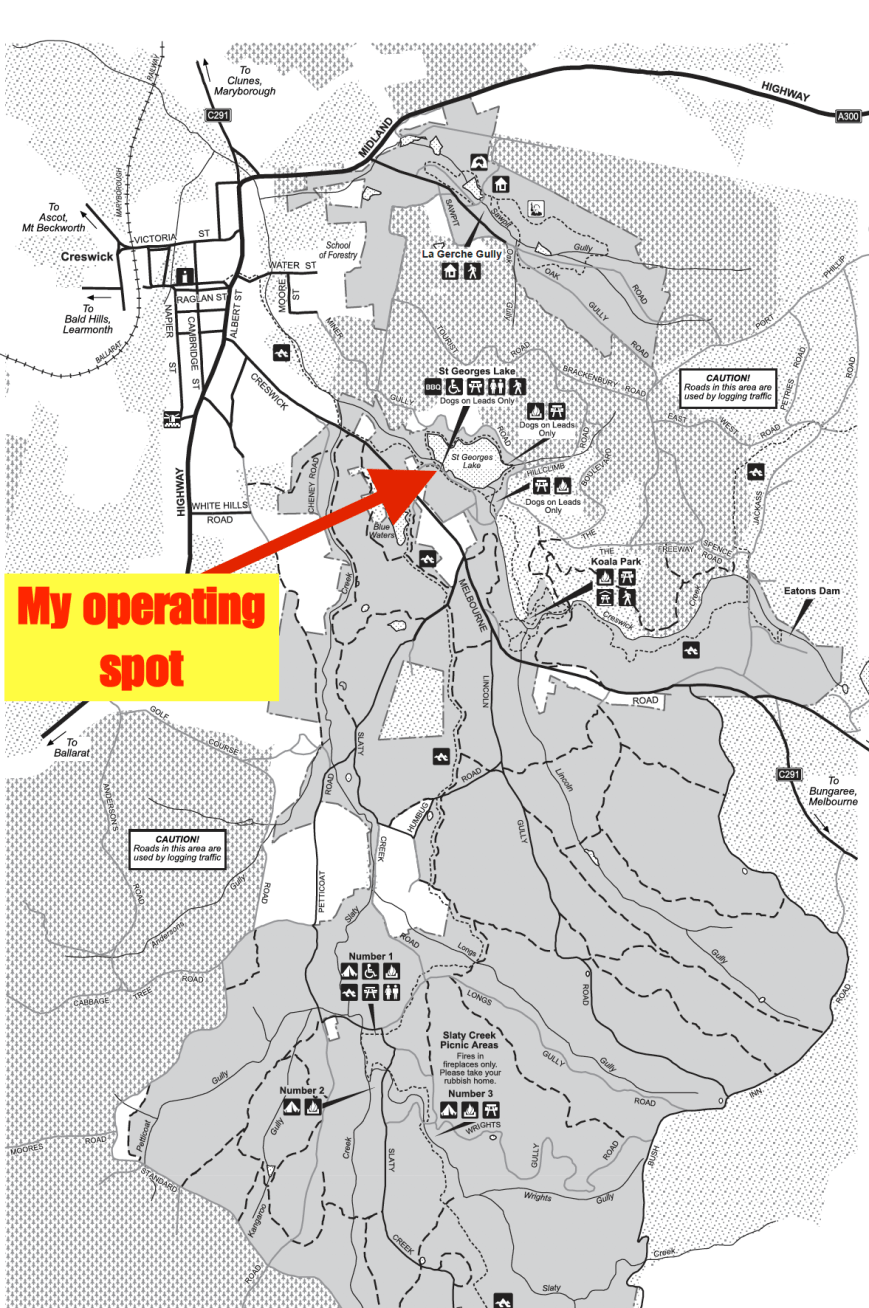
I found a spot on the southern side of St Georges Lake and as it was too wet, I was forced to operate from the vehicle.  I braved the elements and erected the 7 metre squid pole, attaching it to a fence post with an octopus strap, and ran out the 80/40/20m linked dipole.  Getting very very wet in the process.

Screen Shot 2017-04-15 at 11.11.08 pm

Map of the Creswick Regioanl Park showing my operating spot.  Map courtesy of Parks Victoria

The static crashes on the band were S9 plus.  This along with the miserable weather conditions, made this activation one of the less memorable ones IO have undertaken.  I called CQ on 7.144 and this was answered by Ivan VK5HS in the Riverland with a strong 5/9 signal.  I then spoke with Peter VK5PE with his newly upgraded call, followed by my good wife Marija VK5FMAZ, and then Adrian VK5FANA.  I soon reached 10 contacts with Jim VK2LC in the log.  The required 12th contact was Jason VK2FAVL/p.

I had a steady flow of callers, and as most were aware of the weather conditions, most stations kept their contacts short.  I worked a total of 39 stations from VK1, VK2, VK3, VK4, VK5, VK6, and VK7.  This included a Park to Park contact with Jarrad VK6FFAR who was portable in Leschenault Peninsula Conservation Park VKFF-1430.

Bill VK4FW came up to let me know that I was being heard in Europe, but sadly due to the extremely strong static crashes, I was unable to pull any Europeans out of the noise.

I jumped out of the vehicle and removed the links for 20m and then called CQ on 14.310.  This was answered by Ted VK6NTE/m who had followed me up from 40m.  Ted was quite low down compared to the signal he normally puts in.  I made about 5 minutes of CQ calls, however Ted was my only caller.

I then braved the weather again, and inserted the links for 80m.  I called CQ on 3.610 and was called by Mick VK3GGG/VK3PMG, followed by Peter VK3PF.  I worked a further 5 stations on 80m from VK4, VK5, and VK7.

After a little over one hour in the park I had a total of 48 stations in the log and I had well and truly qualified the park for WWFF.  It was time to head back into Ballarat.  I ordered a pizza and made my way back to the motel room.

I worked the following stations on 40m SSB:-

  1. VK5HS
  2. VK5PE
  3. VK5FMAZ
  4. VK5FANA
  5. VK5KX
  6. VK4PDX
  7. VK4FW
  8. VK2YW
  9. VK2EJW
  10. VK2LC
  11. VK5FKYM
  12. VK2FAVL/p
  13. VK5PET
  14. VK2HOT
  15. VK4QQ
  16. VK2FOUZ
  17. VK5TW
  18. VK1AT
  19. VK2SK
  20. VK1DI
  21. VK7QP
  22. VK4SMA
  23. VK2NCS
  24. VK7ZGK
  25. VK2VKB
  26. VK5AFZ
  27. VK4NH
  28. VK6FFAR/p (Leschenault Peninsula Conservation Park VKFF-1430)
  29. VK5FMWW
  30. VK2BNG
  31. VK5KLT
  32. VK4KUS
  33. VK4HNS/p
  34. VK4RF
  35. VK4HA
  36. VK5KLV
  37. VK5YX
  38. VK5HYZ/2
  39. VK6NTE/m

I worked the following station on 20m SSB:-

  1. VK6NTE/m

I worked the following stations on 80m SSB:-

  1. VK3GGG
  2. VK3PMG
  3. VK3PF
  4. VK5YX
  5. VK7JON
  6. VK4FW
  7. VK5FANA
  8. VK5HS


References.

Wikipedia, 2017, <https://en.wikipedia.org/wiki/Creswick,_Victoria&gt;, viewed 16th April 2017

Wikipedia, 2017, <https://en.wikipedia.org/wiki/New_Australasian_Gold_Mine_disaster&gt;, viewed 16th April 2017

Shallow Inlet Marine Coastal Park VKFF-0749

After a good night sleep at the home of Chris VK3QB at Foster, I was spoilt by Chris cooking me breakfast on Saturday morning (8th April 2017).  Although I did have to put up with his techicolour morning attire as you can see from the photo below.

IMG_0183

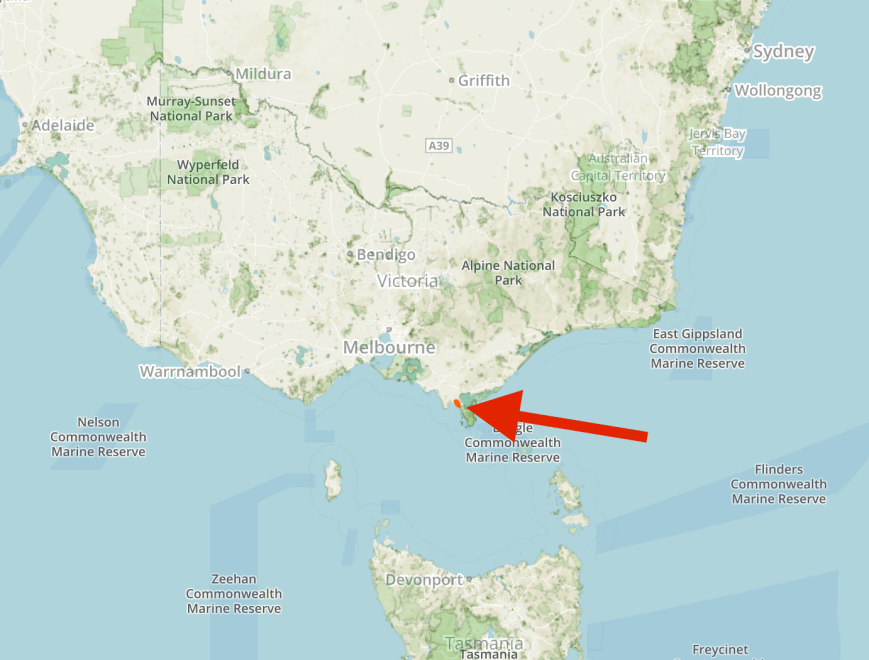
We had decided the night before to activate the Shallow Inlet Marine Coastal Park VKFF-0749 that morning.  Chris VK3PAT also organised to meet us out at the park.  The Shallow Inlet Marine Park is located about 190 km south east of Melbourne, and about 22 km south of Foster.

Screen Shot 2017-04-15 at 10.20.51 pm

Above:- Map showing the location of the Shallow Inlet Marine Park.  Map courtesy of Protected Planet.

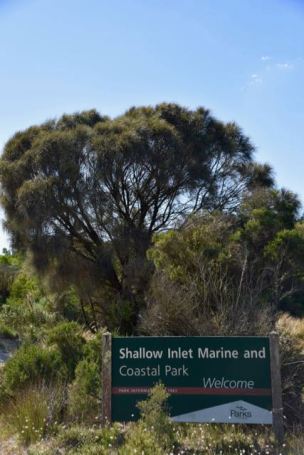
We decided to take two vehicles out to the park so that Chris could leave at any time required to head to the Antennapalooza event.  We drove south out of Foster along the Foster-Promontory Road and then took Soldiers Road and continued to the little town of Sandy Point.  We soon reached the park at the end of Sandy Point Road and drove onto the beach.

DSC_6232

The Shallow Inlet Marine Coastal Park which was established in April 1986 is 2,377 hectares in size.  The park is nestled between Warratah Bay and the peaks of Wilson Promontory.  Shallow Inlet is popular for a range of water based activities including fishing, swimming, boating and sail boating.  And as it was a glorious day, there were numerous people on the beach, swimming, and riding horses.

The Brataualung Aboriginal clan once occupied the area of Wilsons Promontory and Waratah Bay. A large number of coastal middens containing charcoal, stones and the remains of shellfish are located along the coast and around Shallow Inlet and are up to 6000 years old. Earlier sites have been covered by rising sea levels. The Aboriginal population of the area declined from the 1850s after European occupation of their tribal territory, leading to disease, forced evictions and murders.

Settlers established pastoral runs around Shallow Inlet in the 1850s. Land in the catchment of Shallow Inlet was then extensively cleared and drained from the turn of the century. The Shallow Inlet Marine and Coastal Park was declared in 1986 in recognition of the area’s habitat values for migratory wading birds and shorebirds.

This slideshow requires JavaScript.

The park protects a diverse range of vegetation including foredunes of Spinifex, heathy woodlands of Messmate and Coastal Banksia, Paperbark swamps and saltmarsh communities. Extensive mudflats and intertidal areas are exposed at low tide. These areas provide important feeding grounds for a range of migratory wading birds. Below the waves are extensive seagrass meadows.

Shallow Inlet and the adjacent ocean beaches are significant areas for breeding shorebirds. Over 180 species of birds have been recorded in the park. Many wading birds make spectacular migrations, breeding in the arctic during the northern hemisphere summer and migrating southwards to arrive in Australia in late August and September. Pied Oystercatchers and Red Capped Plovers nest in the dunes and on the spit. A diverse range of mammals including the Koala, Common Ringtail Possum, Common Wombat, Swamp Wallaby and Echidna can be found in the woodlands and heathlands along the shoreline of Shallow Inlet.

Chris and I set up about 30 feet from the water’s edge and as it was quite a warm day we set up underneath the awning of my Toyota Hi Lux.  For this activation we ran the Yaesu FT-857d, 40 watts output, and the 80/40/20m linked dipole.

Screen Shot 2017-04-15 at 10.20.36 pm.png

Aerial shot showing our operating spot in the park.  Image courtesy of Protected Planet.

Our first contact was with John VK2YW, followed by Cliff VK2NP, Bill VK4FW, and then Peter VK5PE.  Chris and I swapped the mic to log the contacts.  Contact number 17 in the log was Grant VK4JAZ who was activating the Denmark Hill Conservation Park VKFF-1529.  Grant was a very difficult copy to us, but after a number of attempts, we were able to successfully exchange callsigns and signal reports.  Thanks to the patience of Grant.  For information on Grant’s activation, you can view his blog at….

https://vk4jaz.wordpress.com/2017/04/09/denmark-hill-conservation-reserve-vkff-1529/

Chris VK3PAT soon joined us and we continued our mic sharing experience, logging a total of 21 contacts on 40m from VK1, VK2, VK3, VK4, and VK5.  We then headed to 3.610 on the 80m band where we logged 3 stations: Mike VK3NMK, Geoff VK3SQ, and Nick VK3ANL.

We then tried our luck on 14.310 on the 20m band, where our first caller was the ever reliable Rick VK4RF/VK4HA, followed by Neil VK4HNS, and then Rob VK4AAC.

With 28 stations in the log we headed back to 7.144 on the 40m band where our first contact was with Norm VK2FANT, followed by Owen VK2AEJ who was operating from the Cape Don lightship in Sydney.  We also logged Peter VK3PF/p and Sergio VK3SFG/p who were activating SOTA peak Mount Square Top VK3/ VT-071.  A number of the hams at Antennapalooza gave us a shout, including Joe VK3YSP/p, Julie VK3FOWL/p, Tony VK3XV/p, and Jamie VK3TZE/p.  We also logged Ian VK1DI who was activating SOTA peak Mount Tumanang VK2/ SM-049 which is located within the Tallaganda National Park VKFF-0474.

Chris VK3PAT had headed off for lunch with his wife, and Chris VK3QB and I had 45 contacts in the log, and it was time to head off to Antennapalooza.  I think I may have inspired Chris VK3QB into activating.  He was very happy qualifying his first park with 44 contacts +.  It was a beaut morning.  Great weather, good propagation, and good company.

I worked the following stations on 40m SSB:-

  1. VK2YW
  2. VK2NP
  3. VK4FW
  4. VK5PE
  5. VK2NEO
  6. VK1AT
  7. VK5FANA
  8. CK2GKA
  9. VK2AN
  10. VK2ZK
  11. VK2JDC
  12. VK4TJ
  13. VK2FADV
  14. VK4RF
  15. VK4HA
  16. VK3KTO/p
  17. VK4JAZ/p (Denmark Hill Conservation Park VKFF-1529)
  18. VK4AAC/p
  19. VK4KX
  20. VK2IO
  21. VK3ARH
  22. VK2FANT
  23. VK2AEJ
  24. VK5FMAZ
  25. VK5HCF
  26. VK3PF/p (SOTAMount Square Top VK3/ VT-071)
  27. VK3CM
  28. VK3SFG/p (Mount Square Top SOTA VK3/ VT-071)
  29. VK3YSP/p
  30. VK3FOWL/p
  31. VK3XV/p
  32. VK3KYF
  33. VK1DI/p (SOTA Mount Tumanang VK2/ SM-049 &Tallaganda National Park VKFF-0474)
  34. VK5VBR
  35. VK7VDL
  36. VK3XMF
  37. VK3FCLK
  38. VK3TZE/p

I worked the following stations on 80m SSB:-

  1. VK3NMK
  2. VK3SQ
  3. VK3ANL

I worked the following stations on 20m SSB:-

  1. VK4RF
  2. VK4HA
  3. VK4HNS/p
  4. VK4AAC/p

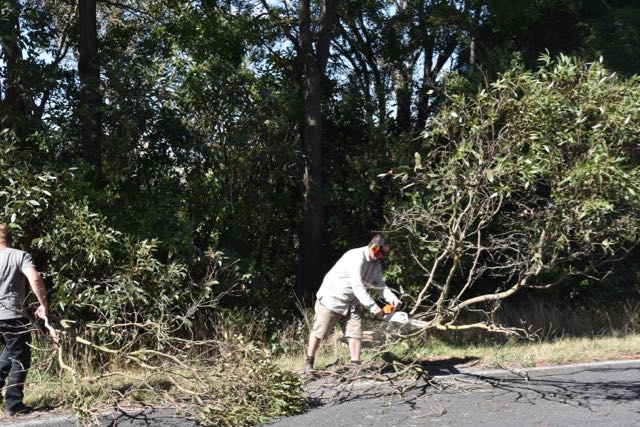
On the way back to Foster we came across a small tree which had fallen across the road.  Fortunately Chris had a chainsaw in the back of his vehicle.

DSC_6233

Once back at Antennapalooza I caught up with all those present.  It was terrific to meet Tony VK3XV for the very first time.  I had spoken with Tony many times previously both on air and on the telephone.  But this was the first time we had met in person.  The presentations commenced mid afternoon, with 3 presentations delivered by myself on 1.  General tips whilst operating portable; 2. WWFF; and 3. the VK5 Parks Award.  Tony VK3XV spoke about the Keith Roget Memorial National Parks Award, whilst Peter VK3PF spoke about the Summits on the Air (SOTA) program.  We settled in for the night, enjoying a nice meal and a few reds, and plenty of chat around the campfire.  A great night.

This slideshow requires JavaScript.


References.

Parks Victoria, 2012, ‘Shallow Inlet Marine Coastal Park’.

Wilsons Promontory National Park VKFF-0539

After activating Mount Fatigue I drove down to the Wilsons Promontory National Park VKFF-0539 to activate the park.  This was to be a unique park for me for the World Wide Flora Fauna (WWFF) program and the Keith Roget Memorial National Parks Award (KRMNPA).  The park is situated about 240 km south east of Melbourne.

Screen Shot 2017-04-14 at 11.22.54 pm

Above:- Map showing the location of the Wilsons Promontory National Park.  Map courtesy of Protected Planet.

The drive took me down through Foster, where I would be staying for the next 2 nights, and then to the little town of Yanakie.  Along the way I stopped to have a look at the Foster Poison post.  It was erected in the late 1800’s to mark where poison was laid to eradicate wild dogs and dingoes.  On the original stock route linking Western Port with East Gippsland, it defined the corner of Wonga Wonga, Waratah and Yanakie Parishes.  Poison Post became quite a significant landmark to the early residents and was used until 1960.

I continued along the Meeniyan-Promontory Road until I reached the park entrance.

The Wilsons Promontory National Park is commonly known as Wilsons Prom or The Prom.  It is located at the southernmost tip of mainland Australia in the Gippsland region, and offers spectacular scenery of huge granite mountains, open forest, rainforest, sweeping beaches and coastlines.  The park is 50,500 hectares (125,000 acres) in size and was established in July 1898.

The park is home to a large amount of native wildlife including kangaroos, wallabies, wombats, and echidnas.  Marine creatures that can be sighted include Southern Right whales, Humpback whales, Killer whales, dolphins, seals, and Sea Lions.

The first Europeans to sight Wilsons Promontory are believed to be George Bass and Matthew Flinders in 1798.  Prior to this the area was inhabited by aboriginals for at least 6,500 years.  During the 1800’s extensive sealing took place at Sealer’s Cove.  Such was the extent of the sealing, that seals are no longer found there.  During the late 1800’s extensive lobbying of the Government of Australia by the Field Naturalists Club of Victoria and the Royal Society of Victoria led to Government temporarily reserving the area in 1898 as a National Park.  This was made permanent in 1908.

In April 2015 a large section of the park was burnt out as a result of a bushfire which originally started as a controlled burn which breached containment lines.  And during the Black Saturday Bushfires of February 2009, numerous trees within the park were struck by lightning which led to the loss of up to 50% of the National Park through fire.

As I pulled in to the carpark at the end of Five Mile Road, the slippery creature below was crossing the carpark in front of me.  The carpark was full of cars and quite a few people, all about to head off on a bush walk.  And all oblivious to the snake’s presence.  Which was not such a band thing, because I suggest there would have been a lot of screaming by the women present.

Red Bellied black snakes are one of Australia’s best known snakes and are found throughout eastern Australia.  Its venom is capabale of causing significant morbidity, however a bite from a Red Belly is not generally fatal, and is less venomous than many other Australian venomous snakes.

DSC_6181

Red-bellied black snake

I set up in the carpark, trying to make as much noise as possible to scare away any other snakes.  I am not a snake fan by any stretch.  However, I have never killed any of the snakes I have sighted.  Snakes are generally a protected species and hefty fines can be imposed on those found killing them.  In South Australia, the maximum penalty is a $10,000 fine and 2 years imprisonment.  The only exception is if a venomous snake is posing a genuine threat to life and safety.

I ran the Yaesu FT-857d, at 40 watts output, and the 20/40/80 m linked dipole, on the top of the 7 metre telescopic squid pole.  There was just enough room to stretch out the dipole.

It was quite a warm day, around 29 deg C, so I tried to find a little bit of shade.

Screen Shot 2017-04-14 at 11.19.27 pm

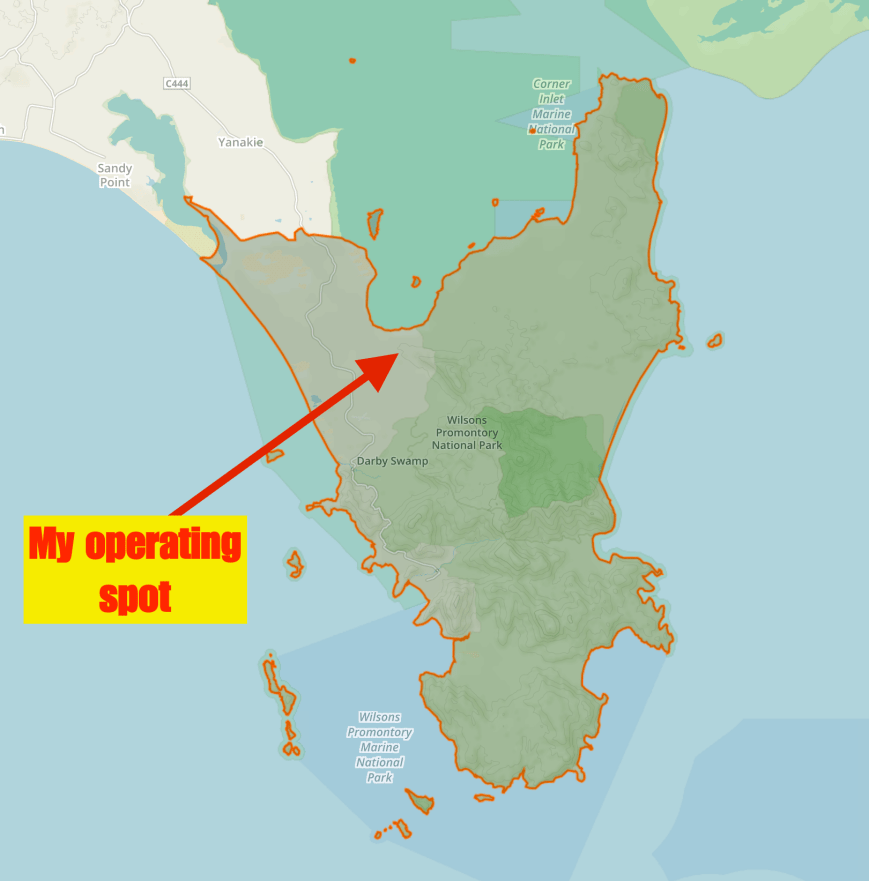
Above:- Map of the park showing my operating spot.  Map courtesy of Protected Planet  

The 40m band was quite busy, and I found 7.130 and asked if the frequency was in use.  Brenton VK3CM came back to me and was number one in the log from Wilsons Prom.  This was followed by Adrian VK5FANA on the Yorke Peninsula with a good 5/6 signal, then Ivan VK5HS in the Riverland region with a strong 5/8 signal.  Contact number ten, qualifying the park for VKFF, was Mick VK3GGG/VK3PMG.

I was very pleased with the steady flow of callers, as I was keen to leave the park as soon as possible and head off to Antennapalooza at Foster.  In just a little over an hour I had contact number 44 in the log, VK3ER portable at Antennapalooza.

I logged a total of 46 stations on 40m from VK1, VK2, VK3, VK4, VK5, and VK7.  This included a Park to Park contact with Jim VK1AT who was activating the Namadgi National Park VKFF-0377.  I also logged a number of amateurs who were portable at Antennapalooza, including Julie VK3FOWL, Chris VK3QB, and Ian VK3BUF.  Another good contact was with Rick VE3MM/VK5 who was holidaying on Kangaroo Island OC-139.  Rick had a good signal with his KX3, 10 watts and end fed 1/2 wave antenna.

I then headed to 14.310 on the 20m band where I logged a total of 10 stations.  Australian stations logged there were Rob VK4AAC/p, Steve VK4KUS, Sergio VK3SFG, and Rick VK4RF/VK4HA.  There was a small opening into Europe on the long path, with five Italian stations logged.

I then lowered the squid pole and inserted the 80m links and called CQ on 3.610 on the 80m band.  First caller was Peter VK3PF with a strong 5/9 signal, followed by Mick VK3GGG/VK3PMG who was 5/8.  But despite 5 minutes of CQ calls, they were my only takers on 80m.

I had a total of 59 contacts in the log and another unique park activated.  It was approaching 5.00 p.m. local time and I wanted to have a quick look around the park before heading off to Foster.

DSC_6189

I worked the following stations on the 40m band:-

  1. VK3CM
  2. VK5FANA
  3. VK5HS
  4. VK3AXH
  5. VK3SQ
  6. VK7DD
  7. VK3DMD
  8. VK5TR
  9. VK3GGG
  10. VK3PMG
  11. VK3YSP
  12. VK4RF
  13. VK4HA
  14. VK2LX
  15. VK5KX
  16. VK3VIN
  17. VK5EMI
  18. VK3LSD
  19. VK2NP
  20. VK5NFB
  21. VK2EXA
  22. VK7VDL
  23. VK4AAC/p
  24. VK3VBI
  25. VK2STO
  26. VK5KLV
  27. VK5FRSM
  28. VK1AT/p (Namadgi National Park VKFF-0377)
  29. VK4VXX/2
  30. VK2FOUZ
  31. VK4HNS/p
  32. VK2SMS/p
  33. VK2FADV
  34. VK5YX
  35. VE3MM/VK5
  36. VK2GQR
  37. VK2IO/m
  38. VK4CPS
  39. VK3FOWL/p
  40. VK1FWBK
  41. VK3QB/p
  42. VK3BJA/p
  43. VK3BUF/p
  44. VK3ER/p
  45. VK2QA
  46. VK5WG

I worked the following stations on 20m SSB:-

  1. VK4AAC/p
  2. IK2ZJN
  3. IK8FIQ
  4. VK4KUS
  5. VK3SFG
  6. I5FLN
  7. IW2NXI
  8. VK4RF
  9. VK4HA
  10. IU5HIV

I worked the following stations on 80m SSB:-

  1. VK3PF
  2. VK3GGG
  3. VK3PMG

I drove down to Tidal River, the main campground in the park, enjoying some of the amazing coastline views along the way.  The campground was extremely busy as it was school holidays.  There were hundreds of people enjoying the park.  The campground even has a general store and take away food shop.

This slideshow requires JavaScript.

I then headed off to Foster and caught up with Chris VK3QB on the road.  We dropped off my bags at his home and then drove to the campsite next door, where I enjoyed a few ales and good company with those present.


References.

Parks Victoria, 2017, <http://parkweb.vic.gov.au/explore/parks/wilsons-promontory-national-park&gt;, viewed 14th April 2017

Wikipedia, 2017, <https://en.wikipedia.org/wiki/Red-bellied_black_snake&gt;, viewed 14th April 2017

Wikipedia, 2017, <https://en.wikipedia.org/wiki/Wilsons_Promontory_National_Park&gt;, viewed 15th April 2017

Mount Fatigue VK3/ VT-057

My first planned activation for Friday 7th April 2017 was Mount Fatigue VK3/ VT-057.  I made an early start from the motel in Ballarat and headed east.  The first part of my drive was quite pleasant, along the Western Freeway through Ballan and Bachus Marsh.  But I then hit the outskirts of Melbourne and the drive certainly slowed down.  It took me some time to get through the western suburbs and across the Westgate Bridge.

Screen Shot 2017-04-14 at 9.38.59 pm

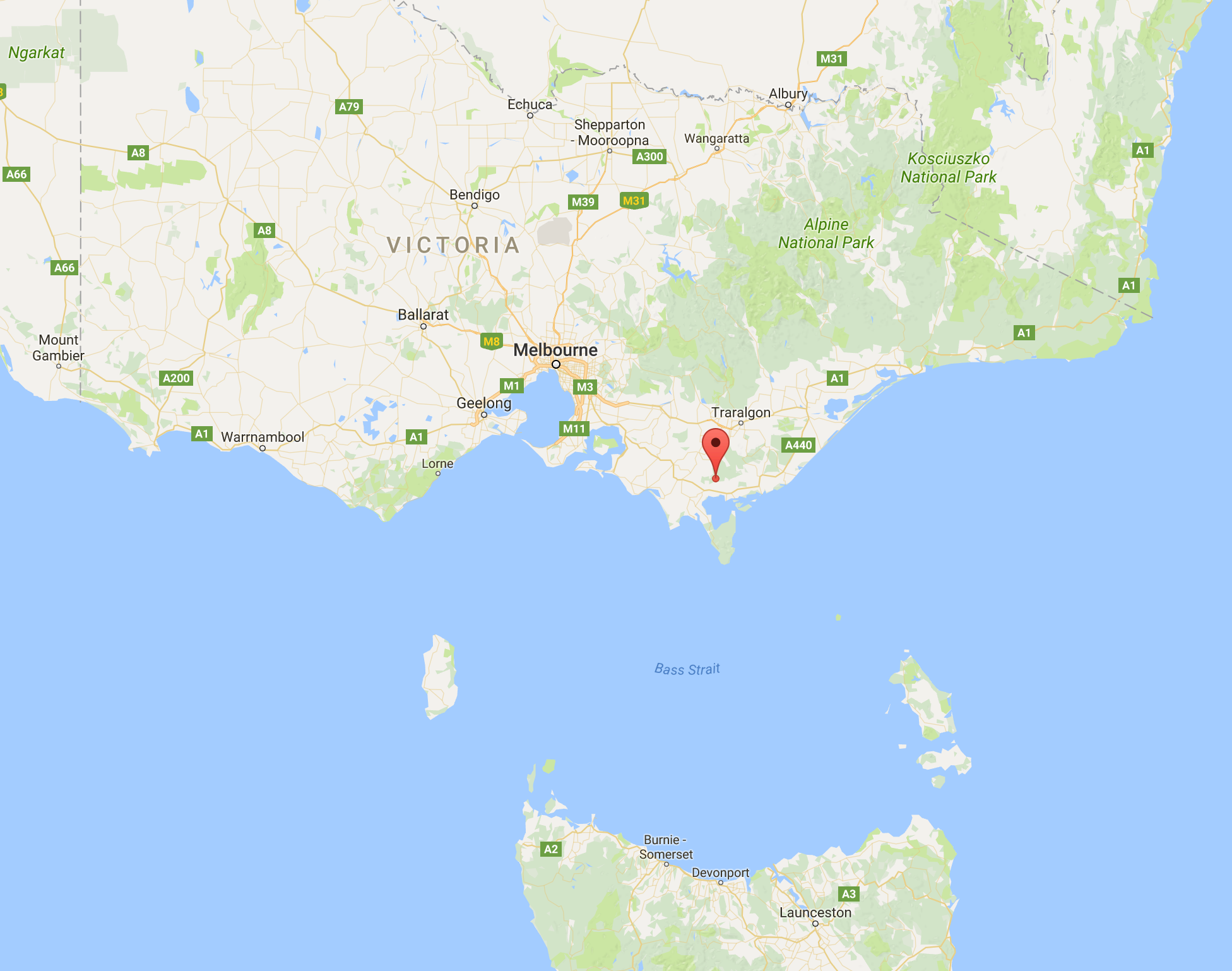
Above:- Map showing the location of Mount Fatigue VK3/ VT-057, south east of Melbourne.  Map courtesy of google maps.

Once I got out of the Burnley Tunnel and onto the M1, the traffic flowed a little smoother.  I continued on to Koo Wee Rup and then Korumburra and then Leongatha.  I then headed up the Foster-Mount Best Road

DSC_6145

I soon entered the Wonjip plantation area which was truly spectacular, with dense forest and beautiful green tree ferns

After some weaving up Toora-Gunyah Road I reached the junction with the Mount Fatigue Road and headed up to the summit.

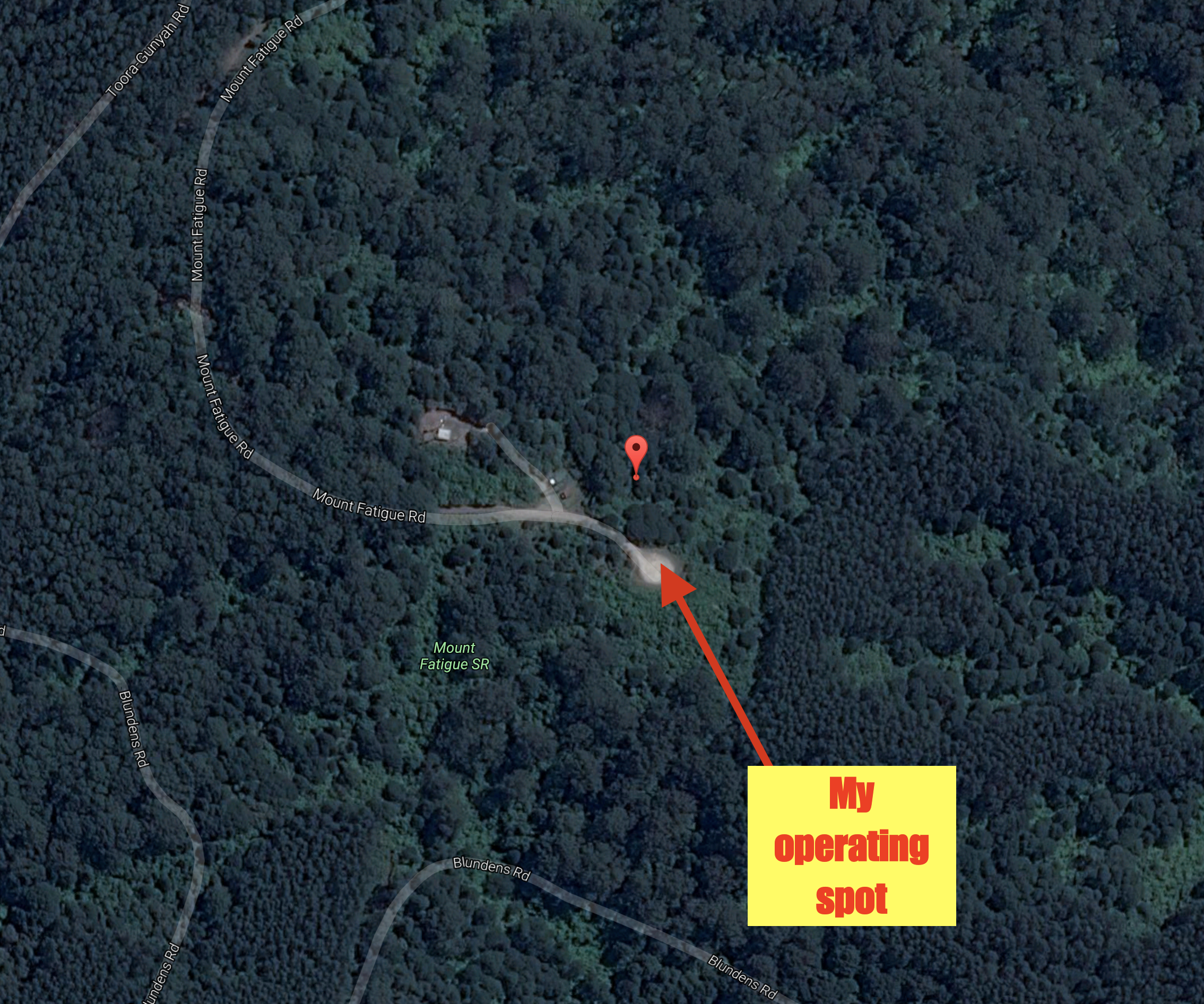
I set up in the carpark at the end of Mount Fatigue Road.  There were no other vehicles in the carpark, so I had plenty of room to stretch out the 80/40/20 m linked dipole.  Due to the 7m squid pole splitting the night before, I could only get the antenna up at 6 metres for this activation.  As it was a nice easy drive up summit I had the luxury of the fold up table and deck chair.  I ran the Yaesu FT-857d and 40 watts for this activation.

Screen Shot 2017-04-14 at 9.37.52 pm.png

Above:- Aerial shot of the summit, showing my operating spot.  Image courtesy of google maps

Prior to calling CQ I enjoyed some of the views to be had from the top of Mount Fatigue.  Views can be enjoyed of the surrounding countryside all the way down to the Wilsons Promontory National Park.

Mount Fatigue is 595 metres above sea level and is worth 2 SOTA points.  The summit has been activated a total of 7 times.  It was first activated by Peter VK3PF back in July 2013.  Mount Fatigue is situated in the Strzelecki Ranges, also known as the Strzelecki Hills, part of the Great Dividing Range.  The summit is located within the Mount Fatigue Scenic Reserve which is 12.9 hectares in size and was established in June 1984.

Mount Fatigue was named by Captain John Lort Stokes (1812-1885) in 1846 when he and his party made their way through the thick scrub to the top of the summit.  There is a memorial plaque at the top of the summit to commemorate this fact.

DSC_6153

The following is from Stokes’ book ‘Discoveries in Australia during the Voyage of H.M.S. Beagle’:

“When we sailed out of Alberton – to commemorate my friend Count Strzelecki’s discovery of this important and valuable district, which he named in honour of His Excellency the Governor.  I called the summit of a woody range 2110 feet high, over the north shore of Corner Inlet, Mount Fatigue.  The only vegetation this part of the promontory supports is a wiry grass, stunted gums and banksias in the valleys, and a few grass-trees near the crests of the hills which are generally bare masses of granite”

At the end of the 19th century, the largest tin mines in Victoria were in close proximity of Mount Fatigue.  Gold was also discovered on the slopes of Mount Fatigue by William Turton in 1856.

There is a trig point at the summit which is hidden behind the trees and a small tower.

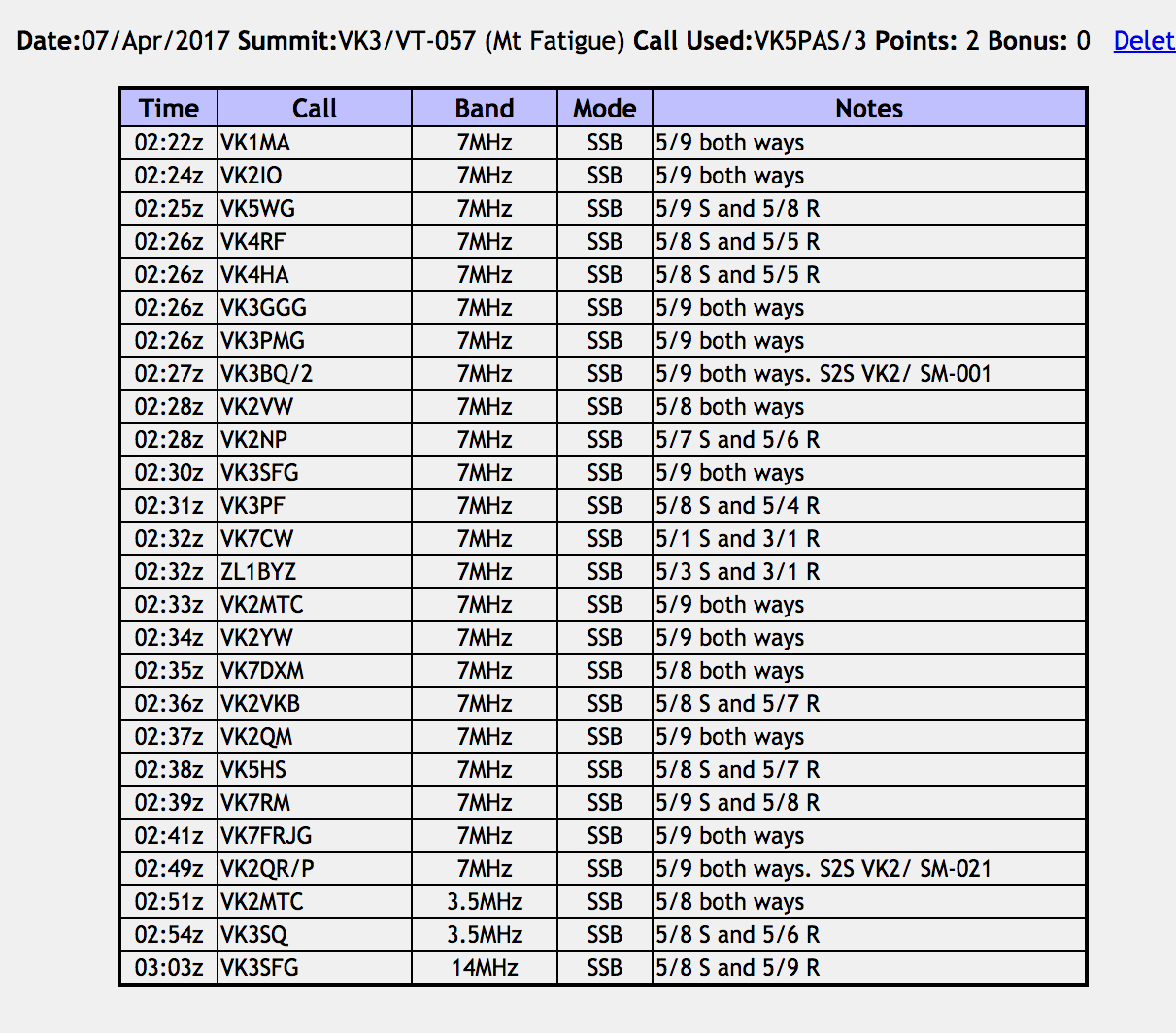
I was set up and ready to go just after 0220 UTC (12.20 p.m. Victorian local time).  I started calling CQ on 7.095 and this was answered by Matt VK1MA whi a beautiful 5/9 signal.  This was followed by Gerard VK2IO, Nev VK5WG, and then Rick VK4RF/VK4HA.  All had good strong signals.  I had qualified the summit.

Contact number eight in the log was a Summit to Summit contact with Andrew VK3BQ/2 who was activating Australia’s highest peak, Mt Kosciuszko VK2/ SM-001.  Andrew was running QRP 5 watts and was a strong 5/9.

I went on to work a total of 23 contacts from VK1, VK2, VK3, VK4, VK5, VK7, and New Zealand.  This included John ZL1BYZ in New Zealand.

My final contact on 40m was another Summit to Summit, with Rob VK2QR/p who was activating the SOTA peak Mount Hudson VK2/ SM-021.

I then called CQ on 3.610 on 80m and this was answered by Greg VK2MTC who was a good 5/8 signal.  Geoff VK3SQ then called in from Beechworth with a good 5/8 signal.  Sadly Greg and Geoff were my only takers on 80m.

I then moved up to 14.310 on the 20m band and called CQ.  This was answered by Sergio VK3SFG at nearby Mirboo North.  Sergio had a good 5/8 signal and reciprocated with a 5/9 signal for me.  I put out around another 12 CQ calls, but I had no takers.

It was time to pack up and head off to the Wilsons Promontory National Park.  I had a total of 26 stations in the log and a unique SOTA summit to add to my SOTA activator list.

I worked the following stations:-

Screen Shot 2017-04-14 at 9.07.34 pm

As I left the summit, I had some nice views back to Mount Fatigue.

I also enjoyed some nice views of the surrounding countryside including the Toora Wind Farm.  Toora has 12 wind turbines, each of 1.75 MW rated capacity, with a total generating capacity of 21 MW of electricity. The power station was completed in 2002.


References.

Mount Kosciuszko Inc, 2017, http://mtkosciuszko.org.au, viewed 14th April 2017

Parks Victoria, 2017, <http://parkweb.vic.gov.au/explore/parks/mount-fatigue-s.r.&gt;, viewed 14th April 2017

Wikipedia, 2017, <https://en.wikipedia.org/wiki/Toora_Wind_Farm&gt;, viewed 14th April 2017

Enfield State Park VKFF-0757

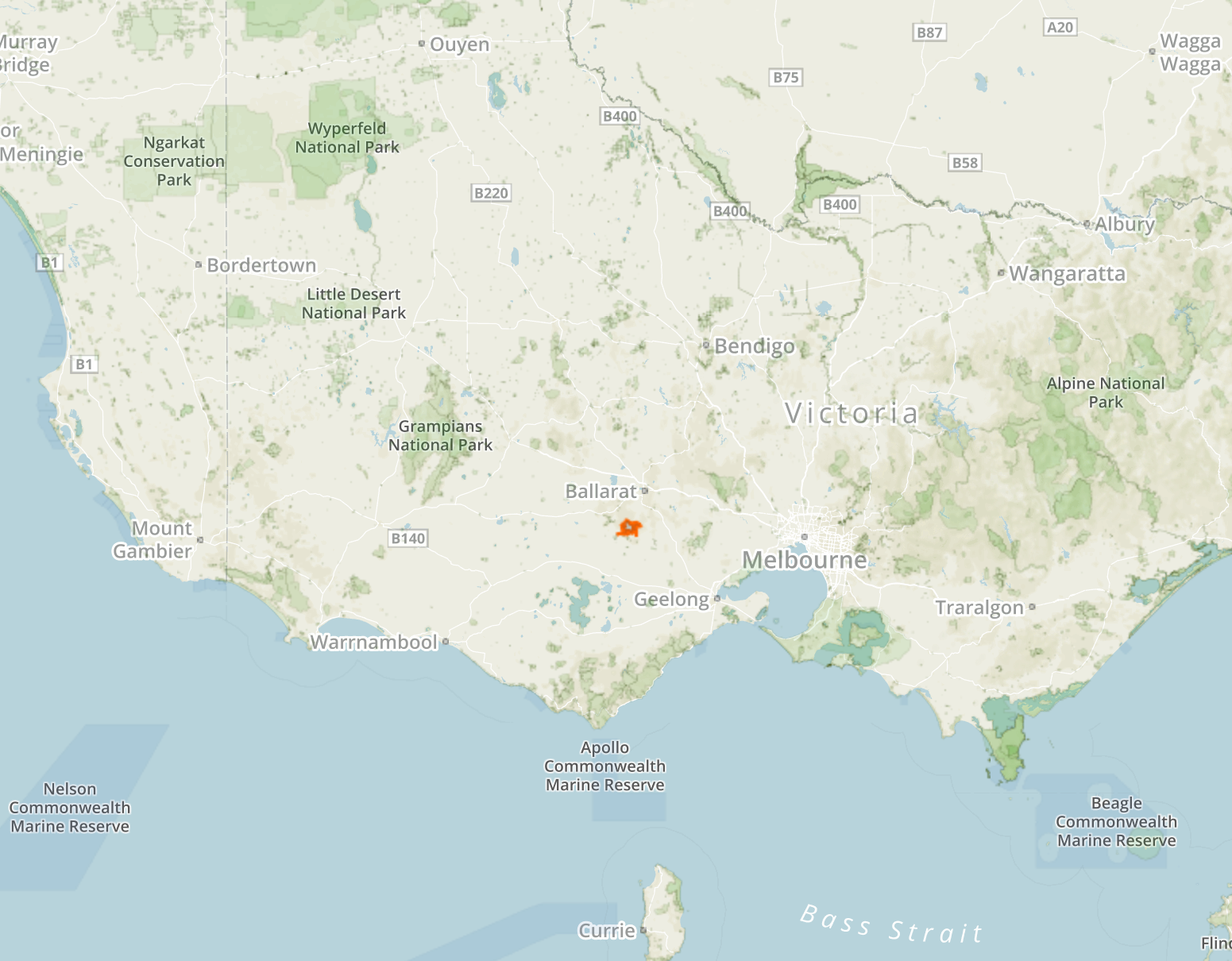
After booking in to my accomodation I headed out to the Enfield State Park VKFF-0757, which is located about 28 km south of Ballarat.  It was now completely dark and a very chilly night in Ballarat.  I was also a bit hungry, but I had posted that I was going to activate Enfield, so I decided on a quick activation.

The drive from the motel took me out through Mount Helen, Scotchmans Lead and then on to Napoleans and Enfield.

Screen Shot 2017-04-13 at 9.28.35 pm

Above:- Map showing the location of the Enfield State Park.  Map courtesy of Protected Planet.

Enfield State Park was established in August 1995.  It is 4,400 hectares in size.  The open forest of Enfield State Park supports a number of different types of eucalyptus including Messmate, Broad-leaved Peppermint, Narrow-leaved Pepperminth, Swamp Gum, Manna Gum, and the rare Yarra Gum.  Over 60 species of native orchids can be found in the park, and also the endemic Enfield Grevillia.

Over 100 species of birds have been recorded in the park including Kookaburras, Grey Currawongs, Boobook Owls, Crimson Rosellas and the Superb Fairy Wren.  About 22 species of native mammals have been recorded in the park including the Eastern Grey Kangaroo, Swamp Wallaby, Echidna, and Koala.  Several species of possums, bats, and antechinus also occur in the park.  Frogs are also common in the park including the Common Froglet, Victorian Smooth Forglet and the Southern Brown Tree Frog.

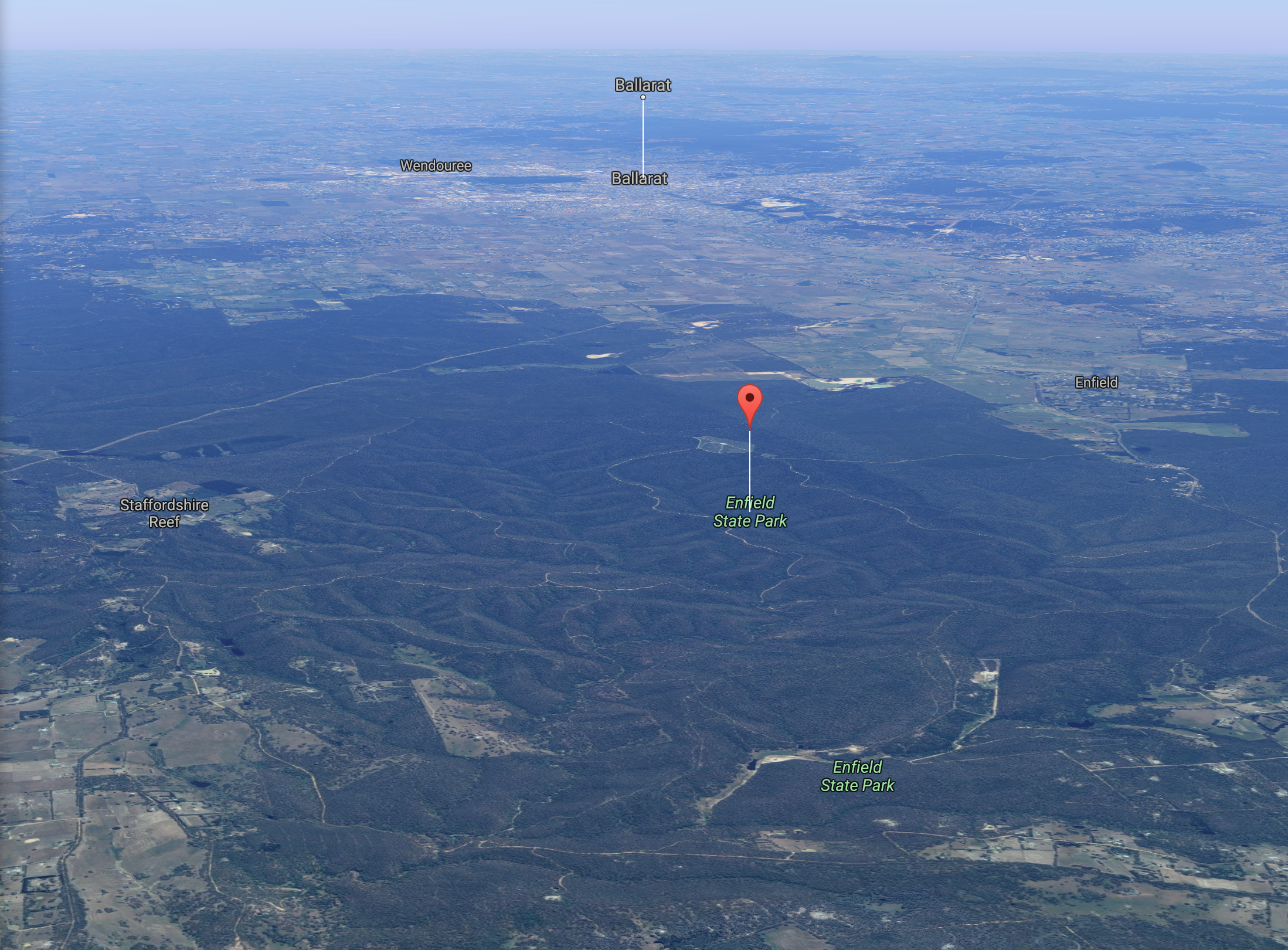
Screen Shot 2017-04-13 at 9.16.29 pm

The Enfield State Park, with Ballarat in the background.  Image courtesy of google maps

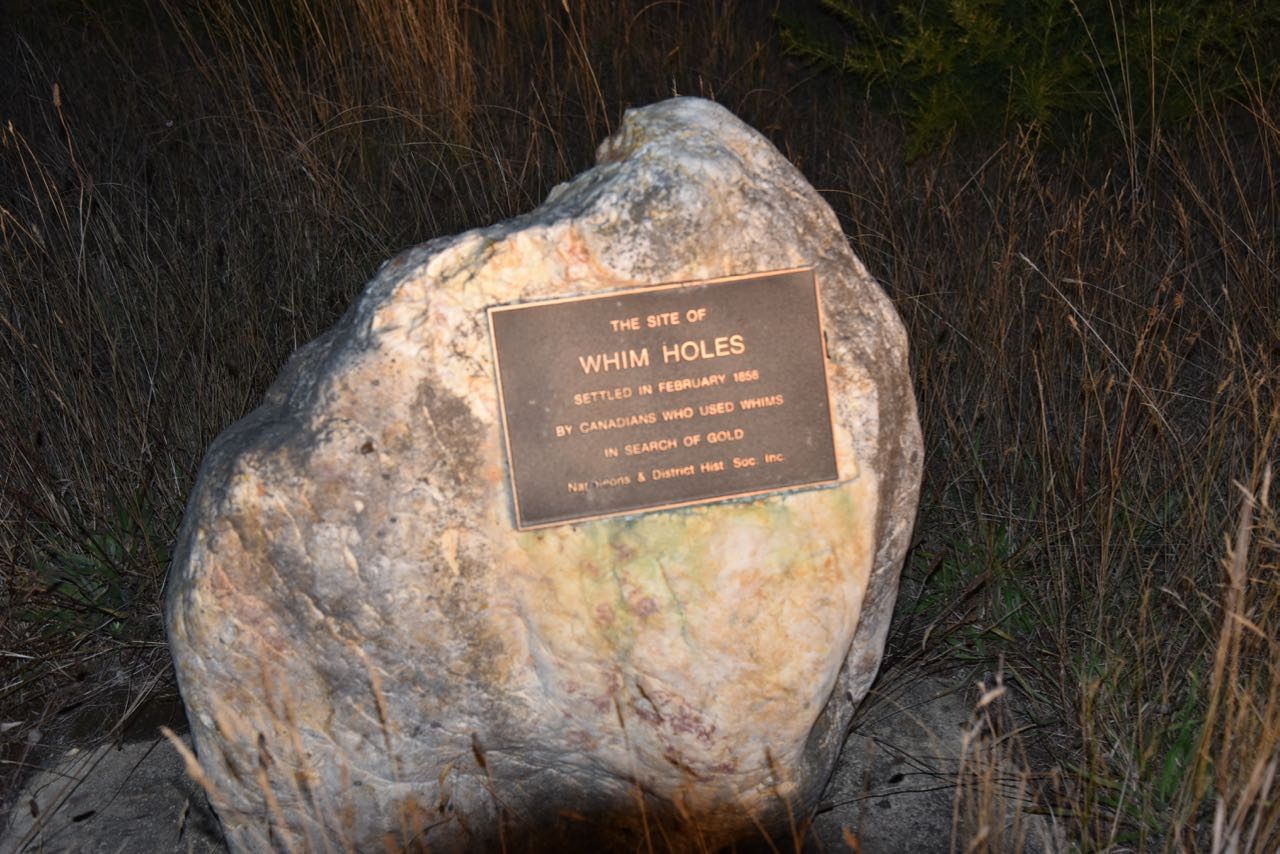
The park was dominated by tents and diggers from all around the world during the Victorian Gold Rush period.  A reminder of these times is reflected in local place names such as Misery Creek and Surface Point, which was the site of a Chinese settlement in the 1860s, complete with temples, tearooms, gaming tents, herbalists and market gardens. Some remains of this community can still be found in the area.

The forest has been cut for timber, fence posts and local housing materials and has also been used for the production of eucalyptus oil. A historical marker at Enfield township indicates the site of a eucalyptus distillery from days gone by.

DSC_6144

I soon reached the north eastern corner of the park and I found a 4WD track off Incolls Road.  It was now 7.00 p.m. local time.  I set up along the track and ran the Yaesu FT-857d, 40 watts, and the 80/40/20m linked dipole.

DSC_6143

I called CQ on 7.140 and this was answered by Peter VK7PRN whose signal was well down to what I am normally accustomed to with Peter.  He was just a 5/7 and gave me a 5/2.  This was not a good start.  I was then called by Adrian VK5FANA who was 5/9 and reciprocated with a 5/9 for me.  I worked just 11 stations on 40m from VK2, VK4, VK5, VK7 and New Zealand.  I was pleased to log regular park hunter Oliver ZL1XS who was a good 5/9 signal.

Screen Shot 2017-04-13 at 9.24.01 pm

Above:- Map showing my operating spot in the Enfield State Park.  Image courtesy of Parks Victoria.

I decided to try my luck on 80m.  I lowered the squid pole and inserted the 80m section links and headed to 3.610.  I worked Ronny VK3VBI and then disaster.  The squid pole came crashing down, with a huge split detected in the first section of the pole.  So I was forced to use the vehicle equipment, the Icom IC-7000 and the Codan 9350.  As a result, signal reports were way down.  I boxed on and worked a total of 11 stations on 80m.

I was cold, hungry, and frustrated, and decided to call it quits for the night, with just 22 contacts in the log.  This is a park which I will have to return to, to get my remaining 22 contacts to qualify the park for the global WWFF program.

I worked the following stations on 40m SSB:-

  1. VK7PRN
  2. VK5FANA
  3. VK2ZH
  4. VK4TJ
  5. VK4/AC8WN
  6. VK4/VE6XT
  7. VK6NU
  8. ZL1XS
  9. VK4ZL
  10. VK2FOUZ
  11. VK4GSF

I worked the following stations on 80m SSB:-

  1. VK3VBI
  2. VK3GGG
  3. VK3PMG
  4. VK3PF
  5. VK5FANA
  6. VK4HNS/p
  7. VK4GSF
  8. VK3SFG
  9. VK5HYZ
  10. VK7GG
  11. VK3AXF


References.

Parks Victoria, 2010, ‘Enfield State Park’.

Parks Victoria, 2017, <http://parkweb.vic.gov.au/explore/parks/enfield-state-park&gt;, viewed 13th April 2017


Langi Ghiran State Park VKFF-0760

After leaving Ararat I decided to head into the Langi Ghiran State Park VKFF-0760 for an activation.  I have activated Mount Langi Ghiran as part of the Summits on the Air (SOTA) program, but this was to be a unique park for me for the World Wide Flora Fauna (WWFF) program.

Langi Ghiran is situated about 191 km west of Melbourne, and about 20 km east of Ararat.

Screen Shot 2017-04-13 at 7.59.02 pm

Above:- Map showing the location of the Langi Ghiran State Park.  Map courtesy of Protected Planet.

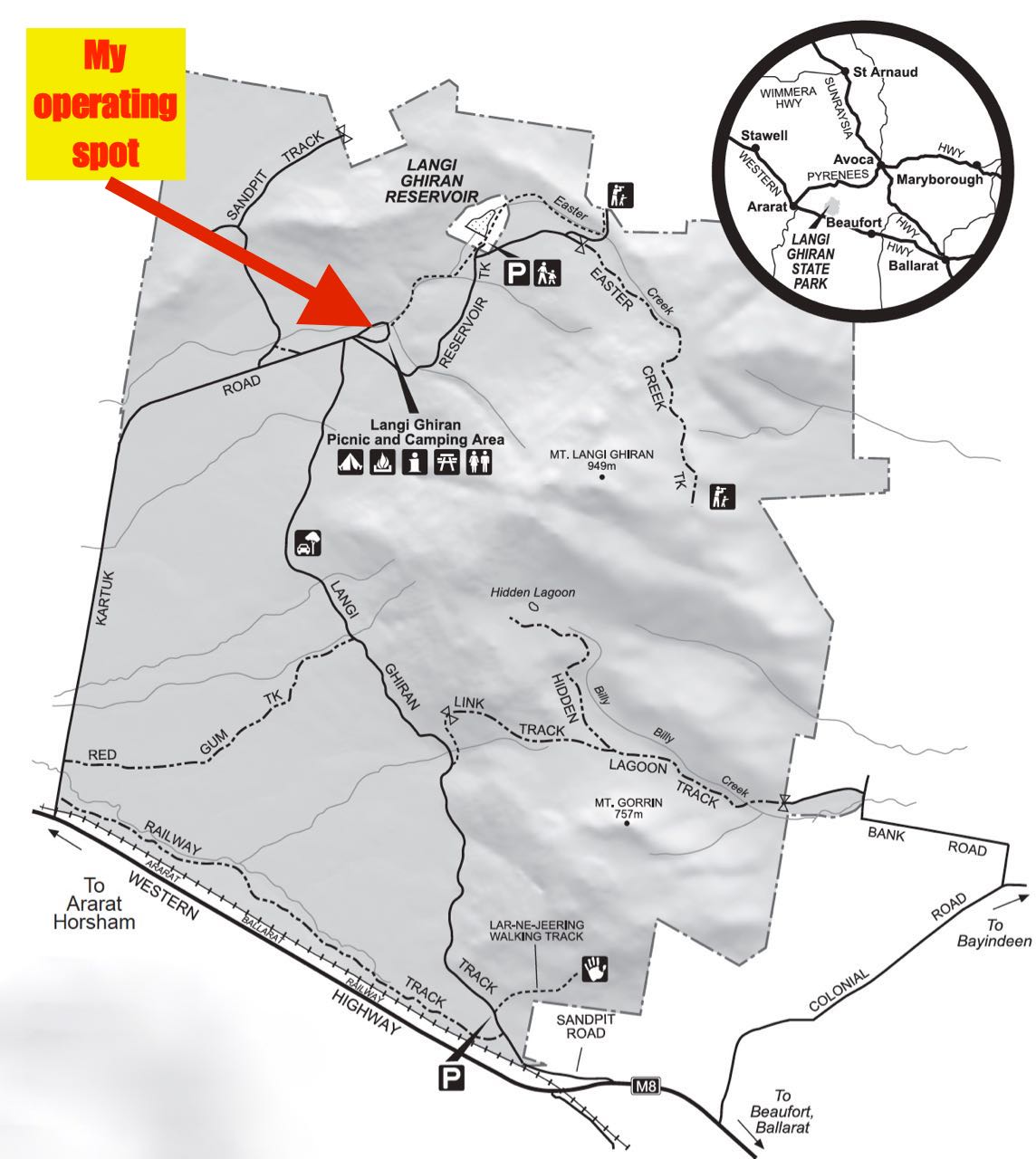
The park is well signposted on the Western Highway.  I entered the park via Kartuk Road, which took me to the Langi Ghiran Picnic and Camping Area.

Langi Ghiran ‘Lar-Ne-Jeering’ is Djab Wurrung aboriginal language for ‘home of the black cockatoo’, referring to the Yellow Tail Black Cockatoo.  The park which is 26.95 km2 (2,965 hectares) in size, is dominated by rugged granite peaks and gentle sloping woodlands.  The park was established in December 1984.  If you are keen you can take the 2km walk to Mount Langi Ghiran where you can enjoy a view of ancient Red Gums on the surrounding plains skirted by Mount Buangor in the east and the Grampians Mountains in the distant west.

Screen Shot 2017-04-13 at 9.09.28 pm

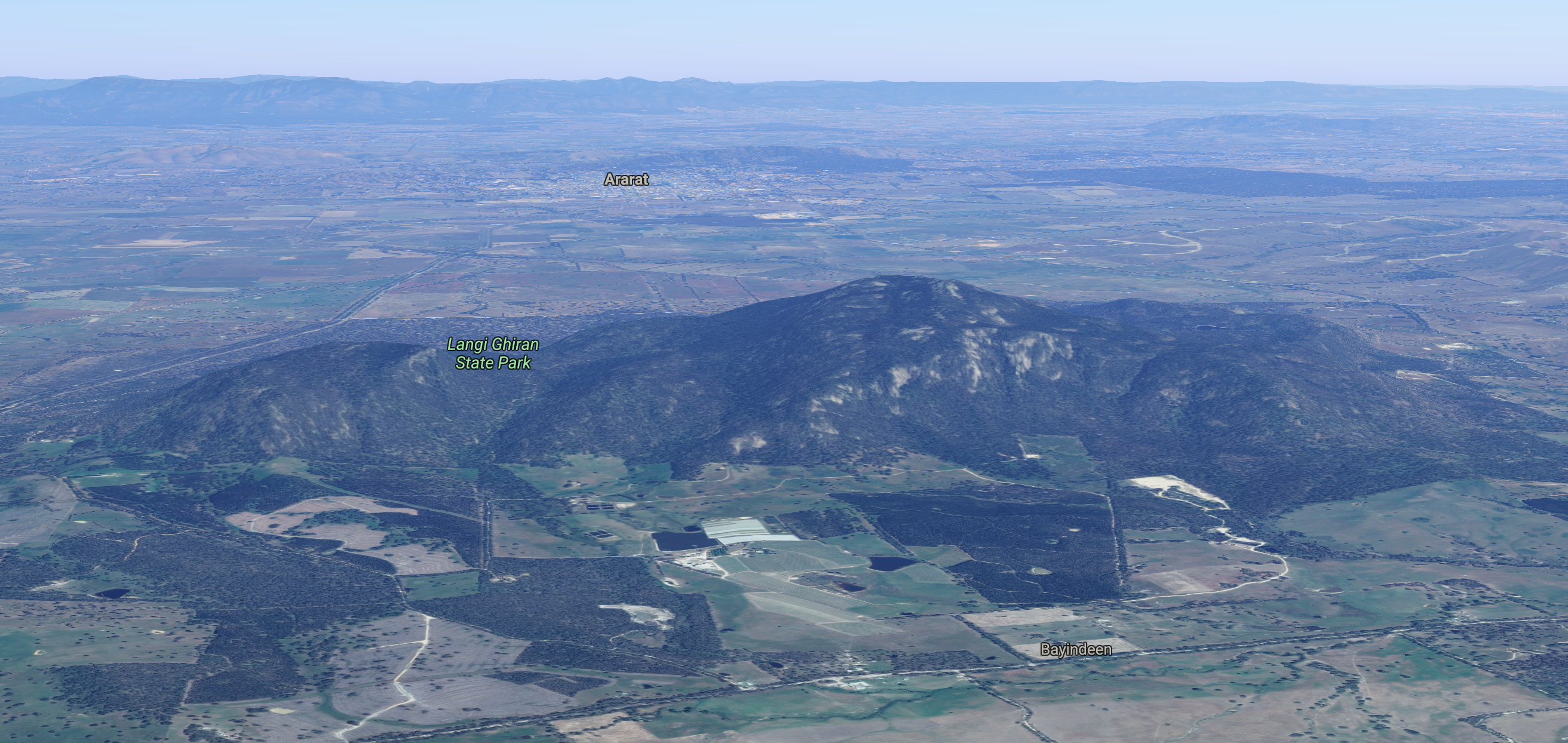
Langi Ghiran State Park, with Ararat in the background.  Courtesy of google maps

River Red Gums, Yellow Box and Candlebark trees are scattered through the woodland, with Messmate, Manna Gums and Red Stringybark in the mountains and Yarra Gums along the waterways.  Some plants unique to this area are the Langi Ghiran Grevillea and the Grampians Bitter-pea.

A number of native animals call the park home including Eastern Grey Kangaroos, wallabies, and echidnas.  Numerous birds can be seen in the park including Powerful Owls and Wedge Tailed Eagles.

The Ngutuwul balug or “mountain people” of the Dwab wurrung tribe occupied this area. Four rock art sites, numerous shelters, scar trees and other artefacts have been found.

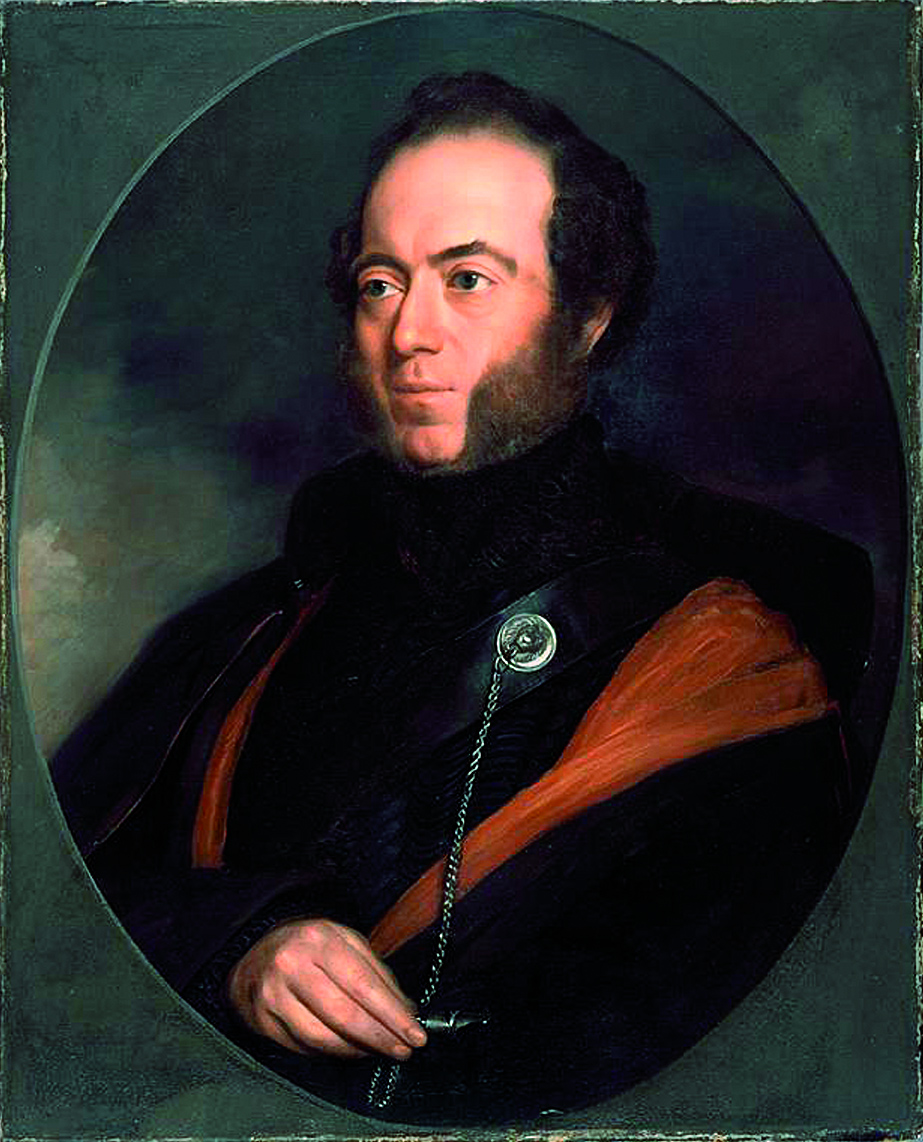
Sir Thomas Mitchell climbed Mt Langi Ghiran on his 1836 expedition through ‘Australian Felix’.  He named the summit Mount Mistake.  The two reservoirs which are located in the park were built from locally hewn granite blocks in 1880.  The main reservoir still forms part of the Ararat water supply.

Mitchell,_Sir_Thomas_Livingstone,_Explorer,_1792-1855,_NLA

Lt Col Sir Thomas Livingstone Mitchell

At the foot of the southern side of Mount Langi Ghiran was a small settlement, which no longer exists, called Colvinsby.  It was a staging point for miners making their way to either Ararat or into the forested area surround Langi Ghiran to explore quartz leads.  There was even a hotel here called the Mount Mistake Hotel, later known as Fay’s Hotel.

I headed to the picnic and camping area.  There were a number of wooden tables and benches, and as the camp ground was relatively empty, I had a choice of a few.

Screen Shot 2017-04-13 at 7.59.28 pm

Unfortunately there was very spotty phone coverage in the park, but I had made a phone call to John VK5BJE prior to entering the park, and John had kindly alerted that I was going to activate Langi Ghiran.  So it was quite fitting that, as was the case at One Tree Hill, John was my first contact in the log with a good strong 5/9 signal.  Next up was park regular Geoff VK3SQ at Beechworth, followed by another park tragic Adrian VK5FANA.  It was a weekday, but netherless I had a steady flow of callers from VK2, VK3, VK5, and VK7.  About 9 contacts into the activation, Mike OE6MBG in Austria came onto the frequency and started calling CQ DX.  Sadly he could not hear me.  As Mike’s signal was quite strong, I decided to QSY up to 7.148.

Fortunately some of the callers had followed me up and I worked a total of 30 stations on 7.148 from VK1, VK2, VK3, VK4, VK5, and VK7.  This included a Park to Park contact with Rob VK4AAC who was portable in the Tewantin National Park VKFF-1218 in Queensland.

Time was marching on, and I really needed to pack up and head off to Ballarat, as I still had one more planned park activation.  But I only had 42 contacts in the log and I needed another 2 contacts to qualify the park for the global WWFF program.  I headed to 3.610 on the 80m band and called CQ.  This was answered by Mick VK3GGG/VK3PMG at nearby Stawell.  This was followed by Jason VK3FNQS, Hans VK5YX, and Peter VK3NAD.

I then lowered the squid pole and removed the links and headed to 14.310 on the 20m band.  I managed to get enough phone coverage as standing on the roof of the Hi Lux, and self spotted on parksnpeaks.  My first taker on 20m was Rolf HB9RDE in Switzerland, followed by Maurizio IU5HIV in Italy.  But despite a dozen or so CQ calls, they were my only takers on 20m.

DSC_6135

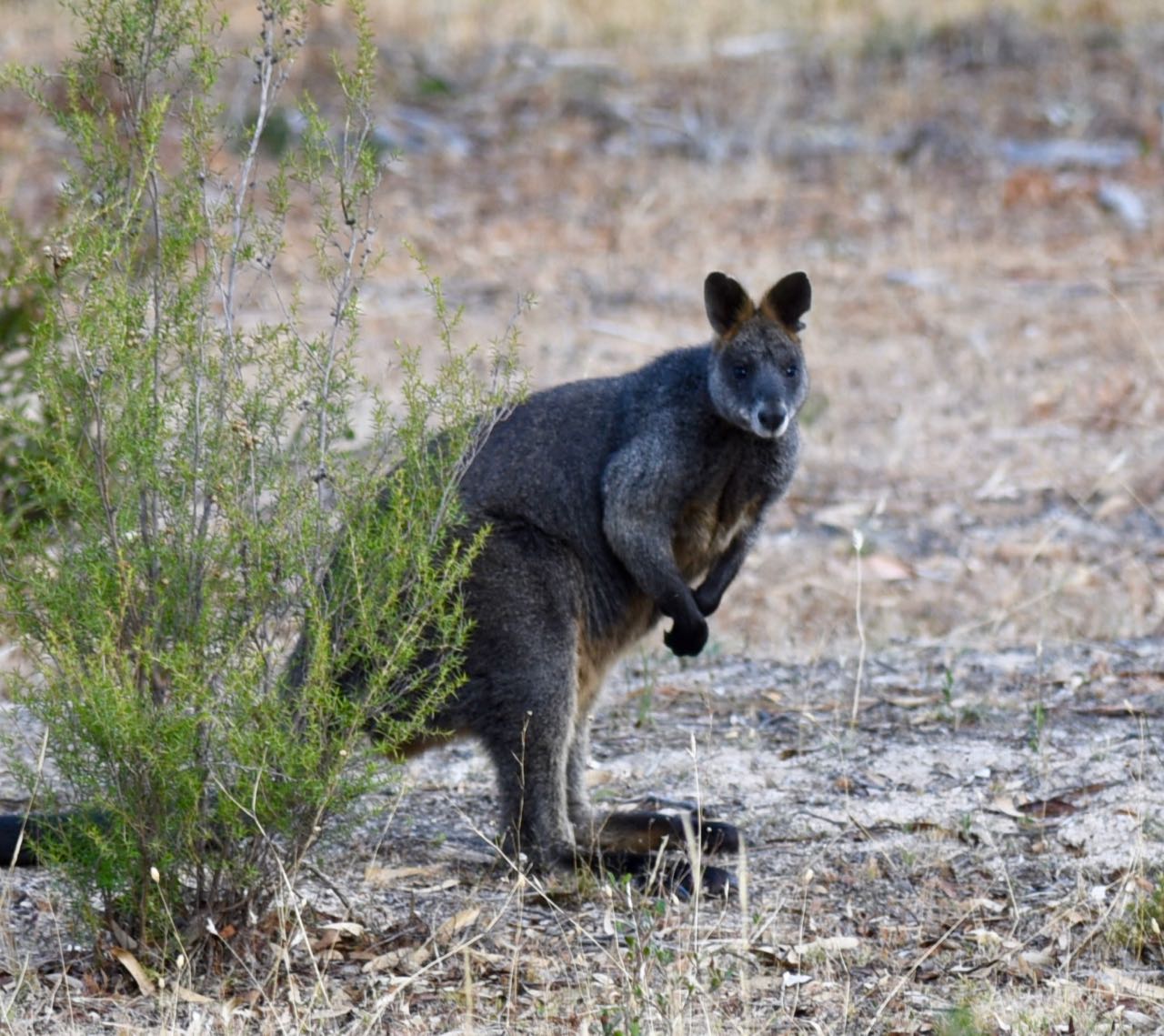
An interested onlooker

So it was time to pack up and head off to Ararat.  I had successfully qualified the park with a total of 49 contacts in the log.

I worked the following stations on 40m SSB:-

  1. VK5BJE
  2. VK3SQ
  3. VK5FANA
  4. VK5HYZ
  5. VK2HHA
  6. VK5VBR
  7. VK3PF
  8. VK5FSPJ/m
  9. VK7JON
  10. VK5WG
  11. VK2NP
  12. VK5FCLK
  13. VK2IO
  14. VK7XDM
  15. VK5FMJC
  16. VK2VKB
  17. VK5KLD
  18. VK1AT
  19. VK2KF
  20. VK2QK
  21. VK2GKA
  22. VK2JAZ
  23. VK5WA
  24. VK2FADV
  25. VK5PL
  26. VK4FEEL
  27. VK2FJPR
  28. VK2LL
  29. VK2MOR/m
  30. VK5FLKJ
  31. VK4AAC/p (Tewantin National Park VKFF-1218)
  32. VK5MBD
  33. VK2HPN
  34. VK3NGD/m
  35. VK7VDL
  36. VK7JGD.p
  37. VK2VOL
  38. VK5FMLO
  39. VK4KUS
  40. VK7DIK
  41. VK2EJW
  42. VK2OQ/m

I worked the following stations on 80m SSB:-

  1. VK3GGG
  2. VK3PMG
  3. VK3FNQS
  4. VK5YX
  5. VK3NAD

I worked the following stations on 20m SSB:-

  1. HB9RDE
  2. IU5HIV


References.

Parks Victoria, 2017, <http://parkweb.vic.gov.au/explore/parks/langi-ghiran-state-park&gt;, viewed 13th April 2017

Heritage Council Victoria, 2017, ‘Former Fay’s Hotel’ Victorian Heritage Database Report.

One Tree Hill VK3/ VS-036 and Ararat Regional Park VKFF-0958

Bright and early on Thursday morning, 6th April 2017, I hit the road, on my way to Ballarat in western Victoria.  My ultimate destination was Foster, south east of Melbourne for the Antennapalooza event.  But as Foster was 870 km away, I had planned to stay overnight at Ballarat, and then drive down to Foster on Friday morning.

I had one planned activation for the day, and that was Mount Buangor State Park.  But all good plans are made to be broken, and I decided to activate SOTA summit One Tree Hill VK3/ VS-036 which is located in the Ararat Regional Park VKFF-0958.

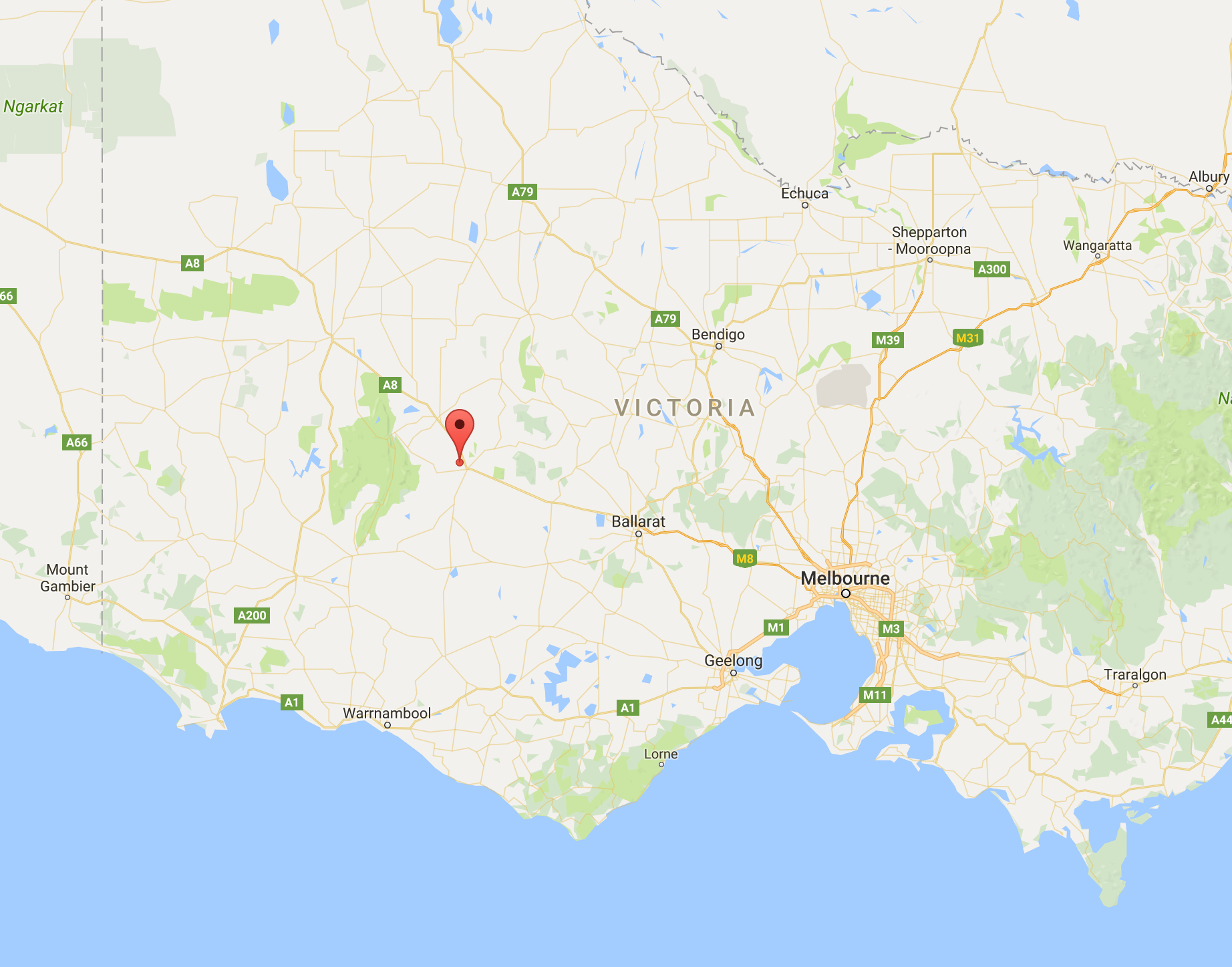
Screen Shot 2017-04-12 at 4.37.48 pm

Above:- Map showing the location of One Tree Hill in western Victoria.  Map courtesy of Google maps.

After a 7.00 a.m. start, I stopped off briefly at Coonalypn for a coffee at the newly opened Silo cafe on the Dukes Highway.  This is about 200 km south east of Adelaide.  It was also an opportunity to view the newly completed artwork on the adjacent 30 metre high silos.  This fantastic artwork is the product of Brisbane based artist Guido van Helten. He has imortalised five local Coonalpyn Primary School children on the silos.

For more information check out this link to the ABC News website which includes some time lapse video of van Helten at work…..

http://www.abc.net.au/news/2017-03-25/coonalpyn-silo-artist-guido-van-helten-finishes-project/8380546

I continued on, a further 360 km to the west, crossing the South Australian/Victorian border, until I reached the town of Ararat.  It was 1.30 p.m. Victorian local time, and I had just a further 93 km to go until I reached Ballarat.  So I decided to activate One Tree Hill, which is a nice easy drive up summit for Summits on the Air (SOTA).

One Tree Hill is 569 metres above sea level and is worth 2 SOTA points.  The summit has been activated a total of 12 times by SOTA activators from VK3 & VK5.  I myself have activated the summit four times before.  The first being back in 2013.

https://vk5pas.org/2013/09/13/one-tree-hill-vk3-vs-036/

https://vk5pas.org/2013/09/14/one-tree-hill-vk3-vs-036-night-time-activation/

https://vk5pas.org/2015/12/11/one-tree-hill-vk3-vs-036-2/

https://vk5pas.org/2016/11/21/one-tree-hill-vk3-vs-036-and-ararat-hills-regional-park-vkff-0958/

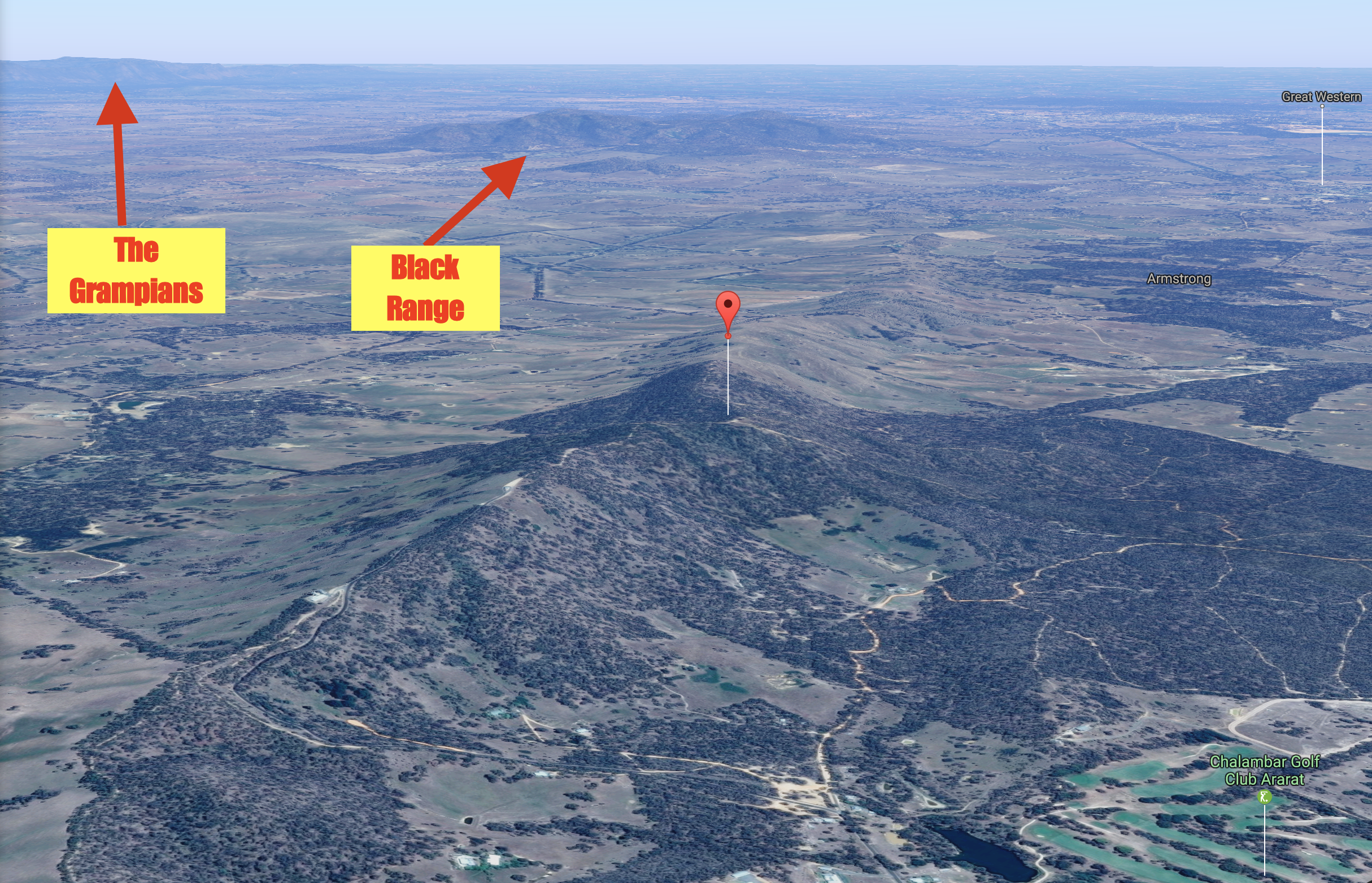
Screen Shot 2017-04-12 at 4.37.19 pm

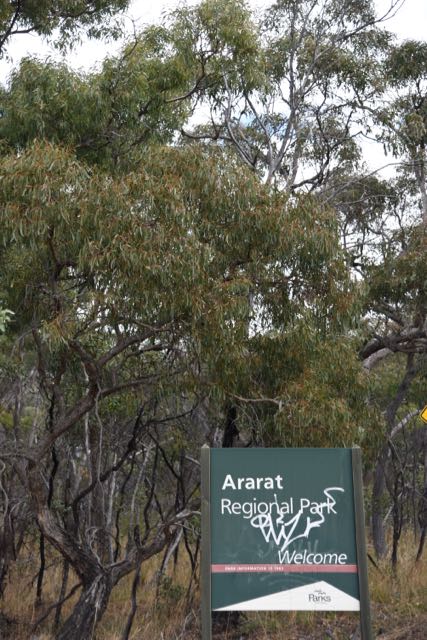
One Tree hill is located on the north western outskirts of the town of Ararat.  I followed Picnic Road and then One Tree Hill Road and soon reached the Ararat Regional Park sign which has come under attack by local vandals.


DSC_6116

Ararat Regional Park comprises three separate, easily accessible blocks.  The Ararat Hills block, which consists of 820 hectares, offers panoramic views from Pioneers Lookout and has a rich gold mining history.  Dunneworty block is 2,670 hectares in size and is made up of gentle terrain to the north.  While Bradys block is 180 hectares in size and has rich Ironbark forests.  The summit is located in the Ararat Hills block.

Screen Shot 2017-04-12 at 5.54.26 pm

The park is home to more than 200 native wildflower and other plant species, including 34 species of small delicate native orchids.  Victoria’s Box-Ironbark forests once covered 3 million hectares.  Sadly these forests and woodlands were cleared by early settlers for agriculture, gold mining, urban development and timber.  Today, only 17% of the original area of Box-Ironbark vegetation remains.

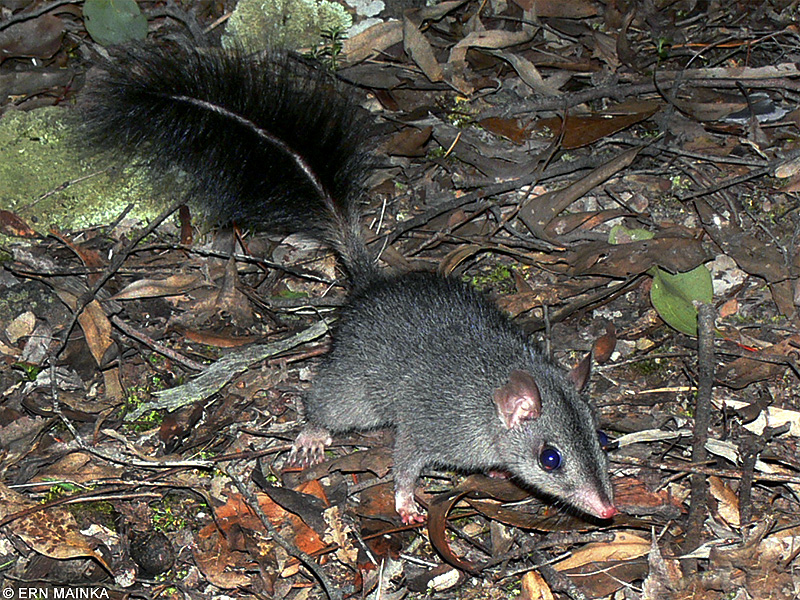
A significant amount of native wildlife can be found in the park incuding the Peregrine Falcon, the threatened Powerful Owl, and the vulnerable Brush-tailed Phascogale, which is a small carnivorous mammal.  Other native animals found here including Western Grey kangaroos, wallabies, Echidnas, Brush-tailed possums and Sugar gliders.

d605-656_tuan

Brush-tailed Phascogale.  Image courtesy of http://www.roundthebend.org.au

Gold was discovered at Ararat in 1857, and relics of this gold mining era are evident in the numerous shallow mine shafts, a mining dam and water-races in the Ararat Hills.  Ararat’s Gum San Chinese Heritage Centre gives an insight into the area’s goldmining.

Edward_Roper_-_Gold_diggings,_Ararat,_1854

The Ararat gold diggings, c. 1854.  Image courtesy of Wikipedia.

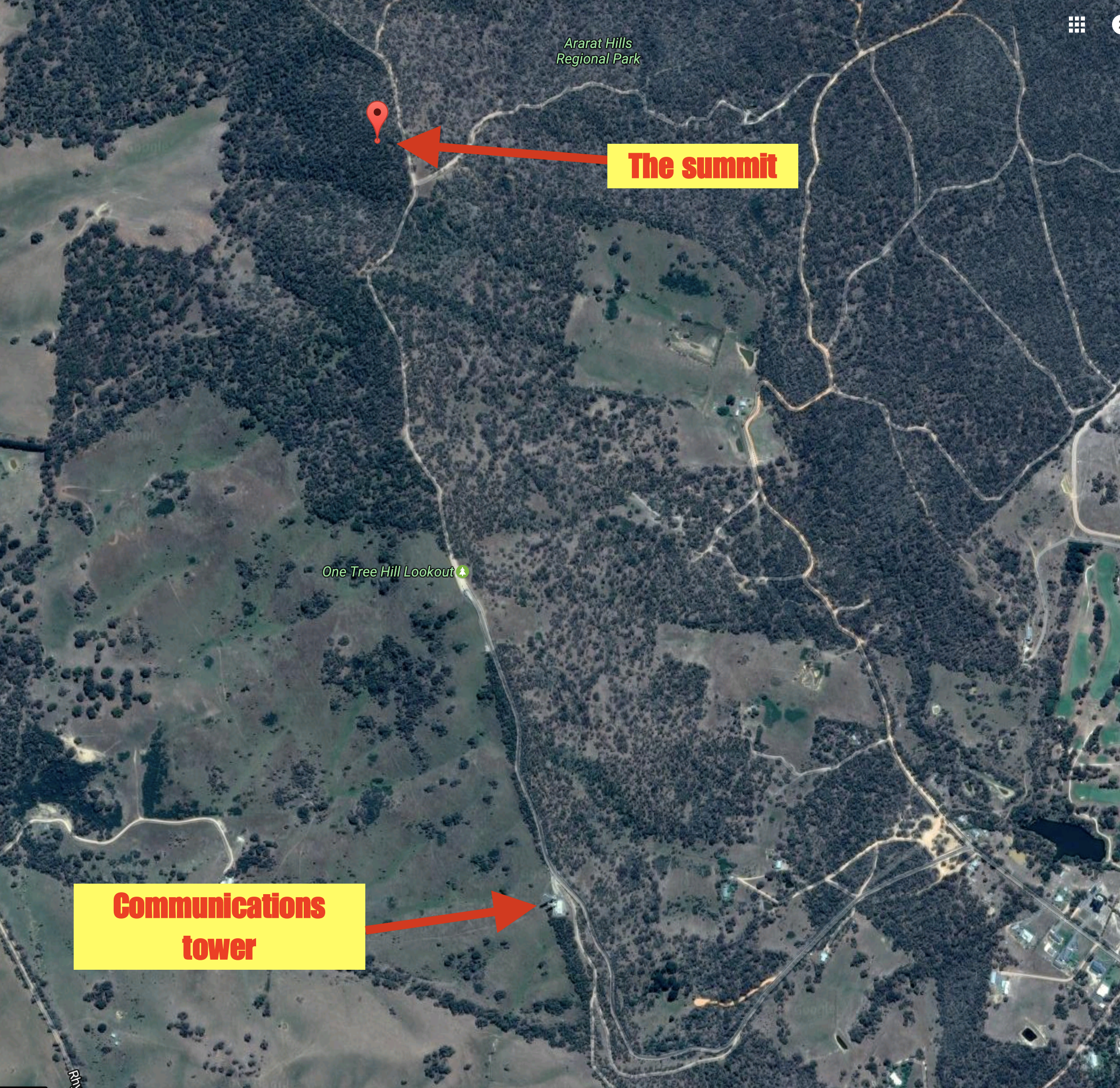
I followed the road up passed the telecommunications tower and on to the lookout.  In just under 2km the One Tree Hill Road climbs nearly 200 metres.  There are some sensational views to be enjoyed here of Ararat township, the Grampians National Park, and the Pyrenees mountains.  Enjoy the views here, as the views from the summit itself are shrouded by the trees.

However, the lookout carpark is technically NOT the summit.  You need to continue along the 4WD track and head north.  The track is quite washed out in many parts and I would not recommend you trying to negotiate it without a 4WD.  If you decide to walk, it is a short walk along the track until you reach the official summit point, One Tree Hill.  A little further up the track is Snake Hill, which interestingly is marked on some maps as being 579 metres, 10 metres higher than One Tree Hill.  And a little further to the north is Napolean Hill.

I’m not sure of the origins of the name of the summit, but there is definitely more than one tree on the summit.

Screen Shot 2017-04-12 at 4.39.14 pm

As this was an easy drive up summit, I had the luxury of the fold up table and deck chair.  I could also use the 44 amp hour power pack and run a little extra power, 40 watts from the Yaesu FT-857d.  I used my normal antenna, the 80/40/20m linked dipole, inverted vee, supported on the 7 metre telescopic squid pole.

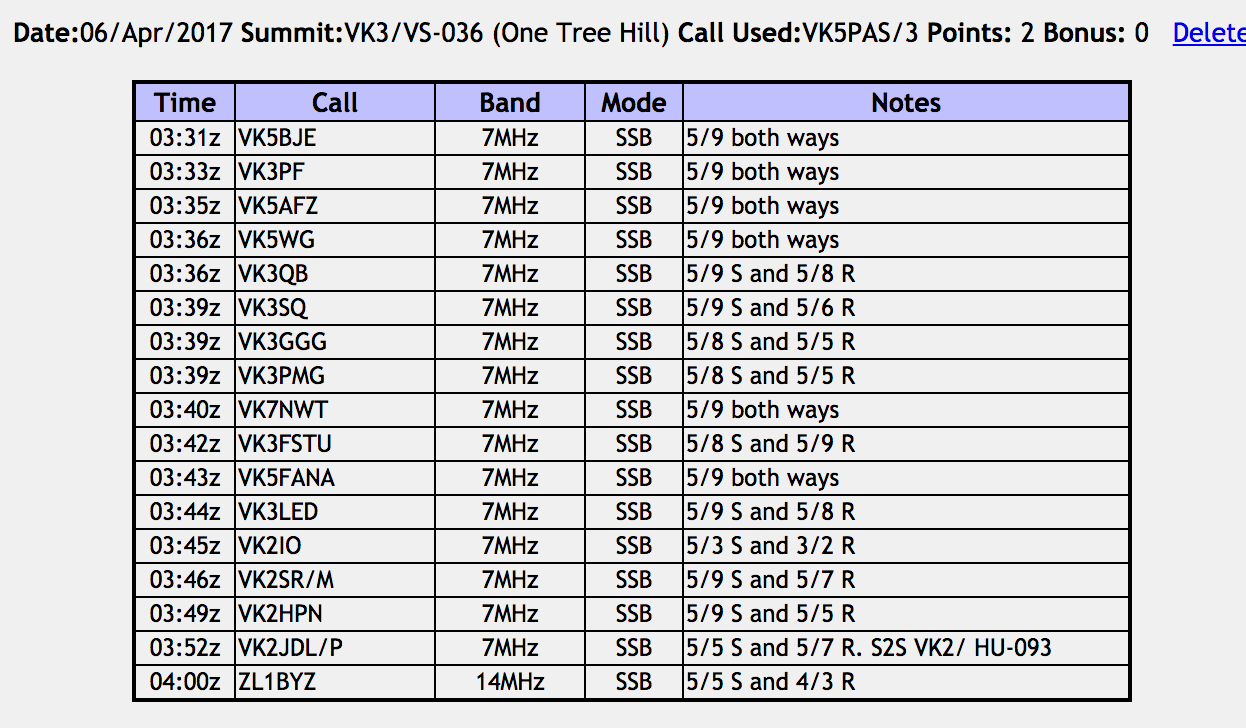
I had telephoned John VK5BJE just before reaching Ararat to let him know that I was going to be on the summit and he had kindly spotted me.  So it was pleasing that John was the first in my log, with a lovely 5/9 plus signal from the Adelaide Hills.  Interestingly, John was number one in my log the last time I activated One Tree Hill.  This was followed by SOTA & Parks guru Peter VK3PF, and then Bob VK5AFZ at Goolwa, south of Adelaide.

As it was a weekday, there was not a mad pileup, but more than enough callers for me to qualify the summit.  Contact number four was with Nev VK5WG in the Mid North of South Australia.  I went on to work a total of 16 stations from VK2, VK3, VK5 and VK7.  This included a Summit to Summit contact with Phil VK2JDL who was activating SOTA peak Mount Elliot VK2/ HU-093, which is situated near Gosford in New South Wales.

DSC_6123

I then lowered the squid pole and removed the links and headed off to 14.310 on the 20m band where I started calling CQ.  This was answered by John ZL1BYZ in New Zealand with a good 5/5 signal.  Sadly, John was my only caller on 20m.

So it was away with the gear and back on the road, heading east towards Ballarat.

I worked the following stations:

Screen Shot 2017-04-12 at 4.30.47 pm


References.

Parks Victoria, 2010, ‘Ararat Regional Park’

Trip to Antennapalooza in VK3

On Thursday 6th April 2017 I headed over to Foster in Victoria to attend Antennapalooza, hosted by the Gippsland Gate Radio & Electronics Club.  I returned home last night, Monday 10th April.

The theme for this year’s Antennapalooza was ‘operating portable’.  I delivered 3 short presentations on operating portable from parks.  I also had a small display table.  Other presenters included Peter VK3PF, Tony VK3XV, Joe VK3YSP, and Ian VK3BUF.

Whilst away I activated 2 summits for the Summits on the Air (SOTA) program, and 8 Parks for the World Wide Flora Fauna (WWFF) program & the VK5 Parks award.  I made a total of 386 QSOs.

Below is a run down on my activations…..

  • One Tree Hill VK3/ VS-036 & VKFF-0958
    • 17 QSOs
    • 1 Summit to Summit
  • Langi Ghiran State Park VKFF-0760
    • 49 QSOs
    • 1 Park to Park
  • Enfield State Park VKFF-0757
    • 22 QSOs
  • Mount Fatigue VK3/ VT-057
    • 26 QSOs
    • 2 Summit to Summit
  • Wilsons Promontory National Park VKFF-0539
    • 59 QSOs
    • 1 Park to Park
  • Shallow Inlet Marine Park VKFF-0749
    • 45 QSOs
    • 2 Park to Park
  • Creswick Regional Park VKFF-0964
    • 48 QSOs
    • 1 Park to Park
  • Mount Buangor State Park VKFF-0766
    • 70 QSOs
    • 1 Park to Park
  • Mount Monster Conservation Park 5CP-149 & VKFF-0800
    • 50 QSOs

Thanks to everyone who called during my activations, and special thanks to those who took the time to spot me on parksnpeaks, the DX Cluster, Facebook, etc.

Thanks also to Chris VK3QB for allowing me to stay at his home during my visit.  This was a great event and I will certainly be doing my very best to be back next year.