I have now qualified for the VKFF Hunter Honour Roll 350 certificate, for working 350 different VKFF references.
Thanks to all the activators for their efforts of getting out and about into the field.
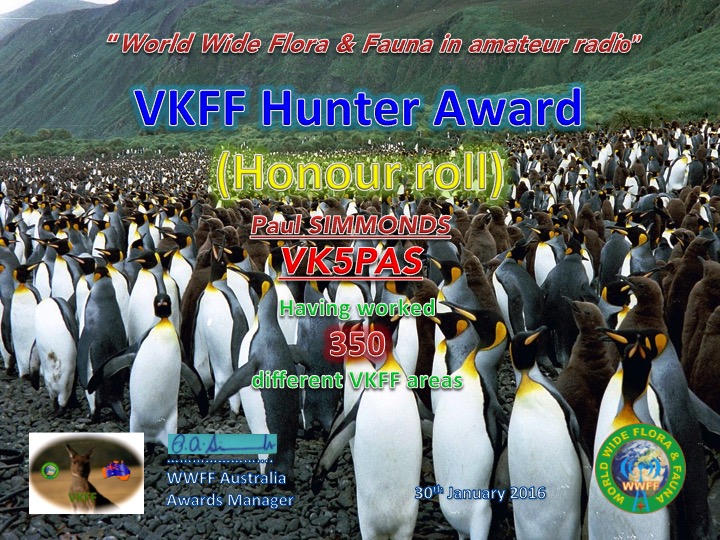

I have now qualified for the VKFF Hunter Honour Roll 350 certificate, for working 350 different VKFF references.
Thanks to all the activators for their efforts of getting out and about into the field.
Yesterday, after lunch I headed down the South Eastern Freeway to the small but very picturesque Conservation Park, called The Knoll (5CP-229 and VKFF-0937). I have activated this park previously as part of the VK5 National and Conservation Parks Award, but the park was recently added to the VKFF program as part of the World Wide Flora Fauna (WWFF) program, so this was to be a unique VKFF park for me.
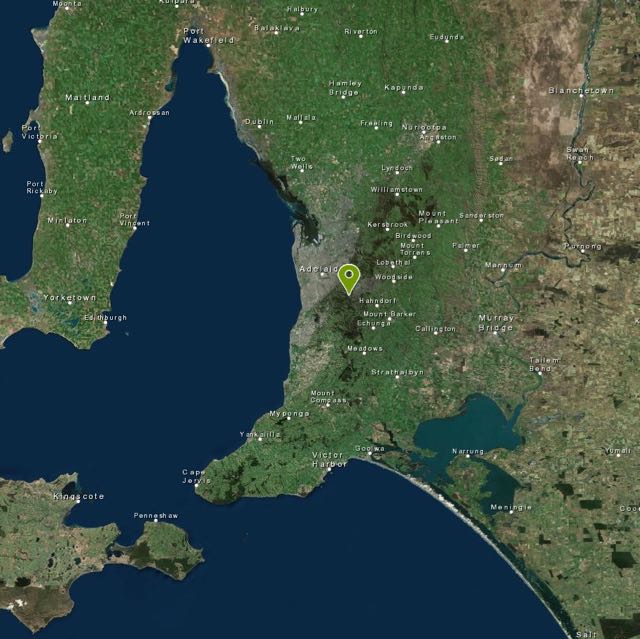
Above:- Map showing the location of The Knoll Conservation Park, near Crafers in the Adelaide Hills. Image courtesy of Location SA Map Viewer.
The park is only a 20 minute drive to the west from my home, so it was a leisurely drive down the South Eastern Freeway, and then along Waverley Ridge Road at Crafers. This road is known as Revenue Ridge Road, as it is policed heavily for speeding. And this particular afternoon was no different, with a uniform patrol car having pulled someone over on the side of the road.
I stopped just short of the park to have a look at the memorial plaque at a Police Heritage site. It remembers the loss of three South Australian police officers who lost their lives whilst fighting a bushfire in the vicinity of nearby Fosters Gully on 19th January 1951.


I found the following newspaper clippings related to the tragedy (courtesy of Trove)…..


The Knoll Conservation Park is located on the eastern side of the intersection of Waverley Ridge Road, Upper Sturt Road, and Sheoak Road. It is a small area of scrub, situated on a Knoll as the name implies.
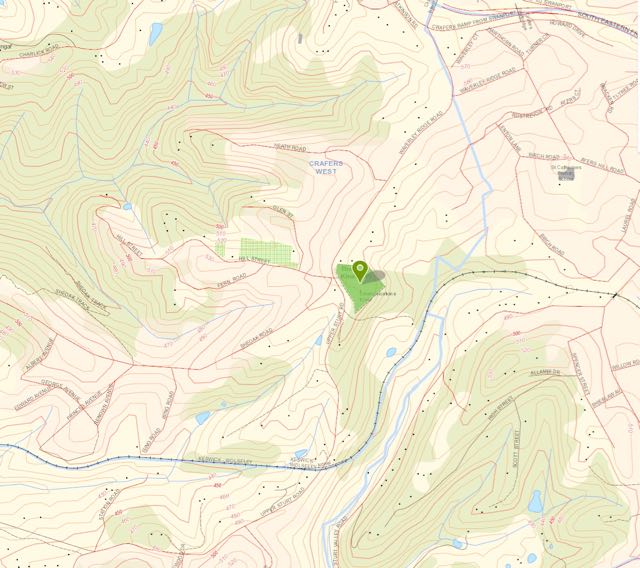
There is a small area out the front of the park for parking. But be careful, as this intersection sneaks up on you, and Upper Sturt Road is extremely busy.


If you make the small walk up the dirt track to the telecommunications installation, you will be rewarded with some very nice views out to the south and to the east through the trees.


I set up in amongst the scrub just off Waverley Ridge Road. I strung out the 20m/40m linked dipole on the 7m squid telescopic squid pole. For this activation I ran the Yaesu FT-857d and 40 watts output. I tried to get a bit of shelter from the sun, as it was a warm 32 degrees C afternoon.
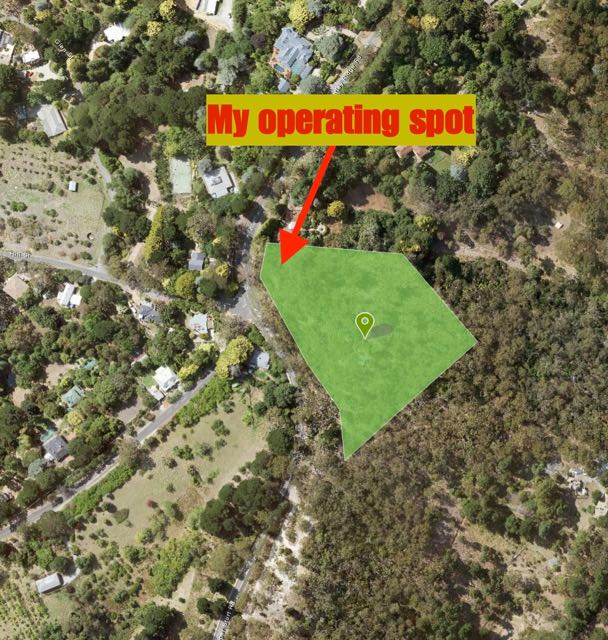
I headed to 7.144 and asked if the frequency was in use, and Stef VK5HSX/1 came back to me. Stef was actually using the frequency, and was portable in the Namadgi National Park, VKFF-0373. Stef was a 4/5 to me, and I was struggling a little with some noise on the band, and static crashes. The noise floor was peaking a strength 5, probably due to the nearby homes that surround the western side of the park.
I then moved up to 7.150 and called CQ, and this was answered by park stalwart VK3PF with a lovely 5/9 signal. This was followed by Mick VK3PMG in Stawell in western Victoria, who was also 5/9. Both Mick and Peter kindly spotted me on parksnpeaks. Thanks guys.
A mini park pile up ensued with callers from VK2, VK3, VK4, and VK5, many of whom were taking advantage of using the special AX prefix for Australia Day. The 40m band was in average condition, with signals down a little from usual.
After working 23 stations on 40m, I tuned across the band and found Andrew AX1DA calling CQ from SOTA summit, Snow Gum Mountain, VK2/ SW-028.


I then moved over to 20m and started calling CQ on 14.310. This was immediately answered by Mark VK4MON with a strong 5/8 signal. I was then quite surprised to be called by Luca IK6QOO in Italy. The 20m band long path has been quite poor over recent months whilst I’ve been out portable, so I was very pleased to being heard in Europe. This was followed by a call from Jaroslav OK2TS in the Czech Republic. Although signals were not strong, we were able to exchange call signs and signal reports.
I worked a further 15 stations from Italy, New Zealand, VK4, VK5, and VK6, before starting to experience some splatter from 14.307 and the Over the Horizon Radar (OTHR). It was nice to have 6 European park hunters in the log, and also Ted VK6NTE, Jonathan VK6JON, and Mike VK6MB. So I lowered the squid pole and replaced the links and started calling CQ on 7.142. I couldn’t get back to 7.144 as there was a European station on 7.145 with quite a good signal.
I was pleasantly surprised to have Gerard VK2IO come back to my CQ call. Gerard was activating SOTA peak, Mount Kembla, VK2/ IL-015, and had a strong 5/8 signal to The Knoll.
I worked a further 16 stations from VK1, VK2, VK3, VK4, and VK5, before having one last tune around the 40m band before going QRT. I found Lewis VK6FLEW on 7.140 calling CQ from SOTA summit, Mount Randall, VK6/ SW-039. It was quite a struggle with Lewis, but we did make it (4/3 sent and 5/1 received).
It was time to head home for tea, as it was not just after 7.00 p.m. local time. I had a total of 60 contacts in the log, and a unique VKFF park in the bag.
The following stations were worked on 40m SSB:-
The following stations were worked on 20m SSB:-
Yesterday morning I ventured over to Mount Gawler, VK5/ SE-013, near Kersbrook, to activate the summit for the Summits on the Air (SOTA) program, using the special call of AX5PAS for Australia Day. We can only use the special AX prefix three times a year here in Australia, so I almost always try to use it on those occasions.

I have activated Mount Gawler summit a number of times in the past, as it is a very easy summit to access, and just a short 45 minute drive from home through the Adelaide Hills.
There is a trig point at the summit, but this is located on private property. Contact details for Noel and Anne, the property owners, can be located within the SOTA database. They are very friendly people and very supportive of our hobby. Please do NOT enter onto their land without permission. If you don’t have prior permission, the roadway out the front of the property is still well and truly within the SOTA activation zone.
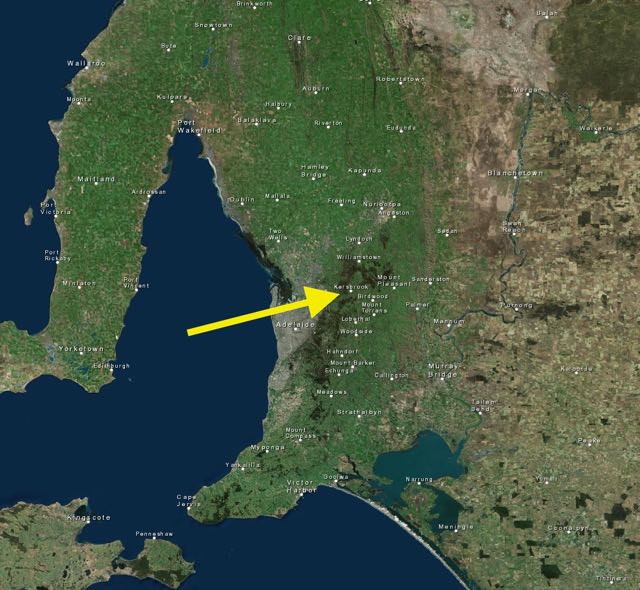
Above:- Map showing the location of Mt Gawler. Image courtesy of Location SA Map Viewer.
Despite the fact that the summit is called Mount Gawler, it is situated quite some distance from the town of Gawler, which is located north of Adelaide (and about 26 km north of the summit). Mount Gawler is situated about 32 kms north east of Adelaide and about 8 kms west of the town of Kersbrook.
The summit is 541 metres above sea level and is worth two (2) SOTA points.
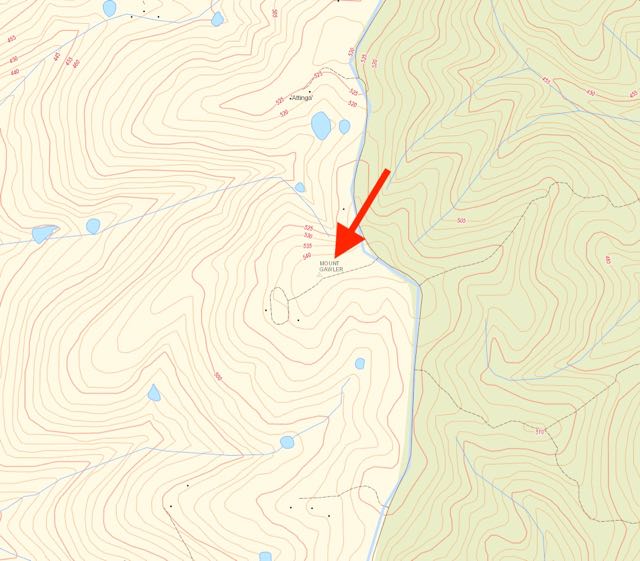
Above:- Mount Gawler summit contour map. Courtesy of Location SA Map Viewer.
As I drove down Checker Hill Road, the summit soon came into view. Checker Hill Road is used as part of the King of the Mountain hill climb for the Tour Down Under cycling event. It is much easier driving down this hill, than cycling up it!
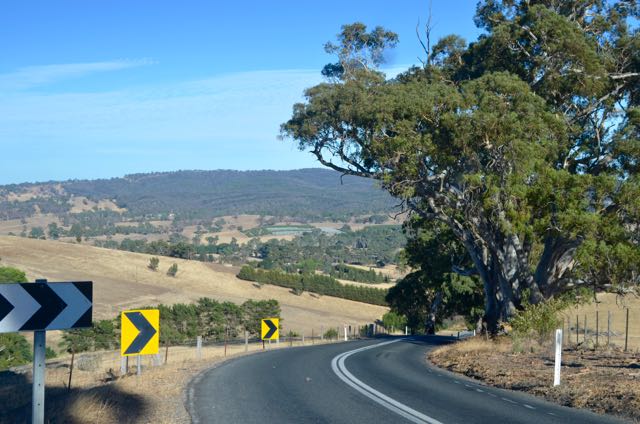
I then travelled west out of Kersbrook until I reached the intersection of Kersbrook Road and Mount Gawler Road, where I turned left to head up Mt Gawler Road


Mount Gawler is situated in the fire ravaged area of the Sampson Flat fire from January 2015. A major bushfire burnt in this area for around 8 days, blackening more than 112,500 hectares (31,00 acres) and destroying 38 houses. Fortunately Noel and Anne’s home survived (but only just). I last activated Mount Gawler in March 2015 with Tom VK5FTRG, and I was pleasantly surprised to see a large amount of regrowth of the trees on the fireground.


I then reached Noel and Anne’s property and drove in through the front gate which they had kindly left open for me. I had spoken with Anne a few days before, seeking permission to operate from the trig point.
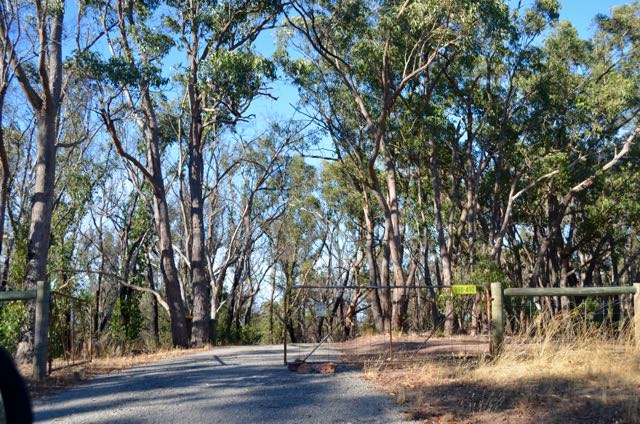
I was set up and ready to go by around 2210 UTC (8.40 a.m. South Australian local time). I set up at the trig point, using a large moss rock as a chair, and another moss rock to rest the Yaesu FT-857d on. It was a beautiful morning, with an expected top temperature for the day of 33 degrees C. There was quite a bit of cloud cover, so that was screening me from the sun, with the temperature sitting on a very comfortable 21 degrees C, with a slight breeze.
For this activation, I ran about 30 watts, the 20m/40m linked dipole, and the 15m dipole, supported on a 7 metre heavy duty telescopic squid pole.
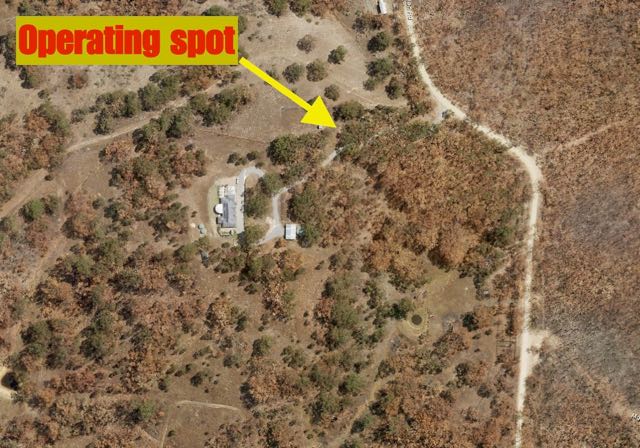
Above:- Aerial image showing my operating spot. The dirt road is Mount Gawler Road. The fire damage is still evident. Image courtesy of Location SA Map Viewer.
There are some very nice views of the northern suburbs of Adelaide and beyond from the summit, including the Salt Crystalisation Plains at St Kilda.
I commenced calling CQ on 7.090 and this was soon answered by Andrew AX3BQ with a beautiful 5/9 signal from Melbourne. This was followed by Peter VK3FPSR (5/9), Ron AX3AFW (5/9), and then Scott VK7NWT (5/9). I was happy…I had qualified the summit.
My 7th contact for the activation was with Greg VK5LG who lives nearby in the Adelaide Hills. As you would expect, Greg had a very strong signal, and indicated that he might come up and pay me a visit. Unfortunately this was short lived, as it was quashed by Greg’s ‘Minister of the Interior’ as there were other things planned.
Band conditions on 40m were less than ideal. I would describe them as average. And although there were 5/9 signals coming in from the eastern seaboard, signals were down. Most callers were from VK3, followed by VK2 and VK4. Sadly, there were very few VK5 SOTA chasers.
It was pleasing to see a number of hams using the AX prefix to celebrate Australia Day. This included Marcus AX3TST/5 who was running his double sideband kit radio, and sounding great.
I worked a total of 32 stations 0n 40m SSB, before heading over to 20m, where I commenced calling CQ on 14.310. This was answered by Mr. Reliable, Rick VK4RF/VK4HA with a booming 5/9 signal from Burpengary in Queensland. Whilst Rick and I were talking, a USA station came up on the frequency. Despite the fact that he was very light, I decided to QSY down to 14.305, where I started calling CQ again. My CQ call was answered by Tony VK2VIC, followed by Steve VK7CW and then Mark VK1EM.
But conditions on 20m were rather poor, with a lot of QSB present on most signals. This was particularly noticeable with the VK3 callers. They were very strong one moment, and then gone the next. I worked a further 5 stations from Vk1, VK2 and VK3, before trying my luck on 15m.
I headed for 21.244 and started calling CQ and this was almost immediately answered by Steve VK5SFA with a 5/9 ++ signal to Mount Gawler. This was followed by Cliff VK2NP who was also 5/9, and then Stuart VK5STU. Stuart informed me that he and Nigel VK5NIG would venture up to Mount Gawler to say g’day and do a little SOTA work themselves.
The 15m band seemed to behaving itself a bit better than 20m, with some good signals coming in from all across Australia (VK1, VK2, VK4, VK5, and VK6). I worked a further 14 stations after Stuart, including a contact with Phil NS7P in Oregon, USA. Phil was quite weak to me (5/3) and I was even weaker (3/3), but we made a successful contact. Looking at Phil’s QRZ.com page, it is evident that he is a SOTA enthusiast. Another USA station, I think a W7, was also calling me. But sadly, we just couldn’t quite make it.
I also spoke with Gerard AX2IO who was activating SOTA peak Bulgo Hill VK2/ IL-017 which is located within the Royal National Park VKFF-0362. Gerard was my first Summit to Summit contact for this activation (5/7 both ways).
I just snuck in Ian VK5CZ from Clare prior to the UTC rollover, and worked Ian again for the new UTC day giving him another 2 SOTA points. My final contact on 15m was with Mike VK5SF from the northern suburbs of Adelaide, with a very very strong signal.
It was at this time that Stuart VK5STU arrived at the summit, and this was soon followed by Nigel VK5NIG. We stopped briefly for a chat, and Stuart and Nigel then commenced erecting their antennas. They both use ropes and weights to get their antennas high up into the trees, whereas I use the squid pole.
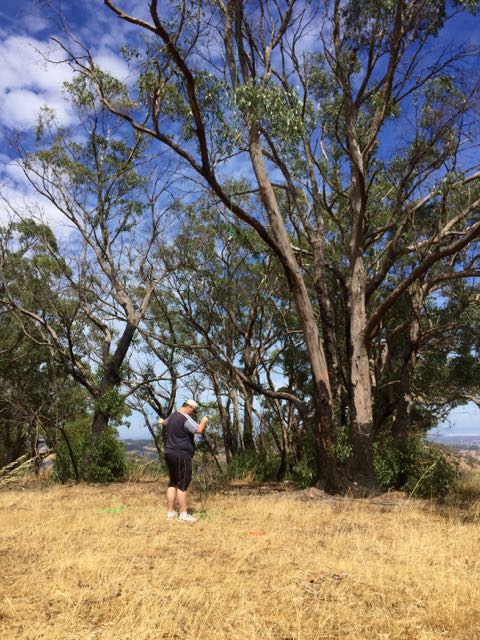
Above:- Stuart VK5STU, in the process of erecting one of his antennas.
Whilst Stuart and Nigel were busy, I tried 20m for any SOTA chasers after the UTC rollover. I called CQ on 14.305 and this was answered by Andrew VK2MWP, followed by Brett, and then Murray VK7ZMS. Signals were well down compared to normal, and I worked a further 10 stations after Murray, from VK1, VK2, VK4, VK6, and VK7. The strongest signal was from my old mate Ted VK6NTE in Western Australia.
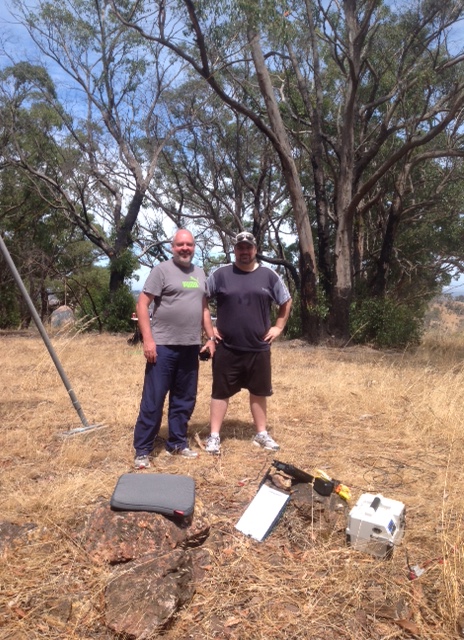
I also spoke again with Gerard on VK2/ IL-017 and VKFF-0362. I was actually in the process of connecting the links on the dipole when Gerard called in. So, with one link in, and the dipole laying on the ground, it was a scramble to get the squid pole back up in the area before Gerard disappeared. It was great to get another Summit to Summit contact with Gerard on a 2nd band. Gerard and I were receiving each other a little weaker here on 20m compared to 15m (5/3 sent and 5/4 received). Stuart and Nigel also took a break and worked Gerard.


I then headed to 40m for the last time, to see if I could give some of the SOTA chasers a few extra points for the new UTC day. I called CQ again on 7.090 and this was answered by Adrian VK5FANA on the Yorke Peninsula. Although Adrian was not his normal 5/9, he was still very readable, as the noise floor on the summit was incredibly low. I worked a further 5 stations and was just about to go QRT when I was called by Tony AX3VTH who was activating the Yarrawonga Regional Park, VKFF-0981. Tony was not his normal booming 5/9 signal, but this was just due to poor band conditions.
I packed up my gear, and then sat down under the shade of some gum trees for a chat and some ‘war stories’ with Stuart and Nigel, who worked the occasional station, including Richard VK5ZRY who was portable in the Roonka Conservation Park, VKFF-1090. Being a park tragic, I couldn’t help myself, and worked Richard on Nigel’s gear.
I then left the boys to play radio, and I headed home for lunch. I had a total of 82 contacts in the log, despite band conditions being rather average.
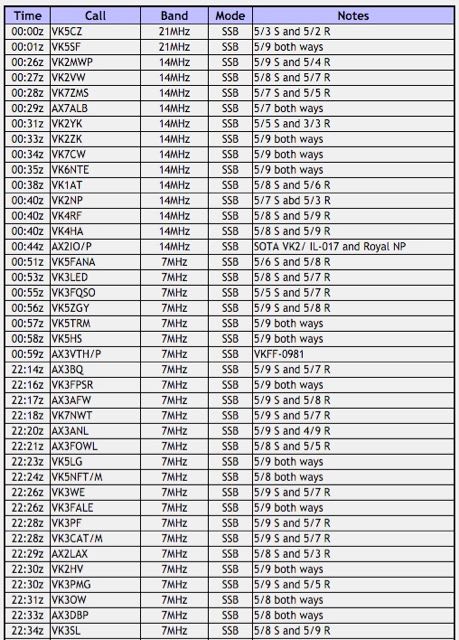
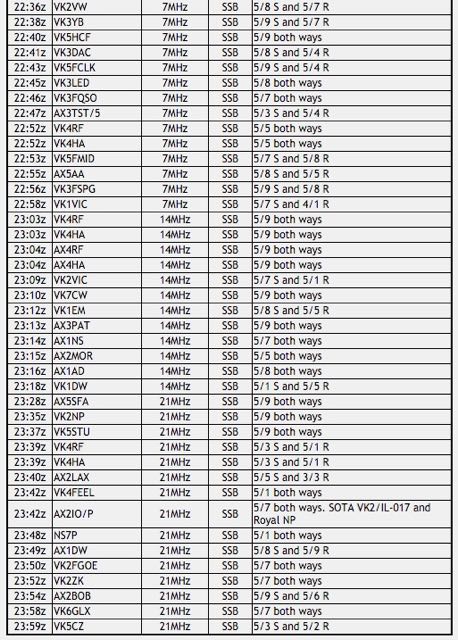
The following stations were worked:-
Here is a short video which Stuart VK5STU put together……..
I also received my latest Summit to Summit (S2S) Award for the Summits on the Air (SOTA) program. It is for the acrual of 1000 S2S points.

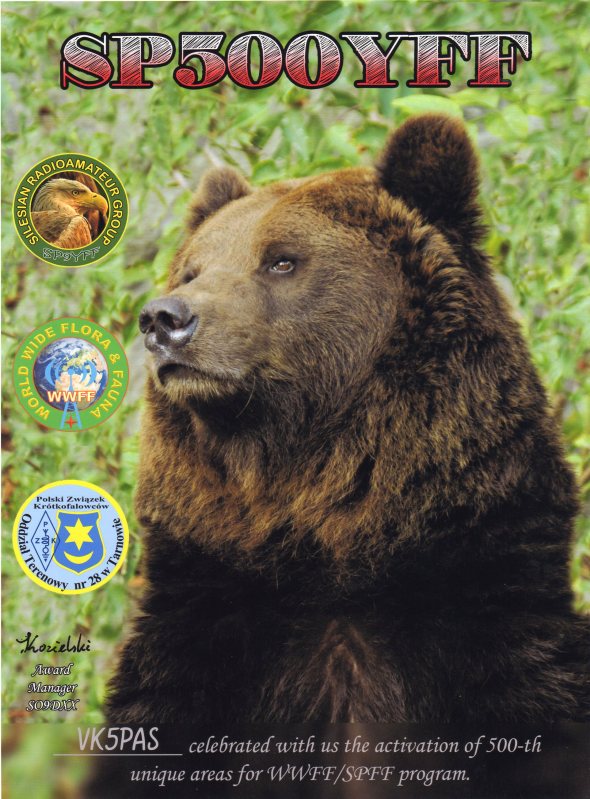
Whilst I was away in Swan Hill, I received the following award certificate via email for the World Wide Flora Fauna (WWFF) program. The certificate is issued by the Silesian Radio Amateur Group, to celebrate the activation of the 500th Polish WWFF protected area.
Many thanks to Peter SO9DXX, the award manager and art designer.
For the third Friday afternoon/evening activation event for the VK5 National and Conservation Parks Award, held on Friday 15th January 2016, I headed out to the Ettrick Conservation Park, VKFF-1029.
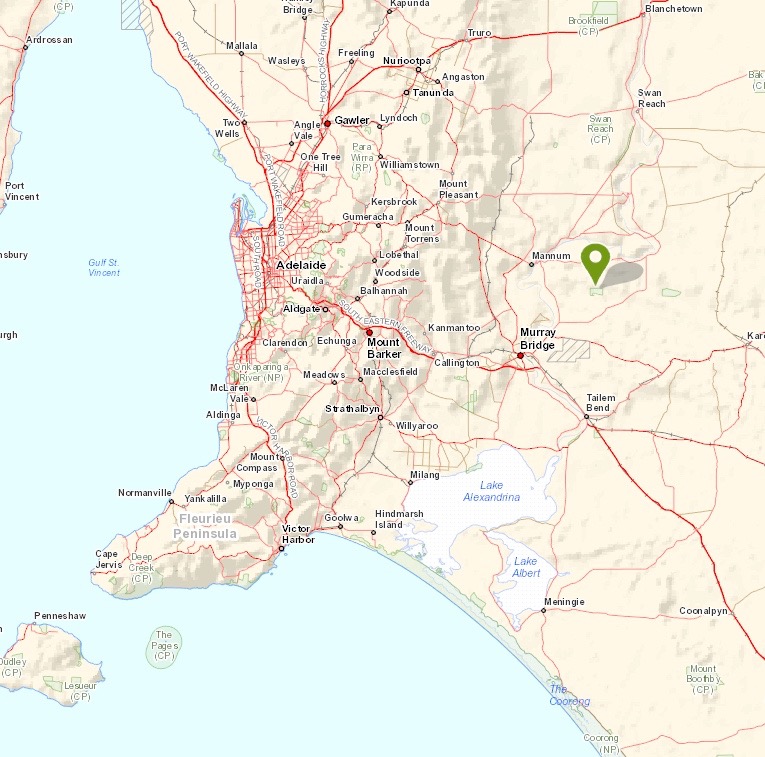
Above:- Map showing the location of the Ettrick CP in the Murray Mallee. Image courtesy of Location SA Map Viewer.
Ettrick CP is situated about 112 km east of Adelaide and about 32 km north east of Murray Bridge. It is a newly formed park, and was proclaimed on 31st October 2013. The park is about 484 hectares in size and predominantly comprises open mallee and several species of eucalypt. It also contains some of the few remaining examples of tussock grassland in the Murray Darling Basin. A number of vulnerable South Australian birds call the park home, including the malleefowl, Shy Heathwren, Hooded robin, White winged cough, Jacky Winter, Restless flycatcher, Painted Button quail, and the Regent parrot.
The park is NOT signposted, so check your maps prior to leaving home. There is a lot of scrub in this area which can be confused for the park.
I headed east along the South Eastern Freeway and took the turn off onto the Old Princes Highway and then headed north east along the Karoonda Highway, passing the Bowhill Road, and continuing north on Burdett Road. I then turned right onto Glenburr Road. Keep your eyes peeled, as Glenburr Road only has a very small sign indicating its presence.
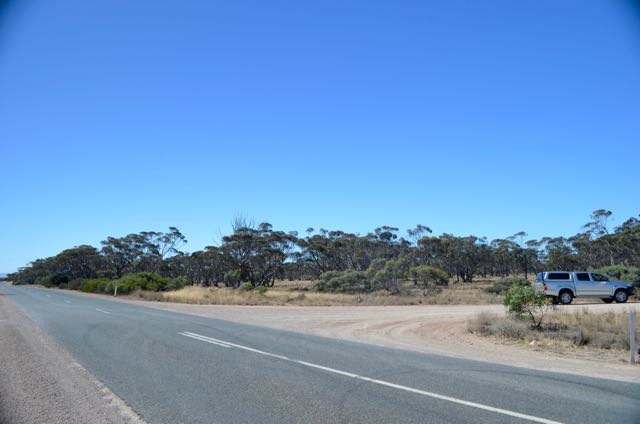
Above:- The Burdett Road and Glenburr Road intersection.
I travelled about 10 km east on Glenburr Road, which is a dirt road, but is in good condition. I then reached the junction of Glenburr Road and Boundary Road. This is the north western corner of the park.
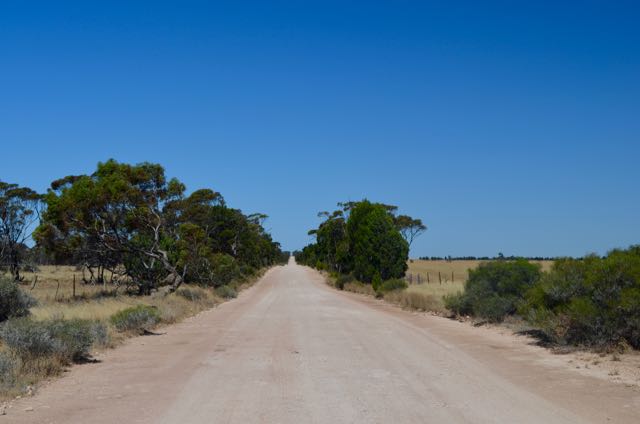
Above:- Looking east along Glenburr Road towards the park
I found that there weren’t too many operating opportunities in the park. There are 2 entry points on the northern side of the park off Glenburr Road. One has an unlocked gate, whilst the other has no gate at all. However both indicated that entry to those parts of the park were closed due to weed eradication issues. I remember Geoff VK5HEL activating this park a long time ago and telling me about the presence of the signs. I wonder if DEWNR have just forgotten to take them down? Anyway, I didn’t want to test my luck, so I headed to the north western corner of the park where there were no signs and found a little clearing in the mallee scrub.
This is another issue. The mallee in the park is very thick, so it is quite difficult to find a clearing, enabling you to stretch out a dipole.
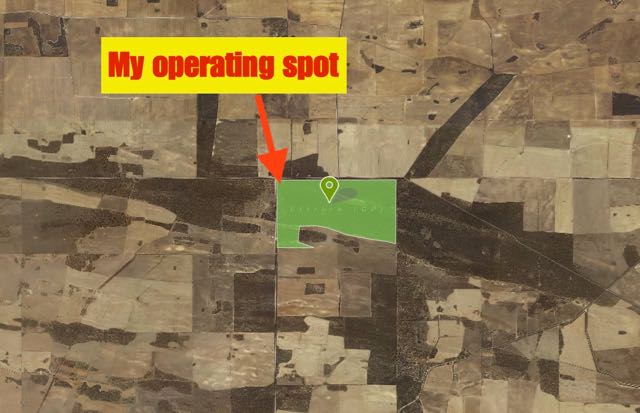
Above:- Map showing my operating spot in the Ettrick Conservation Park. Image courtesy of Location SA Map Viewer.
Much of the land surrounding the park has been cleared for agricultural purposes. It is a stark contrast to see the barren farming land as opposed to the thick mallee scrub. Much of this scrub would have been cleared during the 1800’s. At first the trees were cut down, but settlers soon found that the roots produced regrowth. So the regrowth and the shallow roots were burnt. But this left deep roots which made it impossible for farmers to plough the soil.


Above:- Thick mallee scrub (left) and cleared farming land (right).
This situation had become so frustrating that by 1878 the South Australian Government had offered a £200 reward to anyone who could develop an effective solution to the problem. This resulted in the invention of the stump jump plough which was invented by Richard Bowyer Smith. The plough comprised a number of hinged shares. When the blade encountered an underground obstacle such as a mallee stump, it would rise out of the ground. Weights which were attached to the plough, forced the blade back in the ground when the mallee root was passed.
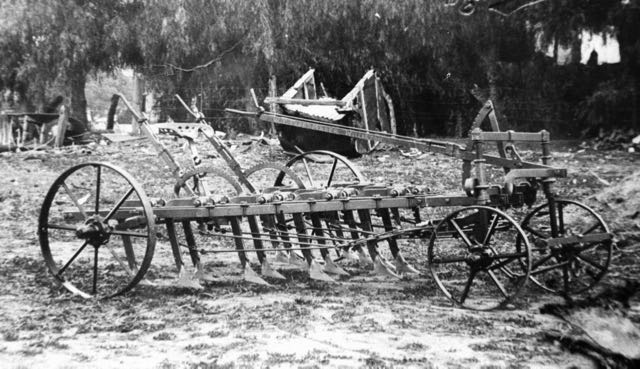
Above:- the stump jump plough. Image courtesy of wikipedia.
I found a little clearing in the scrub and set up my fold up table and deck chair. I ran my normal park operating equipment for this activation, consisting of:-
It was a warm (26 degree C) day, but it was very windy. I lost the squid pole when setting up, as I hadn’t driven the squid pole holder firm enough into the sandy ground. I was flying the VK5 Parks Award flag for the first time and that was certainly moving around in the very strong breeze.
I was set up and ready to go by around 0700 UTC (5.30 p.m. South Australian local time). I headed for my nominated operating frequency of 7.144 and started calling CQ. It took a few calls, but I finally had my first contact in the log. It was Russ VK2BJP with a good 5/9 signal. This was followed by Steve VK3YW who was 5/9 plus, Alan VK3DXE and then Scotty VK7NWT. Contact number 8 was with Roger VK5NWE who was operating portable from Mulyungarie Station near the South Australian/New South Wales border, not far from Broken Hill. Roger was up there doing some electrical work.
My ninth contact was my first park to park for the activation, and it was with John VK5BJE who was operating portable in the Mark Oliphant Conservation Park in the Adelaide Hills. John was quite low down, but due to the non existant man made noise in the park, I was able to hear him very well. John has a great WordPress site, with details about his park & SOTA activations. It can be found at…..
I continued to work the steady flow of callers, battling with a little bit of USA DX on the frequency as well. Conditions on 40m were excellent, with some very strong signals from the east coast. Clearly the close in propagation was not working, as I had very few calls from VK5. And those that did call in were very low down.
Contact number 36 was another park to park. This time it was Adrian VK5AW who was activating the Lyrup Flats section of the Murray River National Park. This was Adrian’s first time out for a Friday VK5 Parks event, so I was very pleased to get Adrian in the log.
Contact number 44, qualifying the park for me, was George VK3MVP, who has recently upgraded his call from VK3FJUD. Congratulations George and what a great signal you had with your StepIR.
A few QRP stations called in. They included John VK7HRS operating with 5 watts (5/5 sent), and Rod VK4FLYT also running 5 watts (5/7 sent). I also worked a couple of mobiles including Peter VK3TKK/m (5/8 sent) and Alan VK3FPBI/m (5/8 sent).
After working a total of 52 stations on 40m I headed over to 20m and started calling CQ on 14.310. First taker there was Mr. Reliable, Rick VK4RF/VK4HA. Rick kindly spotted me which resulted in a few European callers. However, band conditions were very poor, and my only successful DX contact was with Xaver DK4RM. Sorry to Luciano I5FLN and Sergey RA3PCI, who were 2 of the European stations that I heard calling in. Unfortunately we were not able to successfully exchange signal reports, making the contact void. I was pleased though, to get John VK6NU in the log from Western Australia. Propagation on 20m was very disappointing again, and the Over the Horizon Radar (OTHR) did not help either.
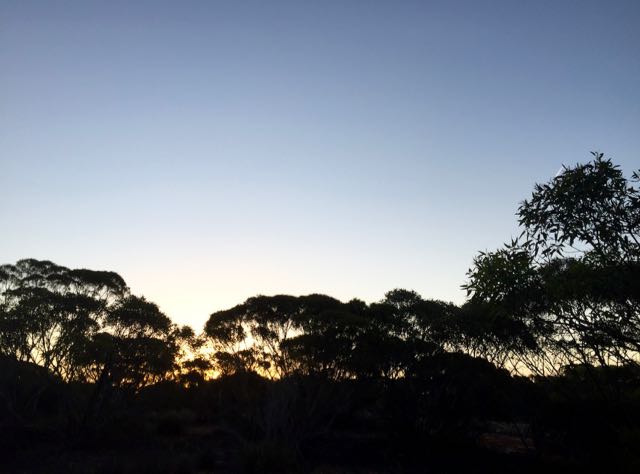
Above:- The sun setting at Ettrick.
I then tried my luck on 15m, calling CQ a few dozen times on 21.244, with no takers. Unfortunately I had no mobile phone coverage in the park, so I was unable to spot myself on parksnpeaks. A quick listen across 15m resulted in me hearing a weak VU2 from India calling CQ, and a moderately strong RK9 working a very weak French station.
So I headed back to 40m and found Mark WC1X calling CQ on 7.133 from northern California. Mark had a good strong 5/9 signal and nobody was coming back to his CQ call so I tried my luck, and got through in the second call. I then booked in to the 7130 DX Net, where I worked a total of 10 stations in New Zealand, French Polynesia, VK2, VK5, and VK7. This included a contact with Peter using a Magnetic loop antenna. Peter was 5/9 plus.
I then left the net and found Rob VK4FFAB calling CQ from the Great Sandy National Park, VKFF-0216, with a very strong 5/9 signal. This was my third park to park contact for the activation.
I then moved down to 7.139 and called CQ and this was answered by Steve VK4QQ who had a strong 5/9 signal, followed by Mike VK6MB who was also 5/9 from Western Australia. I worked a further 19 stations on 7.139 including Owen ZL2OPB in New Zealand, and my two mates Ted VK6NTE and Greg VK8GM. Unfortunately a combination of deliberate QRM in the form of tuning and a very strong DU7 station on 7.140, brought the activation to a sudden halt.
I had a total of 89 contacts in the log, and another unique park under my belt for both the VK5 National & Conservation Parks Award, and the World Wide Flora Fauna (WWFF) program. Thanks to everyone who called in, and I hope I was able to give some park hunters, a new park.
The following stations were worked on 40m SSB:-
The following stations were worked on 20m SSB:-
References.
Wikipedia, 2015, <https://en.wikipedia.org/wiki/Stump-jump_plough>, viewed 16th January 2016
I received this certificate a few days ago for the World Wide Flora Fauna (WWF) program. It is awarded for working a total of 544 different WWFF reference areas.
Many thanks to Pit YO3JW, the WWFF Awards Manager.

Last night I received the following global World Wide Flora Fauna (WWFF) Activator certificates.
The first is for placing number 40 in the Top 44 Activators in the world (based on the number of QSOs).
The second is for placing number 21 in the Top 44 Activators in the world.
Many thanks to Pit YO3JW for the certificates


Yesterday after finishing work, I headed home and packed the 4WD and headed down to the Fleurieu Peninsula for the second 2015/2016 Friday afternoon/evening event for the VK5 National & Conservation Parks Award. Very hot weather, Christmas, and New Year had prevented activations during the past 2-3 weeks on Fridays.
My intended destination was the Mount Billy Conservation Park, VKFF-0912, which is situated about 75 km south of Adelaide, and about 12 km north of the seaside tourist town of Victor Harbor.

Above:- Map showing the location of the Mount Billy Conservation Park. Image courtesy of Location SA Map Viewer.
I have activated Mount Billy once before, back in December 2013, but in recent times the park has been added to the list of qualifying parks for the World Wide Flora Fauna (WWFF) program. A check on WWFF Log Search showed that the park had not been activated before for WWFF, so this was going to be a unique VKFF activation for me, and a brand new park activation for the program.
For more information on my previous activation, please have a look at my previous post…….
https://vk5pas.org/2013/12/29/mount-billy-conservation-park/
I travelled out of Mount Barker, through the little town of Echunga and on to Meadows. I then drove west along Brookman Road until reaching Willunga Hill and then travelled south towards Victor Harbor.
Along the way I spoke with Peter VK5PET who was activating the Bullock Hill Conservation Park (5/5 both ways).
I stopped briefly to have a look at Cut Hill Wall, to the north of Victor Harbor. The stone wall was built in 1868 by Jabez Grimble, under contract to the Central Roads Board. The road was reconstructed in 1961 by the Highways and Local Government Department.
There is a very interesting page detailing the life of Jabez Grimble which can be found on the Encounter Bay Family History Group, at…..
http://encounterbayfhg.org.au/grimble/


I then turned right onto Hindmarsh Tiers Road and travelled west towards the park. I made another brief stop to have a look at the old Hindmarsh Valley school which was established in 1867. It is a magnificent old stone building.


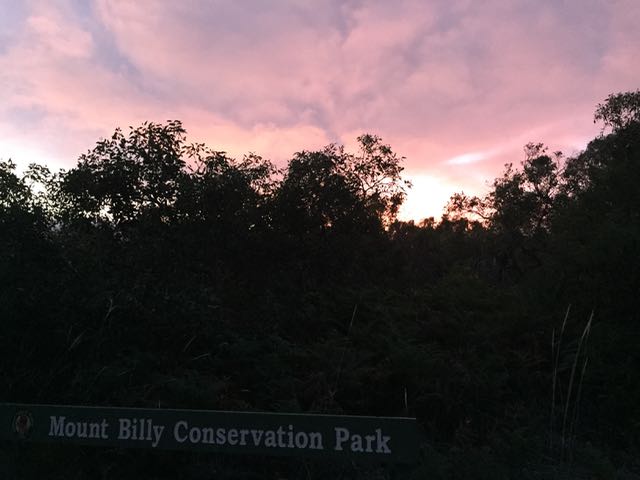
It wasn’t long before I reached the park on my left, on the western side of Hindmarsh Tiers Road. The park is well signposted and there are three gates allowing access to the park (not vehicular access though). I headed for gate number one which is at the northern end of the park.
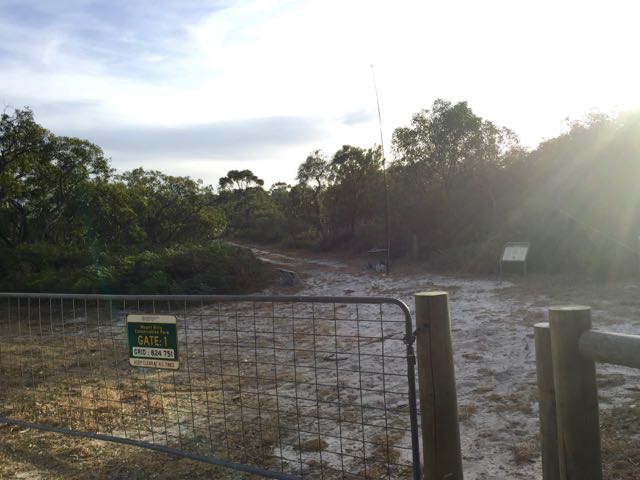
Above:- Gate 1 entrance to the park. With my squid pole visible amongst the scrub.
Mount Billy Conservation Park is about 199 hectares in size and represents some of the best preserved mallee and forest, not only on the Fleurieu Peninsula, but also in the entire Mount Lofty Ranges. Mount Billy summit is located in the southern section of the park, along with the Hindmarsh Valley Reservoir. Sadly, Mount Billy does not qualify for the Summits on the Air (SOTA) program.
The park is, as you would suspect, home to a large amount of native wildlife and native birds. This includes Western Grey kangaroos, the Southern Brown Bandicoot and the endangered Bassian Thrush.


Above:- the Bassian Thrush and the Southern Brown Bandicoot. Images courtesy of wikipedia.
The scrub within the park is very thick and consists of Pink Gum, Blue Gum, Cup Gum, Woodland Sheaok, Banksias, flowering orchids, and ferns.
I set up just inside gate number one. Hats off to DEWNR, who have allowed provision for access by foot to this park.
I set up the deck chair and fold up table under some shade, as it was quite a warm evening. This was just off one of the tracks which runs through the park. I ran the Yaesu FT-857d, 40 watts and te 20m/40m linked dipole on top of the 7 m squid pole for this activation.
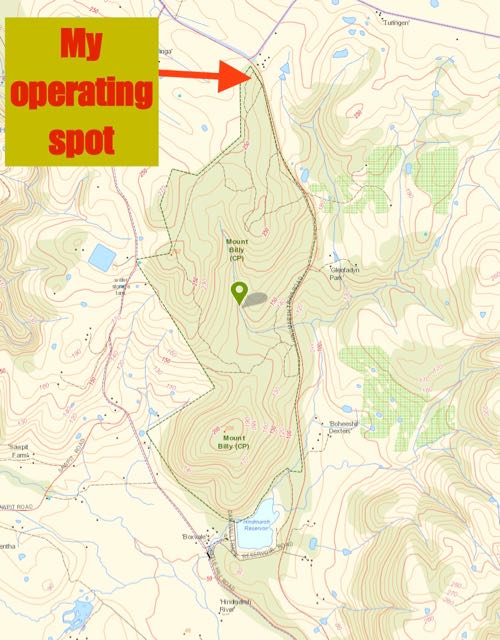
Above:- Map showing my operating spot in the northern section of the park. Image courtesy of Location SA Map Viewer.
I was set up and ready to go by 6.00 p.m. South Australian local time (0730 UTC). I headed for my nominated operating frequency of 7.144 and it wasn’t long before I had my first QSO in the log. And it was a park to park contact, with Les VK5KLV who was activating The Dutchmans Stern Conservation Park, north of Port Augusta in the north of South Australia. Les had a particularly strong 5/9 signal. This was followed by John VK5BJE in the Adelaide Hills, Mick VK3PMG in western Victoria, and Peter VK3PF, all of whom had strong 5/9 signals. The 40m band was in great shape.
As this was a unique park I had quite a few callers lining up to get Mount Billy in the log. The band was in top condition, with some static crashes, but generally very quiet. I experienced just a small amount of QRM from some low down European stations.
About 20 contacts into the activation, I had a few more park to park contacts. This time it was with Theo VK5MTM and Gary VK5FGRY who were activating the Morialta Conservation Park, VKFF-0783. Theo and Gary were exceptionally strong…5/9 plus plus.
I worked a total of 44 stations on 40m. Just the right number to qualify the park for the global WWFF program. I then headed over to 20m after removing the links in the dipole. I commenced calling CQ on 14.244 and this was soon answered by Owen ZL2GLG who was portable in Otago. Owen had a strong 5/8 signal, but unfortunately our QSO was rapidly brought to a halt by ZL9A who started operating split, with the calling frequency on 14.245.
I moved down the band to 14.220 and started calling CQ again and this was answered by Chris VK3PAT who was a sold 5/9. This was followed by Glenn VK2WGW, and then Rob VK3EY. Next up was Rick VK4RF who advised me that Danny OT4V was activating a park on 14.310. I headed up there, hoping to get a park to park with Danny. Sadly, his signal was very very low down and we were unable to make contact. So I headed back to 14.220 and called CQ again.
My CQ call was answered by David ZL1GQ and then Sergey RA3PCI (5/5 both ways). Sadly, Sergey was my only European contact. I was then called by Peter K3BV (VK3FN) who was operating remote from New York. An interesting contact. And following my QSO with Peter, I was called by my friend Bill W1OW in Massachusetts (5/7 sent and 4/4 received).
It was just after 8.00 p.m. local time and had cooled down to just 13 degrees C. I headed back to 40m and booked in to the 7130 DX Net. I worked a total of 8 stations on the Net from VK3, VK4, VK5, VK6, VK7, New Zealand, and French Polynesia. This included a contact with Craig VK6VCK maritime mobile, who was on his boat, about 3 km off shore, off the coast of Rockingham.
I then checked out of the Net and put out a few CQ calls on 7.144 and worked into VK1, VK2, VK3, VK4 and VK5. I started experiencing a bit of QRM from just above me from a number of Japanese stations who were working a T88 in Palau. So I moved up the band to 7.155 and called CQ again. I worked 8 stations before a very strong JA3 came up on the frequency and started talking to another JA who was portable in the Philippines. The Japanese station was 5/9 plus and was wiping everything out, so I took the opportunity of going QRT.
I had a total of 80 contacts in the log.
The following stations were worked on 40m SSB:-
The following stations were worked on 20m SSB:-
Yesterday I celebrated my 51st birthday.
I received a number of birthday wishes via Facebook, which I thank everyone for. They included this little card from my good mate Danny ON4VT (OT4V) in Belgium. Thanks Danny.

Amateur Radio, Short Wave Listening, travel and history
Amateur radio experiences with VK1DA
Brisbane - Australia
german amateur radio station
Summits On The Air
SOTA on the peaks, wilderness QRP and some bushwalking
A fine WordPress.com site
Amateur Radio Adventures
Summits on the Ai
Amateur radio station from Belgium
Radio craft, homebrew, QRP/SOTA, AM
Ego loqui ad viros super montes
My adventures with Amateur Radio and Geocaching!
The rantings of VK2GAZ on his SOTA experiences in Australia
A survivor, with minor cuts and abrasions.
The Art and Craft of Blogging
The latest news on WordPress.com and the WordPress community.
Blog of Justin Giles-Clark VK7TW's SOTA and amateur radio adventures.
Occasional SOTA & Microwave operation
 VK5PAS