VK5 SOTA and Parks activation day

Early this morning I headed off to Crafers and met up with John VK5BJE.  John and I had organised an introduction day to SOTA & the Parks awards, with a planned SOTA activation at Mount Lofty, followed by a parks activation at Belair National Park.  The day was targeting those amateurs who had an interest in SOTA & parks activations, but for whatever reason had not previously completed an activation, or for those that wanted to pick up a few more operating tips.

We met at the Crafers bus interchange just before 8.00 a.m. and we were soon joined by a group of keen amateurs.  It was a very chilly morning, but the weather gods were smiling down on us, as the heavy rain from Saturday had disappeared and although the sky was grey and overcast, the weather was generally fine.  (As I type this, it has recommenced raining here at Mount Barker, so we were very lucky!).  I was also moving a bit slow after my neighbour’s 50th birthday party last night and the consumption of a little too much red wine.

John and I spoke briefly to the group about our respective introductions to SOTA and parks activities, and this was followed by some tips on portable operation.  Of the group, about 50 % had never conducted a SOTA or parks activation, so John and I warned them about pile up management and general operating tips.

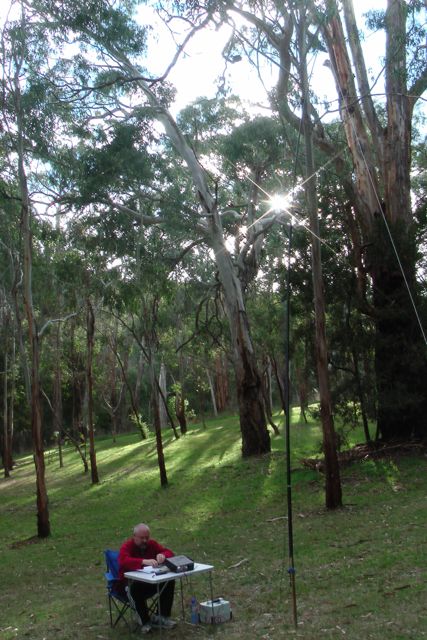
At 8.30 a.m. we headed off in convoy, just up the road, to Mount Lofty summit, VK5/ SE-005 which is also located within the Cleland Conservation Park.  So apart from being a SOTA peak, it also qualifies for the VK5 Parks award.  We parked our cars just inside the main gate to the Mount Lofty summit, and then walked a few hundred metres down a track through the scrub, which leads out to the east.  This track leads to the spot where John and I have operated from previously.  It is away from the crowds at the obelisk and the restaurant, but is well within the activation zone.  So for those that showed a willingness to get on air, we did the ‘walk out, walk back in method’.   We walked out of the activation zone and then back in, after walking downhill for about 600 metres.

Because we had a number of willing hams, lugging gear was not a problem.  So we decided to share the load, and to take a few of the comforts from home, including a small fold up table and chair.  Our operating equipment was a Yaesu FT817nd, 5 watts output and a 40m / 20 m linked dipole, supported on a 7 metre squid pole.  The transceiver was powered by small SLAB batteries.

First in the ‘hot seat’ was Patrick VK5MPJ, who is one of the younger members of the Adelaide Hills Amateur Radio Society.  Well, Patrick didn’t really volunteer….it was more a case of Patrick being pushed into the operators chair.  Conditions appeared to be very good, and as we warned, Patrick was soon greeted with a pile up and had his first SOTA activation under his belt.

Tony VK5FTVR was next up.  Tony is recently licenced and is enjoying retirement.  This was Tony’s first ever SOTA and parks activation, and he performed admirably and also qualified the summit.  Next up was David VK5NQP with his mascot, a little goat, which can be seen in the photographs below.  David has activated parks previously, but I believe this was his first ever SOTA activation.  Well done David.

Mark VK5FMRK then followed.  Again, Mark is just recently licenced, and considering he had the preying eyes of all his peers on his on air performance, Mark did a great job and qualified the summit.  Chris VK4FR/5 then hopped in the driver’s seat, followed by Graham VK5GW.  This was the first SOTA activation for both Chris and Graham.  I think they may have been bitten by the bug.  Keith VK5OQ then qualified the summit.  You may recall Keith’s recent article in AR magazine re activating SOTA peaks in the Falls Creek area.

Not sure how it happened, but the boys encouraged me to warm up the operator’s chair for a short time, as did John VK5BJE, and Nigel VK5NIG.  And our final SOTA activator was Steve VK5AIM.  Again, this was Steve’s very first SOTA activation, although he has been active in the VK5 Parks Award.  Steve won the ‘biggest mascot of the day’ award with his kangaroo which can also be seen in the photographs below.

This slideshow requires JavaScript.

After completing our activation of Mount Lofty just after 11.00 a.m. local time we headed over to the Belair National Park, which was just a short 10 minute drive to the south.  We entered the park via Sheaok Road, and set up in a little clearing, about 500 metres down the track off Sheaok Road.  Belair National Park qualifies for both the VK5 National & Conservation Parks award, and the World Wide Flora Fauna (WWFF) program.

Again we set up the 40 m / 20 m linked dipole and initially used John’s Yaesu FT857 on the 10 watt setting.  John displayed to the guys his LIFePO4 battery with powered the radio, and passed on some tips re the various batteries.  We then moved to the Yaesu FT-450 and 40-50 watts, with the transceiver being powered by a 44 amp hour power pack.  The extra power made our signal just that little bit more readable considering that it was now lunch time, and the 40 m band was going to sleep.

Again Patrick was first up in the ‘hot seat’, followed by Mark VK5FMRK, then Tony VK5FTVR, Keith VK5OQ, and Steve VK5AIM.  A few of the guys managed park to park contacts with Bob VK5FO who was activating Morialta Conservation Park, and David VK5NQP who was activating Charleston Conservation Park.  As Bob and David had activated parks before, they decided after Mount Lofty, to head of to Montacute and Charleston to give the new guys an opportunity of having a ‘park to park’ contact for the VK5 Parks award.


This slideshow requires JavaScript.

The following amateurs took part…..

  1. Tony VK5FTVR
  2. Mark VK5FMRK
  3. Victor VK5KAB
  4. Chris VK4FR/5
  5. Graham VK5GW
  6. David VK5NQP
  7. Patrick VK5MPJ and his Dad
  8. Bob VK5FO
  9. Ray VK5RR
  10. Steve VK5AIM
  11. Keith VK5OQ
  12. Nigel VK5NIG

Many thanks to John VK5BJE for helping me out with the day.  And also thanks to Nigel VK5NIG @ Mr Mount Gawler, for helping out at Mount Lofty.  A lot of the guys walked away from the day, amazed with what 5 watts and a simple little antenna can achieve.

I would also like to say thank you to the many patient SOTA chasers and park hunters that called the activators today.  It was a big learning curve for many of the activators, and I would imagine it would not be easy performing to a crowd behind the mic.

Also thanks to the fellas who turned up this morning to brave the elements.  It was a pretty chilly day, but fortunately we dodged the rain which is the most important thing.  From feedback provided, I think everyone enjoyed themselves.

We are planning on running a similar day in Spring later in the year, so we hope to see some new faces at the next activation day.  I think we all learned today, that there are never ‘silly questions’ and it is all about giving it a go and learning from each other.
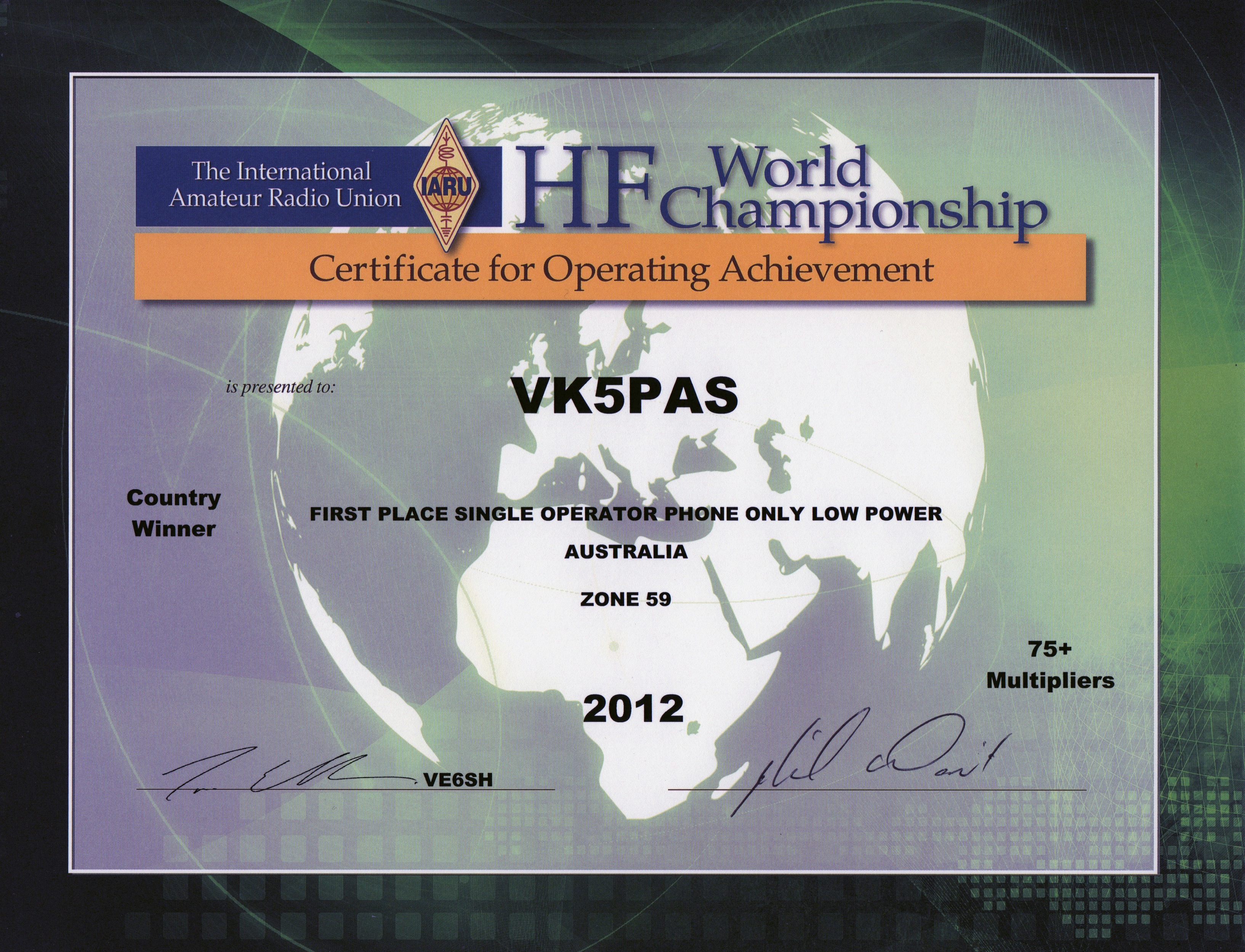
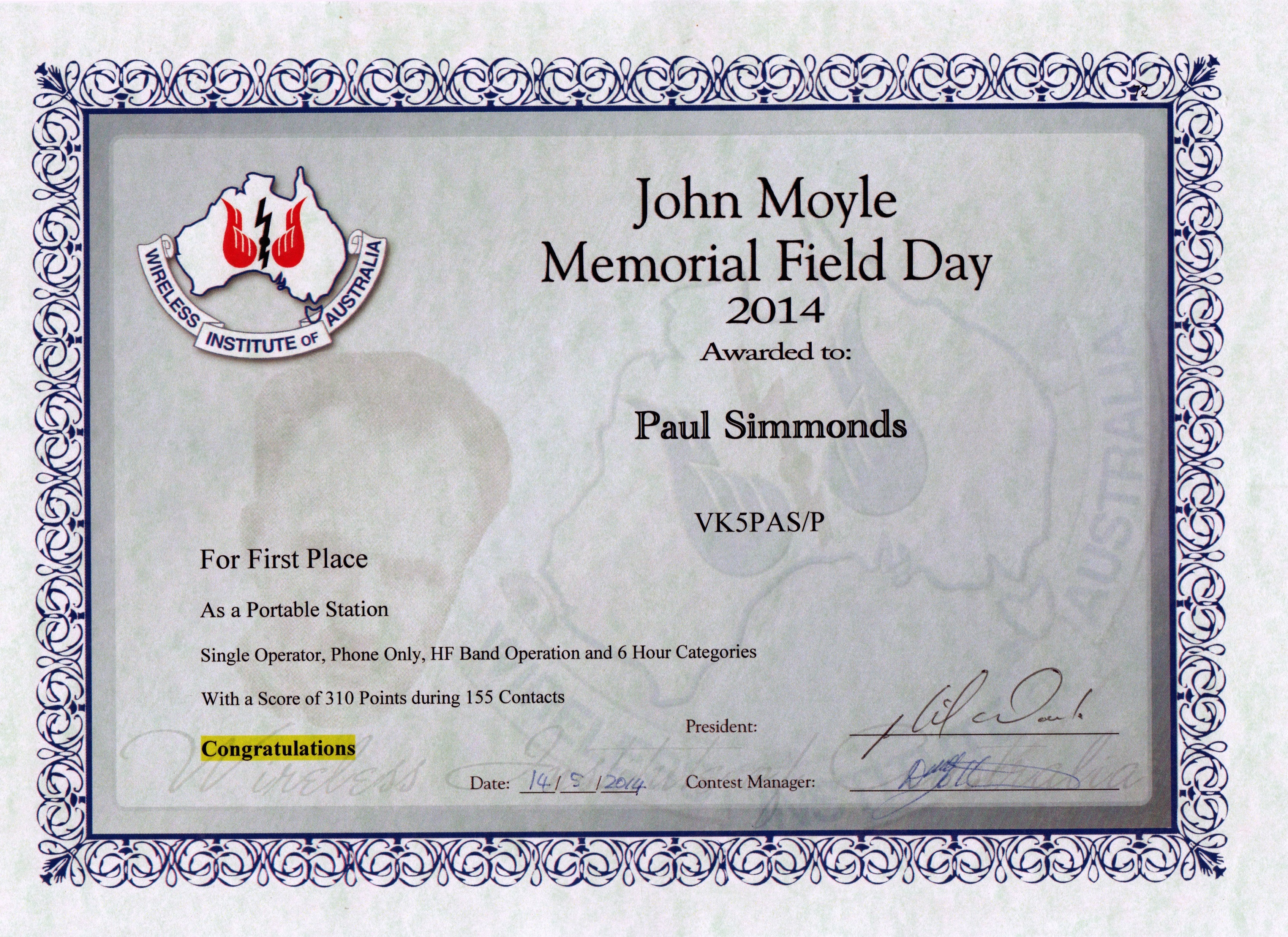
John Moyle Memorial Field Day 2014 results

Another pleasant surprise in today’s mail was my certificate in the 2014 John Moyle Memorial Filed Day.  I received a certificate for first place as a portable station in the ‘Single operator, phone only, HF band operation and 6 hour categories’.

Although it was a wild, wet, and woolly day on the top of Mount Barker, it was a lot of fun, and I will definitely be competing in next year’s Field Day.

Scan 12


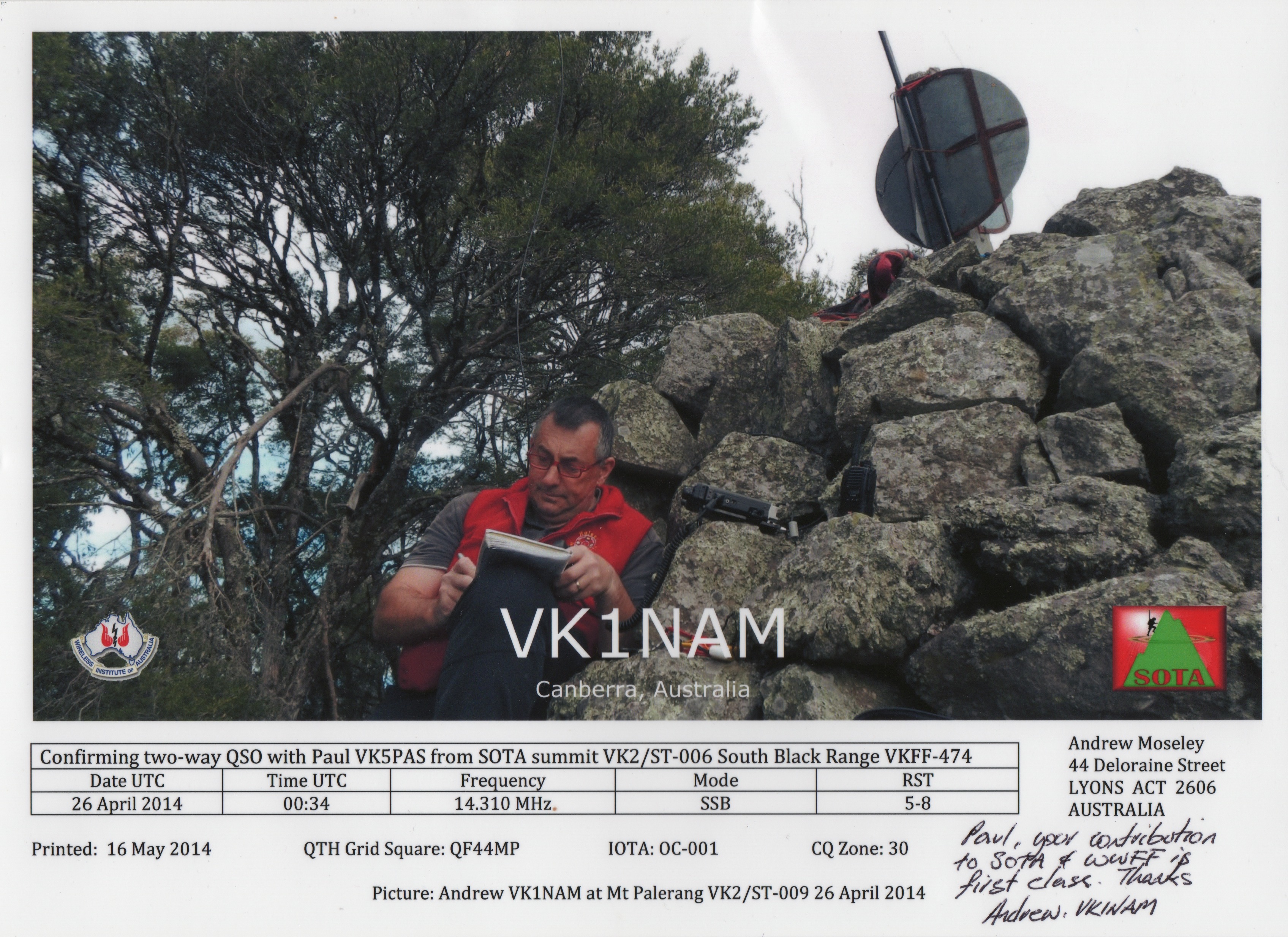
Certificate from Andrew VK1NAM

I was pleasantly surprised this morning when I went down to the post office.  Amongst the bills, I had  a few QSL cards, a batch of QSL cards forwarded to me by Tony VK3VTH to check for DXCC, but I also had a certificate from Andrew VK1NAM.  Greatly appreciated Andrew.

Andrew and many others have set a high benchmark for SOTA and have certainly formed a strong foundation for the program here in Australia.  And now Andrew has been hooked on WWFF.  Again thanks mate, and look forward to working you when either your or I, or maybe both, are on a SOTA peak or in a National Park.

Image

GMA – Chaser stats

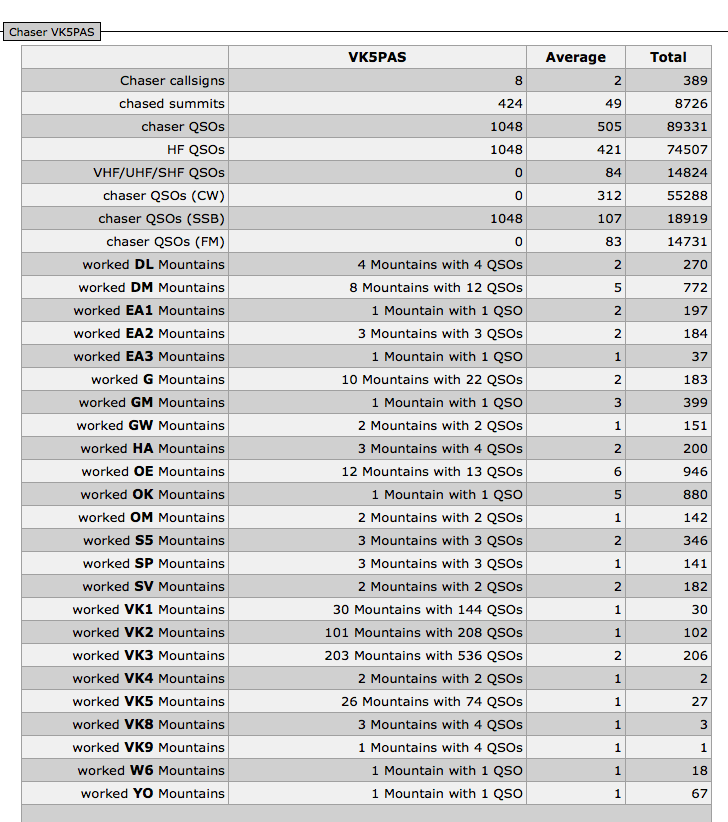
Last night I had a bit of an issue with loading a csv file with my Chaser log from the SOTA website.  So I sent off an email to GMA and was promptly answered by Mario DL4MFM, who was kind enough to reformat the file for me.  This morning I successfully uploaded it to the GMA website.

Here are my Chaser stats…..

Screenshot 2014-05-31 07.51.57

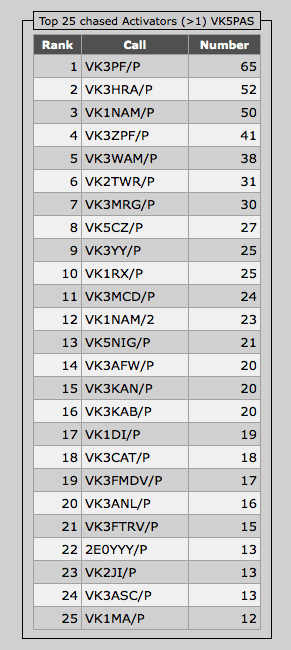
My top 25 chased activators consist mostly of VK1s & VK3s, with Ian VK5CZ creeping in at number 8.  Mike 2E0YYY appears at number 13.  As you would expect, Peter VK3PF (Australia’s 2nd Mountain Goat) appears at number 1, followed by Allen VK3HRA.  Andrew VK1NAM appears at number 3 as VK1NAM/p and at number 12 as VK1NAM/2.  The SOTA website only shows your top 10 chased activators.

I did notice some discrepancies here with statistics from the GMA site and the SOTA site.  This is due to the different point scoring system within the GMA.

 Screenshot 2014-05-31 07.52.06

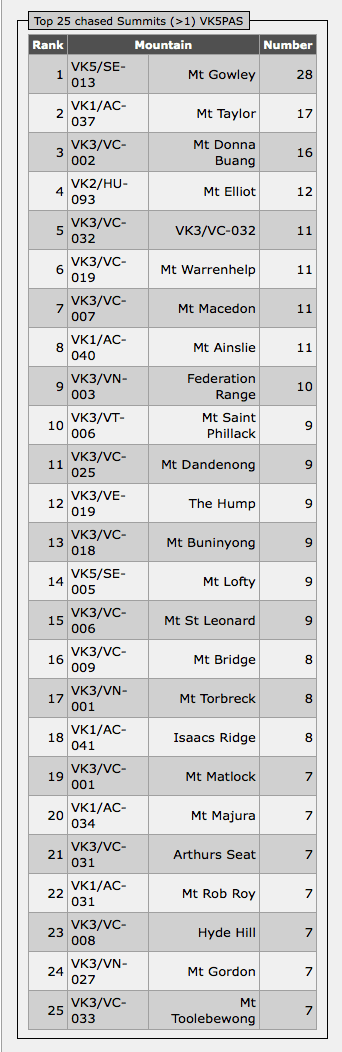
And here is a list of my top 25 chased summits.  Mount Gowley is actually Mount Gawler.  The SOTA database was corrected some time ago and I have advised Mario of this issue with the GMA database.  Mount Taylor in Victoria is certainly a very popular summit for activators.  The GMA website shows your top 25 whereas the SOTA website shows your top 10.  Again, I noticed some discrepancies here between the GMA stats and the SOTA stats (due to the point scoring system).

Screenshot 2014-05-31 07.52.17

More on the GMA – Activator

Here is a little bit more info on the German Activity Group (GMA).

gma_title-002

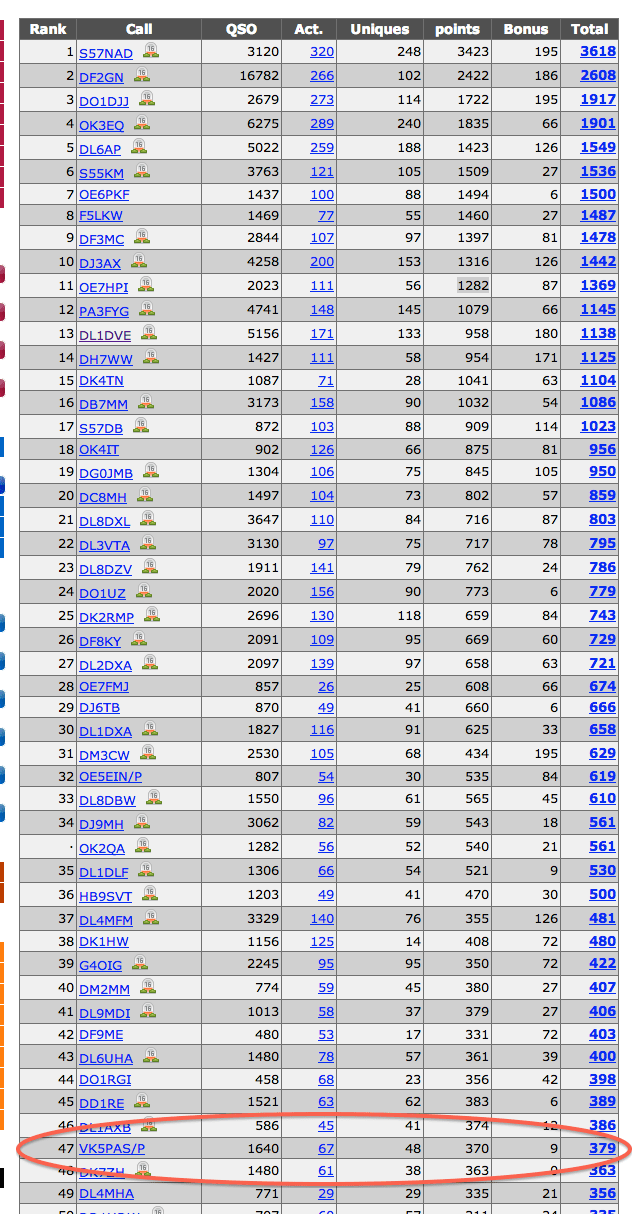
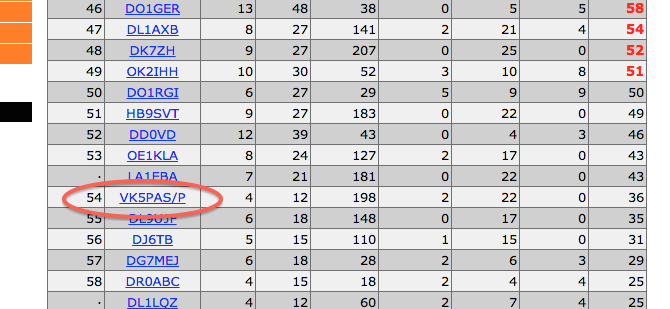
On the Stats page, in the red area in the left hand column, you can view your Activators log, a list of GMA activators ranked by points (see the image below), a list of GMA activators ranked by QSOs, a list of GMA activators ranked by unique summits, and a summit 2 summit ranking.  There is also a Globetrotter list (similar to the SOTA Mountain Hunter), and Regionhopper list.

Screenshot 2014-05-29 21.42.46

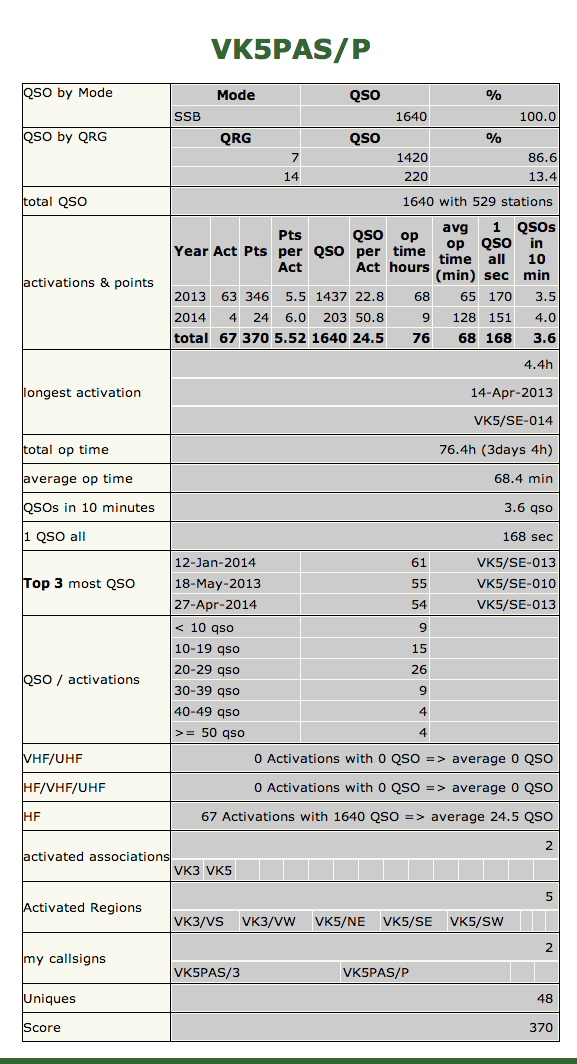
And you can also click on your own call sign (this is the last option in the top red box).  This will bring up some interesting individual statistics including a breakdown on your activations and points, activated associations and activated regions.

My GMA score as an activator is 370 points and my SOTA score as an activator is 153 points.  This is due to the difference in point scoring as mentioned in my previous post.

The ‘top 3 most QSO’ stats interested me.  This showed that my activation of Moun t Gawler, VK5/ SE-013 on 12th January 2014 produced my most number of QSOs.  A total of 61 in fact.  This was closely followed by my early activation of Tothill Range VK5/ SE-010 with 55 QSOs, and in third place was another activation of Mount Gawler in April 2014 when I managed a total of 54 QSOs.

The highest number of QSOs per activation was in the 20-29 QSO bracket.  And this was preceded by the 10-19 QSO bracket.

My average operating time was 68.4 minutes on a summit, with a total operating time of 76.4 hours which equates to 3 days and 4 hours.  Geez, I can’t believe I’ve sat on the top of hills that much.  I would love to see some of the stats from some of the SOTA gurus in the eastern states.

In all, I had a total of 1,640 QSOs as an activator, with 1,420 of those being on 7mhz on 40m, and a total of 220 QSOs on 14 mhz on 20m.  So 86.6 % of my QSOs were on the 40 m band, followed by 13.4 % on the 20 m band.

Screenshot 2014-05-29 22.04.03

There is also an event called the GMA Triathlon, which appears to be a combination of your SOTA activities, World Wide Flora and Fauna (WWFF), Castles on the Air (COTA), Islands on the Air (IOTA), and Lighthouses.  I am still looking at this to work it out fully.

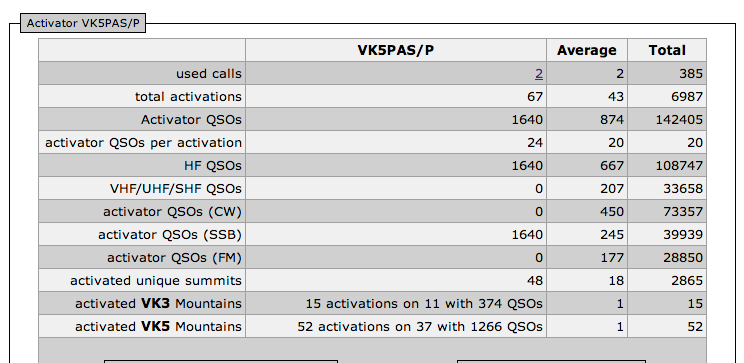
A little lower down on the Stats page, in the orange area, if you click on your call sign, you can view various personal call sign statistics.  Those stats include your total activations, the number of activator QSOs, your activation modes, and your unique stats.  There is also an average column which shows the average for activators who have uploaded their logs to GMA.  And a total column which shows all the totals for activators who have uploaded their logs to GMA.

There were some interesting stats on the GMA site which you cannot see on the SOTA site.  For example, the total number of activator QSOs and the average number of activator QSOs per activation.  In my case I had a total of 1,640 activator QSOs with an average of 24 activator QSOs per activation.  All of those were on HF SSB.  I really must make the effort of taking the 2m handheld to the top of Mount Lofty one day, and also give CW a go.

Furthermore, the stats showed that I had 11 unique activations in Victoria with a total of 374 QSOs and a total of 37 unique activations in South Australia with a total of 1,266 QSOs.  My total activation count was 67, however, 48 of those were unique.  This goes back to the problem of submitting 2 logs across the UTC rollover, which I now still has some heated debate.  And activation of the same summit within the calendar year.

Screenshot 2014-05-29 21.24.13

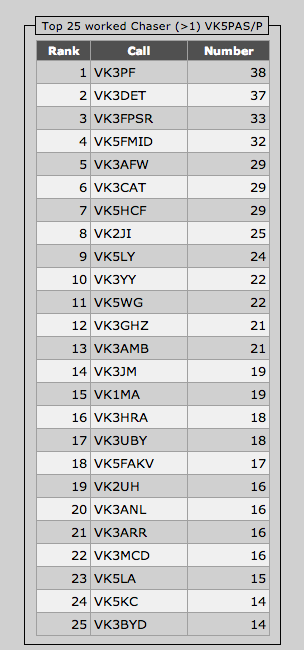
You can also view the top 25 chasers that have worked you.  The SOTA website statistics only list your top 10 activation chasers.  This matched the stats on the SOTA site.  And also the top 25 chasers who appear in activator logs that have been uploaded to the GMA website can be viewed (worldwide).  Here are my top 25 worked chasers, a mixture of VK1s; VK2s, VK3s and VK5s…..

Screenshot 2014-05-29 20.56.25

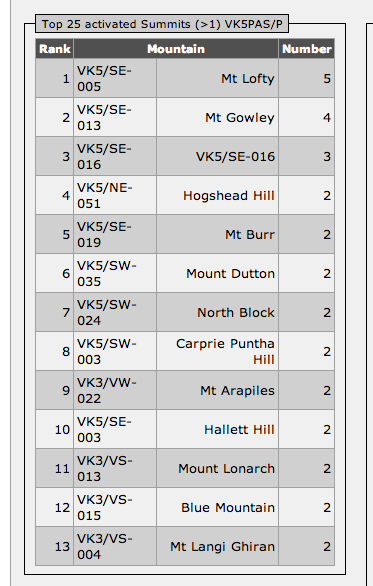
You can also view your top 25 activated summits and the top 25 activated summits from all activators.  On the SOTA website, your statistics will only show your top 10 activated summits.

Screenshot 2014-05-29 21.30.17Other than the Mountain Award (MA), there is also the Mountain Challenge (MC) which is an annual competition where the winner is the participant who has achieved at the end of the contest period, the most points.  The contest period is defined as 1st January at 0000 UTC to 31st December at 2400 UTC.  Each participant with more than 50 points will be awarded a certificate of participation.  If you have achieved the 50 point threshold, your total appears in red.  Again, you can view a table of your progress.

Screenshot 2014-05-29 21.53.08

German Mountain Activity Group

Tonight I was looking at the Adventure Radio mapping project and found the German Mountain Activity Group website which is located at…..

http://www.cqgma.eu/

The scoring system for GMA is different to that of SOTA.  In GMA a summit is definable when it is 100 metres or higher.  Each full height of 100 metres is awarded a point. Examples: 120 metres = 1 point, 700 metres = 7 points, 1299 metres = 12 points.

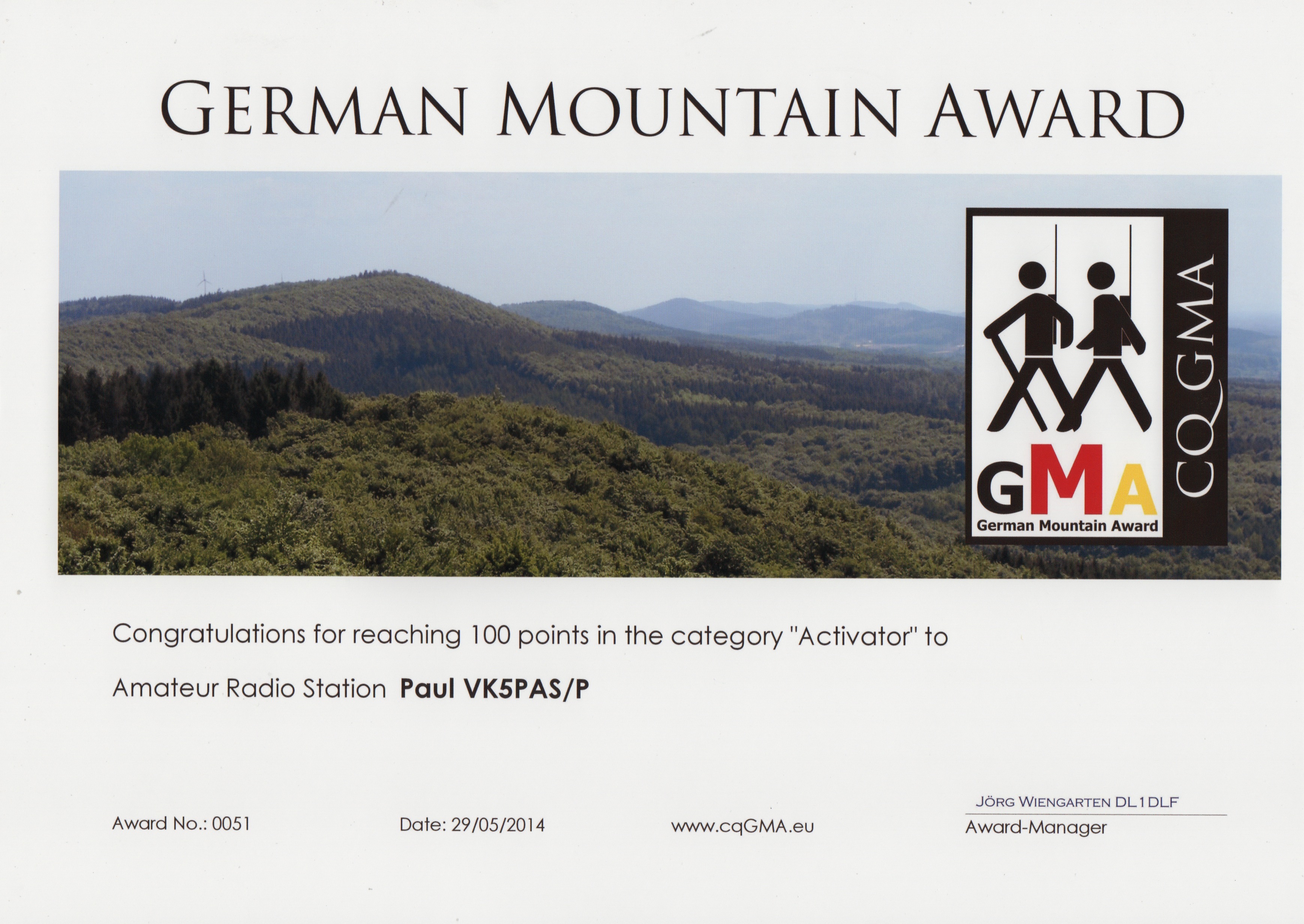
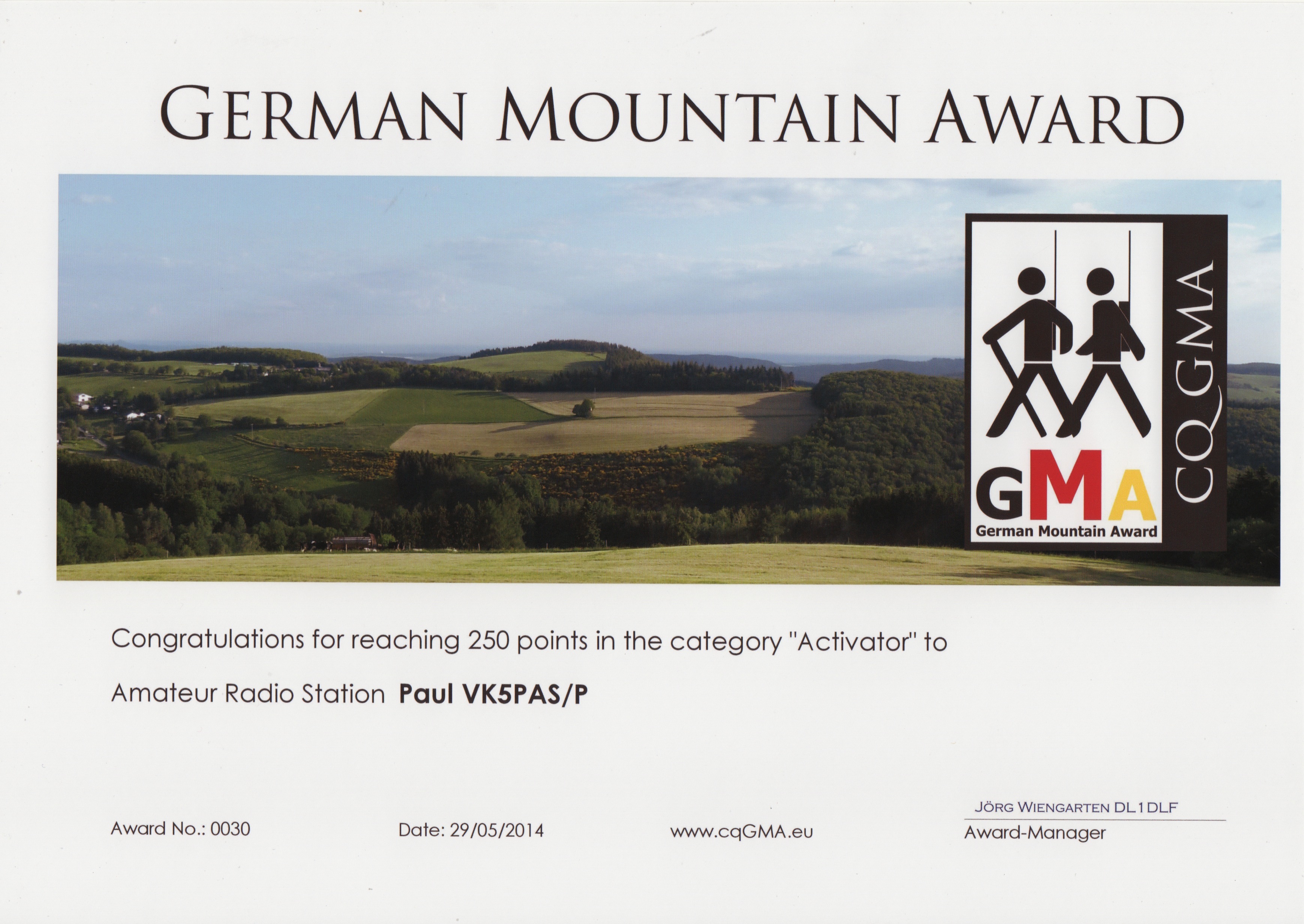
After looking at the site I realised that I was eligible for some award certificates.

Image

Image

Mount George Conservation Park

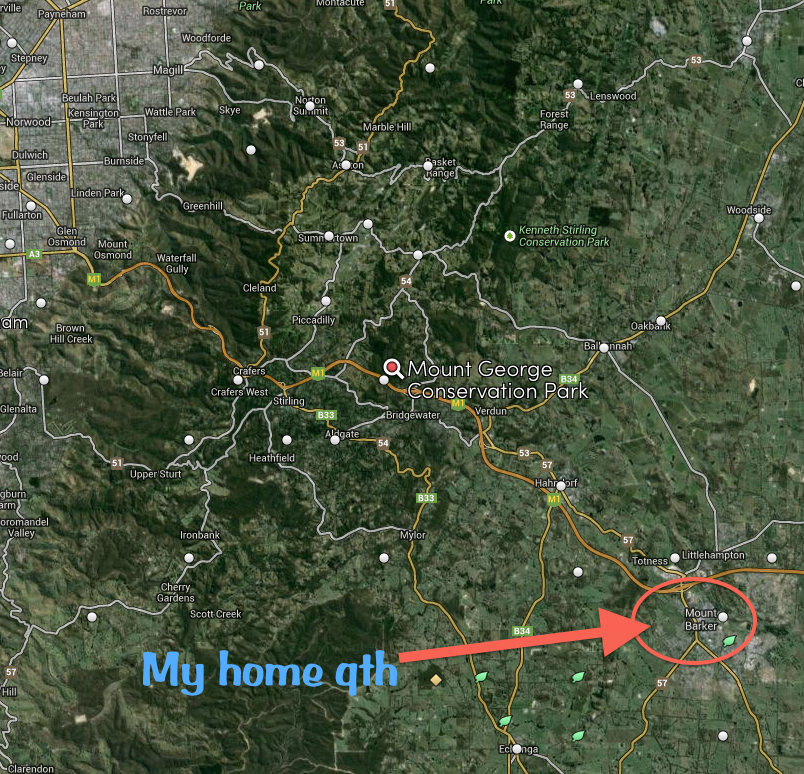
Today (Sunday 18th May 2014) I ventured over to the Mount George Conservation Park near Bridgewater.  This is just a short 15 km drive from my home at Mount Barker, and about 25 km south east of Adelaide.

Mount George CP conserves about 85 hectares of native Mount Lofty Ranges vegetation and was proclaimed on the 7th November 1996.  The park was originally 67 hectares in size before the boundaries were extended in October 2003.  Mount George CP’s landscape ranges from everything including wetlands to open forests and rocky outcrops.  A section of the famous Heysen trail runs through the park.  The eastern section of the park encompasses the summit of Mount George which rises 520 metres above sea level, but sadly is not recorded as a SOTA summit.

The park is full of bird life including yellow tailed black cockatoos, wedge tailed eagles, superb blue wrens, red browned finches, white throated treecreepers and scarlet robins.  A number of native mammals can also be found in park including western grey kangaroos, echidnas, Southern Brown bandicoot, Yellow footed Antechinus, and koalas.

Screenshot 2014-05-18 20.13.49

Map courtesy of mapcarta.com

I set up in the picnic area at the bottom of Mount George Road.  The picnic area is in close proximity to the very busy South Eastern Freeway.  You can hear the traffic from this part of the park, but it is generally masked by all of the thick vegetation.

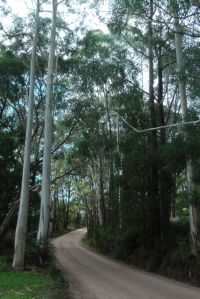
IMGA0002

Above: Mt George Rd leading into the park

As it was another beautiful day, there were quite a few people enjoying the sunshine and the beautiful surrounds of the park.  Despite the fact that there are signs everywhere that dogs are to remain on leashes in this particular area of the park, there were still a few dogs running loose.  This included a small poodle who decided to ignore its elderly owner, and piddled on my squid pole.  Maybe this was a good luck sign?

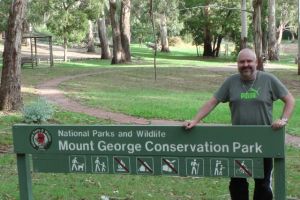
IMGA0001

My first contact was with Mark VK3ASC who was portable on SOTA peak Mount Martin VK3/ VE-100 which is to the north east of Mount Beauty.  Mark had a beautiful 58 signal.  I then tuned up the 40m band to 7.105 and put out a CQ call to be answered by Peter VK3PF and then Arno VK5ZAR who was 40 db over S9.  A steady flow of callers followed from VK3, VK5 and VK6.  But unlike yesterday, VK2 was no represented.

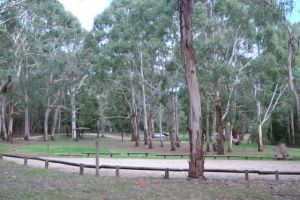
IMGA0016

Above: the picnic area at the end of Mt George Road

A good catch was Mike VK6MB on 40m ssb.  This was 2 days in a  row that I had worked Mike on 40m ssb with a good signal.  Normally it is a bit of a battle to work Mike whilst I am in a park or on a SOTA peak.  But conditions were excellent, and Mike’s signal was coming in extremely well.

  IMGA0004     IMGA0015

I also managed a couple of Park to Park contacts.  The first was with Gary VK5FGRY who was operating portable in the Morialta Conservation Park.  Gary was a good strong 59 signal.  I then spoke with Bob VK5FO who was portable in the Morialta Conservation Park, and this QSO was courtesy of Peter VK3PF who had come up to advise me that Bob was out and about.  Bob was using his newly built home brew transceiver and was an excellent 59 signal.

After working 22 stations on 40m I ventured over to 20m hoping to work some DX.  But I was sadly disappointed.  My first contact was with Mike VK6MB and this was followed by Gary VK6NCS who was mobile in Perth, running 10 watts and a vertical antenna on the roof racks of his car.  Despite the QRM, Gary had a nice 55 signal.  My old mate Steve VK4KUS then came up to say hi and was kind enough to place me on the DX cluster.  I did hear two F4 stations from France calling but their signals were well down and clearly they were not able to hear me.  I went on to work Adam VK2YK and then Ted VK6NTE who nearly knocked the gear off the fold up table with a 40/9 signal.

IMGA0010

I tuned across the 20m band but did not hear the customary strong European stations.  In fact the band was almost dead with just a few signals coming in from Europe and they were well down in signal strength.  I then QSYd back to 40m and worked a further 8 stations in VK2, VK3, VK4, and VK7.  It was starting to get dark and the sulphur crested cockatoos were becoming increasingly noisy as they were preparing to roost for the night.

After 2 hours in the park, it was time to pack up and head home.  It almost completely dark and the mozzies were out in force.  I also had a casserole waiting for me and a nice bottle of Paulette’s cab sav.  I had a total of 35 QSOs in the log which I was very happy with.

 IMGA0018

The following stations were worked on 40m ssb:-

Mark VK3ASC/p; Peter VK3PF; Arno VK5ZAR; Greg VK5ZGY/m; Amanda VK3FQSO; Bernard VK3AMB; Nev VK5WG; John VK5BJE; Shaun VK5FAKV; Rod VK5VRB; Bob VK5FPAC; Larry VK5LY; Brian VK5FMID; Trevor VK3FPY/5; Mike VK6MB; Craig VK3NCR; John VK5DJ; Peter VK3PF; Nick VK3ANL; Gary VK5FGRY/p; Graham VK5KGP; Bob VK5FO/p; Hans VK5YX; Dave VK2WLD; Roy VK7ROY; Colin VK4FAAS; Cedric VK7CL; Jess VK6JES; Alan VK4KO; and Colin VK3LO.

The following stations were worked on 20m ssb:-

Mike VK6MB; Gary VK6NCS/m; Steve VK4KUS; Adam VK2YK; and Ted VK6NTE.

References.

National Parks South Australia, http://www.environment.sa.gov.au

Department for Environment and Heritage, Mount George Conservation Park Management Plan.

Ferries McDonald Conservation Park

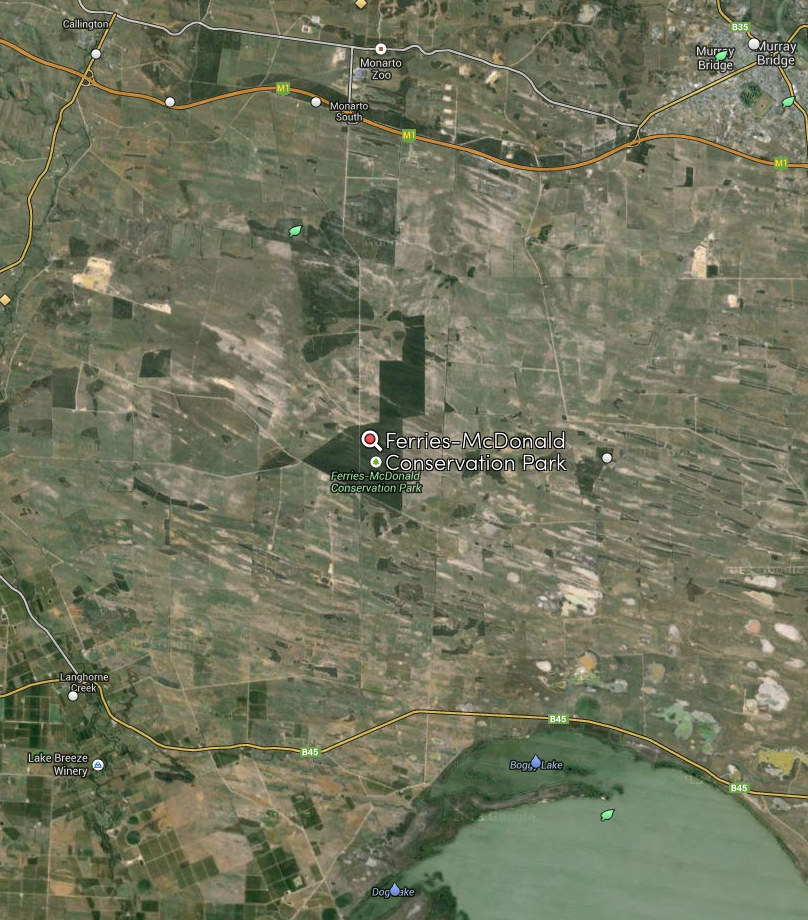
After packing up at Monarto Conservation Park, I headed just down the road to the Ferries McDonald Conservation Park, about 70 km east of Adelaide.

Ferries McDonald CP is about 845 hectares in size and contains one of the few pieces of remnant males vegetation close to Adelaide.  The land is named in honour of Mr. Ferries and Mr. McDonald, who kindly donated the land for conservation last century. The park is home to over 60 species of birds including the endangered Mallee fowl, and 300 species of plants some of which are significant in their rarity.  It is also home to short beaked echidnas, western grey kangaroos and the marsupial mouse.     Screenshot 2014-05-18 13.38.46

Map courtesy of mapcarta.com

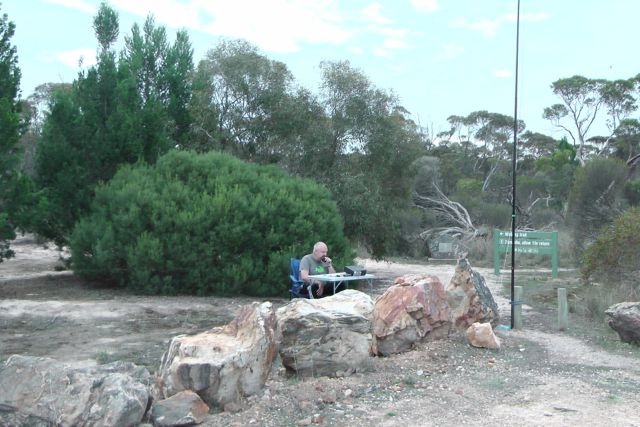
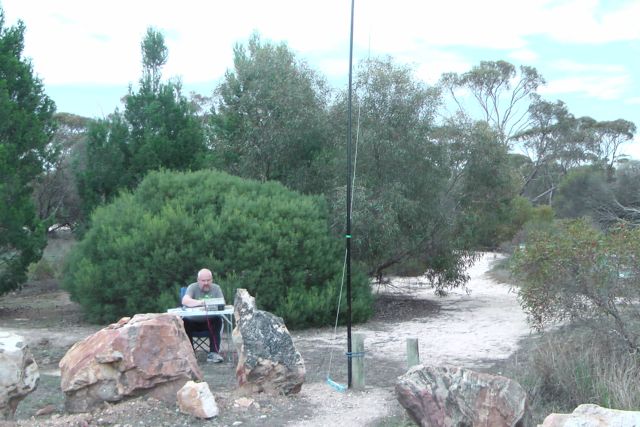
We parked in the carpark located in the south eastern corner of the park, off Chaunceys Line Road.  I strapped the 7 m telescopic squid pole to a nearby post and strung out the legs of the dipole.  After making myself comfortable in the deck chair at the fold up table, I tuned to 7.090.  I asked if the frequency was in use and was immediately greeted by Larry VK5LY who had a very strong 59 plus signal.  This was followed by Nev VK5WG and Terry VK5ATN, both of whom also had very strong 59 plus signals.

IMGA0028

The band was in excellent condition again with very strong signals coming in from all parts of Australia.  I even got to work Mike VK6MB who had a beautiful 59 signal coming in from Manimup.  Another interesting contact was with Andy VK3FRDN who was portable at the Cape Otway lighthouse near Apollo Bay.

Again, I had a few enjoyable contacts with QRP callers including Bob BK5FO who was running 11 watts, Darren VK2AUX running 10 watts, Bryan VK7KWB running 5 watts into a long wire antenna, and Scott VK7FTTT using just 5 watts.  All had terrific signals into the park.

IMGA0019

My last contact of the day was with Blue ZL3TT, in Napier New Zealand.  Blue was a good strong 59 signal and I received a 57 signal report back from across ‘the pond’.  A few guys had told me that a New Zealand station had been calling, so it was very pleasing when I heard Blue come back to my CQ call.  It was now dark and the mozzies were out in force, so it was time to pack up and head home after a very enjoyable afternoon in the 2 parks.

IMGA0018

After an hour in the park I had a total of 39 contacts in the log from VK1, VK2, VK3, VK4, VK5, VK6, VK7, and ZL.

The following stations were worked:- Larry VK5LY; Nev VK5WG; Terry VK5ATN; Amanda VK3FQSO; Bob VK5FO; Greg VK5ZGY/m; Matt VK1MA; Colin VK3UBY; Tony VK5TT; Mark VK1EM; Peter VK3FPSR; Bernard VK3AMB; Col VK5FCDL; Max VK3MCX; Darren VK2AUX; Peter VK3ZPF; Neil VK4HNS; Haucke VK1HW; John VK2YW; Mike VK6MB; Tom VK2GU; Ian VK3VIN; ohm VK2MOP; Craig VK3NCR/p; Andy VK3FRDN/p; Danny VK4SD/2; Steve VK5SFA; Peter VK3PF; Bryan VK7KWB; Al VK4FFKZ; Ian VK3FIAN; Darren VK2NNN; Len VK3FB; Scott VK7NWT; Scott VK7FTTT; Arno VK5ZAR; Peter VK5NAQ; Dave VK2BDR; and Blue ZL3TT.

References.

Strathalbyn Garden Club, wwww.strathgardenclub.com.au