
Our second and final silo activation for Saturday, the 6th day of December 2025, was the Kapunda silo VK-KPA5. Kapunda is about 87 km north of Adelaide.
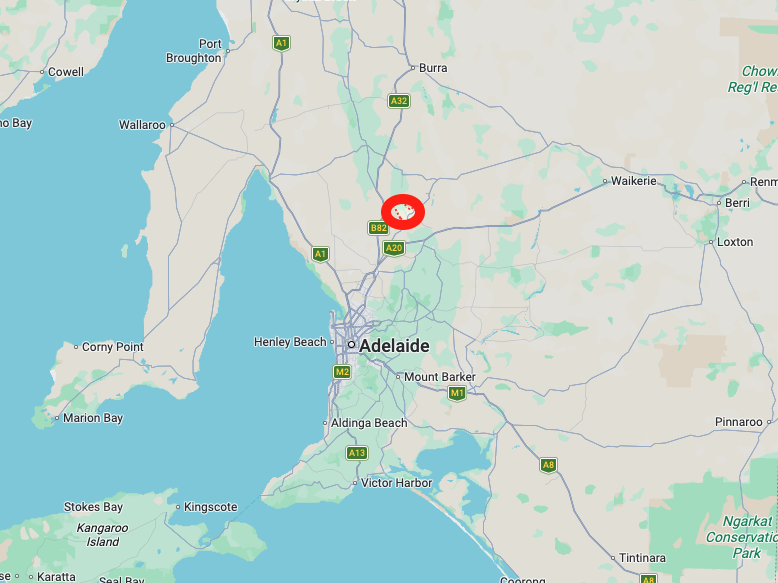
Above: Map showing the location of Kapunda. Map c/o Google Maps
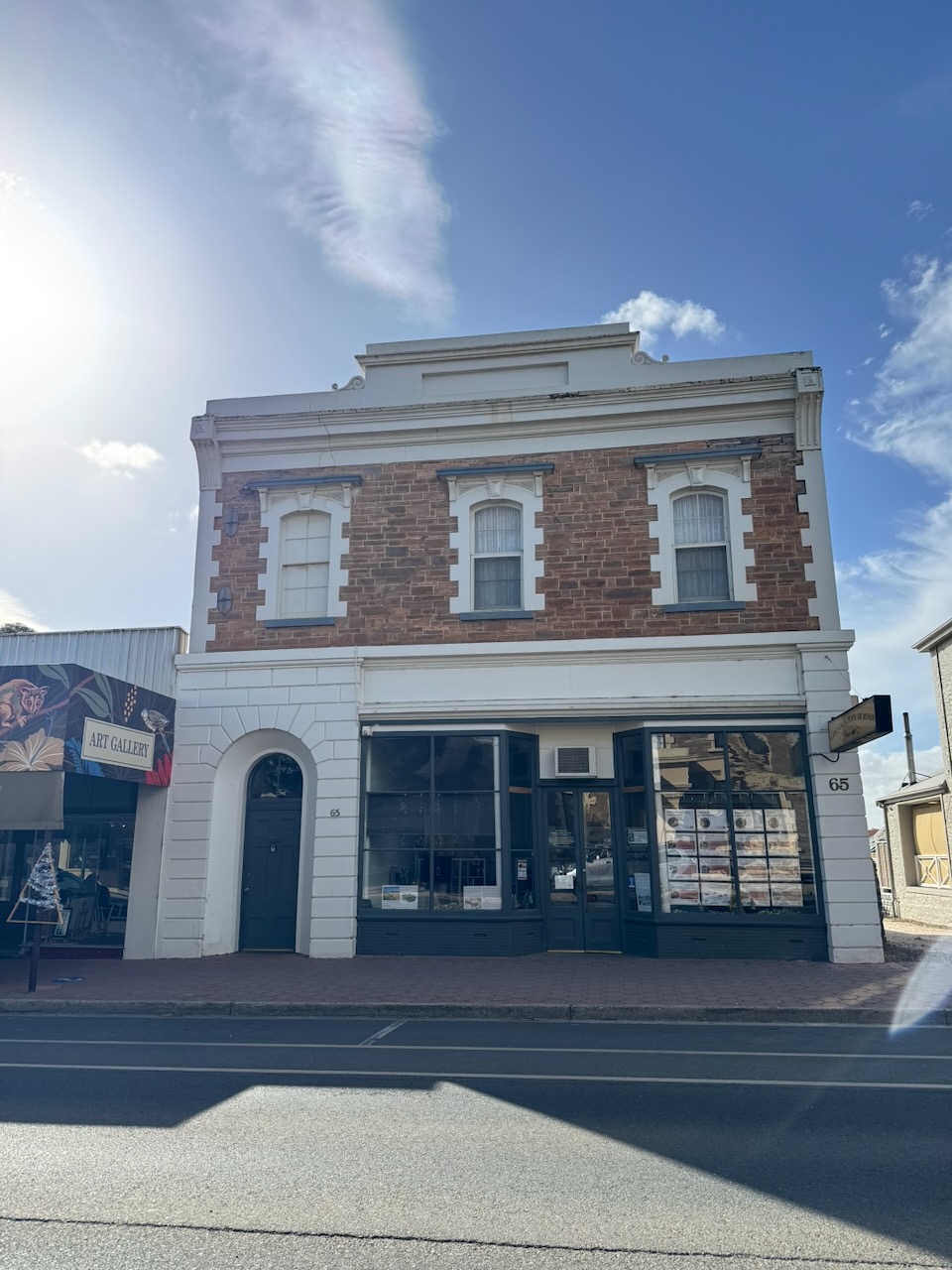
Marija and I drove south on Thiele Highway, and as we approached the town of Kapunda, we stopped to view the magnificent old building below. It is the old stone store built in 1854 by David & James Fowler.
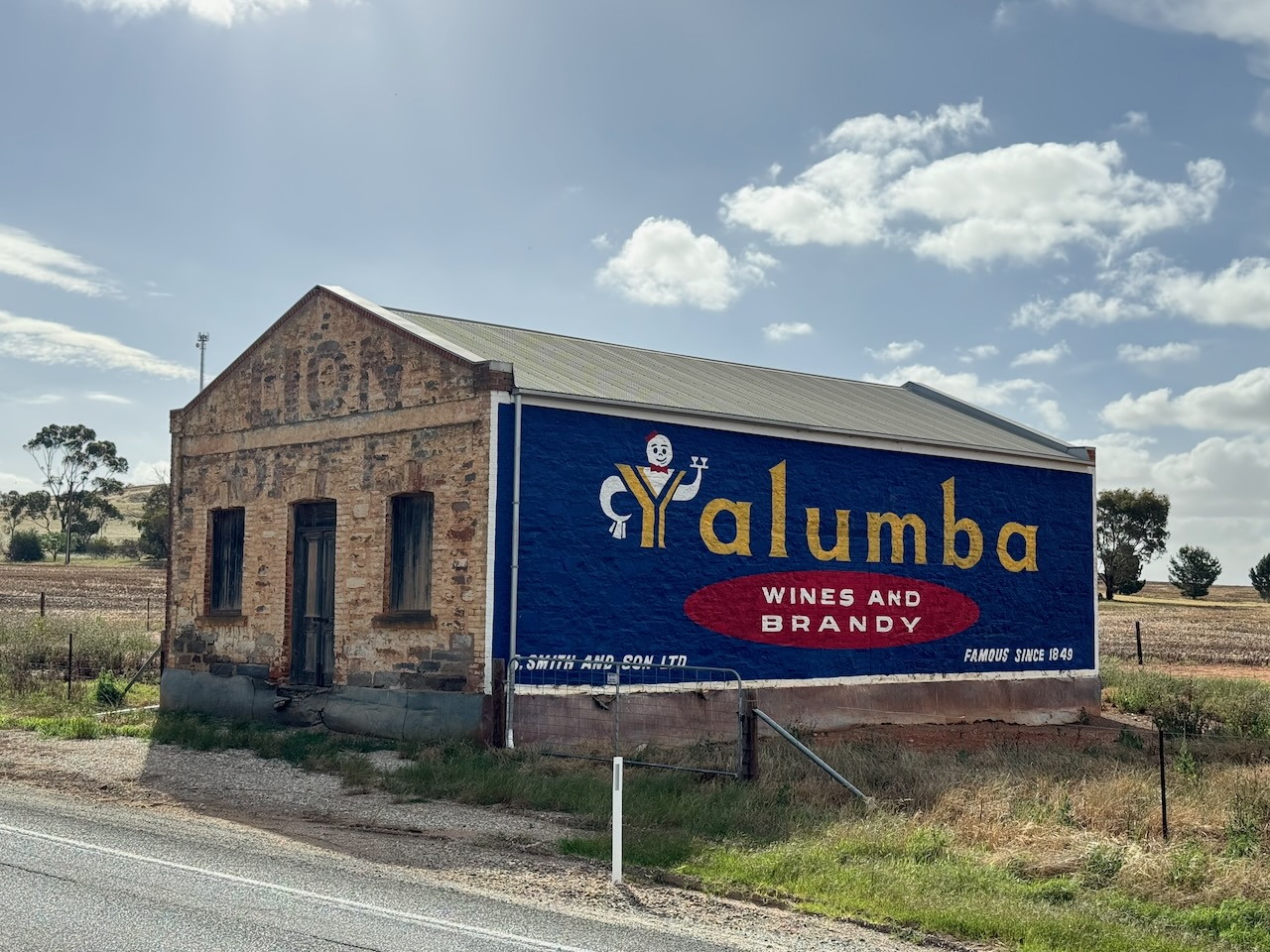
James Alexander Fowler was born in 1831 in Fife, Scotland. He emigrated to South Australia with his sister Margaret aboard the Anna Maria in 1850. He opened a grocery store in Rundle Street, Adelaide. He was joined by his elder brother David, who arrived in South Australia in 1854 aboard the Fop Smit. David was born in January 1827 in Fife, Scotland. The two brothers traded under the name D. & J. Fowler. (Wikipedia 2023)
In February 1858, James Fowler died after a long battle with illness. He was just 27 years old. Another brother, George Swan Fowler, emigrated in 1860 and became a partner in the business. In 1868, they purchased premises in King William Street, Adelaide and by 1865 they had opened a branch office in London. By 1873, they had acquired premises at Port Adelaide. Branches were opened in Fremantle, Broken Hill, and Kalgoorlie. They acquired a dealership for Shell products and set up a shipping agency. (Wikipedia 2023)
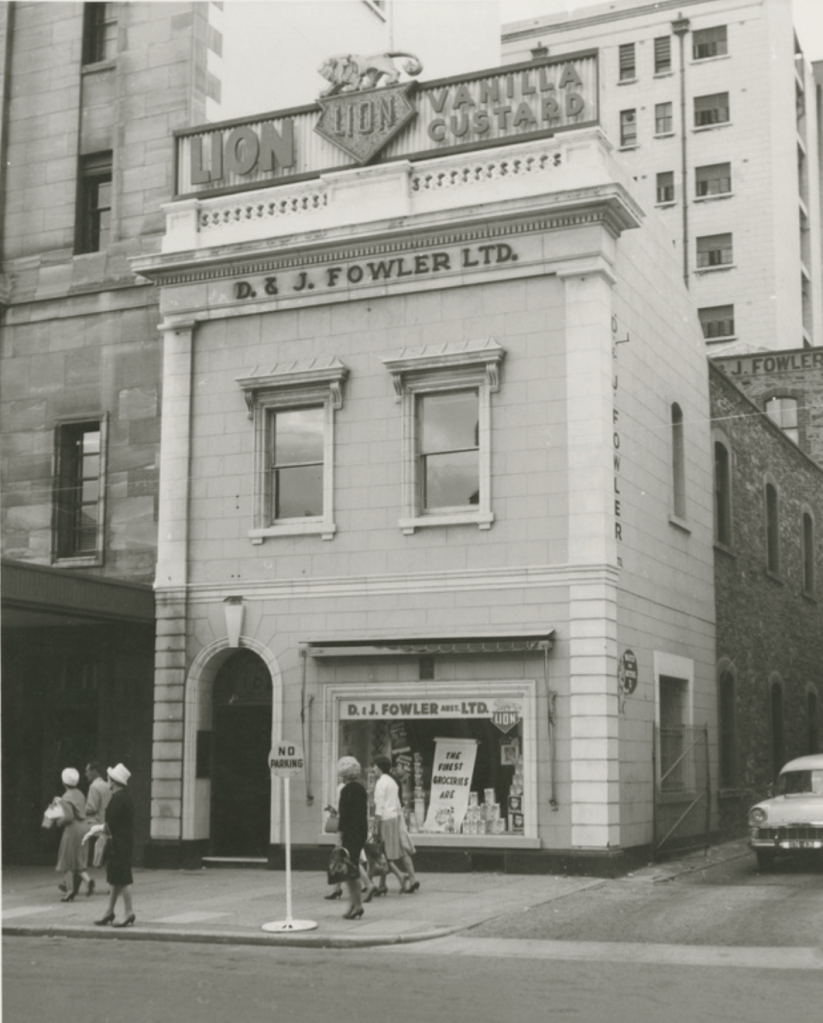
Above:- The Lions building in King William Street during the early 1960s. Image c/o State Library SA.
In 1881, David Fowler died, leaving George as the senior partner in the business. In c. 1882, they contracted farmers in the south-east of South Australia to grow chicory. This was used to make “Lion” brand coffee and chicory essence. The brothers built the “Paou Chung Factory” on King William Road. By 1883, their “Paou Chung” brand was the first packaged tea marketed in South Australia. They took over Barnfield & Turner’s “London Condiment Company” at Maylands and H. B. Hanton’s in Fullarton and renamed it the “Lion Preserving Company”. (Wikipedia 2023)
The brothers expanded their range of canned fruits, jams and pickles. A new factory for “Lion” canned fruit was set up at Nuriootpa. They took over the factory of Henry Harford in Mill Street, Adelaide, and this became the Lion Confectionery Works. In 1895, they took control of the bankrupt Adelaide Milling Company’s flour mill, the Adelaide Bottle Company in 1912, and the Robur Tea Company in 1928. (Wikipedia 2024)
We continued on to the town of Kapunda, reputed to be the most haunted town in Australia. Copper ore outcrops were discovered in the district in 1842 by Charles Bagot, who ran sheep in the Kapunda area.
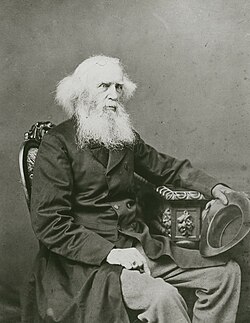
Above: Charles Bagot. Images c/o Wikipedia
Although Kapunda is well known for its copper, there were also marble mines which provided fine quality marble ranging in colour from dark blue to white. Marble from Kapunda was used at Parliament House in Adelaide, and the pedestal of the statue of Venus on North Terrace. (Wikipedia 2024)
The Chronicle in May 1913 reported:
“No better proof of the quality of Kapunda marble should be needed than an inspection of the Parliament Buildings on North-terrace…” (Trove 2026)
Kapunda is a very historic town and contains dozens of historical buildings. Below is some information on just a few of the buildings that we viewed.
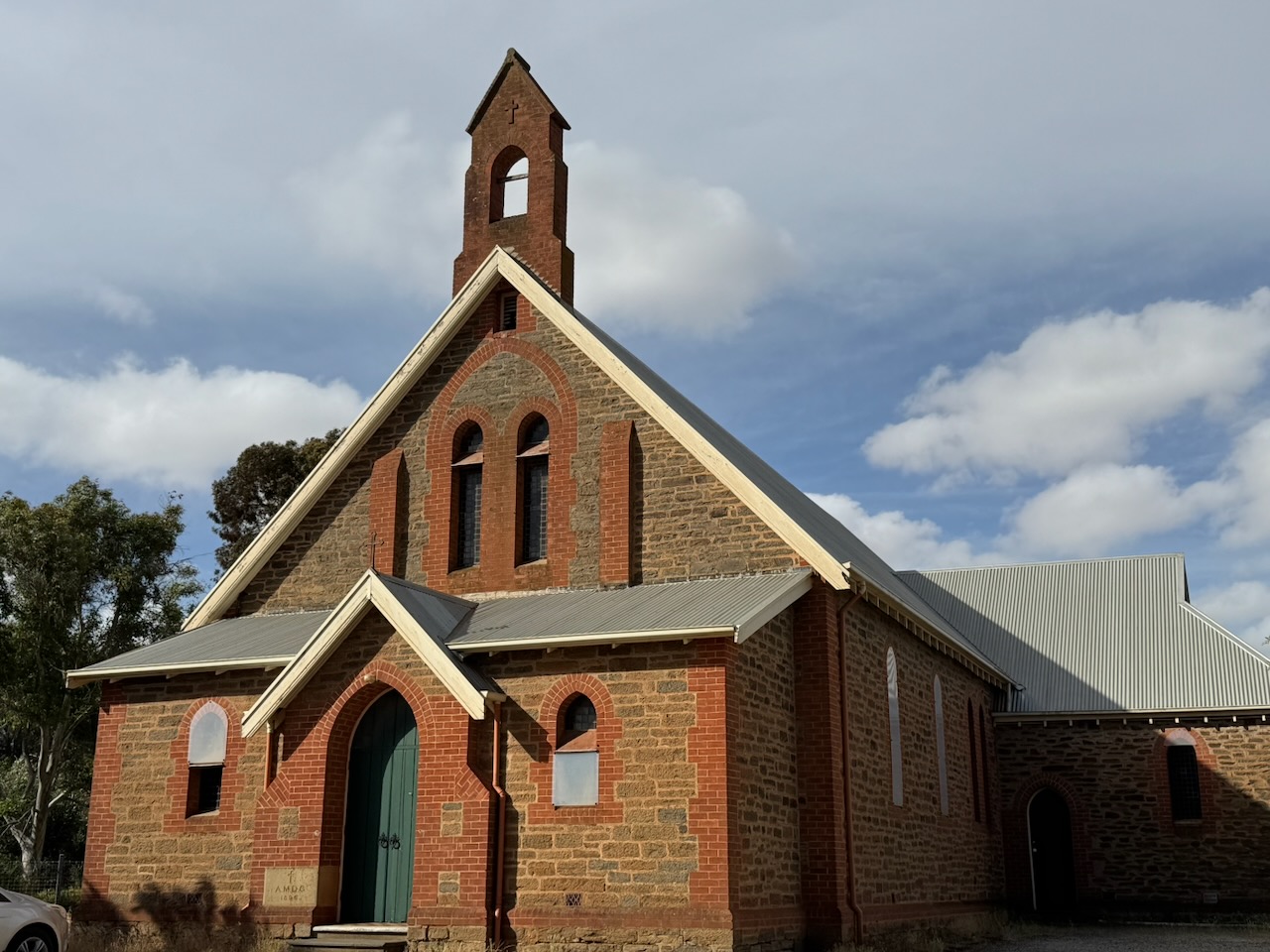
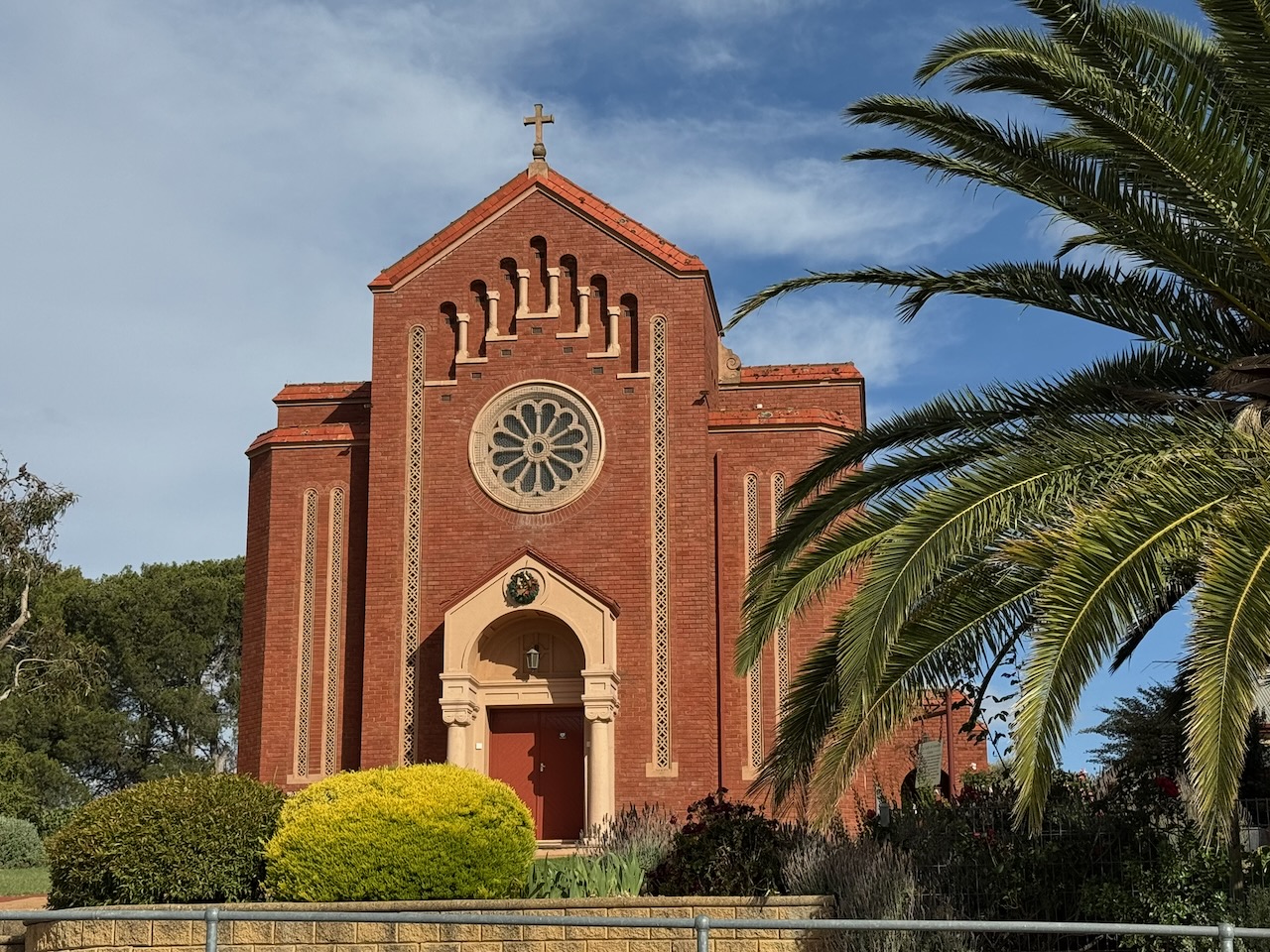
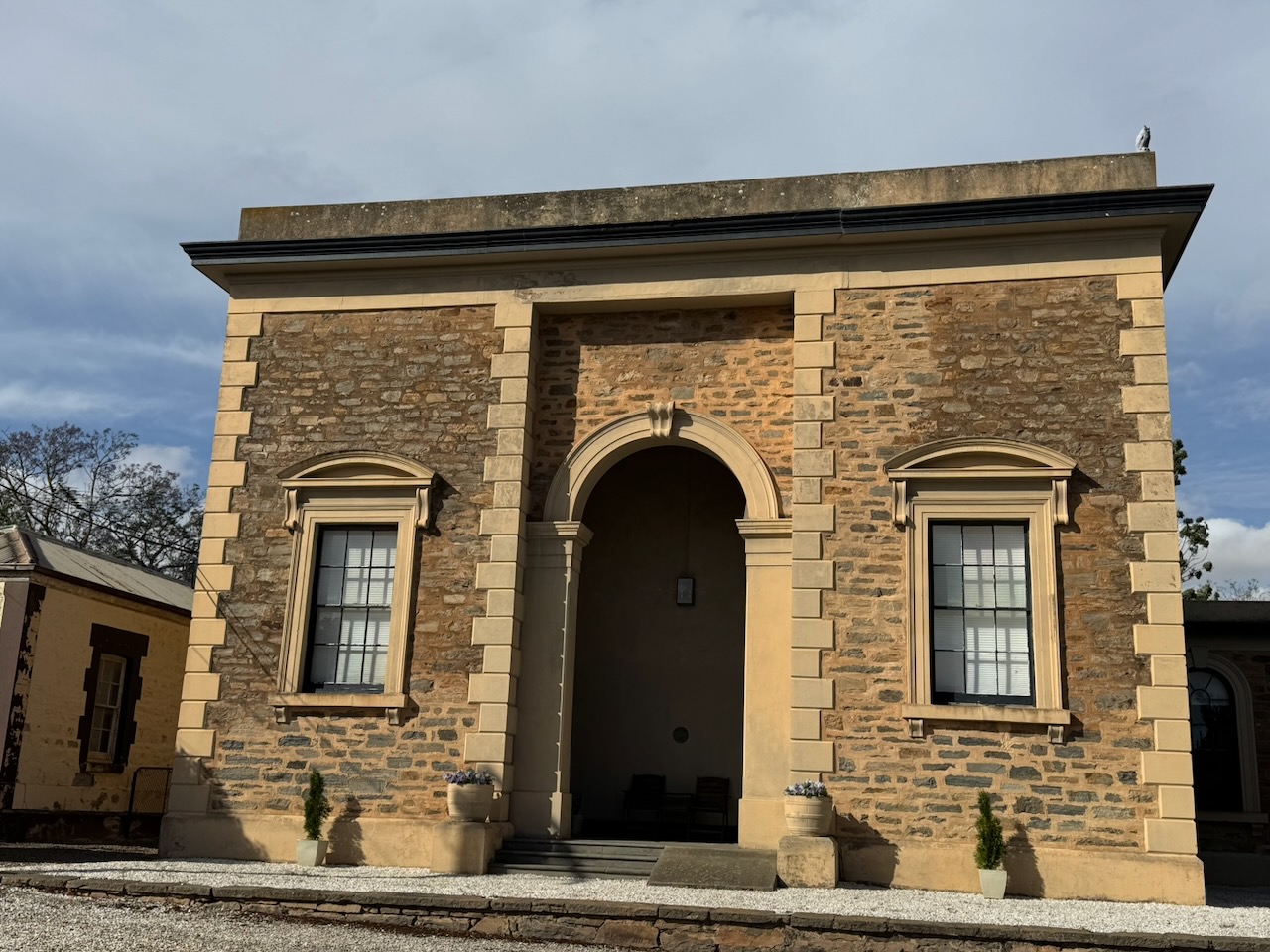
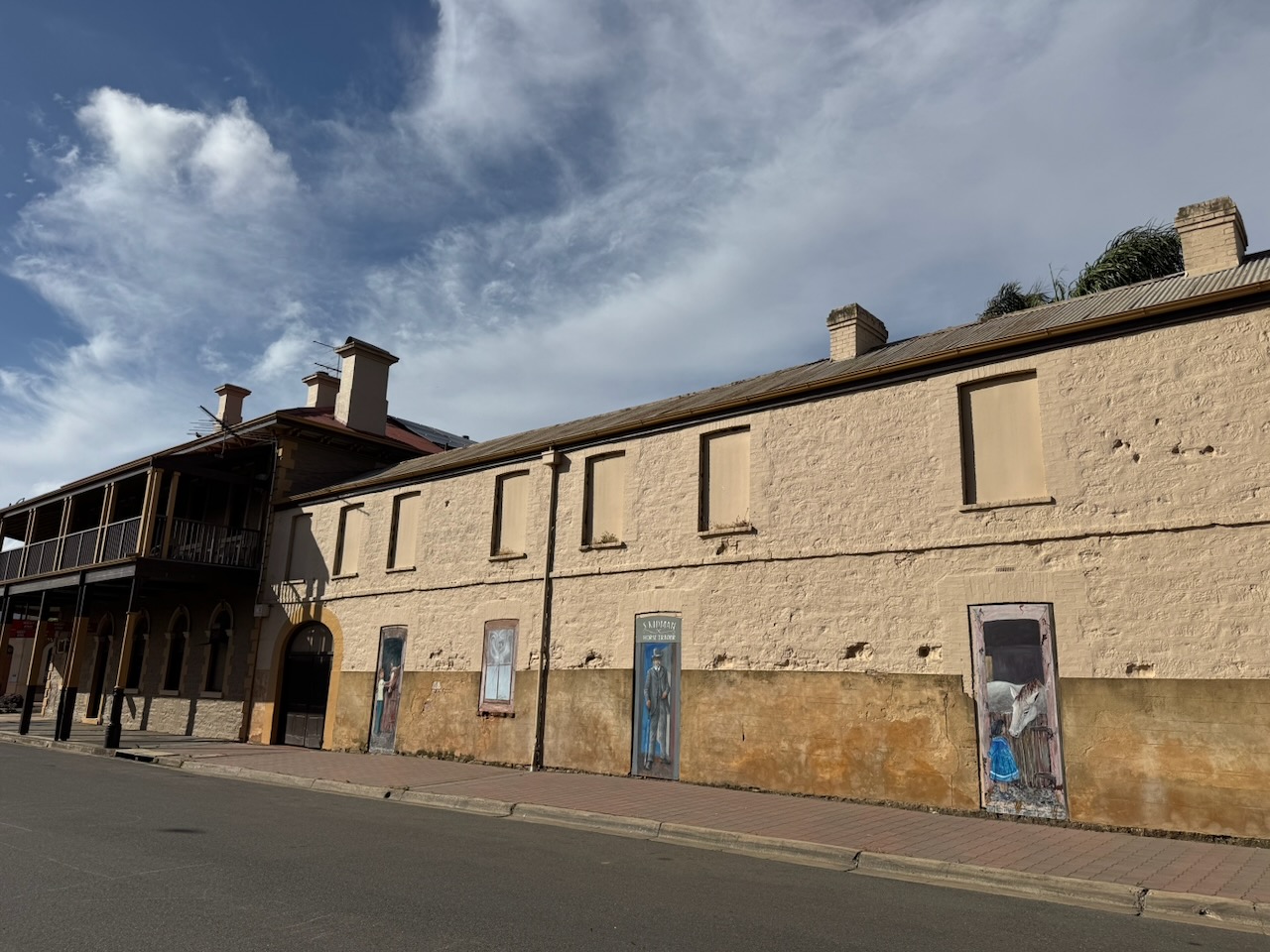
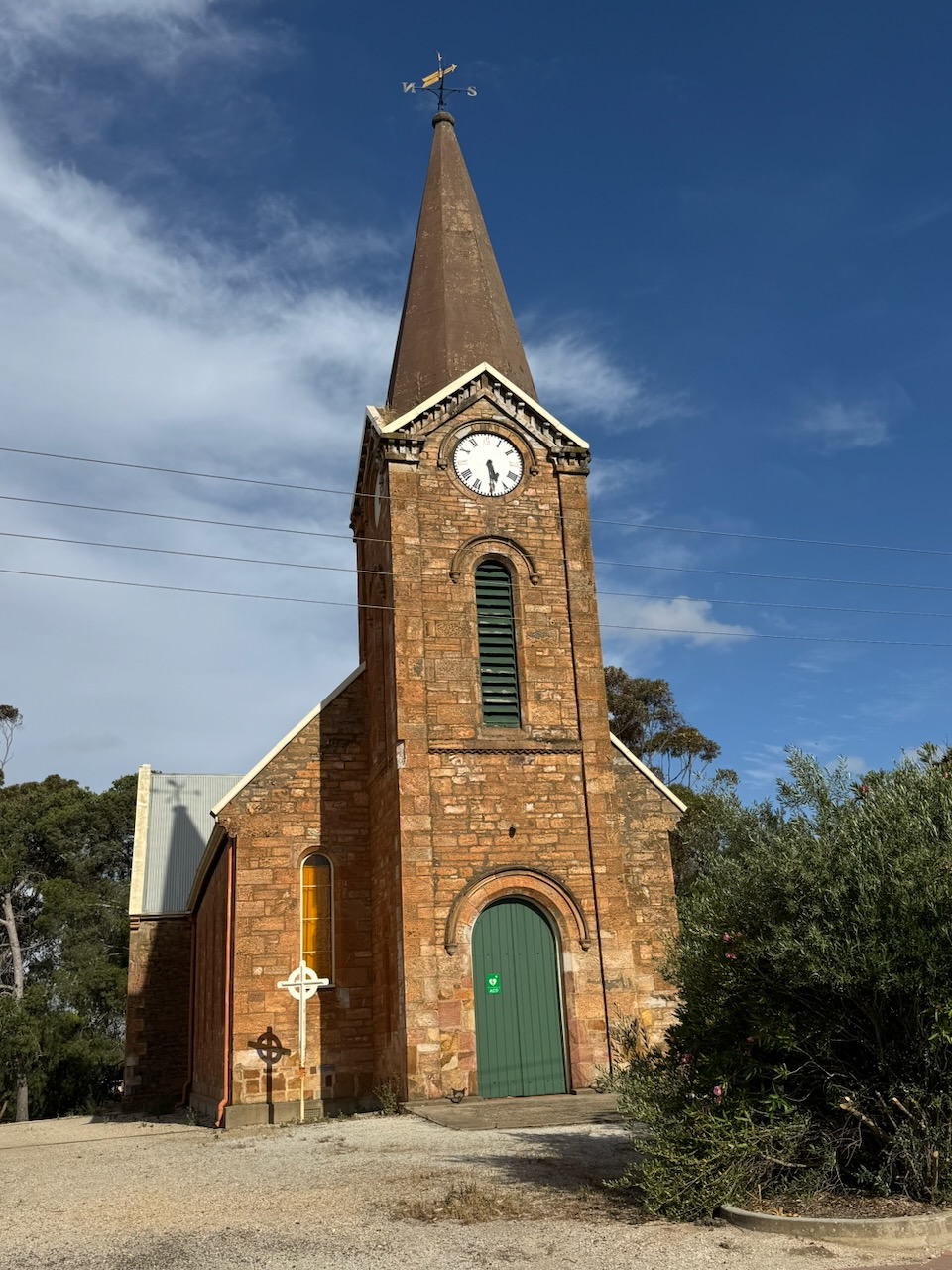
Christ Church Anglican church was built in 1857 and was extended in 1868. It was designed by the renowned South Australian architect Edmund William Wright. This was his second church and is the most intact of the remaining churches designed by Wright. The church contains a pipe organ from 1885. (Sa.gov.au 2026)
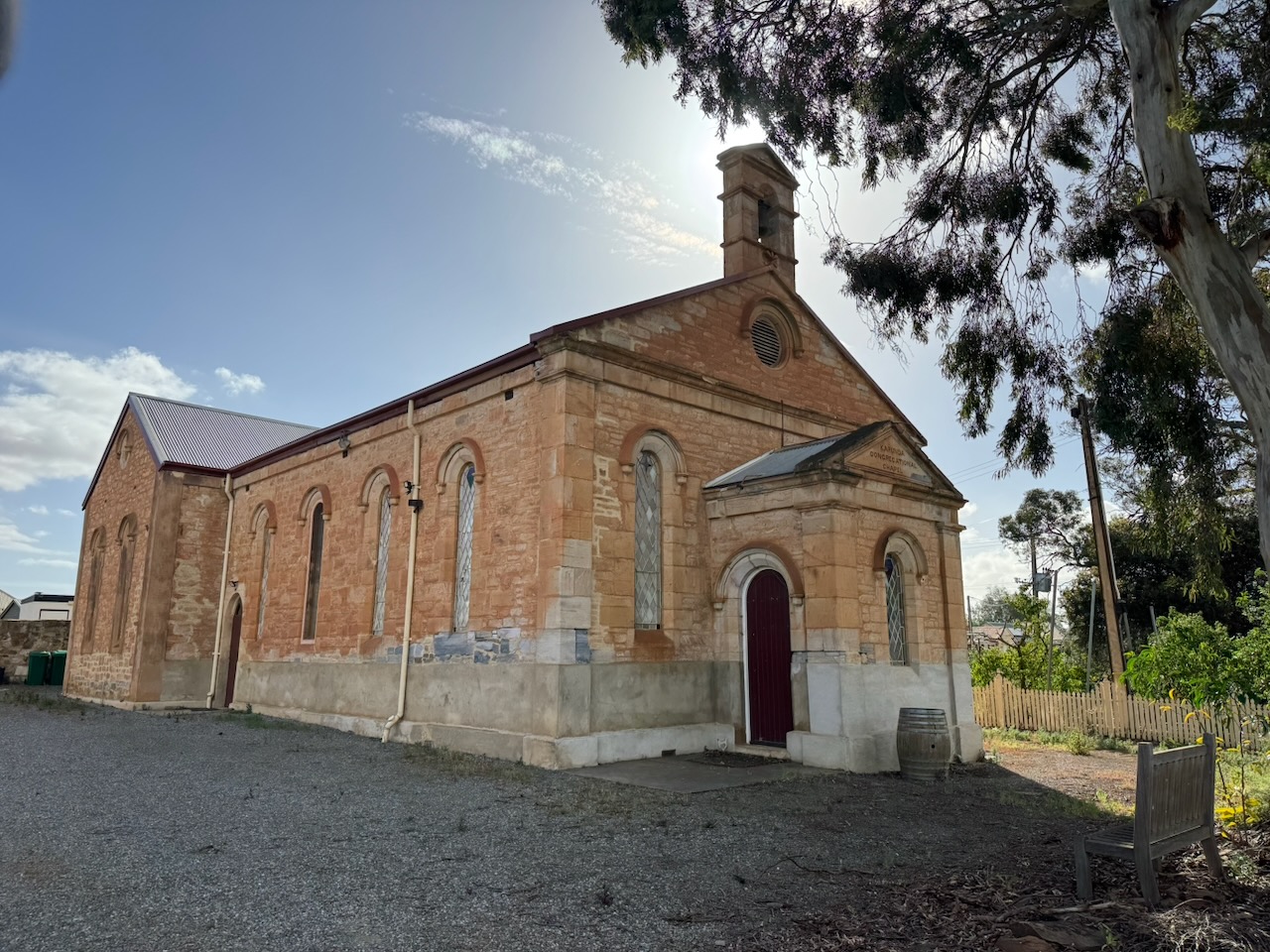
The foundation stone of the Kapunda Congregational Church was laid on the 21st day of June 1858. The church was opened on the 14th day of November 1858. (Flickr 2026)
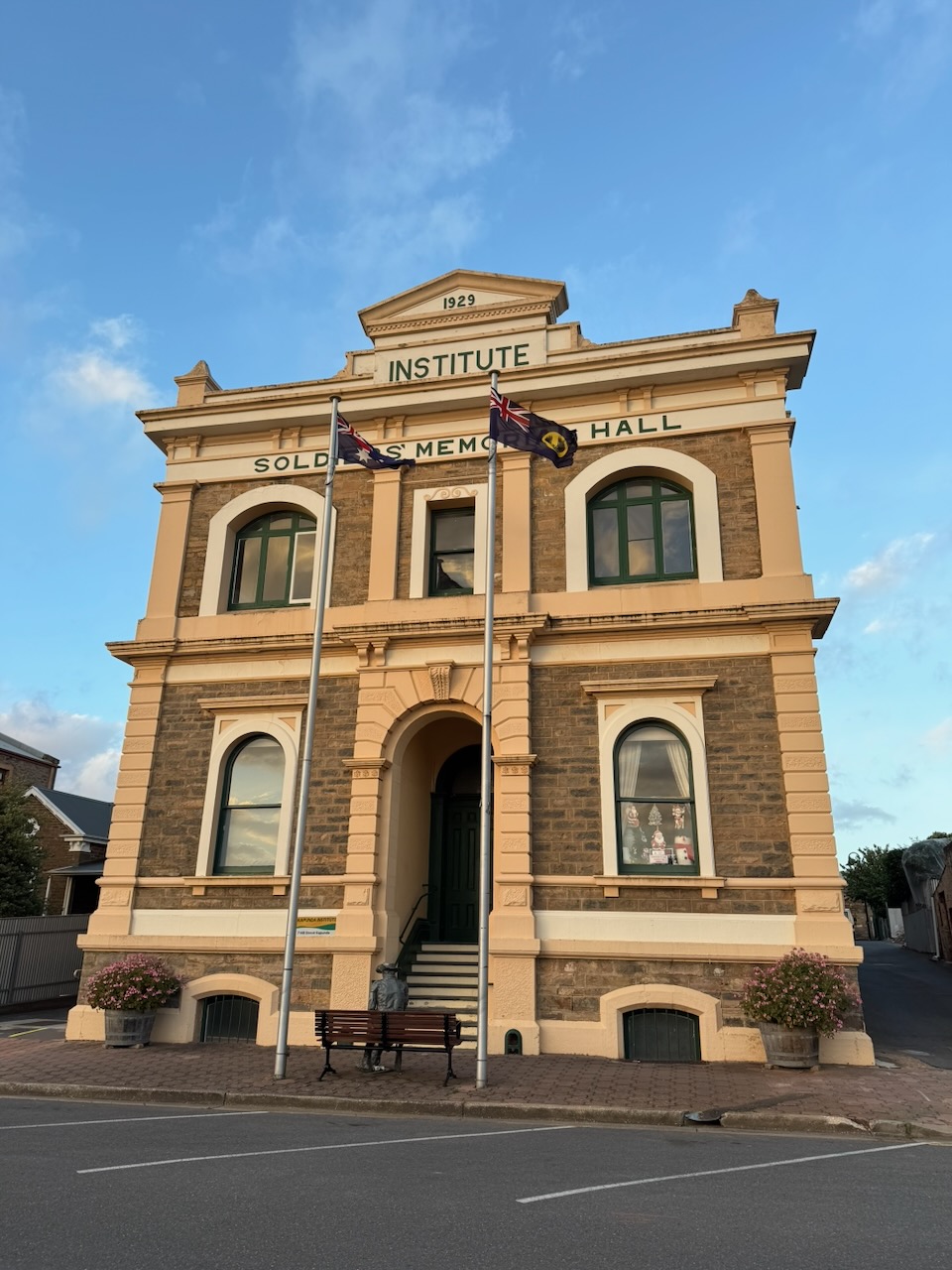
The Kapunda Institute Soldiers Memorial Hall is located on Hill Street. It was built in 1871.
The Kapunda Herald Printing Office was built in 1866.
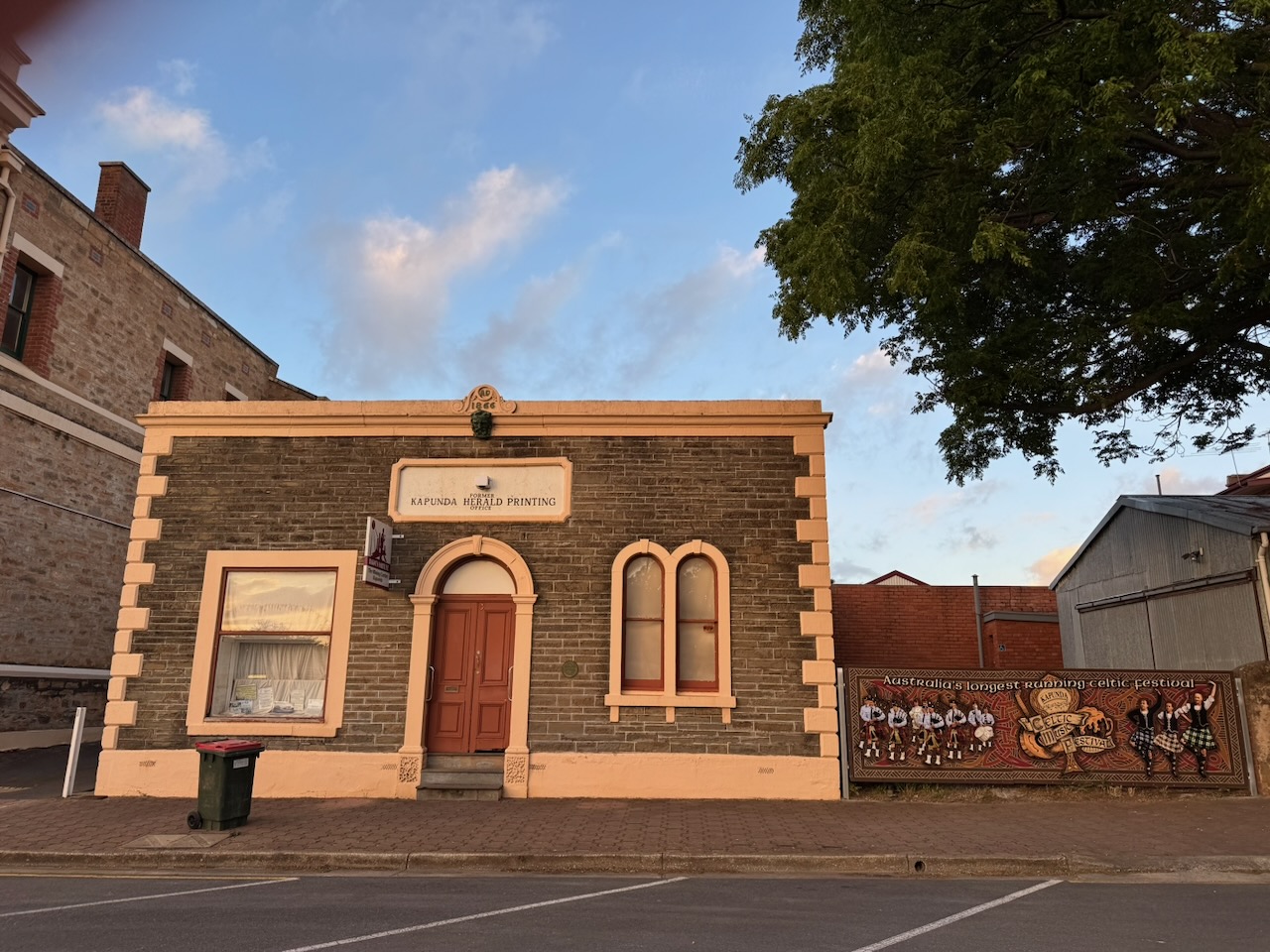
The Kapunda Herald was published in Kapunda between 1864 and 1951, and was founded by Charles Barton and Deutsche Zeitung. (State Libray SA 2026)
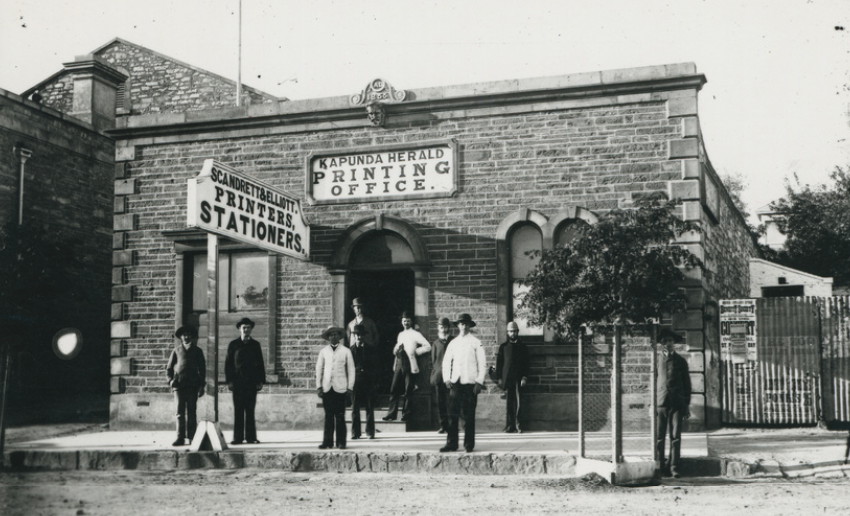
Above: The Kapunda Herald printing office, c. 1900. Image c/o State Library South Australia
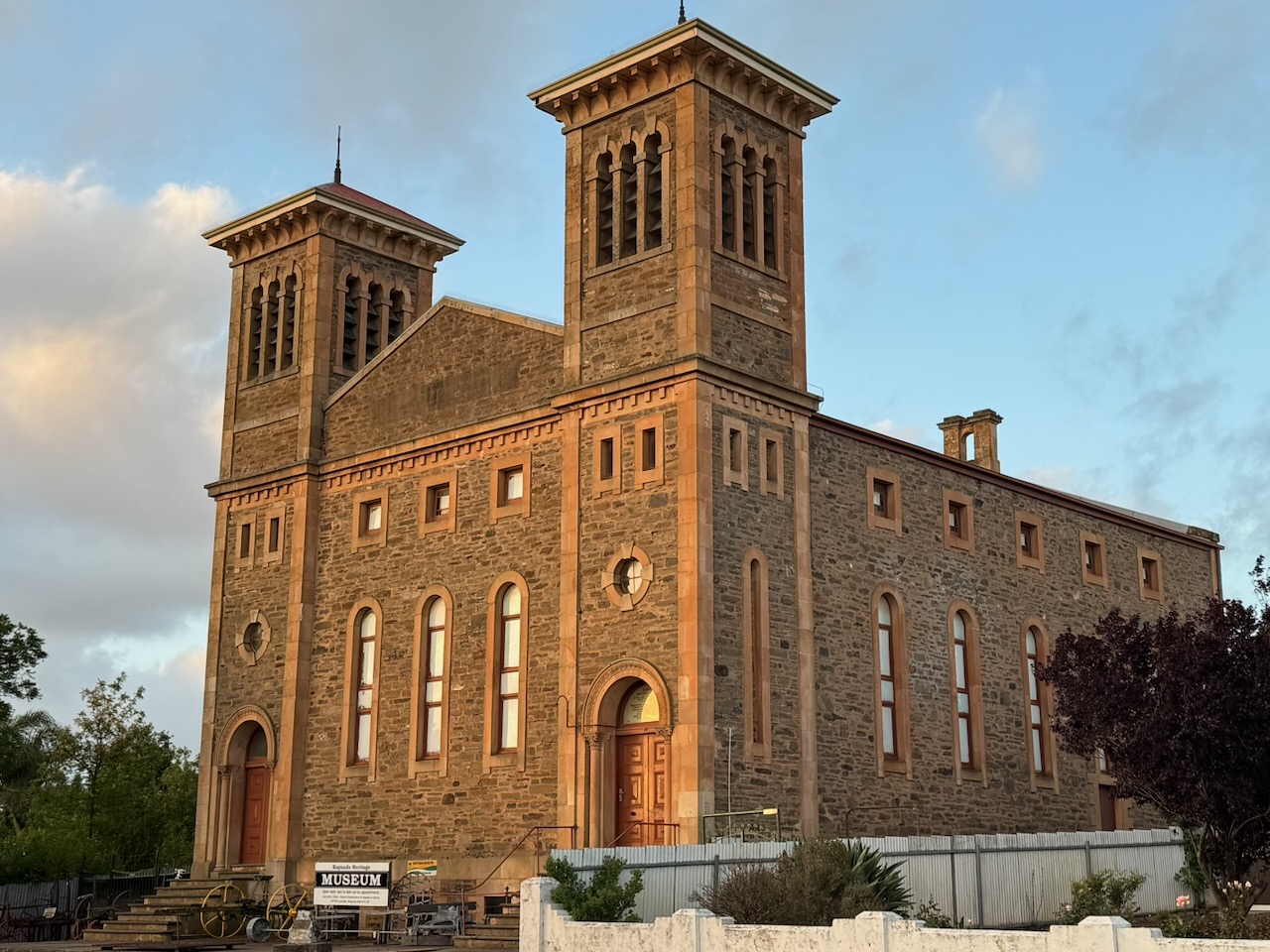
The very impressive Baptist church was built in 1866. It was used as a technical school from 1948 until the 1960s. It now houses the Kapunda Historical Society’s museum. (Sa.gov.au 2018)
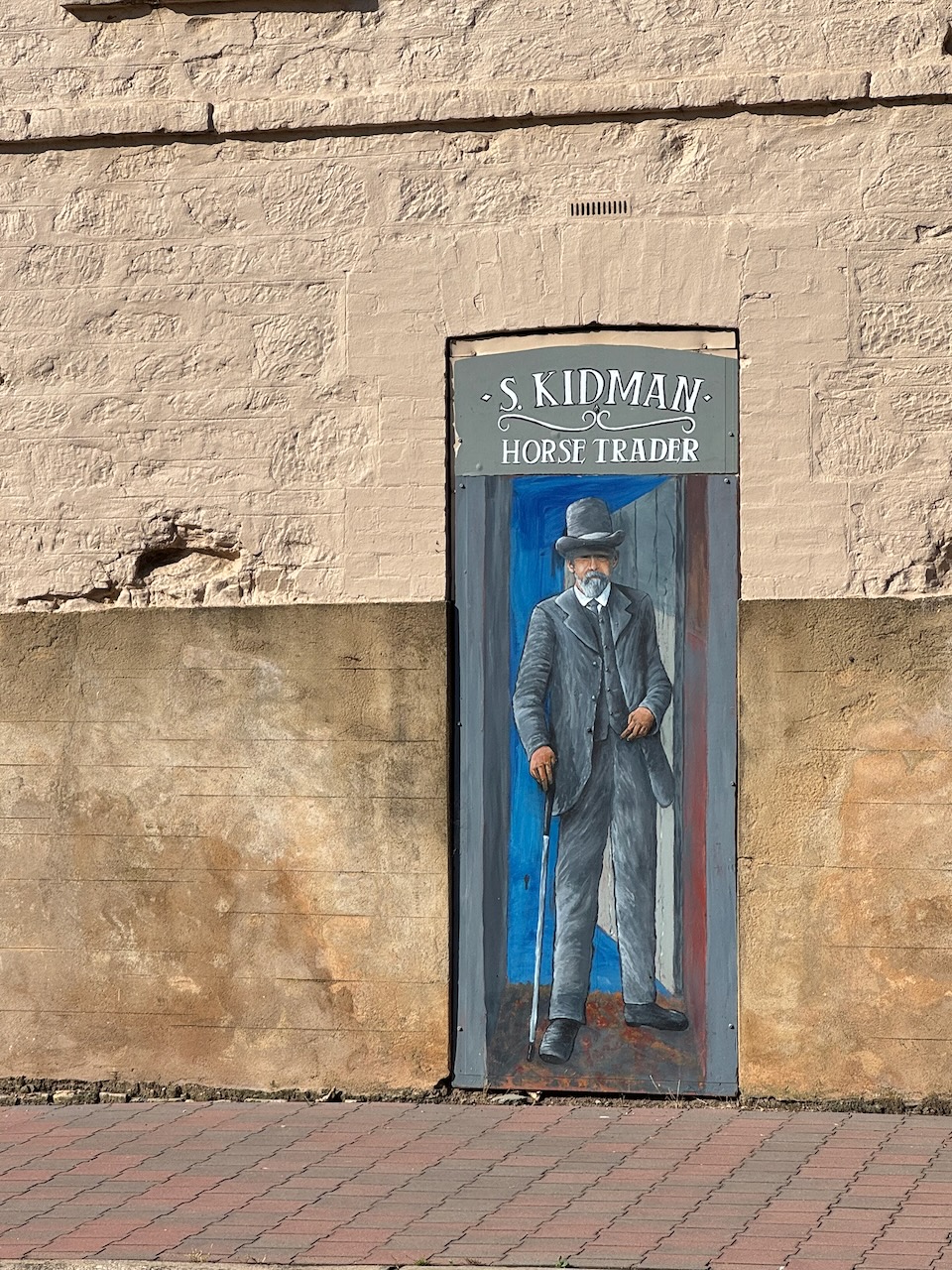
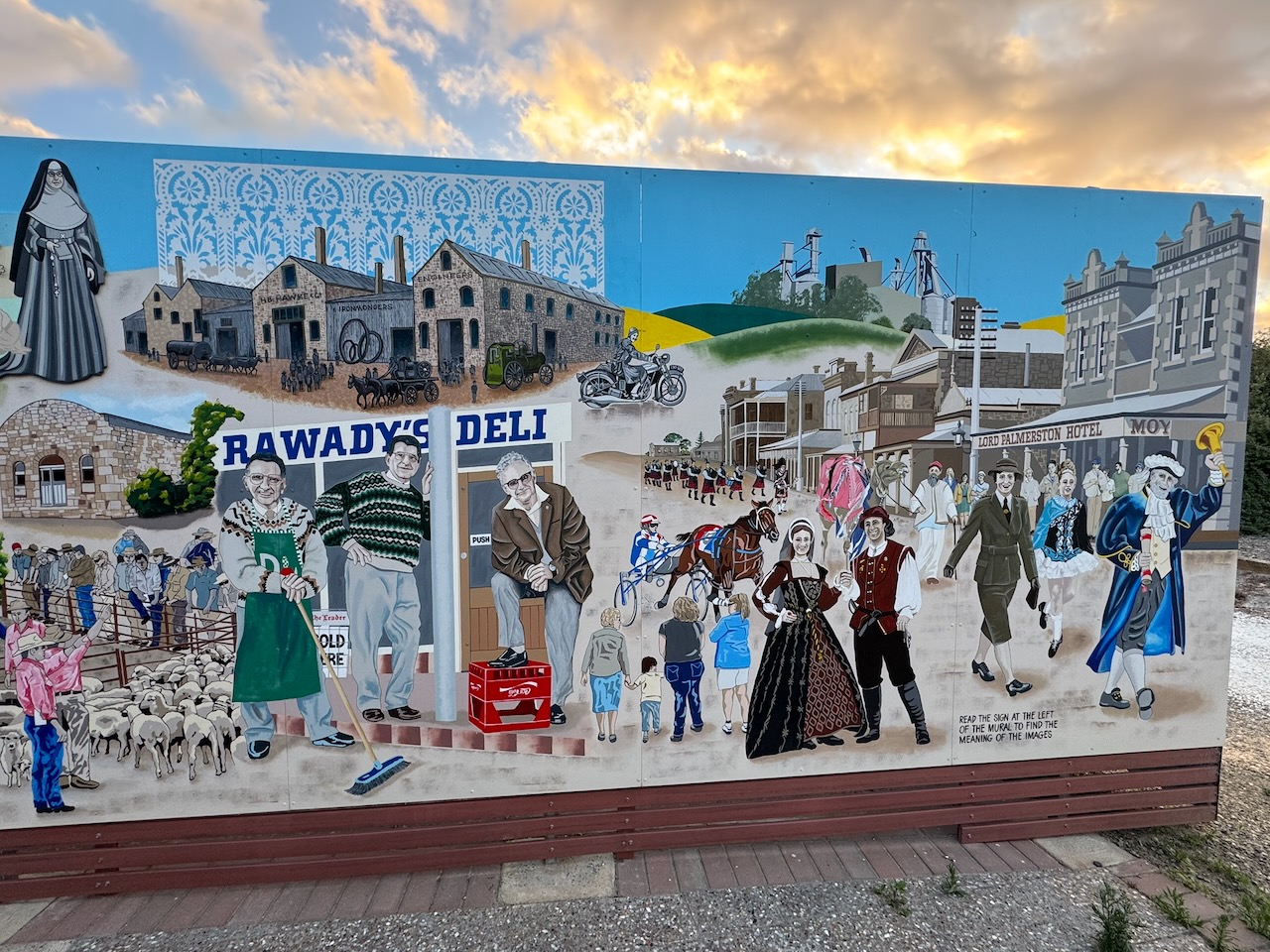
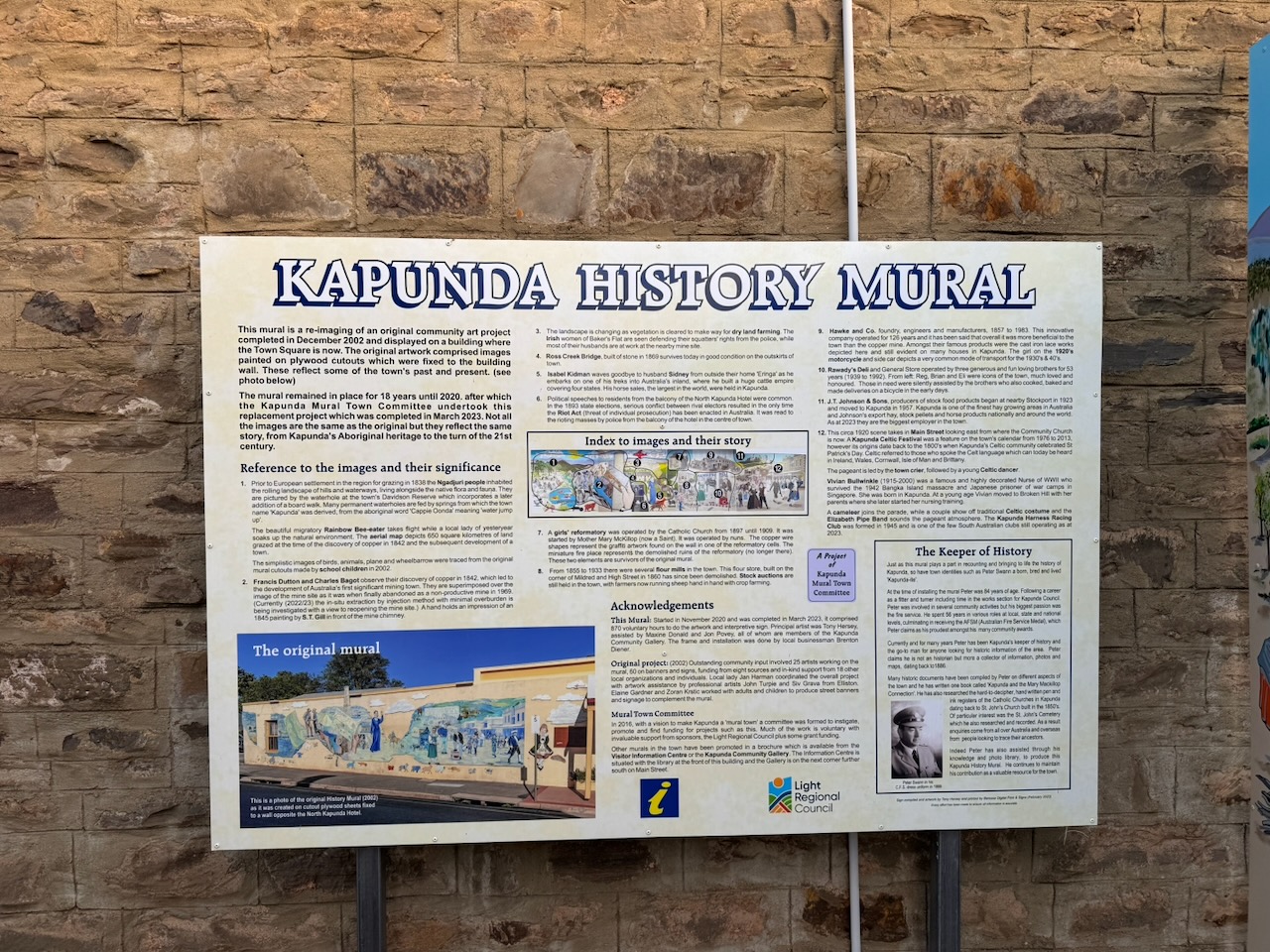
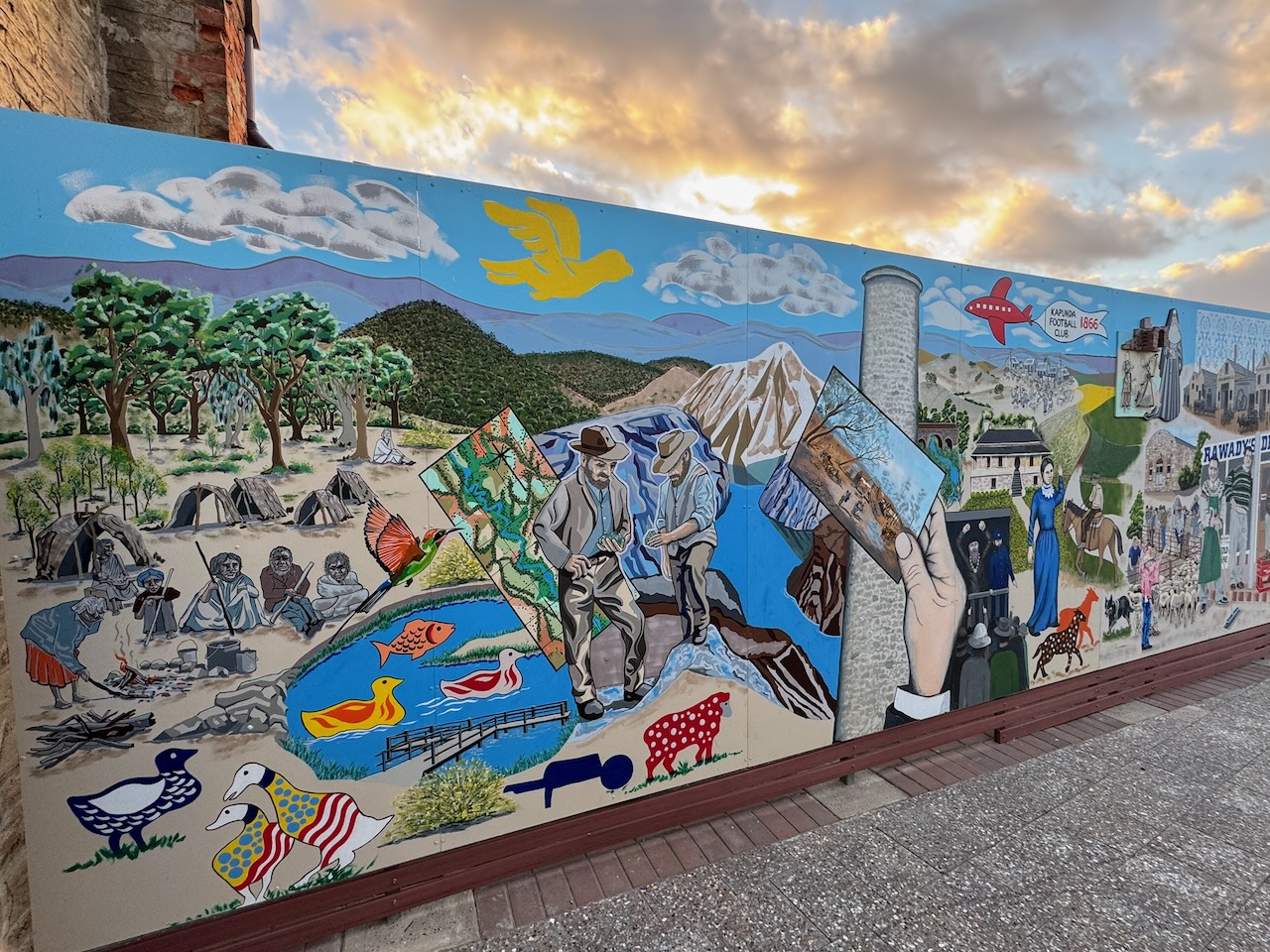
In Lucas Street, you can find a very impressive mural. It is one of 13 murals in Kapunda, part of the Kapunda Mural Town Project. (ABC 2024)
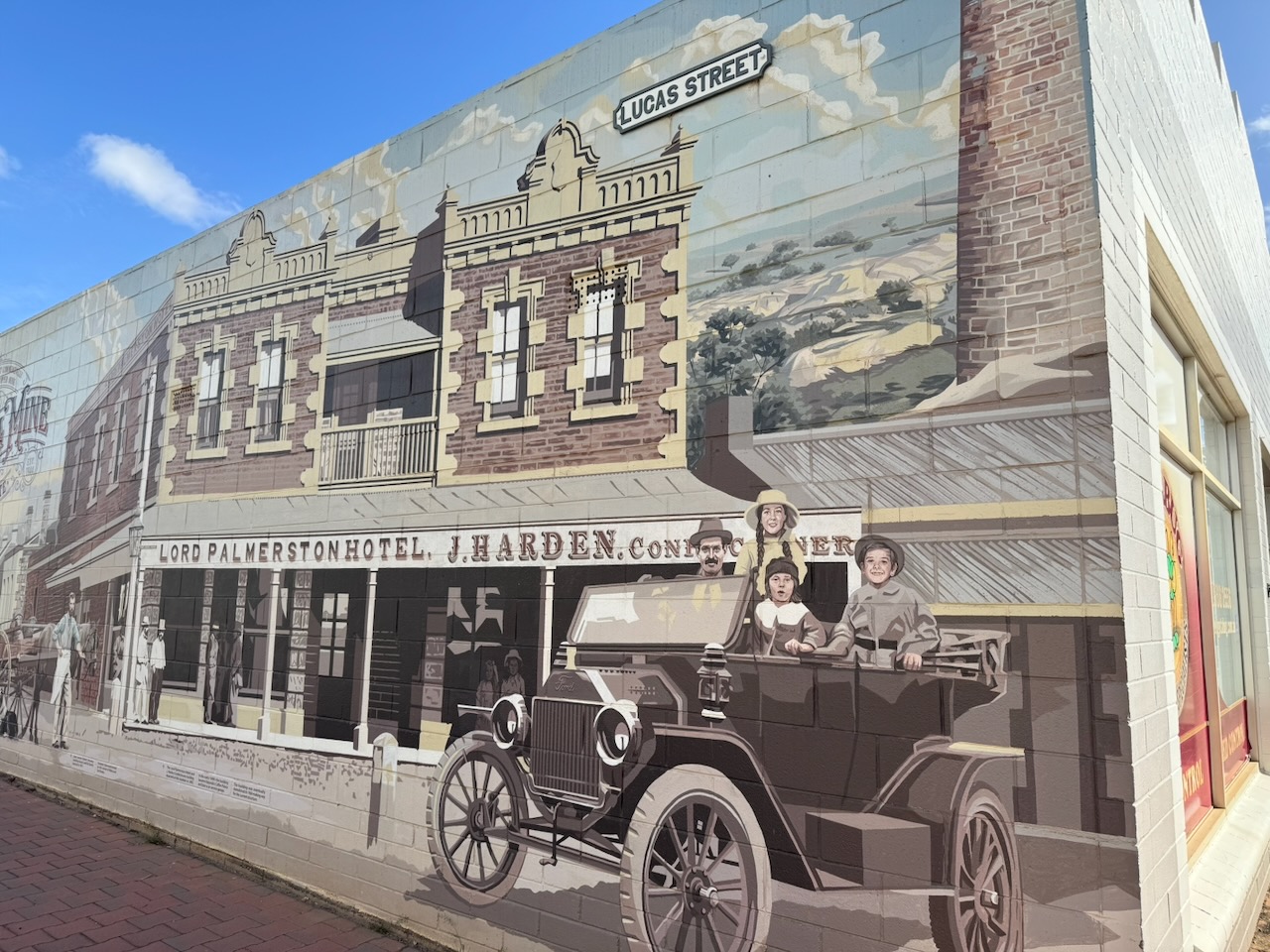
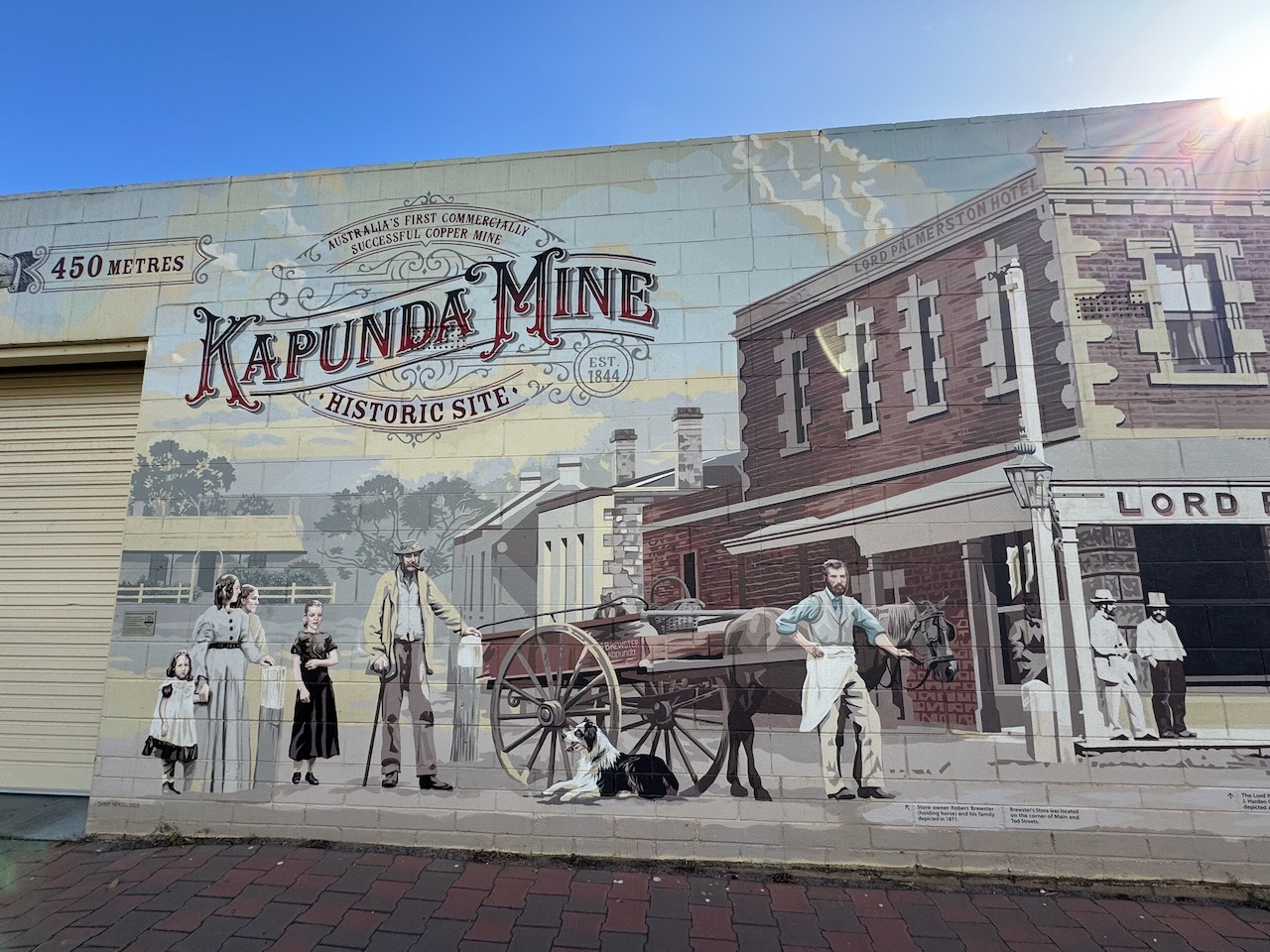
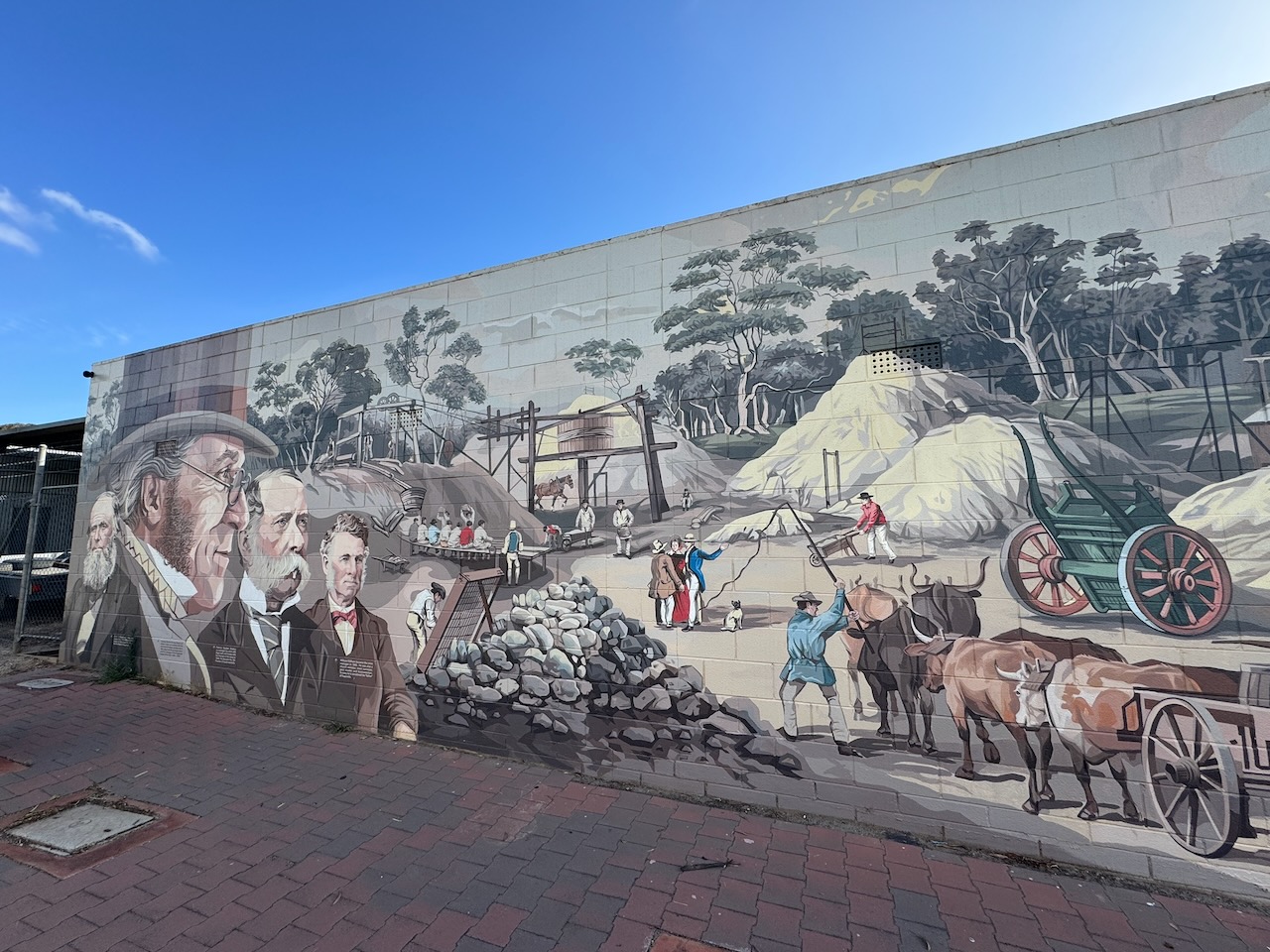
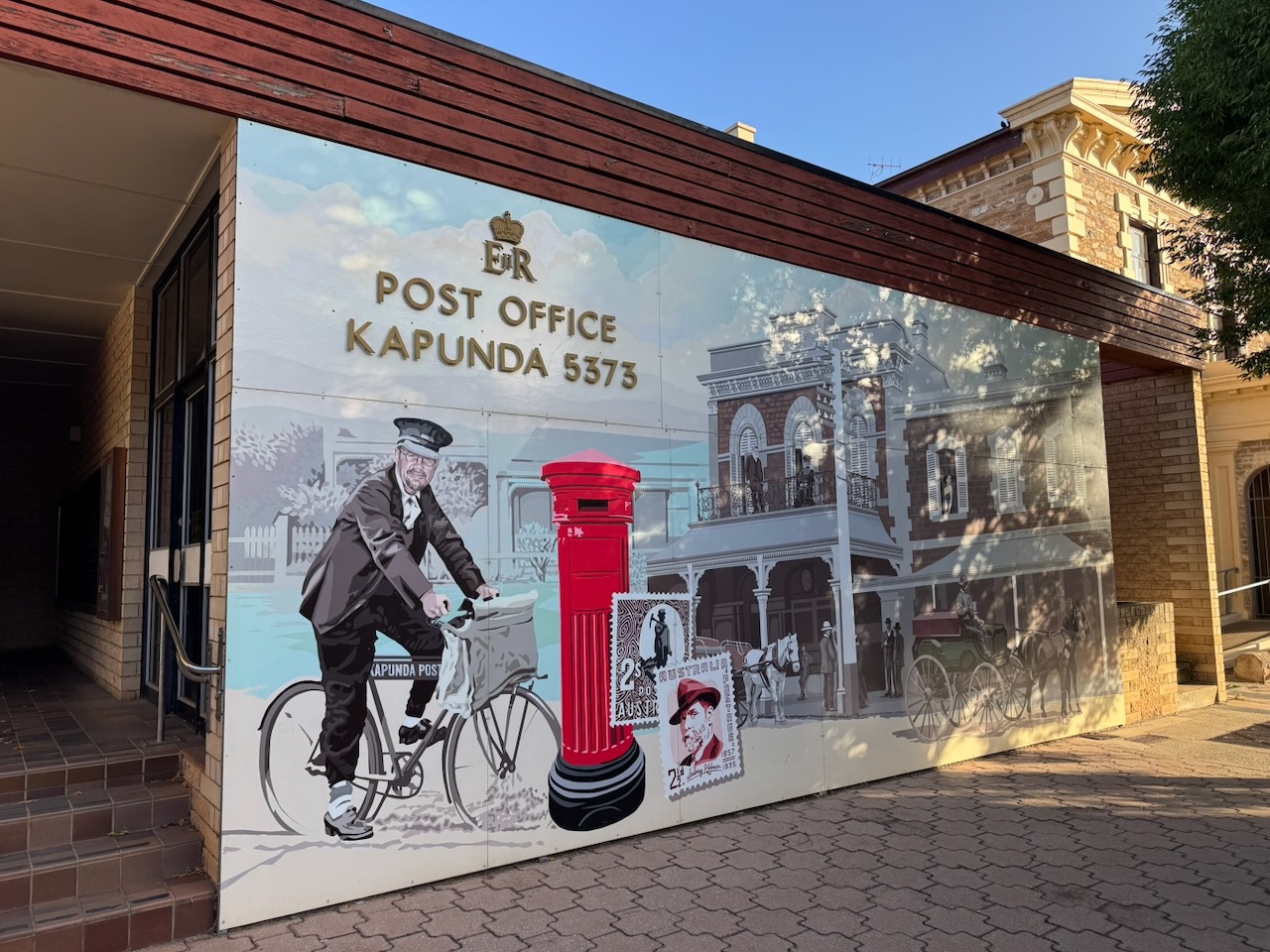
The mural on the Kapunda Post Office was nominated for a national art award. It depicts the original Post Office of 1910 and features a postman on a bicycle and a bright red heritage post box. (ABC 2024)
The Kapunda History Mural features Kapunda’s history, dating back to Aboriginal times to the turn of the 21st century.
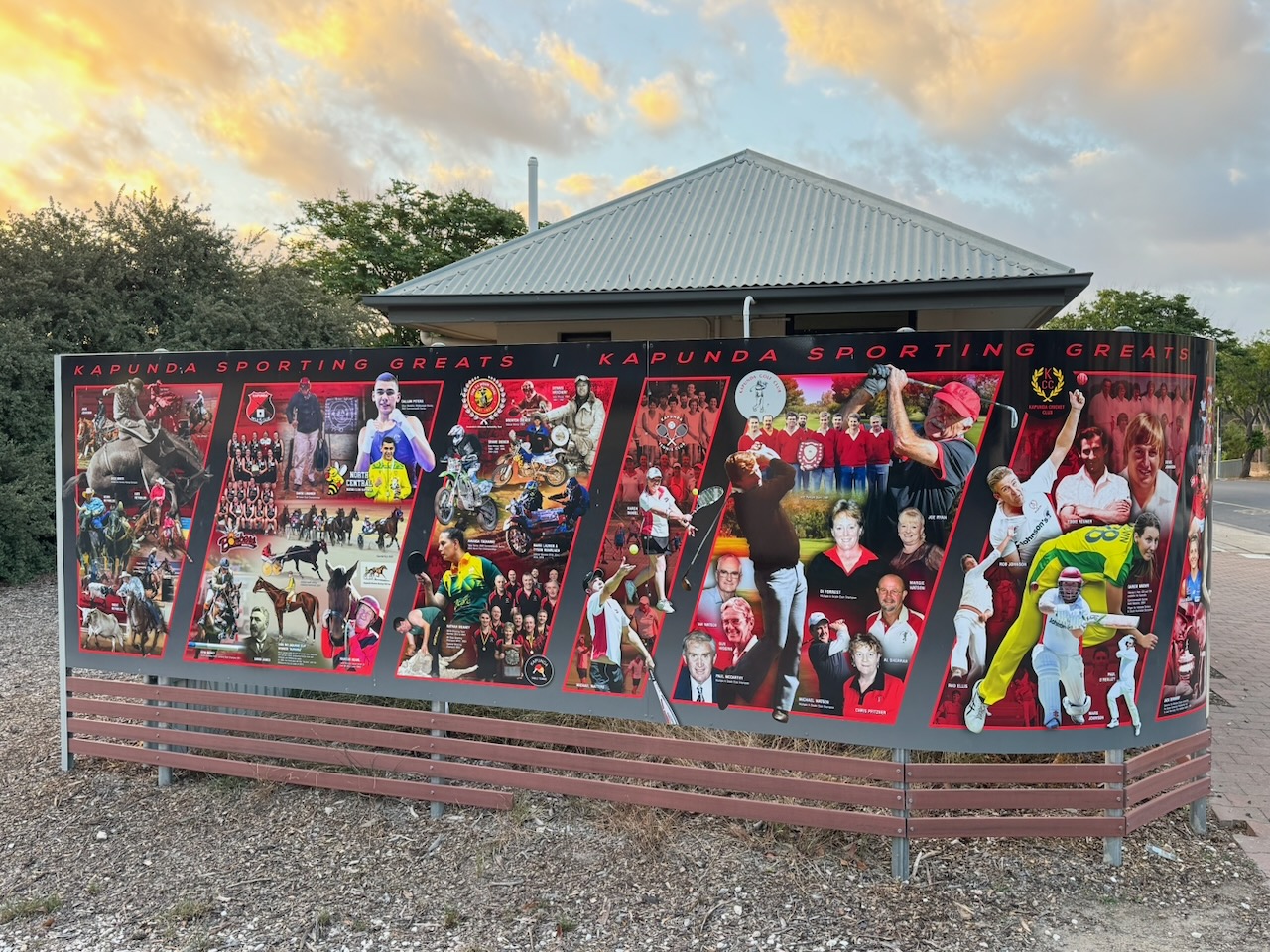
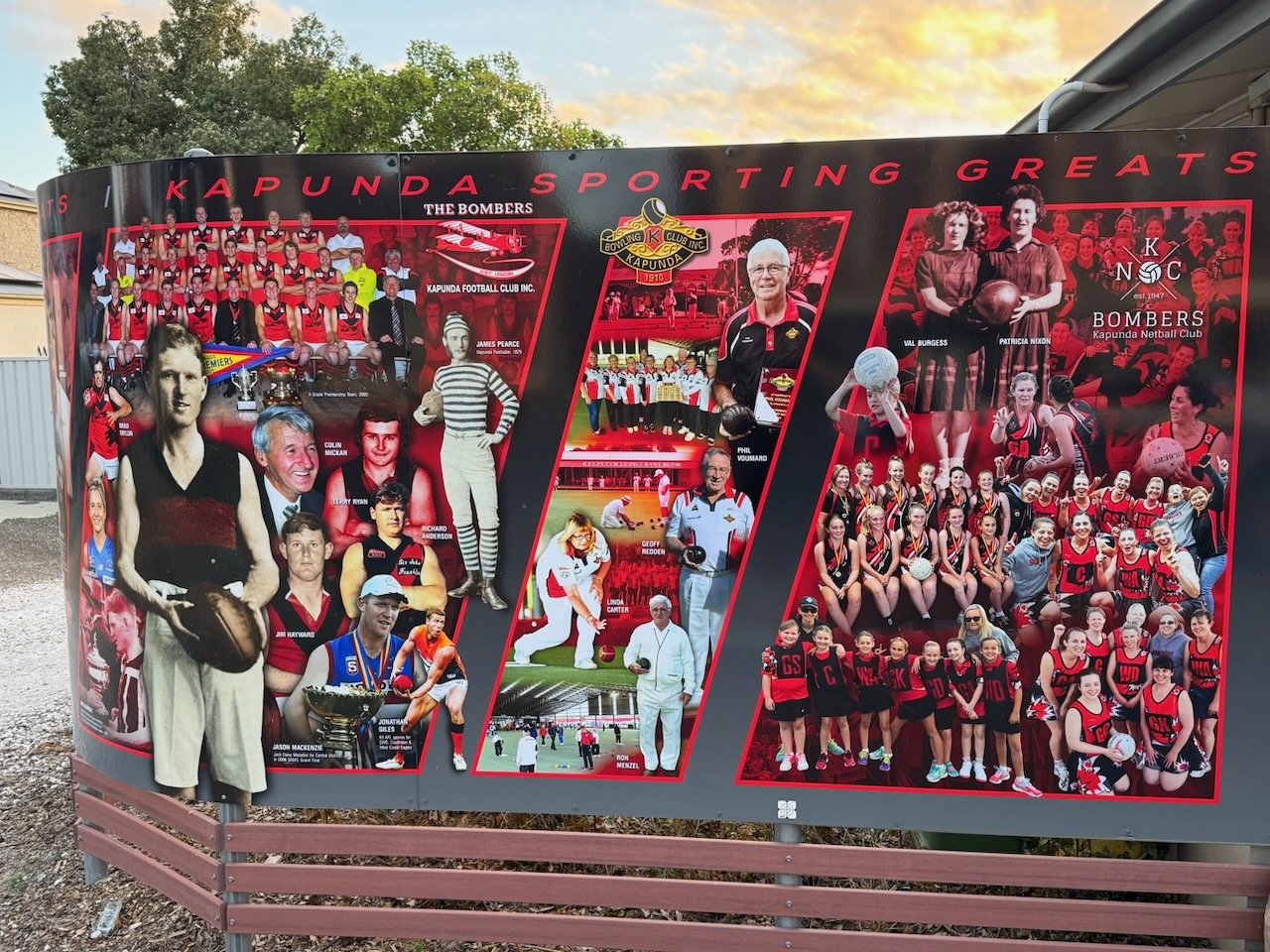
Adjacent, you can view a mural of Kapunda’s sporting greats.
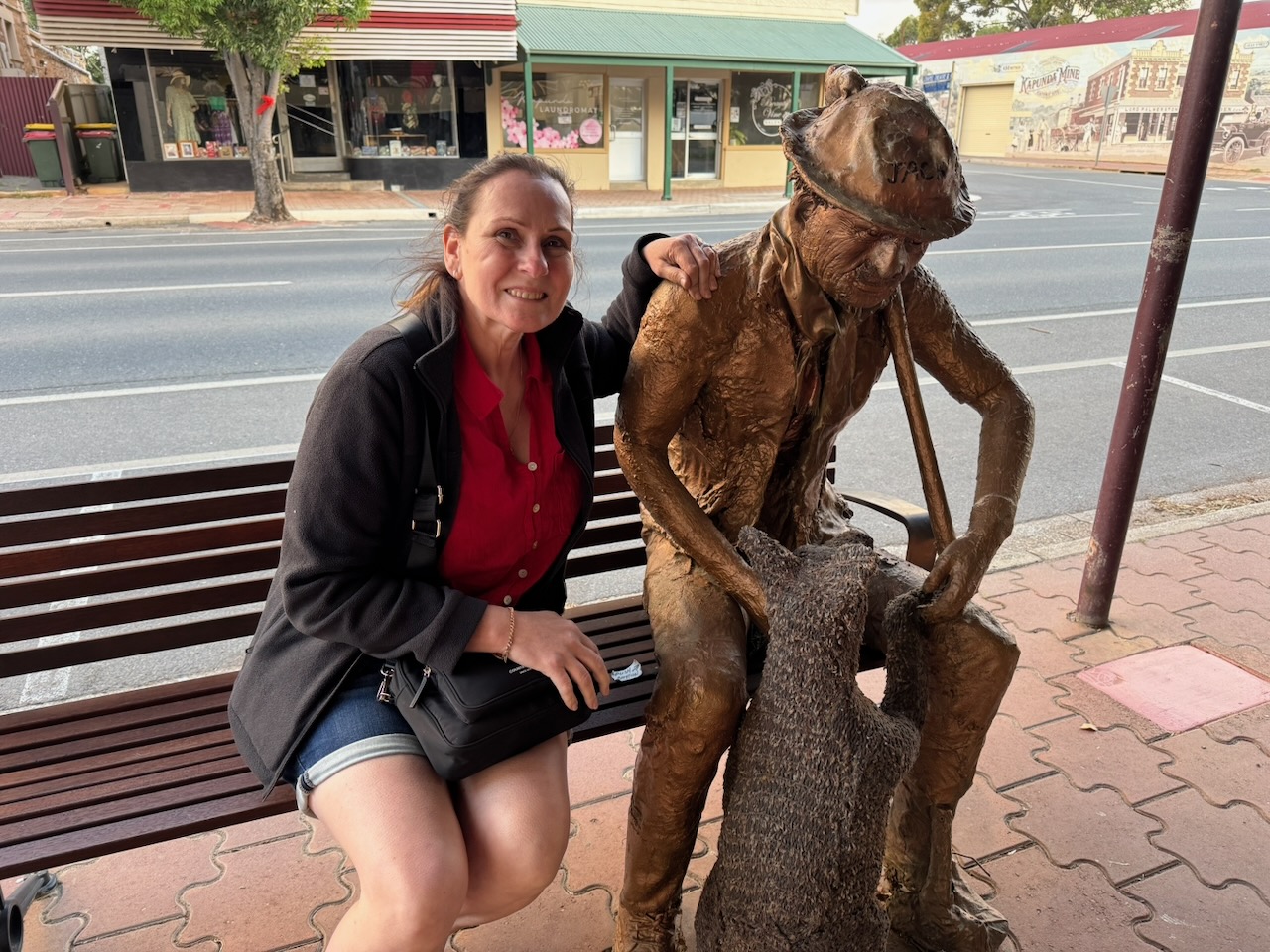
On the main street, we found this statue of a miner, taking a rest on a bench.
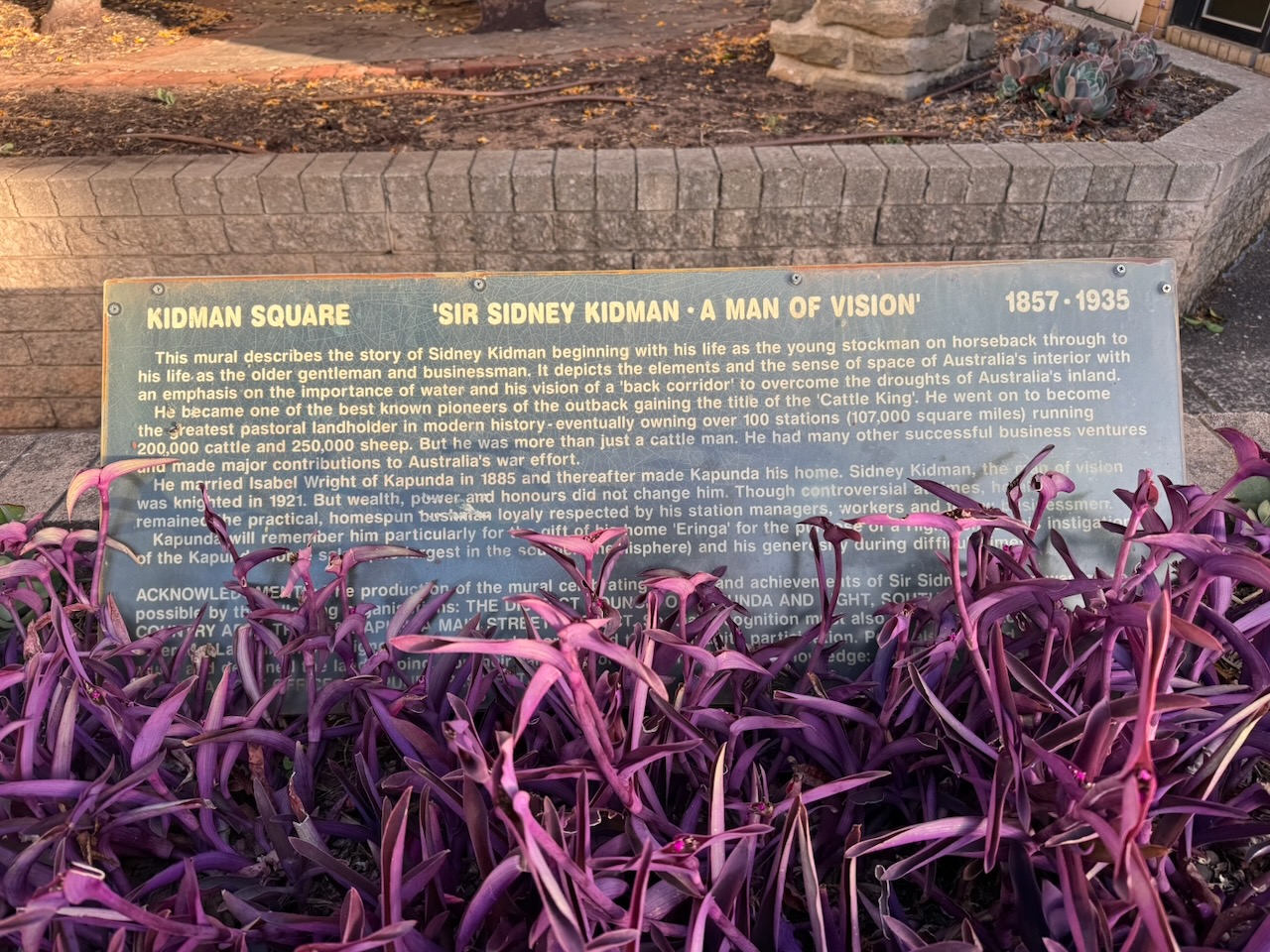
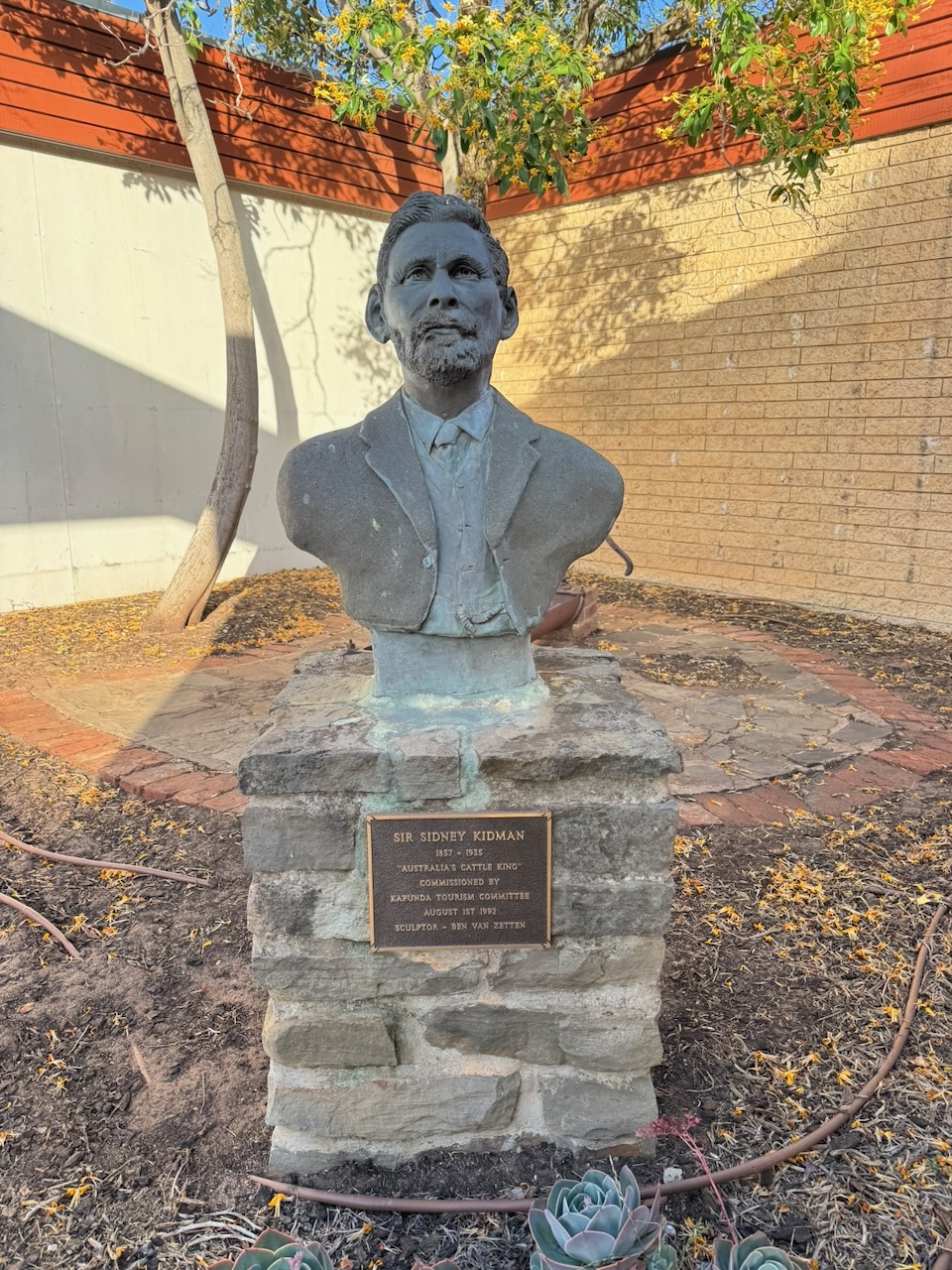
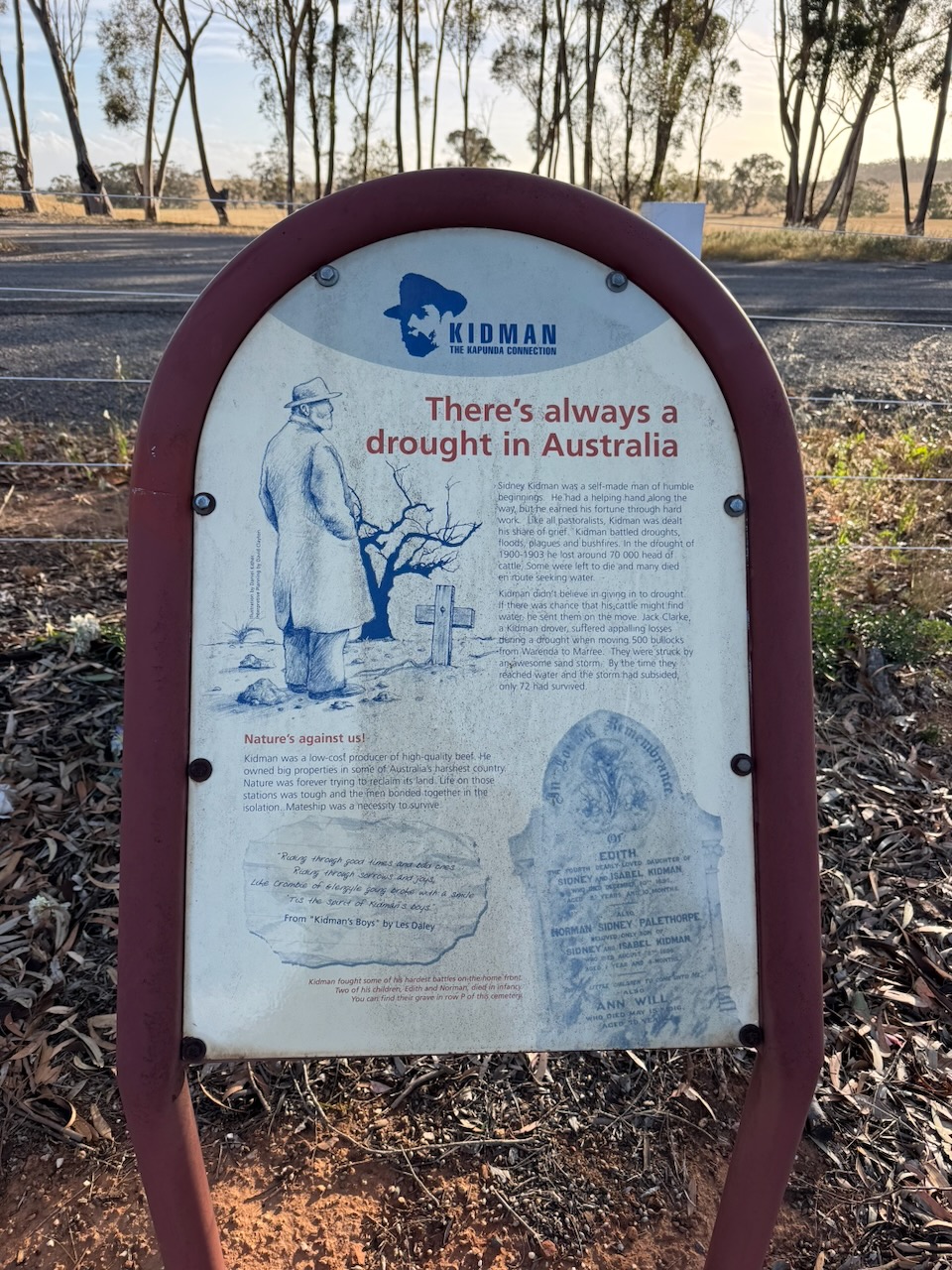
In Kidman Square is a monument for Sir Sidney Kidman, an Australian pastoralist and entrepreneur who was known as ‘the Cattle King’. He either owned or co-owned large tracts of land in Australia. (Wikipedia 2025)
Marija and I then visited the Kapunda Mine Historic Site.
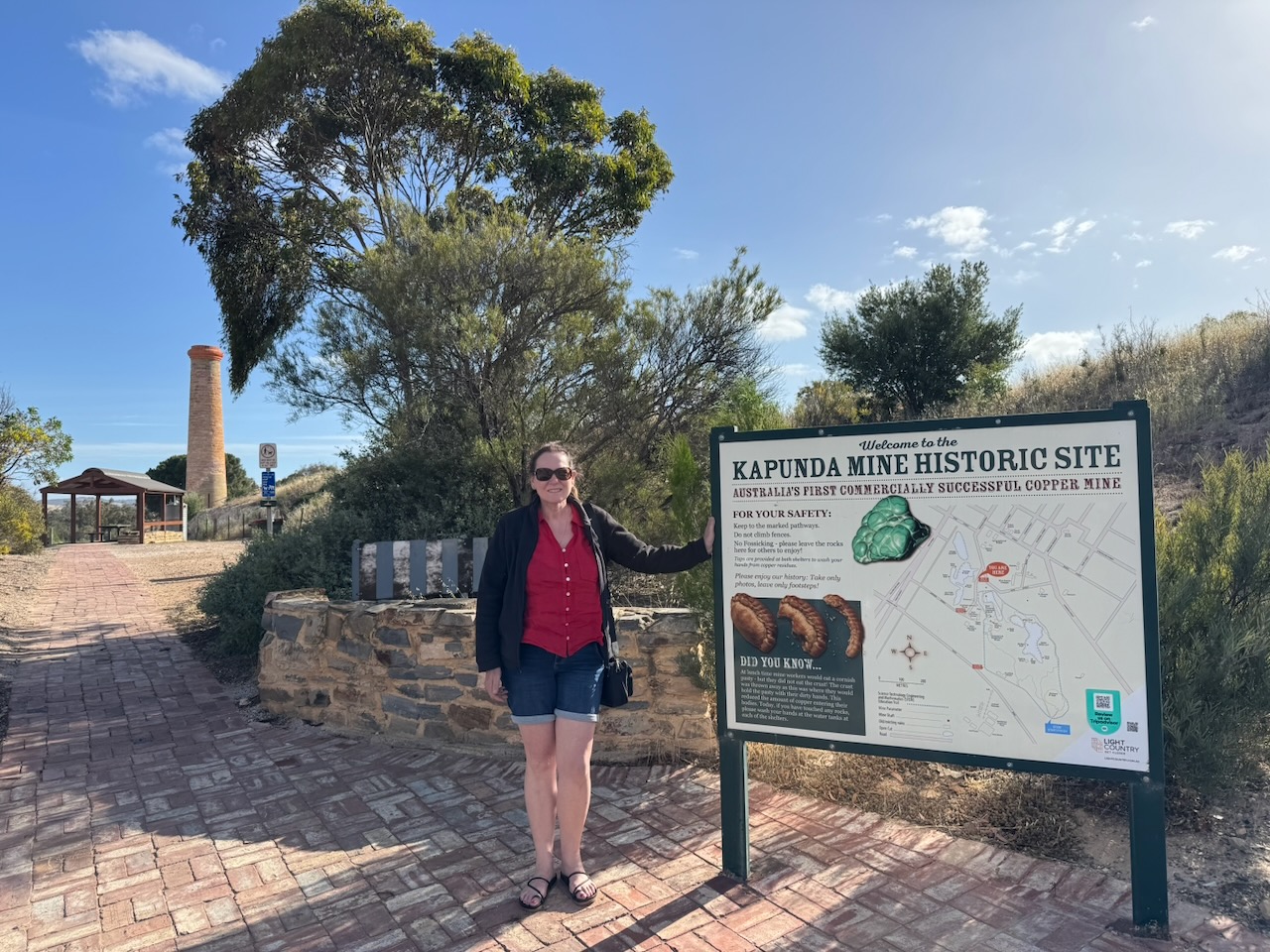
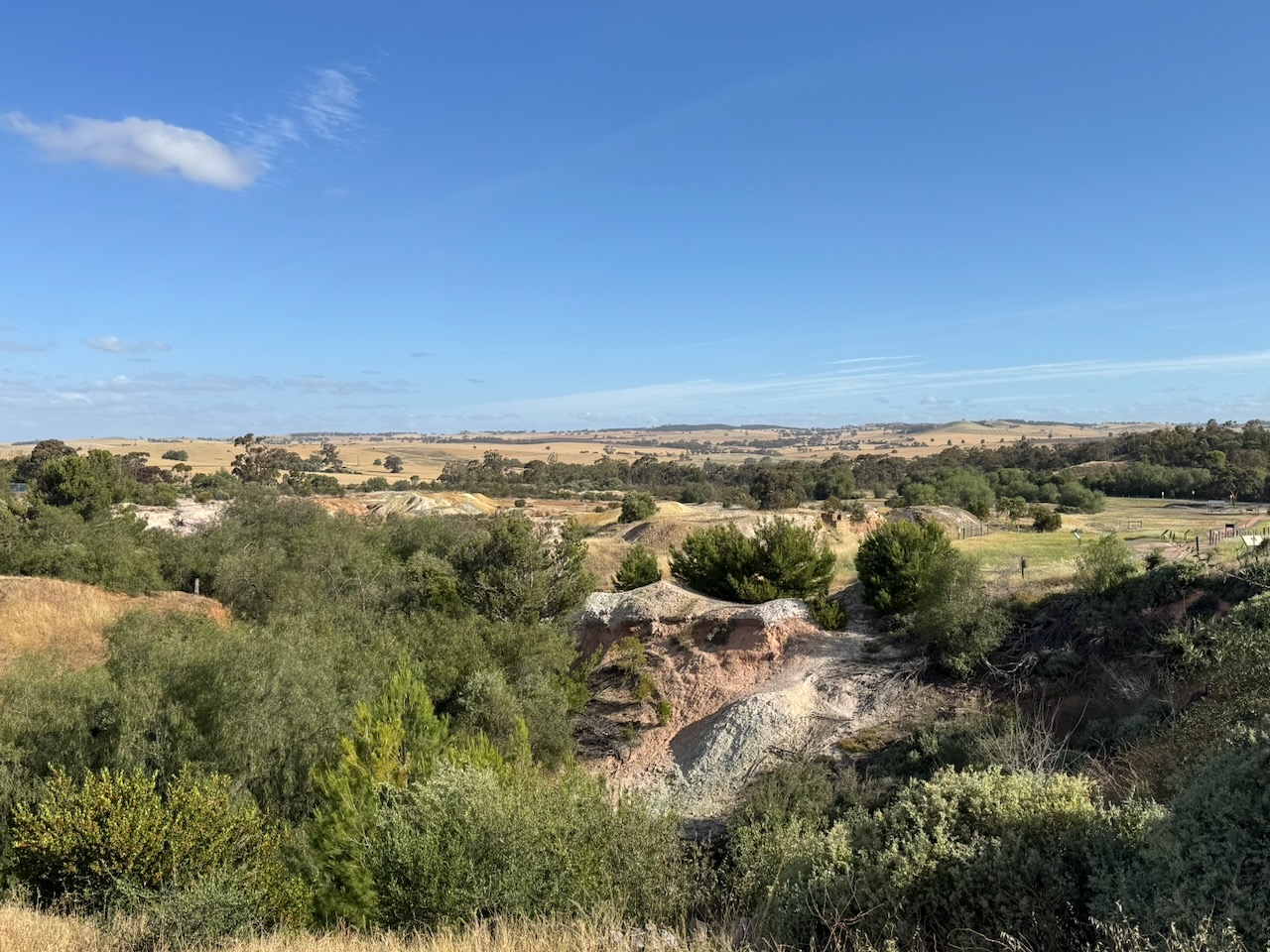
The Kapunda Mine was opened in 1833, following the discovery of copper in the district two years earlier in 1842. It was the first metal mine in South Australia to operate on a commercial level. South Australia had suffered a depression during the 1840s, and the Kapunda Mine assisted with the economic recovery of the colony of South Australia. The mine was also the first in South Australia to use large open-cut mining methods. The Kapunda mine closed in 1878. (SA.gov.au 2026)
The photograph below shows the mine in the 1860s.
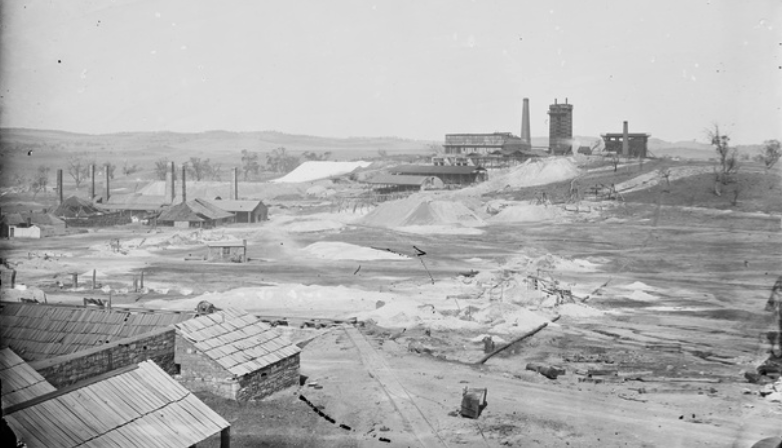
Above: the Kapunda Mine, c. 1860s. Image c/o State Library South Australia
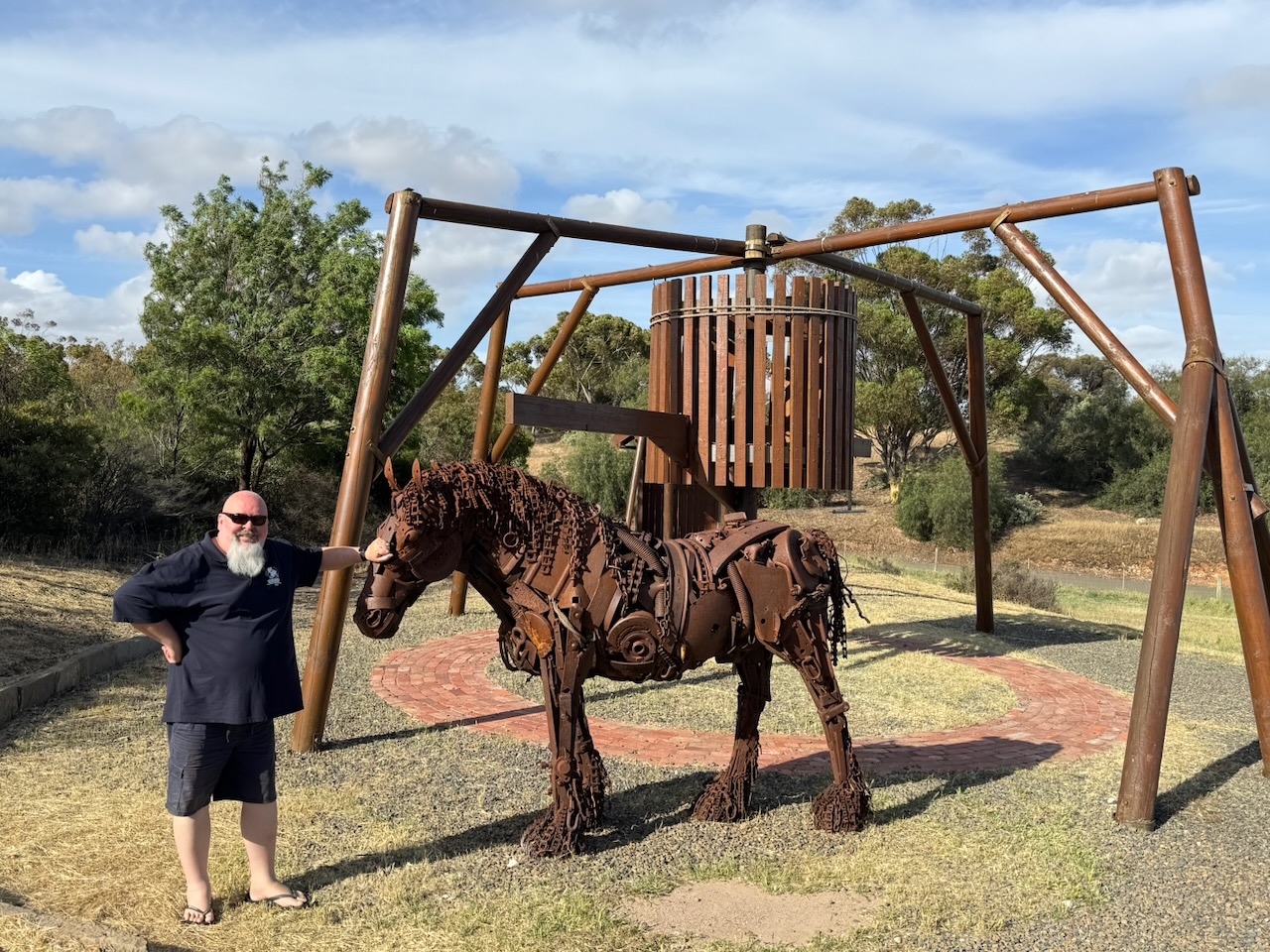
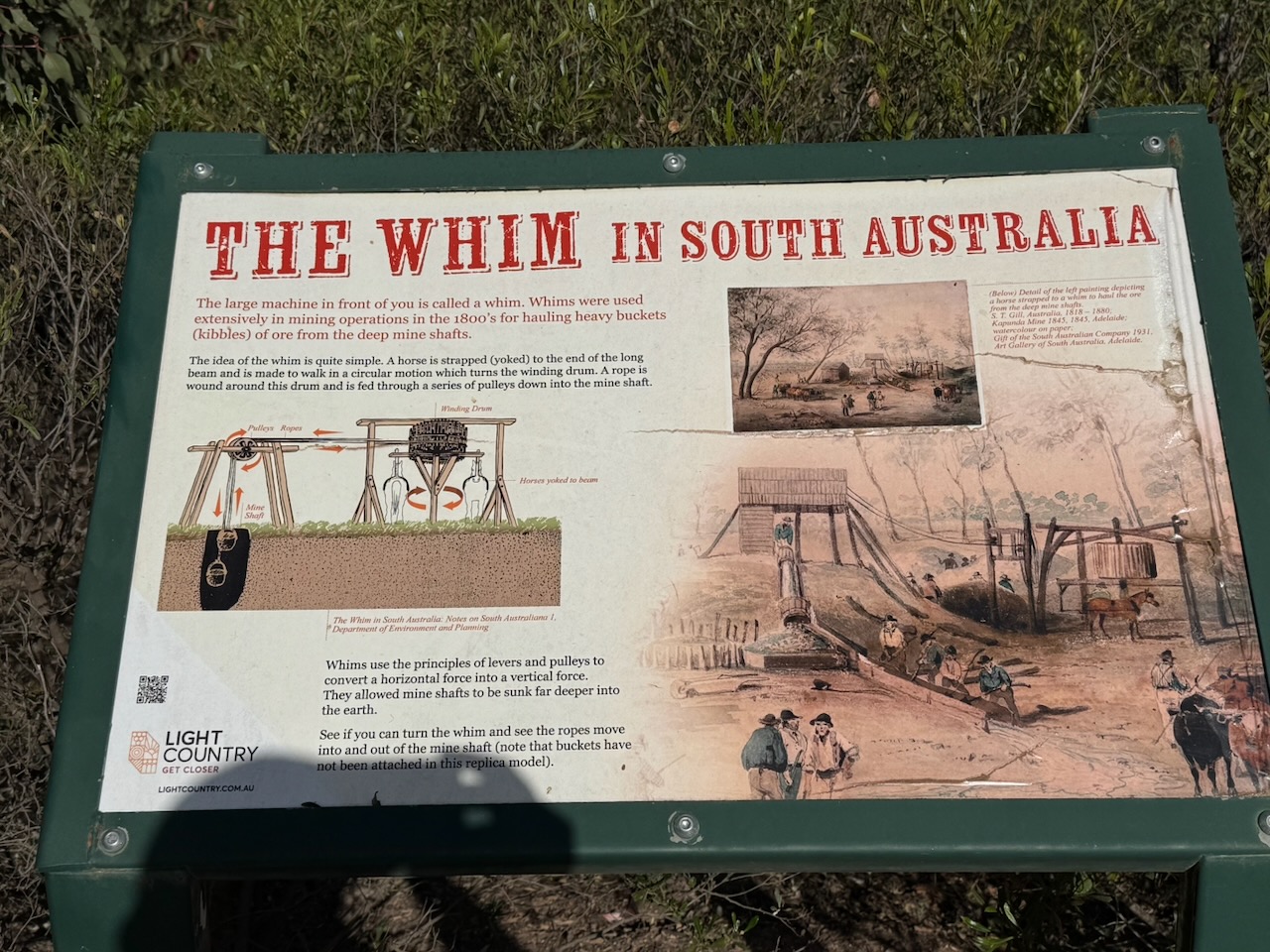
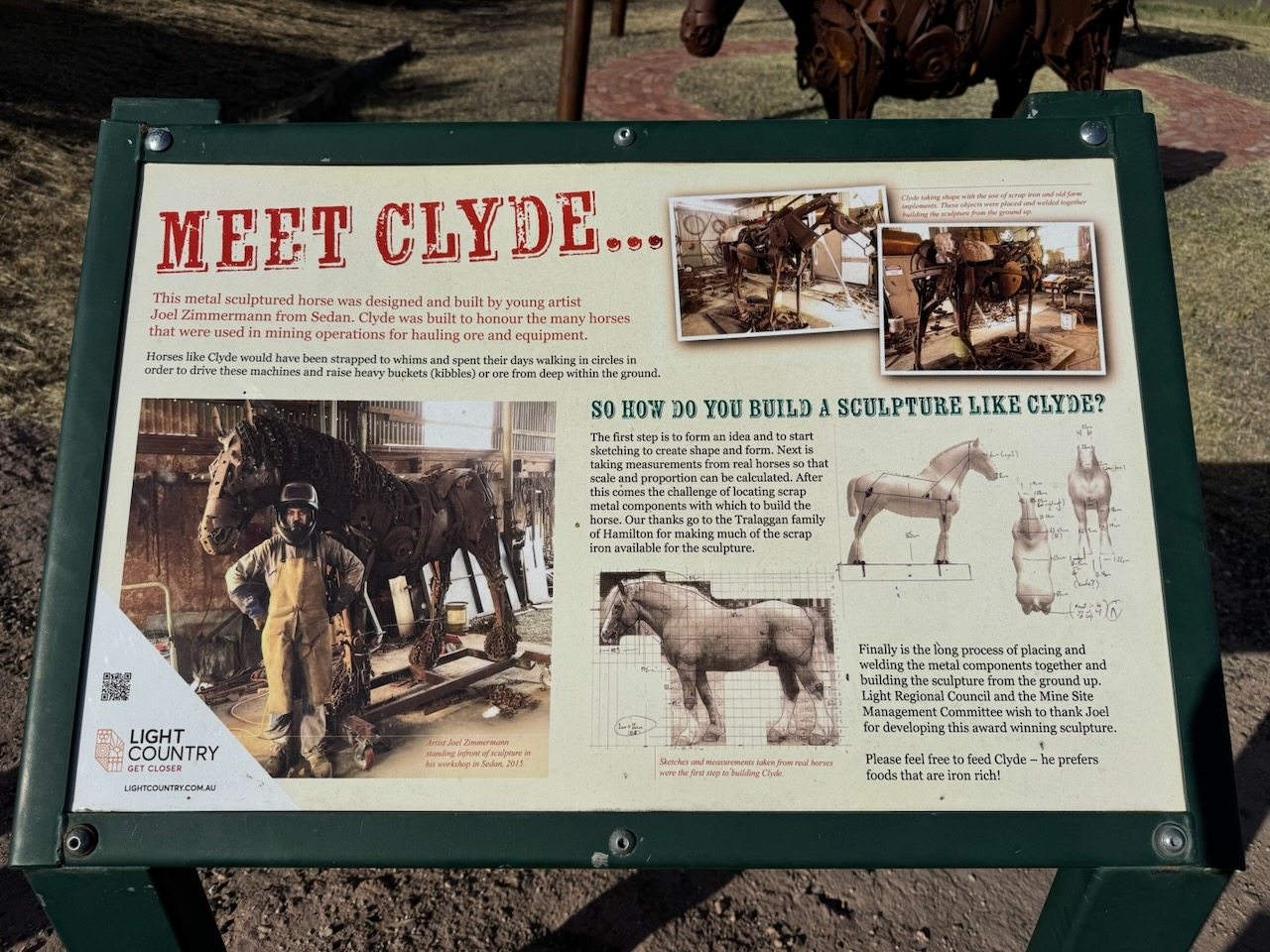
There is a replica of the first horse whim used at the mine site. Whims were used extensively in mining operations in the 1800s for hauling heavy buckets called kibbles of ore from the deep mine shafts. The horse sculpture is Clyde, designed and built by Joel Zimmermann from Sedan, to honour the numerous horses that were used in mining operations to haul ore and mining equipment.
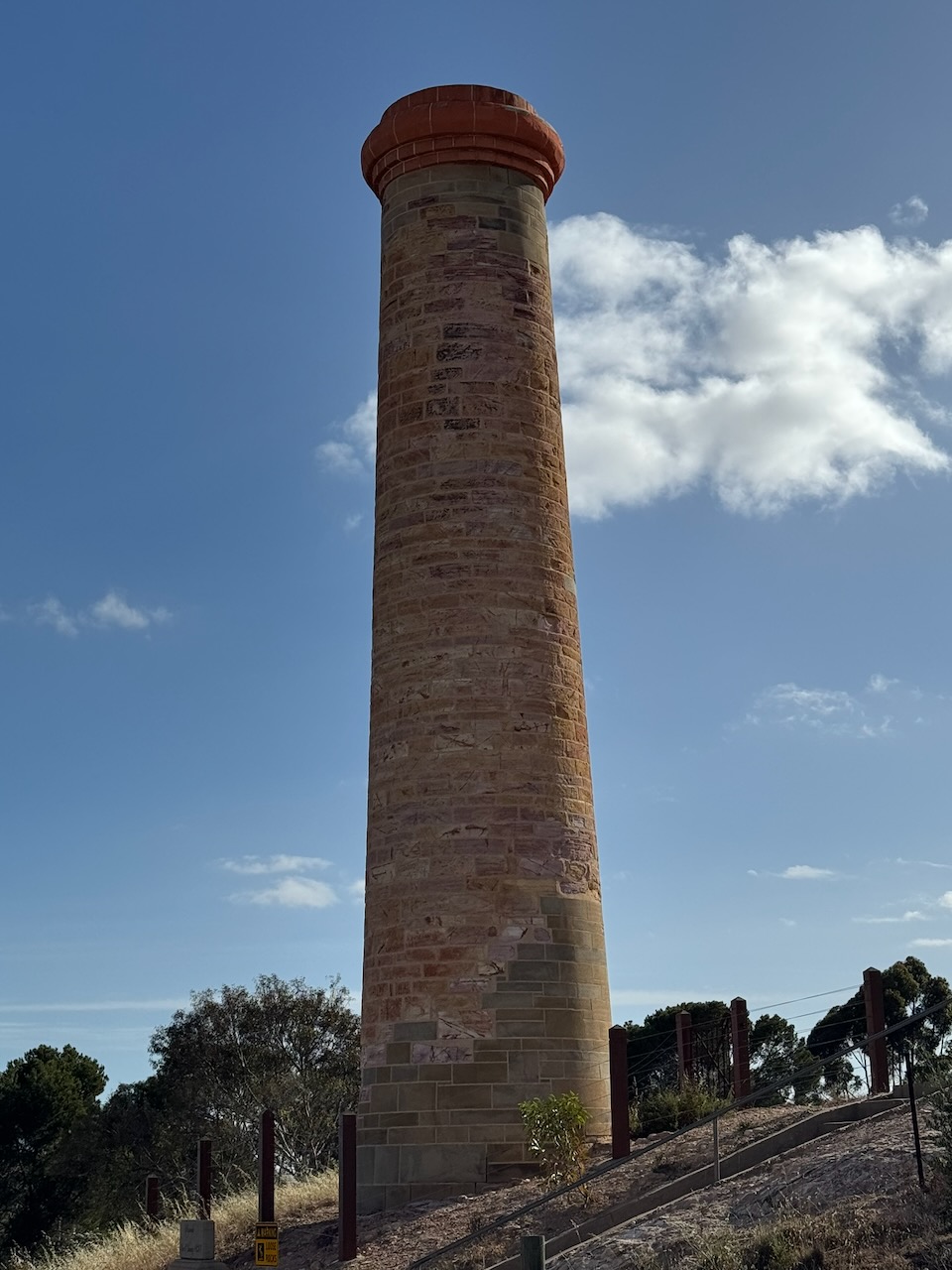
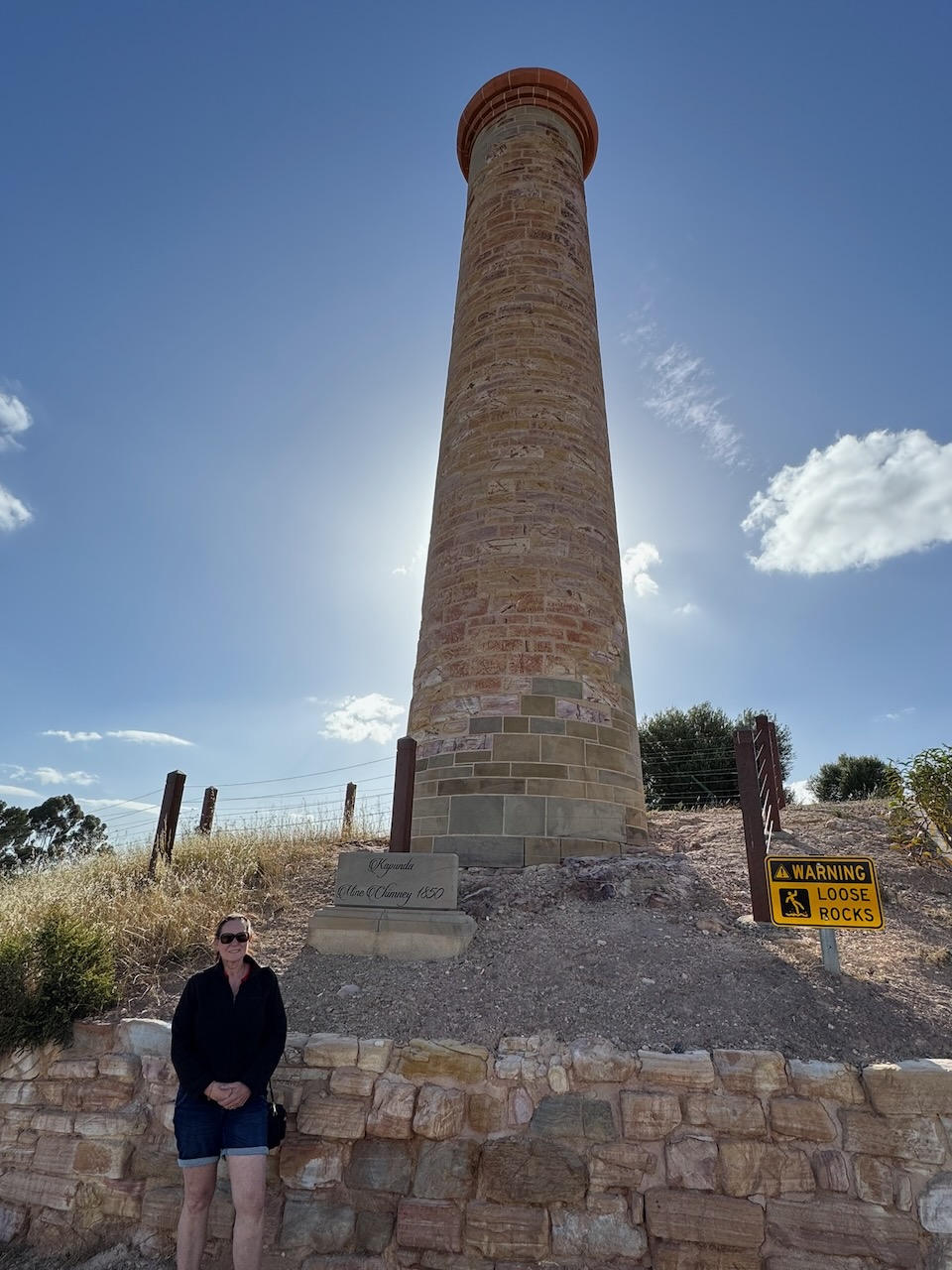
Certainly, the most impressive feature at the site is the mine chimney which was constructed in 1850.
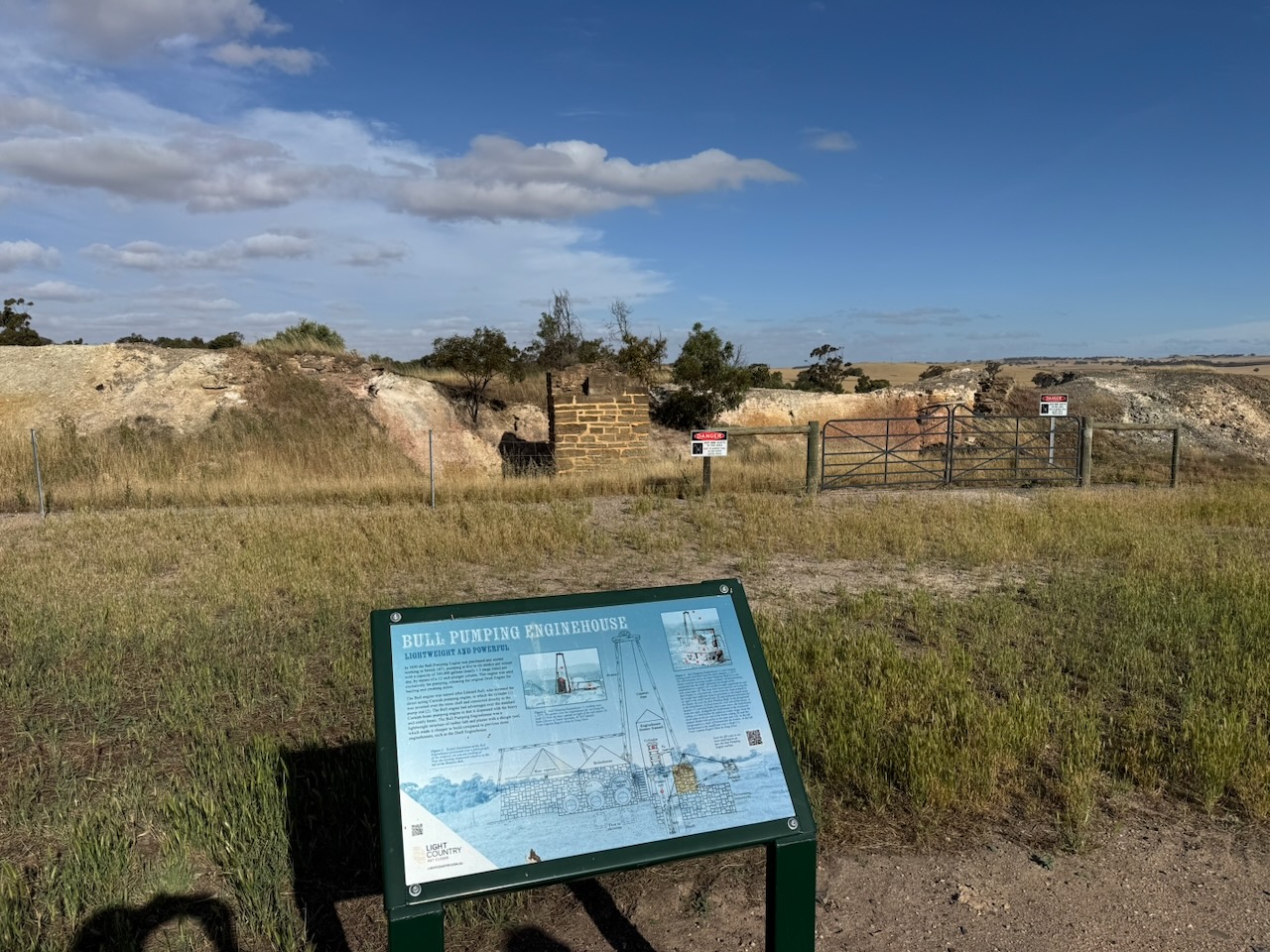
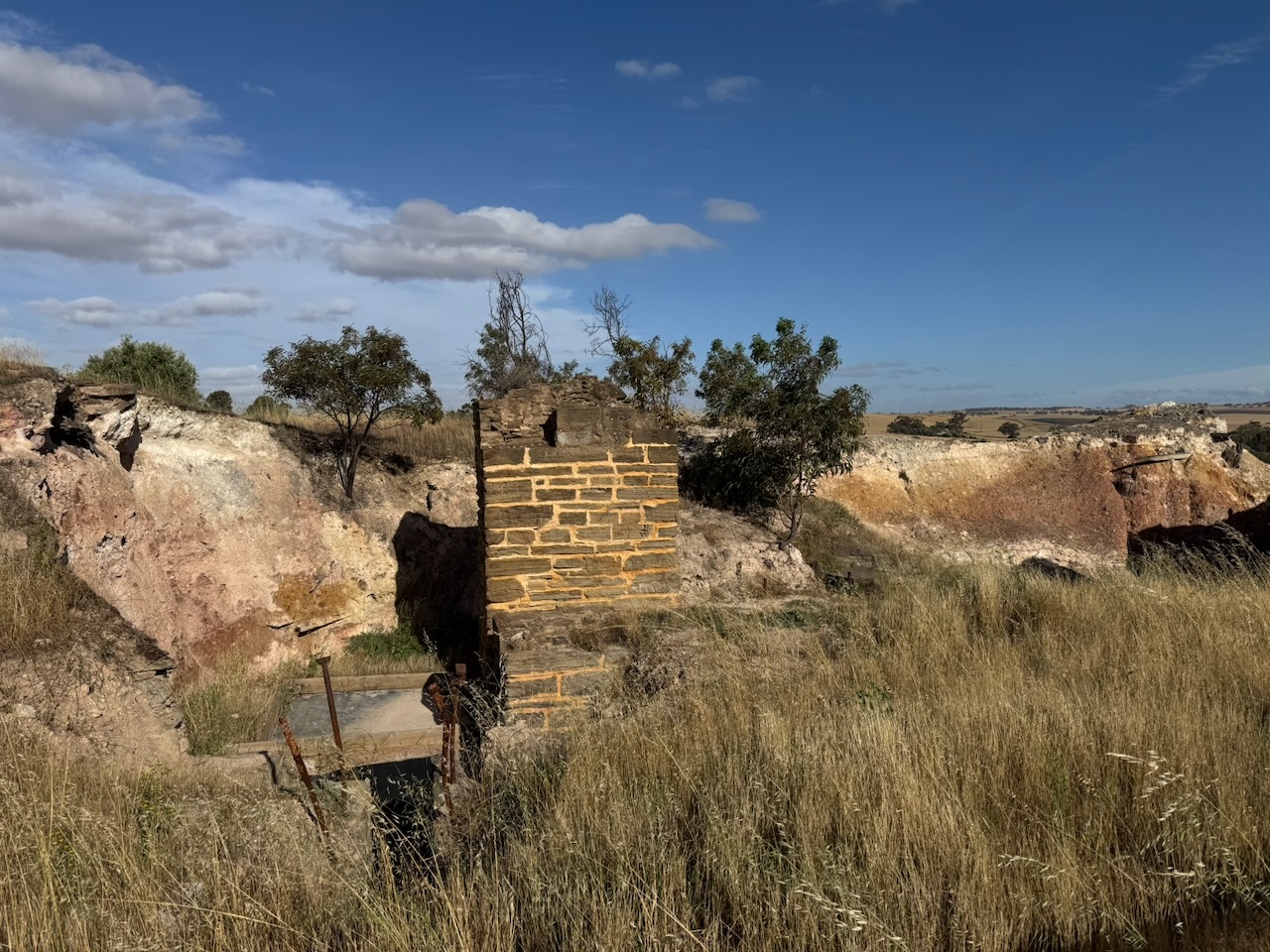
The ruins of the Bull Pumping enginehouse can also be viewed. In 1850, the Bull Pumping Engine was purchased and commenced operation in March 1851. The Bull engine was named after Edward Bull, who invented the direct-acting Cornish pumping engine
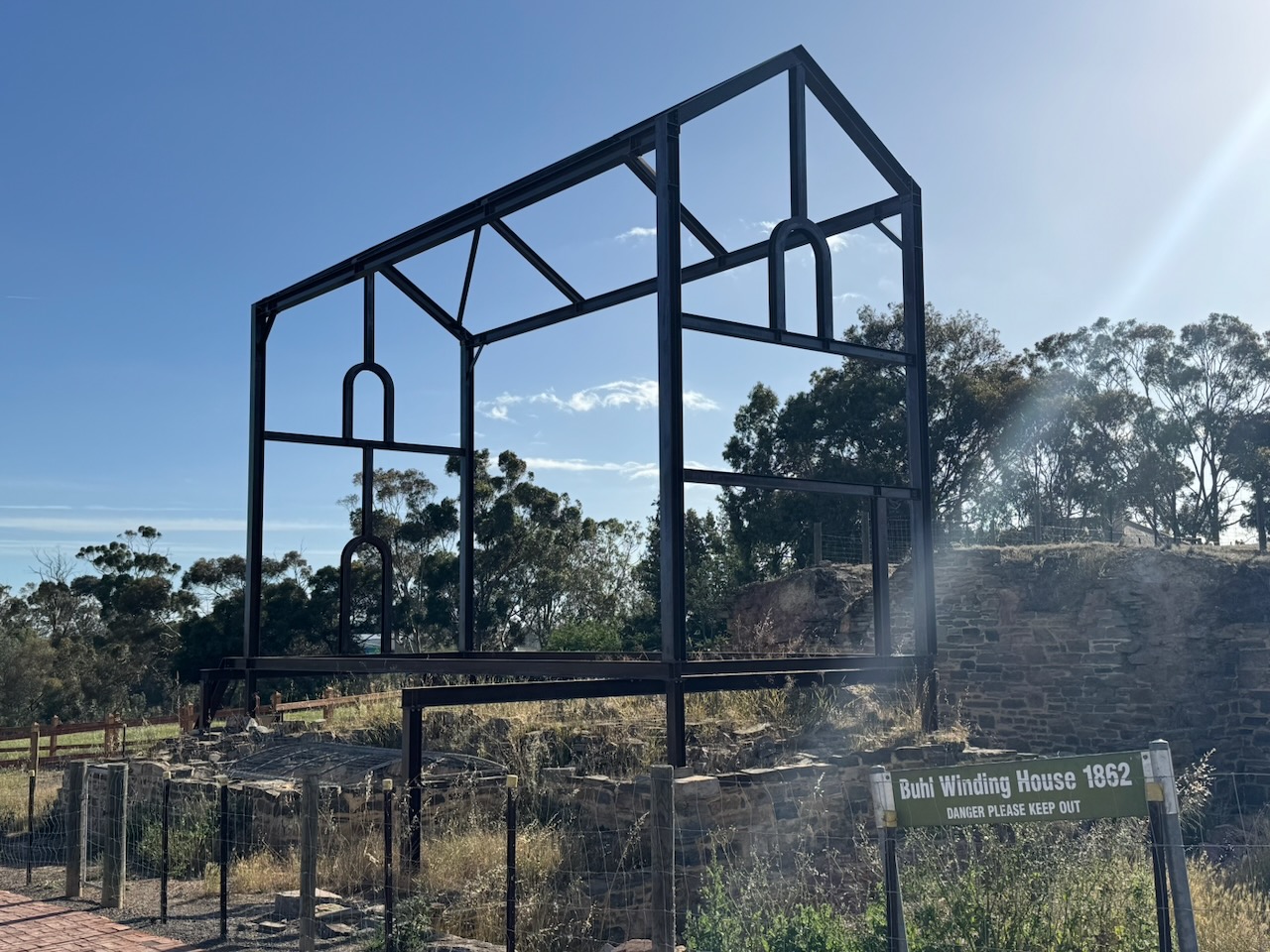
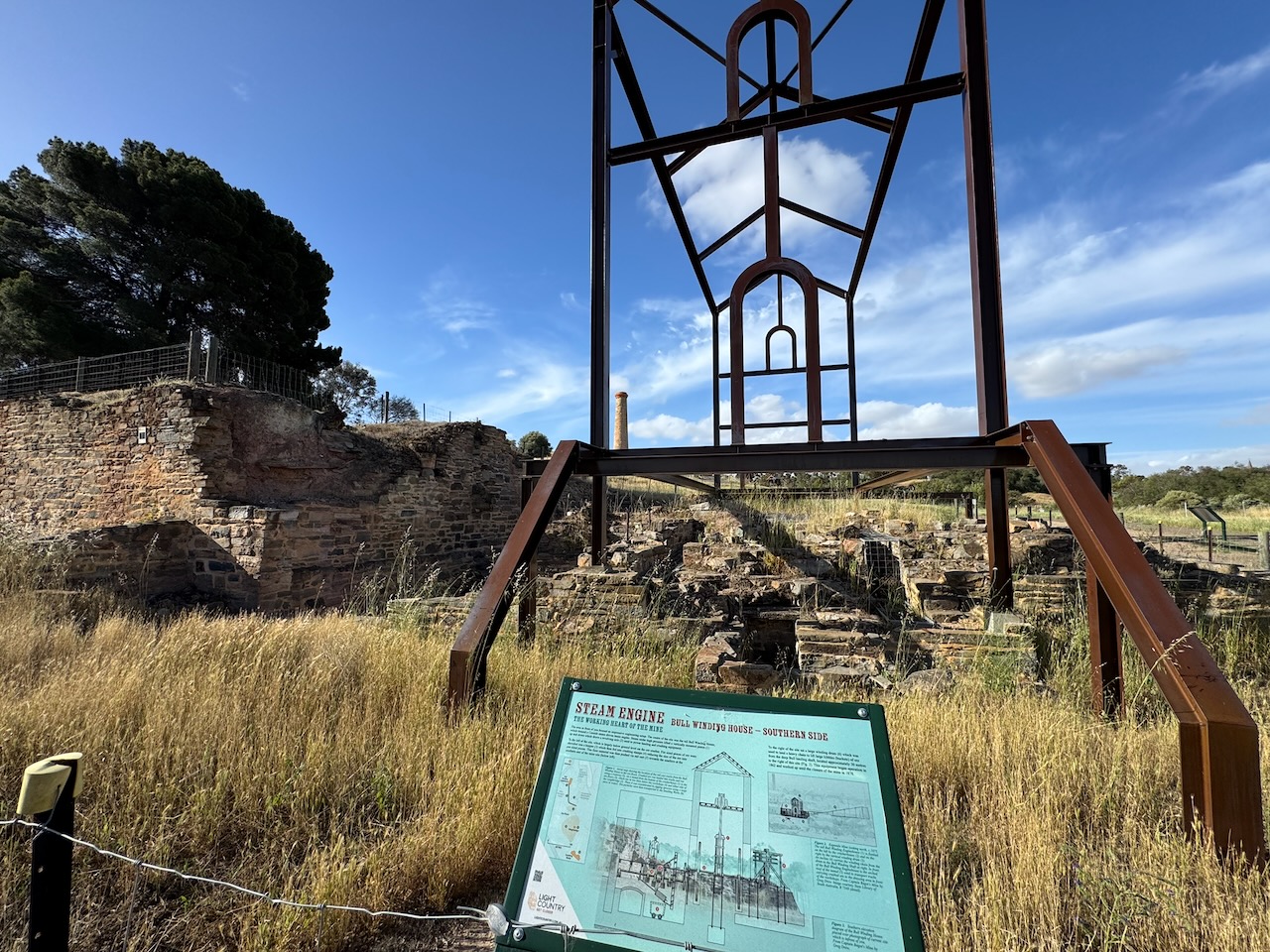
The ruins of the Bull Winding House can also be viewed.
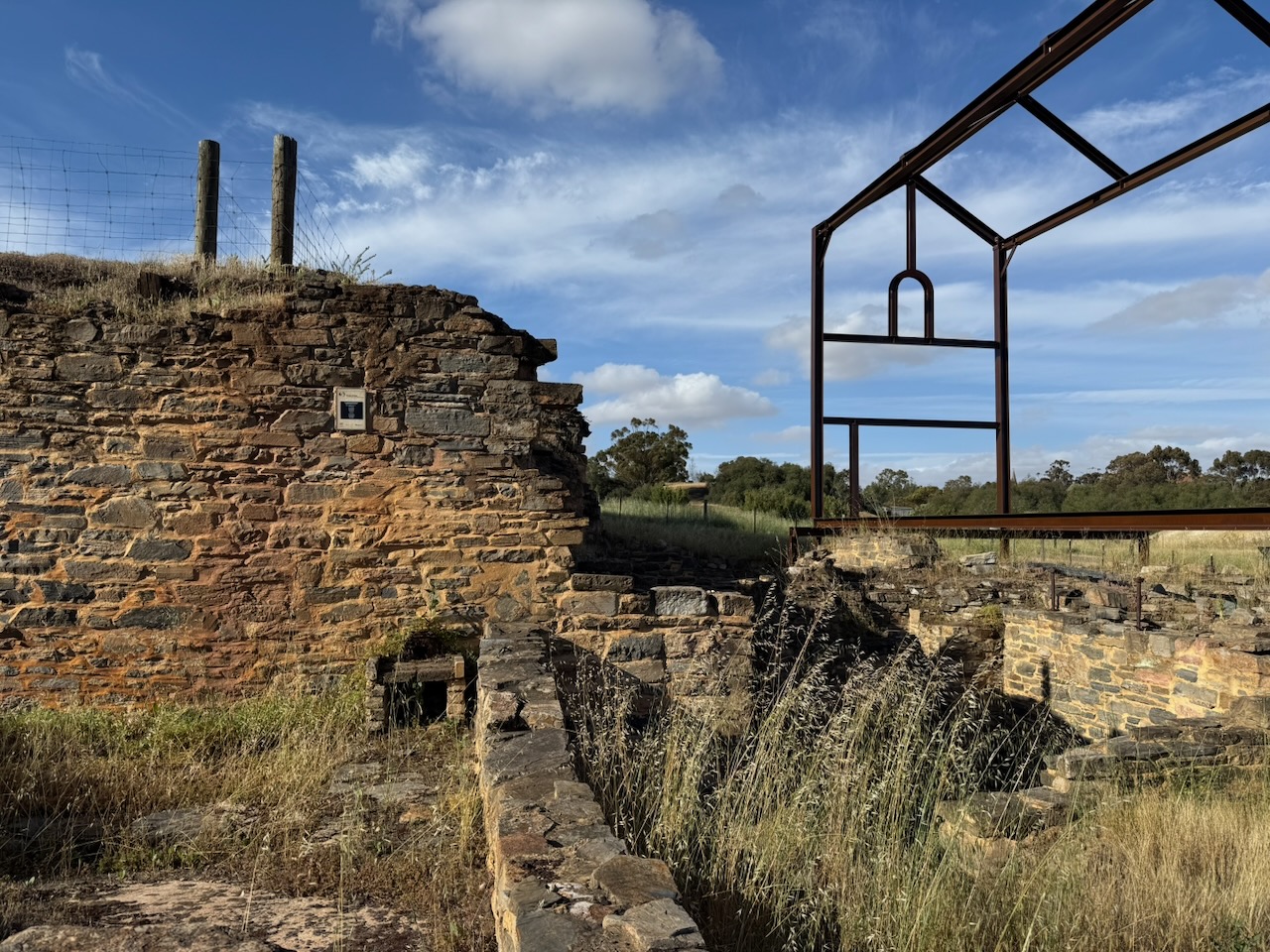
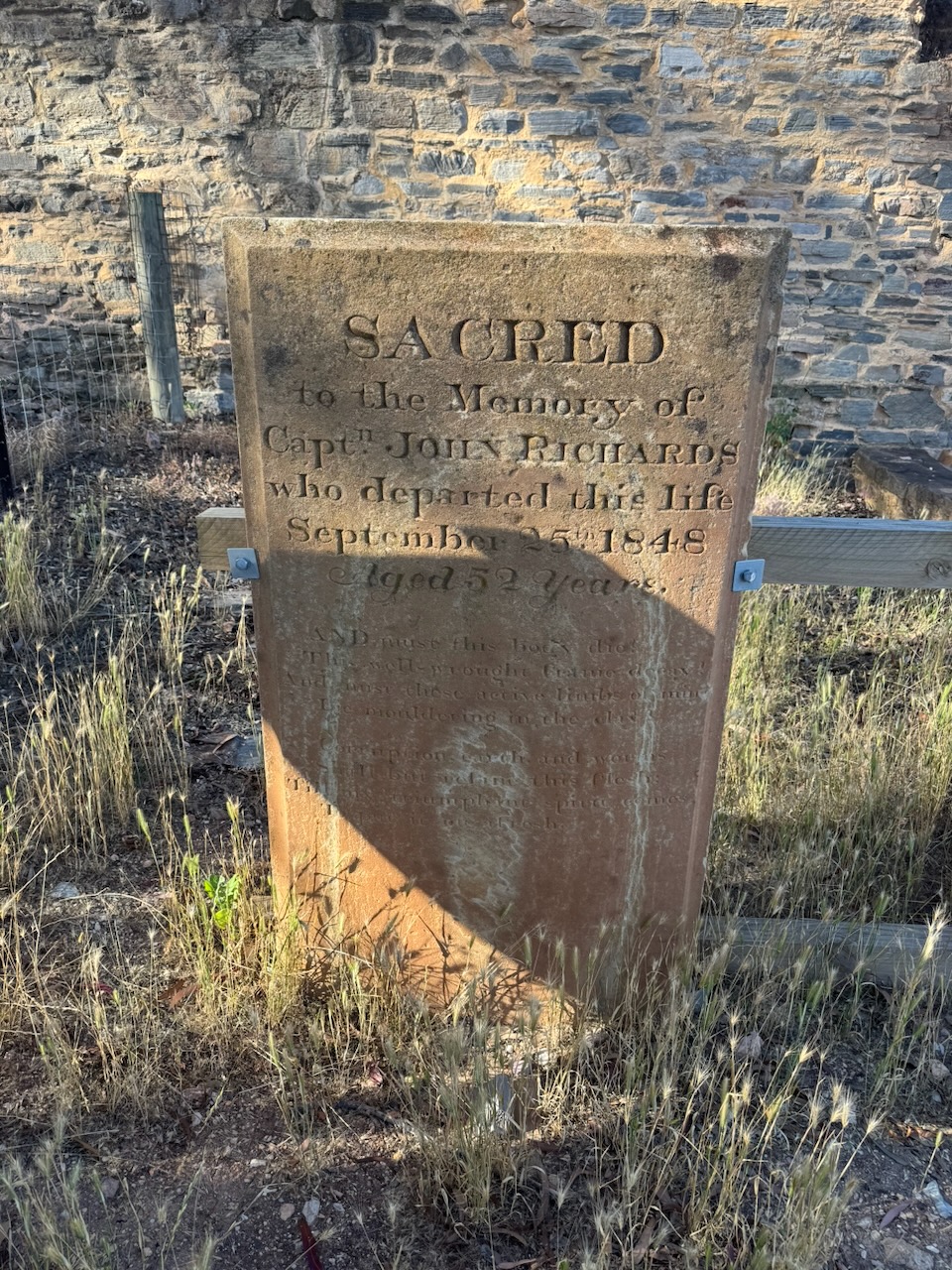
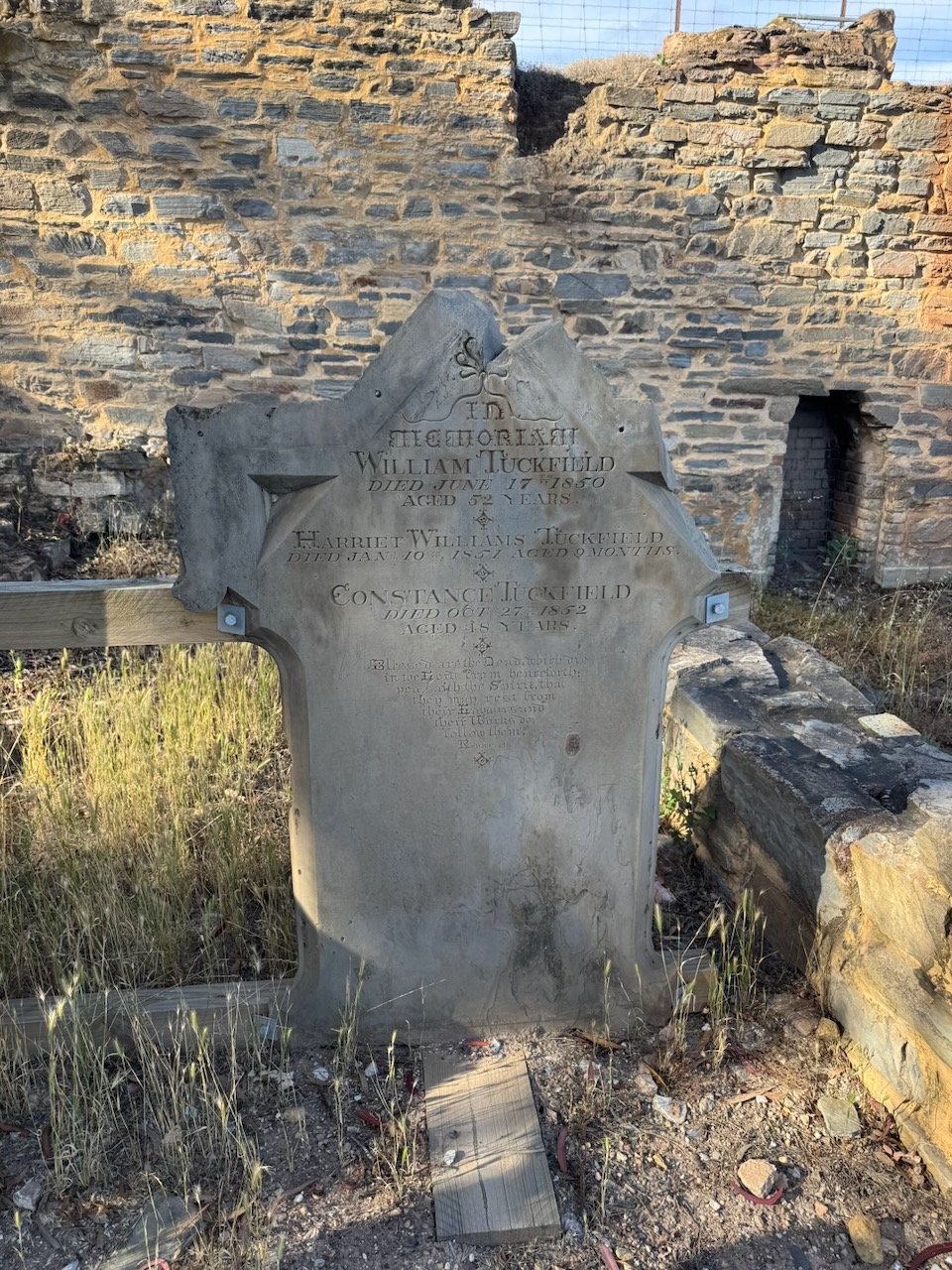
At the site are two headstones. One is for Captain John Richards. The other is for William Tuckfield, Harriet Tuckfield, and Constance Tuckfield.
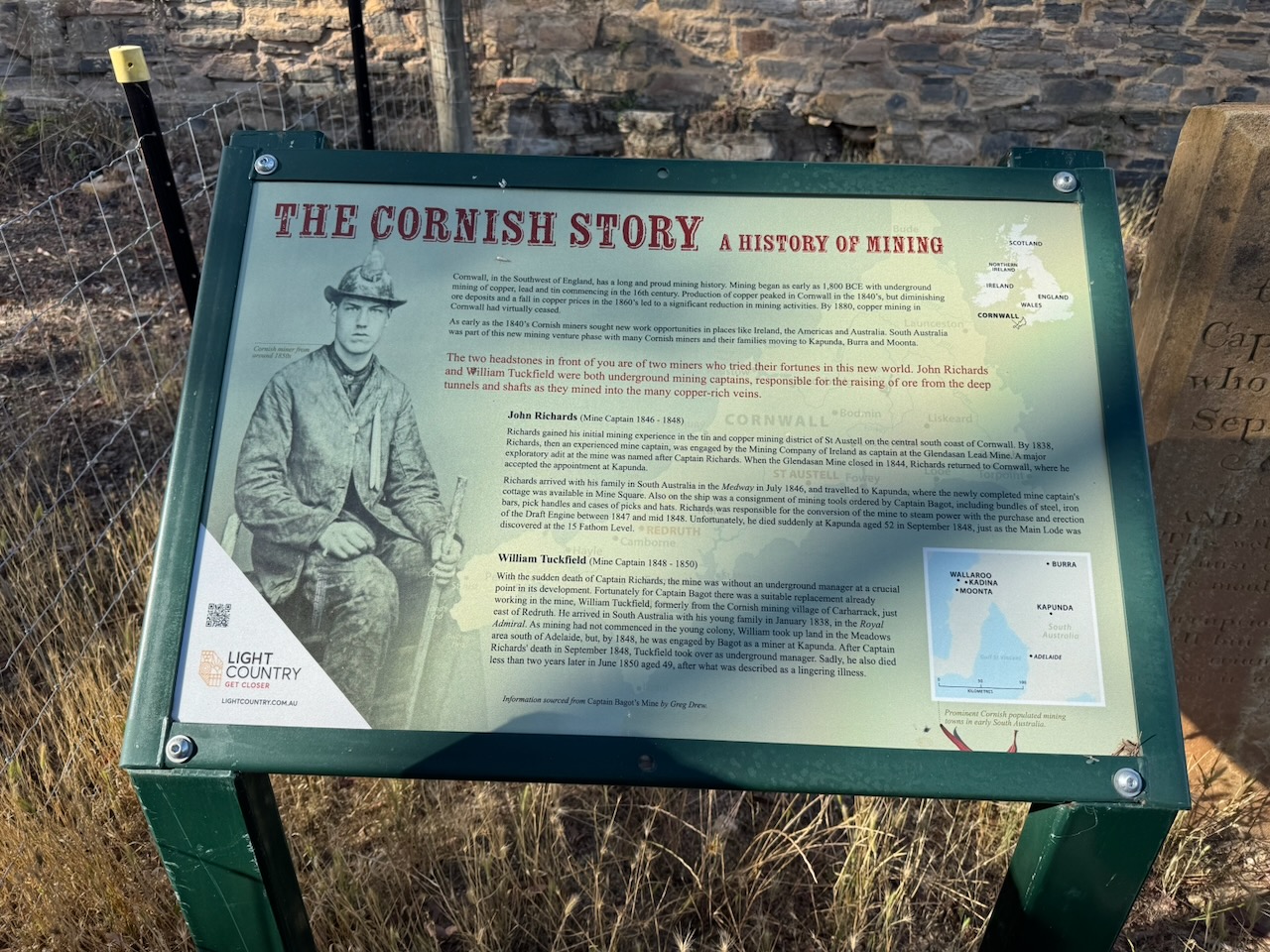
John Richards was born in 1796 in Gwinear, Cornwall, England. In 1821, he married Amy Eddy in Cornwall. He gained his mining experience by working in the tin and copper mining district of St Austell in Cornwall. By 1838, he was employed as the mine captain at the Glendasan Lead mine. He arrived in South Australia with his family in July 1846 aboard the Medway. They settled in Kapunda and lived in the newly completed mine captain’s cottage in Mine Square. Captain Richards died in September 1848, aged 52 years.
Following the sudden death of Captain Richards, the Kapunda mine was without an underground manager. Following his death, William Tuckfield commenced as the underground manager. William Tuckfield was born on the 22nd day of November 1801 in Gwennap, Cornwall, England. In April 1828, he married Constance Gillard in Cornwall. Along with their three children, they emigrated to Australia, arriving in January 1838 aboard the Royal Admiral. They initially settled in Meadows in the Adelaide Hills, before moving to Kapunda, where William worked as a miner. He died on the 17th day of June 1850, aged 52 years, following what was described as a ‘lingering illness.’ (ancestry 2016) (Trove 2026)
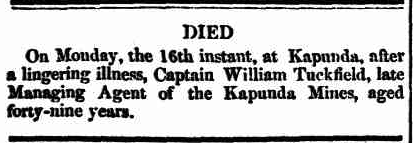
Above: article from the Adelaide Times, Fri 21 Jun 1850. Image c/o Trove
Just 2 months before William’s death, his daughter, Harriet Williams Tuckfield, was born in April 1850 at Kapunda. Sadly, she died on the 10th day of January 1851, aged 9 months. William’s wife, Constance Tuckfield, died on the 27th day of October 1852, aged 48 years. I wonder who took on the role of looking after their surviving children? (ancestry 2016)
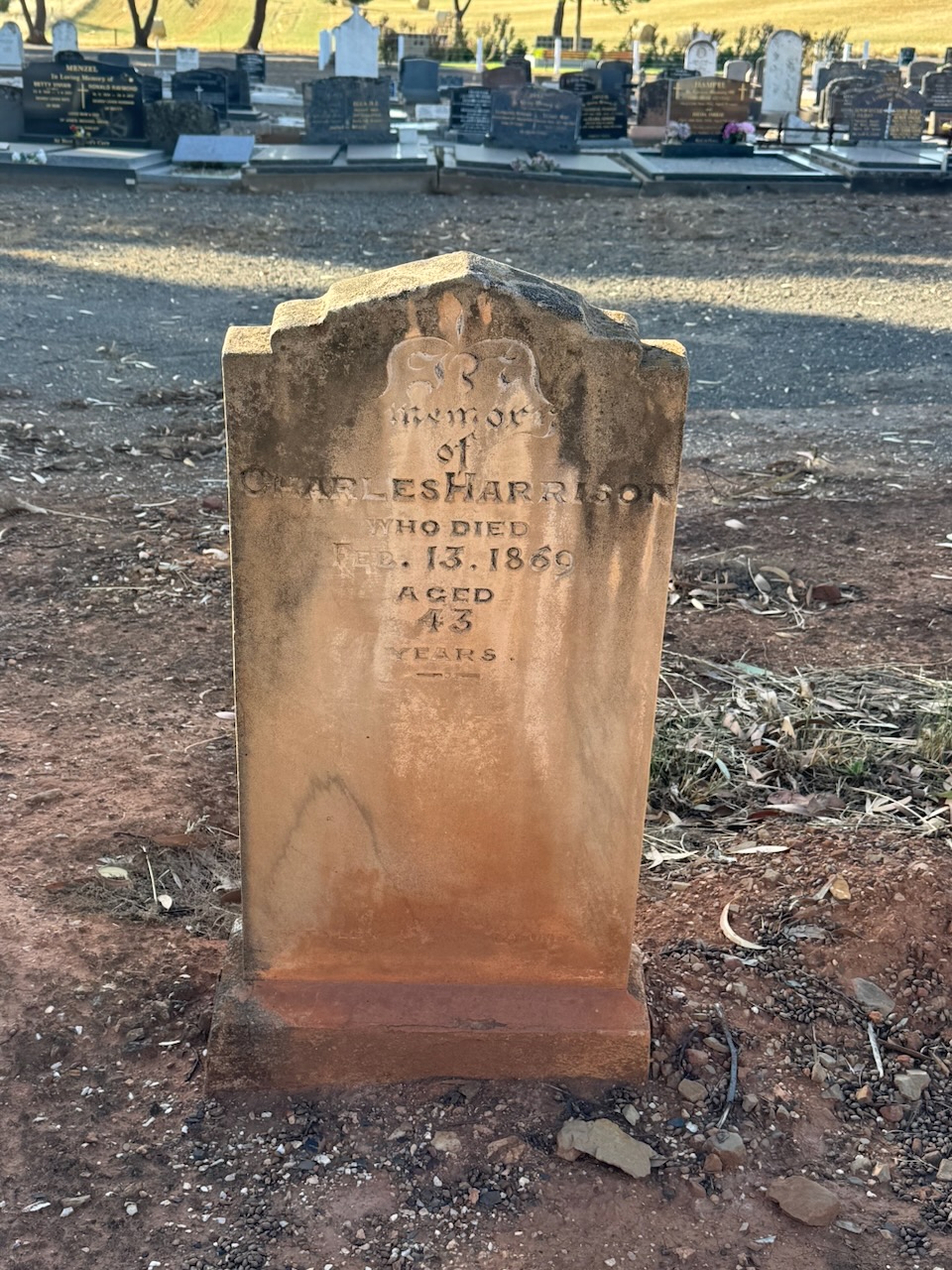
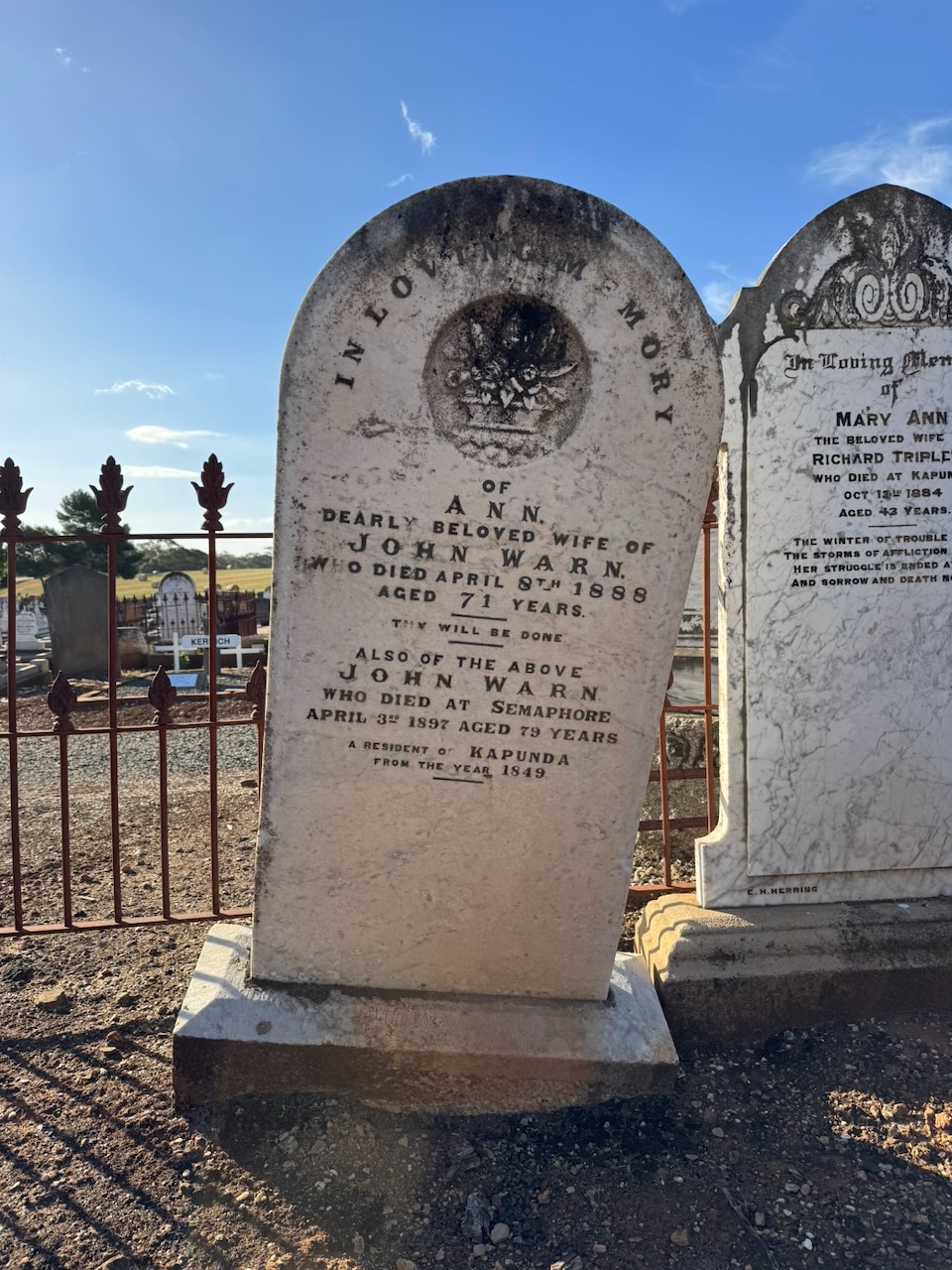
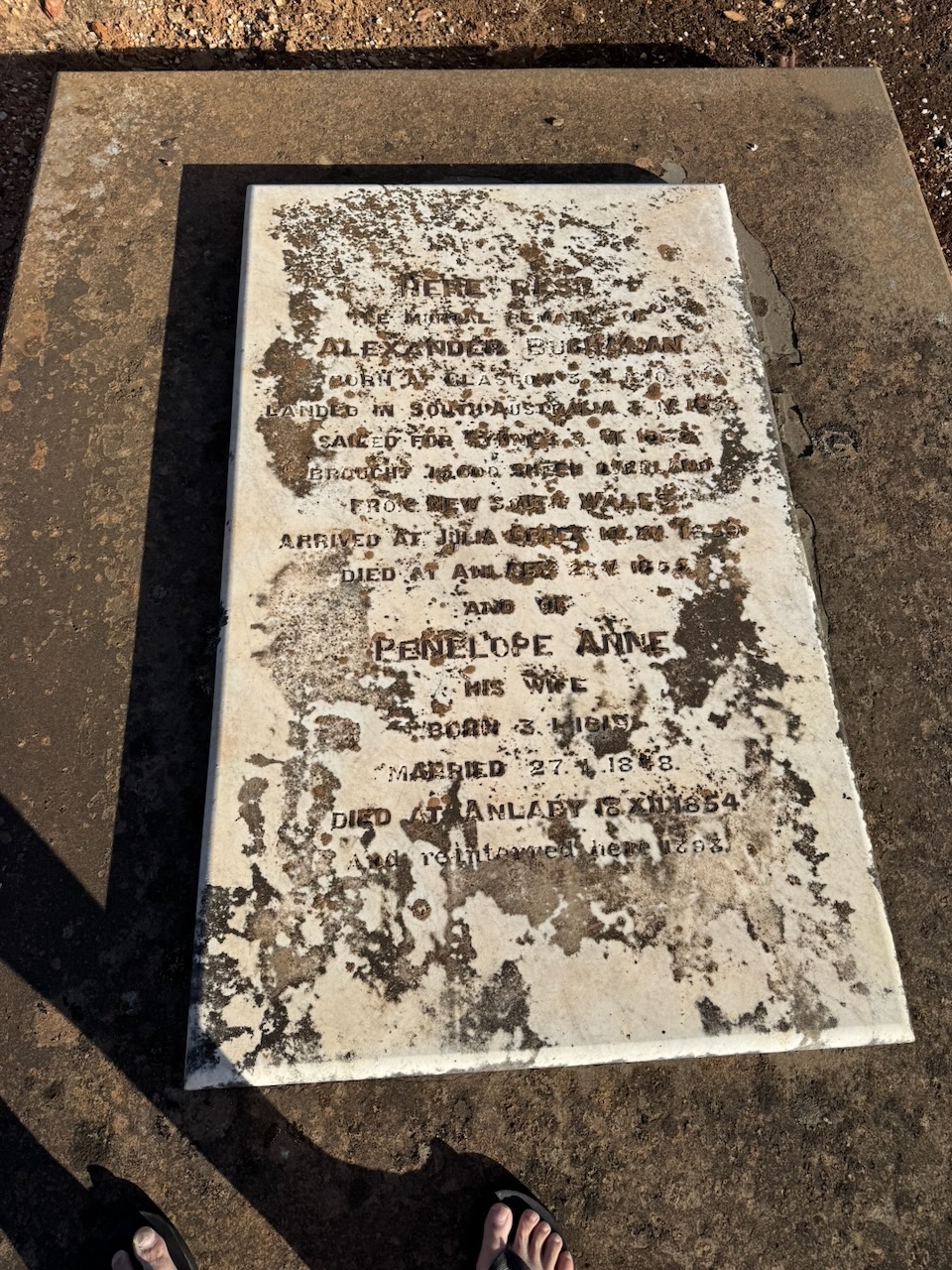
Marija and I also visited the historic Kapunda Cemetery. The first recorded burial in the cemetery was in November 1851 for Christopher Biggs, who drowned at Light Bridge, Kapunda. (Light Regional Council 2023)
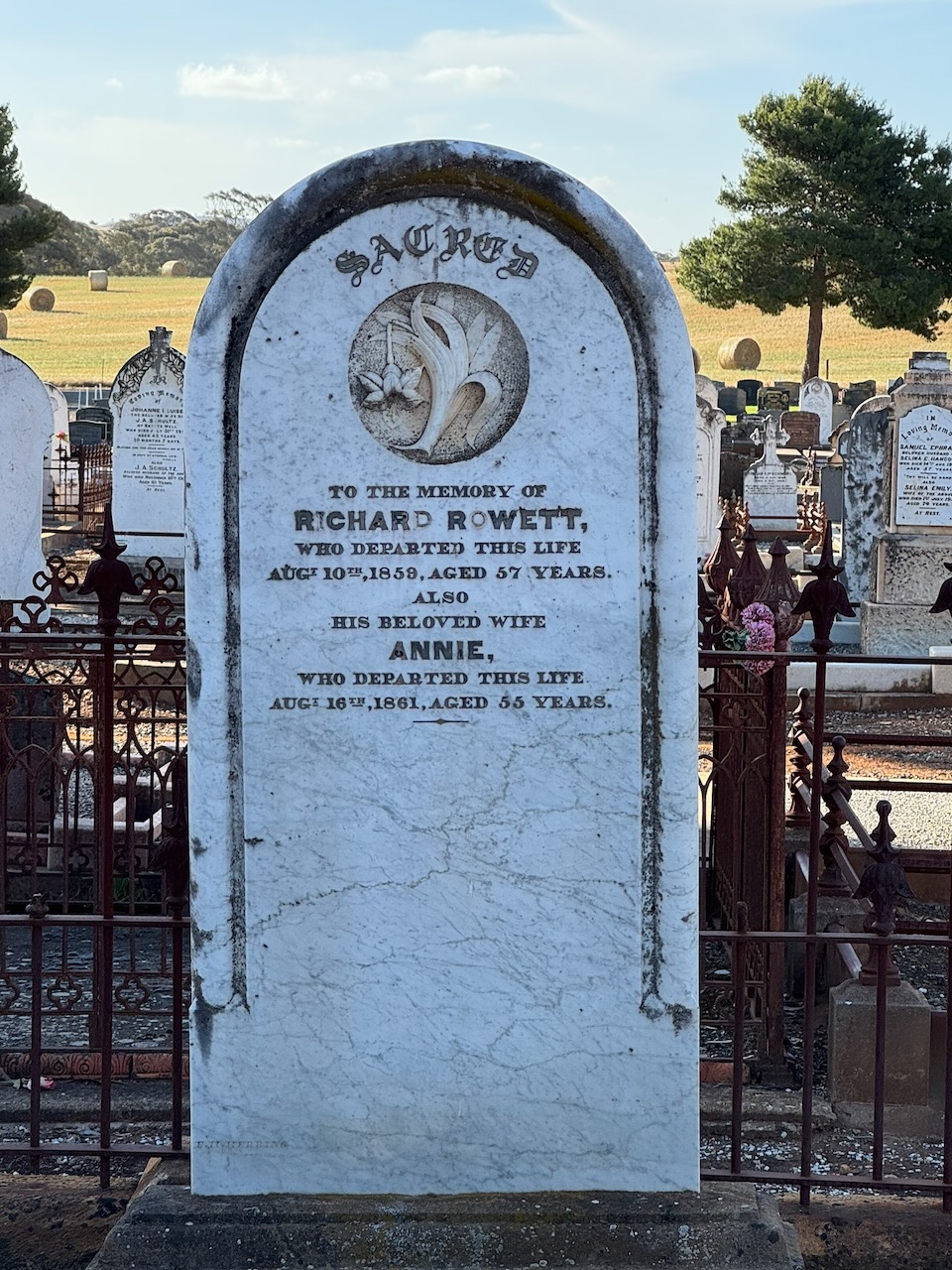
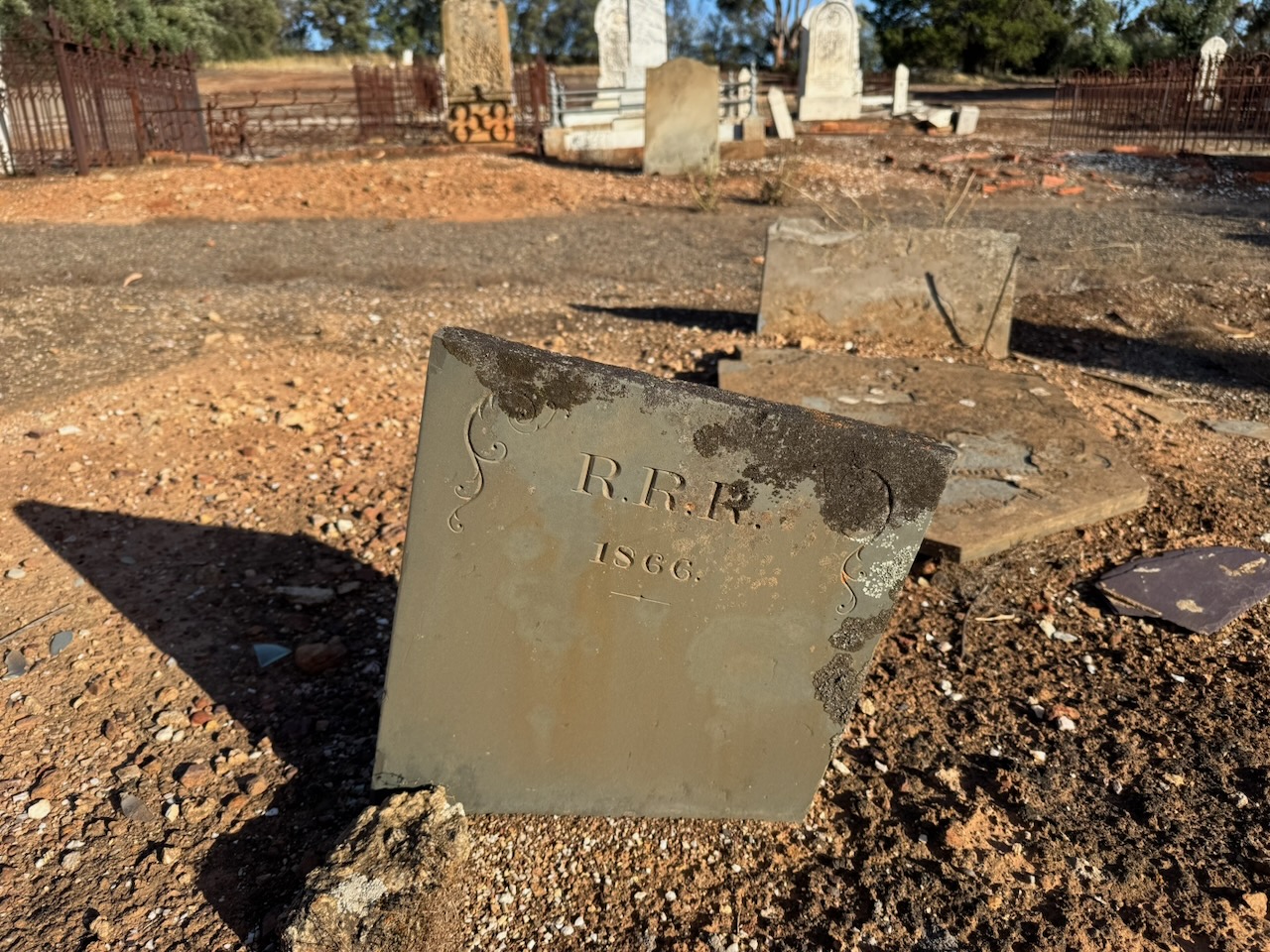
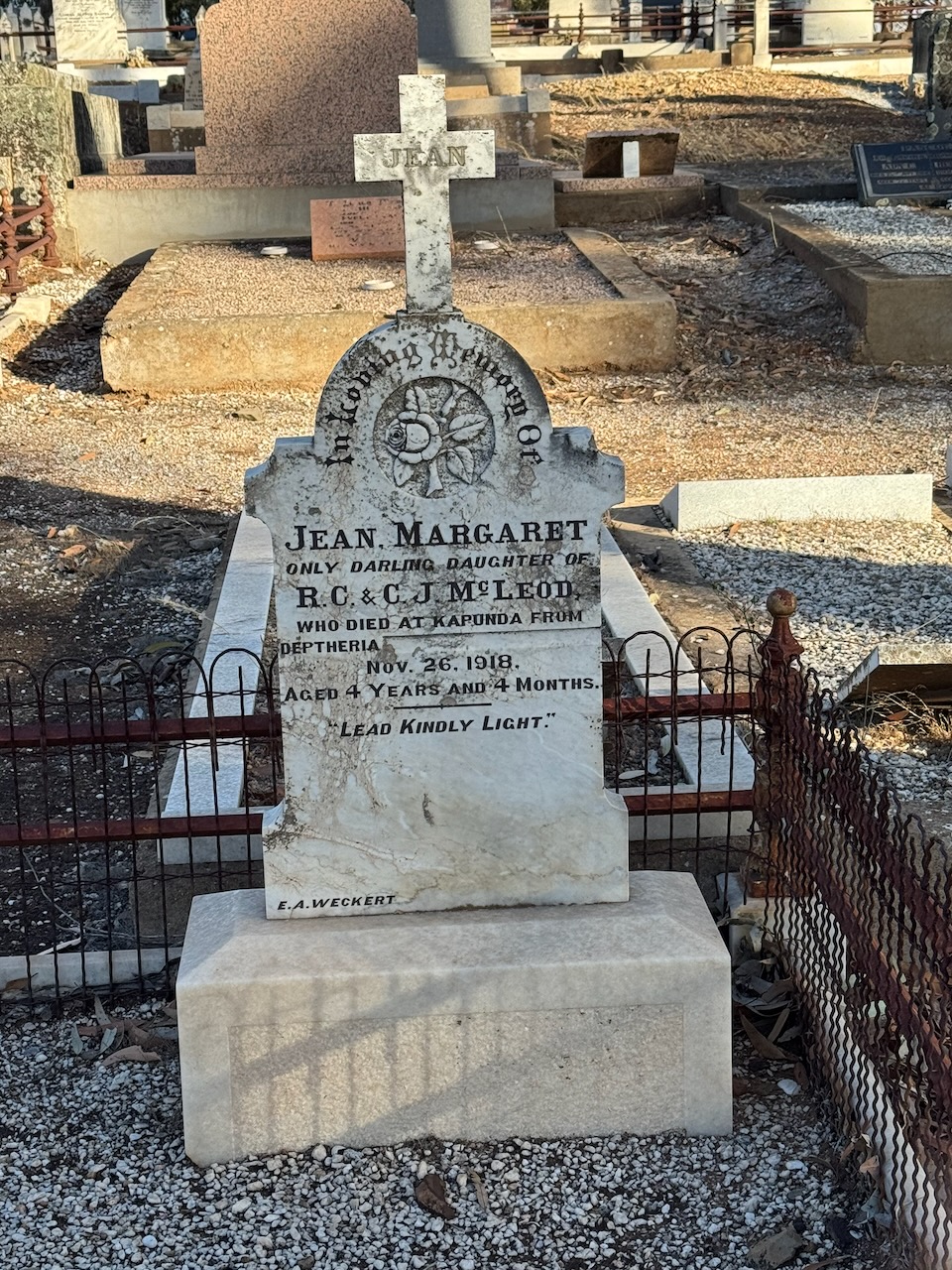
Thomas Vivian Moyle was born in Cornwall, England in c. 1828. He emigrated to Australia in 1852 aboard the Phoebe Dunbar. In 1854, he married Elizabeth James. (ancestry 2016)
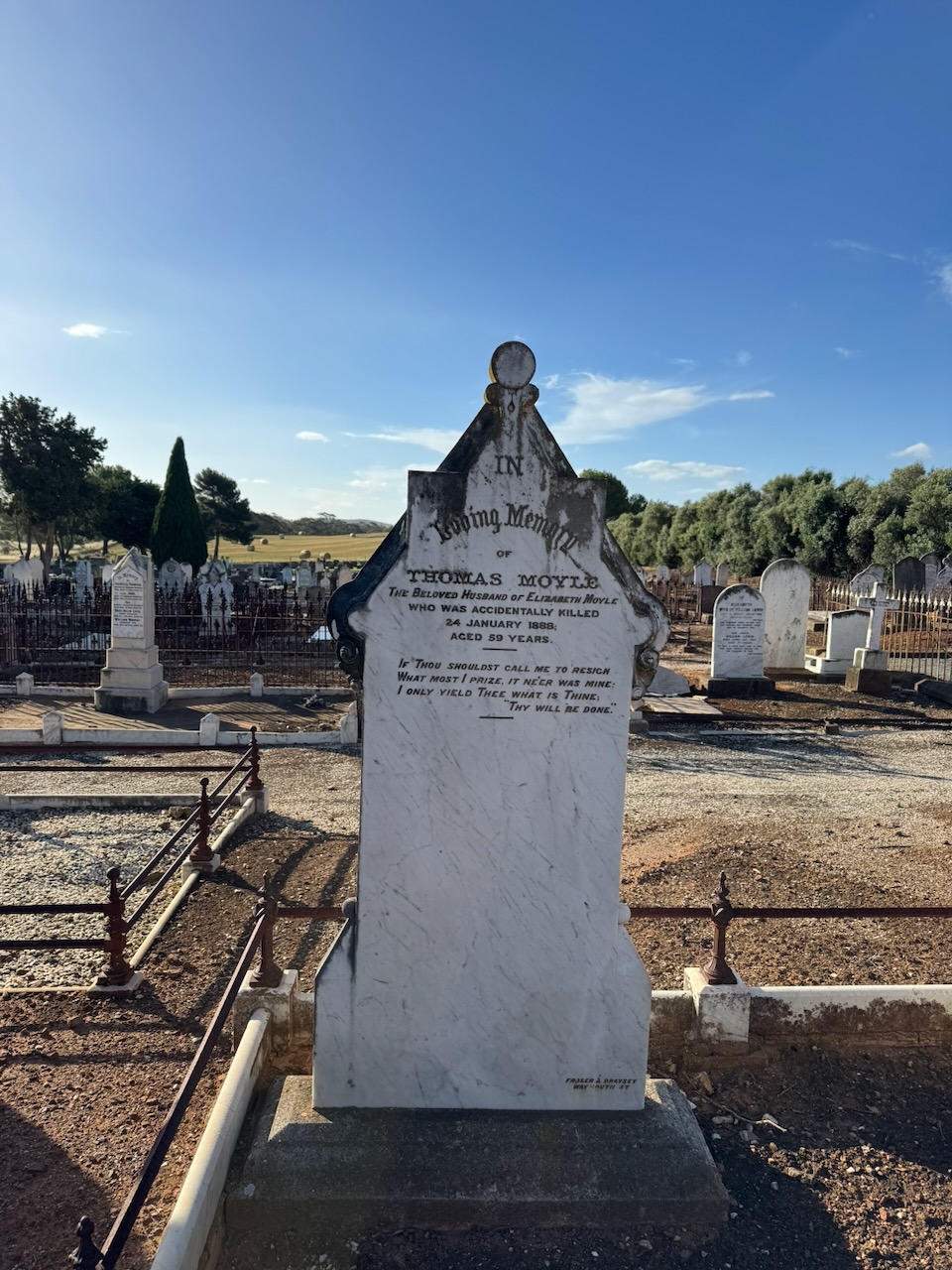
Thomas was a publican of the Hamilton Hotel at River Light from 1855 to 1860. In 1861, he became the manager/licensee of the Kadina Exchange Hotel. In 1867, he became ‘Mine Host’ of the Strathmore Hotel. In 1871, he became the licensee of the Rising Sun Hotel in Auburn. (wikitree 2022)
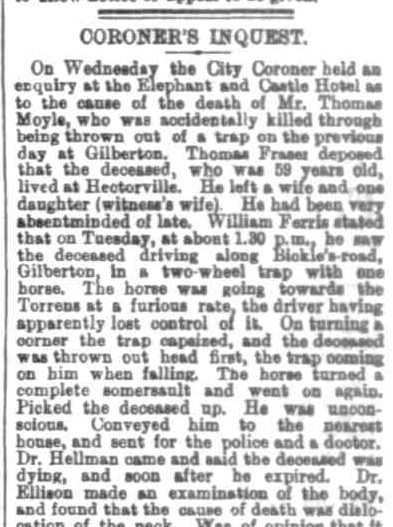
Thomas died on the 24th day of January 1888, at Gilberton, South Australia, aged 59 years, as a result of injuries he sustained in an accident while driving a 2-wheel trap. An inquest was held by the City Coroner at the Elephant and Castle Hotel on the 26th day of January 1888. It was reported that he was seen travelling on Bickles Road, Gilberton, at a ‘furious rate’. He lost control and was thrown headfirst out of the trap. He was conveyed whilst unconscious to a residence, and the police and doctor were called, but he died from his injuries. (ancestry 2016) (Trove 2026) (wikitree 2022)
The South Australian Register recorded that ‘The Jury were of opinion that deceased came to his death from dislocation of the neck caused by being thrown out of a trap, and that no blame attached to any one.” (Trove 2026)
John William Hill was born in 1808 in Hertfordshire, England. John emigrated to South Australia aboard the HMS Buffalo in 1836. He died on the 2nd day of April 1885, aged 77 years. (ancestry 2016)
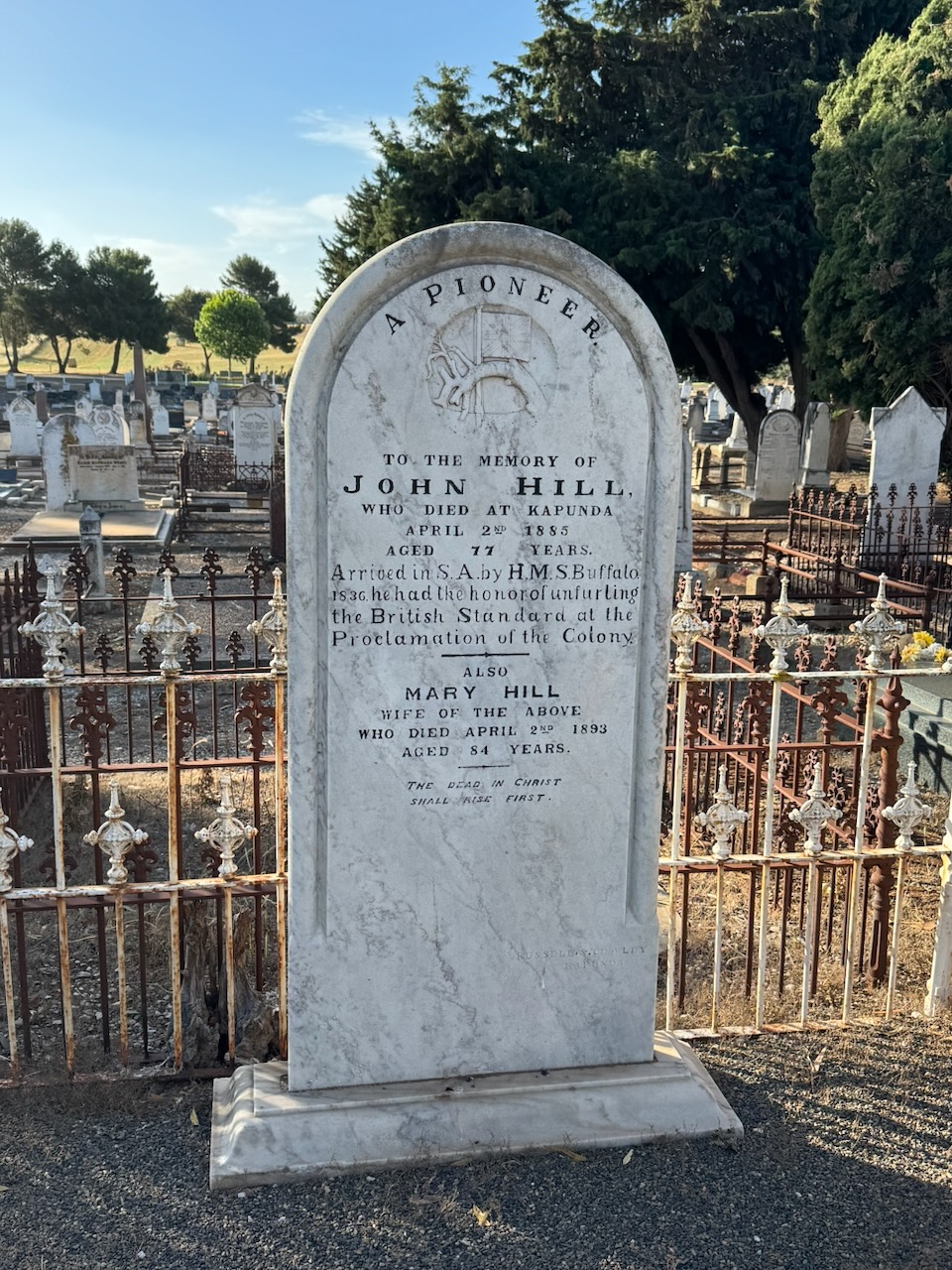
His headstone records that John had the honour of unfurling the British standard at the Proclamation of the Colony.
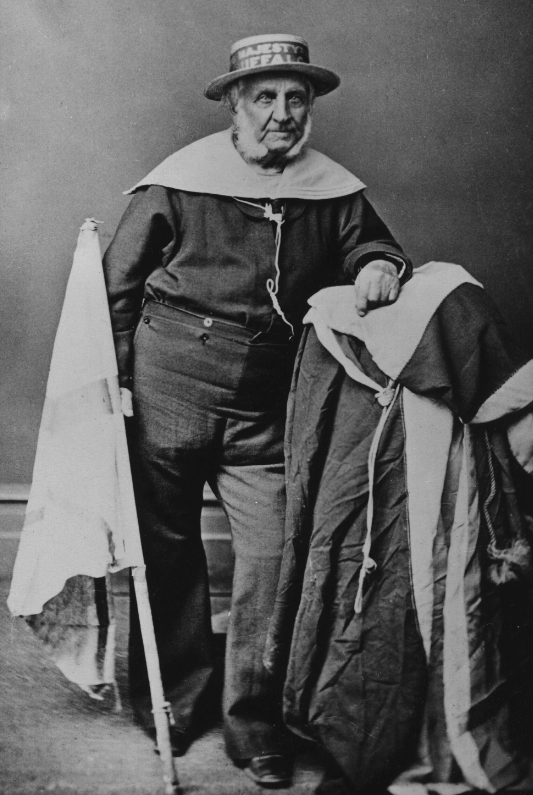
Above: John Hill. Image c/o ancestry.com.au
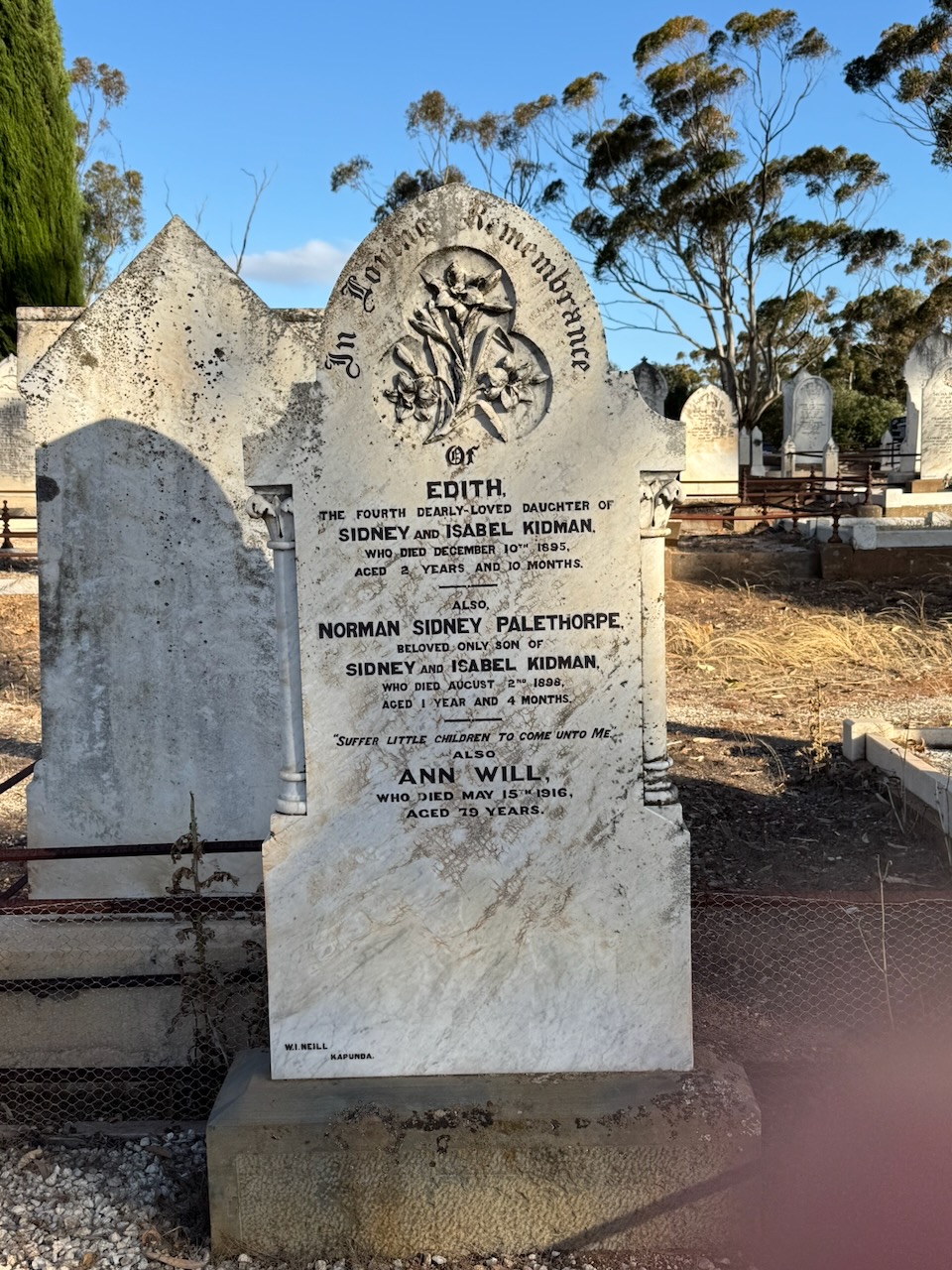
A headstone that caught our attention was the one below, for Edith Kidman and Norman Sidney Palethorpe Kidman. They were the children of Sidney Herbert Kidman and Isabel Brown Kidman, nee Wright. I spoke about Sir Sidney Kidman earlier in this post.
Thomas Badge was born in 1820 in Marazion, Cornwall. He emigrated to Australia in 1850.
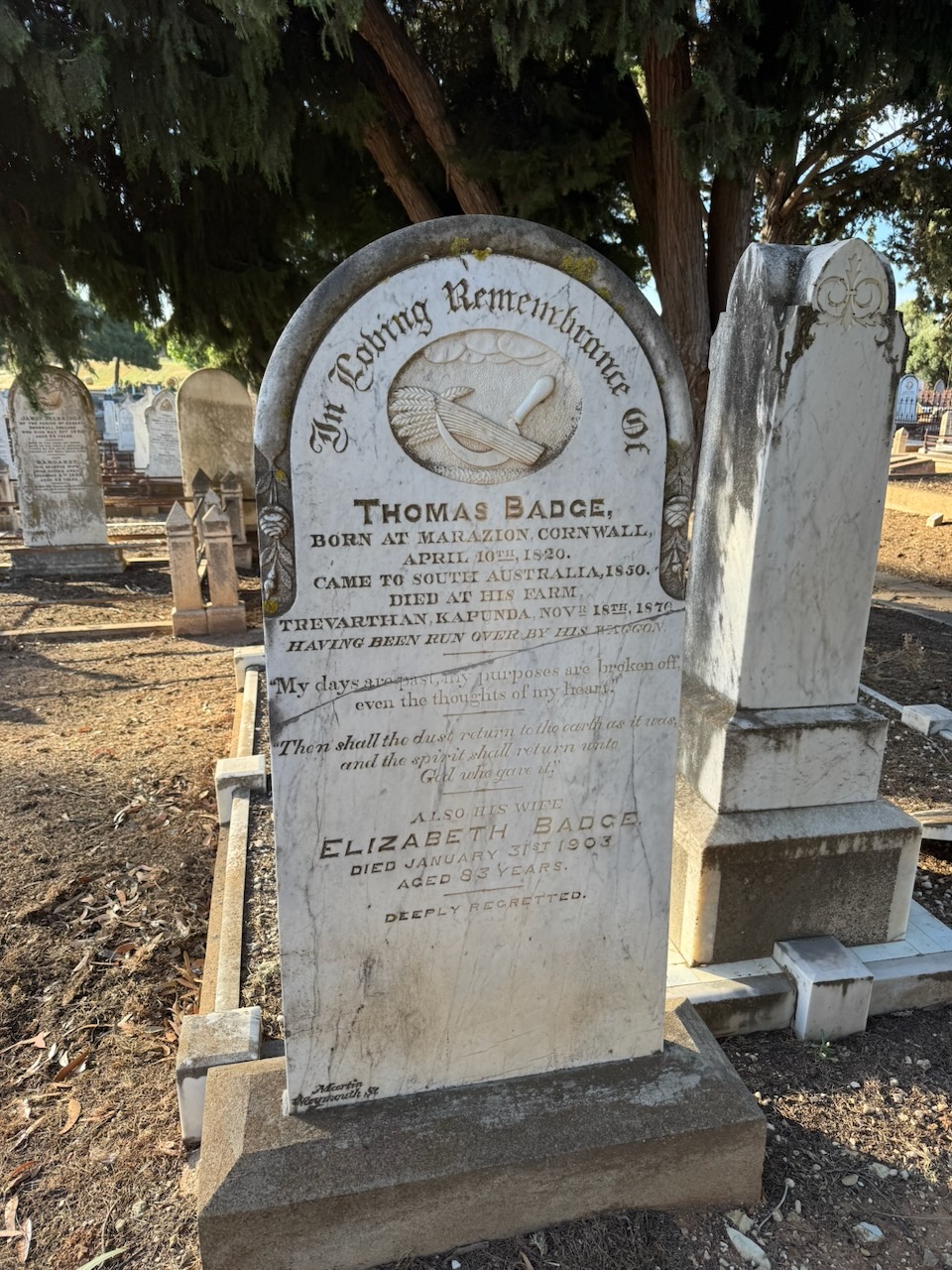
Thomas died on the 18th day of November 1876 on his farm, Trevarthan, at Kapunda, after he was run over by his wagon while carting hay. (Trove 2026)
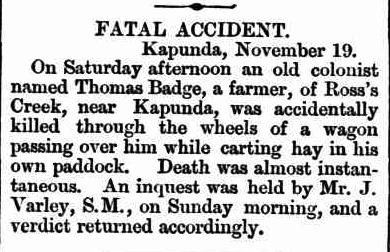
Above: article from the Evening Journal, Adelaide, Mon 20 Nov 1876. Image c/o Trove
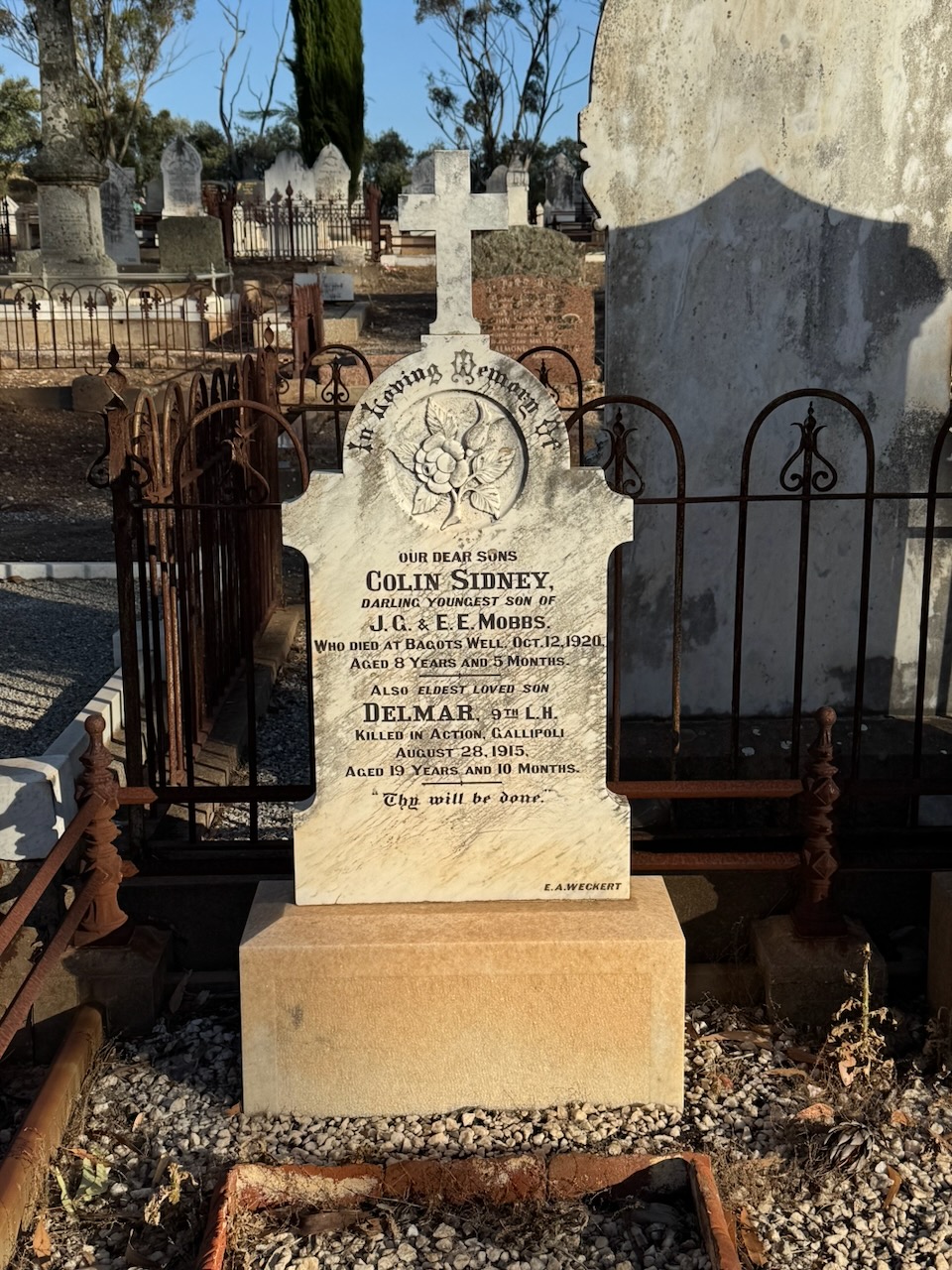
William George Delmar Mobbs was born on the 11th day of October 1895 in Bagots Well near Kapunda. His parents were John George Mobbs and Elizabeth Esther Mobbs, nee Hughes. (ancestry 2016)
Delmar, as he was known, enlisted for service during the First World War and served with the 9th Australian Light Horse. He was killed on the 28th day of August 1915 at Gallipoli, Turkey. He was just 19 years old. Delmar is buried at Hill 60 Cemetery, Turkey. (ancestry 2016)

In February 2016, a ceremony was held at the Bagots Well Public School, where a marble memorial tablet was unveiled to Delmar. He had attended school there and was described as “his fine spirit and manly nature set a grand example for other lads.” (Trove 2026)
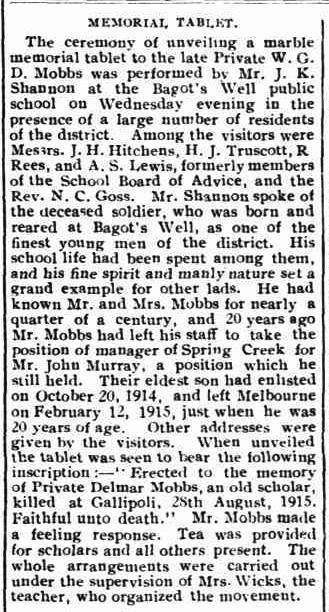
Above: article from the Kapounda Herald, Fri 25 Feb 1916. Image c/o Trove
Three years before Delmar’s death, his younger brother Colin Sidney Mobbs was born in May 1912. He died on the 12th day of October 1920 at Bagots Well, aged 8 years. (ancestry 2016)
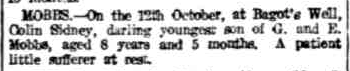
Above: article from The Register, Wed 13 Oct 1920. Image c/o Trove
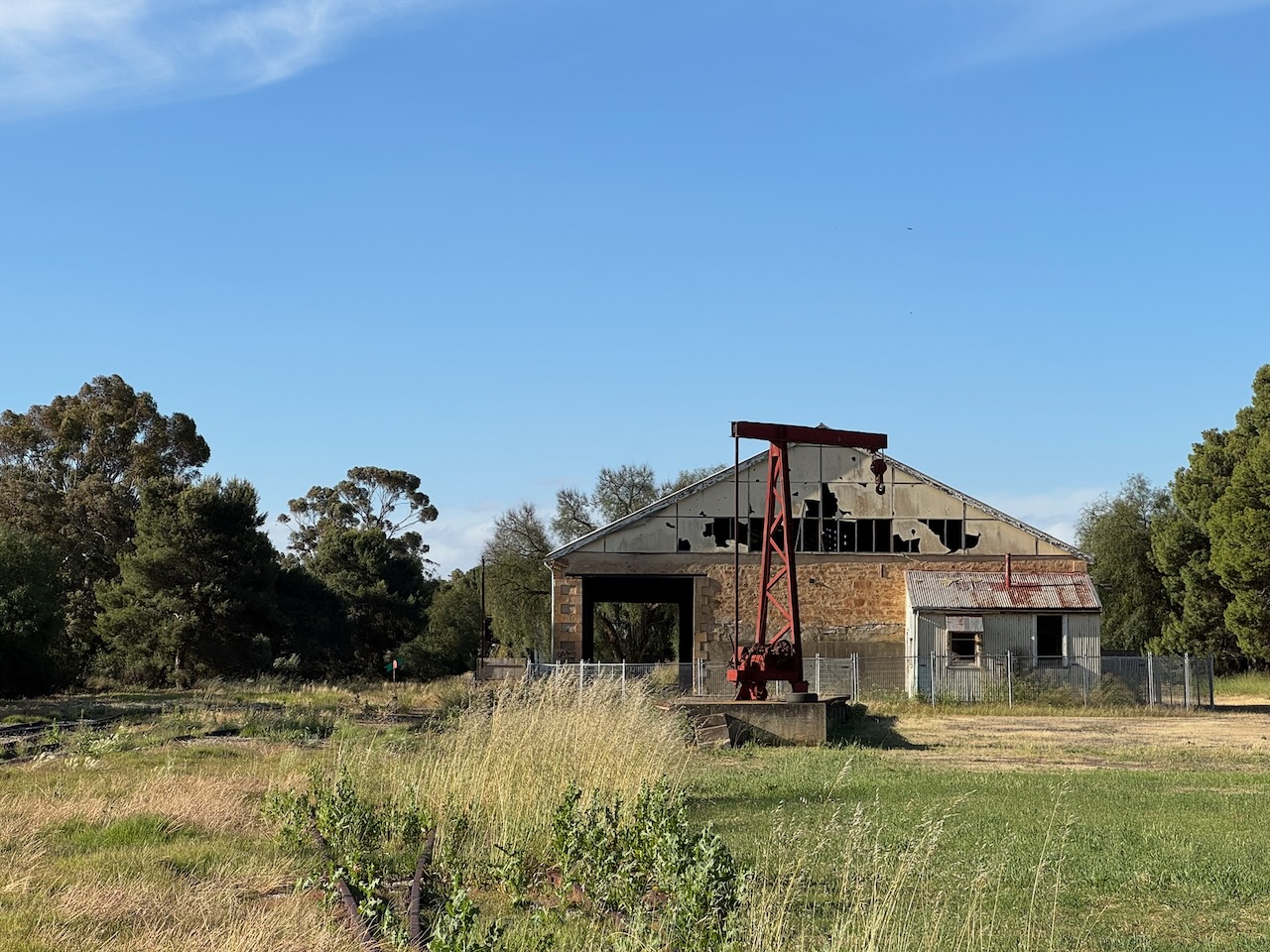
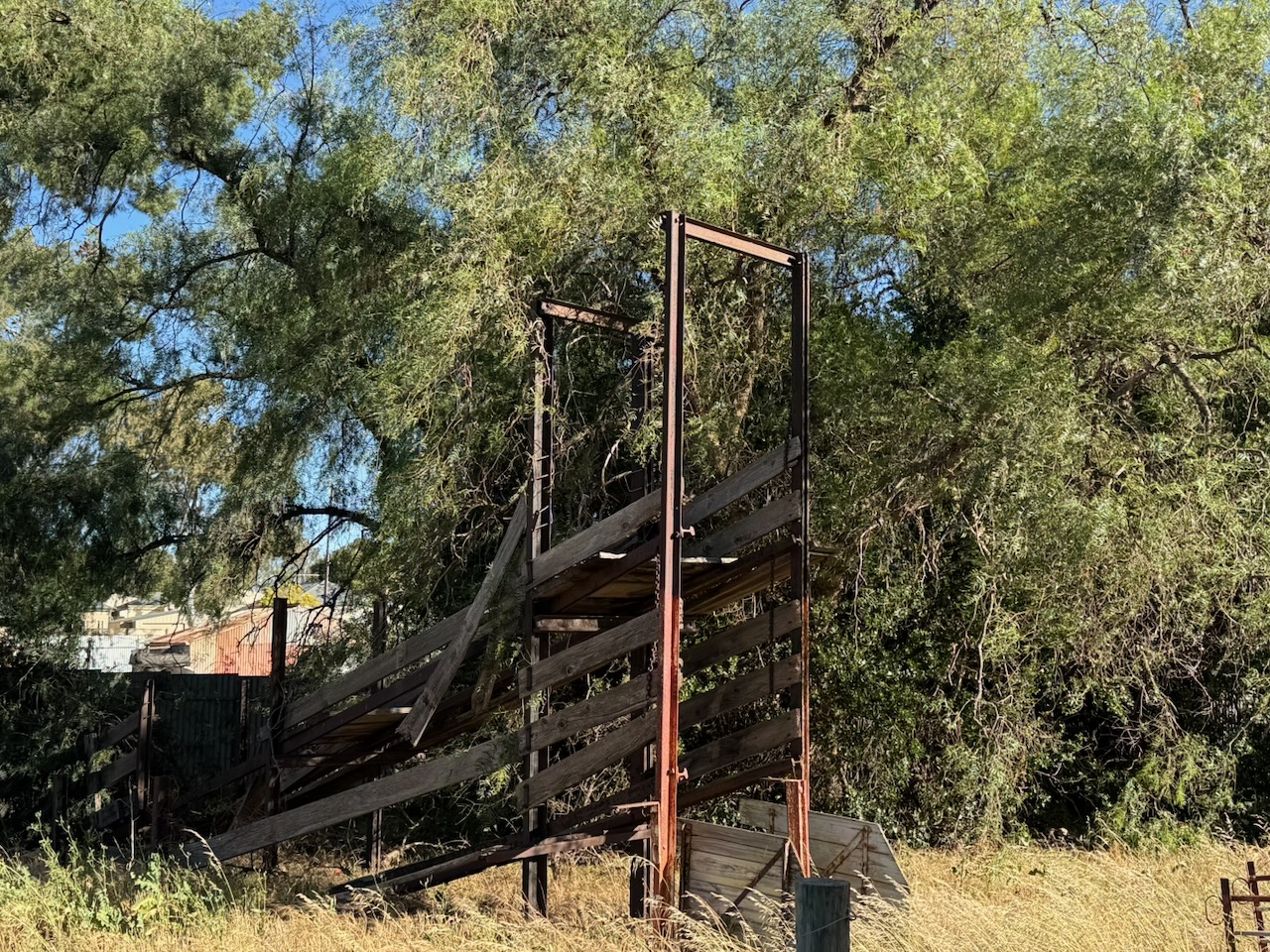
On our way to the silo, we drove past one of the old railway sheds on Hancock Road, which is in a very poor state of repair.
The silos are located alongside the old Morgan railway line. The railway station at Kapunda was opened in August 1860 when the railway line was opened from Gawler to serve the copper mining industry at Kapunda. It was closed in December 1968. (Wikipedia 2025)
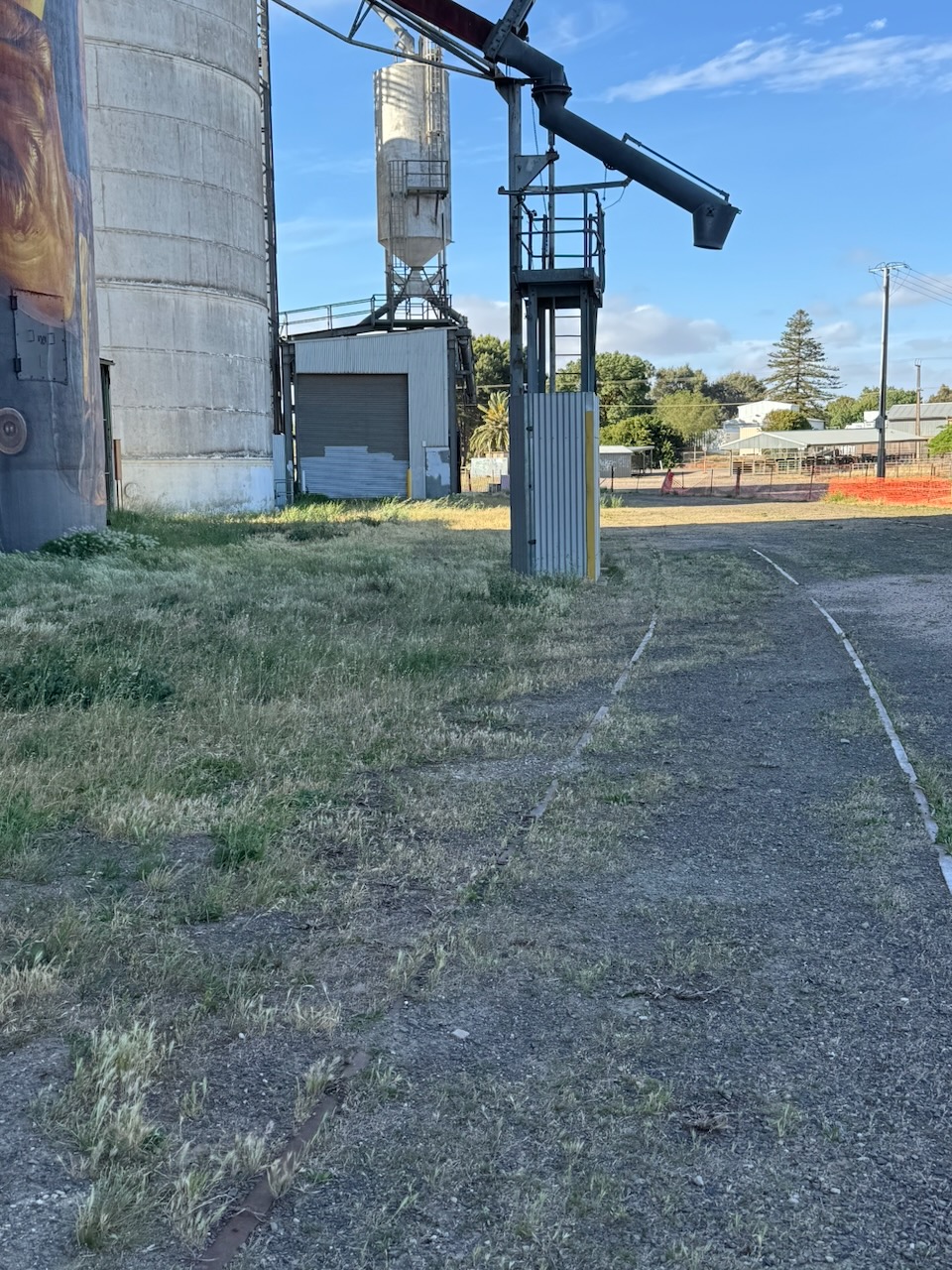
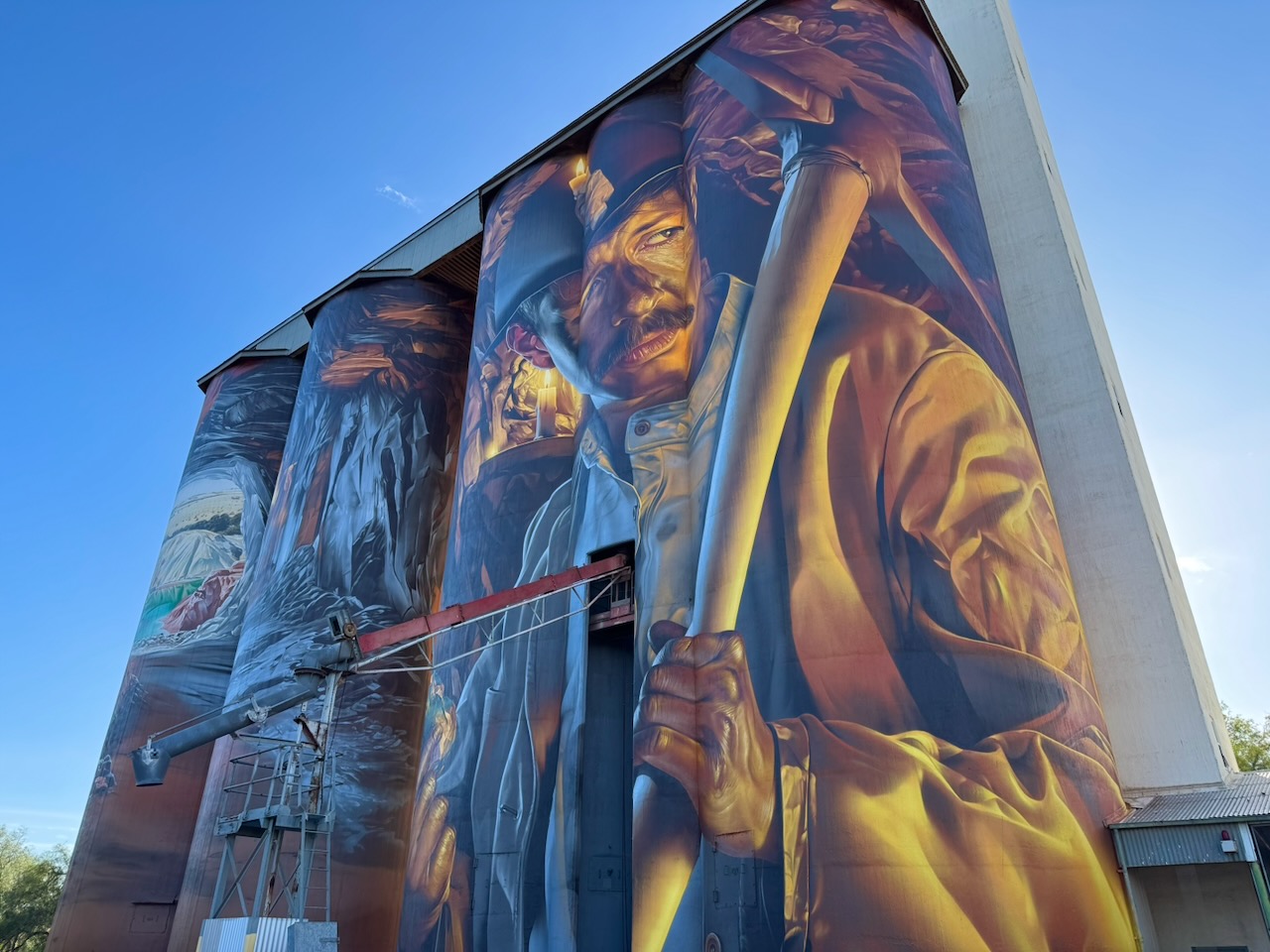
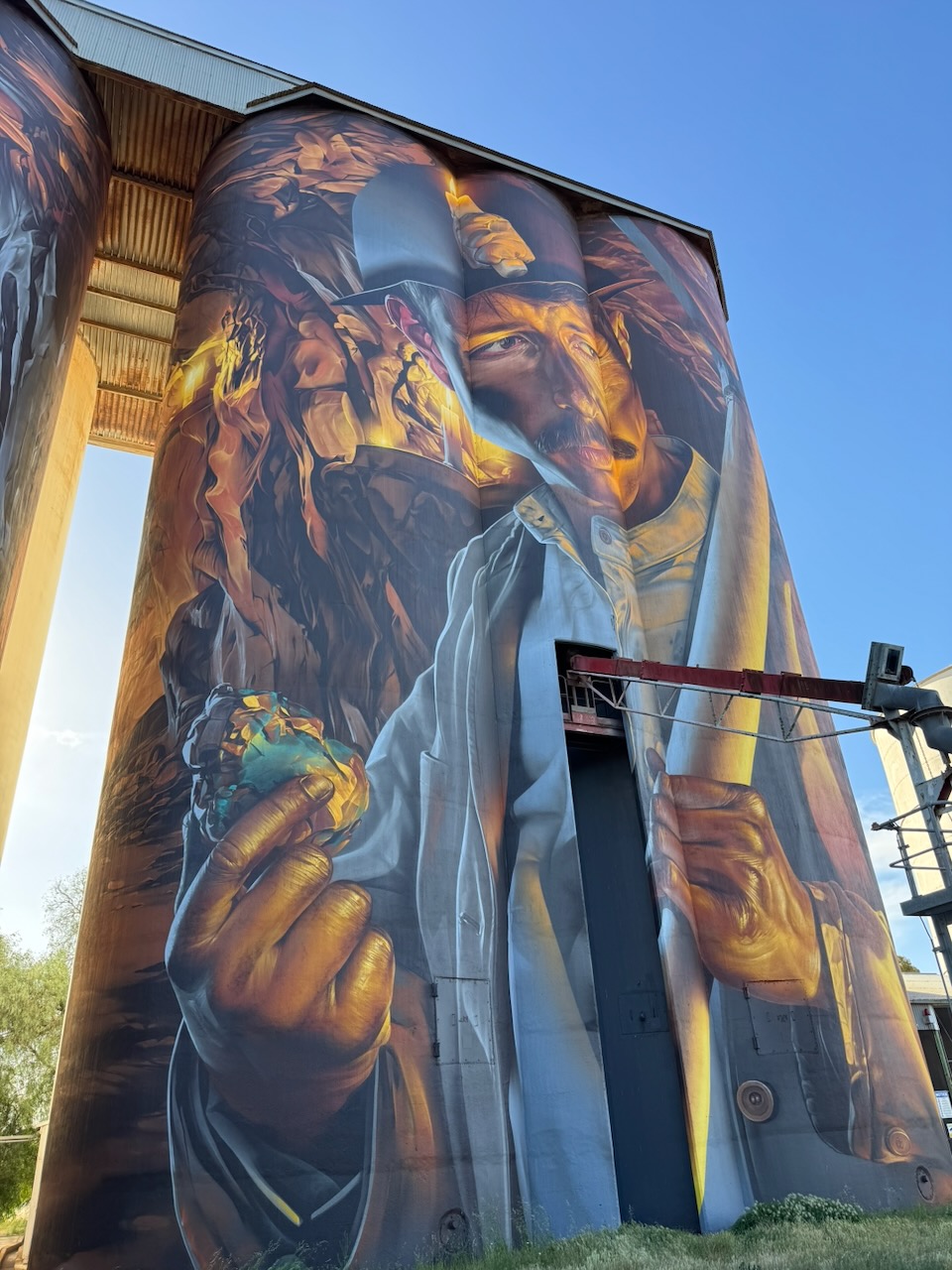
The Kapunda silos are part of the Australian Silo Art Trail. They were completed in October 2025 after 32 days of painting by the world-renowned street artist, Smug. They feature a copper miner underground. (Australiansiloarttrail.com 2026)
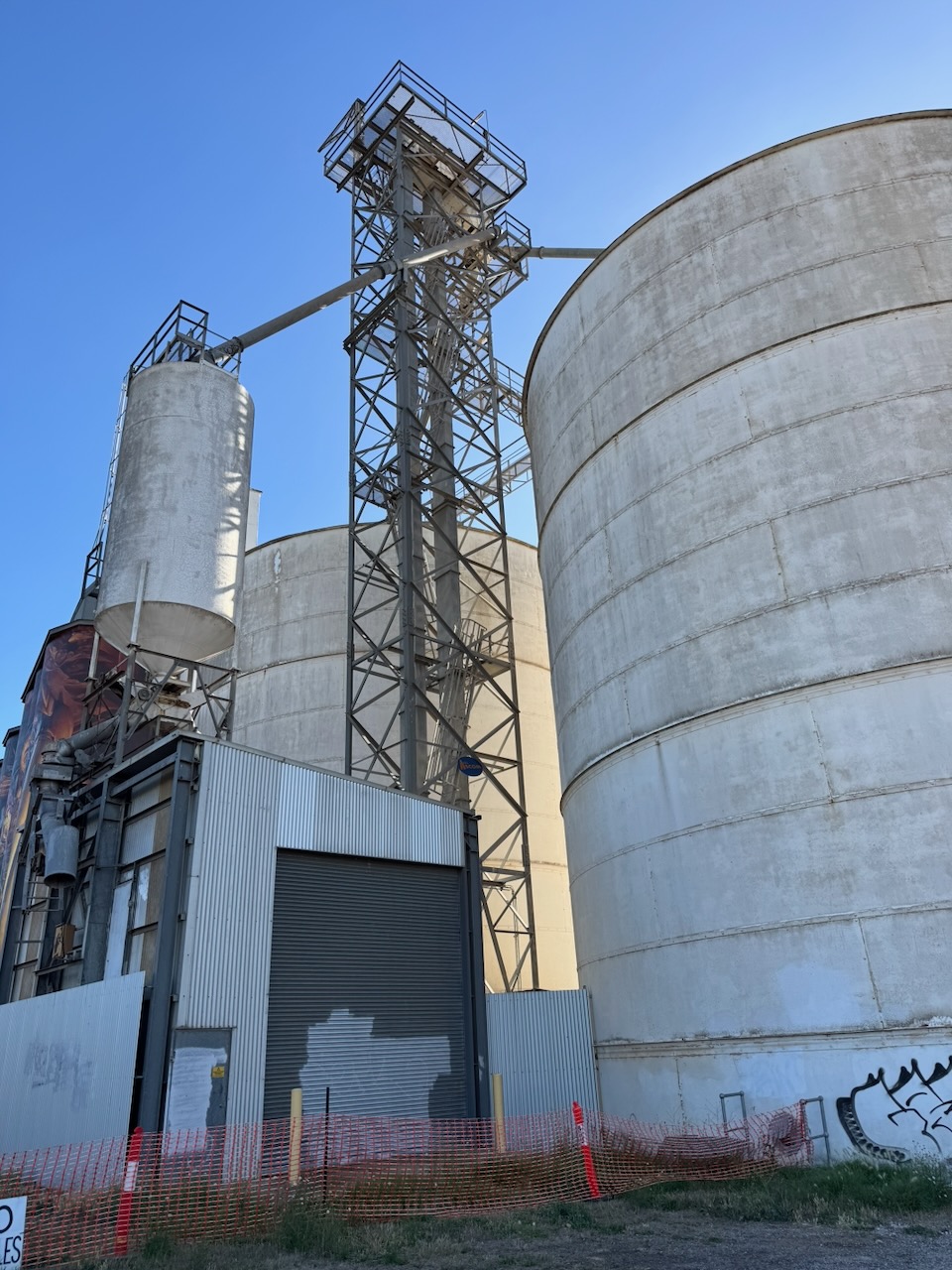
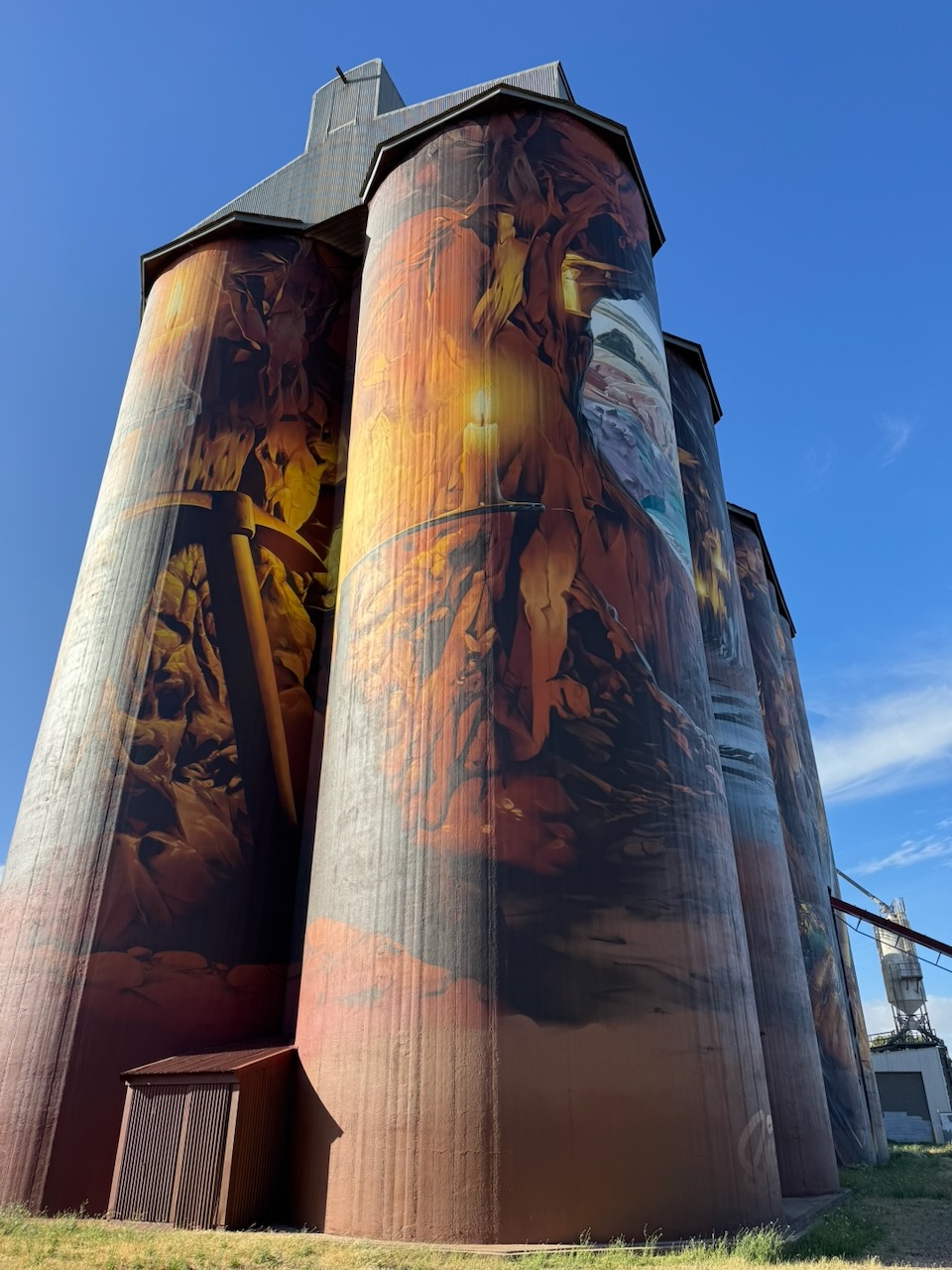
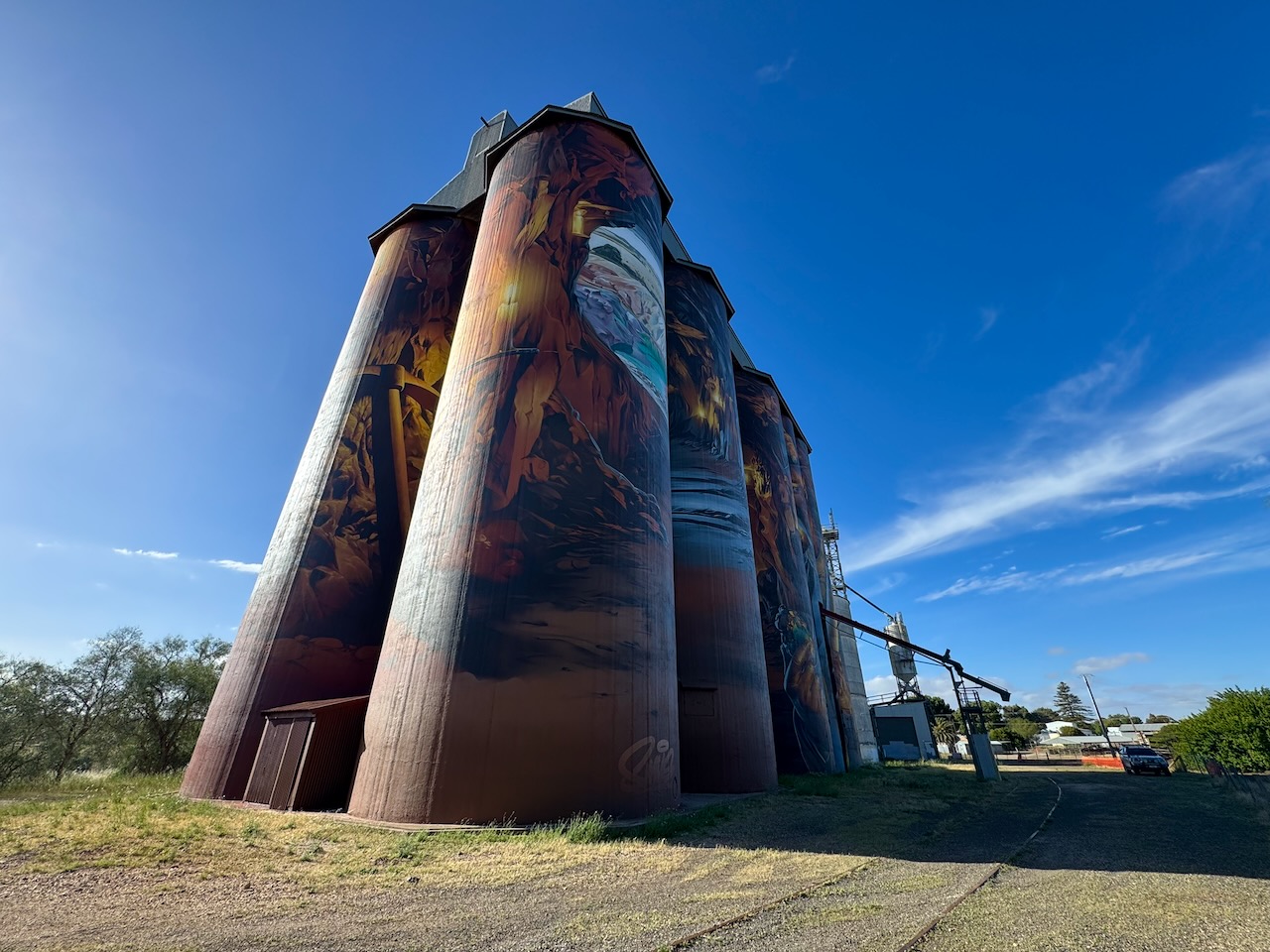
Marija and I parked alongside the silo and operated from the 4WD. We ran the Icom IC-7000, 100 watts, and the Codan 9350 antenna with the 1.5 metre stainless steel ship.
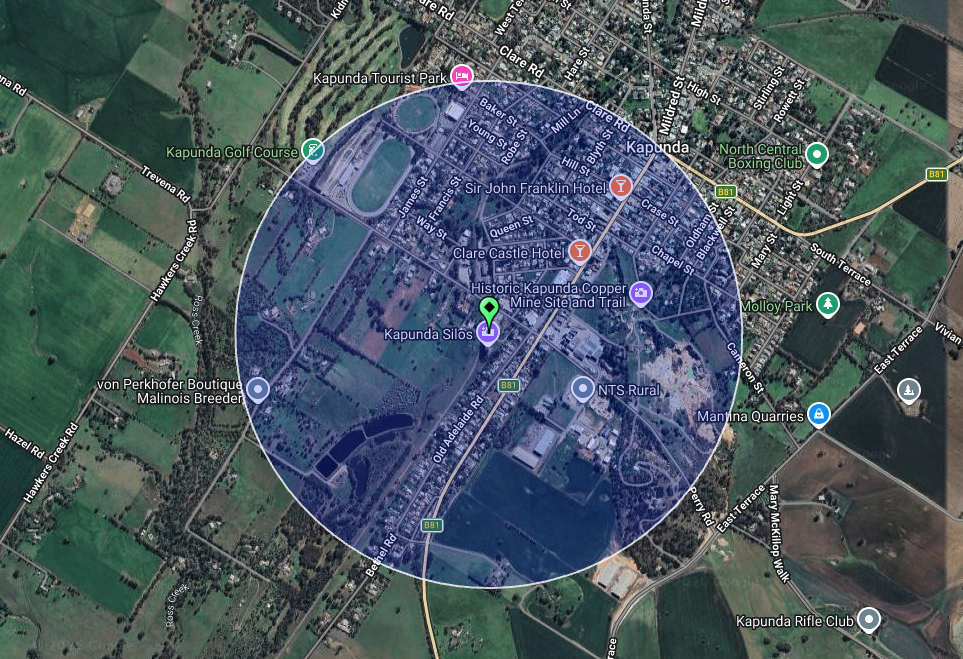
Above: the activation zone at the Kapunda silo. Image c/o SiOTA website
Marija worked the following stations on 40m SSB:-
- VK3MDC
- VK5LA
- VK5KAW
- VK1AO
- VK2MET
I worked the following sttaions on 40m SSB:-
- VK3MDC
- VK5LA
- VK5KAW
- VK1AO
- VK2MET
- VK2HLM
After the activation, Marija and I headed to the Sir John Franklin Hotel at Kapunda for dinner.
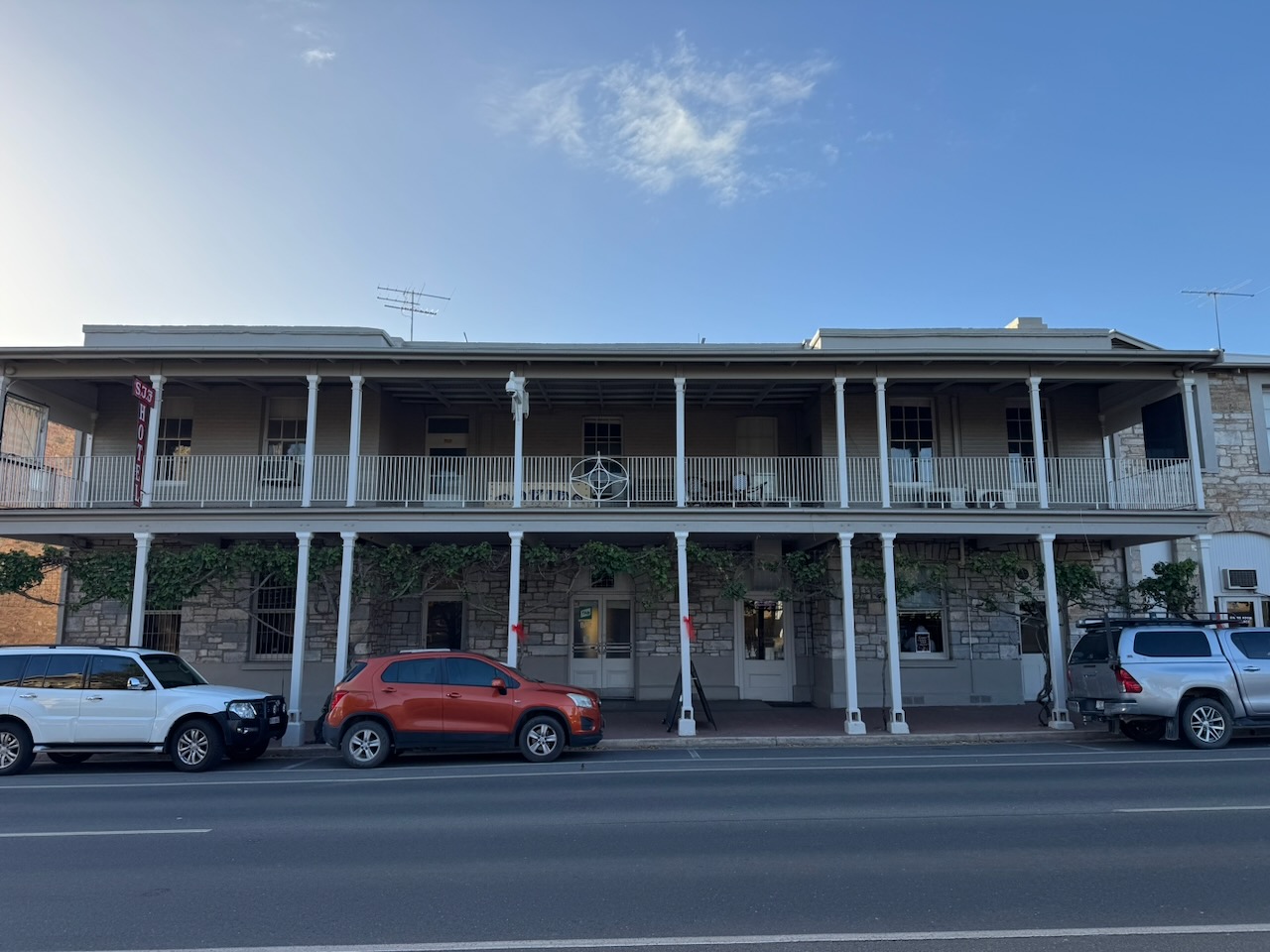
The hotel was built in 1949 by James Whittaker and was named after the Arctic explorer and Tasmanian Governor, Sir John Franklin. In its day, it was the leading hotel in Kapunda. (Sir John Franklin Kapunda, 2025)
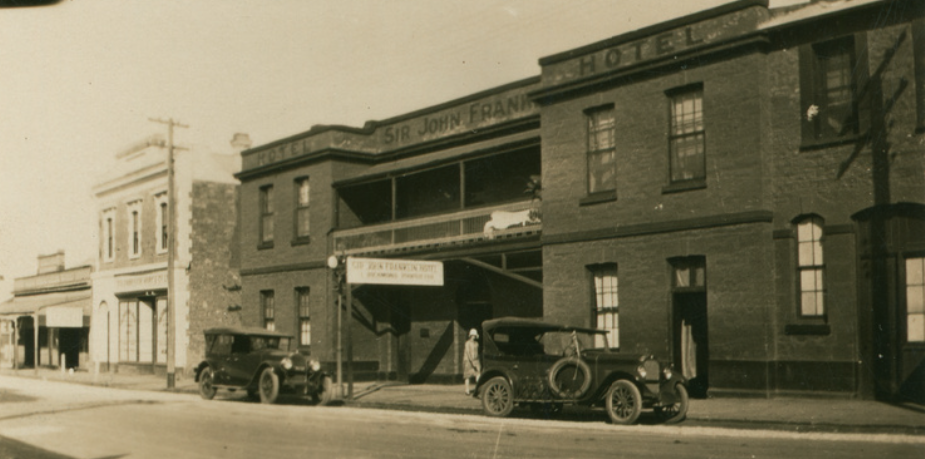
Above: the Sir John Franklin Hotel, c. 1926. Image c/o State Library South Australia.
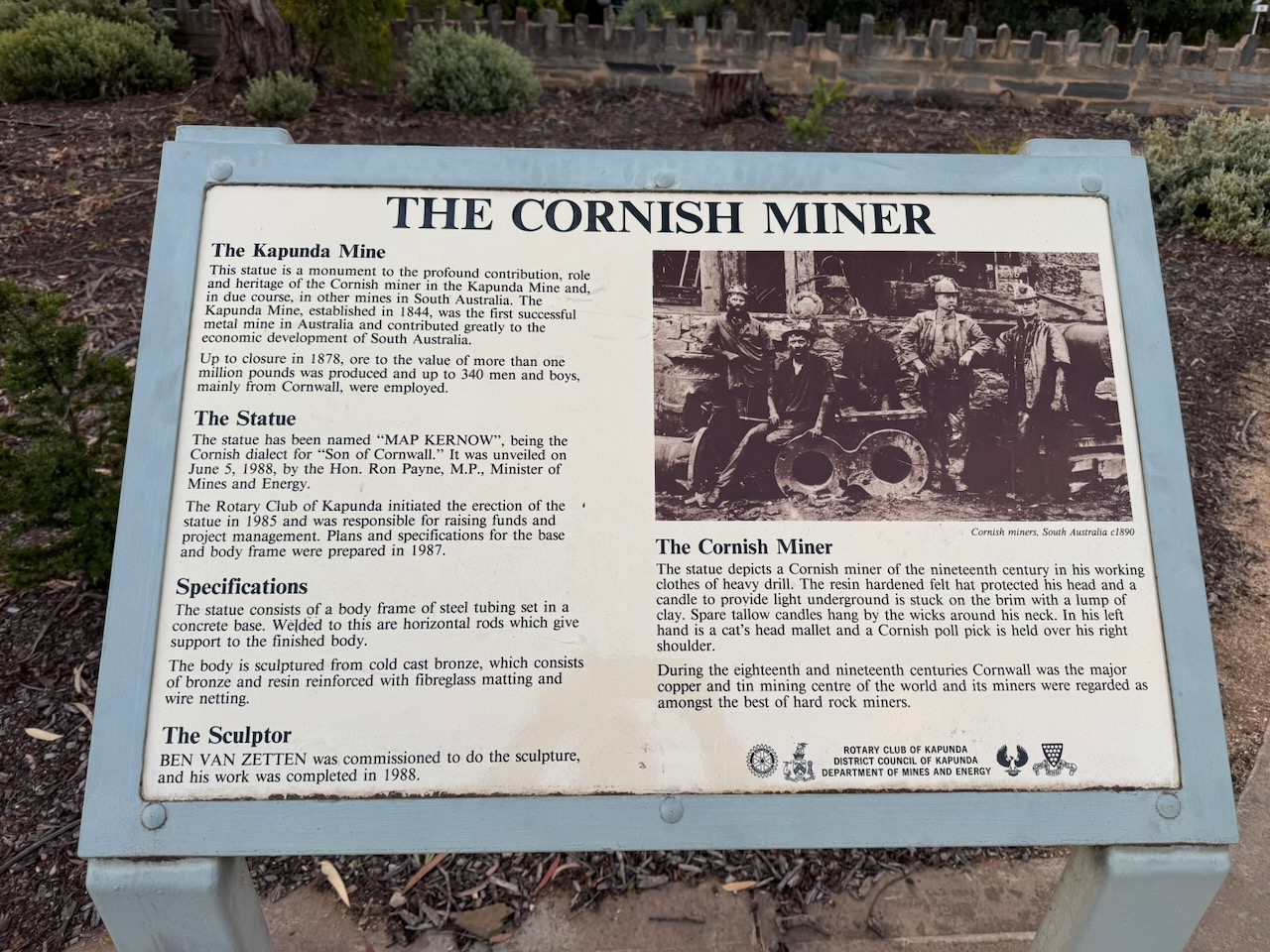
After a very nice evening meal, we visited Map the Miner, also known as Map Kernow or the Son of Cornwall. It is a 7 metre statue that commemorates the Cornish mining history of Kapunda. (Wikipedia 2020)
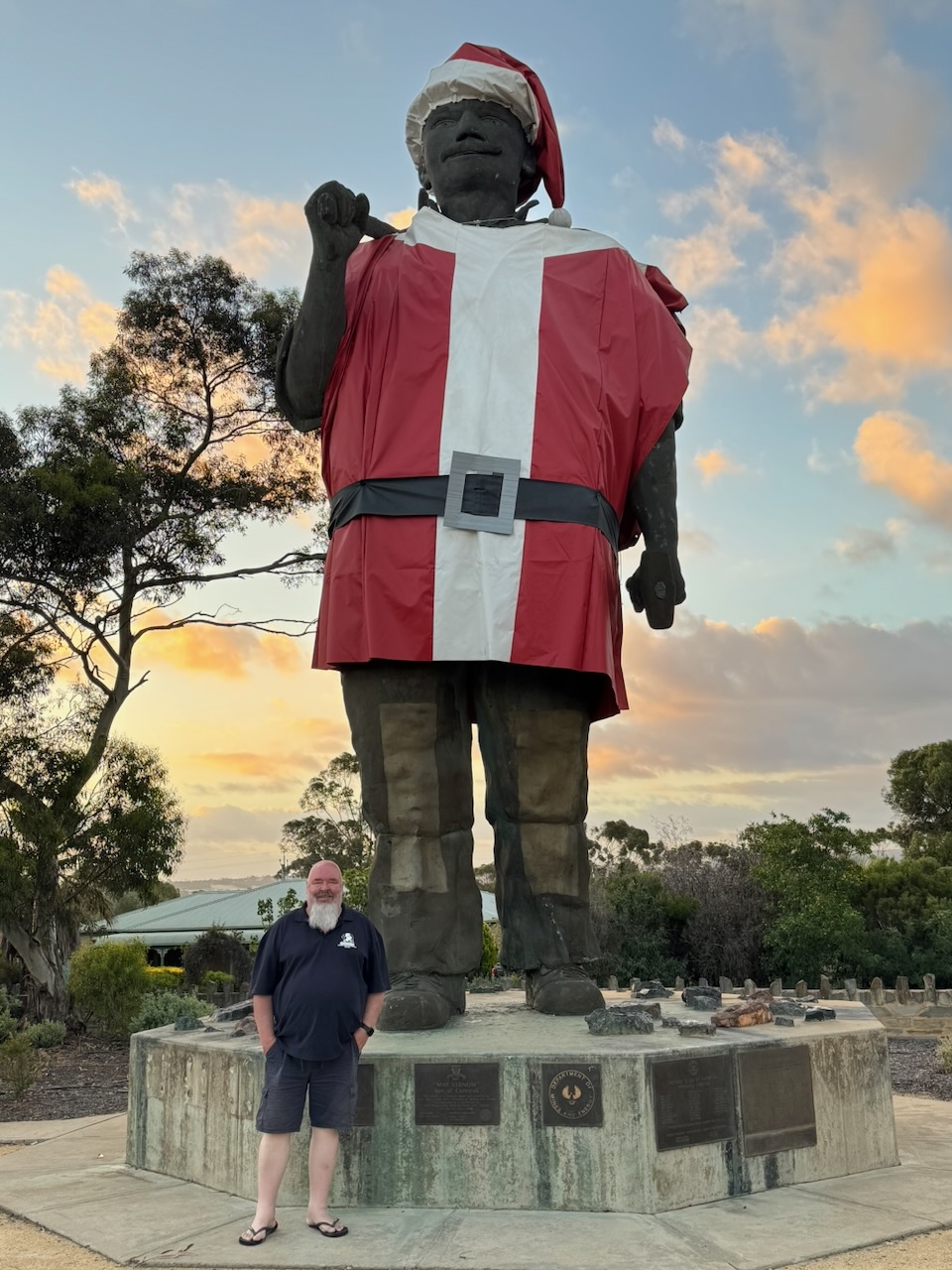
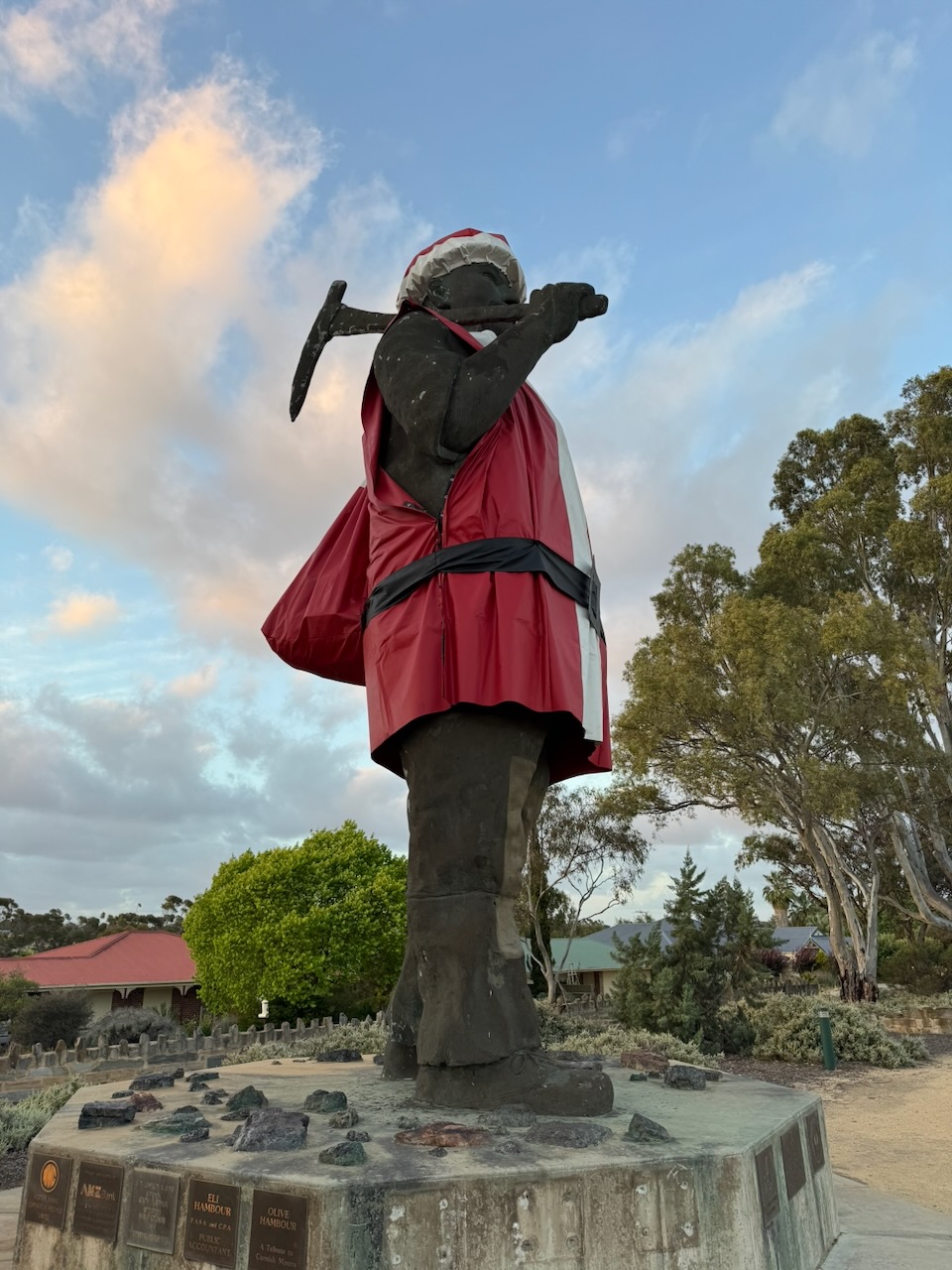
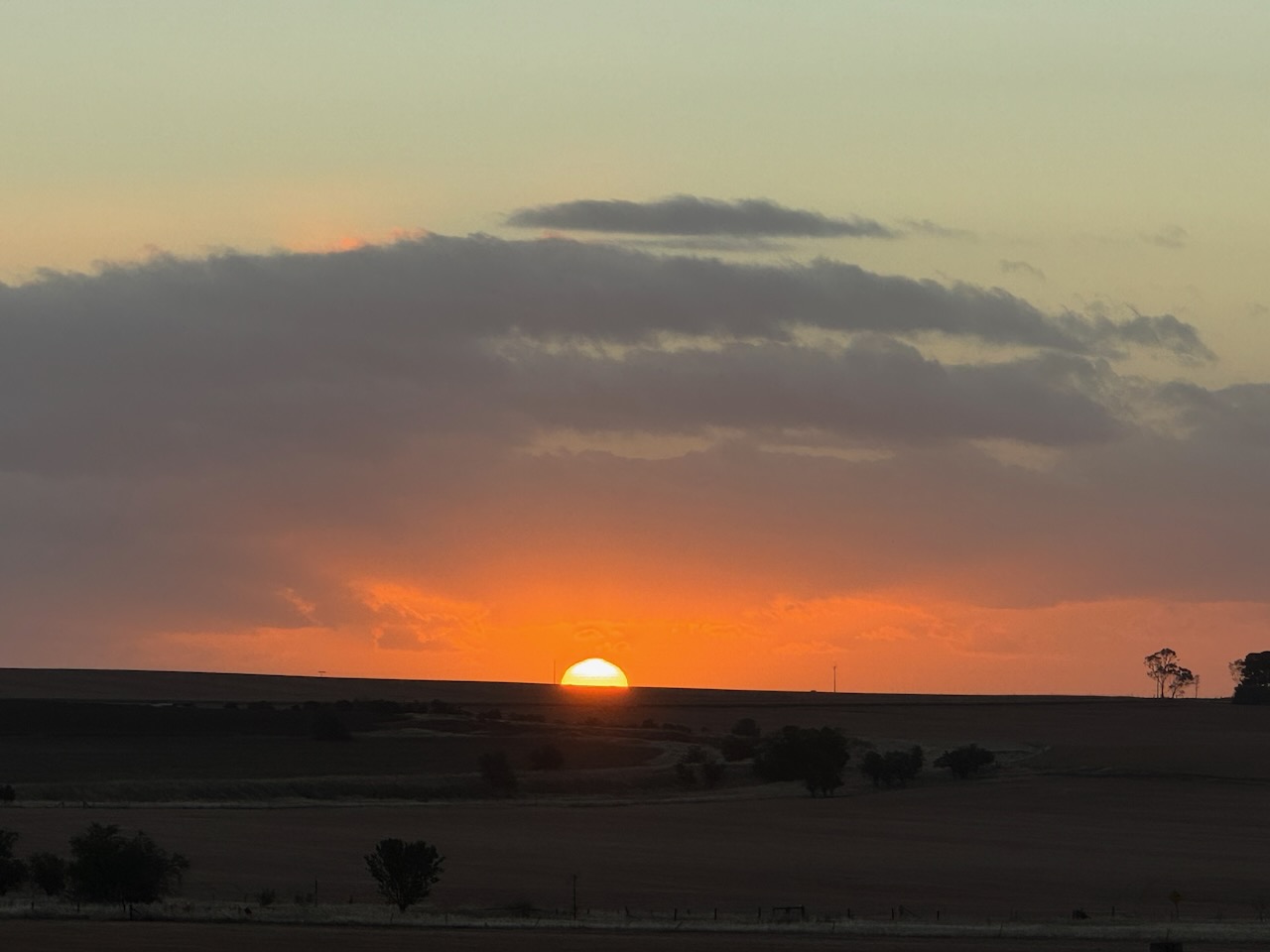
We drove south on Thiele Highway towards home on the Fleurieu Peninsula, admiring a magnificent sunset.
References.
- Australiansiloarttrail.com. (2026). Lameroo Silo Art, Australian Silo Art Trail. [online] Available at: https://www.australiansiloarttrail.com/kapunda [Accessed 25 Apr. 2026].
- Flickr. (2026). Kapunda Congregational church. [online] Available at: https://www.flickr.com/photos/31967465@N04/9260288504 [Accessed 25 Apr. 2026].
- https://www.abc.net.au/news/dixie-sulda/101575458 and https://www.abc.net.au/listen/james-findlay/8951506 (2024). Street art project revives rural town, boosts visitor numbers, sees empty shops filled. [online] Abc.net.au. Available at: https://www.abc.net.au/news/2024-02-05/kapunda-visitor-numbers-increase-in-mural-town-street-art-sa/103421692 [Accessed 25 Apr. 2026].
- Light Regional Council. (2023). Light Regional Council. [online] Available at: https://www.light.sa.gov.au. [Accessed 24 Apr 2026]
- Trove. (2026). South Australian Register (Adelaide, SA : 1839 – 1900) – 26 Jan 1888 – p7. [online] Available at: https://trove.nla.gov.au/newspaper/page/4048194?searchTerm=thomas%20moyle%20%2B%20gilberton [Accessed 24 Apr. 2026].
- Nla.gov.au. (2026). Making sure you’re not a bot! [online] Available at: https://trove.nla.gov.au/newspaper/page/10561035?searchTerm=delmar%20mobbs [Accessed 25 Apr. 2026].
- Nla.gov.au. (2026). Making sure you’re not a bot! [online] Available at: https://trove.nla.gov.au/newspaper/page/22388988?searchTerm=thomas%20badge%20%2B%20kapunda [Accessed 25 Apr. 2026].
- Nla.gov.au. (2026). Family Notices [online] Available at: https://trove.nla.gov.au/newspaper/page/22704601?searchTerm=william%20tuckfield%20%2B%20kapunda [Accessed 25 Apr. 2026].
- Sa.gov.au. (2026). The South Australia Heritage Places database. [online] Available at: https://maps.sa.gov.au/heritagesearch/HeritageItem.aspx?p_heritageno=20495 [Accessed 25 Apr. 2026].
- Sa.gov.au. (2026). The South Australia Heritage Places database. [online] Available at: https://maps.sa.gov.au/heritagesearch/HeritageItem.aspx?p_heritageno=13330 [Accessed 25 Apr. 2026].
- Sa.gov.au. (2018). Kapunda Museum – South Australian History Network. [online] Available at: https://explore.history.sa.gov.au/organisation/kapunda-museum/. [Accessed 26 Apr. 2026]
- Sir John Franklin Kapunda. (2025). About Us – Sir John Franklin Kapunda. [online] Available at: https://sirjohnfranklinhotel.com.au/about-us/ [Accessed 25 Apr. 2026].
- State Library of South Australia. (2026). Printing Office, Kapunda. [online] Available at: https://collections.slsa.sa.gov.au/resource/B+14936 [Accessed 26 Apr. 2026].
- Wikipedia. (2020). Map the Miner. [online] Available at: https://en.wikipedia.org/wiki/Map_the_Miner. [Accessed 25 Apr. 2026]
- Wikipedia Contributors (2024). Kapunda. [online] Wikipedia. Available at: https://en.wikipedia.org/wiki/Kapunda. [Accessed 26 Apr. 2026]
- Wikipedia Contributors (2025). Kapunda railway station. Wikipedia.
- Wikipedia Contributors (2025). Sidney Kidman. Wikipedia.
- Wikipedia Contributors (2023). D. & J. Fowler Ltd. [online] Wikipedia. Available at: https://en.wikipedia.org/wiki/D._%26_J._Fowler_Ltd. [Accessed 25 Apr. 2026]
- Wikitree.com. (2022). Thomas Moyle (1828-1888) | WikiTree FREE Family Tree. [online] Available at: https://www.wikitree.com/wiki/Moyle-653 [Accessed 24 Apr. 2026].
 VK5PAS