
My final park for Sunday, the 3rd day of May 2026, was the Chiltern-Mount Pilot National Park VKFF-0620. The park is located southwest of Albury, and south of Chiltern in northeast Victoria.
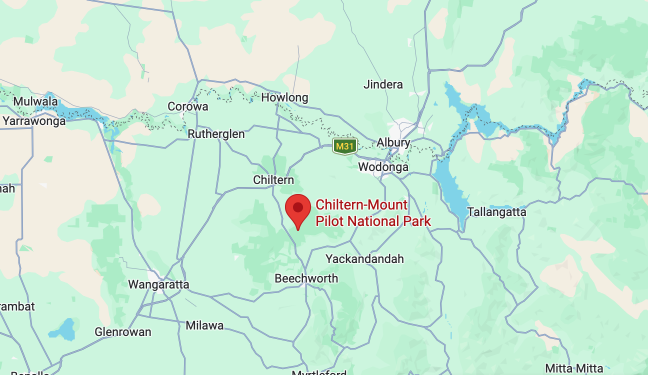
Above: Map showing the location of Chiltern-Mount Pilot National Park. Map c/o Google Maps
The Chiltern-Mt Pilot National Park is about 21,650-hectares (53,500-acres) in size and extends west from Beechworth across the busy Hume Freeway to the west of Chiltern. (Wikipedia 2026)
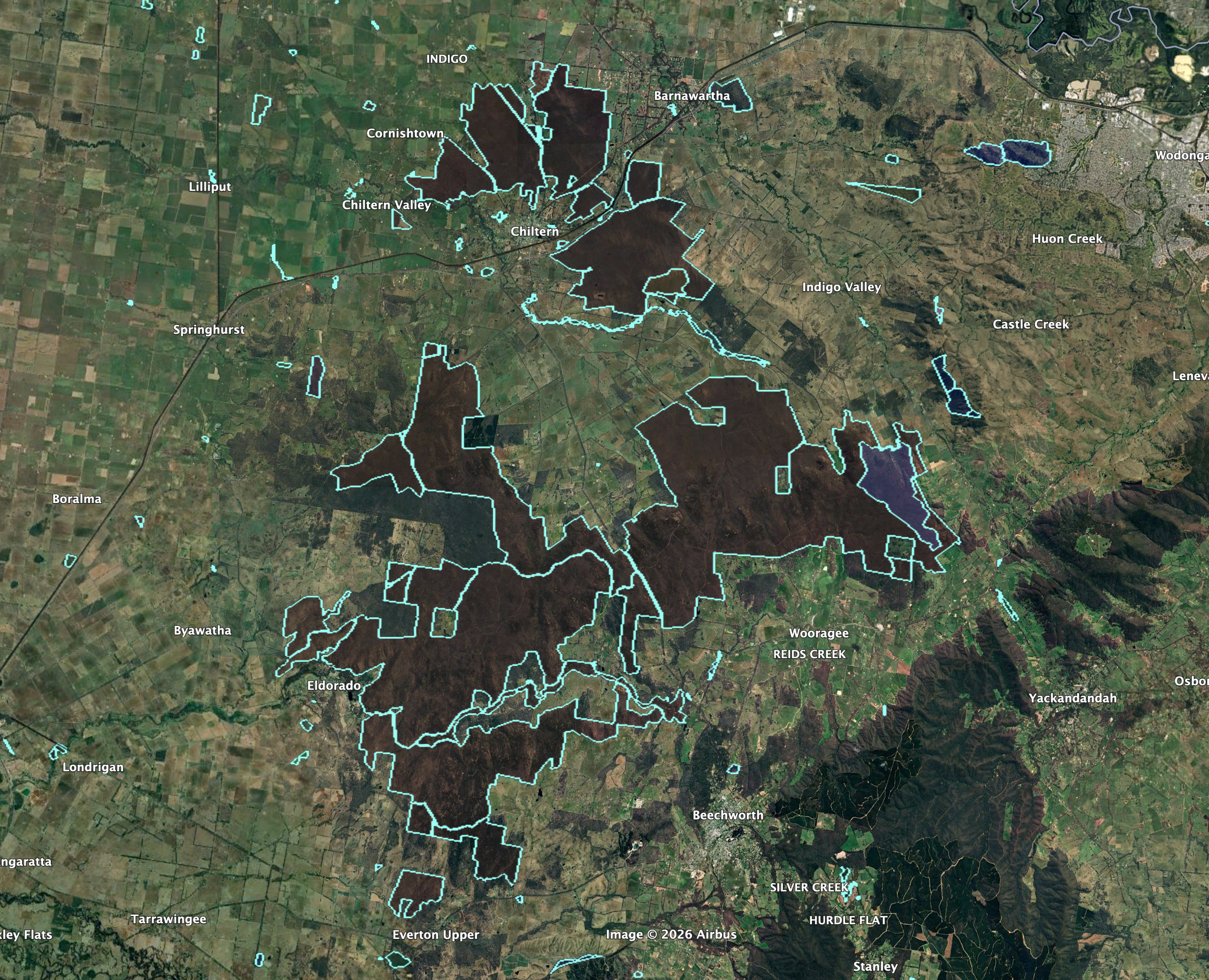
Above: the various boundaries of the Chiltern-Mount Pilot National Park. Image c/o Google Earth
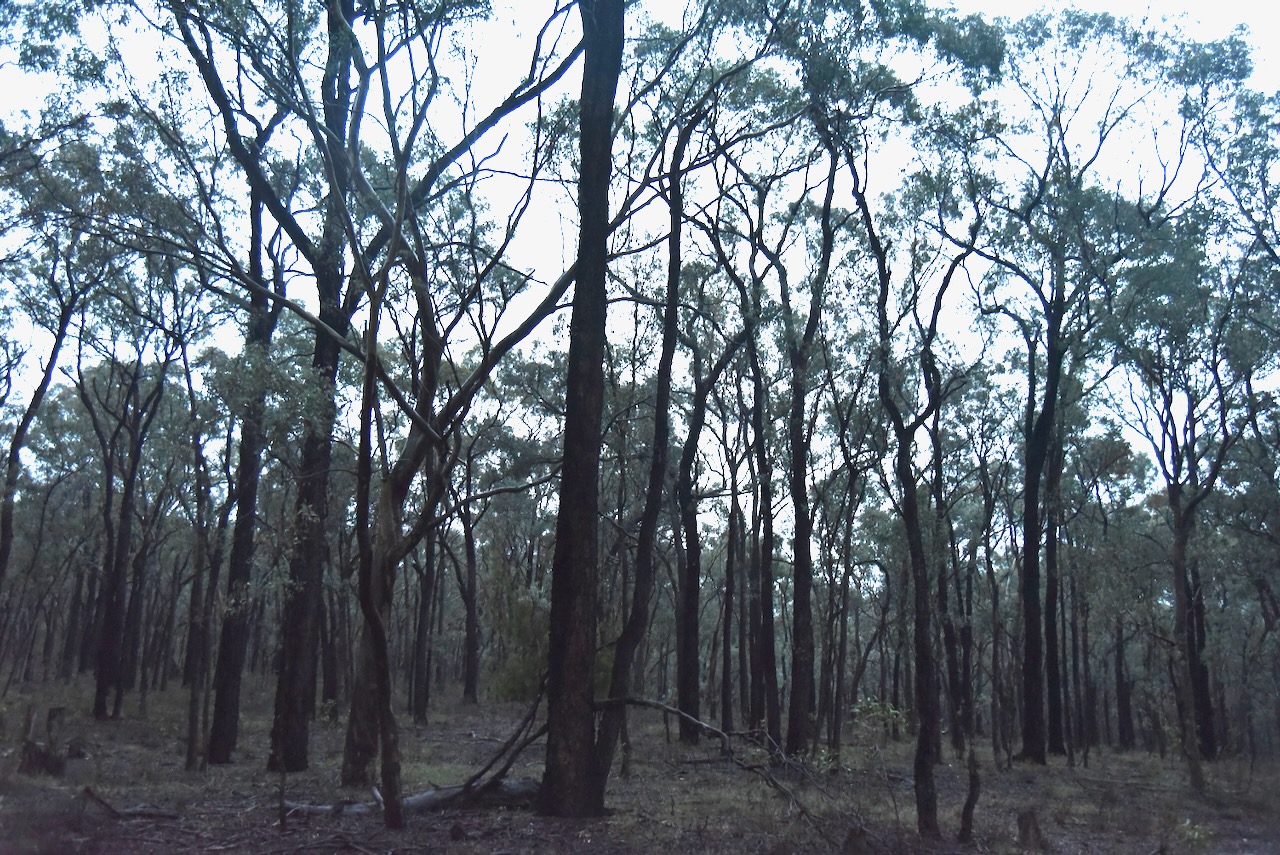
When the Europeans settled in Australia, box-ironbark forests covered about 7.4 million hectares or 13% of Victoria. Nearly 80% of these forests were cleared by European settlers, while the remaining 20% was severely degraded due to grazing. Chiltern-Mount Pilot National Park was declared to protect the remaining box-ironbark forest. (Wikipedia 2026)
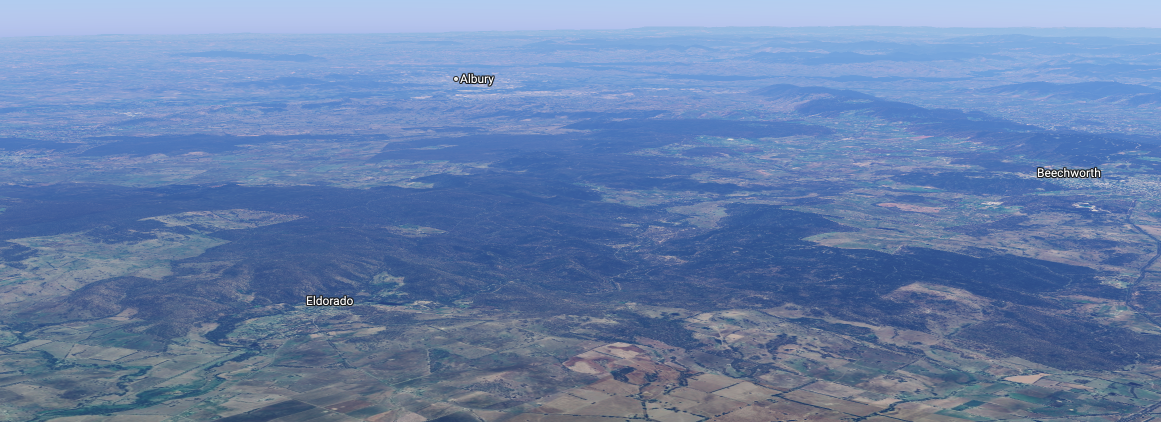
Above: an aerial view of the Chiltern-Mount Pilot National Park. Image c/o Google Maps
The Chiltern Regional Park, first known as the Chiltern State Park, was a 4,520-hectare (10,500-acre) box-ironbark forest that was gazetted in 1980. The Mount Pilot Multipurpose Park was also established. In 1997, the park became the Chiltern Box-ironbark National Park. In 2002, the Chiltern Box-ironbark National Park and the Mt Pilot Multipurpose Park, in addition to other sections of land, were incorporated to form the Chiltern-Mt Pilot National Park. (Wikipedia 2026)
The park is home to more than 600 native species of flora, including 42 threatened species. This includes the crimson spider orchid, yellow hyacinth orchid, Warby swamp gum, and mountain swainson pea. (Wikipedia 2026)
A total of 276 different native mammals, birds, and reptiles have been recorded in the park. This includes 43 fauna species that are recorded as threatened. This includes the squirrel glider, Brush-tailed phascogale, Barking Owl, and Regent honeyeater. (Wikipedia 2026)
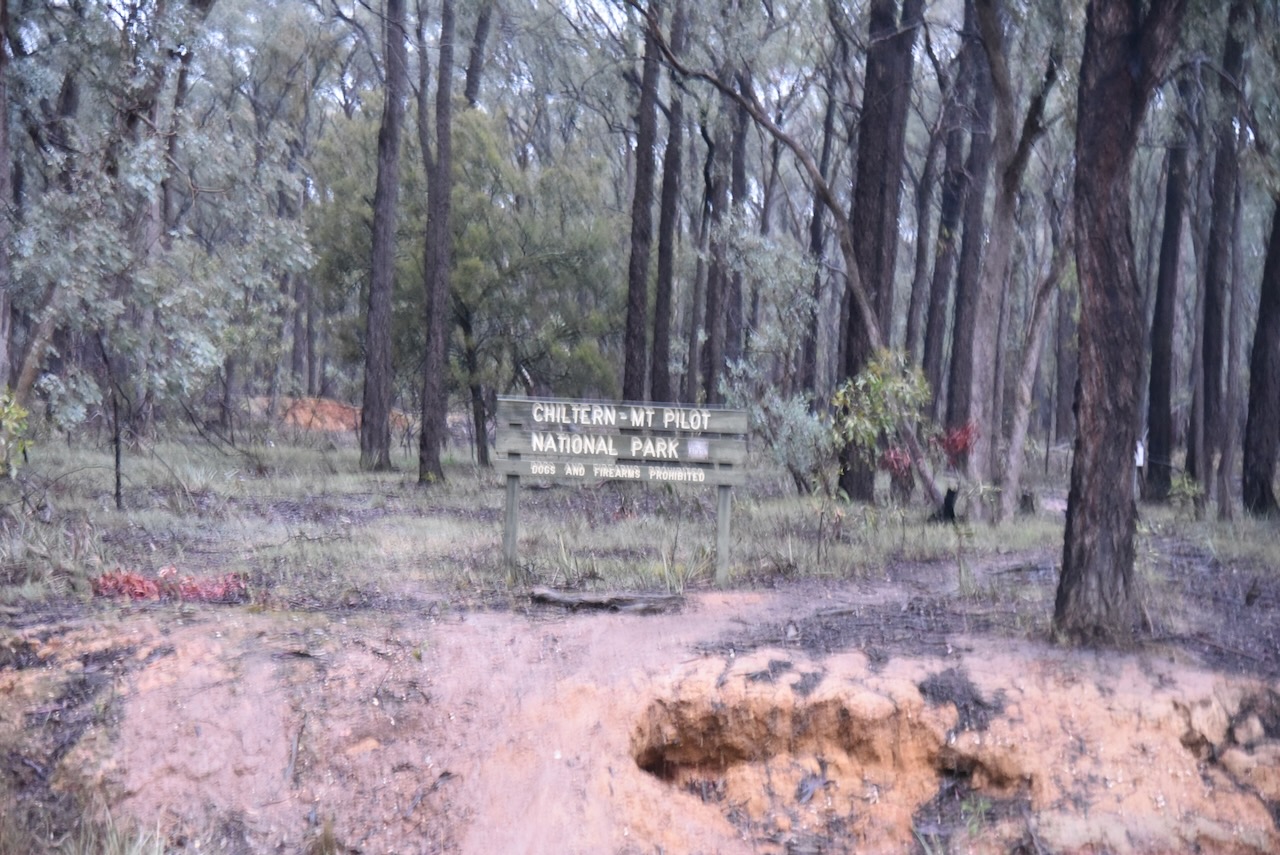
I did not intend to activate this park, and was on my way to another park, when I noticed the park sign after passing underneath the Hume Freeway on McHugh Road. The photo above featuring the park sign is blurred because it was taken in heavy rain.
The rain was so heavy that I could not string out the dipole. I had to operate from the vehicle for this activation, running the Icom IC-7000, 100 watts, and the Codan 9350 antenna with the 1.5 metre stainless steel whip.
The rain was so heavy at times that I could not hear the stations that were calling. In the end, the lightning rolled in and decided to call it a day. I headed back into Albury and went out for dinner with Heath VK3TWO, Chris VK5FR, Gerard VK2IO, Peter VK3PF, and his brother.
I worked the following stations on 40m SSB:-
- VK7EV
- VK2VW
- VK2HFI
- VK2AKA
- VK2BUG
- VK5KPR
- VK5MAZ
- VK4HMI
- VK3CJN
- VK3QHU
- VK2NNN
- VK3BEL
- VK3BEB
- VK3SMW
- VK3CLD
- VK5QA
- VK2DBF
- VK2IO/P (VKFF-2186)
- VK2GEZ/P (VKFF-2186)
- VK3AMO
- VK3EJ
- VK1CHW
- VK2CHW
- VK4KTW
- VK5FL
- VK5HS
- VK2OKR
- VK2BXB
- VK2AUS
- VK2AUR
- VK2AUK
- VK3UH
- VK3CEO
- VK4SMA
- VK2KEV
- VK7AAE
- VK5DIK
- VK2FDSD
- VK3APJ
- VK5AOK
- VK3KRL
- VK5FANA
- VK2OM
- VK5DW
- VK7AJP
- VK7PJM
- VK5AYL
- VK2PKT
- VK2KFT
- VK3MXW
- VK3PE
- VK4CZ
References.
- Wikipedia Contributors (2026). Chiltern-Mt Pilot National Park. Wikipedia.

