Day 18 and Franklin Gordon Wild Rivers National Park VKFF-0185

We were now well and truly into 2 weeks of our Tasmania trip (Saturday 112th November 2022). Today we were to travel from Lake St Clair to Strahan on the west coast of Tasmania, a distance of about 132 km.

Above:- Map showing our route from Lake St Clair to Strahan. Map c/o Google maps.

After another cooked breakfast at Lake St Clair Lodge we hit the road and started travelling south west on the Lyell Highway. It wasn’t long and we saw a sign for the Franklin Gordon Wild Rivers National Park VKFF-0185. We hadn’t realised that the park was so close to Derwent Bridge.

Above:- Map of Tasmania showing the location of the Franklin Gordon Wild Rivers National Park. Map c/o Google maps.

Franklin-Gordon Wild Rivers National Park is 4,463.42 km2 in size and is situated about 117 km west of Hobart. It is named after the two main river systems which lie within the bounds of the park, the Franklin River and the Gordon River. The park is located in the heart of the Tasmanian Wilderness World Heritage Area.

Above:- An aerial view of the Franklin Gordon Wild Rivers National Park. Image c/o Google maps

The Franklin River rises below Mount Hugel west of Derwent Bridge and flows west and south through remote and rugged mountainous country until it meets the confluence with the Gordon River. Its total length is 129 km.

The river is named in honour of Sir John Franklin (b. 1786. d. 1847), a Governor of Tasmania.

Above:- Sir John Franklin. Image c/o Wikipedia.

The Gordon River rises below Mount Hobhouse in the National Park and flows south and spills into Lake Gordon. The river is 172 km in length.

The river was explored by James Kelly in 1816 who named it in honour of an associate James Gordon.

Above:- James Kelly. Image c/o Friends of North Bruny, friendsofnorthbruny.org.au

Part of the current park was previously the Frenchmans Cap National Park which took its name from Frenchmans Cap, a mountain which is 1,446 metres above sea level. It is named due to its appearance from some angles as looking like a Frenchmans Cap, most notably the Liberty Cap worn during the French Revolution.

Most Australians would recognise the names Franklin River and Gordon River. They were the subject of one of Australia’s greatest conservation efforts when in 1978 the Tasmanian Hydro Elecric Commission with the approval of Robin Gray State Liberal Government announced plans to build a dam on the Franklin River.

It became a very big national issue and particularly for the Tasmanian Wilderness Society which was led by Bob Brown. In 1972 the Tasmanian State Government had given the Tasmanian Hydro Electric Commission approval to dam the Serpentine and Huon Rivers to create Lake Pedder. The dam resulted in the loss of Tasmanian wilderness and the extinction of two invertebrate species. The development was opposed unsuccessfully by a number of environmental activists, many who went on to form the Tasmanian Wilderness Society.
Above:- Bob Brown. Image c/o Australian Greens website – Australian Greens

Following the 1978 proposal to build a dam on the Franklin and Gordon Rivers, an organised protect march in Hobart in 1980 against the damming of the Franklin River saw 10,000 take to the streets of Hobart. The Tasmanian State Government compromised and added the Franklin River to the Wild Rivers National Park. However they approved the building of a dam on the Gordon River. In December 1981 a referendum was held which led to a political crisis and a change in Government to the Liberal Party in 1982 who immediately approved legislation to dam the Franklin River.

Protests then commenced including a blockade of the Franklin. Between December 1982 and March 1983. about 2,500 people participated. Of those 1,400 of these were arrested by Police. Bob Brown was one of those who was arrested.

Above:- news article from The Canberra Times, Sun 19 Dec 1982. Image c/o Trove

The Australian Federal Liberal Government refused to over rule the Tasmanian State Government. But in March 1983 the Australian Labor Party took over Federal Government and Prime Minister Bob Hawke introduced legislation to protect the Franklin and Gordon Rivers. The Tasmanian State Government refused to cease work on the dam which resulted in the Federal Government taking the State Government to the High Court of Australia. On the 1st day of July 1983, the High Court ruled in favour of the Federal Government.
Below is a video of reflections on the Franklin River blockade by Bob Brown.

We drove into the Lake King William area of the park on the southern side of the Lyell Highway. The lake’s namesake, Mount King William was named during the 1842 expedition of the area by Sir John Franklin (b. 1786. d. 1847). This was despite the fact that the reigning monarch at the time was Queen Victoria.

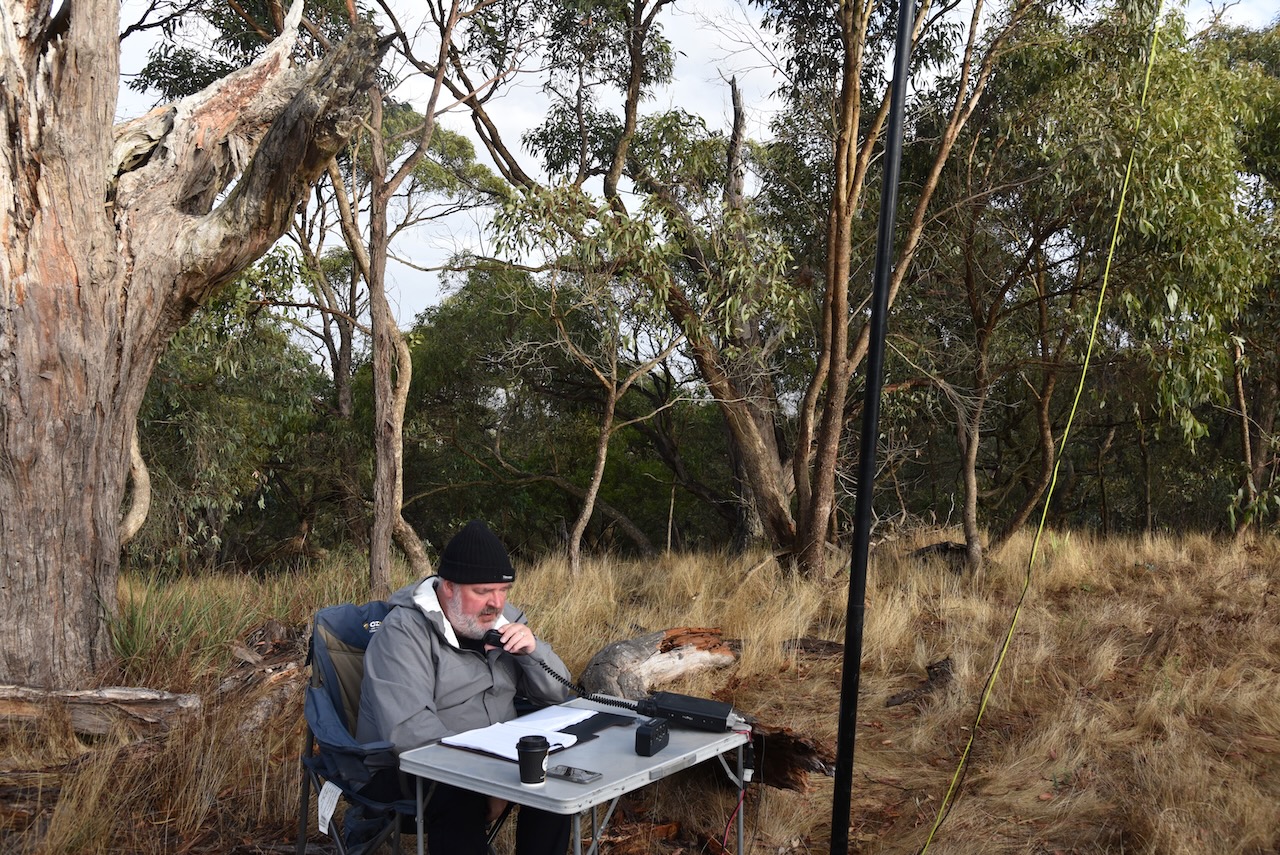
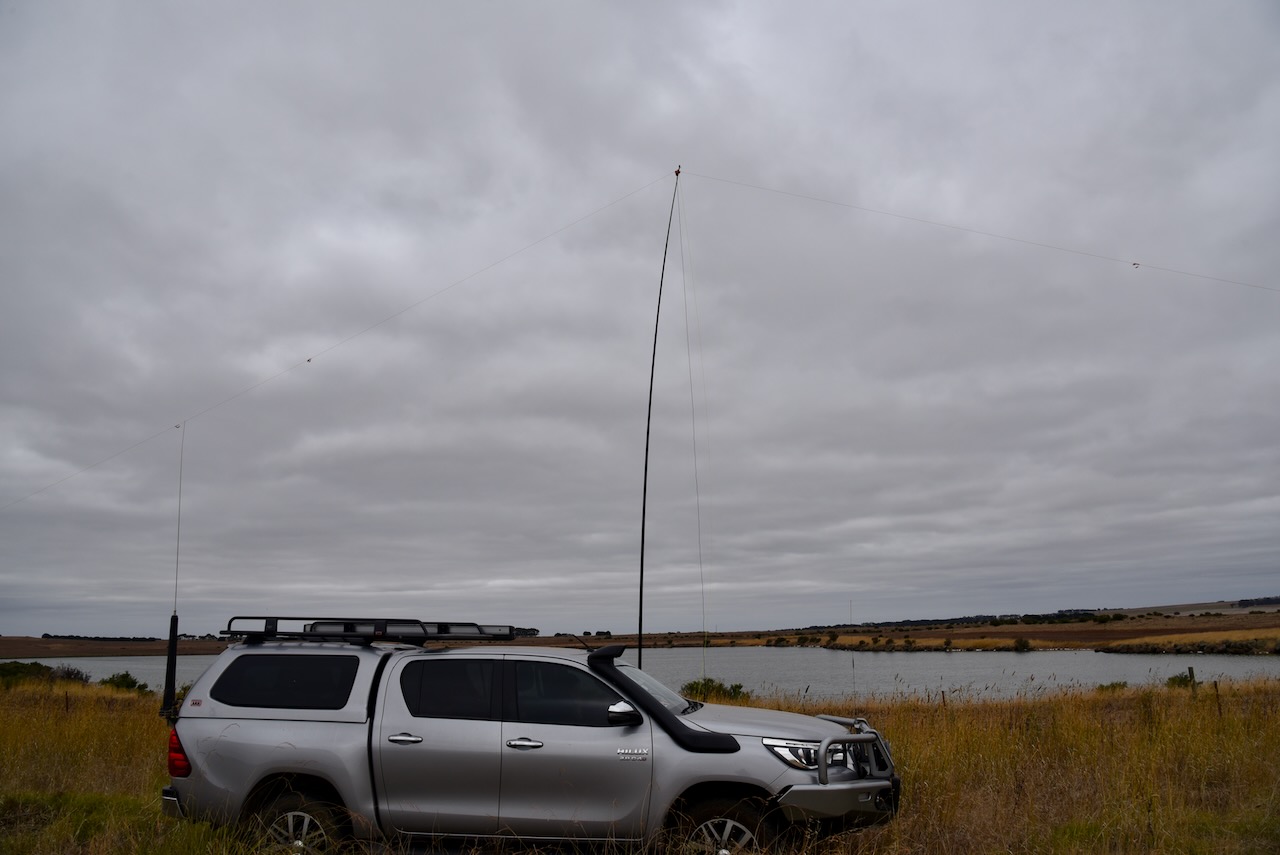
We ran out the 20/40/80m linked dipole for this activation, and used the Yaesu FT857 with 40 watts output.

Marija made the following QSOs on 40m SSB:-

  1. VK5MOS
  2. VK2IO
  3. VK2VW
  4. VK2HFI
  5. VK4TJ
  6. VK5FPKR
  7. VK2EXA
  8. VK5FANA
  9. VK3VIN
  10. VK5HS
  11. VK2YAK
  12. VK4YAK
  13. VK3ZPF/p (French Island National Park VKFF-0622)

Marija made the following QSOs on 20m SSB:-

  1. ZL3DRN/p (SOTA ZL3/ CB-514 & ZLFF-0128)
  2. ZL1BQD

I made the following QSOs on 40m SSB:-

  1. VK5MOS
  2. VK2IO
  3. VK2VW
  4. VK2HFI
  5. VK4TJ
  6. VK5FPKR
  7. VK2EXA
  8. VK5FANA
  9. VK3VIN
  10. VK5HS
  11. VK2YAK
  12. VK4YAK
  13. VK3SMW
  14. VK3MTT/m
  15. VK3BBB/m
  16. VK2CCP/m
  17. VK5BJE
  18. VK5HAA
  19. VK3AHR
  20. ZL1BQD
  21. VK3PF
  22. VK1AD
  23. VK2DRB
  24. VK3ZPF/p (French Island National Park VKFF-0622)
  25. VK3SQ
  26. VK3APJ
  27. VK2NP
  28. VK2CDB
  29. VK2YK
  30. VK5GA
  31. VK5WT
  32. VK2MTC

I made the following QSOs on 20m SSB:-

  1. VK4TJ
  2. ZL3DRN/p (SOTA ZL3/ CB-514 & ZLFF-0128)
  3. ZL1BQD

We had both qualified the park for the VKFF program, and I had fallen a few QSOs short of 44 required for the global World Wide Flora Fauna (WWFF) program. But it was before the UTC rollover and we still had some stops to go in the park. We packed up and headed further into the National Park.

We stopped briefly at a roadside stop on the Lyell Highway where there are a number of information boards and a memorial cairn for Colin Mackenzie Pitt. He was the Surveyor General and Secretary for Lands. He was responsible for the building of the Lyell Highway. It took 200 workers a total of two years to complete the road.

Prior to the construction of the Highway, access to the west coast of Tasmania was along rough tracks. This included a track which was cut in 1840 for Governor Sir John Franklin to travel overland to MacQuarie Harbour. His wife Lady Jane Franklin accompanied him on the inaugural journey which took 20 days with Lady Jane being carried part way by convicts on a purpose built Blackwood chair.

Whilst at the roadside stop Marija and I both worked Daryl VK3AWA who was activating The Lakes National Park VKFF-0484.

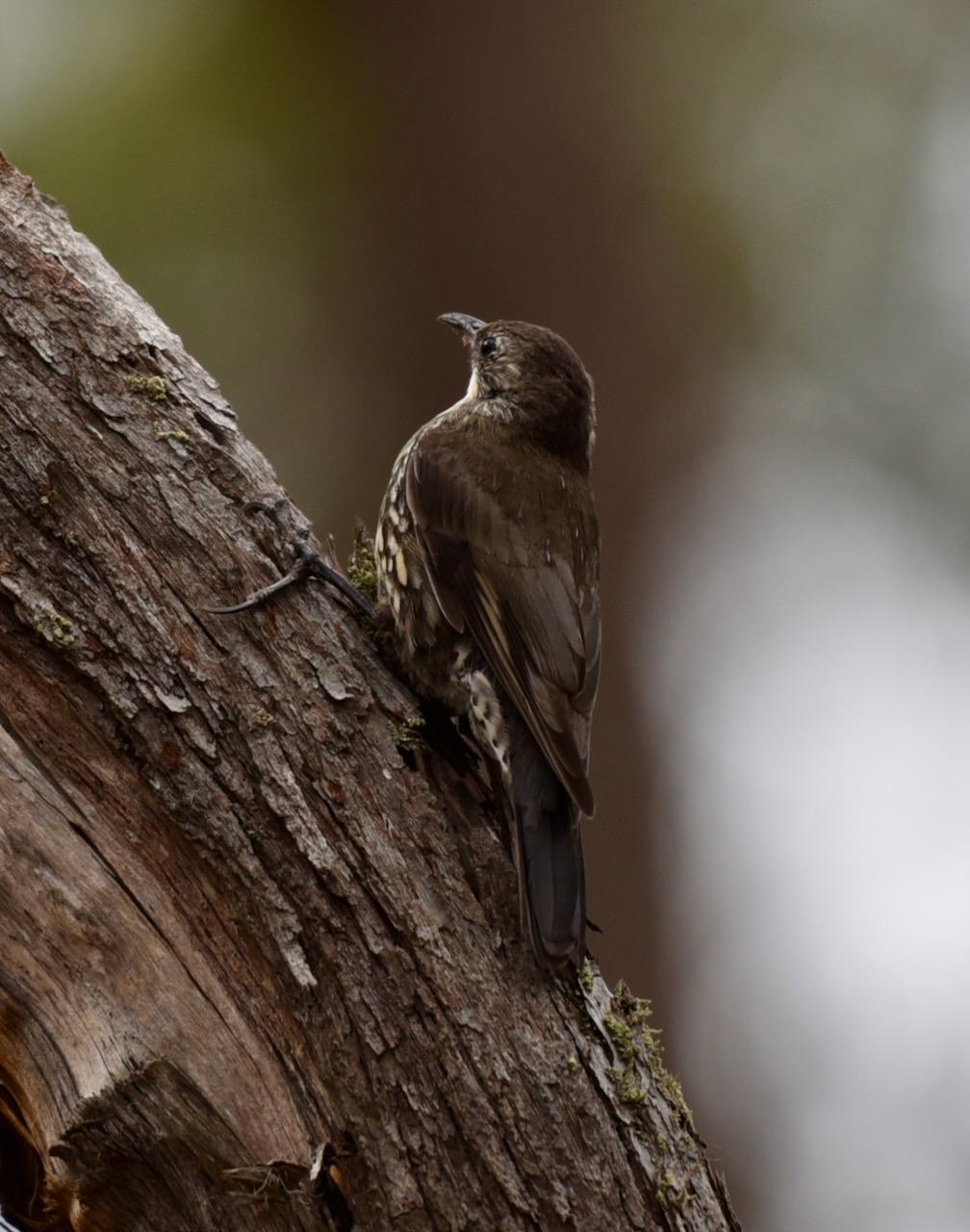
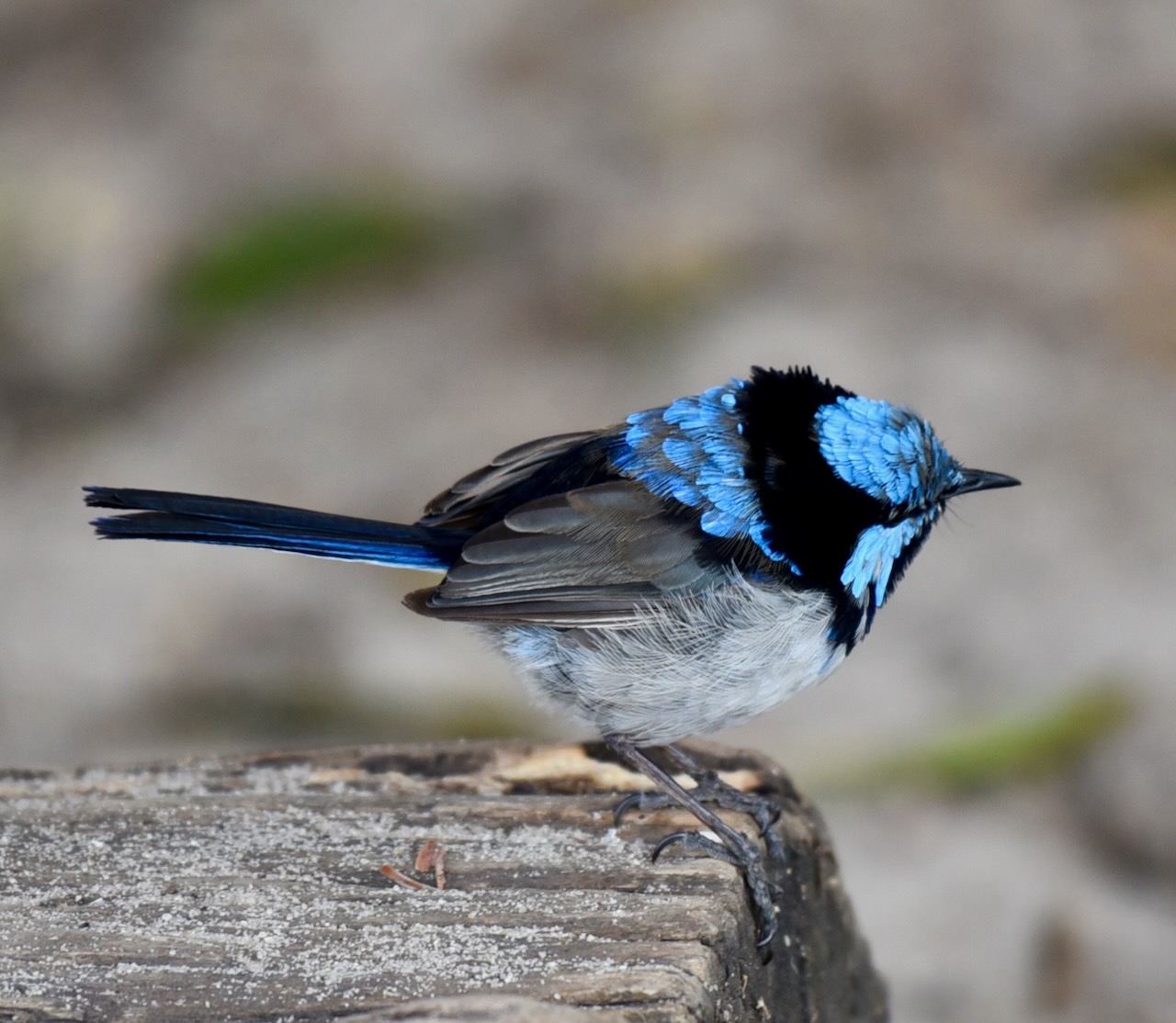
Our next stop was the Franklin River Nature Trail on the Lyell Highway. As we arrived in the carpark, a very friendly Pink Robin landed on our bonnet. I was so pleased to see this little bird as I had sighted one during our walk through Cradle Mountain, but when I went to take a photo the bird turned its back on me. Not this one.

Whilst in the carpark Marija and I both worked Joe VK3SRC who was activating the Churchill National Park VKFF-0621.

We then went for a walk on the very beautiful Franklin River Nature Trail. It is a 1km 25 minute walk which is very easy. It takes you through beautiful mossy rainforest and alongside the Franklin River. Along the walk there are a number of interpretation signs with details about the rainforest and the river.

We then headed a little further along the Lyell Highway and came to the Frenchmans Cap trail which leads to the Frenchmans Cap suspension or swing bridge. The bridge can be reached after walking about 300 metres from the carpark.

The walk was beautiful with lots of the native plants in flower.

Once you reach the bridge you are rewarded with some great views of the Franklin River.

Once we got back to the 4WD Marija and I put out some more calls from the 4WD using the Icom IC7000 and the Codan 9350 antenna.

Marija logged the following QSOs on 40m SSB:-

  1. VK3BEZ/p (VKFF-0480
  2. VK2IO/p (VKFF-3253)
  3. VK3ZPF/p (VKFF-0622)
  4. VK3TKK/p (VKFF-0623)
  5. VK3TUN/p (VKFF-0345)

I worked the following stations on 40m SSB:-

  1. VK3BEZ/p (VKFF-0480
  2. VK2IO/p (VKFF3-253)
  3. VK3ZPF/p (VKFF-0622)
  4. VK3AHR
  5. VK3TKK/p (VKFF-0623)
  6. VK2DA
  7. VK1DA
  8. VK2EXA
  9. VK3OAK
  10. VK3AMO
  11. VK3TUN/p (VKFF-0345)

We then continued along the Lyall Highway towards Queenstown.

We stopped occasionally to take in the view of Frenchman’s Cap which had snow on it.

We then detoured a little of the Highway to have a look at the Collingwood River, a tributary of the Franklin River.

We proceeded a little further along the Lyell Highway and soon reached the carpark for Nelson Falls. It is just a short walk to the waterfall through beautiful rainforest and alongside of the Nelson River.

The Nelson Falls descend about 30 metres and were flowing well during our visit due to all of the recent rainfall.

Further along the Lyell Highway is Lake Burbury, a 54 square kilometre man made reservoir for hydroelectricity production. It was named in honour of Stanley Burbury, the first Australian born Governor of Tasmania. The lake is fed mainly by rivers including the upper King River and Eldon River. It is popular with fishers with Brown and Rainbow trout being found in the lake.

It was an absolutely beautiful sunny afternoon and there were some spectacular views across the lake.

We then drove into the little town of Linda. It is believed that it was named after the French opera ‘Linda di Chamounix’. Linda is now a ghost town.

We had not had lunch and were hoping to get something to eat at Queenstown, but we stumbled across the Linda Cafe, and we were so glad we did. We had a late lunch here and it was absolutely beautiful.

Adjacent to the cafe are the ruins of the old Royal Hotel which was built in 1901 by George Eaves. The hotel was destroyed by fire in 1910 whilst under the ownership of Tom Kelly who then had the hotel rebuilt.

Above:- Article from the Examiner, Launceston, Tues 11 Jan 1910. Image c/o Trove

At one time Linda had a population of about 600 people and the hotel was the heart of the thriving mining town. The last drinks were poured at the hotel in 1952 after which time the hotel fell into disrepair.

Not far up the road is the old town of Gormanston which was built as the company town for the Mount Lyell Mining and Railway Company for operations at the Iron Blow open cut copper mine. It was named in honour of Jenico William Joseph Preston, 14th Viscount Gormanston, Governor of Tasmania 1893 to 1900.

Above:- Jenico Preston. Image c/o Wikipedia.

We headed up to the top of the Iron Blow Lookout which offers sensational views of Gormanston, the old copper mine and the surrounding countryside.

Just across the road you can find Horsetail Falls which is a large seasonal waterfall on Moore Creek which drops about 50 metres. It was flowing during our visit.

We continued on the Lyell Highway and stopped at the Queenstown lookout.

We then reached the town of Queenstown located in a valley on the western slops of Mount Owen. It was named in honour of Queen Victoria.

We then took the short but steep walk up to the top of Spion Kop lookout to enjoy the views of Queenstown. Spion Kop takes its name from a battle in the Boer War.

We headed north out of Queenstown on the Lyell Highway and stopped briefly at the junction of the Lyell Highway and the Zeehan Highway where there is a monument for the opening of the Queenstown-Strahan Road. Work commenced on the road on the 18th day of March 1935 and it was opened on the 30th day of October 1937.

Just up the road is the spectacular Queenstown airport.

Further along the Lyell Highway we stopped at the Rindeena Lookout, also known as Hall’s Creek lookout.

We then reached the town of Strahan on the west coast.

Strahan was originally developed as a port of access for the mining settlements in the area. Up until 1877, it was known as Long Bay or Regatta Point. Strahan was named after the colony’s Governor Sir George Cumine Strahan (b. 1838. d. 1887).

Above:- George Strahan. Image c/o Wikipedia.

We then booked into our accomodation at the Strahan Beach Tourist Park. We had a self contained cabin and it was extremely nice.

We had a drive around the town before it got dark to admire some of the views of Long Bay and some of the historic buildings.

We then sat back and enjoyed a magnificent sunset before heading back our cabin for dinner.

References.

  1. Australia’s Defining Moments, 2023, <https://digital-classroom.nma.gov.au/videos/1982-franklin-dam-protests>, viewed 3rd January 2023.
  2. Britannica, 2023, <https://www.britannica.com/place/Gordon-River>, viewed 3rd January 2023.
  3. Geocaching, 2023, <https://geocaching.com.au/cache/ga1393>, viewed 3rd January 2023.
  4. National Archives of Australia, 2023, <https://www.naa.gov.au/learn/learning-resources/learning-resource-themes/environment-and-nature/conservation/protesting-franklin-dam>, viewed 3rd January 2023.
  5. Tasmania Parks and Wildlife Service, 2023, <https://parks.tas.gov.au/explore-our-parks/franklin-gordon-wild-rivers-national-park/franklin-nature-trail>, viewed 3rd January 2023.
  6. Waterfalls of Tasmania, 2023, <https://waterfallsoftasmania.com.au/waterfalls/horsetail_falls>, viewed 3rd January 2023.
  7. Wikipedia, 2023, <https://en.wikipedia.org/wiki/Franklin-Gordon_Wild_Rivers_National_Park>, viewed 3rd January 2023.
  8. Wikipedia, 2023, <https://en.wikipedia.org/wiki/Franklin_River>, viewed 3rd January 2023.
  9. Wikipedia, 2023, <https://en.wikipedia.org/wiki/John_Franklin>, viewed 3rd January 2023.
  10. Wikipedia, 2023, <https://en.wikipedia.org/wiki/Gordon_River>, viewed 3rd January 2023.
  11. Wikipedia, 2023, <https://en.wikipedia.org/wiki/James_Kelly_(Australian_explorer)>, viewed 3rd January 2023.
  12. Wikipedia, 2023, <https://en.wikipedia.org/wiki/Frenchmans_Cap>, viewed 3rd January 2023.
  13. Wikipedia, 2023, <https://en.wikipedia.org/wiki/Mount_King_William>, viewed 3rd January 2023.
  14. Wikipedia, 2023, <https://en.wikipedia.org/wiki/Nelson_Falls>, viewed 3rd January 2023.
  15. Wikipedia, 2023, <https://en.wikipedia.org/wiki/Lake_Burbury>, viewed 3rd January 2023.
  16. Wikipedia, 2023, <https://en.wikipedia.org/wiki/Gormanston,_Tasmania>, viewed 3rd January 2023.
  17. Wikipedia, 2023, <https://en.wikipedia.org/wiki/Queenstown,_Tasmania>, viewed 3rd January 2023.

Day 17 and Cradle Mountain Lake St Clair National Park VKFF-0117

Day 17 (Friday 11th November 2022) was upon us and we had a full day at Cradle Mountain. Out accomodation deal at the Lodge included breakfast so we headed down there and enjoyed a nice cooked breakfast.

After breakfast we visited the Visitor Information Centre where they have some informative display and information about Cradle Mountain Lake St Clair.

It was a rather dull and overcast day, but we decided to do the Watersmeet and Platypus Bay walks. The Watersmeet walk takes you to the confluence of the Cuvier and Hugel rivers and the Platypus Bay walk is a short loop walk beyond that.

We were fortunate so see quite a bit of wildlife and birdlife along our walk. Sadly we did not see any platypus at Platypus Bay.

Despite the cloudy and foggy weather, there were some nice views of Lake St Clair along the walk.

We then visited The Wall in the wilderness at Derwent Bridge. It is a large gallery with two long stretches of wooden carvings. The carvings are from Huon Pine and took 7 years to complete.

Unfortunately no photographs are allowed in the gallery. But the video below shows you what it is like inside.

We had booked a trip on the Lake St Clair Ferry across Lake St Clair so we headed back to Lake St Clair Lodge. It was slow at times as there was an abundance of wildlife on the road.

We then caught the small ferry from Cynthia Bay to Narcissus and return. Along with the captain, the only other passengers on board other than Marija and I were some friends, one from Sydney and her friend from England.

Sadly it was very foggy and the Captain assured us that Mt Hugel, Mt Olympus, Mt Orthys, Mt Byron and Mt Ida were in fact still out there.

Before reaching Narcissus we stopped at Echo Point and were able to hop off the boat and have a walk through the rainforest.

We then reached Narcissus at the northern end of Lake St Clair and collected a group of bushwalkers that had been trekking for about a week through the National Park. Fortunately they sat up the front of the boat and we enjoyed the fresh air at the back.

It was late afternoon and we had some time for another activation of Cradle Mountain Lake St Clair National Park VKFF-0117. We headed back to our operating spot alongside the Derwent River.

Again the mosquitos were out in force, so we operated from inside the 4WD. We ran the Yaesu FT857, 40 watts, and the 20/40/80m linked dipole for this activation.

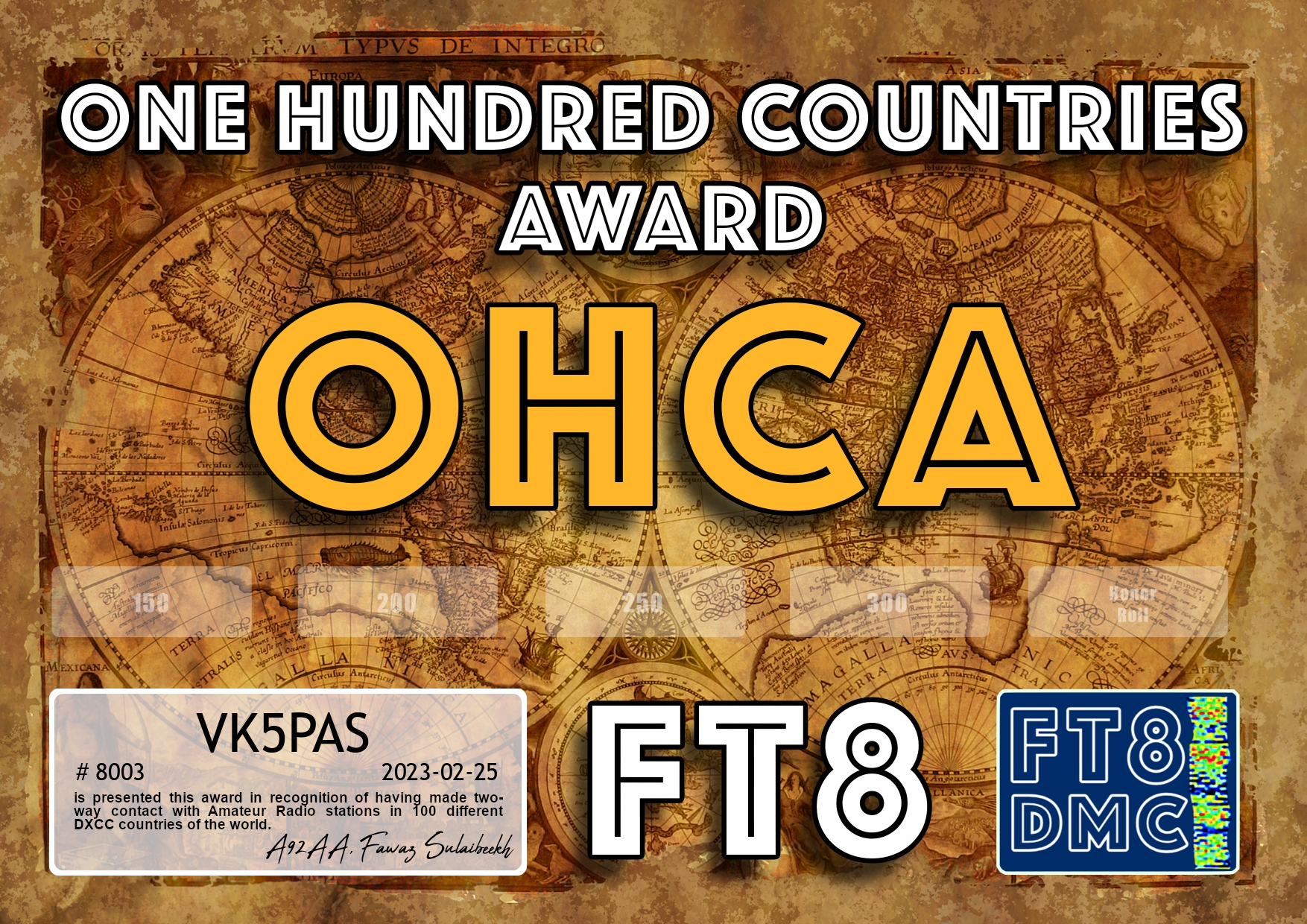
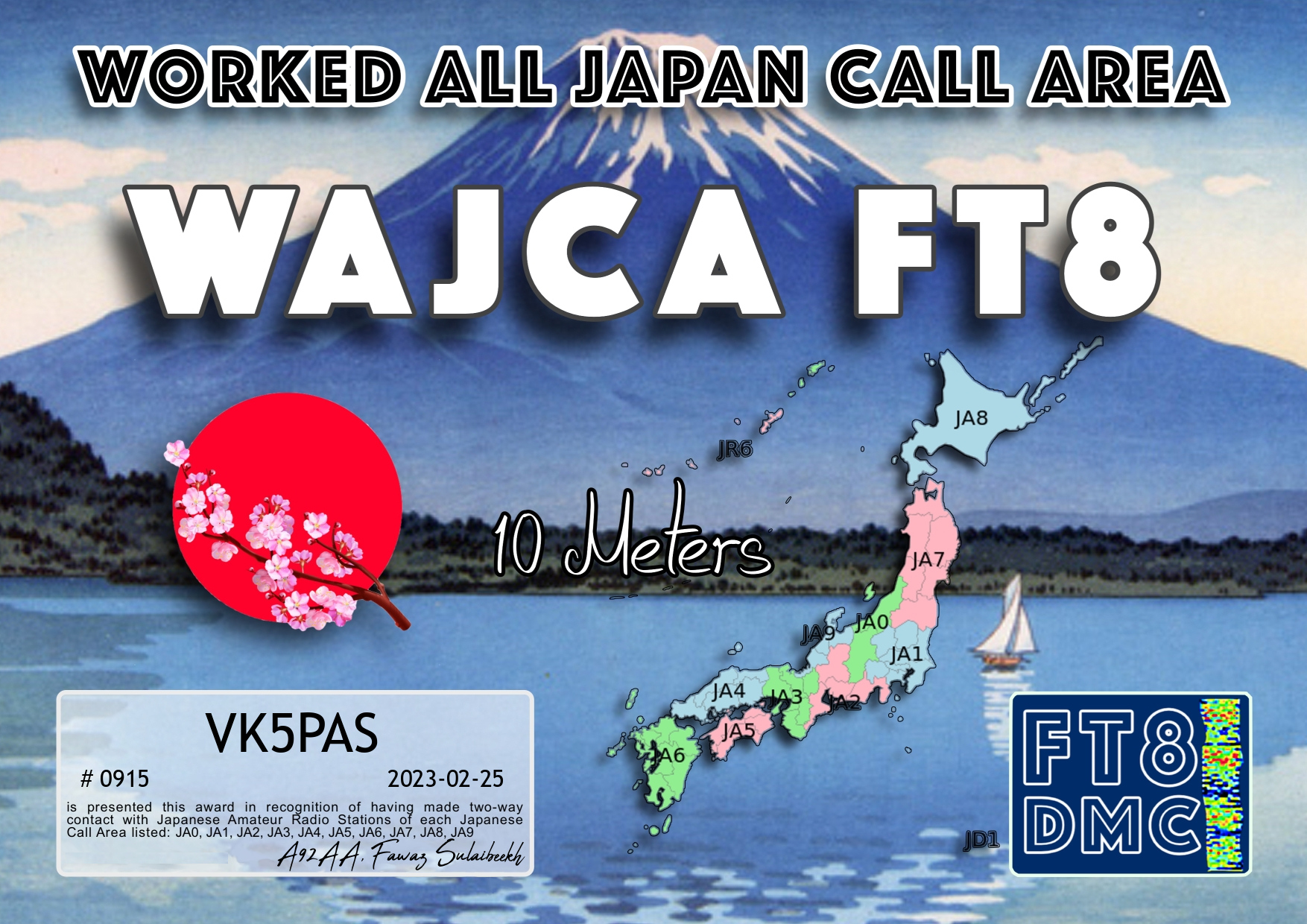
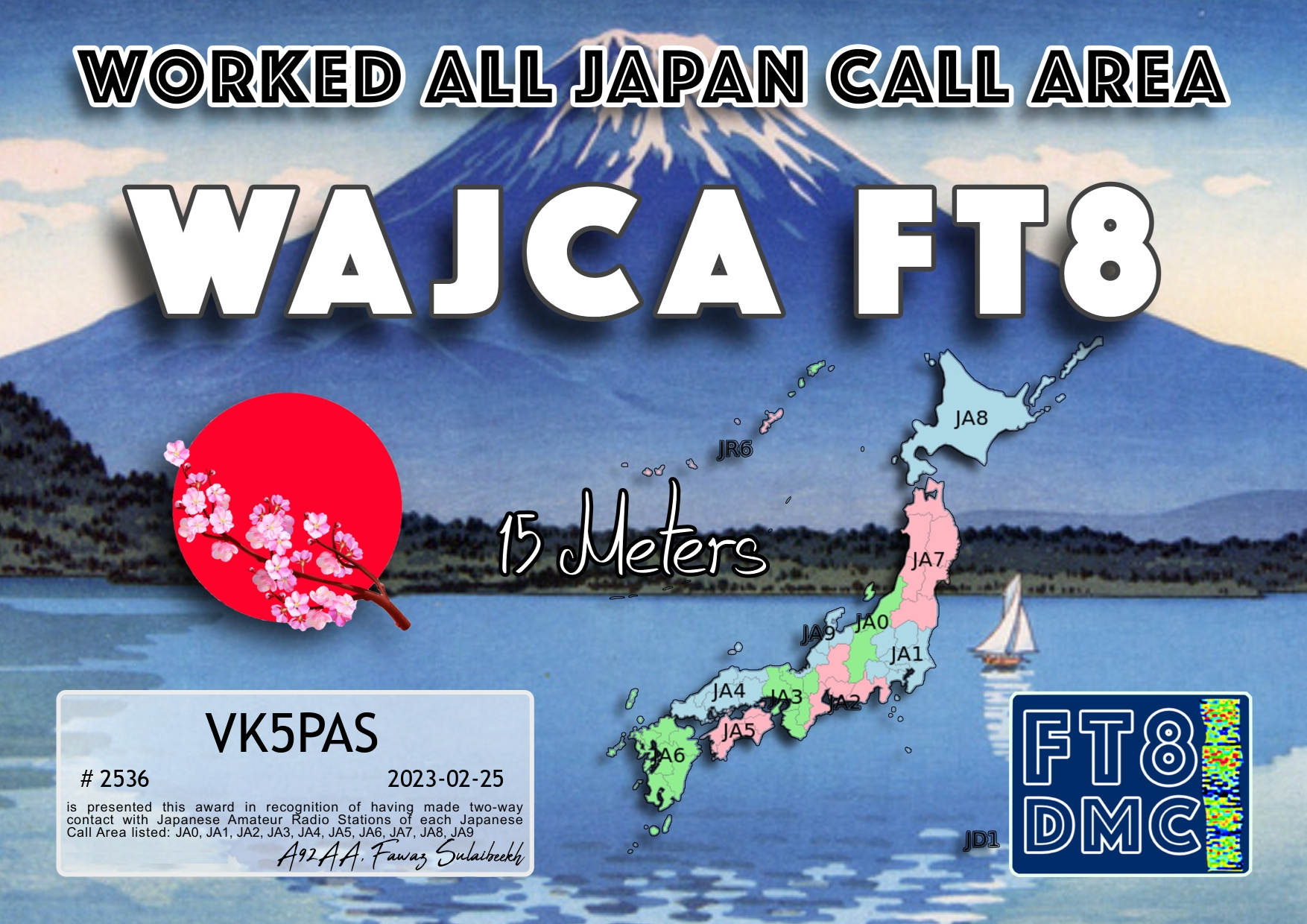
It was pleasing to see an opening on 20m long path into Europe. I worked the following DX: – Japan, Hawaii, Italy, Slovenia, France, Finland, and Belgium.

Marija made the following QSOs on 40m SSB:-

  1. VK3UAO/p (Greater Bendigo National Park VKFF-0623)
  2. Vk3GJG/p (Buckley Nature Conservation Reserve VKFF-2054)
  3. VK3UAO/p (Kara Kara National ParkVKFF-0629)

Marija made the following QSO on 20m SSB:-

  1. ZL1XS

I made the following QSOs on 40m SSB:-

  1. VK3UAO/p (Greater Bendigo National Park VKFF-0623)
  2. VK3GJG/p (Buckley Nature Conservation Reserve VKFF-2054)
  3. VK3PF
  4. VK3AMO
  5. VK3VIN
  6. VK3IK
  7. VK2LEE
  8. VK5HS
  9. VK3KTT
  10. VK3MEHG
  11. VK2IO
  12. VK3AWG
  13. VK3UAO/p (Kara Kara National ParkVKFF-0629)
  14. VK1DI
  15. VK2YK
  16. VK5GA
  17. VK2NWT
  18. VK2NP
  19. VK2BYF
  20. VK5HAA
  21. VK3EW
  22. VK3SQ
  23. VK7HH
  24. VK1TX
  25. VK2EXA
  26. VK5FANA
  27. VK3ANL
  28. VK3BWS
  29. VK7XTC
  30. VK5BJE
  31. VK2PKT
  32. VK2MOR
  33. VK2CDB
  34. VK3ACZ
  35. VK3AHR
  36. VK3ABI
  37. VK5IS
  38. VK3GRX

I made the following QSOs on 20m SSB:-

  1. VK5HS
  2. VK4HAT
  3. VK2VW
  4. VK2HFI
  5. VK4TJ
  6. VK4NH
  7. VK4DXA
  8. VK4CZ
  9. JF7RJM
  10. VK5KLV
  11. KH6KW
  12. VK4KC
  13. VK4MAD
  14. VK4DOG
  15. VK4MGL
  16. ZL1TM
  17. IK4IDF
  18. ZL1XS
  19. IW2NXI
  20. IZ6YLM
  21. S55G
  22. F1BLL
  23. F4ILHJ
  24. OH6GAZ
  25. ON4VT
  26. IW2BNA
  27. OH1MM

We then packed up and drove the short distance to Derwent Bridge where we went out for dinner at the local hotel.

References.

  1. Tasmania Parks & Wildlife Service, 2023, <https://parks.tas.gov.au/explore-our-parks/lake-st-clair/lake-st-clair-walks>, viewed 3rd January 2022.

Cradle Mountain Lake St Clair National Park VKFF-0117

After leaving Mount Field (10th November 2022) we headed north on Ellendale Road towards the Lyell Highway.

We stopped briefly at the Ellendale road stop admiring the view of Mount Field National Park. Between 1860 and 1970 Ellendale was the home of a thriving timber industry. Swan timbers from Ellendale have been sent to many parts of the world and are included in furniture at Parliament House.

We doubled back along the Highway to the little town of Hamilton. I had wanted to see some of the many historic buildings that are in the town. These include the old school house which was built in 1858 by convict stonemasons. It was designed to allow the Headmaster to live in the room above the central staircase, while the children, according to their sex, entered the school from different doors.

Glen Clyde House was built in 1840 by convicts, originally as a private home. It was licenced as the ‘Tasmanian Lass’ in 1844. James Jacksons Emporium was built in 1854. The foundation stone for St Peters church was laid in 1834. The church was completed in 1837. The church had only one door and this was due to the fact that 50% of the congregation were convicts and the single door made escape more difficult.

Our GPS decided to take us off the Lyell Highway and along Fourteen Mile Road which was dirt, before rejoining the Highway. I’m glad it did detour us as we got to see the wooden hydro pipe at Bronte Park. It is one of the few hydro pipes which was constructed of wood. It was built so that the water from the Clarence River would run in to Bronte lagoon and from there though Tungatinah Power Station. This is one of 30 hydropower stations.

As we drove west along the Lyell Highway towards Derwent Bridge we started to smell smoke and then saw a very large plume of smoke. Fortunately we had internet coverage and Marija found out that it was a controlled burn off. t certainly didn’t look like that.

We then turned off the Highway onto Lake St Clair Road and soon reached our accomodation, the Lake St Clair Lodge. It is one of only 2 resorts built within a World Heritage listed area in the world. 

Our cabin was right alongside of the shores of Lake St Clair, known as Leeawulena by the local aboriginal people.

Lake St Clair was named in 1835 by Surveyor General George Frankland when he visited the area. It was named in honour of the St Clair family who resided on the shores of Loch Lomond in Scotland.

After dropping off all of our bags we headed back down Lake St Clair Road and activated the Cradle Mountain Lake St Clair National Park VKFF-0117.

Cradle Mountain-Lake St Clair National Park is 1,614.43 km2 in size and was established in 1911. It is part of the Tasmanian Wilderness World Heritage Area. The park borders the Walls of Jerusalem National Park, the Franklin Gordon Wild Rivers National Park, the Vale of Belvoir Conservation Area, and the Central Plateau Conservation Area.

Above:- The Cradle Mountain lake St Clair National Park. Image c/o GoogleEarth.

Cradle Mountain lies between the Big River and Northern Tasmania people. They were last seen just south of Cradle Mountain in about 1836 following years of persecution by the European settlers.

The first Europeans to explore the Cradle Mountain area were Joseph Fosset (b. 1788. d. 1851) and Henry Hellyer (b. 1790. d. 1832) in 1827. They were surveying the area for the Van Dieman’s Land Company. It was named Cradle Mountain as it bore a similarity to a miners cradle.

From the 1860s until the 1950s, trappers worked in the area. However hunting in the park was declared illegal from 1927. These hunters established huts including Du Cane and Pine Valley. Logging on trees was also undertaken. From 1910 to 1930 cattle and sheep were grazed in Cradle Valley.

On the 16th day of May 2022 the Cradle Mountain Lake St Clair National Park celebrated his centenary. The video below shows what the park is like now, and what it was like back in 1922.

The history of how Cradle Mountain Lake St Clair became a National Park is a very interesting one.

Gustav Weindorfer emigrated to Australia from Austria in 1899. He married Kate Cowle in Tasmania in 1902. They were both dedicated botanists and spent their honeymoon camping at the top of Mount Roland. In 1909 Gustav and a friend and botanist called Charlie Sutton set out on an adventure to explore Cradle Mountain. Unfortunately thick fog, and time spent on collecting plant material, thwarted their intentions of climbing the summit.

In January 1910, Gustav and his wife Kate and Major R E Smith climbed the summit. Following this, Weindorfer famously said:

“This must be a National Park for the people for all time. It is magnificent, and people must know about it and enjoy it.”

Above:- Gustav Weindorfer. Image c/o Trove.

Gustav was so impressed with Cradle Mountain that he commenced building a hut called Waldheim (Forest Home). He provided accomodation for friends and others with whom he wanted to share his love of the Cradle Mountain area. In 1913 Waldheim was opened for commercial business.

Following the death of his wife in 1921, Gustav commenced a tour of Tasmania promoting both his accomodation Waldheim and the concept of a Cradle Mountain National Park. In the following year 1922, Cradle Mountain was declared a scenic reserve. In 1927 it was declared a wildlife reserve, and in 1947 it was declared as a National Park.

Above:- Article from the Examiner, Launceston, Thu 10 May 1923. Image c/o Trove.

Native mammals found in the park include Tasmanian pademelons, Bennetts wallabies, quolls, Tasmanian devils, short-beaked echidna, platypus, common wombats, and possums. The park has been identified as an Important Bird Area (IBA) due to it providing vital habitat for numerous birdlife including the Flame Robin and Pink Robin, and the Striated Field Wren.

We found a nice little quiet spot alongside of the Derwent River off Lake St Clair Road.

We ran the Yaesu FT857, 40 watts, and the 20/40/80m linked dipole for this activation. We operated from inside of the 4WD as the mosquitoes were relentless.

Marija worked the following stations on 40m SSB:-

  1. VK2MOP
  2. VK2VH
  3. VK4AAC
  4. VK3GRX
  5. VK2MET
  6. VK1AO
  7. VK3SMW
  8. VK3APJ
  9. VK3ACZ
  10. VK2EXA
  11. VK3PF

I worked the following stations on 40m SSB:-

  1. VK2MOP
  2. VK2VH
  3. VK4AAC
  4. VK3GRX
  5. VK2MET
  6. VK1AO
  7. VK3SMW
  8. VK3APJ
  9. VK3ACZ
  10. VK2EXA
  11. VK3PF
  12. VK5BJE
  13. VK2WE
  14. VK3TX
  15. VK3ZPF
  16. W2ARX
  17. VK2YK
  18. VK5GA
  19. VK3YV
  20. VK2MOE
  21. VK3GQ
  22. VK4TJ
  23. VK7LTD
  24. VK7FAMP
  25. VK8GM

I worked the following stations on 80m SSB:-

  1. VK8GM
  2. VK7FAMP
  3. VK7LTD
  4. VK5BJE
  5. VK2EWC
  6. VK2EXA

References.

  1. Aussie Towns, 2023, <https://www.aussietowns.com.au/town/hamilton-tas>, viewed 2nd January 2023.
  2. Aussie Towns, 2023, <https://www.aussietowns.com.au/town/lake-st-clair-tas>, viewed 2nd Janaury 2023.
  3. Aussie Towns, 2023, <https://www.aussietowns.com.au/town/cradle-mountain-tas>, viewed 2nd January 2023.
  4. Lake St Clair Lodge, 2023, <https://www.lakestclairlodge.com.au/>, viewed 2nd January 2023.
  5. Tasmania Real Life 4wding/Touring, 20223, <https://www.facebook.com/RealLife4wdingTouring>, viewed 2nd January 2023.
  6. Wikipedia, 2023, <https://en.wikipedia.org/wiki/Cradle_Mountain>, viewed 2nd January 2023.
  7. Wikipedia, 2023, <https://en.wikipedia.org/wiki/Cradle_Mountain-Lake_St_Clair_National_Park>, viewed 2nd January 2023.

Mount Field National Park VKFF-0347

After packing up at the Derwent Cliffs State Reserve (10th November 2022) we visited the New Norfolk Distillery which is Tasmania’s only rum dedicated distillery. We undertook a short our which included some tastings at the end. I walked away with a nice bottle of rum and another bottle of liqueur.

After talking with our guide at the distillery, we decided to take a detour from our planned route and we drove out to Bushy Park, the hops capital of Tasmania.

Hops are the green cone-shaped flowers of the Humulus lupulus plant which is the the source of bitterness, aroma, and flavor in beer.

The Bushy Park are was first called Humphreyyille after one of the first European settlers A.W.H. Humphrey who arrived in 1812. In about 1850 William Blyth, who had arrived in Hobart in 1835, bought out Humphrey. The name was changed to Bushy Park to honour the Blyth family estate near Hampton Court in England.

As were were now close to the Mount Field National Park VKFF-0347, we decided to detour out to the park for the park activation for the Wodl Wide Flora Fauna (WWFF) program

Above:- Map of Tasmania showing the location of the Mount Field National Park. Map c/o Google maps.

Mount Field National Park is located about 64 km northwest of Hobart. Its highest point is the summit of Mount Field West which is about 1,434 meters above sea level. The park is 162.65 km2 in size and was established in 1916.

Above:- An aerial view of the Mount Field National Park. Image c/o Google maps.

Along with Freycinet National Park, Mount Field is Tasmania’s oldest National Park. Russell Falls which is located within the National Park has been protected for its natural beauty since 1885. At that time it was set aside as Tasmania’s very first nature reserve.

Above:- Article from The Mercury, Hobart, Mon 17 Nov 1913. c/o Trove.

The Mount Field National Park is named in honour of Judge Barron Field (b. 1796. d. 1846), an English born Australian judge and poet. He visited Van Dieman’s Land as an itinerant judge in 1819 and 1821.

Above:- Barron Field. Image c/o Australian Dictionary of Biography.

In 1933, the last known wild Thylacine was captured in the vicinity of the Mount Field National Park.  The Thylacine, also known as the Tasmanian Tiger or an extinct carnivorous marsupial. Intensive hunting of the Thylacine encouraged by bounties brought about its extinction.

Above:- A Thylacine. Image c/o WIkipedia.

Native mammals that call the park home include wombats, platypus, eastern barred bandicoot, echidnas, and Tasmanian devil. Mount Field National Park is also home to an enormous diversity of fungi. The Fagus, a deciduous beech can be found in the park. It is one of only a handful of deciduous native trees in Australia.

During winter, the National Park is one of Tasmania’s two popular ski fields. The park is part of the Tasmanian Wilderness World Heritage Area.

We set up in a car parking area alongside of the Tyenna River. Tyenna means bandicoot in aboriginal. It is one of the best trout fishing rivers in Tasmania.

Above:- Map showing our operating spot in the park. Image c/o Google Earth.

We ran the Yaesu FT857, 40 watts, and the 20/40/80m linked dipole for this activation.

We found band conditions to be extremely poor and there were long stretches of calling CQ with no response. A tune across the 40m band found no other stations. We were the only ones calling CQ.

Marija made the following QSOs on 40m SSB:-

  1. VK3UAO
  2. VK2MET
  3. VK1AO
  4. VK3AFW
  5. VK3PF
  6. VK3KAI
  7. VK5DW
  8. VK3ZLP
  9. VK3VIN
  10. VK3PF/m
  11. VK3KAI/m

I made the following QSOs on 40m SSB:-

  1. VK3UAO
  2. VK2MET
  3. VK1AO
  4. VK3AFW
  5. VK3PF
  6. VK3KAI
  7. VK5DW
  8. VK3ZLP
  9. VK3VIN
  10. VK3PF/m
  11. VK3KAI/m

I made the following QSO on 20m SSB:-

  1. ZL1TM

We had both scraped in and qualified the park for the VKF program with more than 10 QSOs each.

We packed up and drove further into the park and went for a walk at the Tall Trees trail. It is a 1 km loop which takes you passed the tallest flowering plants in the world, massive Eucalyptus regnans ‘Swamp Gum’. Some of the trees that you see here were growing when explorer Abel Tasman first sighted Tasmania in 1642. The trees can live for hundreds of years nad can reach over 100 metres in height.

We wished we had more time to explore this magnificent National Park. But it was time for us to continue along the Lyell Highway to our destination at Lake St Clair Lodge.

References.

  1. Aussie Towns, 2023, <https://www.aussietowns.com.au/town/bushy-park-tas>, viewed 2nd January 2023.
  2. Discoveer Tasmania, 2023, <https://www.discovertasmania.com.au/>, viewed 2nd January 2023.
  3. Tasmania Parks and Wildlife Service, 2023, <https://parks.tas.gov.au/explore-our-parks/mount-field-national-park/tall-trees>, viewed 2nd January 2023.
  4. Tyenna River Cottages, 2023, <https://tyennarivercottages.com.au/sights/>, viewed 2nd January 2023.
  5. Wikipedia, 2023, <https://en.wikipedia.org/wiki/Hops>, viewed 2nd January 2023.
  6. Wikipedia, 2023, <https://en.wikipedia.org/wiki/Mount_Field_National_Park>, viewed 2nd January 2023.
  7. Wikipedia, 2023, <https://en.wikipedia.org/wiki/Barron_Field_(author)>, viewed 2nd January 2023.

Day fifteen and Derwent Cliffs State Reserve VKFF-1794

We were now over the half way mark of our holiday and it was day fifteen (Thursday 10th November 2022). Today we wee travelling from Hobart to Lake St Clair. We had spent six very enjoyable nights in Hobart.

Above:- Map showing our route from Hobart to Lake St Clair. Map c/o Google maps.

We headed north west out of Hobart on the Lyell Highway which takes its name from Mount Lyell where copper was found during the late 1800s. Mount Lyell was named by Tasmania’s first Geological Surveyor Charles Gould in 1863 in honour of geologist Charles Lyell.

Above:- Charles Lyell. Image c/o Wikipedia.

It wasn’t long before we reached the little town of New Norfolk, about 32 km north west of Hobart. When the Norfolk Island settlement was closed, 554 folk resettled in other parts of the colony of Australia. A total of 163 of those were settled around the current town of New Norfolk between November 1807 and October 1808. In 1825 the original name of the town, Elizabeth Town, was changed to New Norfolk to honour their former home of Norfolk Island.

Our first stop was Willow Court, Tasmania’s oldest continually run asylum on the same site. Willow Court opened in 1827 and closed in 2001. It was named ‘Willow Court’ due to Lady Franklin planting a willow in the courtyard. It was originally established as a despot for sick and inform convicts.

We then visited the Peter Hudson memorial in Arthur Square, New Norfolk. Peter John Hudson was born in 1946 in New Norfolk. He is a former Australian Rules footballer who played for the Hawthorn Football Club, the New Norfolk Football Club, and Glenorchy Football Club. He is a legend in the Australian Football Hall of Fame.

We then visited Tasmania’s oldest church, the Anglican Church of St Matthew in Bathurst Street opposite Arthur Square. The church was built in 1823 and was consecrated in 1828 by Archdeacon Scott from Sydney. The church has been significantly modified over the years. All that remains of the original church are the walls and flagged floor of the nave and part of the western transept.

Our next stop was the Bush Inn, one of the oldest hotels in Australia, and believed to be the oldest continuously operating hotels in Australia. It was built in 1825.

In April 1825 the Hobart Town Gazette and Van Dieman’s Land Advertiser reported that”‘a widow lady named Bridger has just now completed a very commodious two-storey house of public entertainment, which is deservedly well frequented”

In October 1825 Ann Bridger received a licence to sell spirits, wine and beer at the Bush Inn, New Norfolk.

Above:- Extract from an article in the Hobart Town Gazette and Van Dieman’s Land Advertiser, Fri 22 Apr 1825. Image c/o Trove.

Unfortunately the pub was closed otherwise we would have ventured inside for a drink.

Above:- The Bush Inn, 1834. Image c/o Trove

We then drove out to the old Methodist church on Lawitta Road, Magra, not far from New Norfolk. We wanted to visit the grave of reputedly the first white woman to set foot on Australia.

Elizabeth Thackery (b.1765. d. 1856) was a native of Manchester, Lancashire in English. At age 20, she was tried and convicted in May 1786 for the theft of five handkerchiefs valued at one shilling. She was sentenced to seven years transportation to the colony of Australia. Thackery is the last-known female survivor of the First Fleet, and she is also is reputed to have been the first ashore at Botany Bay upon her arrival aboard the Friendship on the 26th day of January 1788.

Prior to leaving for Australia Thackery spent a year as a prisoner aboard the prison hulk Dunkirk. She was then transported to Australia board the Friendship where it was reported that she was placed in irons on numerous occasions during the voyage.

She received 25 lashes in July 1791 following her arrival in Australia for “coming in from her settlement without permission”.

Thackery subsequently ventured to Van Dieman’s Land where she married and settled in the Dwerwent Valley. She died on August 1856 at the rope old age of 93 and was buried at the Methodist church cemetery at Magra.

We then drove up to the Pulpit Rock lookout. Initially as we parked the car we did not think there was going to be much of a view. But after a short walk we were rewarded with some brilliant views of New Norfolk, the Derwent River, and the surrounding countryside.

We then decided to do a park activation and headed to the Derwent Cliffs State Reserve VKFF-1794, which is located at New Norfolk.

Above:- Map showing the location of the Derwent Cliffs State Reserve. Map c/o Google maps.

The Derwent Cliffs State Reserve is 3.72 hectares in size and is located on the southern side of the Derwent River. You can get some very good views of the park from the Pulpit Rock lookout.

There was quite a bit of birdlife in the park during our visit, including both native species and introduced species such as Blackbirds.

There was no where to drive into this park. We parked at Tynwald Oval and walked along the walkway adjacent to the Derwent River until we entered the park.

Above:- An aerial view of the park showing our operating spot. Image c/o Google Earth.

We found band conditions to be extremely challenging during this activation and we sturggled ober the line to get 10 contacts to qualify the park for the VKFF program.

Marija made the following QSOs on 40m SSB before the UTC rollover:-

  1. VK2HQ/p (Brundee Swamp Nature Reserve VKFF-2547)
  2. VK3PF
  3. VK3SQ
  4. VK3ZSC
  5. VK3UAO

Marija made the following QSOs on 40m SSB after the UTC rollover:-

  1. VK3UAO
  2. VK3PF
  3. VK3BEL
  4. VK2MET
  5. VK1AO

I made the following QSOs on 40m SSB before the UTC rollover:-

  1. VK2HQ/p (Brundee Swamp Nature Reserve VKFF-2547)
  2. VK3PF
  3. VK3SQ
  4. VK3ZSC
  5. VK5BJE
  6. VK3UAO

I made the following QSOS on 40m SSB after the UTC rollover:-

  1. VK3UAO
  2. VK3PF
  3. VK3BEL
  4. VK3NCR
  5. VK2MET
  6. VK1AO

References.

  1. New Norfolk, 2023, <http://www.newnorfolk.org/>, viewed 2nd December 2023.
  2. Wikipedia, 2023, <https://en.wikipedia.org/wiki/Lyell_Highway>, viewed 2nd Janury 2023.
  3. Wikipedia, 2023, <https://en.wikipedia.org/wiki/Mount_Lyell_(Tasmania)>, viewed 2nd January 2023.
  4. Wikipedia, 2023, <https://en.wikipedia.org/wiki/New_Norfolk>, viewed 2nd January 2023.
  5. Wikipedia, 2023, <https://en.wikipedia.org/wiki/Peter_Hudson>, viewed 2nd January 2023.
  6. Wikipedia, 2023, <https://en.wikipedia.org/wiki/The_Bush_Inn,_Tasmania>, viewed 2nd January 2023.
  7. Willow Court History Group, 2023, <https://www.willowcourttasmania.org/>, viewed 2nd January 2023.

Rosny Hill Nature Reserve VKFF-2928

After packing up at East Risdon State Reserve (9th November 2022) we headed to our second park for the day, the Rosny Hill Nature Reserve VKFF-2928.

Above:- Map showing the location of the Rosny Hill Nature Reserve. Map c/o Google maps

The park is located in the Hobart suburb of Rosny on the eastern banks of the River Derwent. Rosny was named by W.A. Bethune, the holder of the original grant on the point, in honour of his ancestor, the Duc de Maximilien de Bethune Sully, of Rosny-sur-Seine near Mantes in France.

Above:- Maximilien de Béthune. Image c/o Wikipedia.

The Rosny Hill Nature Reserve is about 21.4 hectares in size. It encompassed the prominent wooded hill to the south of the Tasman Bridge. The park includes the Rosny Hill Lookout which is well known scenic vantage point. The park contains remnant vegetation which is entirely surrounded by residential subdivision.

The park is within the original homelands of the Oyster Bay people who were once the largest tribe in Tasmania. The band most closely associated with Rosny Hill were the Moomairremener people.

The lookout at Rosny Hill provides spectacular views of the city of Hobart, the Derwent River, Mount Wellington, and the Meehan Range. Residents of Hobart often use the lookout to view special events such as the Sydney to Hobart yacht race and New Years Eve fire works.

We operated from a clearing in the scrub hust down from the main lookout. We ran the Yaesu FT857, 40 watts, and the 20/40/80m linked dipole for this activation.

Above:- An aerial view of the park showing our operating spot. Image c/o Google maps.

We spent a little over an hour in the park and made a total of 66 QSOs. This included a bit of DX on 20m SSB into Italy, Slovak Republic, Marshall Islands, Finland, Switzerland, Belgium, and France. It was a great pleasure to work Danny ON4ON on both 40m SSB and 20m SSB.

Marija worked the following stations on 40m SSB:-

  1. VK3TWO/p
  2. VK2YAK
  3. VK4YAK
  4. VK3VIN
  5. Vk2HHA
  6. VK2MET
  7. VK1AO
  8. VK3PF
  9. VK3SQ
  10. VK5PL
  11. VK2IO
  12. VK3TWO/p (Pieman River State Reserve VKFF-1822)

I worked the following stations on 40m SSB:-

  1. VK3TWO/7
  2. VK2YAK
  3. VK4YAK
  4. VK3VIN
  5. VK2HHA
  6. VK2MET
  7. VK1AO
  8. VK3PF
  9. VK3SQ
  10. VK5PL
  11. VK2IO
  12. VK7FAMP
  13. VK3NDG/m
  14. VK4TJ
  15. VK4EW
  16. VK4BXX
  17. VK2YK
  18. VK5GA
  19. VK7MOO
  20. VK2EXA
  21. VK4SMA
  22. ZL3MR
  23. VK2LD
  24. VK3MCA
  25. VK3TWO/p (Pieman River State Reserve VKFF-1822)
  26. VK3HJW
  27. VK7AAE
  28. VK2VY
  29. VK7LTD
  30. VK4EMP
  31. VK5HAA
  32. VK3KKP
  33. VK3AMO
  34. VK3TR
  35. VK2WOG
  36. VK3ZPF
  37. ON4ON

I worked the following stations on 20m SSB:-

  1. IW2BNA
  2. IK4IDF
  3. VK7LTD
  4. OM5DP
  5. V73MS
  6. VK7HH
  7. ZL3MR
  8. ZL1TM
  9. IW2NXI
  10. OH1MM
  11. HB9BEV
  12. VK4SMA
  13. ON4ON
  14. F4ILH
  15. VK4MGL
  16. VK4EMP
  17. F1BLL

References.

  1. Rosny Hill Nature Recreation Area Management Strategy, August 2011.
  2. Wikipedia, 2022, <https://en.wikipedia.org/wiki/Rosny,_Tasmania>, viewed 1st January 2023.

Day fourteen and East Risdon State Reserve VKFF-1798

It was now day fourteen (Wednesday 9th November 2022) and we had planned on travelling to the historic little town of Richmond and specifically the old Richmond Gaol.

We headed north along the Tasman Highway and soon reached Richmond,about 27 km north of Hobart.

The Richmond area was originally inhabited by the Moomairremener people. The first European to explore the area was Surveyor James Meehan. He named the Coal River after the coal that he discovered there. From around 1808 land grants were given in the Richmond area and Richmond soon became a rich agricultural area. In 1825 the famous Richmond bridge was built over the Coal River and this resulted in travel to the east coast of Tasmania. The town of Richmond then grew.

In 1824, Lieutenant Governor William Sorell proclaimed the township of Richmond. It was named after the nearby property called Richmond Park which was owned by David Lord. Land from Lord’s site was used for the town.

Richmond was developed as a police district for the surrounding area and by 1825 had a gaol, courthouse, barracks and watch house. By 1835 Richmond was the third largest district in Tasmania.

Above:- Lieutenant Governor William Sorell. Image c/o Wikipedia.

Known to be Richmond’s most famous landmark, the Richmond bridge, it was built between 1823 to 1825. It is Australia’s oldest bridge still in use. The bridge was opened in April 1825, ten years before any similar structure in Australia. It was built by convict labour from hand-hewn sandstone which was quarried from nearby Butchers Hill. The bridge was commissioned by Royal Commissioner John Thomas Biggs in 1820. In the early years the bridge was known as Bigg’s Bridge.

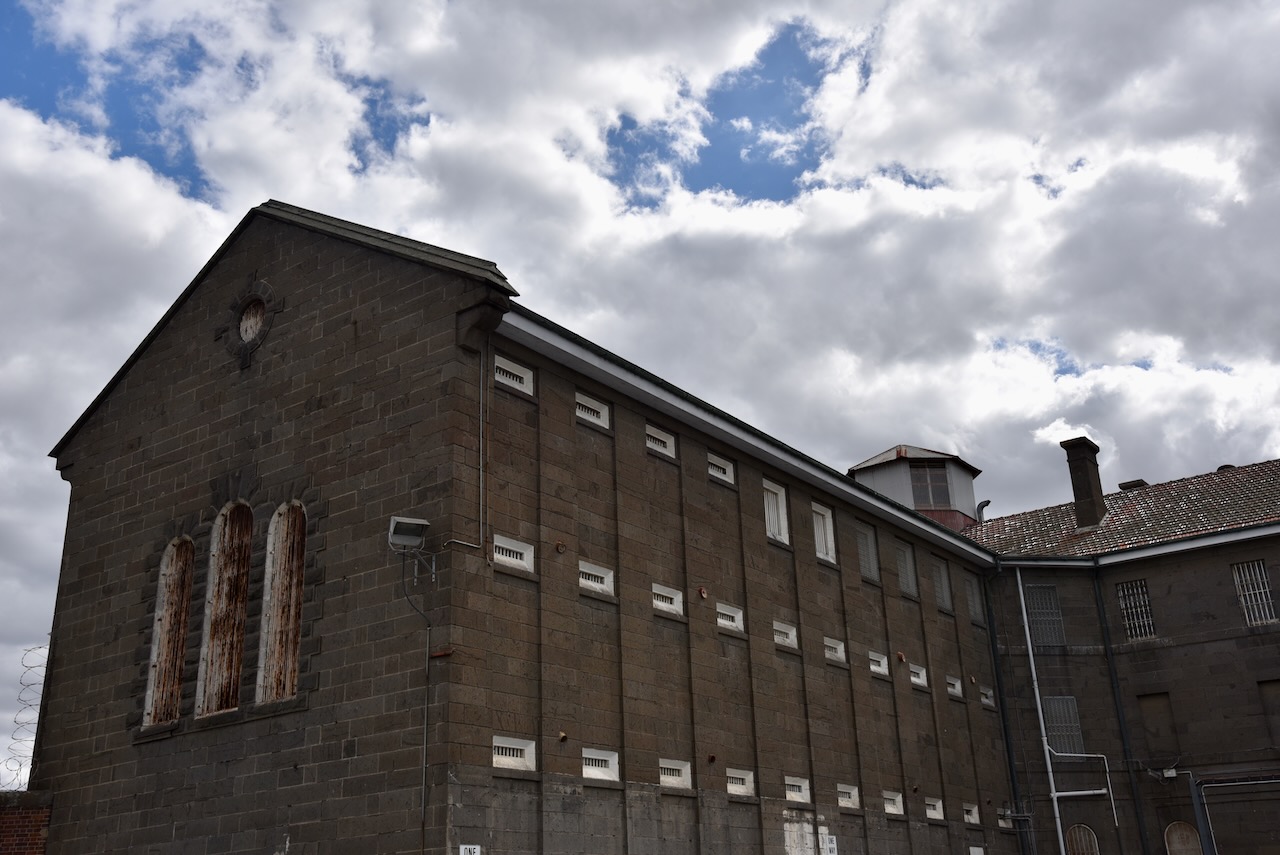
We then visited the historic Richmond Gaol which is the oldest intact gaol in Australia. Construction of the gaol commenced in 1825. This was eight years prior to the establishment of the Port Arthur penal settlement.

We spent a number of hours here as there is a lot to see, Most of the gaol buildings have not changed since the convict era.

We then spent a number of hours admiring the many historic heritage listed buildings in the town of Richmond.

We then enjoyed a magnificent brunch at Czeg cafe in Richmond. We can highly recommend this place, the meal was sensational.

Following brunch we visited Old Hobart Town, Australia’s only, and Tasmania’s original historical model village which depicts life in Hobart Town during 1820. What an amazing job has been made to put this together. Absolutely brilliant. There are over 60 replica model buildings and about 600 period figurines including convicts, soldiers, ladies and gentlemen.

We then took another walk down Richmond’s main street which included a visit to Sweets and Treats of course, for some lollies and icecream.

We then visited the St John’s Church Richmond, which is the oldest existing Catholic church in Australia. The foundation stone was laid in 1835.

We then paid one last visit to Richmond bridge and views a few more historic buildings in the town.

We then headed back to Hobart via the Richmond Road. We stopped briefly to view from the road, the Mount Pleasant Radio Astronomy Observatory and Grote Reber Museum. The radio observatory has been operational for about 20 years. There is also an astronomy museum which celebrates the life and work of Tasmanian radio astronomer, Grote Reber.

Once we got back into Hobart we visited the Cascades Female Factory which is  a former Australian workhouse for female convicts in the penal colony of Van Dieman’s Land. It is listed on the World Heritage List by UNESCO. The Female Factory opened in1828 and closed in 1856.

One of my hobbies includes Family history and I have a strong connection with Tasmania. My great great great grandparents were married in St David’s cathedral in Hobart, and I wanted to visit the church which is what we did next.

It was late afternoon and we decided to do a park activation. We had a few on our list, but we chose East Risdon State Reserve VKFF-1798.

Above:- Map showing the location of the East Risdon State Reserve. Map c/o Google maps.

Risdon Cove State Reserve is 0.8788 km2  in size and was established on the 17th day of March 1971. It is located on the eastern shore of the Derwent River.

Risdon was named by Commodore Sir John Hayes in 1794, who mapped the Derwent River in the ship Duke of Clarence, after his second officer William Bellamy Risdon.

Above:- Commodore Sir John Hayes. Image c/o Wikipedia.

A number of rare and endangered plants can be found in the park including Eucalyptus risdonii and Eucalyptus morrisbyi. Also found in the park is Black peppermint, Prickly moses, Silver Wattle, Blackwood, Native daphne, Dolly bush, Common heath, Golden pea, Spreading wattle, Manna Gum or White Gum, and Blue gum.

This was not an easy park to access. We could not find a spot to drive into the park, so we parked the 4WD and walked a short distance along one of the trails until we reached the park.

Marija worked the following stations on 40m SSB:-

  1. VK3TWO/p
  2. VK3PF
  3. VK3AHR
  4. VK2HHA
  5. VK2EXA
  6. VK3MCA
  7. VK3AMO
  8. VK3BEZ/p (Gippsland Lakes Coastal Park VKFF-0747)
  9. VK7FAMP
  10. VK2IO
  11. VK3SMW
  12. VK2MET
  13. VK1AO

I worked the following stations on 40m SSB:-

  1. VK3TWO/7
  2. VK3PF
  3. VK3AHR
  4. VK2HHA
  5. VK2EXA
  6. VK3MCA
  7. VK3AMO
  8. VK3BEZ/p (Gippsland Lakes Coastal Park VKFF-0747)
  9. VK7FAMP
  10. VK2IO
  11. VK3SMW
  12. VK2MET
  13. VK1AO
  14. VK2YAK
  15. VK3SQ
  16. VK7LTD

References.

  1. Discover Tasmania, 2022, <https://www.discovertasmania.com.au/things-to-do/arts-and-culture/oldhobarttownmodelvillage/>, viewed 1st January 2023.
  2. Richmond Tasmania, 2022, <https://richmondtasmania.com.au/things-to-do/st-johns-church/>, viewed 1st January 2023.
  3. The Compantion to Tasmanian History, <https://www.utas.edu.au/library/companion_to_tasmanian_history/R/Richmond.htm#:~:text=Richmond&text=Originally%20inhabited%20by%20the%20Moomairremener,Tasmania’s%20major%20wheat%2Dproducing%20region.>, viewed 1st January 2023.
  4. Wikipedia, 2022, <https://en.wikipedia.org/wiki/Risdon,_Tasmania>, viewed 1st January 2023.
  5. Wikipedia, 2022, <https://en.wikipedia.org/wiki/East_Risdon_State_Reserve>, viewed 1st January 2023.
  6. Wikipedia, 2022, <https://en.wikipedia.org/wiki/Richmond,_Tasmania>, viewed 1st January 2023.
  7. Wikipedia, 2022, <https://en.wikipedia.org/wiki/Richmond_Gaol>, viewed 1st January 2023.
  8. Wikipedia, 2022, <https://en.wikipedia.org/wiki/Cascades_Female_Factory>, viewed 1st January 2023.
  9. Wikipedia, 2022, <https://en.wikipedia.org/wiki/St_David%27s_Cathedral,_Hobart>, viewed 1st January 2023.

Day thirteen and Tasman National Park VKFF-0481

Day thirteen (Tuesday 8th November 2022) was upon us and we had planned a trip to the historic Port Arthur site on the Tasman Peninsula. Port Arthur is the best preserved convict site in Australia and among one of the most significant convict era sites in the world. Port Arthur haas about 30 historic buildings. I had not been to Port Arthur since 1983 and Marija had never been there, so we were both excited about the day’s activities.

Above:- Map showing our route from Hobart to Port Arthur. Map c/o google maps.

Upon arrival at Port Arthur you are given a playing card. It features a convict or another Port Arthur identity whom you are invited to learn more about during your visit.

My convict was Charles Tossante Brown who was just 28 years old and a native of Stockheath, Hampshire, England, when in May 1828 he was convicted of embezzlement. He was sentenced to 7 years transportation. His job was to keep the accounts in the Commissariat Store. He was never punished at Port Arthur and was soon released. He was convicted in Hobart two years later for stealing 9 shillings and he was returned to Port Arthur where he died in 1841.

Marija’s card was for Joseph Boss William Woolnough, who was a clergyman and Councillor. He was a member of the Carnarvon Town Board. In 1884 Reverend Woolnough purchased the Separate Prison. He had intended to convert it into a high class hotel and pleasure resort before it was destroyed by fire in 1898.

We booked a tour of Port Arthur and also a separate tour out to the Isle of the Dead. To fill in some time we had a look at the extremely interesting museum in the visitor centre.

We then took a walk though Government Gardens. Ornamental trees were planted at Port Arthur during the 1830s. By 1838 the avenue leading to the church was lined with trees which had been provided by Governor Sir John Franklin. Between 1846 to 1847 Government Gardens were developed by Commandant Champ, primarily for the enjoyment of the ladies who lived at Port Arthur. 

After our introductory tour of the Port Arthur site, we had a bit of spare time before our Isle of the Dead tour. We took the opportunity of visiting the Asylum.

Port Arthur’s asylum was built in 1868 to house ‘lunatics’ referred from Port Arthur Penitentiary, Separate Prison, Hospital or Pauper’s Complex. Patients also came from other stations on the Tasman Peninsula, the New Norfolk Asylum, and in one case, the Queens Orphan School in Hobart. The Asylum was orientated re a new way of thinking, aimed at curing people with mental disorders by providing a calm, pleasant and clean environment, kind treatment, exercise and amusement, religious consolation and work to occupy and soothe the mind.

It was built to house 100 patients. By 1876 only two wards were in use and 18 of the 19 patients were invalids.

The building remained in government ownership until it was handed over to the Carnarvon Town Board in 1899 for use as the Town Hall. The 1895 Tasmanian bushfires destroyed the old building, however it was promptly rebuilt. The clock from the Penitentiary was mounted in the new tower.

We wandered next door to the Separate Prison which was opened in 1849. It consists of 50 cells arranged in three corridors with a central hall, on one side of which is a chapel. Each cell is furnished with a hammock, table, stool, and cupboard.

Prisoners were kept strictly apart from each other and not a word was heard except at chapel.

During the 1850s it was used for the worst class of criminal in an effort to bring their minds ‘to a more healthy condition.’ Later the prison was used for long term prisoners as well as those who had committed serious offences or who had absconded.

Following the closure of Port Arthur the prison was purchased in 1884 for conversion to a hotel. The chapel had been converted into a billiard room and other building had commenced. However the 1895 Tasmanian bushfire gutted the building and the Government resumed ownership in 1916.

We then headed down to the dock for our cruise to Isle of the Dead. Our admission tickets included a 20 minute harbour cruise which passed the Dockyard, Point Puer Boys Prison and then for us, stopped off at the Isle of the Dead.

Between 1833 and 1877 about 1,100 people were buried at the settlement’s cemetery. The Isle of the Dead is the final resting place for convicts and those who worked at Port Arthur.

We then made an emotional visit to the Memorial Garden at Port Arthur. On Sunday 28th April 1996, a gunman in cold blood murdered 35 people and wounded a further 19 in and around the Port Arthur historic site. I remember working in the Criminal Investigation Branch for the South Australia Police as a young Detective that day.

The Memorial Garden includes the remnants of the Broad Arrow Cafe where 20 people were murdered.

Our next stop was the Port Arthur church, one of the most impressive buildings/ruins on the site. The foundation stone of the church was laid in 1836 by Lieutenant Governor George Arthur. The church was constructed by convicts and boys from the juvenile establishment at Point Puer. The first service in the church was held in 1837.

In 1884, sparks from a fire which had been lit to clean up around the Parsonage, caught the old shingles of the church roof on fire. Despite the efforts of the local residents the church was irreparably damaged.

Not far from the church is Government Cottage which was built in 1853 to accomodate government officials who were vistting the Port Arthur penal settlement. Unfortunately it was another victim of the 1895 bushfires.

Also nearby is St David’s church, named after the patron saint, St David. The foundation stone was laid in May 1927.

We then visited the Parsonage (Post Office), the Accountants House, the Junior Medical Officers House, the Roman Catholic Chaplains House, and the Visiting Magistrates House.

Next was the Penitentiary, the most recognisable building on the site. The building was originally constructed as a flour mill and granary in 1845. Due to an insufficient water supply and competing priorities for space and industry, the mill was converted into a penitentiary between 1854 and 1857.

There were 136 separate cells on the lower floors. Men in heavy chains were housed on the ground floor. Those in lighter chains were on the first floor. A total of 348 men were accommodated on the uppermost floor in the dormitory in bunk style beds.

The 1897 bushfire saw the devastation of the building other than the masonry walls and barred windows.

The guard tower at Port Arthur was built in 1835. The Senior Military Officer’s Quarters had been constructed two years earlier in 1833. The quarters were the home of the Military Officer in charge of the soldiers at Port Arthur.

The Commandants House was originally built as a four room timber cottage in 1833. Ove the years the house and gardens evolved to accomodate the needs of the five commandants and their families who lived there.

It had been a brilliant day at Port Arthur and it was time to head back towards Hobart. But before getting back to our motel, there were a few other things we wanted to stop to have a look at and we also intended on a quick activation of the Tasman National Park VKFF-0481.

Above:- Map showing the location of the Tasman National Park. Image c/o Google maps.

On our way to the park we stopped off at my namesake quarry.

We soon reached the Tasman National Park.

Tasman National Park is located about 56 kilometres east of Hobart. It is 107.5-square-kilometre in size and was proclaimed on the 30th April 1999. It is located on the Forestier and Tasman Peninsulas and includes all of Tasman Island.

Three species of Euphrasia commonly known as eyebright are found only in Tasman National Park. Also found only in the park is the rare Cape Pillar Sheoak, a small shrub or tree.

Above:- An aerial shot of the Tasman National Park. Image c/o Google maps.

The coast of the Tasman National Park supports a colony of Australian Fur Seals and also Little Penguins. The Tasman National Park forms part of the South-east Tasmania Important Bird Area which has been identified by BirdLife International due to its importance in the conservation of a range of woodland birds. This includes the endangered Swift parrot and the Forty spotted pardalote.

We operated from the campground at the trailhead of Cape Hauy. We operated from the 4WD using the Icom IC-7000, 100 watts, and the Codan 9350 self tuning whip antenna.

Above:- An aerial shot of the park showing our operating spot. Image c/o Google Earth.

Marija made the following QSOs on 40m SSB:-

  1. VK2DWP
  2. ZL4NVW/p (Mount Aspiring National Park ZLFF-0006)
  3. VK2VH
  4. VK4AAC
  5. VK2EXA
  6. VK2MET
  7. VK1AO
  8. VK3APJ
  9. VK3SMW
  10. VK4NH
  11. VK4DXA

Marija made the following QSOs on 20m SSB:-

  1. VK6NU/p (SOTA VK6/ SW-005 & Stirling Range National Park VKFF-0467)
  2. ZL1TM

I made the following QSOs on 40m SSB:-

  1. VK2DWP
  2. ZL4NVW/p (Mount Aspiring National Park ZLFF-0006)
  3. VK2VH
  4. VK4AAC
  5. VK2EXA
  6. VK2MET
  7. VK1AO
  8. VK3APJ
  9. VK3SMW
  10. VK4NH
  11. VK4DXA
  12. VK2NP
  13. VK2VW
  14. VK2HFI

I made the following QSOs on 20m SSB:-

  1. VK6NU/p (SOTA VK6/ SW-005 & Stirling Range National Park VKFF-0467)
  2. ZL1TM
  3. VK4HAT
  4. IW2NXI
  5. VK4NH
  6. VK4DXA
  7. VK5HS

It was starting to get late in the day and we were hungry, so we decided to pack up having not reached the 44 QSOs required for the global World Wide Flora Fauna (WWFF) program. However we had both qualified the park for VKFF with 10 QSOs each. It was a pleasure to log Matt ZL4NVW in New Zealand and John VK6NU in Western Australia for some Park to Park contacts.

We stopped briefly to have a look at Tasmans Arch which is located in the park.

There are some amazing viewing points of the spectacular coastline including the Cliffs Lookout point.

We then visited Devils Kitchen, the remnants of a collapsed sea cave.

Our final stop in the park was the Blow Hole.

We then stopped to have a look at the former Officers Quarters at Eaglehawk Neck. Eaglehawk Neck, known as ‘The Neck’ is a narrow isthmus which connects the Tasman Peninsula with the Forestier Peninsula.

The quarters were built in 1832 and are believed to be the oldest military building in Australia. The Officers Quarters was one of several structures which formed a small military settlement at this location which was established to prevent the escape of convicts from the peninsula.

To prevent convict escape from the peninsula, a system was developed in 1831 where a line of dogs were chained to posts across The Neck to warn of any convicts who were attempting to escape. The dog line was used until closure of Port Arthur in the 1870s.

Above:- the Dogline. Image c/o Libraries Tasmania.

We stopped occasionally on the way back to Hobart to enjoy the views of the coastline.

We stopped quickly at Dunalley to have a look at the monument erected to commemorate the tercentenary of the discovery of Tasmania.

By the time we got back to Hobart is quite late. We went to the famous Mures for a sensational seafood basket. MAGNIFICENT!

References.

  1. Port Arthur Historic Site, 2022, <https://portarthur.org.au/>, viewed 31st December 2022.
  2. Port Arthur Historic Site Visitor Guide, 2022.
  3. Tasmania Parks and Wildlife Service, 2022, <https://parks.tas.gov.au/explore-our-parks/eaglehawk-neck-historic-site>, viewed 31st December 2022.
  4. Wikipedia, 2022, <https://en.wikipedia.org/wiki/Tasman_National_Park>, viewed 31st December 2022.
  5. Wik,ipedia, 2022, <https://en.wikipedia.org/wiki/Eaglehawk_Neck>, viewed 31st December 2022.

South Bruny National Park VKFF-0456

After packing up at Quarantine Station State Park (Monday 7th November 2022), Marija and I drove south on the Bruny Island Main Road and we soon reached The Neck.

The Neck is an isthmus of land connecting north and south Bruny Island. What is an isthmus? An isthmus is a narrow strip of land that connects two larger landmasses and separates two bodies of water.

I immediately noted that there was a sign for Bruny Island Neck Game Reserve. Marija and I checked the WWFF Australia website, but sadly the park was not listed.

We toiled up the 300 steps across the dunes to the lookout. And it was worth it. From the top you can view an incredible 360 degree view which takes in water on both side of The Necks of the water on both sides of the neck, the remainder of Bruny Island and mainland Tasmania. 

Once you reach the top of the lookout you can also view the memorial to Truganini who I mentioned in my previous post.

We then walked back down to the 4WD and continued south on our way to South Bruny National Park, stopping every now and again to enjoy some of the breathtaking views.

We continued south along Lighthouse Road and soon had the Cape Bruny lighthouse in our sights. We parked the 4WD and then took the short but steep walk up to the lighthouse.

We decided to take a tour of the lighthouse which we can highly recommend.

The Cape Bruny lighthouse was first lit on March 1838. It is Tasmania’s third lighthouse and Australia’s fourth lighthouse.

It was commissioned by Governor George Arthur in 1835 following a series of shipwrecks south of Bruny Island. This included the wreck of the convict transport ship George III, with the loss of 134 lives in April 1835.

Above:- part of an article from The Cornwall Chronicel, Sat 18 Apr 1835. Image c/o Trove.

In January 1836 architect and engineer John Lee Archer (b. 1791. d. 1852) submitted his final design for the lighthouse. In April 1836 work commenced. However, construction took longer than expected. Part of this was due to the person he put in charge of construction, Charles Watson (b. 1798. d. 1849). Watson was a former convict and had not been approved by Governor Arthur.

Watson and his team of 12 convicts completed the lighthouse in March 1838.

Above:- Cape Bruny lighthouse, early 1900s. Image c/o Trove

The Cape Bruny Lighthouse was made redundant in 1993. Its last lighthouse keeper was John Cook who spent 13 years at Cape Bruny.

Our lighthouse guide was veery informative and we got to admire the very impressive views from the railing at the top of the lighthouse.

After leaving the lighthouse Marija and I headed north through the park along Lighthouse Road. We then turned onto Old Jetty Road and headed down to Jetty Beach to activate South Bruny National Park VKFF-0456.

South Bruny National Park is located at the southern end of South Bruny Island. It is 50.59 km2 in size and was established in 1997 for its coastal scenery, Aboriginal and historic heritage, and to protect a number of threatened species. The highest point in the park is Mount Bruny at 504 metres. It qualifies for the Summits On The Air (SOTA) program, but unfortunately we did not have sufficient time to activate it. The park includes a number of island including Partridge Island, Green Island and The Friars

Above:- Map of Tasmania showing the location of South Bruny National Park. Map c/o Google maps.

The park includes the Labillardiere Peninsula which is named in honour of the French botanist Jacques Labillardière. He was the author of the first general flora of Australia and a member of Bruni d’Entrecasteaux’s expedition who I mentioned in the previous post.

Above:- Jacques Labillardiere. Image c/o Wikipedia.

The park consists of eucalypt woodland , heathland, and wet eucalypt forest and temperate rainforest. The park contains several rare, endemic orchid species including the endangered chestnut leek orchid and the pretty leek orchid.

Native mammals found in the park include Bennett’s wallaby, common brush tail possum, Tasmanian pademelon, Eastern quoll, Spitted quoll, Tasmanian devil, and Common wombat. The Bennett’s wallaby is quite common throughout Tasmania, however the South Bruny National Park protects a small population of unusual white Bennett’s wallabies.

Birds found in the park include the white-bellied sea eagle, the wedge-tailed eagle, and the grey goshawk which is endangered and found on Partridge Island. A breeding colony of penguins can also be found on Partridge Island.

Other rare birds include the Ground parrot which are extremely scarce. The Forty spotted pardalote, one of the rarest birds in Australia and classified as endangered can be found in the park. Despite rescue efforts, their numbers are declining. The endangered Swift parrot can also be found in the park. They are a migratory bird which travels between southeast mainland Australia and Tasmania.

Above:- Forty spotted Pardalote. Image c/o Nomdeploom, Wikipedia.

As we had a 4WD we were able to drive down onto Jetty Beach and set up. We ran the Yaesu FT857, 40 watts, and the 20/40/80m linked dipole for this activation.

Above:- Aerial view showing our operating spot. Image c/o Google Earth.

It was a beautiful sunny day and the scenery at Jetty Beach was amazing.

We operated for about 90 minutes and made a total of 63 contacts on 40m & 20m SSB. Unfortunately the DX was light on during this activation with just New Zealand, Hawaii, and France in the log. It was nice to get a Park to Park contact with Daryl VK3AWA who was activating the Gippsland Lakes Coastal Park VKFF-0747.

Marija made the following QSOs on 40m SSB:-

  1. VK3PF
  2. VK7JFD
  3. VK2EXA
  4. VK3AMO
  5. VK3ZPF
  6. VK2MET
  7. VK1AO
  8. VK3UH
  9. VK3ZSC
  10. VK2NP
  11. VK3AWA/p (Gippsland Lakes Coastal Park VKFF-0747)

Marija made the following QSOs on 20m SSB:-

  1. VK4NH
  2. VK4DXA

I made the following QSOs on 40m SSB:-

  1. VK3PF
  2. VK7JFD
  3. VK2EXA
  4. VK3AMO
  5. VK3ZPF
  6. VK2MET
  7. VK1AO
  8. VK3UH
  9. VK3ZSC
  10. VK2NP
  11. VK3UAO
  12. VK7OT
  13. VK2VH
  14. VK4AAC
  15. VK7DON
  16. VK7KW
  17. VK3TWO/m
  18. VK3VIN
  19. VK2DWP
  20. VK3BEL
  21. VK3CJN
  22. VK7HH
  23. VK5VK
  24. VK3AWA/p (Gippsland Lakes Coastal Park VKFF-0747)
  25. VK2IO
  26. VK3SQ
  27. VK2CDB

I made the following QSOs on 20m SSB:-

  1. VK2DWP
  2. VK5KLV
  3. VK2NP
  4. VK4NH
  5. VK4DXA
  6. VK4TJ
  7. VK2IO
  8. VK2MET
  9. VK1AO
  10. VK5BJE
  11. VK4KLA
  12. VK4EMP
  13. ZL1TM
  14. ZL3LAL/m
  15. VK4CC
  16. VK4MAD
  17. VK4DOG
  18. ZL4CY
  19. KH6KW
  20. VK7XX
  21. VK2HDT
  22. VK4XCS
  23. F1BLL

We were pushed for time, but we were keen to see the Captain Cook memorial on Bruny Island. Unfortunately we did not find it. Researching this after getting back home, it appears to be a common problem, wioth people not being able to find the memorial.

Cook had anchored at Adventure Bay on 26th January 1777 and had carved his initials into a tree. The tree was destroyed by a bushfire in 1905.

There were some other interpretive signs that we did stop to have a look at. This included information on European explorers of Adventure Bay including Cook and D’Entrecasteaux. And another one on coal mining in Adventure Bay.

We then headed back to Roberts Point and caught the ferry back to the Tasmanian mainland. It had been a very enjoyable day on Bruny Island.

References.

  1. Bruny Island, 2022, <https://www.brunyisland.org.au/walk/truganini-the-neck-lookout/>, viewed 29th December 2022.
  2. Cape Bruny Lighthouse Tours, 2022, <https://www.capebrunylighthouse.com/history/>, viewed 29th December 2022.
  3. Discover Tasmania, 2022, <https://www.discovertasmania.com.au/things-to-do/nature-and-wildlife/brunyislandneck/>, viewed 29th December 2022.
  4. Wikipedia, 2022, <https://en.wikipedia.org/wiki/South_Bruny_National_Park>, viewed 29th December 2022.

Day 12 and Quarantine Station State Reserve VKFF-1823 on Bruny Island OC-233.

It was day twelve (Monday 7th November 2022) of our Tasmania holiday and we had planned a trip to Bruny Island.

We drove south out of Hobart on the Channel Highway to the little town of Kettering, about 32 km south of Hobart. This is where you catch the ferry to Bruny Island.

Above:- Map showing our route from Hobart to Kettering. Map c/o Google maps.

The area where Kettering is now located was explored by Antoine Bruni D’Entrecasteaux in 1792. He was a French naval officer, explorer, and colonial governor . By the early 1800s the Kettering area had been settled by European timber cutters, whalers, and sealers.

A dark piece of Australian history lies near Kettering. In 1847, just north of Kettering in Oyster Cove, the last Tasmanian Aboriginal settlement was established. In the years leading up to 1847, indigeneous people from around Van Dieman’s Land had been rounded up and isolated at Settlement Point on Flinders Island in Bass Strait. It was known as Wybalenna, meaning “Black Man’s House.

In 1847, the remaining 44 aboriginal people were taken to a former convict settlement at Oyster Bay. This was following a campaign by the aboriginal population against their Commandant, Henry Jeanneret. It included a petition to Queen Victoria,

Eight years later in 1855, only 16 remained. And by 1869, the sole remaining aboriginal person was Truganini. She died in 1876.

Above:- Truganini. Image c/o Wikipedia.

Today the Kettering area is renowned for its apple, cherry, and pear orchards. Kettering is also popular with fishers. There are two major marinas at Kettering.

It is only a short journey from the mainland across to Bruny Island.

It was a beautiful sunny day and we enjoyed some amazing views as we crossed the D’Entrecasteaux Channel to Bruny Island.

Bruny Island is 362 square kilometres in size and is about 50 kilometres in length. Its traditional Aboriginal name is lunawanna-allonah. Bruny Island is two land masses: North Bruny and South Bruny, which are joined by a long narrow sandy isthmus referred to as “The Neck’.  

Above:- an aerial view of Bruny Island looking north towards Hobart. Image c/o Google maps.

Bruny Island was originally inhabited by aboriginal people prior to the arrival of the Europeans. The firt recorded European explorer to land on Bruny Island was Tobias Furneaux in 1773. He landed at Adventure Bay, named after his ship. In 1642 Dutch seafarer, merchant, and explorer Abel Tasman had attempted to land in the vicinity of Adventure Bay but was unsuccessful.er 1642.

Above:- Captain Tobias Furneaux. Image c/o Wikipedia.

Bruny Island was named in honour of French explorer Antoine Bruni d’Entrecasteaux. He explored the Channel regio and discovered it to be an island in 1792. Up un til 1918, Bruny Island was known as Bruni Island until 1918. The spelling was then changed to Bruny.

Above:- Antoine Bruni d’Entrecasteaux. Image c/o Wikipedia.

Below is a video with drone footage of Bruny Island.

After our arrival on the island we decided to head to Quarantine Station State Reserve VKFF-1823 for a park activation for the World Wide Flora Fauna (WWFF) program. Bruny Island also qualifies for the Islands On The Air (IOTA) program as OC-233.

Above:- Map of Tasmania showing the location of the Quarantine Station State Reserve. Map c/o Google maps.

The Quarantine Station State Reserve is located at Barnes Bay on North Bruny Island. It was proclaimed as a State Reserve in 2003, and is 320 acres in size.

Above:- An aerial shot of Quarantine Station State Reserve. Image c/o Google maps

We arrived at the park entrance on Killora Road a little early. The park had not yet opened and the gate was padlocked. We waited a short time until the park ranger came down to open the gate.

Prior to the area becoming a quarantine station, it was occupied by a former convict and his family. In 1833, Anthony Cox was convicted of housebreaking in England. He was transported from England to Van Dieman’s Land. In May 1849 he was granted a conditional pardon and soon after he married Jane Daly, also a convict.

Due to him being a former convict of “good conduct and disposition to industry”, he received a 19-acre parcel of land from the government. This was on the site which would later become the quarantine station. He built Shelwood Cottage on his parcel of land.

From 1884 to 1904 a State quarantine operated on the site. Between 1908 to 2002 it became a Commonwealth quarantine station ‘for the performance of quarantine by vessels, persons, and goods’.

During the First World War, German internment took place at the station. “Enemy subjects” in Tasmania were interned at Quarantine Station. They were put to work felling timber and clearing land. By April 1915 there were 70 internees, watched by about 15 guards.

Above:- Article from the Daily Telegraph, Launceston, Tue 1 Jun 1915. Image c/o Trove.

Due to the worldwide outbreak of the Spanish influenza pandemic in 1918, it was necessary to quarantine Australian troops returning home from the First World War. Over 9,000 Australian troops passed through the station between February 1919 to August 1919.

Above:- Article from the Examiner, Launceston, Wed 12 Mar 1919. Image c/o Trove.

Many of the quarantine buildings remain at the Quarantine Station and there are numerous interpretive signs explaining the history of the site.

Prior to setting up we spoke with the park rangers who were extremely friendly. We set up on a lawned area adjacent to the visitors carpark.

Above:- an aerial view of the park showing our operating spot. Image c/o Google Earth.

We ran the Yaesu FT-857, 40 watts, and the 20/40/80m linked dipole for this activation.

We had set up about 30 minutes prior to the UTC rollover, so we used that to advantage. Contacts prior to and after the UTC rollover count towards the 44 QSOs required to qualify the park for the global WWFF program.

Both Marija and I qualified the park for the VKFF program, with 10 QSOs. I pushed on and made 45 QSOs, qualifying the park for the global WWFF program. Conditions on the 40m band were quite good, but sadly I only made one contact on the 20m band with John VK4TJ.

It was good to get a Park to Park contact with VK2HQ/p at Bomaderry Creek Regional Park VKFF-1779.

Marija made the following QSOs on 40m SSB:-

  1. VK2HQ/p (Bomaderry Creek Regional Park VKFF-1779)
  2. VK3PF
  3. VK2IO
  4. VK3SQ’VK3VIN
  5. VK3AMO
  6. VK2MET
  7. VK1AO
  8. VK3AWA
  9. VK2HHA
  10. VK3CMC

I made the following QSOs on 40m SSB before the UTC rollover:-

  1. VK2HQ/p (Bomaderry Creek Regional Park VKFF-1779)
  2. VK3PF
  3. VK2IO
  4. VK3SQ
  5. VK3VIN
  6. VK3AMO
  7. VK2MET
  8. VK1AO
  9. VK3AWA
  10. VK2HHA
  11. VK3CMC
  12. VK3UAO
  13. VK3GMC
  14. VK5BJE
  15. VK4KLA
  16. VK5MRS
  17. VK3MKE
  18. VK3BBB
  19. VK2CCP
  20. VK2EXA
  21. VK2ABT
  22. VK2VAR
  23. VK2HRX

I worked the following stations on 40m SSB after the UTC rollover:-

  1. VK2VAR
  2. VK2EXA
  3. VK3UH
  4. VK2IO
  5. VK3PF
  6. VK3MKE
  7. VK3AWO
  8. VK3GRX
  9. VK3TPM
  10. VK3ZSC
  11. VK3PT
  12. VK3MCA
  13. VK3DW/p
  14. VK3SQ
  15. VK3AHR
  16. VK3ARK/p
  17. VK3UAO
  18. VK2MET
  19. VK1AO
  20. VK2NP
  21. VK7AN

I worked the following station on 20m SSB:-

  1. VK4TJ

References.

  1. BBC, 2022, <https://www.bbc.com/travel/article/20200505-tasmanias-ruggedly-beautiful-quarantine-site>, viewed 29th December 2022.
  2. Bruny Island Community Association, 2022, <https://www.bica.org.au/biqshistory>, viewed 29th December 2022.
  3. Wikipedia, 2022, <https://en.wikipedia.org/wiki/Kettering,_Tasmania>, viewed 29th December 2022.
  4. Wikipedia, 2022, <https://en.wikipedia.org/wiki/Bruny_Island>, viewed 29th December 2022.
  5. Wikipedia, 2022, <https://en.wikipedia.org/wiki/Antoine_Bruni_d%27Entrecasteaux>, viewed 29th December 2022.
  6. Wikipedia, 2022, <https://en.wikipedia.org/wiki/Flinders_Island>, viewed 29th December 2022.