European and UK activators

Last night (Monday 23rd December, 2013) I was on the 7.130 DX Net on 40m, and the goat bleated on my iPhone on the SOTA Goat app, to advise there was a SOTA activator out and about.  So I checked the phone and saw that it was Jana, DG5WU operating portable on Wildalpjoch, DL/ MF-075.  It was just starting to get dark outside, so things looked promising with the grayline.  I tuned to 20m and I could just barely hear Jana, but certainly not strong enough to work.  And there was a constant pile up.

So feeling a little dejected, my goat bleated again a few minutes later, and I saw a spot for Patricio EA2EX who was portable on Ilso, EA2/ BI-050 in the Vizcaya region of northern Spain, not far from the French border.  I tuned a few kc away from Jana, and there was Patricio.  Not all that strong, but audible all the way down here in South Australia.  So I eagerly picked up the mic, and I tried calling Patricio, but couldn’t make the grade through the European pile up.

But I kept listening and remained patient, and to his credit, Patricio called for outside Europe, and I was able to make contact with him.  Not flattering signal reports either way, but a contact nether less.  We were able to hear each other.  All the way from a mountain top in Spain to the Adelaide Hills in South Australia.  And all on Patricio’s 5 watts.

Patricio was using a Yaesu FT-817, 5 watts, and a ground plane antenna.

Patricio is ranked 9th in the EA2 Association as a SOTA activator.

2013_12_18_EA2_BI_005_ODORIAGA_1

I then saw another spot for Col, F/MM0YCJ, on 20m, on F/ AB-204.  Hoping that I might get lucky again, I tuned to his operating frequency.  But that wasn’t to be the case.  Sadly I could not hear Col at all.  I could clearly hear the Chasers, but not Col.

I have now worked a total of  22 DX Activators in 14 different European SOTA Associations on SSB (20m & 10m).  I have my Bronze Mountain Hunter certificate (currently 9 different Associations with QSO’s with at least 2 different summits).  I have 11 Associations where my count is 1 summit. So I need just 1 more contact to qualify for Silver Mountain Hunter.

I am yet to make contact with a US activator.  I must polish up on my CW skills and give Morse a go and I would probably have more success !

As I have found out myself, as a SOTA Activator, it is possible to make good DX contacts all the way to Europe, the UK, & the USA, on QRP power.  It all depends on the conditions, your antenna, the Chaser’s antenna, good listening skills, good operator practise, the time of the day, and of course GOOD LUCK !

In closing, I just wanted to say thank you to those European & UK SOTA activators that take the time to have a listen out for us all the way down here in Australia.  It seems that more & more interest is growing in getting Europe – Australia SOTA contacts, thanks to the recent efforts of Andrew VK1NAM, Ed VK2JI, & others. Ian VK5CZ (the VK5 SOTA Assoc Manager) made contact with a station in Poland on 10m just a few nights ago.

So thanks for listening for us Aussies.  There is a core group of us SOTA enthusiasts down here that would be more than happy to get you in the log.

New book added to my library

Recently I purchased the following book from the WIA Library…..

‘Low Power Communication.  The Art and Science of QRP”.

Low_Power_Cover_333_X_220

I am only half way through reading it, but this book is highly recommended.  It contains some terrific information and tips on QRP operation, not just for portable enthusiasts, but for Foundation calls as well.

The book includes the following…..

  • Tips to Get You Started the Right Way
    An introduction to QRP operating, FAQs for newbies and tips that even experienced amateurs will appreciate.
  • Equipment and Station Accessories
    Off-the-shelf commercial gear, kit building and homebrew, including an all-new homebrew photo gallery.
  • Antennas for QRP – Updated and Expanded!
    Wire beams, loops, dipoles, portable antennas and a look at the author’s new stealth antenna design.
  • Operating Strategies
    Contesting, awards and advanced techniques for becoming a successful QRP operator.
  • Emergency Communication
    Training, planning and other factors for utilizing low-power gear during an emergency.
  • HF Propagation for the QPRer
    NEW! An authoritative look at likely propagation conditions for Solar Cycle 24.
  • Plus, QRP calling frequencies, manufacturers…and much more!

The other day I heard someone commenting on air as to how stupid it was that Foundation calls used just 10 watts.  All I can say to that is that SOTA, the KRMNPA, the VK5 Parks Award, etc, have all recently shown what can be done with a lot less than 10 watts.  For me its all about knowing the band conditions, timing your calls, and antenna…antenna….antenna.

Mt Lofty summit and Cleland CP

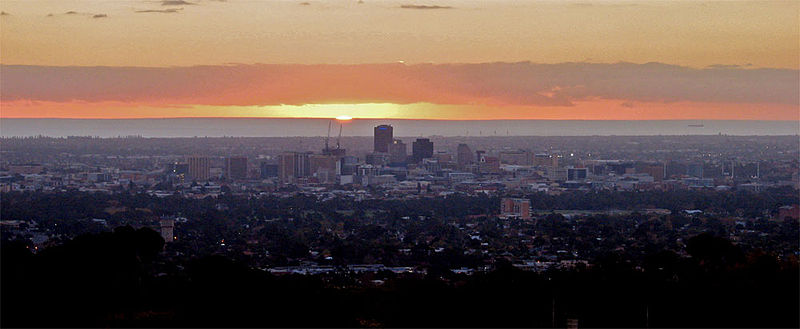
On Friday evening, 20th December, 2013, I headed up to Mount Lofty summit, which is only 20 km west of home.  Well, I actually had the luxury of a chaufferred ride up there by my wife Marija, who dropped me off and then headed back home.  Marija didn’t fancy sitting on a log in the bush, holding hands, and listening to me talking on the radio, so she dropped me off and we organised for her to come back over and pick me up later.  Now thats a dedicated wife.  I think she may have had plans of leaving me on the summit !

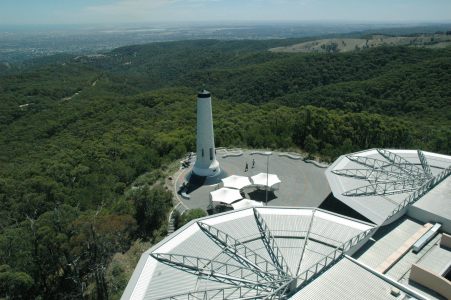
Mount Lofty summit is also located within the Cleland Conservation Park, so it qualifies for the VK5 National & Conservation Parks Award as well as SOTA.  I have activated Mount Lofty & Cleland Conservation Park, 3 times before, but my motivation for the activation was that the 7.130 DX Net was holding a special Christmas edition of the net.  So I decided to do something a bit ‘novel’ for the net and head up to the summit.

surfing_santa

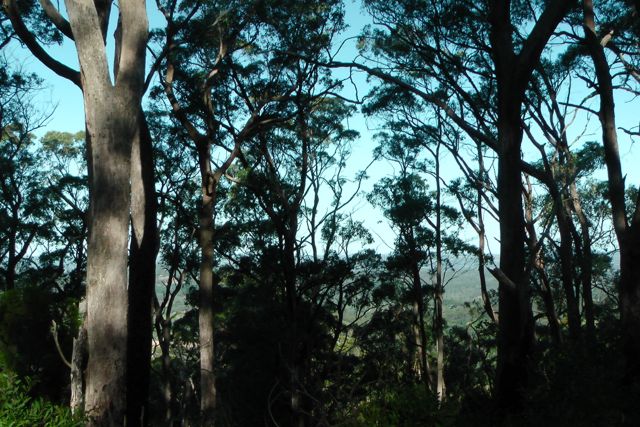
After Marija dropped me off, I set up in my favourite spot on the eastern side of the summit, along a walking track in the bush.  This is a quieter location, away from the obelisk, the cafe, and the tourists.  There is a convenient Telstra sign there which is great to secure the squid pole to.  The weather conditions were not the best.  The temperature had dropped from a very hot 40 deg C down to about 25 deg C and the wind had really whipped up and was very strong.  Every time I heard a crack or a creak, I was looking up to make sure it wasn’t a gum tree limb about to come crushing down.  And out to the east of me there was plenty of shower activity.

IMG_1228

I set up the linked dipole to 20m first, and my first contact was with John VK2YW who had  beautiful strong signal coming in from Wagga Wagga.  This was followed by Tom VK3EO who also had a very strong 5/9 signal from Swan Hill.  Normally the VK3 fellas don’t come in all that well on 20m, but Tom certainly had a magnificent signal.  Andrew VK1NAM then called in from the ACT with his normal good solid signal.  And thanks to Andrew as well for spotting me on SOTAWatch.  And my fourth contact was with another VK3….Marshall VK3MRG, who had a beautiful strong signal.

IMG_1223

I was hoping that some of the Western Australia SOTA Chasers may call in, and sure enough Mike VK6MB came up.  It was good to get Mike in the log, because I can only imagine how hard it must be all the way over there in Western Australia to get 20m SOTA / QRP contacts.  So that’s why I have been trying to make a concerted effort to get onto 20m more often during any SOTA or Parks activation.  I have mentioned it before, but I think us Aussies take distance/s for granted down here in this big country of Oz.  It is about 4,000 km from Sydney to Perth (east to west), and a little over 3,000 km from Adelaide to Darwin (south to north).  They are big distances.  The map below will give you a good idea of the size of Australia compared to Europe.  And we regularly call VK3 – VK6 contacts…a local QSO !

aust-europe-map

I was also hoping that a bit of DX might call in, and to my surprise (with the help of Andrew’s spot on SOTAWatch), Michael DJ5AV called in with a booming 5/9 signal.  I received  a 5/5 signal report back Michael, who has recently been chasing a lot of the Australian SOTA activators.  My second DX contact was with Colin G4UXH.  This was much more of a challenge.  I could hear Colin very well (5/6) but he was struggling with me (3/2).

I then looked down the band to 14.156, hoping to speak to a few of my friends in the UK, Spain, Australia, and New Zealand, who gather there every day for a chat.  I spoke to John EA7BA (5/9 sent & 5/4 received).  I could clearly hear Terry G0VWP, but sadly he was unable to hear me.  This was a real shame, because Terry is a SOTA enthusiast.  I could also hear Billy, GI3NVW, but unfortunately I wasn’t quite making the grade with him.  He could hear me, but that was about it.

After working 11 stations on 20m I was running out of time, so I switched over to the 40m band and initially called CQ on 7.090 and worked Nev VK5WG, Allen VK3HRA, and Tony VK3CAT.  All had very nice signals.

I then QSY’d to the 7.130 DX Net.  Sadly the Over the Horizon radar was extremely strong and this made conditions very difficult indeed for me to work any of the DX that was on the net with my flea power of 5 watts.  I tried calling Brian ZL2ASH who was a good signal, but sadly he couldn’t hear me through the radar.  I normally make the grade quite easily with Brian when I am portable/QRP, but not this night.  William FO5JV was coming in very strong, and despite the fact that I had worked him previously whilst portable/QRP, I decided not to call, simply because of the radar.

I did take a little bit of video which I have placed on You Tube, which shows the radar in action…..

After working 6 stations on the net (in VK2, VK3, & VK7), I announced that I would QSY down to 7.110 and work anyone who might like Mount Lofty & Cleland Conservation Park.  The weather had deteriorated dramatically, and Marija had arrived and was waiting for me in the car, so it was a case of getting any interested ops in the log and moving on.  The weather had dropped from 40 deg C earlier in the day, down to about 13 deg C on the summit, with drizzly rain and strong gusty winds.  I did manage to work a few more stations in VK2, VK3, VK4, & VK5, (including Andrew VK2FAJG, operating QRP with 4 watts) before packing up and heading back home to the warmth of home.

By the end of the activation, I had a a total of 26 stations on 20m SSB and 40m SSB in the log.

The following stations were worked:-

John VK2YW; Tom VK3EO; Andrew VK1NAM; Marshall VK3MRG; Ed VK2AFY; Mike VK6MB; Michael DJ5AV; Gerard VK2IO; Colin G4UXH; Glenn VK3YY; John EA7BA; Nev VK5WG; Allen VK3HRA; Tony VK3CAT; Andy VK4TH; Ron VK3IO; Richard VK3IDX; Dennis VK2HHA; Paul VK7CC; Roy VK7ROY; Colin VK4FAAS; Urey VK3ATA; Luke VK3HJ; Iva VK4HG; Rod VK5FTTC; and Andrew VK2FAJG (QRP 4 watts).

Despite the weather, and the fact that it was no extra points for me for either SOTA or the VK5 Parks Award, this was a good fun evening.

The Summitsbase S2S Award

This morning I checked my e-mails and to my pleasure I found an e-mail from Mike G4BLH from ‘The Summitsbase’.  The e-mail contained my Class 2 Summit to Summit Award for 50 Summit to Summit contacts.

The Summitsbase website is primarily tailored for amateur radio operators who participate in programs such as Summits on the Air (SOTA),  the Summitsbase HuMPs Awards (HEMA) or S2S Awards, Wainwrights on the Air (WOTA).  More information can be found on the Summitsbase website……

http://www.summits.org.uk

FullwidthfadedlogoB

Other than having some really interesting information which is well worth reading, Summitsbase also runs a number of awards.  Some of these such as the HuMPS Awards are not applicable to Australian hams, but the Summit to Summit (S2S) Awards Scheme is.  The S2S award is currently valid for contacts between two SOTA summits and is available at a number of different levels (I have highlighted the levels I have reached)…..

Class 3 Award: 25 unique Summit–Summit contacts
Class 2 Award: 50 unique Summit-Summit contacts
Class 1 Award: 100 unique Summit-Summit contacts
Intermediate Award: 250 unique Summit-Summit contacts
Advanced Award: 500 unique Summit-Summit contacts
Master Award: 750 unique Summit-Summit contacts
Supreme Award: 1000 unique Summit-Summit contacts

So why not add a bit more wallpaper to your shack and apply for some of The Summitsbase certificates.  They are really impressive.

OLYMPUS DIGITAL CAMERA

VK5PAS SS-25-070

European/UK summit contacts

During the past couple of weeks, a number of VK amateurs have been aiming for Summit to Summit (S2S) contacts with European & UK SOTA activators.  Andrew VK1NAM has been leading the charge, and has been very successful in bagging some great S2S contacts and also along the way some general DX QSO’s with SOTA Chasers in Europe.  Check out Andrew’s WordPress site at…..

http://vk1nam.wordpress.com

As a result, Andrew’s enthusiasm has rubbed off on me, and my interest in keeping an eye on SOTAWatch for European activators has increased (from the comfort of home at this stage).  In the past week I have worked 5 x European/UK SOTA activators:-

  • Steve, G1INK/p in ENGLAND
  • Klaus, DF2GN/p in GERMANY
  • Dinos, SV3IEG/p in GREECE
  • Csaba, YO6PIB/p in ROMANIA
  • Don, M0HCU/p in ENGLAND

My first ever SOTA contact was actually with a DX station.  That was back in December, 2011, and was with Mike, 2E0YYY/p, who was portable on Moel Famau, in WALES.  What an introduction to SOTA.  I would go on to work Mike again in May 2012, and May 2013.

In between time, I had worked a few other DX activators…..

  • EA3EGB/p in SPAIN
  • EA1/M0UOK/p in SPAIN (my mate Barry who was on holidays)
  • OK/SQ9SHR/p in CZECH REPUBLIC
  • HA5MA/p in HUNGARY
  • HA5LV/p in HUNGARY
  • G7TAS/p in ENGLAND
  • SP6KEP/p in POLAND
  • S57MS/p in SLOVENIA
  • HA3LV/p in HUNGARY
  • SV3GLI/p in GREECE
  • OE4JHW/p in AUSTRIA

HA3LV365

So, on Saturday (23rd November, 2013) I saw that Andrew VK1NAM and Al VK1RX were heading to Mount Taylor, VK1/ AC-037 to see if they could work some DX summit to summit QSO’s.  Surprisingly I could barely hear Andrew & Al on 20m from Mount Taylor.  Normally they both have thumping signals on 14 mhz, but this day their signals were really low down (almost unreadable).  But to my surprise I could hear the SOTA activators in Europe that they were working.  So there was some hope that I could work a few from the comfort of my shack.

I tuned across the 20m band, but sadly could not find any of the European activators, so I headed up to 10m, which is my favourite band, hoping to work some DX.  And much to my surprise, I found Steve, G1INK/p, who was on SOTA peak, Kinder Scout, G/SP-001.  Steve was one of the activators that had previously worked Andrew and Al on 20m.  Activity was pretty quiet, so I called Steve who came back to me (5/4 sent and 5/7 received).  Steve is the leading activator in England, and is currently sitting on 1,011 summits activated, with a total of 4,081 points.  Not a bad effort at all.  I think I have a bit of catching up to do !!!

Below is a photo of Steve…..

Nordhelle_2

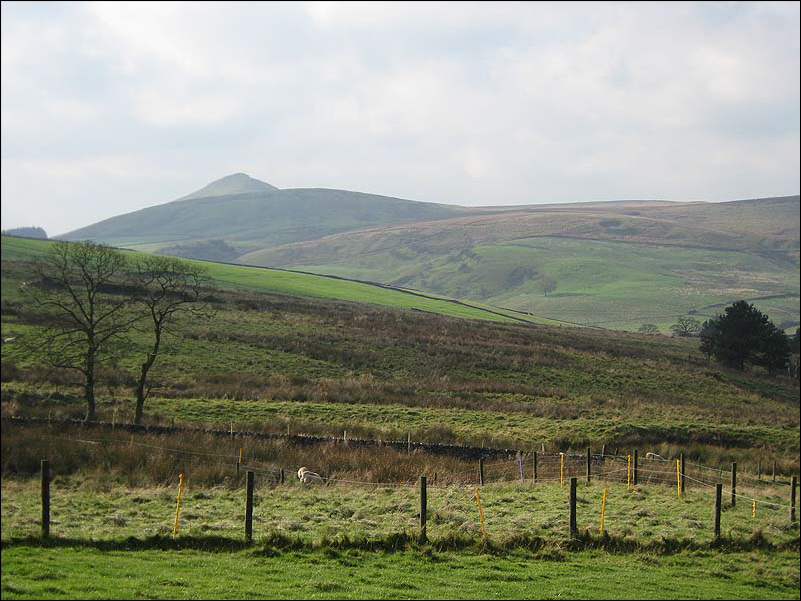
Kinder Scout is 636 metres above sea level, is worth 4 SOTA points, and is situated in the Southern Pennines Region of ENGLAND.  It is a moorland plateau and National Nature Reserve in the Dark Peak of the Derbyshire Peak District in England.  It is the highest point in the Peak District, the highest point in Derbyshire, and the highest point in the East Midlands.  During excellent weather conditions, the city of Manchester and Greater Manchester can be seen.  Below is a photograph of Kinder Scout plateau as viewed from the south…..

800px-KinderScoutPlateau

Steve has a terrific You Tube page with lots of videos.  Click on the link below to have a look…..

http://www.youtube.com/user/g1ink

A week later, on Friday afternoon (29th November, 2013), I saw that Andrew VK1NAM was heading to the hills again in the hope of getting some more European S2S activity.  And he succeeded.  Well done Andrew.  And this time I could hear Andrew well, so I gave him a shout and bagged Mount Taylor, VK1/ AC-037.  He was using a Yaesu FT-857d, 50 watts, into a 20m/40m linked dipole.

I then hunted around the 20m band, hoping to find some of the European SOTA activators.  I managed to track down Klaus, DF2GN/p, who I had heard working Andrew a little earlier.  Klaus was portable on SOTA peak, Hummelsberg, DM/ BW-228 and had a very strong 5/8 signal into my shack.  I received a genuine 5/9 from Klaus.   He was using an inverted L antenna.  Klaus is ranked 16th as an Activator in the DM Association.

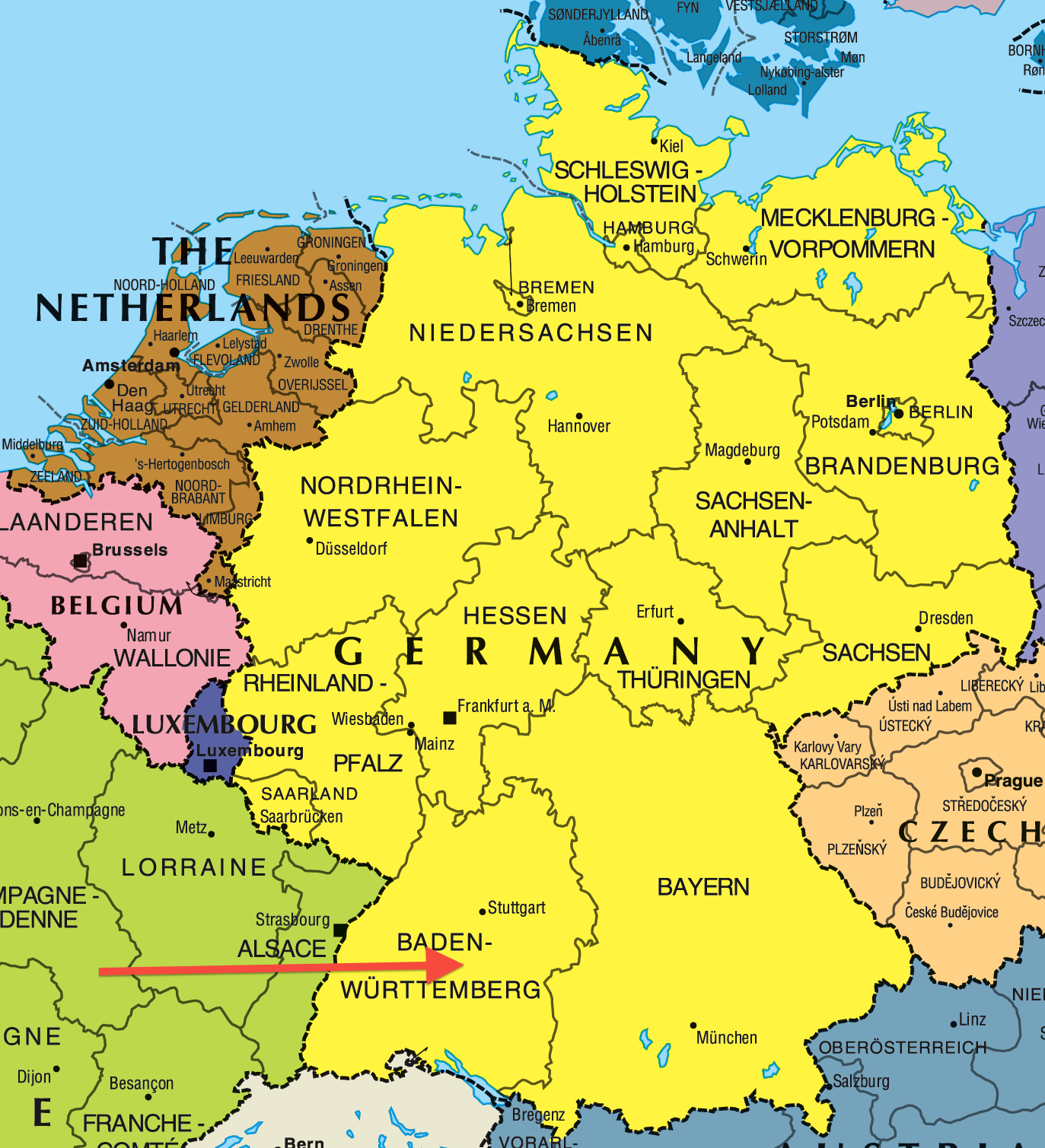
Hummerlsberg is located in the Low Mountains in the Bathe Wuerttemberg Region of Germany, and is 1,002 metres above sea level.  It is worth 10 points.

sota_df2gn_05

On Saturday afternoon (30th November, 2013), inspired by working Klaus the day before, I had a listen again on 20m.  I had seen a few Alerts on SOTAWatch from European activators indicating that they would be looking for VK Chasers, so this was very promising.

My first contact was with Dinos, SV3IEG/p, who was portable on SOTA peak, Pergari, SV/ AT-033.  Dinos had a very nice signal and I got through first time to him (5/7 both ways).  Hats off to Dinos, because despite having lots of European Chasers, he regularly stopped and called for VK and outside Europe.  Pergari is located in the Attica Region on Greece and is 1,108 metres above sea level.  It is worth 4 SOTA points.

5358427078_cb2b5ea6e6_m

My second contact was with Csaba, YO6PIB/p who was portable on SOTA peak, Clabucetul Taurului, YO/ EC-145.  His signal was down a little bit, but still he was very readable.  (4/3 sent and 5/3 received).  Clabucetul Taurului is located in the Eastern Carpathians Region of Romania.  It is 1,520 metres above sea level, and is worth 8 SOTA points.  This was the first time the summit had ever been activated.

Csaba has a Blogspot.  Click on the following link to have a look…..

http://yo6pib.blogspot.com.au

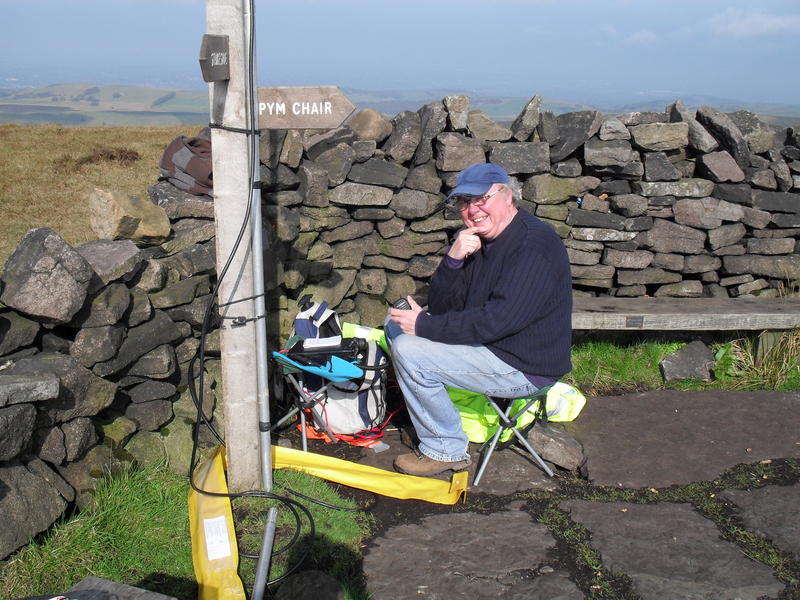
Below is a photo of Csaba operating on a SOTA peak (not YO/ EC-145).

IMG_1927

And finally, I saw a spot for Don, M0HCU, who was on SOTA peak, Titterstone Clee Hill, G/ WB-004.  Initially Don was very weak and I was struggling to hear him through the noise from the neighbour’s plasma television.  And when his signal did come up, it was a struggle to break through the European Chaser pile up.  But eventually I did, and got Don in the log (5/3 sent and 4/7 received).  I was Don’s first ever VK SOTA contact.

Don has a website.  Click on the link below to have a look…..

http://m0hcu.co.uk

The summit of Titterstone Clee which Don was sitting on, is bleak and treeless.  It has been shaped by decades of quarrying.  Many of the quarrying structures still remain, and these lend to the ghostly atmosphere of the hill top, especially during the prolonged winter fogs that descend over the hills.

lmashhol_03

I have worked quite a bit of DX since becoming a SOTA activator in March this year.  But I have never had a DX S2S contact.  I would imagine it would be a real buzz when you receive a call back from someone sitting on top of a mountain overseas.  As Andrew VK1NAM told me, it took him 3 days to come down off his high after getting his first European S2S.

I have now worked 17 different SOTA Associations.  I am now just a few contacts away from qualifying for my Silver Mountain Hunter certificate (2 different / unique summits in each of 10 Associations).

  • DM – 1
  • EA1 – 1
  • EA3 – 1
  • G – 3
  • GW – 1
  • HA – 2
  • OE – 1
  • OK – 1
  • S5 – 1
  • SP – 1
  • SV – 2
  • VK1 – 24
  • VK2 – 29
  • VK3 – 134
  • VK5 – 21
  • VK9 – 1
  • YO – 1

Talk at Adelaide Tech Meet

On Wednesday night I attended the Adelaide Tech Meet meeting at Hackerspace, King William Street in the city, after being invited to do so by Kym VK5FJ.  I delivered a presentation on the portable aspect of amateur radio, which included equipment used, and some of the various formal portable programs including SOTA & the VK5 Parks Award.

Hackerspace are a group of people with an interest in electronics and computing, who meet to work and share on their ideas.

imgres

I was the third of five presenters during the evening.  The first 2 presentations were well at least for me, quite technical in regards to computers.  I think I was lost after the first 5 minutes.  But I have never professed to be computer literate.

The meeting was attended by about 25 people who all showed a keen interest, despite the fact that only 3 that were present were amateur radio operators.  Because the majority of the audience were new to amateur radio, I tailored the start of the presentation, and explained in basic terms what ham radio was all about.

Other than the powerpoint presentation, I took along my FT-817nd, a SLAB battery, and a few portable antennas.

Much to my surprise, at least 2 people in attendance showed a very keen interest in obtaining their amateur radio licence.

Thanks to Kym VK5FJ for giving me the opportunity to attend.

growing2

KRMNPA weekend 2013

The 2013 KRMNPA weekend was held between Friday 15th – Sunday 17th November, 2013.  My wife Marija and I headed to Pinnaroo (near the Victorian border) for a 2 night stay and activated the Murray Sunset National Park on Saturday, and Wyperfeld National Park on Sunday.  I have added separate blogs for those activations.

I worked a total of 63 stations in both parks.  In Murray Sunset NP I had 26 QSO’s into VK1, VK2, VK3, & VK5, whilst in Wyperfeld NP I managed 37 QSO’s into VK2, VK3, & VK5.

I worked a total of 16 different Victorian National Parks, as follows…..

  1. Great Otway National Park
  2. Port Campbell National Park
  3. Terrick Terrick National Park
  4. Churchill National Park
  5. Hatte Kulkyne National Park
  6. Mount Eccles National Park
  7. Grampians National Park
  8. Organ Pipes National Park
  9. Mornington Peninsula National Park
  10. Kara Kara National Park
  11. Wyperfeld National Park
  12. Morwell National Park
  13. Lower Glenelg National Park
  14. Murray Sunset National Park
  15. Dandenong Ranges National Park
  16. Heathcote-Graytown National Park

And I added 4 x new parks to my KRMNPA list, bring me to a total of 33 Victorian Parks worked.  The new Parks worked were…..

  1. Hatte-Kulkyne National Park
  2. Morwell National Park
  3. Dandenong Ranges National Park
  4. Heathcote-Graytown National Park.

Our accommodation at the Pinnaroo cabins was excellent.  They were very friendly and although basic, the accommodation was very clean & tidy.  Recommended !

IMGA0003      IMGA0005

It was great to catch up with Larry VK5LY and his wife Di, on the Saturday night.  We had a nice feed at the Golden Grain Hotel at Pinnaroo.

IMGA0004     IMGA0066

We can also recommend the Cobb and Co Cafe at Murrayville.  After our activation at Wyperfeld NP, we stopped off there and had a coffee and some really delicious home made cake.

And Marija and I had an enjoyable trip back home to the Adelaide Hills, stopping off on the way back, and looking at a few of the sights on the Mallee Highway.  The Kow Plains homestead just outside of the little town of Cowangie, is well worth having a look at.  There are a number of restored buildings here that date back to the 1860’s.

IMGA0055_2     IMGA0104

Thanks to Tony VK3VTH for co-ordinating a really enjoyable weekend, and everyone else involved in the organisation including Peter VK3ZPF.  Thanks to all the activators.  And thanks to everyone that called me during my 2 activations.  It was a lot of fun.

IMGA0096_2


Wyperfeld National Park

On Sunday morning, 17th November, 2013, Marija and I left the Pinnaroo cabins, and again headed across the border into north western Victoria.  We drove into the little town of Murrayville, and then travelled about 30 km along the Murrayville Track, until we reached the Wyperfeld National Park.

Wyperfeld National Park is the third largest National Park in Victoria and covers an area of 3,570.17 km².  It was declared in 1921, and has been significantly expanded since that time to protect a huge area of mallee, woodland, and heartland in the north west of Victoria.

Vic-Mallee-Loop-map

Wyperfeld contains numerous sand dunes and these are estimated to be between 40,000 and 15,000 year old.  Wyperfeld was once a shallow sea from about 25 million years ago.  As the seas slowly retreated, the westerly winds blew sand over the exposed inland areas, which resulted in the rolling sand dunes that you see today.

Wyperfeld was originally home to the local aboriginal people, the Wotjobaluk, who regularly travelled up and down Outlet Creek, visiting the lakes and swamps in their quest for water and food.    They called Outlet Creek, ‘Tyakil-ba’Tyakil’.  Outlet Creek snakes its way through the centre of the park.  The first European to venture along Outlet Creek was James Clow, who in 1847, established the first pastoral run.

By the early 1900’s, the mallee of Victoria was a fast disappearing habitat.  And luckily, by 1909, a number of naturalists persuaded the Victorian Government to temporarily reserve 3,900 hectares.  By 1921, the park was declared.  The name, Wyperfeld, is of Germanic origin, and was most likely given by the Germanic settlers who came to the Wimmera and Mallee regions from South Australia.

Fortunately Spring is the best time to see the wildflowers in the park.  And there were quite a few plants out in flower that we saw.  About 520 species of native plants occur in the park.  River Red Gum and Black Box woodlands cover the floodplains of Outlet Creek and the lakes within the park.  Cypress-pine woodlands grow on the dunes near the lakes.  On the eastern side of the park, mallee is the predominant flora.  In the western section of the park, heathland covers the rolling sand plains.

IMGA0031_2     IMGA0032_2

A variety of native animals call the park home including Mitchell’s Hopping Mouse, Desert Silky Mouse, and Western Grey kangaroos

More than 200 species of birds have been recorded in the park, including the Sulphur Crested Cockatoo, Emus, Mallee Ringneck Parrot, Red-rumped Parrot, Galah, Variegated Fairy-wren, & Red-capped Robin.  Wyperfeld is part of the Wyperfeld, Big Desert and Ngarkat Importand Bird Area, which has been identified as such by BirdLife International, due to its importance for the conservation of the rare Malleefowl and various other mallee bird species.

A large variety of reptiles can be found within the park.  They include the Sand Goanna, dragons, skinks, and geckos.  We saw literally hundreds of lizards sunning themselves on the Murrayville Track.  Surprisingly, snakes are rarely seen in Wyperfeld NP.

IMGA0050_2

Marija and I pulled up at the Milmed Rock 4WD track, and set up the gear here.  It was already very warm, and safely there was no shade.  I could see some small gum trees about 2 km into the bush, but I didn’t fancy trying my luck along Milmed Rock Track, as it was very very sandy and suitable for 4wd only.

IMGA0006_3      IMGA0010_2

Fortunately the track ran north – south, so I set up the 40m dipole using my 7 m squid pole, and tied off the ends to some of the small native shrubs.  We set up the folding table and deck chair, and away I went.  My first contact from within Wyperfeld was with Peter VK3YE who was sitting on the end of a concrete pier at Chelsea Beach in Melbourne.  Peter had a great signal as always from his QRP pedestrian mobile set up (5/8 both ways).  This was followed by a  steady flow of callers from VK3 & VK5, including Tim VK3MTB who was operating portable from Morwell National Park, and Tony VK3VTH who was operating portable from the Lower Glenelg National Park.

IMGA0024_2

I then decided to tune around the band to see if I could pick up a few more park activators, and was fortunate enough to speak with Ben VK3FTRV who was portable north of Halls Gap, in the Grampians National Park, using his full wave loop antenna.  I then spoke with Larry VK5LY who was portable in the Murray Sunset National Park, and then stumbled across Andy VK5AKH who was operating portable from the Morialta Conservation Park, as part of the VK5 National and Conservation Parks Award.

The 40m band was in quite good condition and was very busy.  The Ballarat Amateur Radio Club were also holding their annual Field Day and I propped on 7.085 and I worked a number of their members, operating portable in the field.  Joe VK3YSP, who was operating portable from the Dandenong Ranges National Park, with his wife Julie VK3FOWL, called in to say hi.

After working a number of stations I decided to tune across the band again, and I spoke with Peter VK3ZPF who was active again on a SOTA peak.  This time, Mount Ida, VK3/ VU-009, which is also within the Heathcote-Graytown National Park.  I was really happy to find Peter, because this was a new Victorian park for me.  Peter was kind enough to leave me his frequency, and again I worked a steady flow of park Hunters.  This included Andy VK3CAH who was portable in the Kara Kara National Park, and Andrew VK1DA/2 who was portable on SOTA peak, Spring Hill VK2/ ST-036.

As the day progressed, it was getting hotter and hotter, so I improvised and used an umbrella from the boot of the car to offer me some shade.

IMGA0037_2

I had heard a few guys tell me that the south east fellas were around, so I tuned up to 7.110, where I spoke with Col VK5HCF/p, Tom VK5EE/p, and Greg VK5ZGY/p, who were all portable in the Lower Glenelg Conservation Park.  They had gained access to the park via boat, and were using 5 watts from an IC-703 and a linked dipole.  A great effort fellas.

After working Col, Tom, & Greg, I found Glenn VK3YY, who was portable on SOTA peak, Spion Kopje, VK3/ VT-040 (5/6 both ways).

My last 2 contacts of the day were with Stu VK5STU/p, and Nigel VK5NIG/p.  Stu and Nigel were portable at One Tree Hill trying out their new Yaesu FT-817nd’s (which they had bought from the AHARS Buy & Sell, a few weeks earlier) and experimenting with portable antennas (linked dipole & 40m inv fee dipole).

Time was getting away, & I had pushed my luck with Marija sitting in the car watching DVD’s, so it was time to pack up.  I had a total of 37 QSO’s in the log.

I worked the following stations:-

Peter VK3YE/pm; Ron VK3AFW; Ivan VK5HS; Tim VK5AV; Tim VK3MTB/p; Tony VK3VTH/p; Frank VK3GFS;Ben VK3FTRV/p; Larry VK5LY/p; Andy VK5AKH/p; Ian VK3AXH/p; John VK5EMI; Brian VK5FMID; Harry VK3KGL/p; Tom VK5FTRG; Bob VK3NBV/p; Mal VK5MJ; Joe VK3YSP/p; Julie VK3FOWL/p; Peter Vk3TKK; Tony VK3VTH/p; Peter VK3ZPF/p; Bob VK3BNC/p; Andy VK5LA; Craig VK3KG/p; Andy VK3CAH/p; IAndrew VK1DA/2; Dave VK3VCE; Col VK5HCF/p; Tom VK5EE/p; Greg VK5ZGY/p; Glenn VK3YY; Nev VK5WG; Kevin VK3VEK; Stu VK5STU/p; and Nigel VK5NIG/p.

Just wanted to say thank you to Tony VK3VTH for organising the KRMNPA weekend.  It was a lot of fun, and we will definitely be participating again next year.

I have posted a video on You Tube of this activation…..

Murray Sunset National Park, Victoria

My third and final activation for Saturday was the Murray Sunset National Park.  This was my first of two Victorian park activations for the 2013 KRMNPA weekend.

Prior to activating the park, Marija and I headed to the town of Underbool, where we met up with Larry VK5LY and his wife Di.  After a nice cold beer, Larry loaned me one of his home brew 40m dipoles.  The VSWR on my linked dipole had been very high, so I was very appreciative of Larry’s offer of a spare antenna.

IMGA0066

Murray Sunset National Park is 6,330 km2 in size and is the second largest National Park in Victoria.  It is about 438 km northwest of Melbourne and is situated in the northwestern corner of Victoria, bordering South Australia  to the west and the Murray River to the north.  The Sturt Highway passes through the northern part of the park, but most of the park is in the remote area between the Sturt Highway and the Mallee Highway, west of the Calder Highway.

Vic-Mallee-Loop-map copy

Murray Sunset NP was created in 1991, and in 1999, the park was expanded to encompass Pink Lakes State Park. This is the area of the park that Marija and I activated.  The lakes are dubbed “pink” after the beta-carotene pigment that colours it in late summer, caused by the algae Dunaliella salina.  Beta-carotene is a red-orange pigment found in plants and fruits, especially carrots and colourful vegetables.  Between 1916, through until 1975, this area was the site of a major salt industry.  At its peak, 10,000  tons of salt was harvested and railed from Lake Crosbie, Lake Becking, and Lake Keynyon to the nearby town of Linga.  Marija and I drove through Linga, and sadly it is a shadow of what it previously was at its boom.

IMGA0077      IMGA0078

Over 600 species of plants have been recorded in the Murray Sunset National Park.  Some of the more notable plants include the Murray Lily, Silvery Emu bush, porcupine grass, and Blue leaved Mallee.  During springtime, there are numerous wildflowers including spider orchids, Azure Sun orchids, Desert Heath myrtles, and the interestingly named Poached egg daisies.

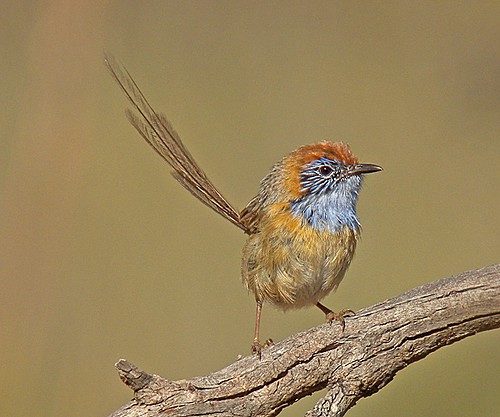
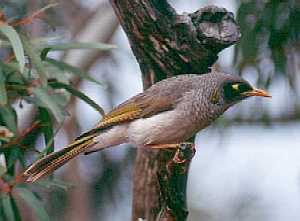
The park is home to many Australian native birds.  In fact over 300 species of birds have been documented.  The majority of the Murray Sunset NP lies within the Murray Sunset, Hattah, and Annuello Important Bird Area (IBA), identified by BirdLife International.  This is due to the fact that the agra contains mallee habitats which support numerous threatened mallee bird species, including the Malleefowl, Black eared Miner, and the Mallee Emu wren.

The park also supports a large amount of wildlife including both Western Grey and Red Kangaroos.  When we were leaving we saw a group of Western Grey’s grazing in some of the grassy area.

IMGA0103

Marija and I pulled into the Lake Crosbie campground which was buzzing with activity.  There were numerous campers and caravaners here.  But we did manage to find a parking spot, very close to the shores of Lake Crosbie, and set up the gear here at a table with benches, and conveniently placed under the shaded of a nearby gum tree.

IMGA0082      IMGA0084

The 40m band appeared to have ‘repaired itself’ a bit since the morning.  Of course, it was a much better time of the day for the band as well.  Signals appeared much stronger.  My first contact within the park was with Peter VK3ZPF who was portable on SOTA peak, West of England Range, VK3/ VW-013, which is contained within the Kara Kara National Park (formerly known as St Arnaud Range National Park).  Peter had a beautiful strong 5/8 signal and I received 5/8 back.  Things were looking promising.  This was followed by a QSO with Joe VK3YSP and his wife Julie VK3FOWL, who were both portable in the Churchill National Park (5/9 both ways).

I then worked into VK1, VK3, & VK5.  Larry VK5LY then called in to say g’day.  He was with his wife Di, portable in Wyperfeld National Park, which I planned on activating on Sunday (5/7 both ways).  Following this I had a steady flow of callers from VK2 & VK3.

My final contact of the day was with the same station I had started off with.  That being Peter VK3ZPF who had moved, and now was portable on top of SOTA peak West if England Fire Tower, VK3/ VW-016, which was still within the Kara Kara National Park.

After 2 very enjoyable and pleasant hours in Murray Sunset NP, it was time to pack up, and head back to Pinnaroo, and catch up with Larry & Di.  I had a total of 26 QSO’s on 40m SSB.

I worked the following stations:-

Peter VK3ZPF/p; Joe VK3YSP/p; Julie VK3FOWL/p; Matt VK1MA; Ron VK3AFW; Kevin VK3EC; Tim VK5AV; Ivan VK5HS; Ian VK5CZ; Larry VK5LY/p; Brian Vk3MCD/p; Ernie VK3DET; Clive VK3FCMR; Kev VK3AKT; Bob VK3XP; Frank VK3GFS; Joe VK3YSP/p; Mal VK3AZZ; Colin VK3LO; Laurie VK3AW; Peter VK2NEO; Tim VK3MTB; Peter VK3TKK, Lloyd VK2KNS; and Peter VK3ZPF/p.

I have uploaded a video of this activation to You Tube.  It can be found at…..

Peebinga Conservation Park

Off to my 2nd activation of Saturday 16th November.  And this was to be Peebinga Conservation Park, which is located about 240 km east of Adelaide, and just 10 km west from the Victorian border.  It is located about 37 km north of the town of Peebinga.

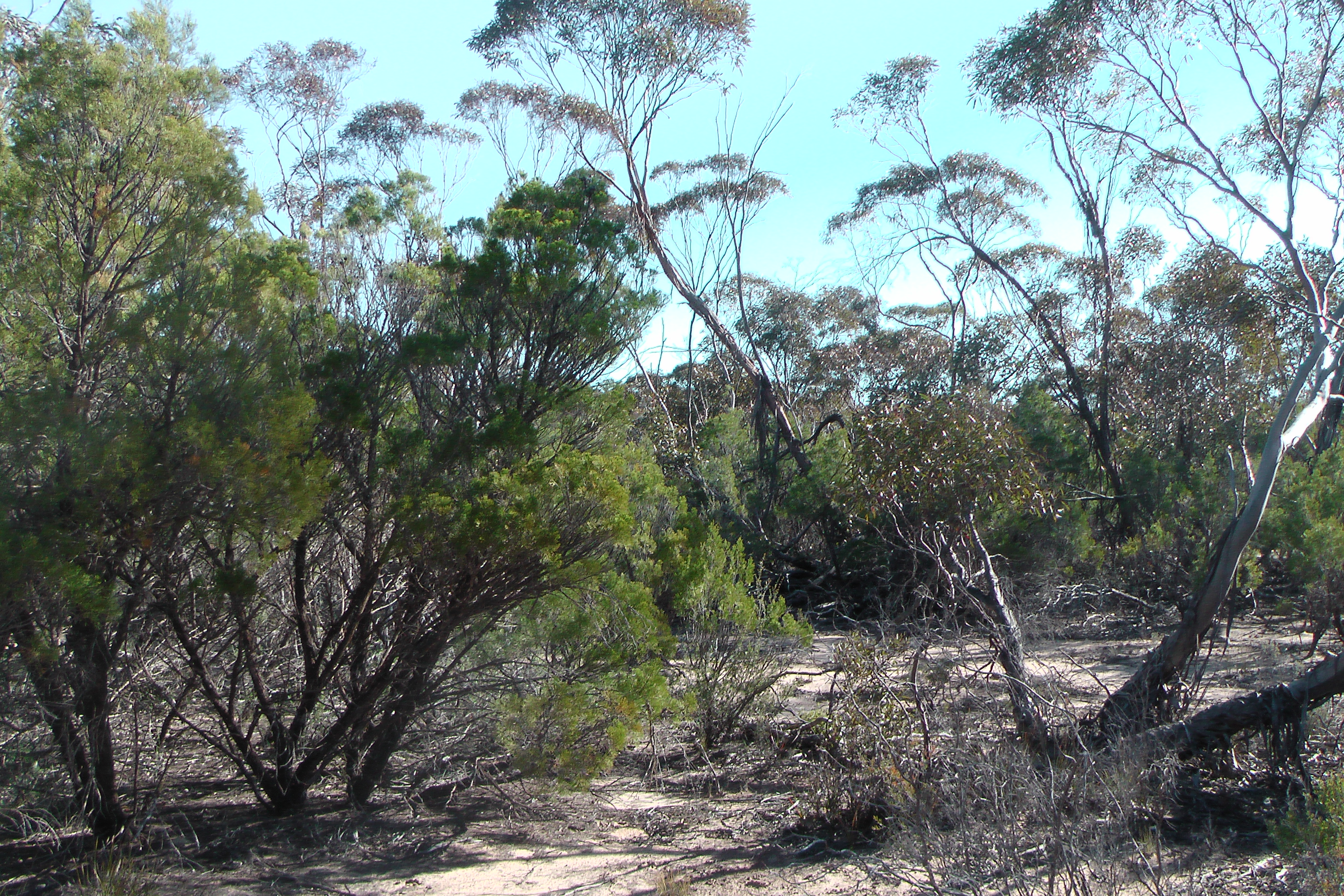
Peebinga Conservation Park which is about 3.400 hectares in size, was reserved to conserve the habitat of the rare Western Whipbird.  Vegetation in the park varies as some of it has been cleared and remains grassland. The rest is characterised by low stabilised dunes with open scrub cover featuring Ridge-fruited and Slender-leaved Mallee with Warty Cypress over Broom Bush.  The higher areas have Square-fruited, Red and White Mallees.  A total of 150 native flora species have been recorded in the park, including 14 of conservation significance.

IMGA0052       IMGA0058

The ecological value of the park was formally recognised back in 1940, when Peebinga Flora and Fauna Reserve was dedicated.  It was renamed following proclamation was a conservation park in 1977.

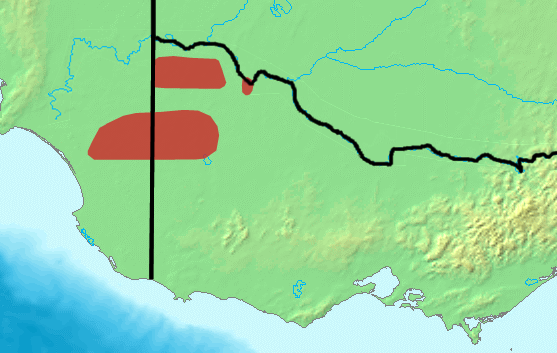
The park is recognised by BirdLife International as an Important Bird Area.  This is due to the fact that it supports a relatively large population of Malleefowl.  The park previously had a population of Eastern Mallee subspecies of the Western Whipbird, which sadly, is now locally extinct.  The declining species of Black shouldered Kite, and Tawny crowned Honeyeater are also found within the park.

Numerous native animals also call the park home, including Western Grey Kangaroos and Echidnas.  A total of 97 native fauna species have been recorded in the park.

A total of 23 reptile species have been recorded within Peebinga CP, including the regionally rare Rough-nosed Blind Snake and the State rare Bardick, which is a small venomous snake morphologically similar to a death adder that attains a maximum length of 70 cm.

Marija and I accessed the eastern side of the park via Conservation Road.  The road is dirt and is in good condition.  Everything was going well, until I came around a sharp corner which bordered the park, and the hard gravelk surface suddenly turned to very soft sand.  After some cursing and some swearing, I managed to get the Ford Falcon out of a rather precarious situation.  We decided to park the car and activate the park at this location.

Fortunately there was some shade offered by small gum trees.  It was great to sit under these and escape the sun.  The temperature was rapidly increasing and there was no breeze to speak of.

IMGA0055

Conditions here on 40m SSB were really hard going.  The band was certainly not in great shape, and my antenna was also playing up.  The VSWR was showing as really high.  However I did manage some interesting contacts including a handful of VK3 Park QSO’s.  My first contact was with Larry who was portable in Hatte Kulkyne National Park.  Larry kindly offered to meet me over the Victorian border, and provide me with a 40m dipole.

My last 2 contacts of the day were with Bernard VK3AMB who was portable in the Organ Pipes National Park, and Nick VK3ANL who was portable in the Mornington Peninsula National Park.

IMGA0054      IMGA0057

So after just 30 minutes in the park, it was time to pack up and head off across the border into Victoria to meet up with Larry and his wife Di.  I had a total of 9 contacts in the log on 40m SSB.

I worked the following stations:-

Larry VK5LY/p; Kevin VK3EC; Peter VK3PF; John VK5BJE; Ivan VK5HS; Andrew VK2UH; Tim VK5AV; Bernard VK3AMB/p; and Nick VL3ANL/p.