Trip to VK3 along the Great Ocean Road

I returned home today after our 2 weeks away up in the Riverland, the South East of South Australia, along the Great Ocean Road in Victoria, and finally the Pyrenees Range area in western Victoria.

Here is a summary of the activities……

  • 2 x South Australian Conservation Parks
  • 3 x Victorian Coastal Parks
  • 3 x Victorian Marine National Parks
  • 1 x Victorian State Park
  • 3 x Victorian National Parks
  • 10 x Victorian SOTA summits
  • Total of 899 contacts
  • 3,084 km travelled.

Here is a list of activations………

Sat 7th Nov.

  • Billiatt Conservation Park VKFF-0821 – 57 contacts

Sun 8th Nov

  • Peebinga Conservation Park VKFF-0830 – 32 contacts

Mon 9th Nov

  • Discovery Bay Coastal Park VKFF-0746 – 26 contacts
  • Discovery Bay Marine National Park VKFF-0949 – 49 contacts

Tues 10th Nov

  • Discovery Bay Coastal Park VKFF-0746 – 25 contacts
  • Cape Nelson State Park VKFF-0754 – 24 contacts

Wed 11th Nov

  • SOTA Mount Clay VK3/ VS-051 – 7 contacts

Thurs 12th Nov

  • Bay of Islands Coastal Park VKFF-0743 – 46 contacts

Fri 13th Nov

  • Twelve Apostles Marine National Park – 69 contacts

Sat 14th Nov

  • Port Campbell National Park – 53 contacts
  • SOTA Crowsnest Lookout VK3/ VS-049 – 34 contacts

Sun 15th Nov

  • Great Otway National Park VKFF-0405 near Cape Otway – 69 contacts
  • Great Otway National Park VKFF-0405 Aire River – 32 contacts

Mon 16th Nov

  • SOTA Mount Cowley VK3/ VC-022 and Great Otway National Park VKFF-0405 – 48 contacts

Tues 17th Nov

  • Point Addis Marine National Park VKFF-0952 – 59 contacts

Wed 18th Nov

  • SOTA Mount Leura VK3/ VS-050 – 29 contacts
  • SOTA Mount Elephant VK3/ VS-047 – 23 contacts
  • SOTA One Tree Hill VK3/ VS-036 – 82 contacts

Thurs 19th Nov

  • SOTA Blue Mountain VK3/ VS-015 – 15 contacts
  • SOTA Point 756/Pyrenees VK3/ VS-018 – 33 contacts
  • SOTA Mount Lonarch VK3/ VS-013 – 16 contacts
  • SOTA Ben Nevis VK3/ VS-009 – 25 contacts

Fri 20th Nov

  • Little Desert National Park VKFF-0291 – 46 contacts


I would like to thank everyone who called.  Band conditions fluctuated dramatically with very good conditions during some activations, to very poor during others.

Also many thanks to those that took the time to spot me, either on parksnpeaks, the DX cluster, Facebook.  It certainly helps fill up the log.

I will post some more info & photos for each of the activations in the coming weeks.


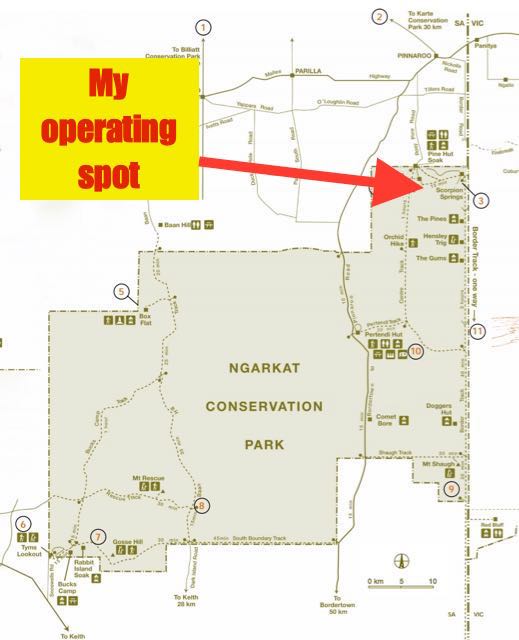
Ngarkat Conservation Park VKFF-0829

Whilst I was in Hattah Kulkyne National Park in Victoria, I had toyed with the idea of activating the Ngarkat Conservation Park, VKFF-0829, in South Australia, after I had crossed the border.  I still had a fair drive ahead of me to get home, but I had worked out that I had enough time for a quick stop at Ngarkat.  I had activated Ngarkat previously, but as part of the VK5 National and Conservation Parks Award, and not the World Wide Flora Fauna (WWFF) program.  So this was to be another unique WWFF/VKFF activation for me.

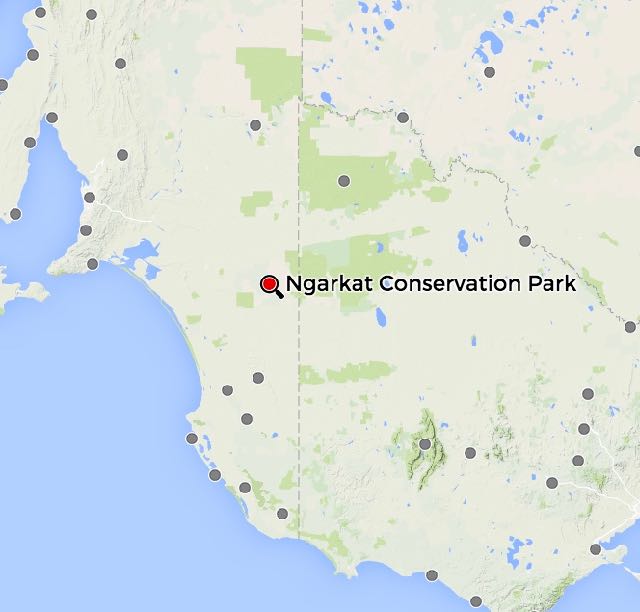
Screenshot 2015-10-31 10.15.36

Above:- Map showing the location of Ngarkat CP.  Courtesy of mapcarta.com

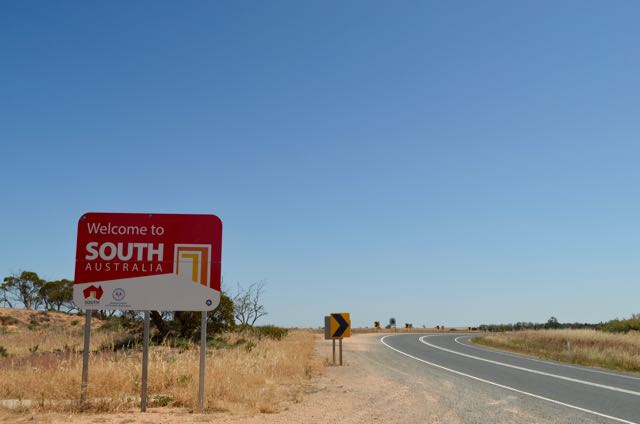
So after leaving Hattah Kulyne National Park I drove west along the Hattah Kulkyne-Robinvale road until I reached the Calder Highway and the little town of Hattah.  Don’t blink, because you will miss it.  There was once a post office here but it closed in 1974.  Today there is a General Store, and that is it.  I then travelled south to Ouyen where I stopped briefly for a bite to eat at the Mallee Deli, consisting of a very enjoyable steak sandwich with the lot.  I then drove west on the Mallee Highway, back through the towns of Walpeup, Torrita, Underbool. Linga, Boinka, Cowangie, Murrayville, and Carina, until I reached the Victorian/South Australian border.

Along the way I spoke with Rob VK4AAC/5 who was operating portable from the Padthaway Conservation Park, VKFF-0924.  Rob had a nice signal coming into the mobile from the South East of South Australia.

DSC_0372

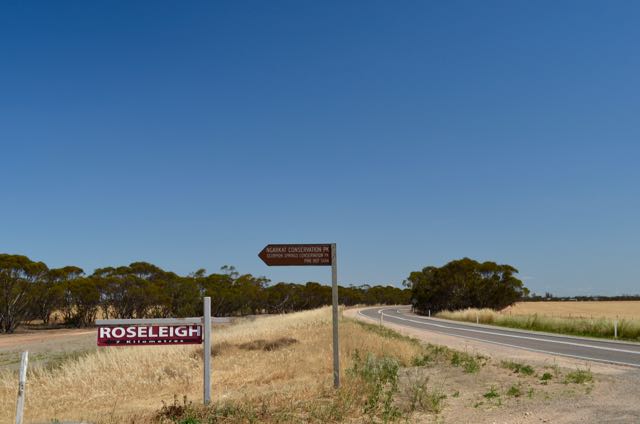
I continued west on the Mallee Highway, towards the town of Pinnaroo, until I reached the Rosy Pine Road.  There is a sign here which shows Ngarkat Conservation Park and another sign for Roseleigh Homestead.  Interestingly, the sign also refers to Scorpion Springs Conservation Park which no longer exists.  It was absorbed into the Ngarkat Conservation Park back in 2004.  Clearly the sign has never been replaced.

DSC_0373

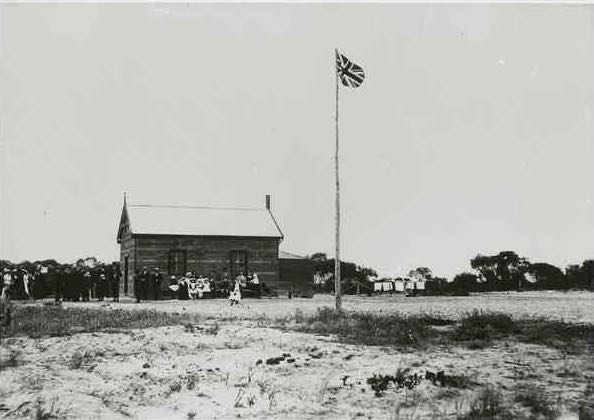
I stopped off briefly to have a look at the site of the old Rosy Pine school.  The school, along with a number of other outlying schools from the town of Pinnaroo, closed in 1943.  Students from these outlying areas were then required to travel to Pinnaroo by bus.  Today there is nothing left of the school.  But a memorial plaque signifies its previous existence.

B18787

Above:- The Rosy Pine school, c. 1916.  Image courtesy of State Library SA.

I continued on towards the park along Rosy Pine Road, which then becomes Centre Track, and on the way I spoke with Peter VK3PF who was portable on SOTA peak, Jarvis Creek Plateau VK3/ VE-208, which is contained within the Jarvis Creek Plateau Region Park VKFF-0969 (5/6 sent and 5/7 received).  I continued south until I reached the Scorpion Boundary Track where there is an unlocked gate.  I entered the northern side of the park, and paid my $10.00 entry fee, before proceeding into the Scorpion Springs camping area.

Ngarkat Conservation Park is a very large park and is located about 200 km south east of Adelaide.  It covers an area of around 270,000 hectares of vegetated sand dunes, mallee and heath.  Ngarkat was proclaimed in September 1979 to conserve the mallee heath habitat of the 90 Mile Desert.  The park was previously four separate sections: Ngarkat Conservation Park, Mount Rescue Conservation Park, Mount Shaugh Conservation Park, and Scorpion Springs Conservation Park, but these were all absorbed into the one park in May 2004.  On many maps, including Google maps, it incorrectly shows the former conservation parks.  Unfortunately, many of the tourism sites also refer to the former three Conservation Parks.

The park is adjacent to the Big Desert Wildnerness Park and Wyperfeld National Park in Victoria.  This is a vast area of remote mallee wilderness in South Australia and western Victoria.  The name Ngarkat (pronounced Narr-kat) takes its name from the Ngarkat aboriginal people who were the original inhabitants of the area.

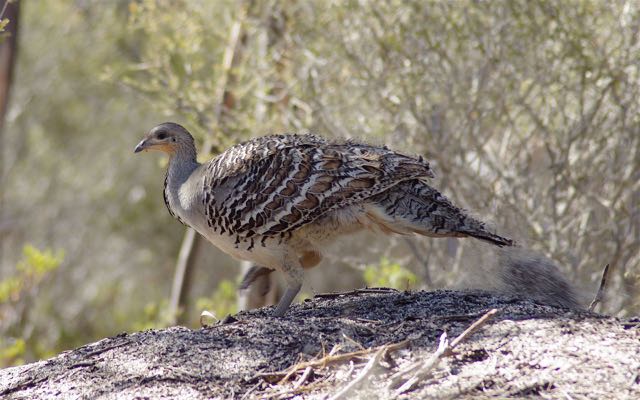
The Ngarkat Conservation Park is alive with wildlife including Western Grey kangaroos, Little Pygmy Possum, Short-beaked echidnas, Mitchell’s Hopping mouse, and Common dunnarts.  More than 120 species of birds can be found in the park including the rare Malleefowl and the Western Whipbird.

Leipoa_ocellata_-Ongerup,_Western_Australia,_Australia-8

Above:- The rare Malleefowl.  Image courtesy of wikipedia. 

It was a very warm afternoon, so the first thing I did was to seek out some shade.  I set up my gear, the Yaesu FT-857d and the 40m/20m linked dipole in the campground.  There was a wooden table and benches under the shade of a gum tree so I took advantage of that.  I attached the 7 metre squid pole to a post on a fenceline, with the assistance of an octopus strap.

Screenshot 2015-10-31 10.18.32

Unfortunately there was absolutely no mobile phone coverage out here so I couldn’t send out an SMS message or spot myself on parksnpeaks.

Prior to calling CQ, I hunted around for Peter VK3PF and found him calling CQ on 7.090.  After securing Peter in the log, I headed to 7.085 and started calling CQ.  This was answered by John VK2YW in Wagga Wagga with a strong 5/9 signal.  Half way through my QSO with John the radio cut out.  Bugger!  I have been having an intermittent problem with the connection between the power supply and the transceiver.  But fortunately that was sorted out quickly and I was back on air.  This was followed by calls from Mike VK3ZMD in Melbourne, Adrian VK5FANA on the Yorke Peninsula, and then Mick VK3PMG in western Victoria, all with 5/9 signals.  My 16th contact in the park was with Rob VK4AAC/5 in the Padthaway Conservation Park, VKFF-0924.  Rob called me, so it saved me having to hunt him down.

I worked a total of 34 contacts on 40m in VK2, VK3, and VK5, before trying 20m.  Conditions on 40m were quite good, however with all the storms across Australia, the band was very noisy with strong static crashes.  I called CQ on 14.315 and this was answered by Rick VK4RF with a powerful 5/9 signal.  Rick had tried calling me earlier on 40m but we just couldn’t make it.  My first DX station was Xaver DK4RM in Germany.  This was followed by Gerard F1BLL in France, and then Mauro IZ7EIU in Italy.  Conditions into Europe on the long path were less than favourable, and after 20 minutes, I had worked a total of 12 stations on 20m in VK2, VK4, VK8, Germany, France, Italy, Russia, Australia, and Greece.

After 90 minutes in Ngarkat I had a total of 46 contacts in the log and it was time to hit the road.  As I exited the park it was slow going as there were sheep on the road, and many kangaroos.  Once mobile back on the Mallee Highway I booked in to the Kandos Net on 40m which was being run by Tom VK2KF.  I then spoke with Doug VK7DK who had a very nice signal coming in to the mobile.

The following stations were worked on 40m SSB from Ngarkat:-

  1. VK3PF/p (SOTA VK3/ VE-208 & VKFF-0969)
  2. VK2YW
  3. VK3ZMD
  4. VK5FANA
  5. VK3PMG
  6. VK5FMID
  7. VK3AFW
  8. VK3VIN
  9. VK3YAR
  10. VK5JK
  11. VK3GP/m
  12. VK5GJ
  13. VK3FPBI
  14. VK5MBD
  15. VK5FDEC
  16. VK4AAC/5 (Padthaway Conservation Park VKFF-0924)
  17. VK5MAS
  18. VK5PL
  19. VK3DPG
  20. VK3FJJAE
  21. VK3FLMJ
  22. VK2PKT
  23. VK1AMG/m
  24. VK3FGMO
  25. VK5EE
  26. VK5PZ
  27. VK3JM
  28. VK5HCF
  29. VK7VEK
  30. VK4RF
  31. VK4HA
  32. VK2IO
  33. VK3PRF
  34. VK5NRG

The following stations were worked on 20m SSB:-

  1. VK4RF
  2. VK4HA
  3. DK4RM
  4. F1BLL
  5. IZ7EIU
  6. VK2XXM
  7. RN3QN
  8. VK8GM
  9. I5FLN
  10. OE6MBG
  11. VK4PHD
  12. SV3AQR

References.

Department for Environment and Heritage, 2004, ‘Ngarkat Complex of Conservation Parks Management Plan’.

Hattah Kulkyne National Park VKFF-0231

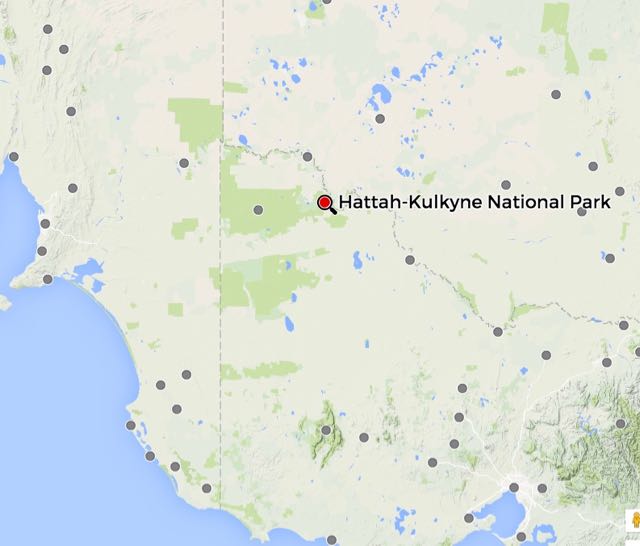
On Monday morning (26th October 2015) I left the Balranald Caravan Park and commenced my 500 km drive back home to the Adelaide Hills.  Along the way I planned to activate the Hattah Kulkyne National Park, VKFF-0231, in Victoria, which is about a 150 km drive south west from Balranald.  This was to be another new park for me, and I was hopeful to get my 44 contacts to qualify the park for the World Wide Flora Fauna (WWFF) program.

Screenshot 2015-10-31 10.07.01

Above:- Map showing the location of the park.  Map courtesy of mapcarta.com

I headed out west along the Sturt Highway and then turned left onto the Murray Valley Highway.  As it was early in the morning, it was relatively slow going as there were a lot of kangaroos and emus out and about.  There is not much to see along this stretch of the road.  I did stop briefly to have a look at Lake Benanee.

I then stopped briefly at Robinvale, just over the Murray River, which forms the border between the States of Victoria and New South Wales.  I was hoping to catch up with Claude VK3FCAS who was staying at the caravan park.  But I didn’t have Claude’s number and the park was absolutely brimming with vans, so unfortunately it was not to be.

After leaving Robinvale I travelled south on the Robinvale-Sea Lake Road, passing all the irrigation district where grapes, olives, carrots, and almonds are grown.  I then turned right onto the Hattah-Robinvale Road and travelled west.  I stopped briefly at a little place called Wemen to view the mighty River Murray just upstream from the Hattah Kulkyne National Park.

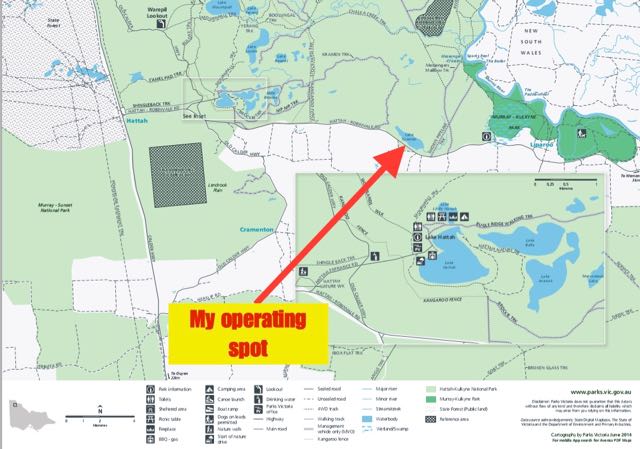
I accessed the park from a dirt track near Lake Kramen.  Unfortunately the track was marked with no vehicular access so I could not get all the way down to the lake.  So I was forced to activate from a less scenic part of the park, close to the Hattah-Robinvale Road.  There had been quite a bit of rain overnight, and it was still cloudy.  However, when the sun came out from behind the clouds it certainly had some bite, so I tried to find a bit of shade.

Hattah Kulyne National Park is 48,000 hectares in size and was established in June 1960.  The park lies in typical mallee country in Victoria and contains extensive low scrub and open native pine woodland.  River Red Gums are found alongside the lakes, the Murray River and adjoining creeks.  Animals, birds, and plants located in the park have adapted to survive in the poor, sandy soils and the searing hot summers.  The park contains Hattah Lakes which are seasonally filled by creeks connected to the Murray River.

A large amount of birdlife can be found in the park, ranging from wetland species including Pelicans, various species of ducks, Great Egret, Spoonbills, to mallee species such as Malleefowl, Emu Wrens, and Emus.  In fact a total of 200 species of birds have been recorded in the park.  Many native animals also call the park home including Red Kangaroos, Western Grey kangaroos and Eastern Grey kangaroos.

This area has a rich aboriginal history.  Within the park you can find scars on trees where shields and canoes were made, and also middens which are heaps of shells discarded after meals eaten over many generations.

Screenshot 2015-10-12 20.21.02

Above:- Map showing my operating spot.

It was only 2200 UTC (8.00 a.m. Victorian local time) and the 40m band was wide open to Europe, with the CQ World Wide contest still in full swing, so it was quite hard to find a clear spot on the band.  I started calling CQ on 7.143 and it wasn’t long before John VK5BJE gave me a shout with a good strong 5/8 signal from the Adelaide Hills.  This was followed by Warren VK3BYD, Gerard VK2IO, and then Ian VK5CZ/2 who was mobile 30km from Coonabarabran in New South Wales.

Things were quite slow on the band, but I managed 10 contacts in 20 minutes, to qualify the park for the VKFF program.  Many thanks to those that took the time to spot me on parksnpeaks.  The European contesters had also moved in right alongside of me, so I took the opportunity of having a listen on 20m.  I called CQ on 14.312, but it wasn’t long before I was competing with Europeans calling CQ contest.  So I moved up to 14.315 and called CQ again, and this was answered by Carl ZL3CX in  Auckland (5/7 both ways).  After my contact with Carl, park devotee Rick VK4HA then gave me a shout with a solid 5/9 signal.  This was followed by Rob VK4LS near Bribie Island in Queensland.  Unfortunately during our chat, a station from the USA came up and started calling CQ contest.

I then moved back to 7.143 with a total of 14 contacts in the log at that stage.  I still had a long way to go before reaching the required 44 contacts to qualify the park for the global WWFF program.  My first contact after returning to 40m was with Adrian VK5FANA on the Yorke Peninsula with a very strong 5/9 signal.  Rick VK4RF then called in on 40m.  Not as strong as 20m, but still a very respectable 5/7.  It was about this time that the noise floor on the band rose up to a strength 6.  I wasn’t really sure where the noise was coming from.  There was nothing around me, except for power lines, but they were a good 1 km away.  But I perservered and still managed to copy all the stations calling, including Mike VK6MB, some 2,900 km away in Western Australia (5/5 sent and 4/3 received).

I pushed on and continued to work the callers, and much to my pleasure, the noise on the band disappeared after about 15-20 minutes.  Contact number 25 was with Frank VK2BFC who said he would advise all the guys on Ron VK3MRH’s Net on 7.085 that I was in the park and in need for further contacts.  And it worked, as it wasn’t long, before I had a steady flow of callsigns that I recognised as being regulars on Ron’s net, including Dennis VK2HHA, Dik VK7DIK, Mike VK3ZMD, Tony VK5FTVR, and even Ron VK3MRH himself.  Many thanks Frank.  This certainly helped to boost the numbers.

It wasn’t long before I had reached the magical figure of 44.  Contact number 44 was Ron VK3VBI.  About 10 contacts later I was called by Peter VK3PF who was activating SOTA peak, Mount Bolga VK3/ VE-175 which is contained within the Mount Granya State Park, VKFF-0767.  This was followed by a call from Kerry VK2GQR, operating from the Mutawintji National Park north east of Broken Hill.  My last contact at Hattah Kulyne was with Rob VK4AAC/5 who was mobile on his way to activate the Padthaway Conservation Park.

At the end of my activation I went for a walk along the track leading down to Lake Kramen which was full of water.  In previous years it has been bare.

After around 3 hours in the park I had a total of 67 contacts in the log.  Thanks to everyone who called in.  The activation started off quite slowly, so I was very very pleased to reach the 44 QSO threshold.

The following stations were worked on 40m SSB:-

  1. VK5BJE
  2. VK3BYD
  3. VK2IO
  4. VK5CZ/2
  5. VK2VW
  6. VK5HCF
  7. VK3PMG
  8. VK5EE
  9. VK5BGN
  10. VK3FJUD
  11. VK5FANA
  12. VK4RF
  13. VK4HA
  14. VK3VEK
  15. VK6MB
  16. VK3FAPH
  17. VK4AAC/5
  18. VK2GKA
  19. VK3UH
  20. VK3EE
  21. VK2BFC
  22. VK3FOWL
  23. VK5HS
  24. VK3SQ
  25. VK2HHA
  26. VK3AV
  27. VK7DIK
  28. VK3ZMD
  29. VK5FTVR
  30. VK2NP
  31. VK7EE
  32. VK1NAM
  33. VK2XUP
  34. VK3UCD
  35. VK2BA
  36. VK3SIG
  37. VK3FENV
  38. VK3NU
  39. VK3FCAS/p
  40. VK3VBI
  41. VK2FBKT
  42. VK2MOR
  43. VK3MRH
  44. VK5ZA/m
  45. VK5NRG
  46. VK3JP
  47. VK5GJ
  48. VK5PL
  49. VK3PF/p (SOTA VK3/ VE-175 & VKFF-0767)
  50. VK2GQR
  51. VK5MAS
  52. VK3FAIM
  53. VK1MTS
  54. VK5KIK
  55. VK5FADP
  56. VK2MTC
  57. VK2FGAA
  58. VK5FMID
  59. VK5JK
  60. VK3KYF/5
  61. VK5GI
  62. VK3OF
  63. VK4AAC/5

The following stations were worked on 20m SSB:-

  1. ZL3CX
  2. VK4RF
  3. VK4HA
  4. VK4LS

References.

Parks Victoria, 2015, <http://parkweb.vic.gov.au/explore/parks/hattah-kulkyne-national-park&gt;, viewed 5th November 2015.

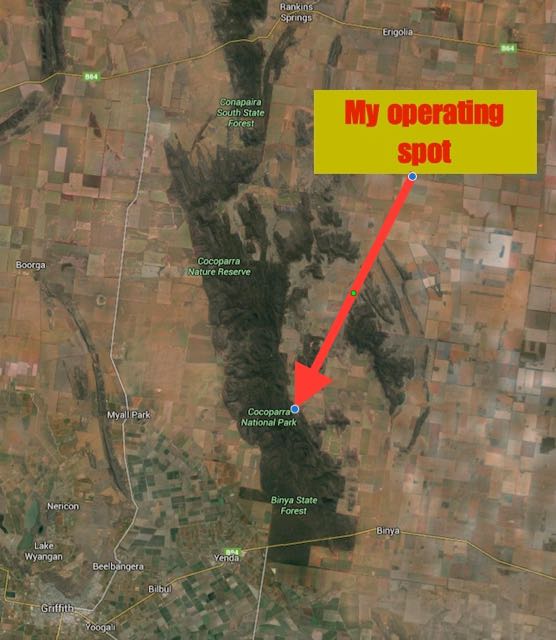
Cocoparra National Park VKFF-0104

After leaving the Livingstone National Park, I headed back into Wagga Wagga and then travelled west out along the Sturt Highway towards Narrandera.  As I was leaving the park I spoke with Ian VK1DI on 7.095 who was portable on SOTA peak Mount Coree VK1/ AC-023 and Brindabella National Park (5/3 both ways).  And then as I was about to turn on to the Holbrook Road, I spoke with Peter VK3PF who was portable on Mount Flakney VK2/ RI-025 (5/9 both ways).

Once I had reached the Sturt Highway I tuned across the 40m band and found Andrew VK1MBE calling CQ on 7.105 from SOTA peak, Mount Gillamatong, VK2/ ST-034 (5/7 sent and 5/6 received).

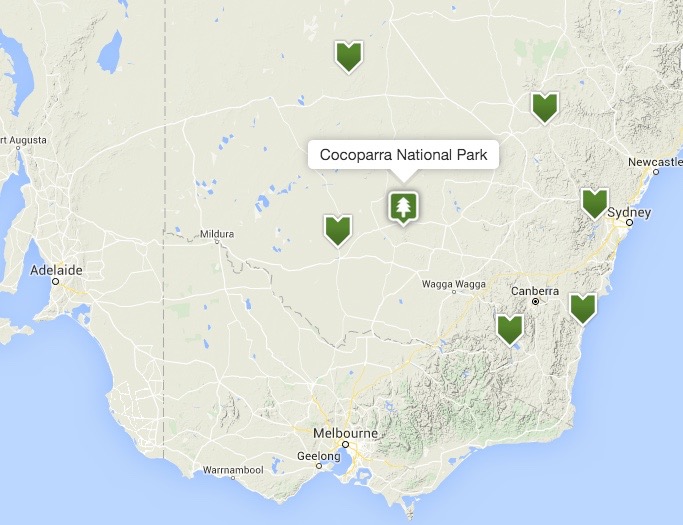
After reaching Narrandera I headed north on Irrigation Way through Yanco and Leeton, and then headed out on the Griffith Road to Peter VK2NEO’s property.  It was great to meet Peter for the first time.  I had spoken with Peter many times on 40m and he always has an exceptionally good signal.  I had a bite to eat at Peter’s and a cool drink.  We discussed the possibility of me activating the Cocoparra National Park, VKFF-0104, to the north of Peter’s property.  Out came Peter’s atlas and we did our sums to see if I could fit in an activation at Cocoparra.

After leaving Peter’s place I made a last minute decision to head north to activate the Cocoparra National Park.  I headed to the little town of Whitton and then travelled north along the road towards Yenda.  This appears on maps as Griffith Road and then becomes Stock Route Road.

Cocoparra National Park is 8,357 hectares (20,650 acres) in size and was established back in December 1969.  The park is 457 km southwest of Sydney and about 25 km northeast of Griffith.  The park contains a prominent range of hils, including Bingar Mountain at 455 metres and Mount Brogden at 390 metres, which is one of two SOTA summits located in the park.

The park adjoins the Binya State Forest and the Cocoparra Nature Reserve.  Make sure you are in the National Park and not in the State Forest or the Nature Reserve.  Cocoparra consists of wattles, orchids, ironbark, and blue-tinged cypress pines.  Over 140 species of birds can be found in the park, which has been classified by Bird Life International as an Important Bird Area due its relatively large population (up to 50 individuals) of the near threatened Painted Honeyeater, and also the Diamond Firetail finch.  Over 450 plants have been recorded in the park.

Above:- Diamond Firetail finch, and Painted honeyeater.  Images courtesy of wikipedia.

The park is part of the traditional lands of the Wiraduri aboriginal people.  The word Cocoparra is allied to the aboriginal word ‘cocupara’ describing the kookaburra.  Nearly 60 aboriginal sites have been found in the park.  The first Europeans to visit the Cocoparra Range were John Oxley and members of his 1817 expedition exploring the Lachlan Country.

Unfortunately I did not get time to explore this park, but I will be back, as it appears to contains some great scenery and a number of walking trails to various waterfalls located in the park.

Screenshot 2015-10-31 09.55.57

I accessed the park via Whitton Stock Route Road and then followed the dirt track to the Spring Hill Picnic area.  The road is easily passable in a conventional vehicle.  There was a nice picnic area here with plenty of room to stretch out the linked dipole and lots of shade, which was definitely required as it was a very hot afternoon.

Screenshot 2015-11-05 11.11.35

I was set up and ready to go by 0415 UTC (3.15 p.m. NSW local time).  I still had a 300 km drive to get to Balaranald, so this was going to be a quick activation.  Prior to calling CQ I had a tune across the 40m band to see what the conditions were like and how active the band was.  I found Brendon VK5FSCC operating portable from the Deep Creek Conservation Park, VKFF-0780, with a nice 5/6 signal.

I then headed up the band to 7.085 and started calling CQ.  This was immediately answered by Peter VK2NEO with a booming 5/9 plus signal.  Peter and I had a bit of a chuckle with each other about me being in the park.  Six QSOs into the activation I was called by Heath VK3TWO who was activating SOTA peak Mount Buninyong, VK3/ VC-018 (5/7 both ways).  I was then called by Sergio VK3SFG who was operating portable from the Pykes Creek Reservoir Park, about 72 km north west of Melbourne.  Another portable station then called in.  This time it was Rob VK2MT who was operating portable from Hill End Historic Site in New South Wales.  And the portable trend continued, with the next calls being from John VK3TUL and then John VK3JO, who were both with VK3SFG at the Pykes Creek Reservoir Park.

Next up was Hans VK5YX who was operating from the Adelaide Hills Amateur Radio Club shack with the special call of VK100ANZAC.

This slideshow requires JavaScript.

A steady flow of callers followed from all across Australia.  I worked a further two SOTA activators before going QRT.  They being Allen VK3HRA/2 who was portable on Mount Flakney VK2/ RI-025, and Monique VK6FMON/3 who was with Heath, operating from Mount Buninyong.

Unfortunately I didn’t have time to give 20m a go, as I still had  along drive to Balranald, and the kangaroos are unforgiving when you hit them.  This was a spur of the moment activation, but I was more than happy with the 50 QSOs, as this meant it was another unique and successful activation for the World Wide Flora and Fauna (WWFF) program.

And on the way back to Balranald I worked a number European stations from the mobile, as part of the CQ World Wide Contest.

The following stations were worked on 40m SSB:-

  1. VK5FSSC/p (Deep Creek Conservation Park)
  2. VK2NEO
  3. VK3SQ
  4. VK3DAC
  5. VK2VW
  6. VK3TWO/p (SOTA VK3/ VC-018)
  7. VK3SFG/p
  8. VK2MT/p
  9. VK3TUL/p
  10. VK3JO/p
  11. VK1000ANZAC
  12. VK5YX/p
  13. VK5NRG
  14. VK3YSP/m
  15. VK3FOWL/m
  16. VK2GSP
  17. VK5BJE
  18. VK3PMG
  19. VK3PI
  20. VK2YK
  21. VK2YW
  22. VK4RF
  23. VK4HA
  24. VK2IO
  25. VK7CW
  26. VK2HBG
  27. VK3TKK
  28. VK2HEW
  29. VK2JAZ
  30. VK2HJ
  31. VK3BSG/m
  32. VK1AT
  33. VK5TT
  34. VK5BW
  35. VK3CAT
  36. VK3DBP
  37. VK7MK
  38. VK3FTAD
  39. VK7NWT
  40. VK1HW
  41. VK3VEK
  42. VK7FRUS
  43. VK3AFW
  44. VK2FE
  45. VK5FAKV
  46. VK3HRA/2 (SOTA VK2/ RI-025)
  47. VK3BBB/m
  48. VK3FAPH
  49. VK2FABE
  50. VK6FMON (SOTA VK3/ VG-018)

References.

NSW National Parks and Wildlife Service, March 1996, ‘Cocoparra National Park and Cocoparra Nature Reserve Plan of Management’.

Wikipedia, 2015, <https://en.wikipedia.org/wiki/Cocoparra_National_Park&gt;, viewed 5th November 2015

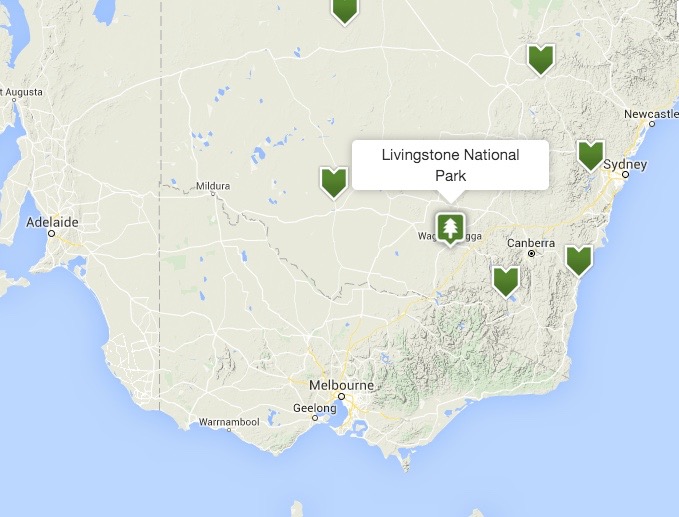
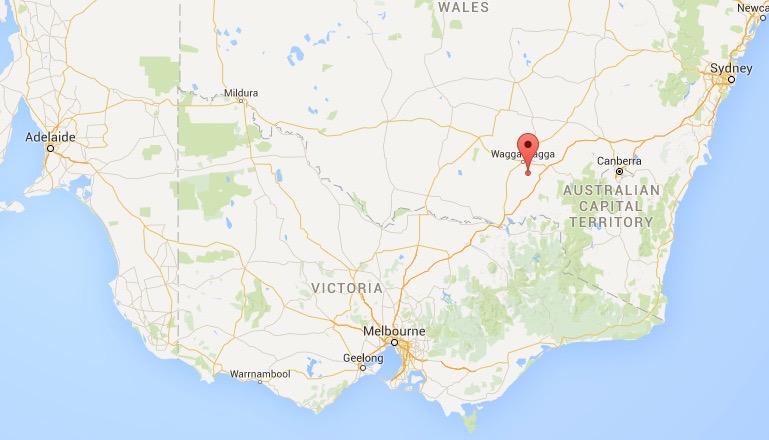
Livingstone National Park VKFF-0292

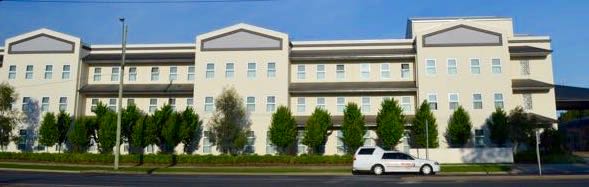
On Sunday morning (25th October 2015) I had a little bit of a sleep in, as my intended park activation of the Livingstone National Park, VKFF-0292, was only 30 km south of Wagga Wagga.  Nether less I was still on the road by 7.00 a.m. NSW local time.  This was my last night in Wagga Wagga.  I had stayed at the International Hotel at Wagga Wagga which I can highly recommend.

DSC_0302

I briefly drove around Wagga Wagga for a final look, before heading out to the park.  I stopped off at Geoff Lawson Oval, named after the former Australian cricketer, and also made a brief photo stop on the banks of the Murrumbidgee River.

I then headed south out out of Wagga Wagga on the Holbrook Road, and then turned left onto O’Briens Creek Road, and then right onto Wrigleys Road which takes you into the park.

Screenshot 2015-10-31 09.53.02

The park is well signposted along the way.  Not the normal big brown park signs we have in South Australia.  But keep an eye out for the blue coloured signs with the NSW NPWS emblem on them.  The park was clearly visible as I travelled along O’Briens Creek Road, as was Mount Flakney which I had activated the day before.

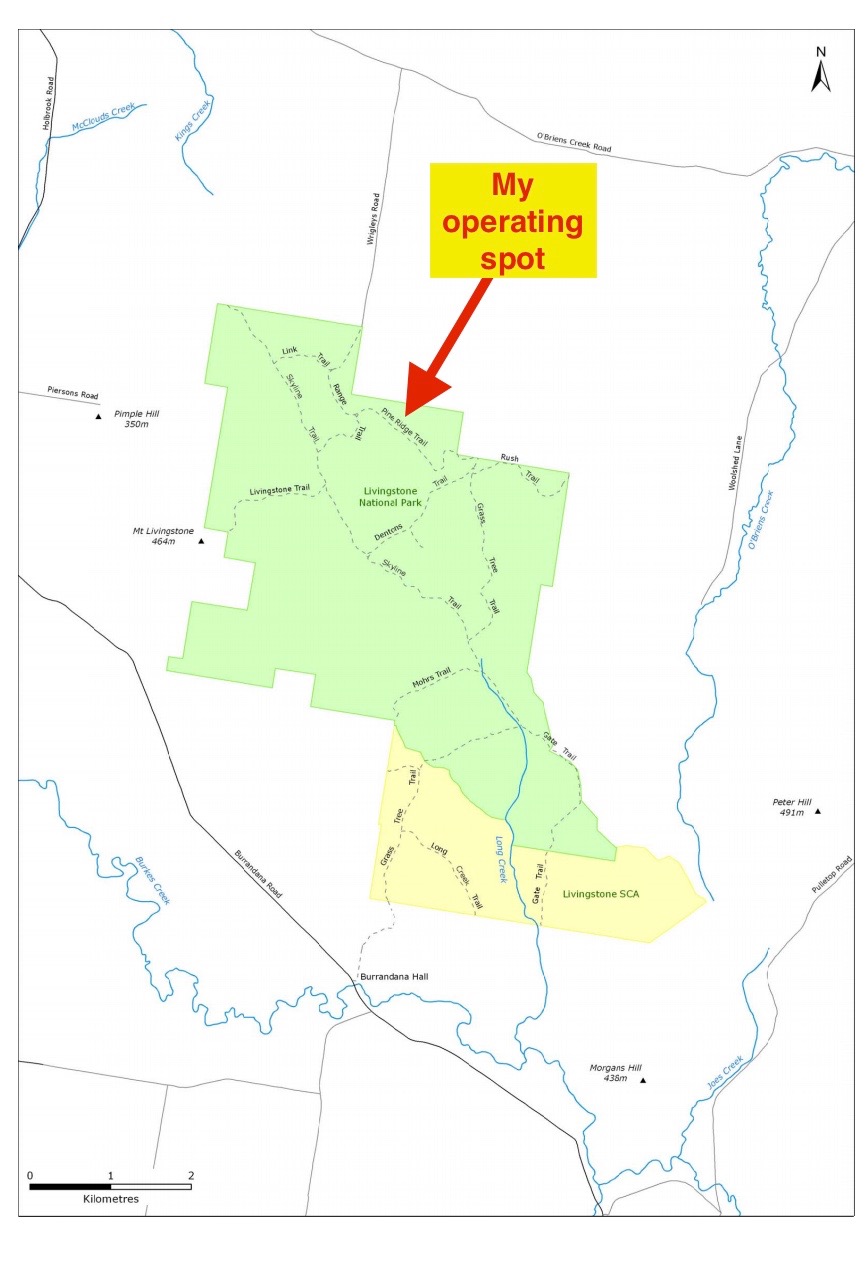
I entered the park via Wrigleys Road and followed the dirt track up to Pine Ridge Track.  This looked like a nice elevated position to operate from.

I found a small clearing on the northern side of Pine Ridge Track where people had obviously been camping, as there was a little campfire.  I parked the 4WD and started setting up the gear.

Screenshot 2015-10-11 18.43.14

Livingstone National Park was established in January 2001 and is about 1,920 hectares in size.  The park was originally proclaimed as a State Forest in 1915 for timber located within the forest which was to be preserved for the town of Junee.  At one stage there was a railway line located next to the forest, used to carry timber.  In fact the park is still marked on Google maps as a State Forest (a good example of why I don’t rely on Google Maps).   In 1976 the Wagga Wildlife and Conservation Society requested that the state forest be gazetted as a national park after it was under threat, however the request was denied.  It wasn’t until January 2001 that the State Forest was gazetted as a National Park.

The park consists of four different types of vegetation, including grass trees, mallee, kangaroo grass, and open forest.  The park has been identified as having one of two colonies of squirrel gliders, located in southern New South Wales.  Over 100 species of native birds call the park home.  Livingstone National Park has been identified by BirdLife International due to its importance for the conservation of Swift Parrots and Superb Parrots.

This slideshow requires JavaScript.

After setting up I headed to 7.144, the frequency I had nominated on parksnpeaks.  Unfortunately the CQ World Wide contest was on and there were some very strong signals across the entire 40m band, including A71CV from Qatar on 7.144.  So I headed down the band and found that 7.085 was clear.  I started calling CQ and my first park hunter for this activation was Col VK5HCF in Mount Gambier with a good strong 5/8 signal.  This was followed by John VK5BJE, Peter VK5FLEX, and then John VK5NJ.  All with good strong 5/9 signals.

My next caller was Rob VK4FFAB who was portable in Aramoor National Park, VKFF-0662 with a very respectable 5/9 signal to Livingstone.

I went on to work a further 16 stations around Australia, including Peter VK2NEO who I arranged to catch up with later in the day.  It was at this time that I heard some rustling in the undergrowth.  As the two fugutives, the Stoccos, were still at large in the general area, my ears pricked up.  Fortunately, up over a ridgeline came some mountain bikers, who saw my 4WD and appeared a bit concerned as well.  I had a chat to the 2 lads who were locals, about their hobby and mine.  We also shared the view that we would high tail it out of the area if we saw the Stocco’s vehicle.

After the lads rode off into the bush, I hopped back on the radio and called CQ again.  This was answered by Ian VK5CZ/2 who was mobile out of Wagga Wagga to a summit for an activation as part of the Summits on the Air (SOTA) program.   After my contact with Ian, I had a steady flow of callers from across Australia.  Unfortunately I had a VK7 Foundation station calling and calling and calling, but not responding to my calls back to him.  So this made it a bit hard to pull out some of the weaker stations that were calling me.  Sorry if I missed anyone.

I was just about to scout around the bands to find the Wagga SOTA & Parks symposium attendees, who I knew were going to be out undertaking some SOTA activations, when Peter VK3PF/2 called me with a 5/9 plus signal from nearby Mount Flakney.  Peter was on the summit with John VK2YW/p, Warren VK3BYD/2, and Knud VK2KJJ, all of whom gave me a call.

A local VK3 net was about to commence on 7.085 so I headed off to have a look around the 40m band.  I found Dave, VK2JDC activating the Nangar National Park, calling CQ on 7.113 with a strong 5/8 signal.

I then headed over to 20m and struggled to find a clear frequency due to the contest.  I called CQ on 14.308 and this was answered by Rick VK4RF, followed by Mike VK6MB, and then Peter VK6RZ.  Unfortunately another VK6 came up just below us and started calling CQ contest, so that put a quick halt to my activity on 20m.

I headed back to 40m, hoping to find Marcus VK3TST and Dave VK4DD who were also going to be out and about activating a local summit.  It wasn’t long before I found them on 7.090 calling CQ from a great summit called Wheel of Fortune, VK2/ RI-031.

My last contact before going QRT was with Ian VK5CZ/2 who was on top of Mount Flakney, VK2/ RI-025.

It was now just after 10.00 a.m. NSW local time, and I needed to pack up and head off to Leeton to catch up with Peter VK2NEO.  I had a total of 51 contacts in the log.  Another new park for me and with over 44 contacts I had qualified the park for the World Wide Flora Fauna (WWFF) program.

The following stations were worked on 40m SSB:-

  1. VK5HCF
  2. VK5BJE
  3. VK5FLEX
  4. VK5NJ
  5. VK4FFAB/p (Aramoor National Park)
  6. VK5FMID
  7. VK5FANA
  8. VK5FTRG
  9. VK5FTVR
  10. VK5AV
  11. VK5HS
  12. VK7NWT
  13. VK2YK
  14. VK5EE
  15. VK7ZM
  16. VK5JK/p
  17. VK4HNS/p
  18. VK3PMG
  19. VK7MK
  20. VK3VTH
  21. VK2NEO
  22. VK5CZ/2
  23. VK2VW
  24. VK3ZZS/4
  25. VK4RF
  26. VK4HA
  27. VK3AP/2
  28. VK4AAC/5
  29. VK2KF
  30. VK5MBD
  31. VK5FMJC
  32. VK2GGA
  33. VK3FCAS/p
  34. VK2LGW
  35. VK5FUZZ
  36. VK5ATQ
  37. VK2FPQ
  38. VK3PF/2 (SOTA VK2/ RI-025)
  39. VK2YW/p (SOTA VK2/ RI-025)
  40. VK3BYD/2 (SOTA VK2/ RI-025)
  41. VK2KJJ/p (SOTA VK2/ RI-025)
  42. VK2AAA
  43. VK2IO
  44. VK2JDC/p (Nangar National Park)
  45. VK3TST/2 (SOTA VK2/ RI-031)
  46. VK4DD/2 (SOTA VK2/ RI-031)
  47. VK5CZ/2 (SOTA VK2/ RI-025)

The following stations were worked on 20m SSB:-

  1. VK4RF
  2. VK4HA
  3. VK6MB
  4. VK6RZ


References.

Wikipedia, 2015, <https://en.wikipedia.org/wiki/Livingstone_National_Park&gt;, viewed 5th November 2015.

2015 SOTA & Parks Seminar at Wagga Wagga

After activating Mount Flakney I headed back into Wagga Wagga to my hotel and freshened up and then headed for the clubrooms of the Wagga Wagga Amateur Radio Club.

On my way back to the clubrooms I spoke with Roy VK5NRG on 40m, who was operating  the special call of VK100ANZAC from the clubrooms of my amateur radio club, the Adelaide Hills Amateur Radio Society.  It was a struggle but we made it.  I then spoke with Rob VK4FFAB who was portable in the Goomboorian National Park, VKFF-0722 with a very nice signal into the mobile.  Joe VK3YSP who was mobile then gave me a shout.

After arriving at the clubrooms and all the introductions, we had a BBQ lunch.  The afternoon presentations commenced soon after.  Presentations during the afternoon were:-

  • Warren VK3BYD – CW activations
  • Peter VK3PF – Portable antennas
  • John VK2YW – Log4OM logging software
  • Allen VK3HRA – Parksnpeaks and MacLogger DX
  • Paul VK5PAS – Portable DX for WWFF & SOTA
  • General brain storming and Mapping

Although the numbers in attendance were far lower than expected, it was still a very enjoyable and informative afternoon.

That evening we all attended at the William Farrer Hotel in Wagga Wagga for some refreshments and a good feed.  And a few war stories!

Mount Flakney VK2/ RI-025

On Saturday morning (24th October 2015) I had a little time to kill.  The SOTA & Parks gathering didn’t kick off until 12.30 p.m.  So I decided to head to Mount Flakney, VK2/ RI-025 for a quick summit activation for the Summits on the Air (SOTA) program.

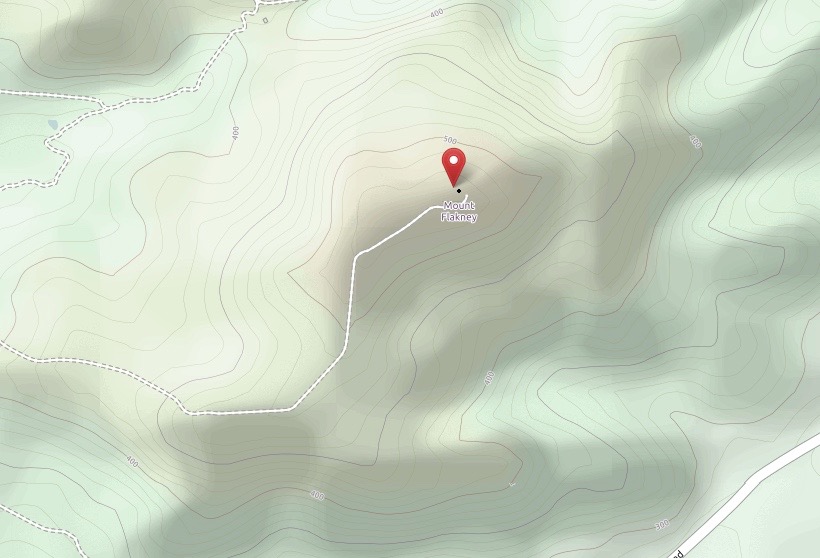
Mount Flakney is 536 metres above sea level and is worth 2 SOTA points.  The summit is situated about 27 km by road, south of Wagga Wagga.  I headed out along Mitchell Road and passed the Wagga airport.

Screenshot 2015-10-31 09.33.34

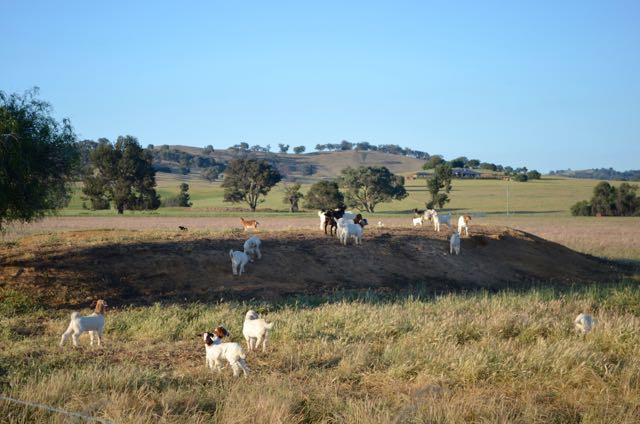
I continued south on Gregadoo Road and then turned right onto Big Springs Road.  I was hoping it was going to be a good omen, because as I drove towards the summit I passed a paddock full of goats.

DSC_0265

As I drove along Big Springs Road, the summit became visible, with the communications tower on the top.

DSC_0266

I then reached Flakney Road on my right.  This is a narrow dirt track which has a ‘No through road’ sign and a cattle grid.

DSC_0267

I travelled a few kilometres up Flakney Road, passed one property and then another, and then reached another cattle grid with a private property sign on it.  So I decided to play it safe and I headed back to the second property where I spoke with a very friendly lady.  She informed me it was fine to drive up to the summit, so long as I closed all the gates.  She also told me to be careful.  I questioned her about the road, but she replied it wasn’t the road to the top that was the issue.  About one week earlier, two fugitives who had shot at the police had been in the adjoining property.  And they were still at large.

So armed with that information, I continued on Flakney Road to the top of the summit.

Screenshot 2015-10-31 09.36.04

I reached the first gate which was nice and easy to open.  There were already some nice views out to the east from this point.

I then reached the second gate.  Now this one wasn’t so easy.  The chain was incredibly tight.


But I got through and made it to the summit.  I parked the car in a clearing just off the track down from the summit and walked a short distance up to the trig point which is where I set up.  I ran the Yaesu FT-857d, 30 watts and the 40m/20m linked dipole for this activation.

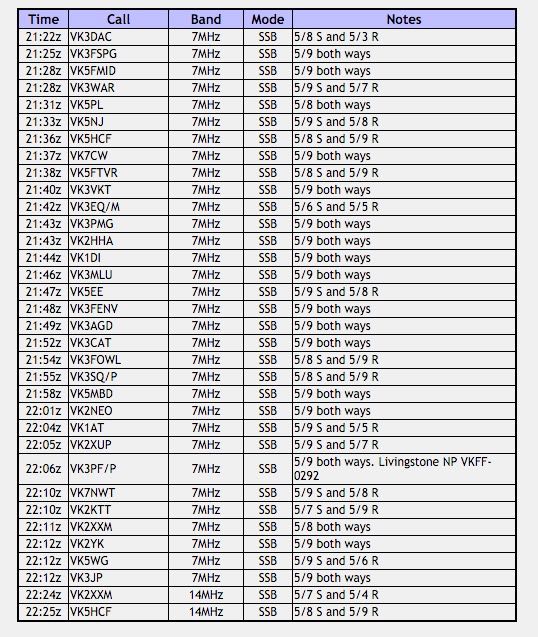
I was set up and ready to go on air at 2120 UTC (7.20 a.m. NSW local time).  I called CQ on 7.098 and my first contact was with Fred VK3DAC, followed by Steve VK3FSPG, Brian VK5FMID and then Craig VK3WAR.  Everything else from here was a bonus.  I had about 15 stations in the log, when a couple of VK4’s came up onto the frequency.  They were quite low down but very readable.  Perhaps they couldn’t hear me, but I was surprised they couldn’t hear the stations who were working me.

After 50 minutes on air I had a total of 33 stations in the log on 40m from VK1, VK2, VK3, VK5, and VK7.  All with good signals.  This included a contact with Peter VK3PF who was portable in nearby Livingstone National Park, VKFF-0292,

This slideshow requires JavaScript.

I then decided to try my luck on 20m.    But I only worked 2 stations there.  They being Bob VK2XXM and Col VK5HCF.  So I headed back to 40m and booked in briefly to the Riverland Radio Club Net on 7.115 and said hello to Ron VK5MRE, the net controller, and the rest of the gang on the net.

I decided it was time to pack up and head back to Wagga Wagga for a freshen up and then off to the SOTA & Parks gathering.

I had a total of 36 stations in the log.

The following stations were worked:-

Screenshot 2015-11-04 12.17.07

Galore Hill VK2/ RI-047

After packing up at Oolambyean National Park, I drove back to the Sturt Highway and continued east towards the town of Narrandera.  My next planned activation was a summit, Galore Hill VK2/ RI-047, for the Summits on the Air (SOTA) program.

As I left the National Park I had a chat with Ian VK5CZ and Craig VK3WAR on 40m from the mobile.  Both had 5/9 signals into the vehicle.

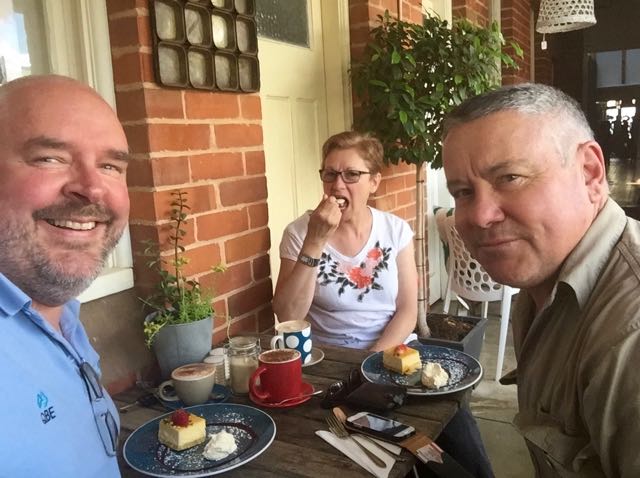
Prior to heading to Galore Hill, I stopped off at Narrandera and met up with Ian VK5CZ and his wife Halima.  We enjoyed a coffee and some fattening cake at the Red Door Cafe.

IMG_1719

We then hit the road again.  Ian and Halima headed for Wagga Wagga, whilst I headed for Galore Hill, which is situated about 64 km west of Wagga Wagga and about 11 km south of the little town of Galore on the Sturt Highway.

As I drove towards the park I spoke with Peter VK3PF who was portable in the Chiltern-Mount Pilot National Park (5/9 both ways).  Peter was also heading to Wagga Wagga for the SOTA & Parks gathering.

Screenshot 2015-10-31 09.26.16

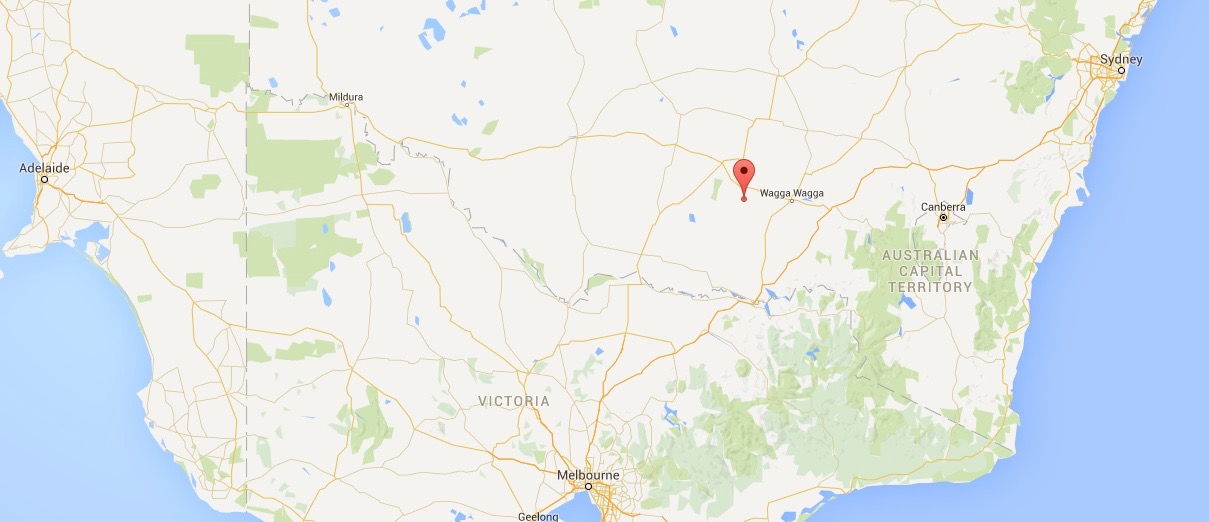
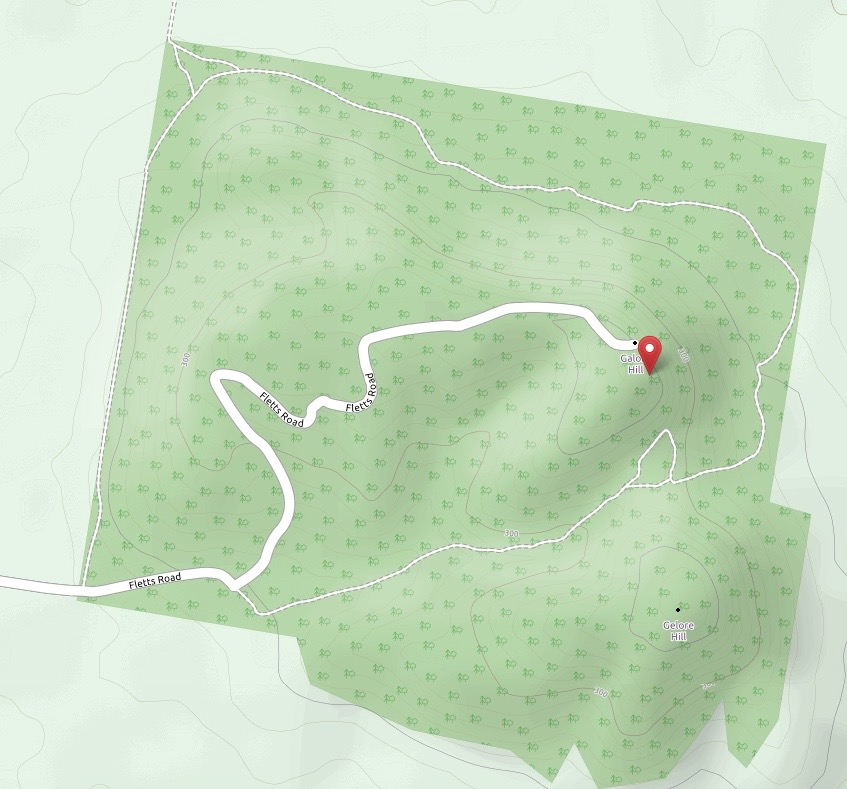
Above:- Map showing the location of the summit.  Courtesy of goole maps.

Mount Galore, or Galore Hill as it is known locally, is 386 metres above sea level and is worth just 1 SOTA point.  It is easily reached by taking the Narrandera to Lockhart Road off the Sturt Highway and then turning left into Slocums Lane.  There is a large brown sign here stating ‘Galore Scenic Reserve’.

The summit is clearly visible from the Sturt Highway.

Towards the end of Slocums Lane you will reach the junction with Tinamba Road.  This is where the entry to the Galore Hill Scenic Reserve commences.  Slocums Lane then becomes Fletts Road.  Simply follow the signs to the top of the summit.

Galore Hill summit is located within the Galore Hill Scenic Reserve which covers an area of over 500 hectares of thriving native bushland.  A wide variety of native animals and birds can be located here including Western Grey kangaroos, echidnas and over 140 species of birds.  Over 850 different varieties of Australian native plants grow within the Scenic Reserve including wattles, grevillias, hakeas and ecualyptus.  The area was formerly a Forest Reserve under the control of the Foresty Commission.  In 1912 the area was let for a grazing lease to a local farmer.  This was despite the fact that the Council strongly opposed the granting of the lease at the time.  In 1968, the local Council gained control of an area of 376 hectares and this was proclaimed as a Recreation Reserve.  In 1978, about 200 hectares were added to the Reserve.

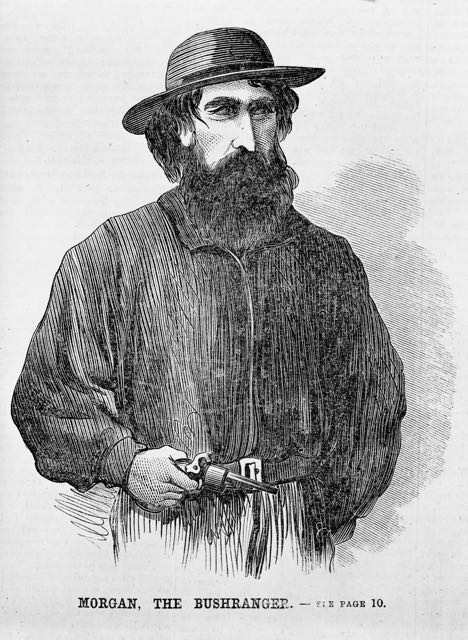
There is a walking track at the summit which takes in the caves of infamous Australian bushranger, Daniel ‘Mad Dog’ Morgan.  The caves were reputedly used as a refuge by Morgan from the persuing authorities.  Although this has not been confirmed, the caves are known today as Morgan’s Caves.

Mad_Dog_Morgan

Above:- Daniel ‘Mad Dog’ Morgan.  Image courtesy of Wikipedia.

The summit had previously been activated by Allen VK3HRA, Ian VK1DI, Warren VK3BYD, and Mark VK3OHM.  And although it was only worth the 1 point, this was to be my very first SOTA summit activation in New South Wales.

It is reported that the hill got its name after a comment made by Henry Osborne, an explorer, who travelled from Wollongong to Adelaide.  Osborne climbed the hill in 1840 and it is reported that he exclaimed, ‘there is land, and galore‘.

Screenshot 2015-10-31 09.30.28

I ran the Yaesu FT-857d and about 30 watts for this activation, with the 40m/20m linked dipole supported on the 7 metre telscopic squid pole.  There was a nicely positioned wooden table and bench at the top of the summit looking out to the east.  It was quite a warm, but stormy afternoon, so I tried to shade myself as much as possible as the afternoon sun certainly had some bite.

I called CQ on 7.104 and my first taker was Peter VK3TKK mobile with a very good 5/9 signal.  This was followed by another mobile station, Rex VK3OF, and then Eric VK3BSG, and Gerard VK2JNG portable.  I had qualified the summit.

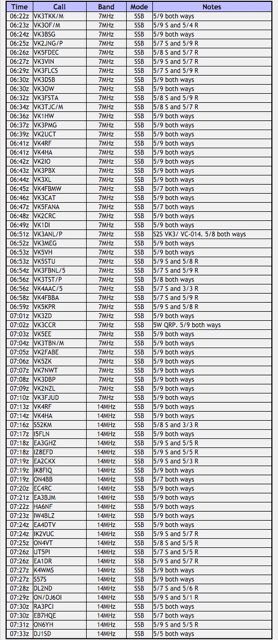
I went on to work a total of 43 stations on 40m in VK1, VK2, VK3, VK4, VK5 and VK7.  That included a summit to summit contact with Nick VK3ANL who was on the top of Mount Disapointment, VK3/ VC-014.  I also had a few other interesting contacts including one with John VK3PBX.  Our QSO was his first time on 40m since 1980.  Welcome back John.

I then headed to 20m hoping to pick up some DX.  I found that 14.310 was clear and I started calling CQ and this was answered by Rick VK4RF.  It wasnt long before the first DX started calling.  First up was Hinko S52KM in Slovenia, followed by Luciano I5FLN in Italy, and then Joan EA3GHZ in Spain.

I worked a total of 26 stations on 20m in about 20 minutes from VK4, Slovenia, Italy, Spain, Belgium, Hungary, Ukraine, USA, Germany, and Russia.  Many of the stations I worked from Europe were the regular WWFF park hunters.

At the end of the activation I climbed to the top of the observation tower which was constructed in 1973.  There is a plaque on the tower with the story of the origins of the name of the hill.  Unfortunately, another plaque has  been stolen by vandals.

I was rewarded with some very nice views of the surrounding countryside.

So, after just a little over one hour on the summit I had a total of 69 contacts in the log.  It was time to pack up and head off to Wagga Wagga and try to avoid the kangaroos on the road.

The following stations were worked:-

Screenshot 2015-11-04 10.37.41

References.

Lockhart Shire Council, 2015, <http://visitlockhartshire.com.au/attractions/galore-hill.aspx&gt;, viewed 4th November 2015.

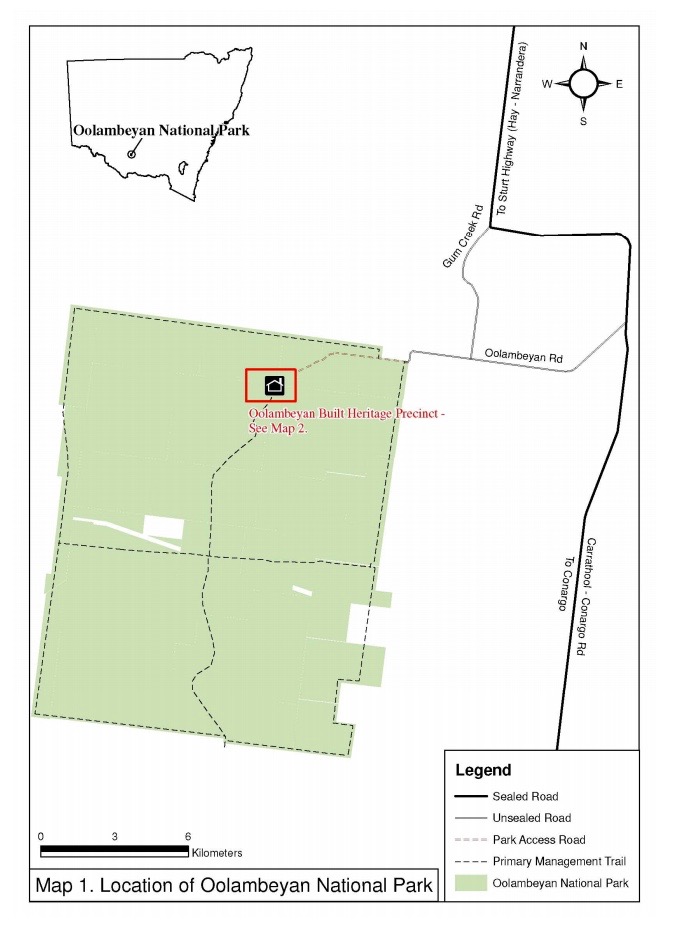
Oolambeyan National Park, VKFF-0403

It was a bright and early start on Friday morning (23rd October 2015).  I had a 480 km drive ahead of me to get to my intended destination of Wagga Wagga.  So I hit the road early after a brief stop at the local bakery in Balranald for a coffee.  I didn’t fancy the sachet coffee and the long life milk at the caravan park.  I had one park activation planned for the day and that was the Oolambeyan National Park, VKFF-0403.  And as far as wildlife and remoteness, this was to be the highlight of the trip for me.

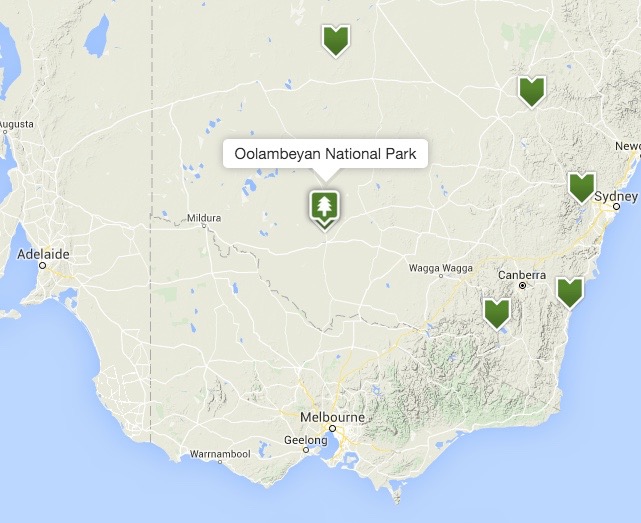
Screenshot 2015-10-31 09.19.56

Above:- Map showing the location of the park.

I was on the road by about 6.30 a.m. NSW local time.  I headed east along the Sturt Highway toward the town of Hay.  This included a drive across the vast flat region of the Hay Plain, which is an ancient lake bed.  Much of this drive is flat saltbush plain, with many thousands of hectares of grazing land, with just the occasional tree in sight.

To break up the drive I had HF going in the car.  In the Toyota Hi Lux I use an Icom IC7000, with a Codan 9350 self tuning antenna mounted in the back tailgate.  I tuned across 40m and found Tom 8P5A from Barbados on 7.068 calling CQ.  I gave him a call as he was very strong and much to my surprise he came straight back to my first call and gave me a 5/9 signal report.  I was very excited, as this was a new country for me from the mobile.

I then joined the Mid South Coast Amateur Radio Club Net on 7.065, being run by John VK2NJP who had a 5/9 plus signal into the mobile.  The guys on the net kept me company as I crossed the first section of the Hay Plain.

Along the way I saw a trig point in the middle of nowhere on completely flat ground.  No SOTA peak here!  This is the Ti Tree Lake trig point and it is lcoated on a very lonely piece of the Sturt Highway between Balranald and Hay.  And a little further up the road I noticed a crop duster out in the fields.  I stopped for a brief photo opportunity and to admire some amazing flying.

I then found Troy VK4LCI mobile calling CQ on 7.120 with a good 5/5 signal.  I also received a 5/5 signal back from Troy.  Nice to work mobile to mobile.

I then drove into Hay where I made a short stop to stretch my legs.  I had not been in Hay for many many years so I drove around the town for about 15 minutes admiring the many fantastic old buildings that can be located in Hay.  Hay is the centre of a propsperous and productive agricultural district and has a population of around 2,400 people.

Whilst in Hay I spoke with Mark, VK2VW on 7.115 (5/9 both ways).  Mark has recently become an active WWFF park hunter, so I told him to keep an ear out for me at Oolambeyan.  Before leaving Hay, Hauke, VK1HW mobile in Canberra also gave me a call (5/9 both ways).

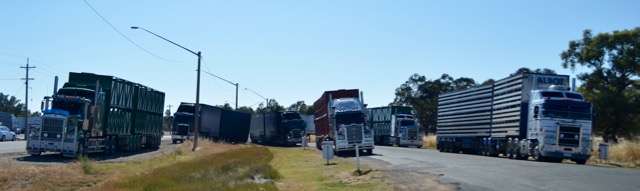
I snapped the photo below at one of the service stations in Hay.  It shows a number of trucks, including B-doubles.  What is a B-double?  Essentially it consists of two trailers that are linked together by a fifth wheel.

DSC_0163

I then left Hay and headed towards the town of Narrandera.  Again to break up the drive I occasionally tuned across the 40m band.  I found VK2MA on 7.104 and the Horsnby and District Amateur Radio Club Net.  I booked in to the net for a chat as there were some particularly strong signals on the Net.

Along the way I noticed a lone grave, outside of Hay, on the Sturt Highway.  I stopped for a brief look.  It is the resting place of Charles Dunstan Thompson who died in September 1879 at nearby  Burrabogie Station, aged just 30 years.

I continued east on the Sturt Highway until I reached Conargo Road near Carrathool.  This is where I needed to turn to head towards Oolambeyan National Park.  There is no sign here for the park.  However, the junction is distinguishable by the Carrathool Grain Complex on one corner, and a woold producing complex on the other.  This is about 64 km east of Hay.

After travelling south on Conargo Road, you will reach the junction with Gum Creek Road.  I continued down Gum Creek Road which is a dirt road, but easily passable in a conventional vehicle.  There are good signs indicating the way to the park from this point.  You need to travel through some gates and grids.

On my way to the park I put out a call on 7.144, hoping that some of the park die hards might be listening, to let them know my progress.  Sure enough my call was answered by Jeff VK5JK at Victor Harbour south of Adelaide with a magnificent 5/9 signal.  This was followed by Col VK5HCF at Mount Gambier who was also 5/9, and then Rick VK4RF with a 5/5 signal.  All were keen to work me upon my arrival at Oolambeyan National Park.

It wasn’t long before I was encountering a lot of wildlife.  As it was still quite early the kangaroos and emus were quite active.  And I don’t think I’ve ever seen so many eagles and hawks in the sky.  It was amazing.

I then travelled along Oolambeyan Road which is also a dirt road.  Another grid was required to be crossed.  This road is not accessible after rain.  And there are some sandy sections which can only be attempted in a 4WD.

And now the wildlife really appeared.  It was amazing.  Kangaroos everywhere, along with numerous emus.  It was very slow going on the road.

I continued along Oolambeyan Road and found a small clearing in the scrub.  It was shaping up to be a very hot day, so I chose a nice shady spot underneath a tree.

Oolambeyan National Park is 22,231 hectares in size and is located about 600 km west of Sydney.  The name is believed to be based on the Wiradjuri aboriginal word ‘Wulambiyan’.  ‘Wulam‘ means ‘to call or give voice to’, and ‘biyan‘ can be past tense for ‘always and continuous’.  Hence it can be interpeted as ‘have always been calling’, the ‘voice of the wind calling in the trees’, or the ‘song of the wind passing through the trees’.  This is linked to the aboriginal story that the voice of Dharramulan, one of Biamie’s sons, was put into the trees from which comes the sound of the bull roarer.

The park was once a merino stud property.  It was purchased by the New South Wales Government in late 2001 and was subsequently gazetted as a National Park on the 25th October 2002.  The park is located in the Riverina region of New South Wales which is the most poorly conserved bioregion in New South Wales, with less than 1% of its area protected within the NSW park system.

As I’ve already mentioned, the park is alive with wildlife including Red Kangaroos, Western Grey kangaroos, and Eastern Grey kangaroos.  Numerous bird species can be found in the park including the endangered Plains-wanderer, which is a quail like, ground dwelling bird.  It is estimated that only 3,100 of these birds remain in the wild.
Screenshot 2015-10-11 18.57.01

I parked the 4WD and started walking towards the shade.  Much to my surprise, I came across a small goanna at a puddle of water, getting a morning drink.  I’m not sure who was more surprised…me, or the goanna.

As I was setting up I could see a 4WD ute approaching in the distance.  I continued to set up my gear, and within a few minutes the 4WD had arrived.  As it turned out it was the park ranger who lives in the homestead at the end of Oolambeyan Road in the park.  He was a very friendly and obliging gentlemen.  I explained to him why I was out here and all about the hobby of amateur radio.  I told him of my experience with the goanna, and he warned me to be wary for Brown snakes as they were plentiful.

I was up and ready to go by 2355 UTC (8.55 a.m. NSW local time).  I called CQ on my nominated 40m frequency of 7.144 and this was immediately answered by Col VK5HCF in the South East.  Col had been patiently waiting there for me after out chat in the mobile.  This was followed by the ever keen Amanda VK3FQSO and park stalwarts Mick VK3PMG and Rick VK4RF.

I was a warm morning, and I had dozens of fury onlookers, all of whom were also seeking the shade of trees.  I even had the occasional Galah come in for a morning drink at the puddle of water.  And I also had some unwelcome visitors in the form of flies.  They were relentless and no form of spray seemed to work and keep them off me.  In the end I had to resort to the use of my fly net hat.

Even though it was a working day, I still had a steady flow of callers and I was hopeful to reach the required 44 contacts to qualify the park for the World Wide Flora Fauna (WWFF) program.  One of my contacts was with Ian VK5CZ who was also attending the get together in Wagga Wagga.  Ian was mobile on the Sturt Highway between Balranald and Hay, not all that far from where I was operating from.  I arranged to meet Ian and his wife Halima in Narrandera for lunch.

After working 36 stations on 7.144 I decided to give 20m a go.  I lowered the squid pole and removed the links in the dipole and headed for 14.310.  Unfortunately I could not spot myself as there was no mobile telephone coverage in this remote location.  I called CQ a number of times and this was eventually answered by Rick VK4RF, who I also worked under his secondary call of VK4HA.  But that was it.  I had no further takers.  I tuned across the 20m band and did not hear a single station.  It was very very inactive.

So I headed back to 40m, hoping to pick up my final 5 contacts to qualify the park.  My first taker after returning to 7.144 was Ian VK2IAN, following by Keith VK2PKT, Tom VK5AA, Mark VK7MK, and then Terry VK5TEL mobile near Victor Harbour south of Adelaide.  I had qualified the park and I was very happy.  A further 4 stations called me after Terry, all from VK3.

After a little under 2 hours in the park, I had a total of 48 contacts in the log.  I

I packed up my gear and headed out of the park, enroute to Wagga Wagga.  As I drove along the dirt roads out of the park, I took the photographs below of a hawk who had a distinct interest on something on the road ahead of me.

The following stations were worked on 40m SSB:-

  1. VK5HCF
  2. VK3FQSO
  3. VK3PMG
  4. VK4RF
  5. VK4HA
  6. VK5FANA
  7. VK4HNS/p
  8. VK3TKK
  9. VK4AAC/5
  10. VK2GKA
  11. VK3VBI
  12. VK5EE
  13. VK3GPm
  14. VK5FMID
  15. VK2MOR
  16. VK5JK
  17. VK3FINE
  18. VK5GJ
  19. VK5KLV
  20. VK5CZ/2
  21. VK2IO
  22. VK2VW
  23. VK5XGH
  24. VK5GI
  25. VK2MTC
  26. VK3DY
  27. VK5FFAA
  28. VK2XXM
  29. VK3FAPH
  30. VK5MBD
  31. VK5ZGY
  32. VK5NRG
  33. VK2YZS/m
  34. VK3MIJ
  35. VK2FABE
  36. VK2SB’
  37. VK5MAS
  38. VK2IAN
  39. VK2PKT
  40. VK5AA
  41. VK7MK
  42. VK5TEL/m
  43. VK3FARO
  44. VK3HRA
  45. VK3ALB
  46. VK3AUR

The following stations were worked on 20m SSB:-

  1. VK4RF
  2. VK4HA

References.

NSW Office of Environment and Heritage, <http://www.environment.nsw.gov.au/sop04/sop04cs4.htm&gt;, viewed 4th November 2015.

NSW Office of Environment & Heritage, Draft Management Plan Oolambyean National Park, December 2012.

Wikipedia, 2015, <https://en.wikipedia.org/wiki/Hay,_New_South_Wales&gt;, viewed 4th November 2015
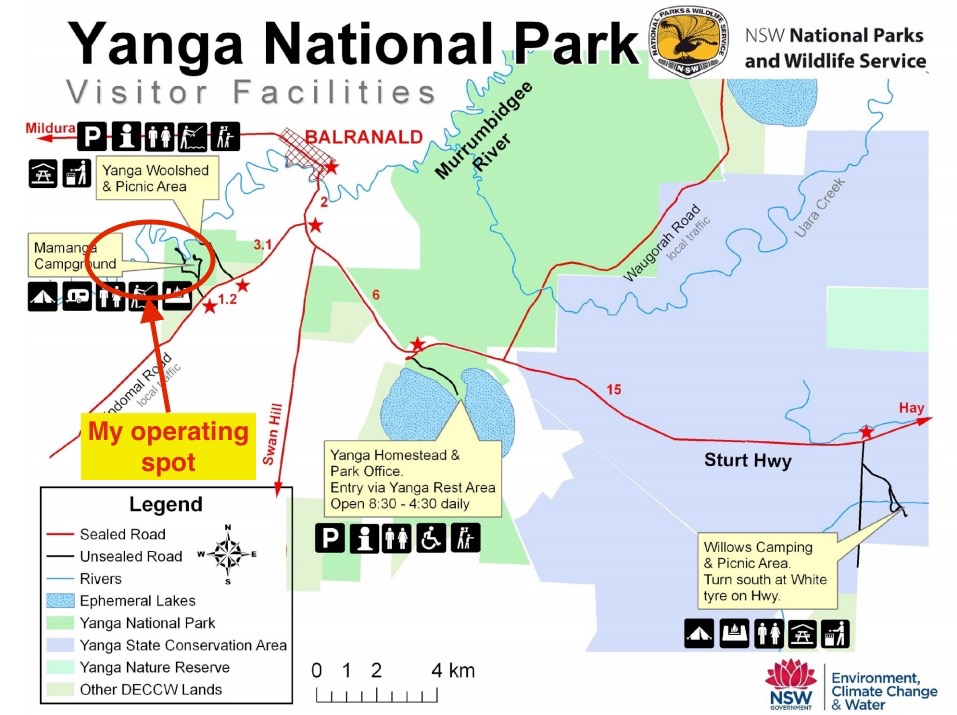
Yanga National Park VKFF-0554

After leaving Wyperfield National Park I hit the road again and continued my journey east along the Mallee Highway, through the towns of Ouyen, Kulwin, Manangatang, and then Piangil, heading for the Yanga National Park (NP) VKFF-0554, near my intended overnight stop at Balranald in the far southwest of New South Wales (NSW).

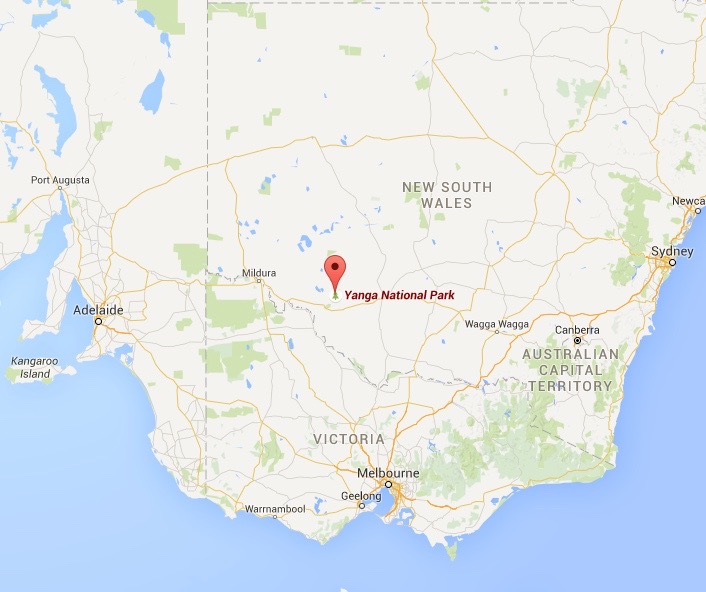
Screenshot 2015-10-31 09.02.31

Above:- Map showing the location of Yanga National Park in New South Wales.  Image courtesy of google maps

After reaching the junction of the Mallee Highway and the Murray Valley Highway I turned left and headed into the little town of Tooleybuc.  This is where you cross over the mighty Murray River which forms the border between the States of Victoria and New South Wales.  Tooleybuc is the home to a historic bridge which was constructed in 1907.  The bridge was designed to rise to allow paddle steamers to pass through.  I stopped briefly here for a photo stop and some lunch, and then made a shot detour into the Tooleybuc cemetery to take some photographs of some headstones, as family history is another hobby of mine.

I then continued north on the Mallee Highway, passing through the little town of Kyalite, and on to Balranald.  I booked in to the caravan park, and offloaded some of my gear, and I then headed back out to the Yanga National Park.  If you are passing through this area, I would highly recommend the caravan park here at Balranald.  It is situated on the banks of the Murrumbidgee River, which is Australia’s second longest river and is a major tributary of the Murray River.  I stayed in a self contained cabin which was very clean and contained all the required essentials.

http://www.balranaldcaravanpark.com.au/

I accessed Yanga National Park via Woolshed Road, which runs off Windomal Road to the south west of Balranald.  This part of the park is very well sign posted.  You can also access the park off the Sturt Highway.

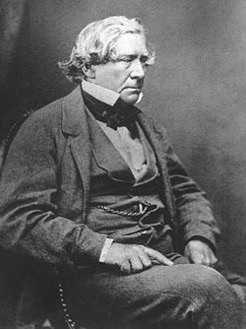
Yanga National Park was established in February 2007 and is a large park, comprising 667,334 hectares.  It has a 170 km frontage on the Murrumbidgee River.  The park was formerly an important pastoral station which was established in the 1830’s, by explorer, William WENTWORTH.  Yanga Station was in its time, the largest privately owned station in the southern hemispherem covering 210,000 acres including the historic Yanga homestead which was built in around 1870.  In July 2005, the NSW Government announced that it had purchased the station with the intention of creating a National Park.  About 2 years later, on the 28th February 2007 the park was gazetted as a National Park.

William_Wentworth

Above:- William WENTWORTH.  Image courtesy of Wikipedia.

Over 300 plant species have been documented in the Yanga National Park.  The park comprises River red gum forest and woodland, black box woodland, and lignum/nitre goosefoot shrubland, and spike rush dominated sedgeland.  Yanga NP incorporates a number of wetlands and as a result, a large amount of native wildlife can be found in the park.  A total of 24 reptile species including geckos, goanna, dragons, skinks, snakes and turtles can be found in the park.  A total of 18 fish species also call the park home.  And around 33 mammal species and about 150 species of birds can also be found in the park.  The number of bird species varies dependant on the amount of water in the wetlands.

Prior to activating the park I stopped off at the historic Yanga woolshed, which when constructed, was once the Riverina region’s largest.  The wooldshed was built during the late 1800’s and housed 3,000 sheep and provided work for up to 40 shearers at a time.  Yanga was a working woolshed up until 2005.  There are a number of interpretive displays in the shed which give you a great insight into the history of the woolshed.  If you visit the park, this is a must see.

This slideshow requires JavaScript.

After visiting the woolshed I headed to the Mamanga campground area, and followed the dirt tracks to a nice quiet spot alongside the Murrumbidgee River.  There were plenty of options, with a number of campspots alongside of the river.  Should you decide to camp here, there are great facilities including picnic tables, wood barbecues, and toilets.

Screenshot 2015-10-31 08.48.06

Above:- Map of Yanga National Park, showing my operating spot.  Image courtesy of

For this activation I again ran the Yaesu FT-857d, 40 watts, and the 20m/40m linked dipole, supported on the top of the 7 metre telescopic squid pole.  There was a strategically placed wooden table and benches in the camp ground I chose, so I secured the squid pole to the table with the help of a long octopus strap.  As it was a nice sunny day, I also had the solar panels out to top up the battery.

I was on air and ready to go by just after 0500 UTC (4.00 p.m. New South Wales local time).  I headed for my nominated operating frequency of 7.144 and started calling CQ.  My CQ call was answered by the ever reliable John VK5BJE who was a very nice 5/9 signal to Yanga.  This was followed by another park devotee, Mick VK3PMG, and then Rob VK4AAC who was portable in the Kelvin Powrie Conservation Park, VKFF-0899.

After working a total of 31 stations on 40m in VK2, VK3, VK4, VK5, and VK7, I lowered the squid pole and removed the links in the dipole and headed for my nominated operating frequency of 14.310.  Once I got there I found that the frequency was already occupied by another WWFF park activator, YP1WFF in Romania.  Unfortunately they were a little low down for me and had a very big pile up from Europe.  I gave half a dozen calls but soon realised that it was going to be very very difficult to break through.  So I headed up to 14.315 and started calling CQ.  Sadly I had no takers there, so I decided to head down a little lower and started calling CQ on 14.299.

This was answed by Mike VK6MB in Perth in Western Australia with a good 5/5 signal to New South Wales.  Not bad considering that is a distance of about 3,000 km.  We call that a local contact down here in Australia.  There are many other parts of the world where that would be DX, with multiple countries in between.  My next caller was Jozsef HA6NF in Hungary, followed by Luciano I5FLN in Italy, and then Max IK1GPG in Italy.

This slideshow requires JavaScript.

The 20m band on the long path into Europe seemed to be in reasonable condition, and I had a good steady flow of callers from Hungary, Italy, Slovenia, Germany, Russia, Israel, Slovak Republic, Switzerland, Pol;and, and Estonia.  Many of the callers were the regular European WWFF park hunters, but there was a scattering of new callers.  But the European run did not last for long and after working 19 stations on 14.299, things went very quiet.  So I took the opportunity of having a look across the band.  I found special event station LZ130SAK in Bulgaria calling CQ on 14.213 with a good 5/9 signal.  After a few calls I got through.  I then found FM/VE8DX with a massive pile up on 14.188.  It would have been a real thrill to get Martinique Island in the log, but the pile up was huge from Europe and it just wasn’t worth a shot.  I also heard PJ2/IK7YTT on 14.216 in Curacao, but again the pile up was enormous.

I then found a clear frequency on 14.275 and called CQ and this was answered by WWFF parks activator and hunter, Swa ON5SWA with a 5/7 signal from Belgium.  Two more Belgium stations followed, Gilbert ON4GI and then Luk ON4BB.  I worked a further 43 stations from Belgium, Russia, Italy, Czech Republic, Spain, Ukraine, Austria, Sweden, Germany, France, Poland, England, Luxembourg, and Estonia.
After things had slowed down on 20m I headed back to 40m to see if I could get some of the park desperados in the log.  Unfortunately I could not get back onto 7.144 as the frequency was occupied by some European stations.  And I did find it hard to get a clear frequency as there were some very good signals coming in from Europe.  I called CQ about 7 or 8 times on 7.150, but unfortunately had no takers.  It was 6.30 p.m. local time and I was starting to get hungry.  So I packed up the gear and headed in to Balranald to the local pub for a few cans of Bundy rum and coke, and a nice feed.  I was very happy with this activation, with a total of 94 contacts in the log.

But there was a hitch with this activation.  John VK5BJE and a few others pointed out that they believed Yanga National Park was in fact now known as Murrumbidgee Valley National Park.  It was also pointed out that on the WWFF Australia website, both Yanga and Murrumbidgee Valley had the same VKFF reference number.  I now vaguely remember reading about these 2 parks when I become the VKFF co-ordinator.  However, all of the park signs referred to Yanga National Park.  The NSW National Parks website states ‘…Also known as Murrumbidgee Valley National Park….”.  I am now awaiting official word back from NSW National Parks and Wildlife and hope to sort out this issue.

The following stations were worked on 40m SSB:-

  1. VK5BJE
  2. VK3PMG
  3. VK4AAC/5 (Kelvin Powrie CP, VKFF-0899)
  4. VK2VW
  5. VK3PF
  6. VK5FANA
  7. VK2IO
  8. VK3NBL
  9. VK4RF
  10. VK4HA
  11. VK3FQSO
  12. VK3TKK
  13. VK3MEG
  14. VK3FINE
  15. VK2HHA
  16. VK2HEW
  17. VK5EE
  18. VK5HCF
  19. VK3DBP
  20. VK7MK
  21. VK2PKT
  22. VK5PET
  23. VK5MAS
  24. VK7LTD
  25. VK3DPG
  26. VK3MCK
  27. VK2WLS
  28. VK3VT
  29. VK7CW
  30. VK5KLV
  31. VK3CWM

The following stations were worked on 20m SSB:-

  1. VK6MB
  2. HA6NF
  3. I5FLN
  4. IK1GPG
  5. S52KM
  6. HA6OB
  7. DK4RM
  8. RV3LO
  9. IZ2GTO
  10. RK9DM
  11. DL3HXX
  12. 4X4JU
  13. OM4AB
  14. HB9RDE
  15. IZ2SDK
  16. S58MU
  17. SP6GF
  18. ES5GP
  19. IK2AHU
  20. LZ130SAK
  21. ON5SWA
  22. ON4GI
  23. ON4BB
  24. RN3QN
  25. IW2NXI
  26. OK1EP
  27. EA3GHZ
  28. UT5PI
  29. OE3WMA
  30. EA4DTV
  31. SM6CNX
  32. IZ5YHD
  33. DL5EBG
  34. SM4CTT
  35. F8DRA
  36. SQ5Q
  37. OE8TLK
  38. DL2ND
  39. ON4VT
  40. OK2TS
  41. SP5UUD
  42. F6CXJ
  43. IK2VUC
  44. IZ8FFA
  45. IK8FIQ
  46. ON8DNY
  47. ON1JU
  48. G0RPA
  49. SP1MVG
  50. DJ1SD
  51. DF1YQ
  52. UY0MM
  53. G0RQL
  54. DL3KZA
  55. IZ5JNO
  56. DL3BUA
  57. IZ8EFD
  58. M0YMM/m
  59. LX1KF
  60. EA8TL
  61. ES1IP
  62. SP2ORL
  63. F6HIA

References.

NSW National Parks and Wildlife Service, 2015, <http://www.nationalparks.nsw.gov.au/things-to-do/historic-buildings-places/Yanga-Woolshed&gt;, viewed 3rd November 2015.

Wikipedia, 2015, <https://en.wikipedia.org/wiki/Tooleybuc&gt;, viewed 3rd November 2015.

Wikipedia, 2015, <https://en.wikipedia.org/wiki/Yanga_National_Park&gt;, viewed 3rd November 2015