
It was now Saturday, the 8th day of November 2025, and time for Marija and I to head home after a magnificent couple of weeks away. It was also the Keith Roget Memorial National Parks Award (KRMNPA) Weekend. Marija and I had 2 planned park activations for the KRMNPA Weekend, the Wyperfeld National Park and then the Murray Sunset National Park.
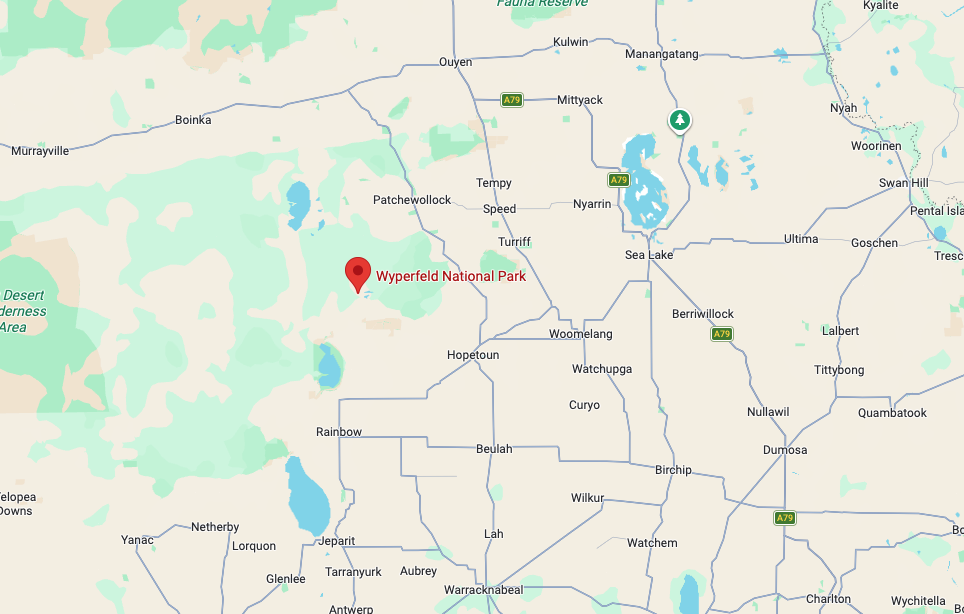
Above: Map showing the location of Wyperfeld National Park. Map c/o Google Maps
After breakfast in Ouyen, we headed to Ouyen Lake on the northwest side of the town of Ouyen. Ouyen Lake is a 14.3 hectare man-made lake on the site of the old Ouyen Reservoir. It was opened in October 2018.
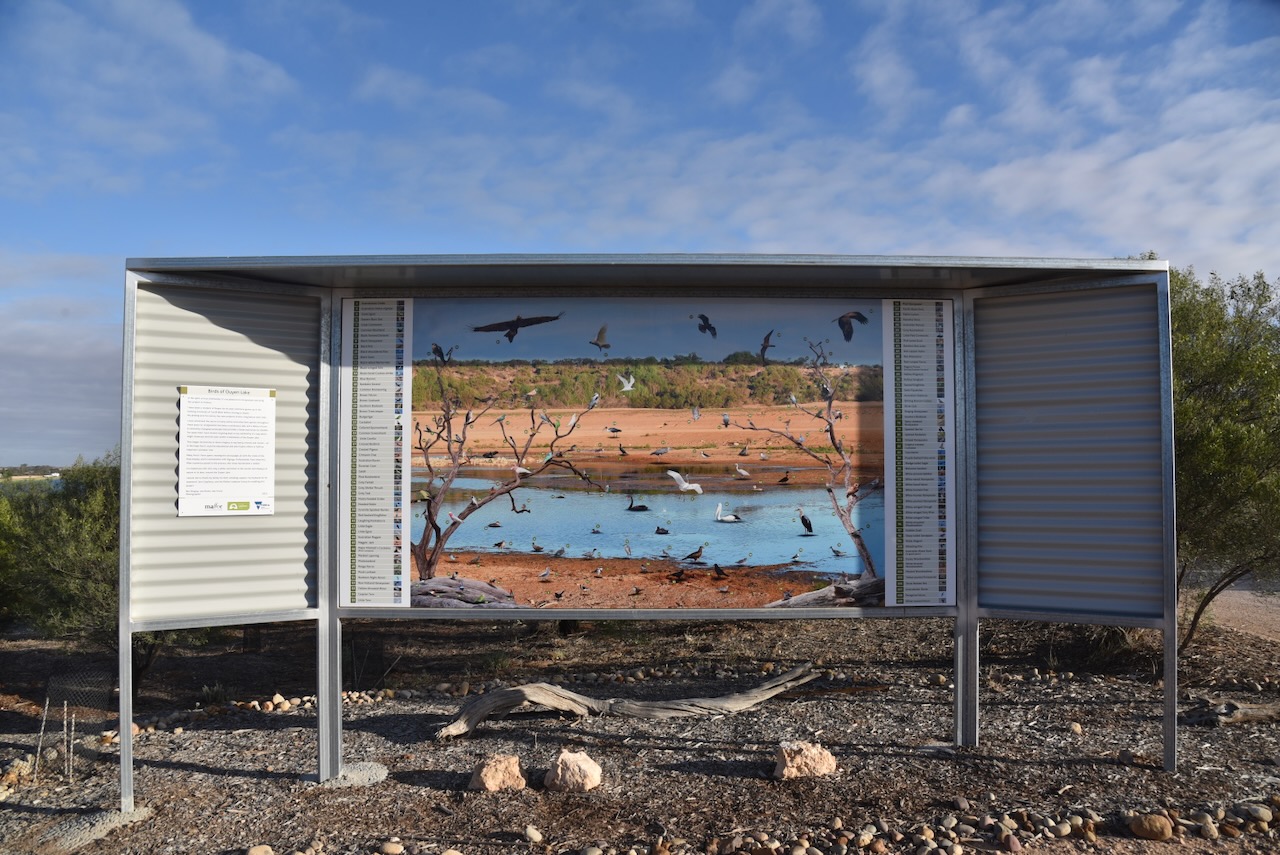
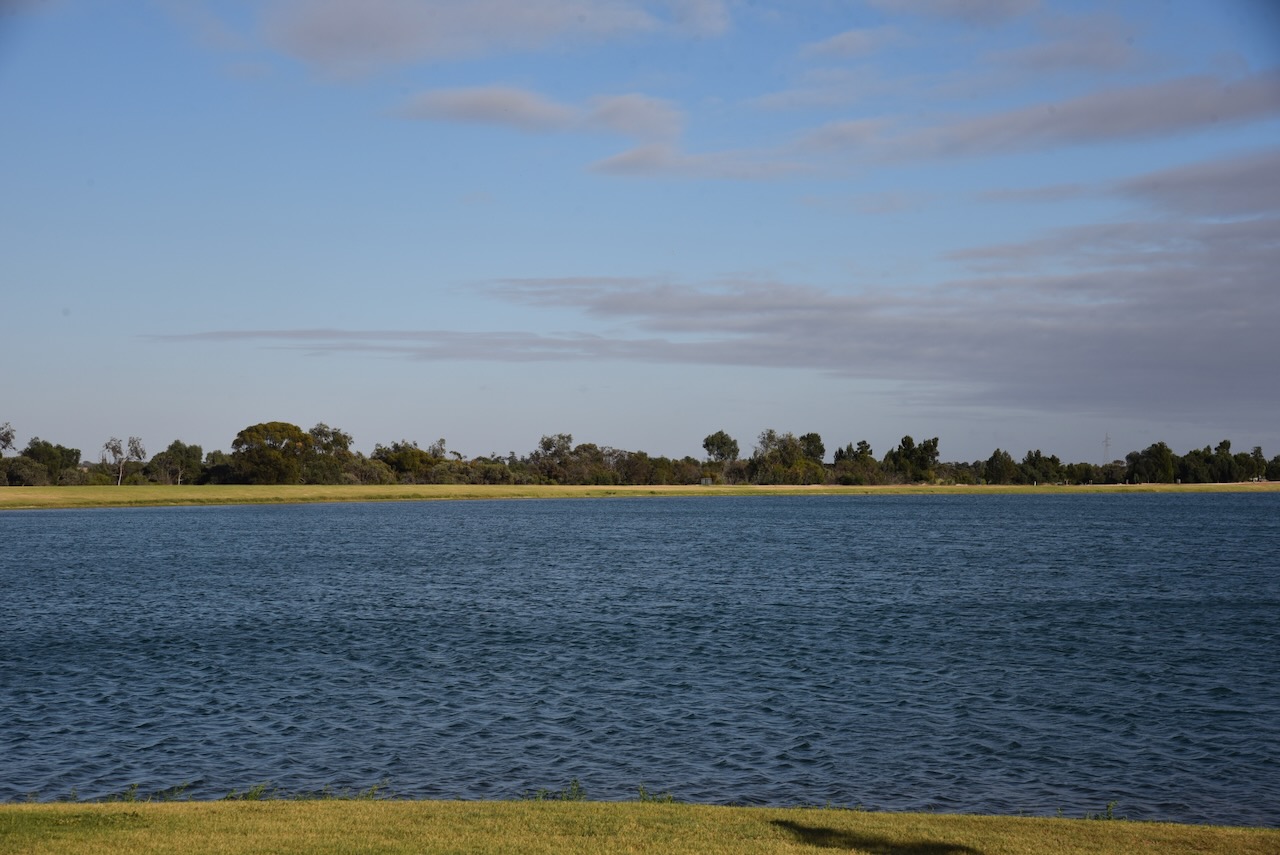
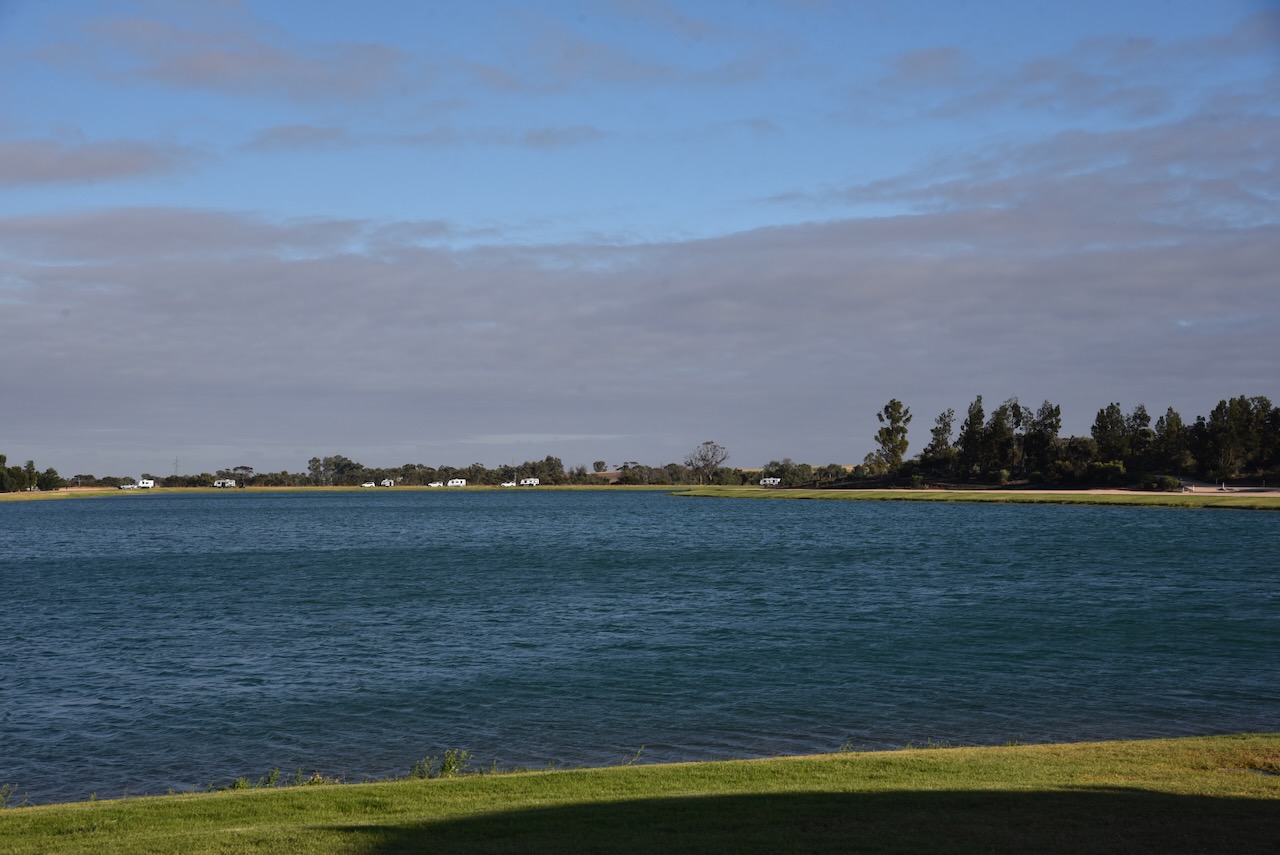
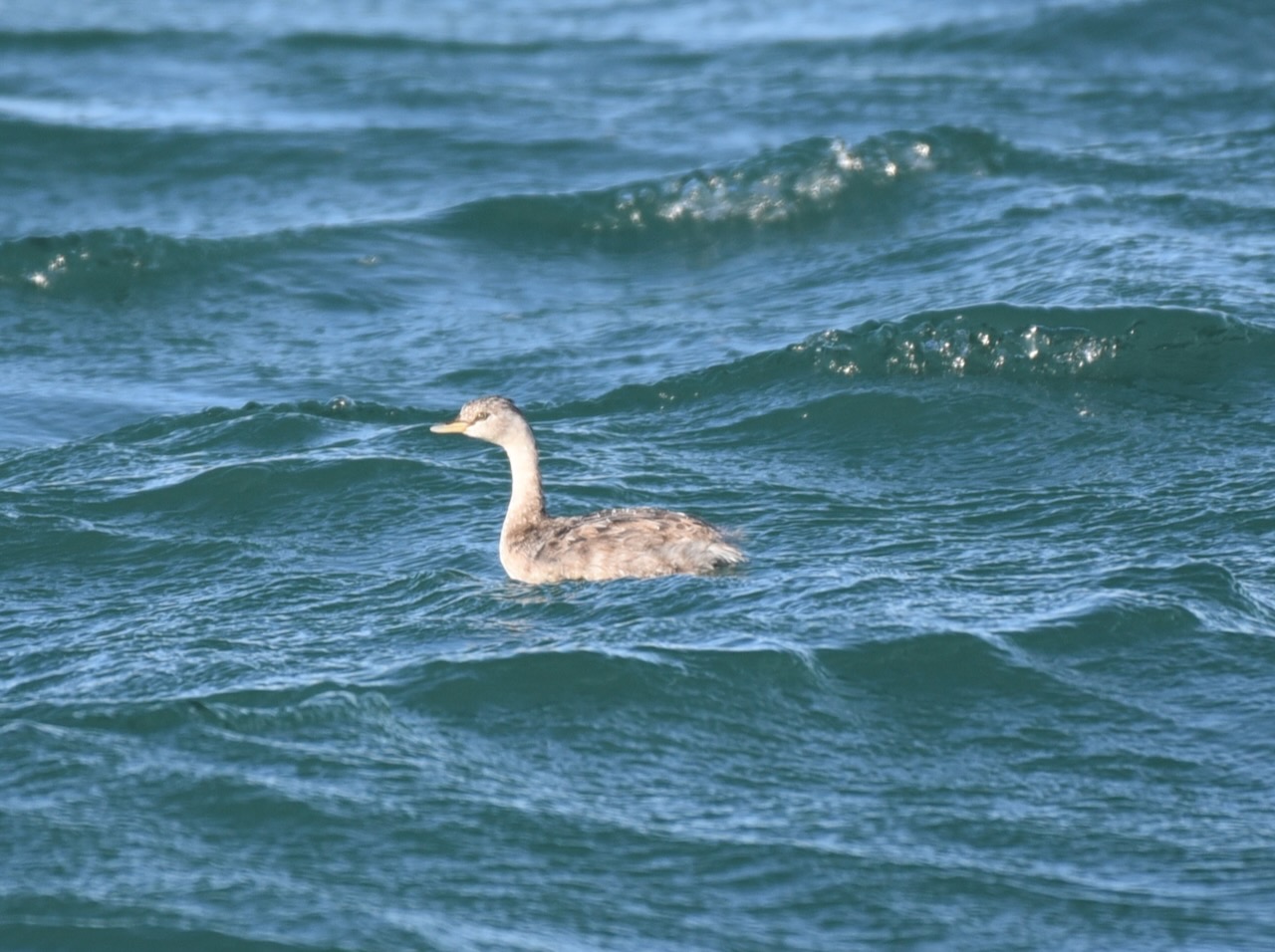
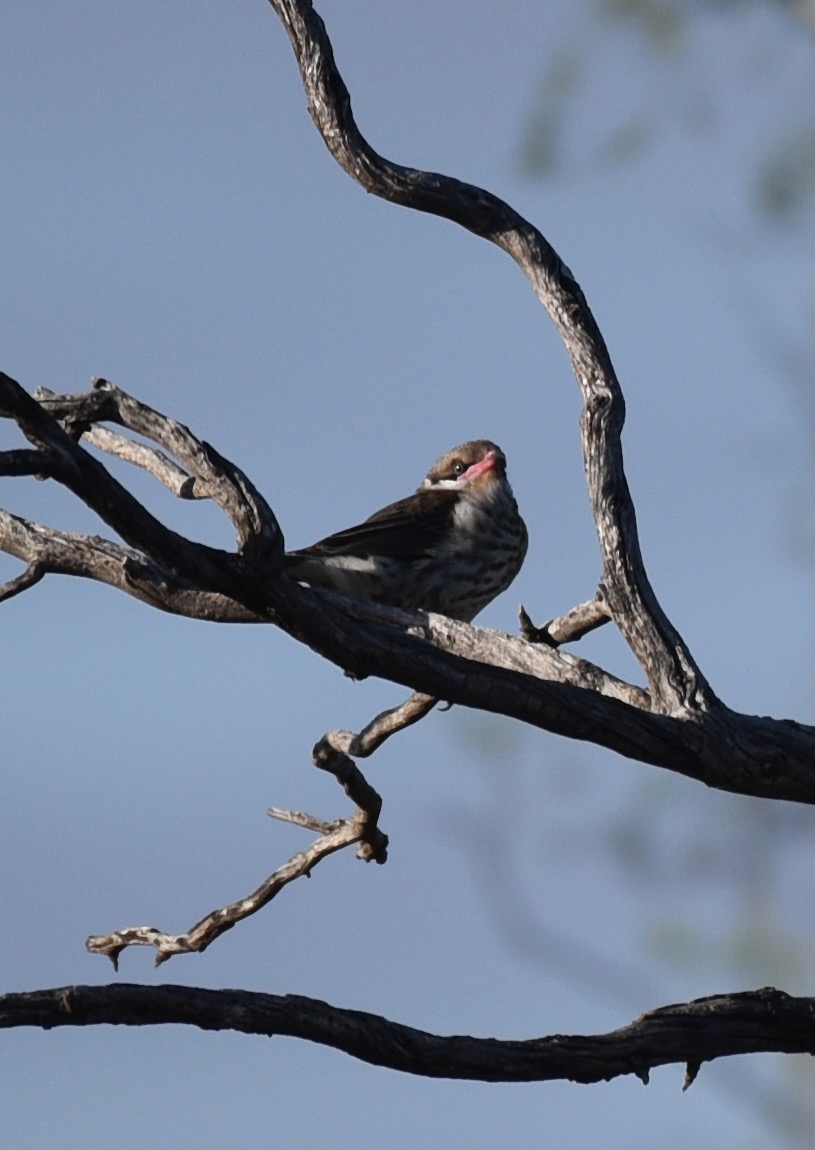
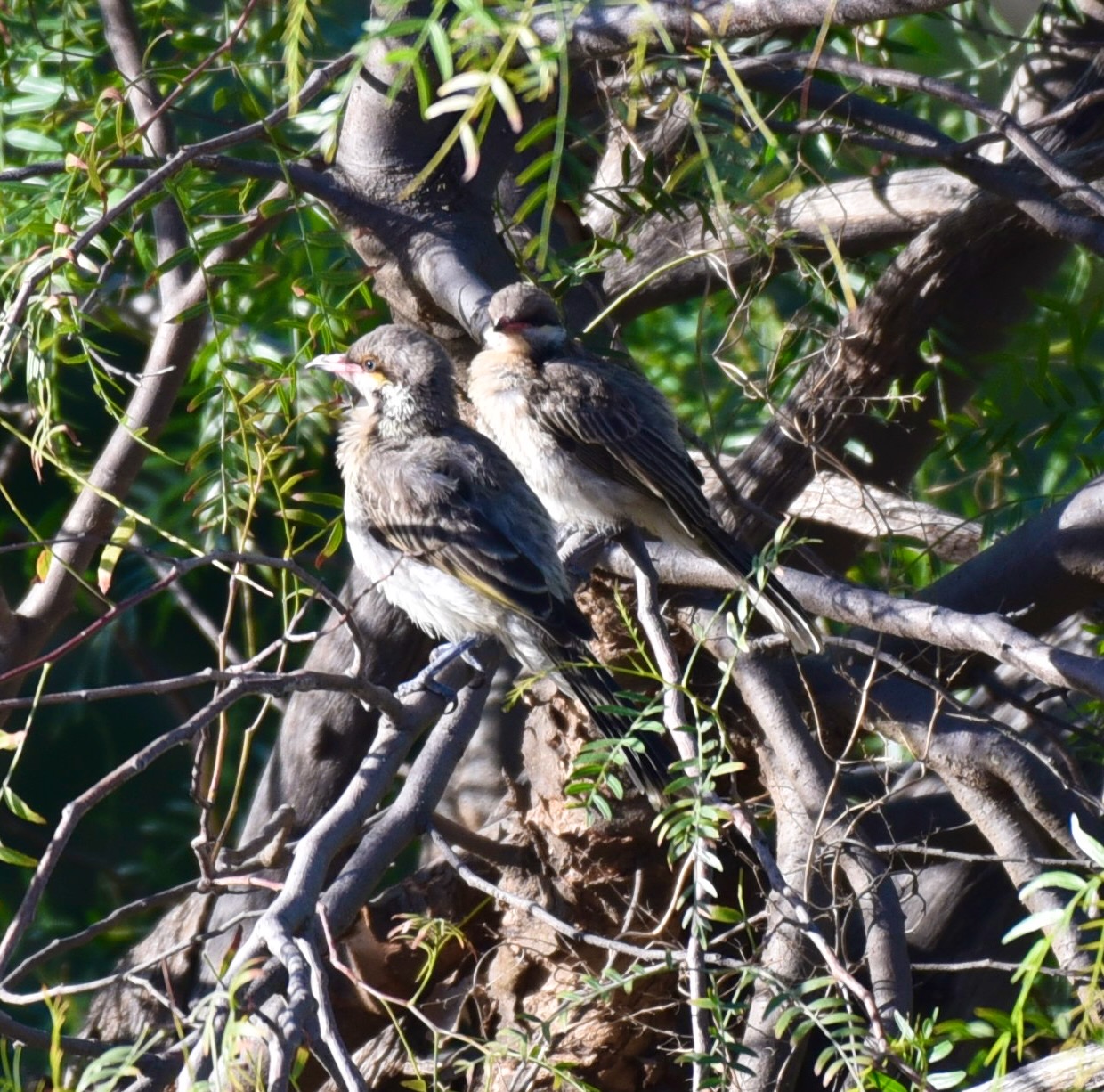
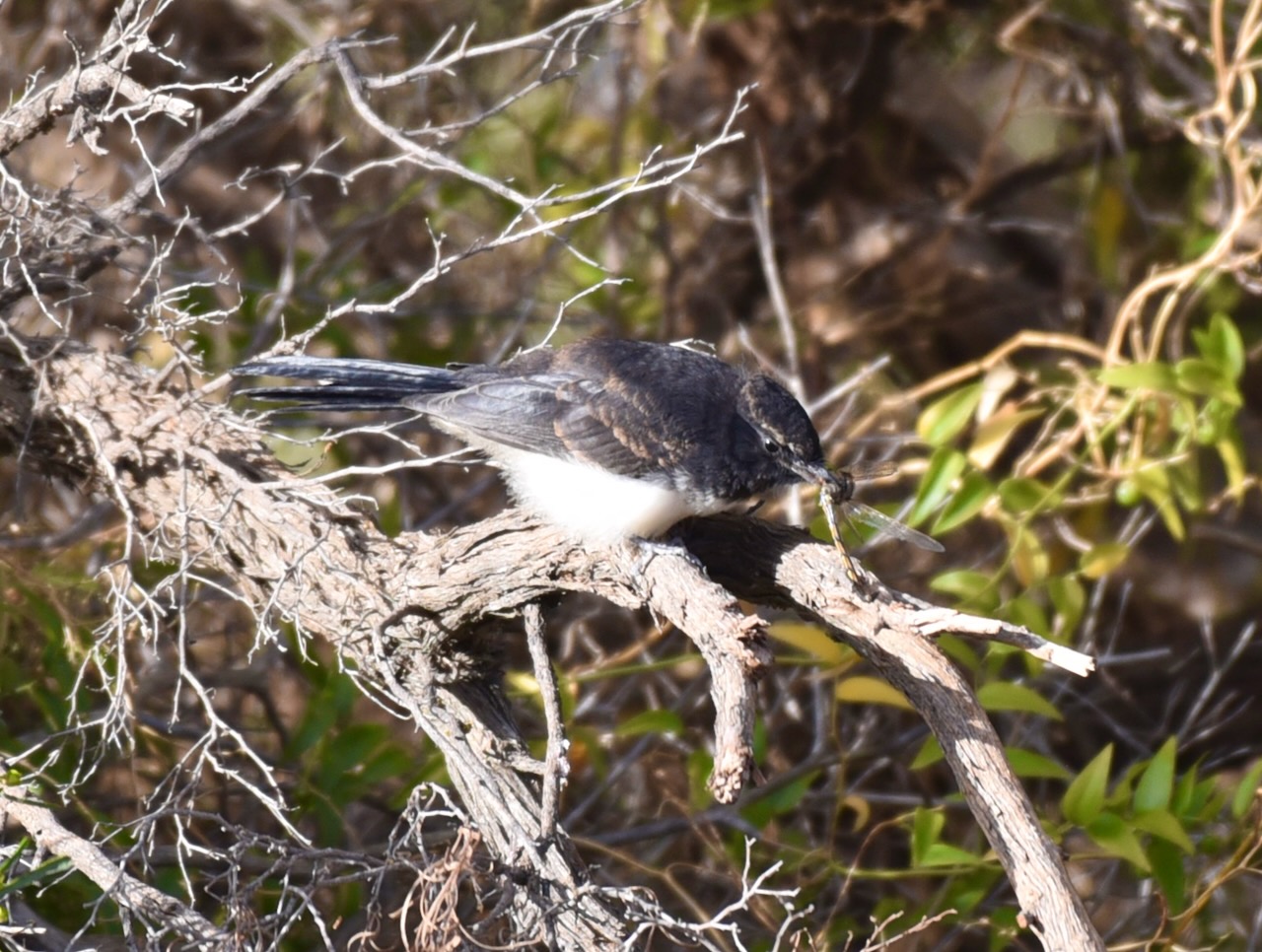
We spent about 45 minutes at the lake, trying my luck with some bird photography.
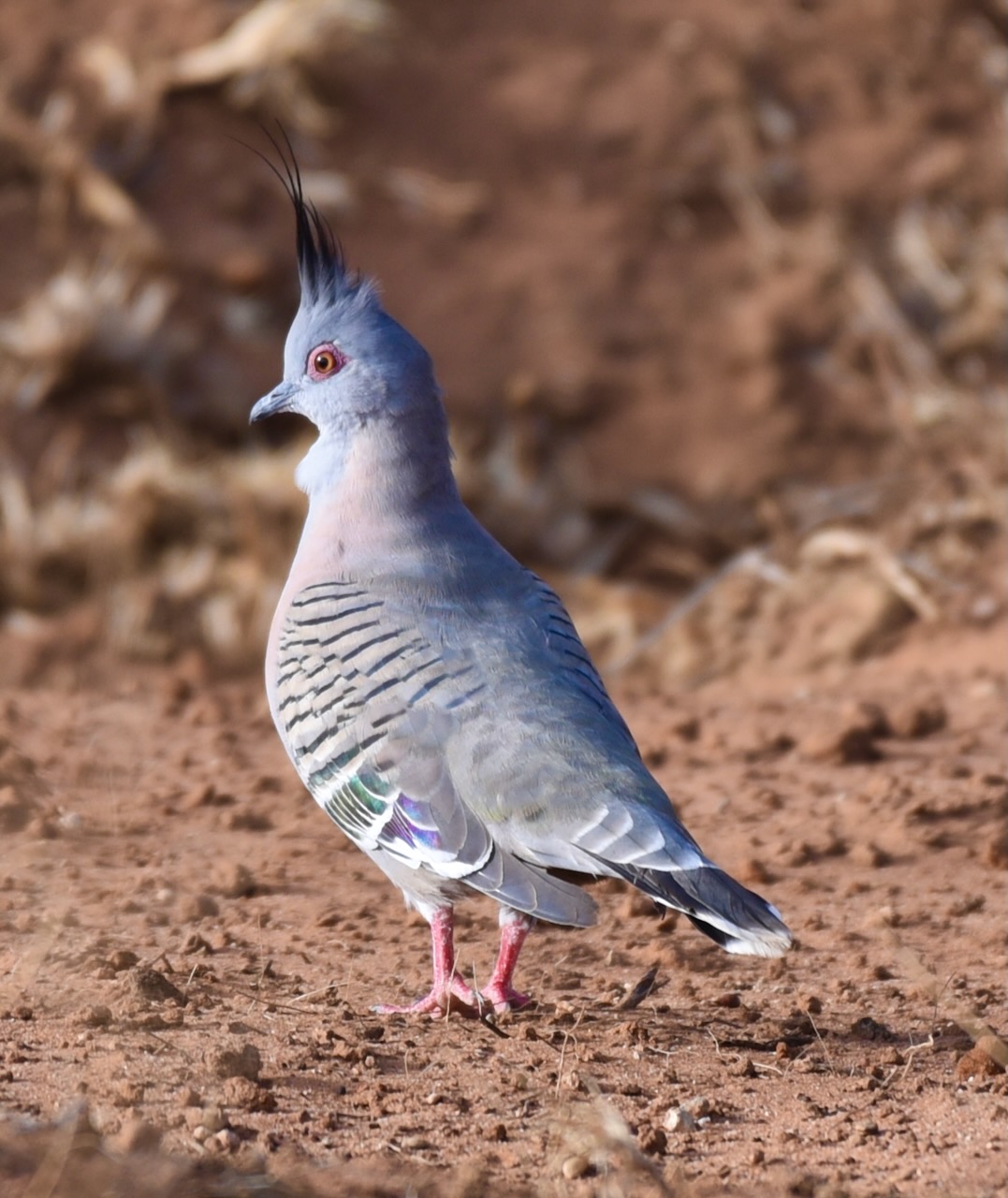
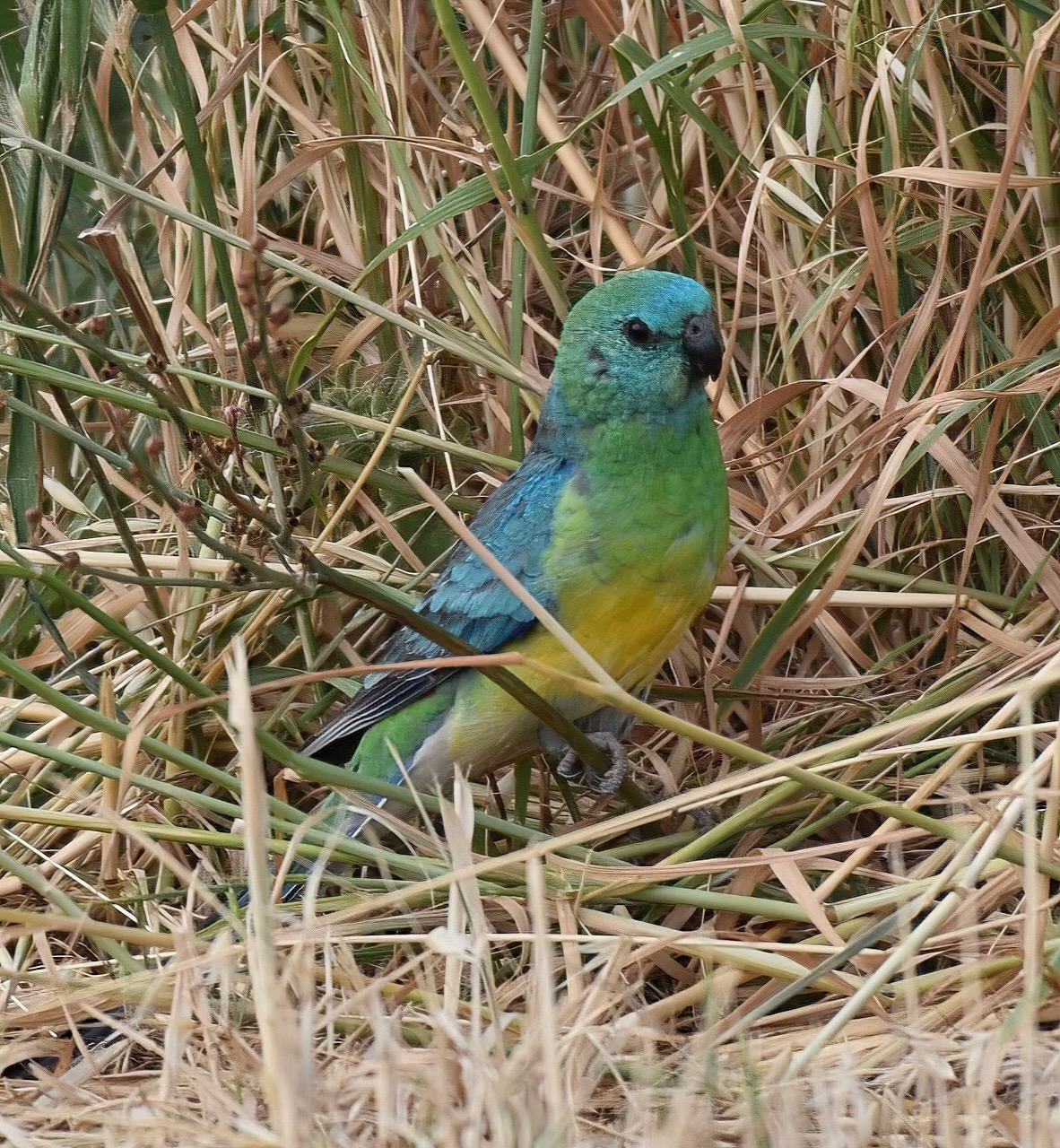
Marija and I have visited Wyperfeld numerous times and activated the park for the World Wide Flora Fauna (WWFF) program and the KRMNPA.
We accessed the park via travelling south out of Underbool on the Underbool-Patchewollock Road, and then Gunner Road.
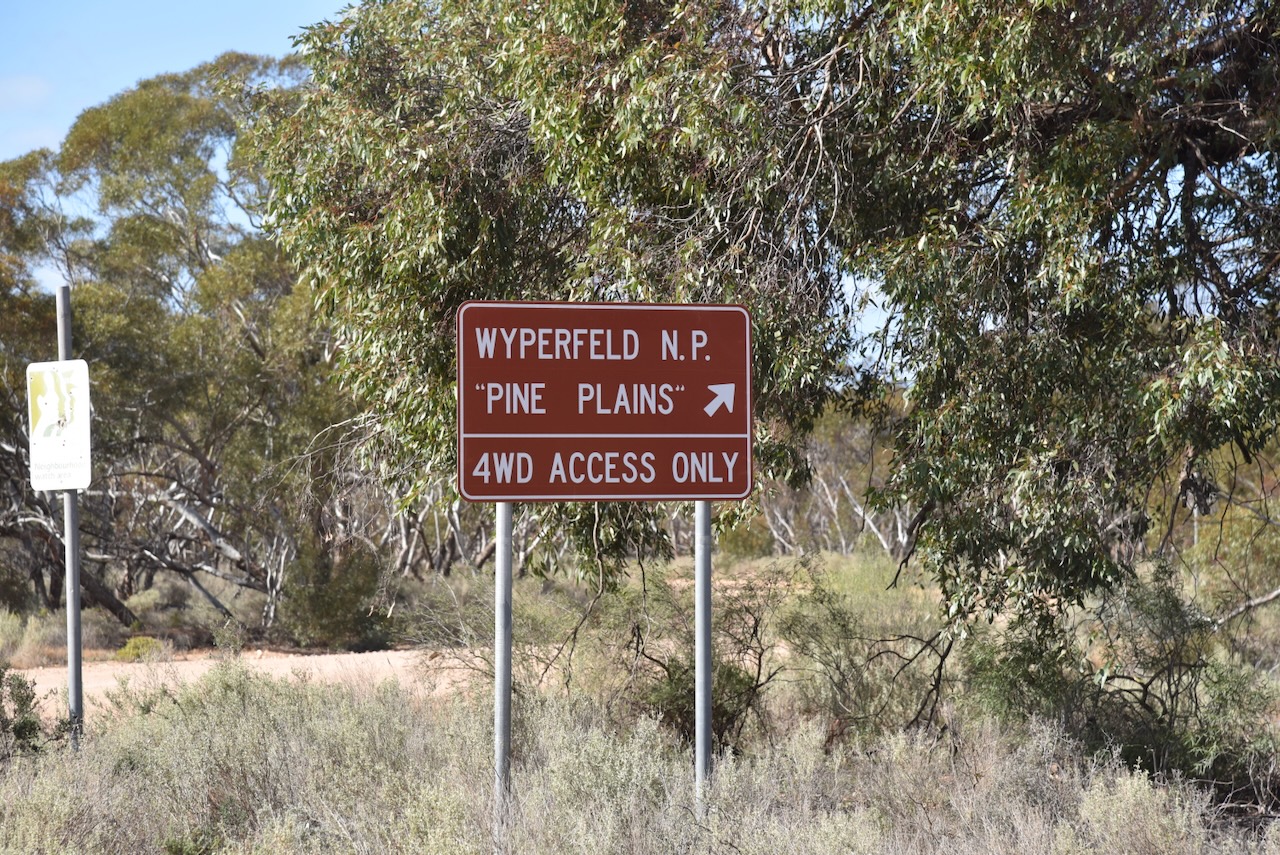
The Wyperfeld National Park is Victoria’s third-largest national park. Only the nearby Murray Sunset National Park, and the Alpine National Park are larger. It was created in 1921 and is 357,000 hectares (882,000 acres) in size. It preserves mallee, woodland, and heathland and was Victoria’s first Mallee park. (ancestry 2016) (Durham 2001)
Wyperfeld National Park is part of the Wyperfeld, Big Desert and Ngarkat Important Bird Area, which has been identified by BirdLife International due to its importance for the conservation of various mallee birds, including the malleefowl. (Wikipedia 2016)
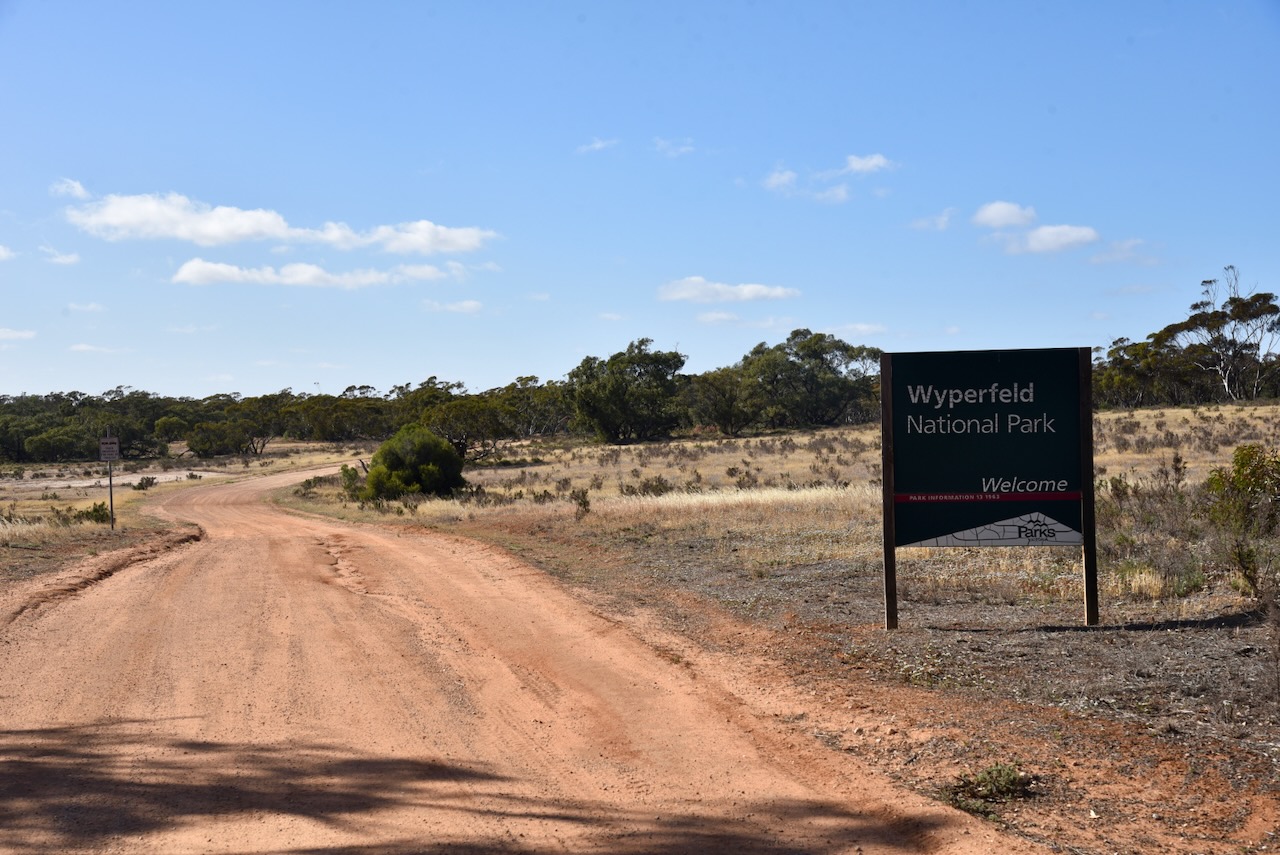
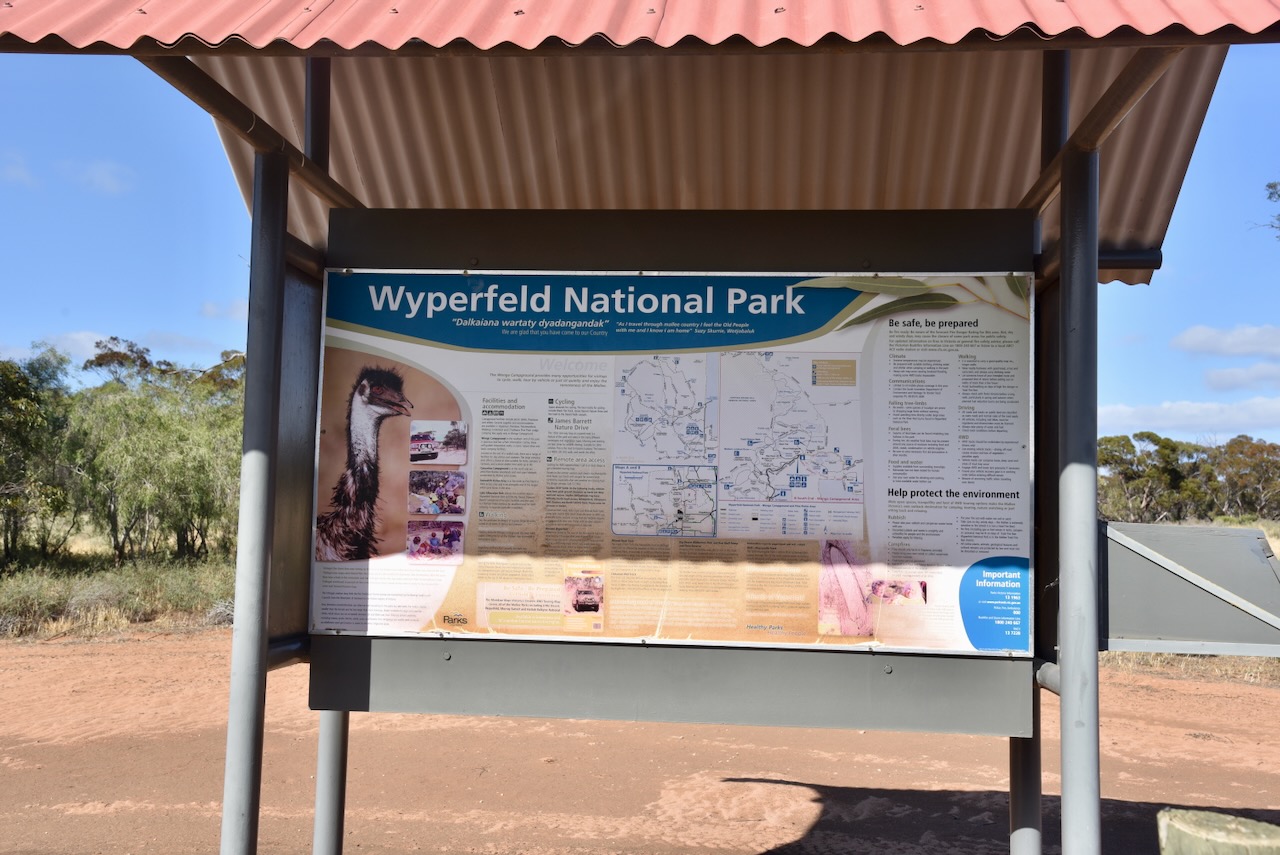
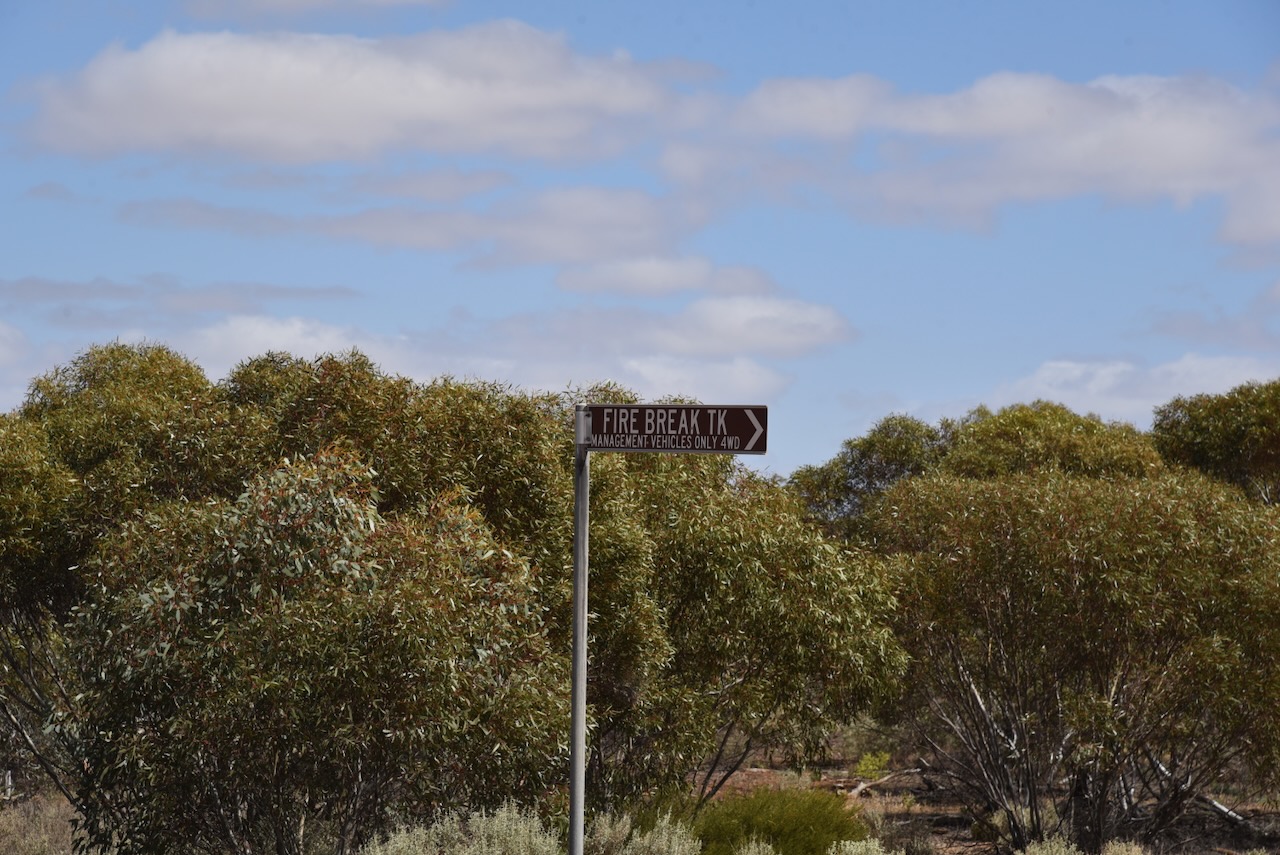
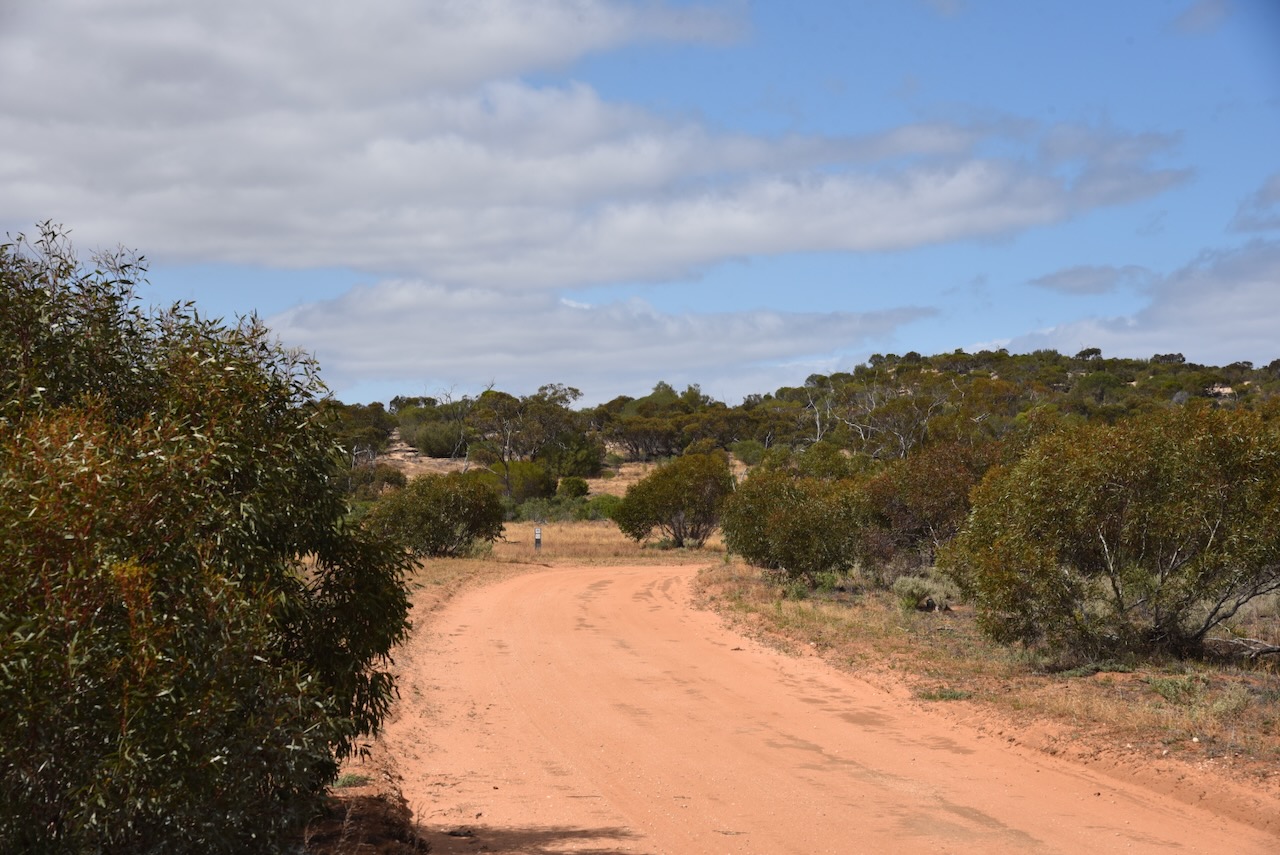
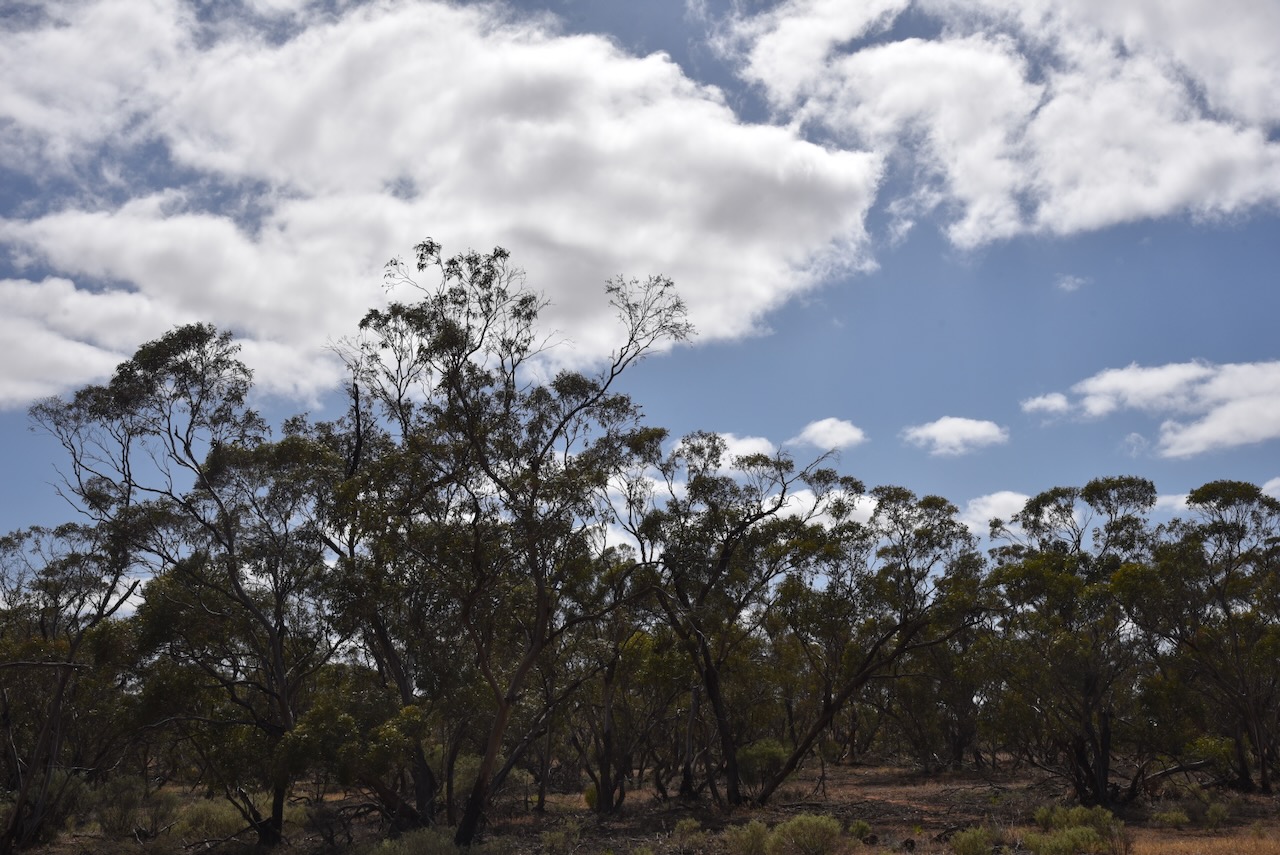
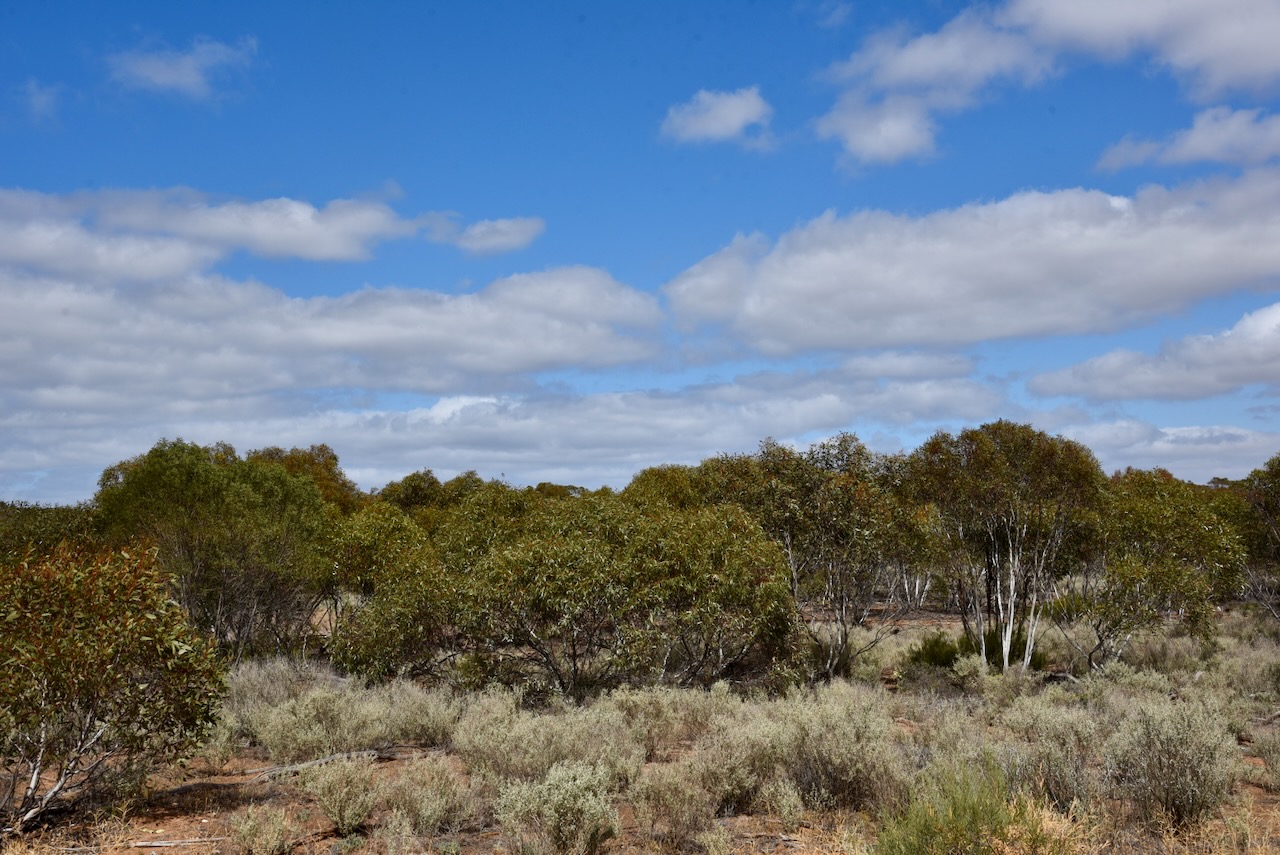
The park is located in the Big Desert, which is part of the Victorian bioregion called the Lowan Mallee. The highest point in the park is a sand dune at about 1234 metres above seal level (Durham 2001)
Wyperfeld is named after the Parish of Wyperfeld, in which the original section of the park is located. It is believed that Wyperfeld is derived from the German language: Wyper meaning a tributary of the Rhine River, and feld meaning field. The correct pronunciation of the park is wiper feld. (Durham 2001)
The Wyperfeld National Park is the traditional home of the Wotjobaluk Aboriginal people. The park contains several scar trees and middens. In 1995, a stone hand mortar and pestle were located at a sand dune at Pine Plains. (Durham 2001)
In 1830, the explorer Charles Napier Sturt travelled close to the park during his exploration of the western flowing rivers of New South Wales. (Trove 2026)
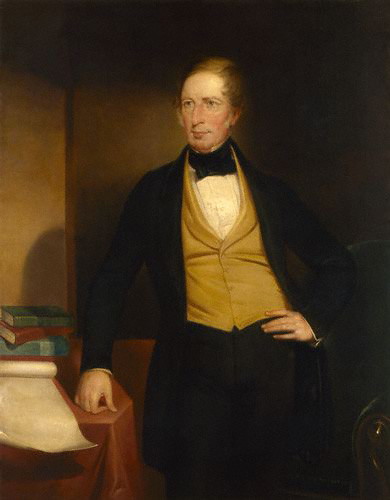
In 1836, Major Thomas Livingstone Mitchell touched the eastern boundary of the park during his third expedition.
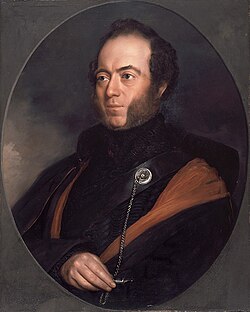
Above: Major Mitchell. Image c/o Wikipedia
The first European to settle in the district was James Maxwell Clow in 1848, who took up Ballarook run, west of Lake Hindmarsh. He also took up Pine Plains run in the Big Desert, which later included Wonga Lake Station. He was born in Bombay, India, in December 1820. In 1837, he emigrated to Australia with his parents. His father was Reverend James Clow, who conducted the first Presbyterian service in Melbourne. Clow went on to become the Assistant Commissioner for Crown Lands in 1851 and then Commissioner. He was also a Magistrate from 1856 to 1871. He died in 1894. (ancestry 2016) (Durham 2001)
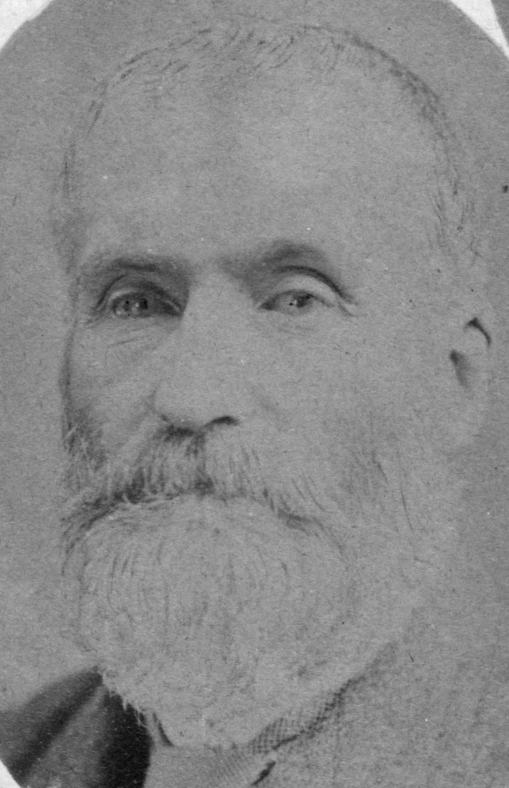
Above: James Maxwell Clow. Image c/o State Library Victoria
Charles Henry McLennan was born in August 1854 at Fiery Creek, Victoria. During the 1890s, he was employed on Cambacanya Station and Pine Plains Station and worked as a dingo trapper. He claimed to have trapped about 3,000 dingoes, but sadly, he also often found Mallee Fowl in the traps. (ancestry 2016) (Anbg.gov.au, 2020) (Durham 2001)
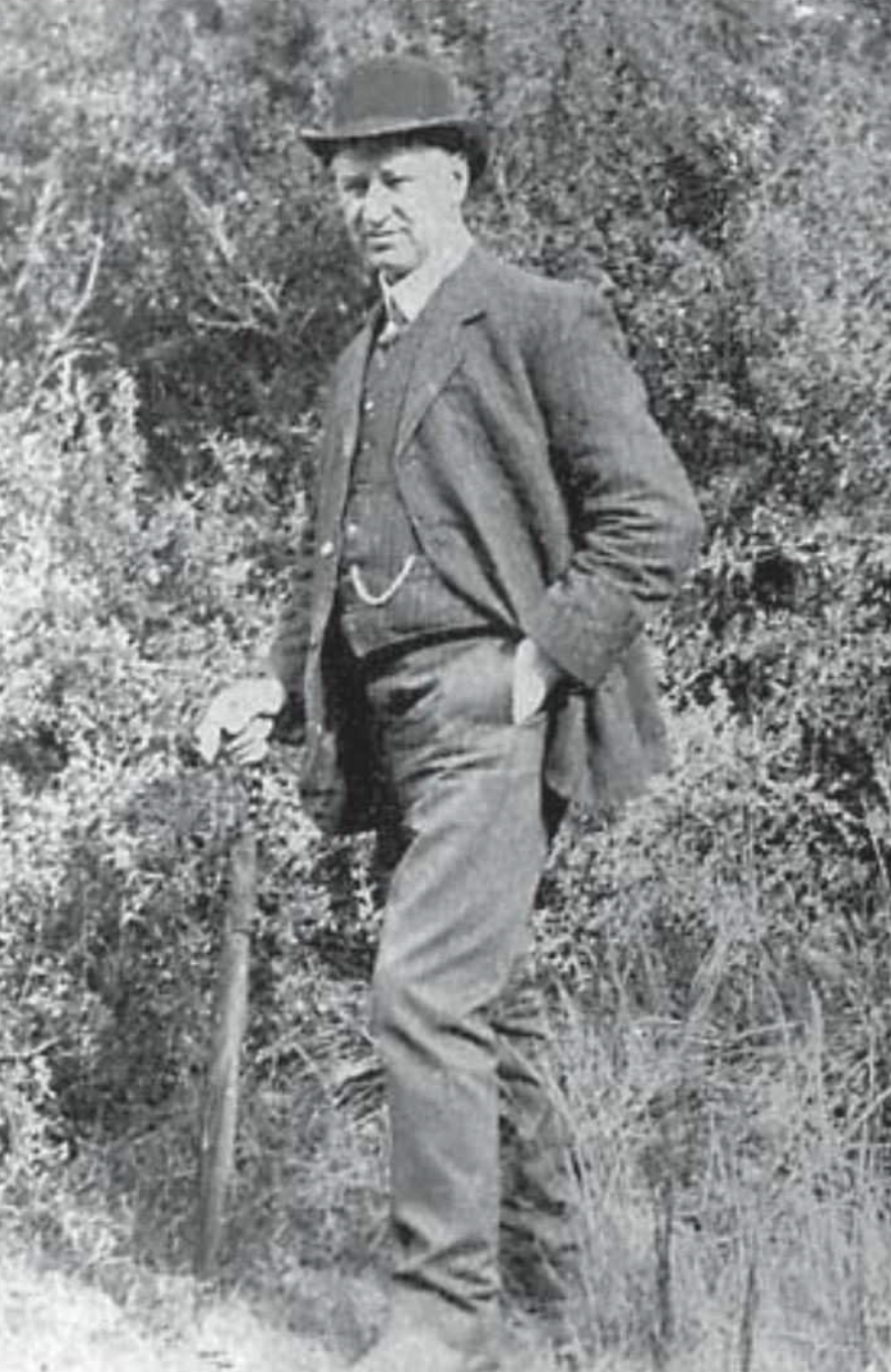
Above: Charles McLennan. Image co ancestry.com.au
McLernnan became an acclaimed naturalist and bird watcher. Under the alias of ‘Mallee-Bird’, he wrote in the Nature Notes column of The Argus newspaper in Melbourne, Victoria. (Anbg.gov.au, 2020)
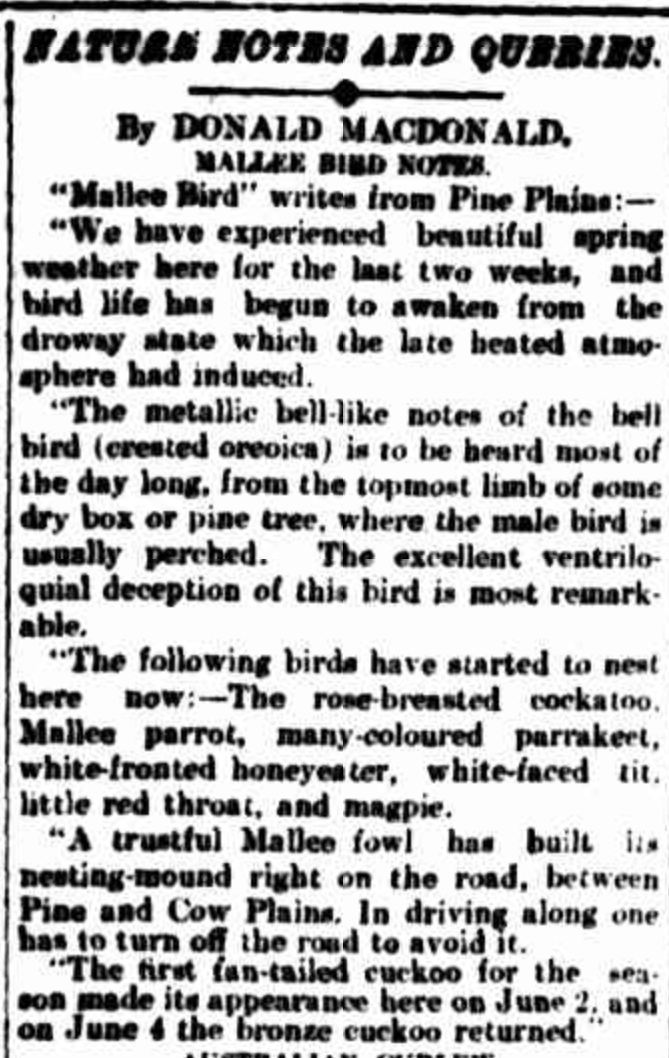
Above: article from The Argus, Fri 22 Jun 1906. Image c/o Trove
In September 1907, Arthur Mattingley, Jack Ross, and Franke Howe visited the Wyperfeld area. McLennan acted as their guide. (Durham 2001)
Arthur Herbert Evelyn Mattingley was born in 1870 and was a renowned Australian bird photographer and ornithologist. He was a founding member of the Royal Australasian Ornithologists Union. (Wikipedia 2025)
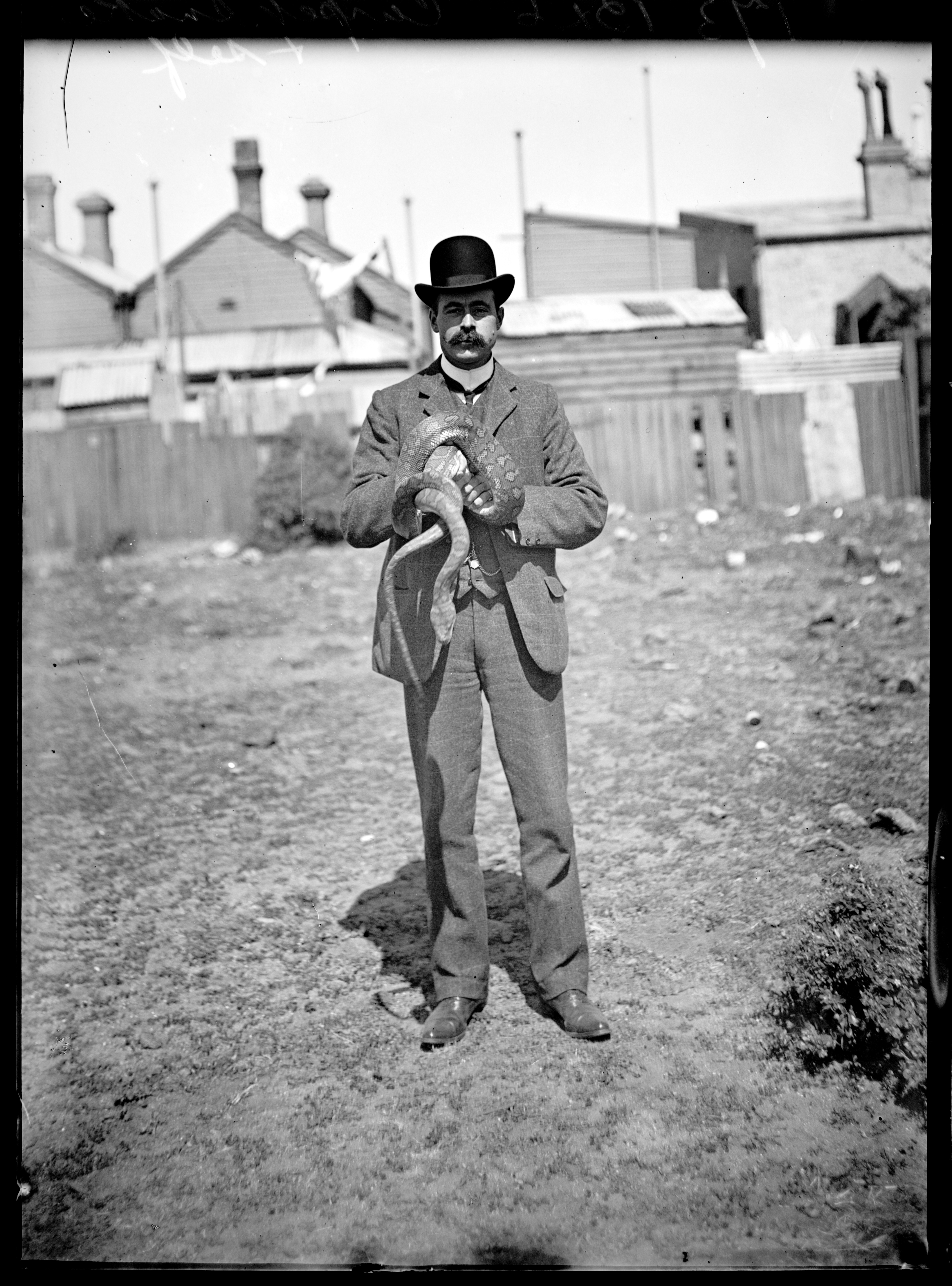
Above: Arthur Mattingley. Image c/o State Library Victoria
Frank Ernest Howe was born in February 1878 in South Melbourne, Victoria. He was a keen oologist and ornithologist, and had an acute ear for bird calls. (Eoas.info 2018)
John ‘Jack’ Alexander Ross was born in April 1868 in Castlemaine, Victoria. He was a solicitor and ornithologist. (Eoas.info 2018)
In August 1908, Mattingley wrote in The Argus newspaper how he was privileged to visit the locality in September 1907.
Mattingley wrote:
“Another tract of country that should be set aside as a national park, on account of the unique characteristics of its flora and fauna and geological formation, is a locality known as Brambrook situated in the Mallee, and lying between Ouyen and Pinaroo, and close to Pine Plains. The whole country thereabouts is one huge national park already made…….Mobs of emus and kangaroos freely dotted these places, and in the Mallee thickets, the wonderful nesting mounds of the Mallee fowl were numerous. Pigeons and cockatoos swarmed in this yet undisturbed country.” (Trove 2026)
He went on to say:
“Were this done the finest national park, and one already made to order, and containing a unique flora and fauna, would be reserved for the present generation, as well as for posterity.” (Trove 2026)
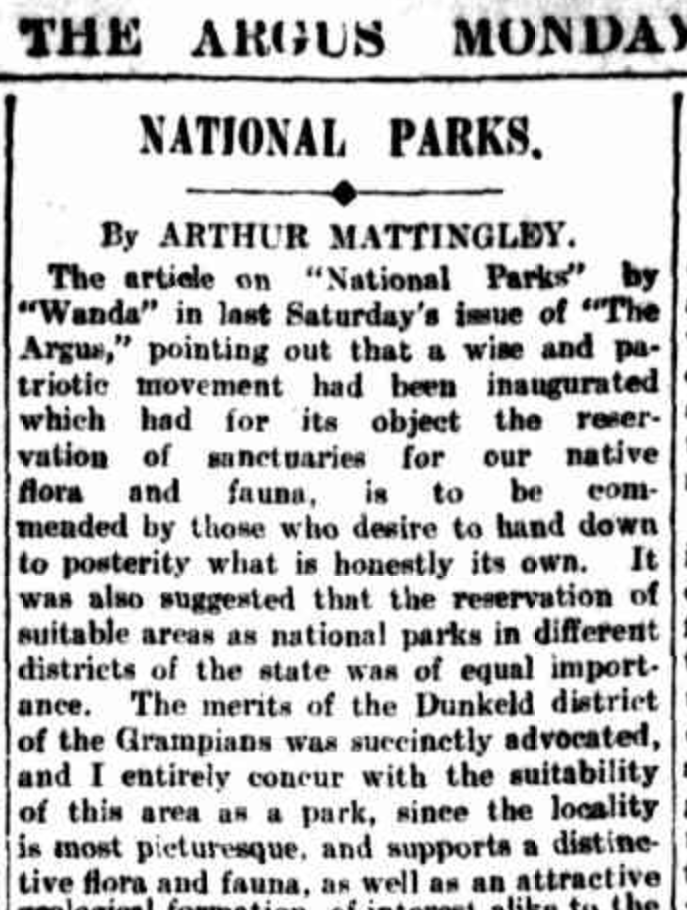
Above: part of an article from The Argus, Mon 31 Aug 1908. Image c/o Trove
In 1909, as a result of negotiations with the Victorian State Government, an area of 9,600 acres at Wyperfeld was set aside as a reserve. (Durham 2001)
Sir James William Barrett (b. 1862. d. 1945) was the Chairman of the National Parks Association, and he was instrumental in having the Wyperfeld National Park declared in 1921. (Durham 2001)
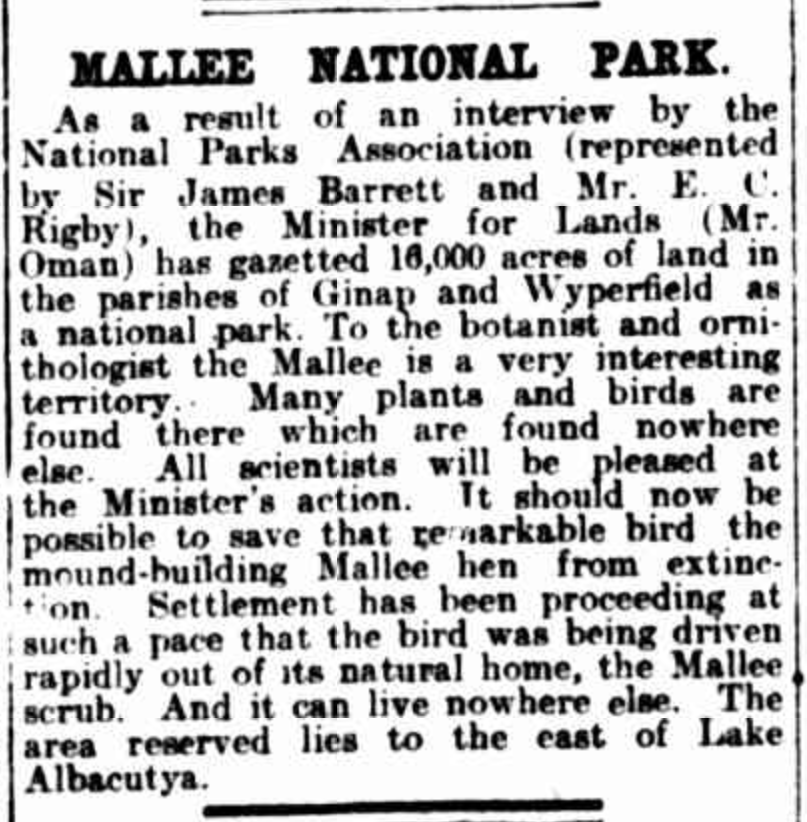
Above: article from The Argus, Melbourne, Tue 11 Oct 1921. Image c/o Trove
In 1948, Wyperfeld’s first caretaker was appointed. Alexander Edward George ‘Rudd’ Campbell was born in Nypo (near Rainbow), Victoria, in May 1913. He was appointed as ‘caretaker’ in July 1948 and was the ranger at Wyperfeld from 1958. He continued in that role until November 1970, when he died as a result of a heart attack. (ancestry 2016) (Durham 2001)
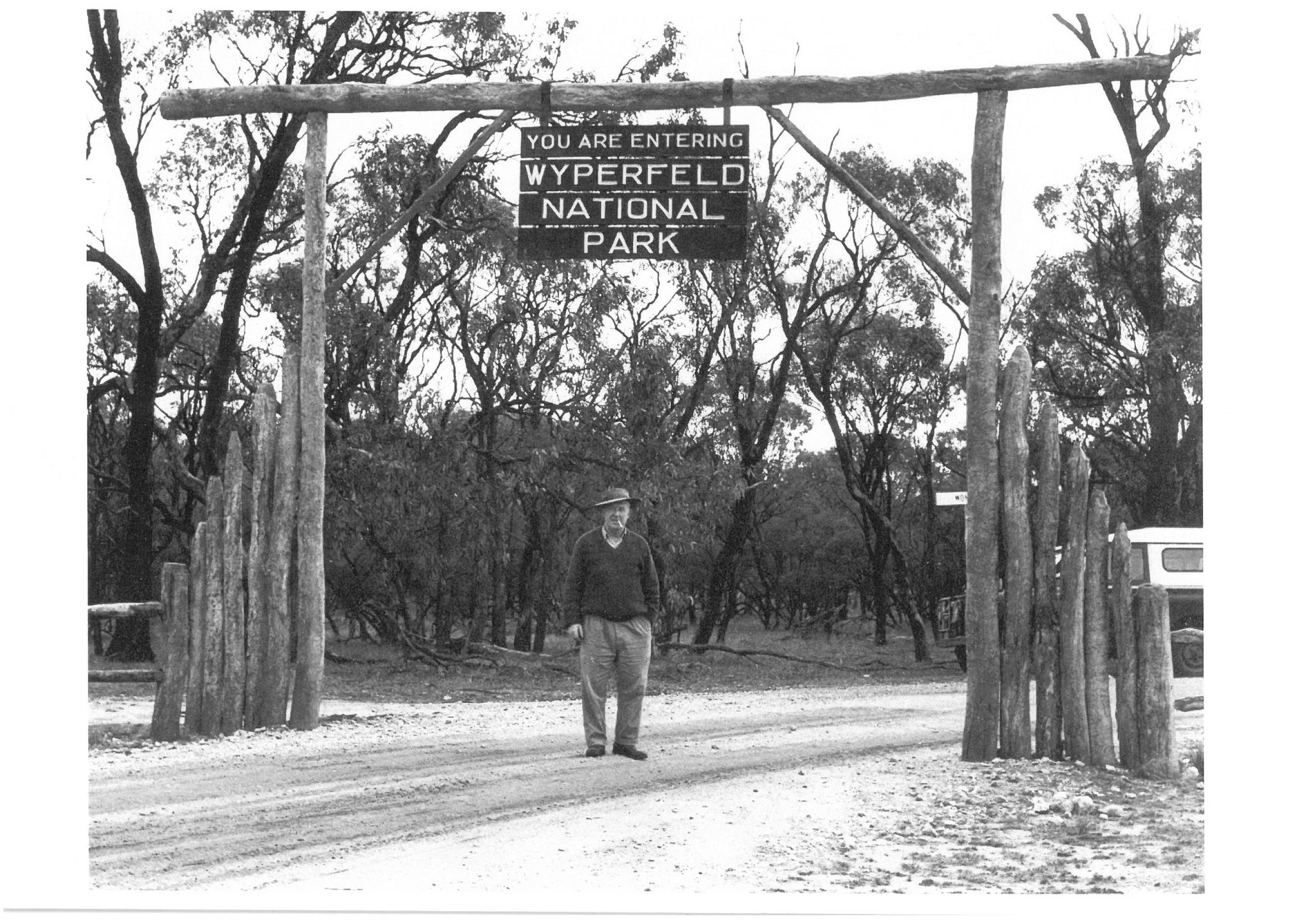
Above: Rudd Campbell. Image c/o Friends of Wyperfeld National Park Facebook page
The gateway above was erected in 1960. The suspended park entrance sign was removed in 1970 to permit buses to pass through. The entire gateway was eventually demolished. (Durham 20001)
Wyperfeld National Park is home to a large variety of native birds, mammals, and reptiles. Reptiles located in the park include Sand Goana, Central Bearded Dragon, and Southern Spiny-tailed Gecko. Native mammals include the Short-beaked echidna, Fat-tailed Dunnart, Little Pygmy Possum, and Mitchell’s Hopping-mouse. Birds include Emu, Red-capped Robin, Malleefowl, Mulga parrot, Major Mitchell Cockatoo, Regent parrot, and Yellow-plumed Honeyeater. (Durham 2001)
I found the video below on YouTube, which features Rudd Campbell. The video was produced in 1965 to promote the Wyperfeld National Park.
Another excellent video can be found below. It was created by Friends of Wyperfeld.
Marija and I ran our normal portable operating setup for this activation, consisting of the Yaesu FT857, 40 watts, and the 20/40/80m linked dipole.
It seemed to be a little quieter this year for the KRMNPA Weekend. Despite this, we still logged several Park-to-Park contacts.
Marija worked the following stations on 40m SSB:-
- VK3MCK
- VK2VW
- VK2HFI
- VK2AKA
- VK2BUG
- VK3PF
- VK3KAI
- VK2EXA
- VK1CHW
- VK2CHW
- VK3CLD
- VK5QA
- VK2DBF
- VK2IO/P (VKFF-2005)
- VK2GEZ/P (VKFF-2005)
- VK5AAF
- VK2DA
- VK1DA
- VK4NH
- VK4DXA
- VK1OZ
- VK2OZI
- VK1PW
- VK2APW
- VK3GJG
- VK3ZSC
- VK2PKT
- VK2KFT
- VK5AYL
- VK5HS/P (VKFF-0373)
- VK1AC
- VK2COS
- VK1DI
- VK5GY
- VK5CS
- VK2USH
- VK3KRL
- VK3FARW
- VK3DAC
- VK3WI/P (VKFF-0728)
- VK2YAK
- VK4YAK
- VK5BL
- VK5AKL
- VK7DIK
- VK3SX
- VK3HBG
- VK3ZPF/P (VKFF-0420)
- VK3JW/P (VKFF-0420)
- VK3PJF/P (VKFF-0420)
- VK3CEO
Marija worked the following stations on 20m SSB:-
- VK2IO/P (VKFF-2005)
- VK2GEZ/P (VKFF-2005)
- VK2VW
- VK2HFI
- VK2AKA
- VK2BUG
- VK4SMA
- VK2MWD
- VK2NP
- VK4EMP
- VK4TI
- VK4GKO
I worked the following stations on 40m SSB:-
- VK3MCK
- VK2VW
- VK2HFI
- VK2AKA
- VK2BUG
- VK3PF
- VK3KAI
- VK2EXA
- VK1CHW
- VK2CHW
- VK3CLD
- VK5QA
- VK2DBF
- VK2IO/P (VKFF-2005)
- VK2GEZ/P (VKFF-2005)
- VK5AAF
- VK2DA
- VK1DA
- VK4NH
- VK4DXA
- VK1OZ
- VK2OZI
- VK1PW
- VK2APW
- VK3GJG
- VK3ZSC
- VK2PKT
- VK2KFT
- VK5AYL
- VK5HS/P (VKFF-0373)
- VK1AC
- VK2COS
- VK1DI
- VK5GY
- VK5CS
- VK2USH
- VK3KRL
- VK3FARW
- VK3DAC
- VK3WI/P (VKFF-0728)
- VK2YAK
- VK4YAK
- VK5BL
- VK5AKL
- VK7DIK
- VK3SX
- VK3HBG
- VK3ZPF/P (VKFF-0420)
- VK3JW/P (VKFF-0420)
- VK3PJF/P (VKFF-0420)
- VK3CEO
I worked the following stations on 20m SSB:-
- VK2IO/P (VKFF-2005)
- VK2GEZ/P (VKFF-2005)
- VK2VW
- VK2HFI
- VK2AKA
- VK2BUG
- VK4SMA
- VK2MWD
- VK2NP
- VK4EMP
- VK4TI
- VK4GKO
References.
- ancestry (2016). Ancestry® | Genealogy, Family Trees & Family History Records. [online] Ancestry.com.au. Available at: https://www.ancestry.com.au/. [Accessed 19 Apr. 2026]
- Anbg.gov.au. (2020). McLennan, Charles Henry – biography. [online] Available at: https://www.anbg.gov.au/biography/mclennan-charles-henry.html [Accessed 20 Apr. 2026].
- Eoas.info. (2018). Howe, Frank Ernest – Person – Encyclopedia of Australian Science and Innovation. [online] Available at: https://www.eoas.info/biogs/P003153b.htm [Accessed 20 Apr. 2026].
- Trove. (2026). MALLEE NATIONAL PARK – ITS HISTORY AND VALUE – The Argus (Melbourne, Vic. : 1848 – 1957) – 17 Nov 1934. [online] Available at: https://trove.nla.gov.au/newspaper/article/10994359 [Accessed 19 Apr. 2026].
- Wikipedia Contributors (2026). Wyperfeld National Park. Wikipedia.
- Wikipedia Contributors (2025). Arthur Mattingley. Wikipedia.

