Trans Tasman Low Band Challenge

The aim of the Trans Tasman Low Band Challenge is to encourage low band activity in Australia and New Zealand.  The applicable bands are 160, 80 and 40m.  Amateurs in VK and ZL contact other amateurs in VK and ZL in three individual 2 hour blocks.  Points are awarded for valid contacts between VK & ZL stations.

The 2016 contest was held on Saturday 16th July 2016.

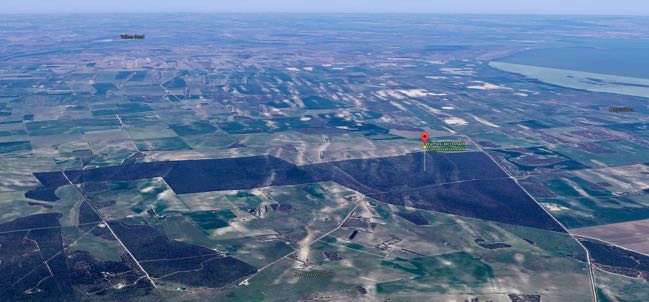
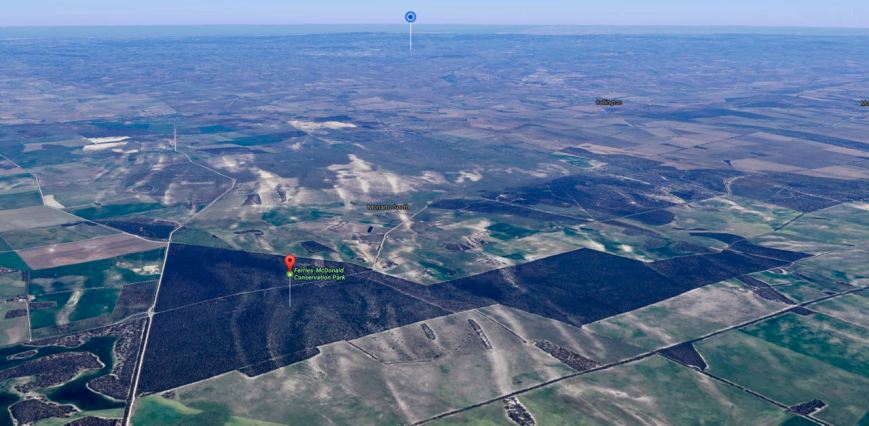
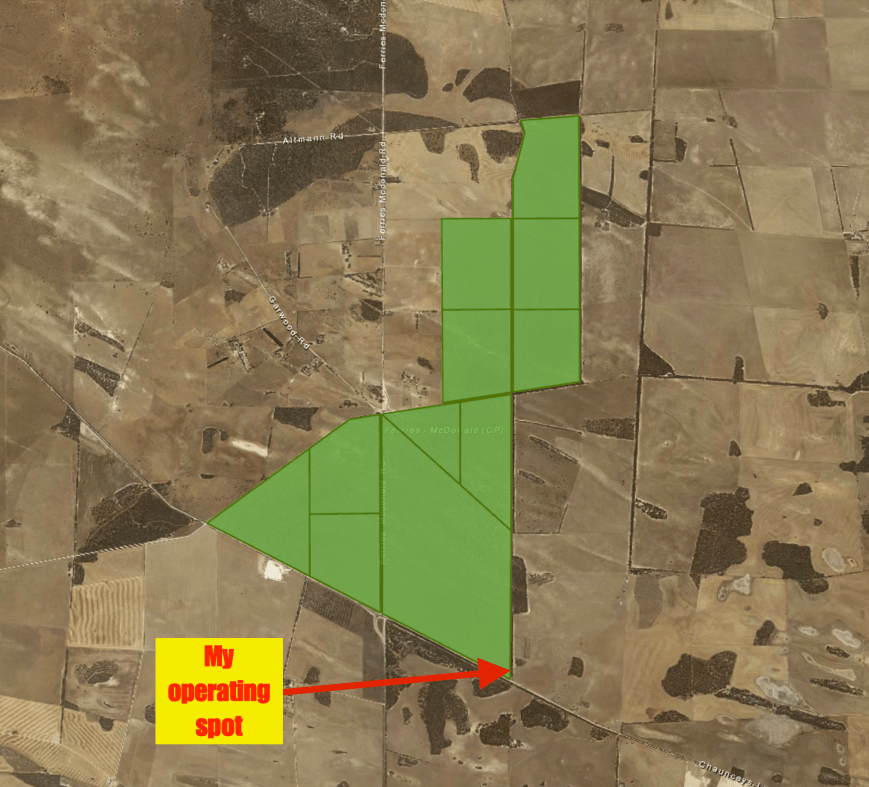
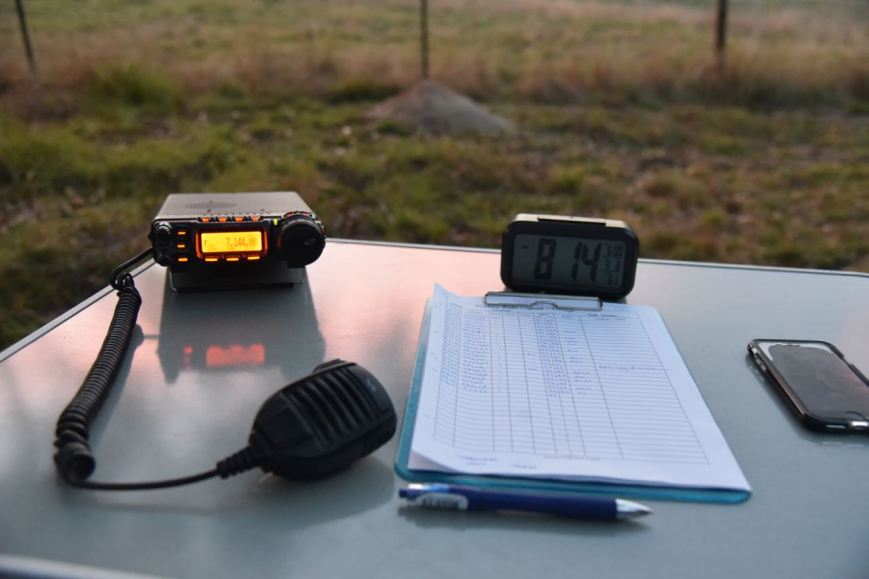
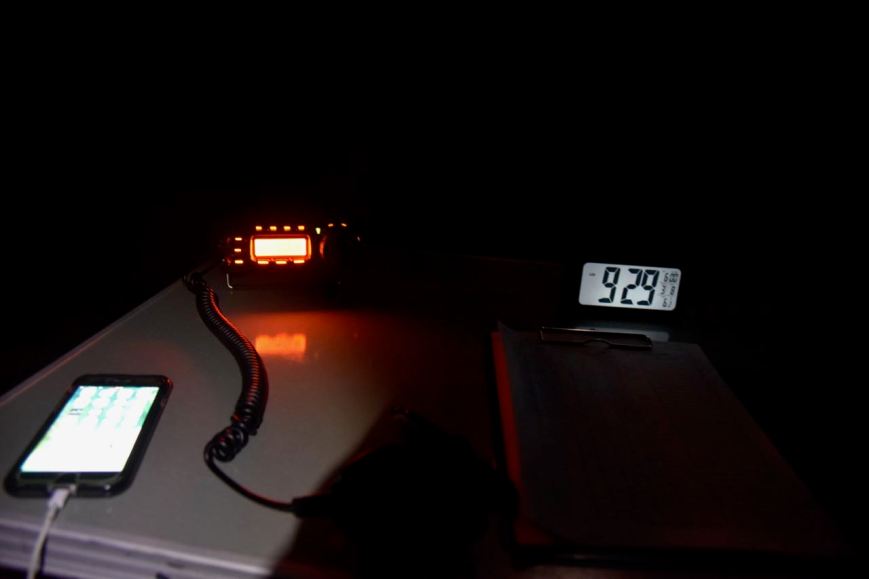
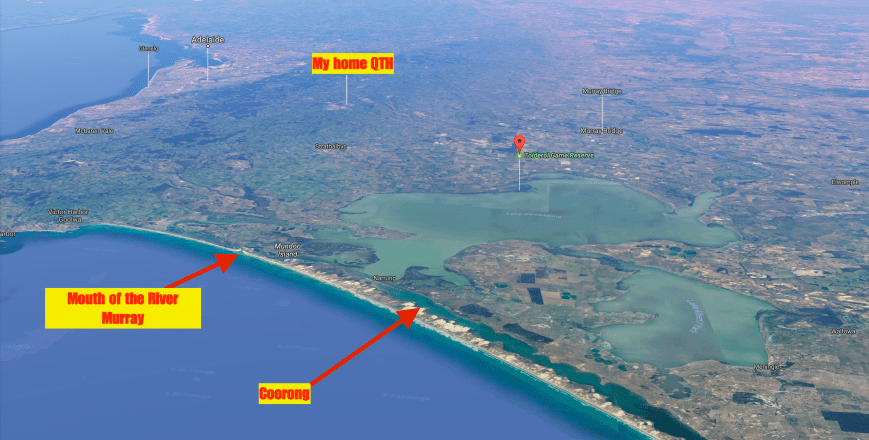
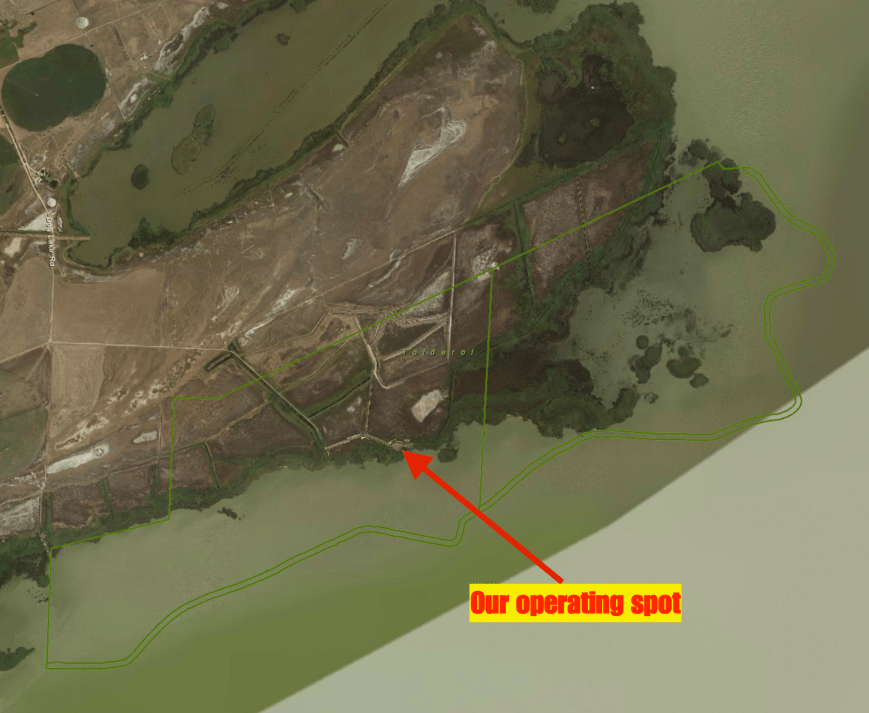
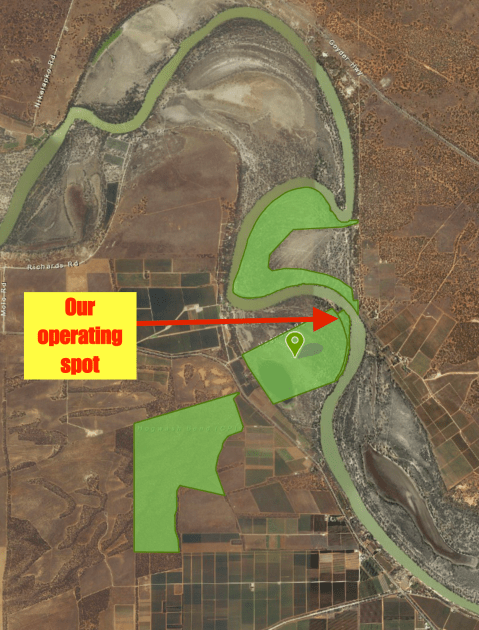
I called in to the Mowantjie Willauwar Conservation on the way home from the Coorong and spent about 90 minutes on air for this contest.  I made a total of 90 contacts on 40m and 80m.

As it turned out 55 of those were in period one, whilst a further 35 were in period two.  I packed up before the conclusion of period 2.  My total score was 795 points.  I came in at position 11.

For more information on the activation, please see my previous post at…….

https://vk5pas.org/2016/07/17/mowantjie-willauwar-conservation-park-5cp-152-and-vkff-0919/

VK5PAS Trans Tasman Low Band Challenge 2016.png

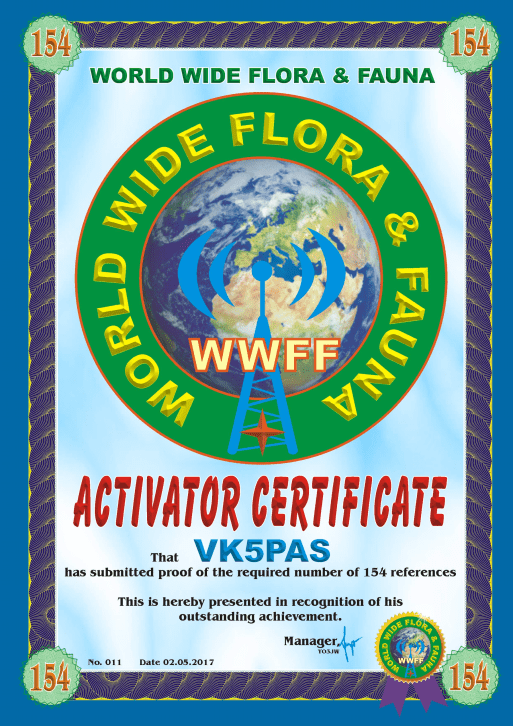
Top Operator certificates

Each year the World Wide Flora Fauna (WWFF) program acknowledges the Top 44 Activators around the world and certificates are issued.  Certificates are issued in the Top Activator (by references) and Top Activator (by number of QSOs).

In 2016 I came in at second place in Oceania in the Top Activator (by references) category.  I was ranked number 12 in the world.  I activated a total of 86 references, but only 74 of those qualified for the WWFF global program due to not reaching the 44 QSO threshold.

A big congratulations to Rob VK4AAC who was in first place in Oceania, and who came in at number 5 in the world.  Rob activated a total of 106 references, with all 106 qualifying for WWFF with 44 QSOs.  A terrific effort Rob.

In the Top Activator (by number of QSOs) I came in first place in Oceania and number 33 in the world, with a total of 6,593 QSOs.  Rob VK4AAC was close on my hells in position 36 with a total of 6,319 QSOs.

Here are the lists showing the Top 44 in each Activator category.

Encounter Marine Park VKFF-1707

Yesterday (Sunday 15th January 2017) I headed down to the Encounter Marine Park VKFF-1707 with Chris VK5FR and David VK5KC and enjoyed a very relaxing afternoon on the beach nof far from the Murray Mouth.  This was the first time the park had been activated for the World Wide Flora Fauna (WWFF) program.

The park is located south of Adelaide and we decided to travel along the beach at Goolwa towards the Murray Mouth and operate from the beach.

screen-shot-2017-01-16-at-10-13-38-am

Above:- The Encounter Marine Park stretches along the southern coast.  This map shows our operating spot in relation to Adelaide.  Map courtesy of Location SA Viewer. 

It was quite a warm day with the expected top temperature being in the high 20’s, so it was an ideal day to be out and about.  Chris and David arrived at my home at around 10.00 a.m. and after packing the Toyota Hi Lux we headed south through the little town of Strathalbyn and on to Goolwa.  The drive took us through some beautiful countryside on the Fleurieu Peninsula and the wine growing region of Currency Creek.

Once we reached the town of Goolwa, we drove down Beach Road to the coastline.  We deflated the tyres a little on the Hi Lux and then drove down onto the beach and headed east towards the Murray Mouth.  As it was such a lovely day there was a lot of activity on the beach.

As we drove along the beach we observed dozens of Sooty Oystercatchers and Pied Oystercatchers.  The Sooty Oystercatcher is the only all black shorebird in Australia.

The Encounter Marine Park encompasses the waters off southern metropolitan Adelaide and the Fleurieu Peninsula.  It extends past the Murray Mouth to the Coorong coast.  At its western boundary, the park includes all waters of Backstairs Passage and the eastern shores of Kangaroo Island.  The park is 3,119 km2 in size and represents 12% of the marine park network in South Australia.

The park contains some of Australia’s best preserved ocean wilderness, including amazing dive sites and spectacular reefs which provide refuge for vitally important fish breeding and shelter areas.  Fishing is very popular within the park, along with diving, and surfing.  Leafy Sea Dragons are found in the park, along with Sea Lions, and Southern Right Whales.

Screen Shot 2017-01-16 at 10.37.06 am.png

Above:- Map showing the location of the Encounter Marine Park.  Map courtesy of National Parks SA.

Below is a terrific video to give you a feel of what this spectacular part of South Australia offers.

We drove down along the beach to the Murray Mouth, where the mighty Murray River flows out into the Southern Ocean.  This is about 10 km south east of Goolwa.  It was very pleasing to see the mouth wide open, which it often is not.  But due to all of the recent rain upstream, it was flowing well out to sea.

The mouth of the Murray River is an opening in the coastal dune system  which separates the river system from the Southern Ocean and which extends from near in a south-easterly direction along the continental coastline for about 145 kilometres.  This is known as the Coorong, which is a National Park.

The Murray mouth divides the dune system into two peninsulas. The peninsula on the west side is known as Sir Richard Peninsula,  which terminates at the mouth with a point named Pullen Spit.  While the peninsula on the east side is known as Younghusband Peninsula,  which terminates at the mouth with a point known in some sources as Sleepy Hollow.

Water flows throughout the mouth from two directions. Firstly, the flow from the west passes along a passage known as the Goolwa Channel which is bounded by Hindmarsh  Island to its north side and secondly, the flow from the east passes along a passage known as the Coorong Channel. 

We found a spot a little away from the people undertaking various activities including fishing and swimming, and rolled out the awning on the side of the Hi Lux.  We erected the fold up table and deck chairs, and the 80/40/20m linked dipole on the 7m squid pole.  As it was a sunny day, the solar panels came out to top up the 44 amp hour power pack charging the radio.  We ran 40 watts output from the Yaesu FT-857d.

Screen Shot 2017-01-16 at 10.02.12 am.png

We were all set up and ready to go by around 0140 UTC (12.10 p.m. South Australian local time).  I jumped on the mic first and headed to 7.144 where we found Marc VK3OHM calling CQ from the Cobboboonee National Park VKFF-0728 in south western Victoria.  Marc had a strong 5/8 signal and reciprocated with a 5/8 for us.  Chris, David and I swapped the mic and logged the Park to Park contact with Marc.  It was a nice way to start our activation.

We then headed down to 7.139 and I started calling CQ.  Steve VK3FSPG/VK3MPR was the first responder to my CQ call, followed by Mick VK3GGG/VK3PMG, and then Tim VK3TJK.  Signals were down a little compared to normal which was not a good sign of things to come.

Ian VK1DI/2 then called us from the Majors Creek State Conservation Area VKFF-1346, and again we swapped the mic to log the Park to Park contact with Ian.

Sergio VK3SFG  was number 10 in the log for me, and I had qualified the park for the VKFF awards.  I jumped out of the ‘drivers seat’ and in went Chris VK5FR.

Chris also qualified the park for VKFF in quite quick time, and David VK5KC soon followed.  But it was very slow going from that time on, on 40m.  The band conditions seemed to be well down and the number of callers was much lower than usual.  We did log a splendid contact with Andrew VK1AD in Canberra who was running just 500 milliwatts.  Andrew was 5/2 to us and he gave us a 5/8 over to the ACT.  Personally there would be no way I could work Andrew on such QRP power from home, as the noise floor is too high.  But from the park, it was ‘armchair’ copy.

We also logged Gerard VK2IO who was operating portable from SOTA peak VK2/ CT-004 in the Central tablelands region of New South Wales.

We then headed over to 20m and Chris started calling CQ on 14.310.  This was answered by Steve VK3MEG who was a beautiful 5/9 from Melbourne.  This was followed by Geoff in Beechworth in north eastern Victoria who also had a nice signal, and then Andrew VK1AD running QRP again, this time 1 watt.  Andrew was peaking 5/7 with us, with some QSB on his signal.  Andrew gave us a 5/8 signal report on our 40 watts, so we lowered our power down to 5 watts and this resulted in a drop of around 3 S points for us.

Again Chris, David, and I swapped the mic on 20m, working into VK1, VK2, VK4, VK4, VK6, and VK8, whilst enjoying a bit of banter amongst the three of us between contacts.

We moved back to 40m where we logged a number of further contacts, mostly on the eastern seaboard of Australia.  It was quite apparent that the close in propagation was not working at all on 40m, with only one VK5 logged and that was Greg VK5GJ at Meadows in the Adelaide Hills.

We logged a few more portable operators, and this included Gerard VK2IO who was portable on SOTA peak VK2/ CT-002 in the Kanangra-Boyd National Park VKFF-0256.  And also .  We alsoAngela VK7FAMP who was portable in the Notley Gorge State Reserve VKFF-1145.  Chris, David and I had all qualified the park, with in excess of 44 contacts each.

Prior to going QRT for the day we also tried 80m where we logged a handful of VK5 stations.  We also played a bit with my Chinese version of the Buddistick without any success.  We had major problems in bringing down the VSWR.  So any contacts on that antenna will have to wait for another day.

It was a great afternoon out in the Encounter Marine Park, but we were starting to get a little thirsty for a beer, so we packed up and made our way back down along the beach to Goolwa.

dsc_4935

Above:- View looking east along Goolwa Beach, back down towards the Murray Mouth

We stopped off at the Corio Hotel in Goolwa for a couple of beers, and then drove on to Strathalbyn where we stopped for tea at the Victoria Hotel, before heading back to my home QTH at Mount Barker.

Below is a short 5 minute video of our activation…..

I worked the following stations on 40m SSB:-

  1. VK3OHM/p (Cobboboonee National Park VKFF-0728)
  2. VK3FSPG
  3. VK3MPR
  4. VK3GGG
  5. VK3PMG
  6. VK3TJK
  7. VK1DI/2 (Majors Creek State Conservation Area VKFF-1346)
  8. VK3SQ
  9. VK7CW
  10. VK3SFG
  11. VK1AD (QRP 500 mw)
  12. VK2IO/p (SOTA VK2/ CT-004)
  13. VK2PDW
  14. VK1AT
  15. VK3NAL
  16. VK3FT
  17. VK7DW
  18. VK3AFB
  19. VK3PAT/m
  20. VK2NEO
  21. VK5EE
  22. VK2GKA
  23. VK3IRM
  24. VK3ARH
  25. VK3HRA
  26. VK5GJ
  27. VK7QB
  28. VK2VV
  29. VK3DMZ
  30. VK3FMAA
  31. VK3RV
  32. VK2IO/p (SOTA VK2/ CT-002 & Kanangra-Boyd National Park VKFF-0256)
  33. VK7FAMP/p (Notley Gorge State Reserve VKFF-1145)
  34. VK3MCD

I worked the following stations on 20m SSB:-

  1. VK3MEG
  2. VK3SQ
  3. VK1AD (QRP 1 watt)
  4. VK2IG
  5. VK4DMC
  6. VK3TKK
  7. VK4HNS/p
  8. VK8GM
  9. VK4RF
  10. VK4HA
  11. VK3AUR
  12. VK6GLX
  13. VK3FT
  14. VK2YK

I worked the following stations on 80m SSB:-

  1. VK5BJE
  2. VK5FMWW
  3. VK5FVSV
  4. VK5YX


References.

Birdlife Australia, 2017, <http://birdlife.org.au/bird-profile/sooty-oystercatcher&gt;, viewed 16th January 2017

National Parks South Australia, 2016, ‘Marine Park 15 Encounter Marine Park’

Wikipedia, 2017, <https://en.wikipedia.org/wiki/Murray_Mouth&gt;, viewed 16th January 2017

Salt Lagoon Islands Conservation Park 5CP-203 and VKFF-1092

It was another Friday afternoon and time for another Friday afternoon/evening session for the VK5 National and Conservation Parks Award.  For the past couple of years, a small group of South Australian amateurs have headed out into the field on each Friday afternoon and into the evening, to promote the award.  So yesterday (Friday 13th January 2016) I headed south and activated the Salt Lagoon Islands Conservation Park 5CP-203 and VKFF-1092.  The park is located about 110 km south of Adelaide (by road) and about 14 km south west of the little town of Narrung.

Screen Shot 2017-01-11 at 2.40.42 pm.png

Above:- Map showing the location of the Salt Island Lagoons Conservation Park, south east of Adelaide.  Map courtesy of Location SA Map Viewer.

Last year my wife Marija VK5FMAZ and I headed down south in the hope that we could activate this park via Pelican Point Road, but sadly access was an issue and we were unable to do so.  In the interim I have been so busy on WIA issues and other commitments, that I hadn’t progressed any further enquiries regarding access.  But in the last few days I was able to speak with the land owner, Mr. David Harvey, who kindly allowed me to access the park via his property.  The only other way into the park is via boat.

This was to be a unique park for me as an activator, and the very first time that Salt Lagoon Islands Conservation Park had been activated.

Salt Lagoon Islands Conservation Park is located at the south east extent of Lake Alexandrina which is a large freshwater ephermal lake.  Lake Alexandrina adjoins the smaller Lake Albert, and together they are known as the Lower Lakes.  Lake Albert was named after Prince Albert, the Consort of Queen Victoria, by Governor George Gawler.  Lake Alexandrina was named after Princess Alexandrina, niece and successor of King William IV of Great Britain and Ireland.

The park comprises two islands and some adjoining waters.  These two small islands are one of the main breeding sites for a number of the larger water birds in South Australia. Species known to breed there include two species of spoonbill, three species of egret, four species of cormorant, three species of ibis and the Nankeen night heron.

screen-shot-2017-01-11-at-2-34-38-pm

Above:- Aerial shot showing the location of the park.  Image courtesy of Location SA Map Viewer.

This is Tiger snake and Red-bellied Black snake country, so I made as much noise as possible whilst setting up, hoping that any that were in the area slithered away from my operating spot.  Tiger snakes are extremely dangerous to humans, with its venom being strongly neurotoxic and coagulant.  The Red-belliwed Black’s venom has predominantly anticoagulant and myotoxic effects.

Above:- Tiger snake (left) & Red bellied Black snake (right).  Images courtesy of wikipedia

There are two main ways to get down to the park from my home.  The first is via the South Eastern Freeway, down past Murray Bridge and on to Tailem Bend and then to Meningie.  Or via Langorne Creek, Wellington and Narrung.  This is the more picturesque of the two drives and the one I chose.  It took me down through the wine growing region of Langhorne Creek and then on to Wellington.

After leaving Langhorne Creek I travelled east on theLanghorne Creek-Wellington Road, passing the Tolderol Game Reserve VKFF-1752 and the turn off to the Ferries McDonald Conservation Park VKFF-0881.  I soon reached the little town of Wellington which is situated on the banks of the mighty Murray River.  It is just upstream from where the Murray empties into Lake Alexandrina.

Wellington was the original crossing of the Murray River for people, livestock, and goods travelling overland between Melbourne and Adelaide, until a bridge was built in 1879 at nearby Murray Bridge.  During the years 1852-1853, gold was escorted through this are by South Australia Police troopers from the Victorian gold fields, and there is a plaque here to commemorate that.  You can also view the original bell which was used to summon the ferry.  The impressive old Wellington courhouse, dating back to the 1840’s, is now a cafe and museum.

I boarded the ferry and crossed the Murray River.  The ferry was absolutely brim full, and I noticed a lot of interstate number plates on the vehicles, so tourism appears to be doing well down in this area.

After crossing the Murray River on the ferry I drove south on the Princes Highway towards the town of Meningie.  Rather than continuing on to Meningie, I turned right onto Pottalloch Road and followed the southern border of Lake Alexandrina.  There are some great views to be enjoyed of the lake along this drive.

I also drove passed the  Point Malcolm lighthouse which is Australia’s only inland lighthouse, and also believed to be the only inland lighthouse in the Southern Hemisphere.  The lighthouse was built in 1878 on the eastern side of the narrows between Lake Alexandrina and Lake Albert.  It was last operated in 1931 due to a decline in river traffic.

I crossed the ferry and entered the little town of Narrung, which was established in 1907.  Narrung is local aboriginal language for ‘place of big sheoaks’.  It was pleasing to see a lot of caravaners camping along the banks of the lake.

I left Narung and travelled south on Loveday Bay Road until I reached Mark Point Road.  I then travelled south until I reached Pelican Point Road.  The very impressive Coorong National Park was now directly in front of me.  The Coorong is a 130 km stretch of saltwater lagoons protected from the Southern Ocean by sweeping sand dunes.  The Coorong is a wetland of international importance, and supports many significant and endangered flora and fauna.

I then travelled a few km along Pelican Point Road until I reached a set of unlocked double gates.  This is where I needed to enter to access the park.  Please remember, this is is PRIVATE PROPERTY!.  DO NOT access the land unless you have the specific permission of the landowner.  I followed a track around the western edge of the lagoon, enjoying the scenery and wildlife, including numerous Western Grey kangaroos and various birdlife.

Once I got around to the northern side of the lagoons, the lagoons themselves came into view.  Access to the water’s edge was not possible as the soil was very boggy to walk on.

I was very cognisant of snakes so I found an area where the grass wasn’t too tall, and a few metres from the reeds and the water.  I set up the fold up table, deck chair, and used the Yaesu FT-857d set at 40 watts output, and the 80/40/20m linked dipole supported on the 7 metre squid pole.  It was quite a nice sunny afternoon but there was a very strong southerly blowing directly off the nearby Southern Ocean, and the squid pole certainly had a huge flex in it.  Sadly, the band was also a little noisy, with some loud static crashes.

Screen Shot 2017-01-11 at 2.34.59 pm.png

Above:- Aerial shot of the park showing my operating position.  Image courtesy of Location SA Map Viewer.

I was a little late from my posted activation time, as I had stopped off along the way to take a few photos.  In fact I was around one hour late, but that did not seem to deter the park hunters.  I called CQ on 7.144 and it did not take long for a mini pile up to ensure, with park hunters wanting to log a unique park.  Mike VK5FMWW was my first station logged, followed by Steve and then Marc VK3OHM/p who was activating the Port Campbell National Park VKFF-0420.

I continued to work through the pile up, asking at one point for portable, mobile, and QRP stations, to give them a chance through the calls of the higher powered stations.  This included logging Rob VK4FFAB/p who was activating the Bunyaville Conservation Park VKFF-1493.  I also worked Phil VK6ADF/p who was in the Yarra Yarra Lake Conservation Park.

I worked a total of 36 stations on 40m from VK2, VK3, VK4, VK5, VK6, and VK7, before QSYing to 14.310 on the 20m band.  My first caller there was Gary VK5ZK at nearby Goolwa who had a good 5/8 signal on ground wave no doubt.  The 20m band was open to Victoria and I logged Peter VK3PF, Ian VK3AXF, Peter VK3TKK/p and Joe VK3MAB.  I also logged another Park to Park contact with Phil VK6ADF/p in the Yarra Yarra Lake Conservation Park.

Sadly there was no opening to Europe for me on the long path and no DX was logged, other than Ken ZL4KD, the ZLFF co-ordinator.  Prior to heading off to 80m I tuned across the 20m and heard very little activity, certainly no Europe.  There were a few weak JA stations and also a BG8 from China who was calling CQ.  I gave him a shout, but unfortunately he was unable to hear me.

I then moved to 3.60 on the 80m band and worked a total of 9 stations amongst the very loud static crashes, which made it particularly difficult at times.  The first station logged on 80m was the every reliable Adrian VK5FANA on the Yorke Peninsula with a very strong 5/9 ++ signal.  States worked on 80m were VK2, VK3, VK4, and VK5.  I even worked Rick VK4RF/VK4HA who was a good 5/7 signal.

I then lowered the squid pole and erected the 15m dipole and called CQ on 21.244.  I believe Mick VK3GGG called me and I heard a 4/1 signal report, but sadly I was not able to be heard well enough at the other end for it to be a valid contact.  I called CQ for around 10 minutes on 15m, but had no takers.  Despite this, it was quite enjoyable sitting back admiring the view, and watching the many waterbirds flying overhead, including Ibis, Cormorants, and Pelican.

I moved back to 40m with the local time now approaching 8.00 p.m.  I hadn’t really planned on being out this late, but was it was approaching 0930 UTC I decided to stick around and book into the 7130 DX Net.

I headed to 7.130 and had asked if the frequency was in use, with no response, and I had just self spotted myself on that frequency on parksnpeaks.  When a JA8 started calling CQ.  Mal VK5MJ the Net Control of the 7130 DX Net then called in and due to the frequency being occupied, the net was moved up to 7.135.  I worked a total of 12 stations on the net including William FO5JV in French Polynesia (5/8 sent and 5/2 received), and Bill W1OW in Massachusetts USA ((5/7 sent and 4/5 received).  I was pleased to make contact with Bill as he is an avid park hunter.

Other good contacts on the net including a QSO with Damien VK5FDEC who was running QRP (1/2 watt).  Damien was a good 5/8 signal to Salt Lagoon Islands.  I also made contact with Tim VK8LLA in Darwin.

After a few rounds on the net I moved up the band to 7.146.  It was starting to get dark and I wanted to be out of the park before it was pitch black, as I did not want to get lost.  I logged a further 18 stations from VK2, VK3, VK5, VK7, and VK8.  This included Greg VK8GM in Alice Springs.

So after 3 and 1/2 hours in the park I had a total of 88 contacts in the log.  Of those, 65 were on 40m, 14 on 20m, and 9 on the 80m band.  I safely manouevered my way out of the park and headed back home.  This time I drove back into Meningie, and then on to Tailem Bend, and along the South Eastern Freeway to home.  Below is a map showing my route for the day.

Screen Shot 2017-01-14 at 11.24.03 am.png

Above:- Map showing my route for the day.  Map courtesy of plotaroute.com

I worked the following stations on 40m SSB:-

  1. VK5FMWW
  2. VK5FVSV
  3. VK4KUS
  4. VK3OHM/p (Port Campbell National Park VKFF-0420)
  5. VK4HNS/p
  6. VK4FRAL
  7. VK3PF
  8. VK5EE
  9. VK5KLV
  10. VK3ARH
  11. VK7AN
  12. VK4RF
  13. VK4HA
  14. VK2IO
  15. VK4FFAB/p (Bunyaville Conservation Park VKFF-1493)
  16. VK5ZK
  17. VK3FORD
  18. VK3FBAA
  19. VK4GSF
  20. VK3GGG
  21. VK3PMG
  22. VK7BC
  23. VK5HS
  24. VK6MB
  25. VK2YK
  26. VK3FEVT
  27. VK6ADF/p (Yarra Yarra Lake Conservation Park VKFF-1443)
  28. VK6BSAm
  29. VK3FPWH
  30. VK3NAL
  31. VK5FRSM
  32. VK5PL
  33. VK7VZ/p
  34. VK5FANA
  35. VK5FAKV
  36. VK3AXF
  37. VK5MJ
  38. VK3OB
  39. FO5JV
  40. VK5ML
  41. VK2SK
  42. VK7VEK
  43. W1OW
  44. VK5FDEC
  45. VK8LLA
  46. VK2XRC
  47. VK5AFZ
  48. VK3FLCS
  49. VK6NTE
  50. VK7FRJG
  51. VK3RU
  52. VK3FSPG
  53. VK3MPR
  54. VK5NFT
  55. VK3FCMC
  56. VK8GM
  57. VK3MIJ
  58. VK2JNG/p
  59. VK5DO
  60. VK2EMI
  61. VK5DC
  62. VK3SOT
  63. VK2QK
  64. VK5ND
  65. VK3FPHG

I worked the following stations on 20m SSB:-

  1. VK5ZK
  2. VK6NU
  3. VK3PF
  4. VK6ADF/p (Yarra Yarra Lake Conservation Park VKFF-1443)
  5. VK4RF
  6. VK4HA
  7. VK3AXF
  8. VK2YK
  9. VK6XN
  10. VK3TKK/p
  11. VK7DW
  12. ZL4KD
  13. VK6MB
  14. VK3MAB

I worked the following stations on 80m SSB:-

  1. VK5FANA
  2. VK4RF
  3. VK4HA
  4. VK5BJE
  5. VK3GGG
  6. VK3PMG
  7. VK2PDW
  8. VK2YK
  9. VK2VU

References.

Australian Museum, 2017, <http://australianmuseum.net.au/tiger-snake&gt;, viewed 12th January 2017

Australian Museum, 2017, <http://australianmuseum.net.au/red-bellied-black-snake&gt;, viewed 12th January 2017

Coorong Country, 2017, <http://coorongcountry.com.au/narrung/&gt;, viewed 14th January 2017

Lighthouse of South Australia, 2017, <http://www.lighthouses.org.au/lights/SA/Point%20Malcolm/Point%20Malcolm.htm&gt;, viewed 14th January 2017

National Parks South Australia, 2017, <http://www.environment.sa.gov.au/parks/Find_a_Park/Browse_by_region/Limestone_Coast/coorong-national-park&gt;, viewed 14th January 2017

Wikipedia, 2017, <https://en.wikipedia.org/wiki/Lake_Alexandrina_(South_Australia)&gt;, viewed 12th January 2017

URFF certificate

I received the certificate below a few days ago from the Ukraine URFF Awards Team.

Back on the 29th December 2016 I worked EM8RFF on 20m, in Regional Landscape Park Yalivschyna, URFF-0173.  Everyone who worked EM8RFF in this new reference, received one of the certificates.

VK5PAS.jpg

From 25th December 2016 to 30th December 2016 a team of Ukrainian hams operated from the park.

em8rff_300dpi

Yalivschyna is located in northern Ukraine, to the north east of the capital Kiev.

Top VKFF Activator and Top VKFF Hunter

It is the start of a new year and the time to announce the Top VKFF Activator and the Top VKFF Hunter for 2016 for the World Wide Flora Fauna (WWFF) program.

CONGRATULATIONS to the following…….

Rob VK4AAC – Top VKFF Activator (having activated 106 VKFF references).

Mick VK3PMG – Top VKFF Hunter (having worked 498 VKFF references).

I came in at number 6 as a Hunter and number 2 as an activator.

Certificates have been forwarded to both Rob and Mick.

My SOTA & Park activator stats for 2016

I thoroughly enjoyed operating portable during 2016.  I visited some fantastic locations, including Norfolk Island out in the Pacific.  I activated a total of 12 SOTA summits and undertook a total of 98 park activations.  All up I made a total of 6,588 QSOs whilst I was operating portable during 2016.  The highlight of the year was being able to undertake activations with my wife Marija VK5FMAZ, who obtained her Foundation licence in March 2016.

Road-to-SEO-Predictions-2016.jpg

A number of great events took place in 2016.  They included the 2016 VKFF Activation Weekend, the VKFF Team Challenge and the Freeze your Butt Off Contest.

I also operated portable during the RD Contest and the VK Shires Contest.

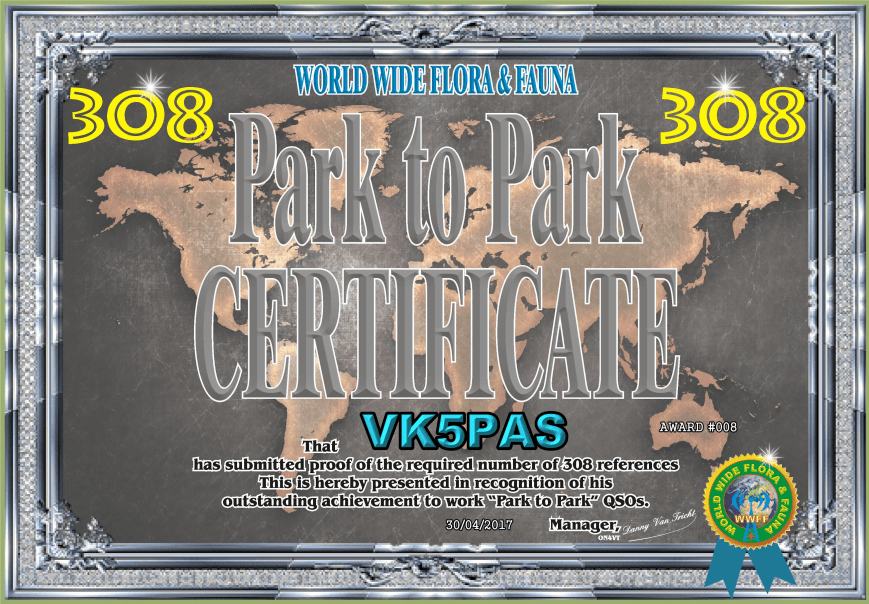
I was issued a number of awards during 2016.  Some of those are shown below.

Below is a summary of my SOTA & Park activations…..

Summits on the Air

  • 12 unique SOTA activations
  • Total of 638 QSOs.
  1. Mount Bryan South Australia VK5/ SE-001 (31/12/2016)
    • 76 QSOs
  2. Brown Hill Range South Australia VK5/ SE-004 (31/12/2016)
    • 56 QSO
  3. Point 756 Pyrenees Victoria VK3/ VS-018 (17/11/2016)
    • 33 contacts
  4. Blue Mountain Victoria VK3/ VS-015 (17/11/2016)
    • 22 contacts
  5. One Tree Hill Victoria VK3/ VS-036 (16/11/2016)
    • 74 contacts
  6. Mount Baranduda Victoria VK3/ VE-189 (14/11/2016)
    • 30 contacts
  7. Huon Hill Victoria VK3/ VE-237 (14/11/2016)
    • 32 contacts
  8. Black Bullock Hill South Australia VK5/ SE-016 (7/8/2016)
    • 65 contacts
  9. Mount Bates Norfolk Island VK9/ NO-001(23/5/2016)
    • 25 contacts
  10. Mount Arapiles Victoria VK3/ VW-022 (29/3/2016)
    • 50 contacts
  11. Mount Gawler South Australia VK6/ SE-013 (26/1/2016)
    • 82 contacts
  12. Mount Lofty South Australia VK5/ SE-005 (1/1/2016)
    • 93 contacts

Parks

  • 86 unique park activations
  • Total of 6,588 QSOs
  1. Adelaide International Bird Sanctuary VKFF-1766 (16/12/2016)
    • 56 contacts
  2. Monarto Woodlands Conservation Park VKFF-1763 and 5CP-276 (9/12/2016)
    • 73 contacts
  3. Ridley Conservation Park VKFF-0932 (27/11/2016)
    • 65 contacts
  4. Swan Reach Conservation Park VKFF-0832 (27/11/2016)
    • 54 contacts
  5. Marne Valley Conservation Park VKFF-0906 (27/11/2016)
    • 58 contacts
  6. Mowantjie Willauwar Conservation Park VKFF-0919 (26/11/2016)
    • 35 contacts
  7. Poonthie Ruwe Conservation Park VKFF-1082 (26/11/2016)
    • 94 contacts
  8. Ararat Hills Regional Park VKFF-0958 (16/11/2016)
    • 74 contacts
  9. Baranduda Regional Park VKFF-0959 (14/11/2016)
    • 30 contacts
  10. Wodonga Regional Park VKFF-0980 (14/11/2016)
    • 32 contacts
  11. Murray Valley National Park VKFF-1178 (13/11/2016)
    • 72 contacts
  12. Barmah National Park VKFF-0739 (13/11/2016)
    • 64 contacts
  13. Terrick Terrick National Park VKFF-0630 (12/11/2016)
    • 58 contacts
  14. Gunbower National Park VKFF-0740 (12/11/2016)
    • 68 contacts
  15. Kerang Regional Park VKFF-0970 (11/11/2016)
    • 36 contacts
  16. Leaghur State Park VKFF-0762 (11/11/2016)
    • 55 contacts
  17. Montacute Conservation Park VKFF-0910 and 5CP-139 (6/11/2016)
    • 79 contacts
  18. Kinchina Conservation Park VKFF-1764 (3/11/2016)
    • 61 contacts
  19. John Forrest National Park VKFF-0250 (22/10/2016)
    • 15 contacts
  20. Greenmount National Park VKFF-0218 (22/10/2016)
    • 14 contacts
  21. Lesmurdie Falls National Park VKFF-0284 (21/10/2016)
    • 8 contacts
  22. Monarto Woodlands Conservation Park VKFF-1763 and 5CP-276 (19/10/2016)
    • 60 contacts
  23. Monarto Conservation Park VKFF-0829 (16/10/2016)
    • 68 contacts
  24. Loch Luna Game Reserve VKFF-1723 (13/10/2016)
    • 10 contacts
  25. Peebinga Conservation Park VKFF-0830 and 5CP-173 (12/10/2016)
    • 28 contacts
  26. Mount Monster Conservation Park VKFF-0800 and 5CP-149 (11/10/2016)
    • 18 contacts
  27. Franklin Harbour Conservation Park VKFF-0807 and 5CP-071 (18/9/2016)
    • 47 contacts
  28. Middlecamp Hills Conservation Park VKFF-1059 and 5CP-184 (18/9/2016)
    • 54 contacts
  29. Yeldulknie Conservation Park VKFF-1127 and 5CP-020 (17/9/2016)
    • 54 contacts
  30. The Plug Range Conservation Park VKFF-1107 and 5CP-231 (17/9/2016)
    • 45 contacts
  31. Heggarton Conservation Park VKFF-1037 and 5CP-089 (17/9/2016)
    • 58 contacts
  32. Whyalla Conservation Park VKFF-0805 and 5CP-253 (16/9/2016)
    • 50 contacts
  33. Ironstone Hill Conservation Park VKFF-0895 and 5CP-095 (16/9/2016)
    • 55 contacts
  34. Munyaroo Conservation Park VKFF-0920 and 5CP-154 (16/9/2016)
    • 51 contacts
  35. Belair National Park VKFF-0022 and 5NP-001 (11/9/2016)
    • 103 contacts
  36. Baudin Conservation Park VKFF-1002 and 5CP-012 (24/8/2016)
    1. 61 contacts
  37. Lashmar Conservation Park VKFF-0902 and 5CP-113 (24/8/2016)
    • 49 contacts
  38. Pelican Lagoon Conservation Park VKFF-0926 and 5CP-174 (24/8/2016)
    • 45 contacts
  39. Lathami Conservation Park VKFF-0903 and 5CP-114 (23/8/2016)
    • 48 contacts
  40. Beyeria Conservation Park VKFF-1005 and 5CP-017 (23/8/2016)
    • 71 contacts
  41. Nepean Bay Conservation Park VKFF-1067 and 5CP-159 (23/8/2016)
    • 54 contacts
  42. Cygnet Estuary Conservation Park VKFF-1130 and 5CP-273 (23/8/2016)
    1. 53 contacts
  43. Parndana Conservation Park VKFF-0925 and 5CP-171 (22/8/2016)
    • 60 contacts
  44. Dudley Conservation Park VKFF-0809 and 5CP-058 (22/8/2016)
    • 47 contacts
  45. Simpson Conservation Park VKFF-1098 and 5CP-213 (22/8/2016)
    • 54 contacts
  46. Cape Willoughby Conservation Park VKFF-1014 and 5CP-033
  47. Totness Recreation Park VKFF-1754  (13/8/2016 & 14/8/2016)
    • 426 contacts
  48. Cox Scrub Conservation Reserve VKFF-1701 (7/8/2016)
    • 73 contacts
  49. Tolderol Game Reserve VKFF-1752 (5/8/2016)
    • 71 contacts
  50. Totness Recreation Park VKFF-1754 (3/8/2016)
    • 77 contacts
  51. Kyeema Conservation Park VKFF-0826 and 5CP-107 (29/7/2016)
    • 46 contacts
  52. Cudlee Creek Conservation Park VKFF-1023 and 5CP-050 (23/7/2016)
    • 47 contacts
  53. Mowantjie WIllauwar Conservation Park VKFF-0919 and 5CP-152 (16/7/2016)
    • 90 contacts
  54. Coorong National Park VKFF-0115 and 5NP-005 (16/7/2016)
    • 25 contacts
  55. Ettrick Conservation Park VKFF-1029 and 5CP-267 (26/6/2016)
    • 101 contacts
  56. Grass Tree Conservation Park VKFF-0885 and 5CP-080 (13/6/2016)
    • 57 contacts
  57. Talapar Conservation Park VKFF-1103 and 5CP-222 (13/6/2016)
    • 54 contacts
  58. Fairview Conservation Park VKFF-0879 and 5CP-065 (13/6/2016)
    • 62 contacts
  59. Carpenter Rocks Conservation Park VKFF-1108 and 5CP-038 (11/6/2016)
    • 102 contacts
  60. Telford Scrub Conservation Park VKFF-0805 and 5CP-226 (11/6/2016)
    • 54 contacts
  61. Dingley Dell Conservation Park VKFF-1025 and 5CP-056 (11/6/2016)
    • 56 contacts
  62. Aberdour Conservation Park VKFF-0994 and 5CP-001 (10/6/2016)
    • 28 contacts
  63. Christmas Rocks Conservation Park VKFF-1020 and 5CP-266 (10/6/2016)
    • 52 contacts
  64. Kelvin Powrie Conservation Park VKFF-0899 and 5CP-103 (10/6/2016)
    • 34 contacts
  65. Norfolk Island VKFF-0392
    • 216 contacts
  66. Norfolk Island VKFF-0392 (27/5/2016)
    • 59 contacts
  67. Norfolk Island VKFF-0392 (26/5/2016)
    • 107 contacts
  68. Norfolk Island VKFF-0392 (24/5/2016)
    • 120 contacts
  69. Norfolk Island VKFF-0392 (23/5/2016)
    • 25 contacts & 56 contacts
  70. Lane Cove National Park VKFF-0281 (21/5/2016)
    • 23 contacts
  71. Wiljani Conservation Park VKFF-1159 and 5CP-274 (30/4/2016)
    • 101 contacts
  72. Ferries McDonald Conservation Park VKFF-0881 and 5CP-067 (25/4/2016)
    • 120 contacts
  73. Maize Island Lagoon Conservation Park VKFF-0827 and 5CP-123 (17/4/2016)
    • 57 contacts
  74. Cooltong Conservation Park VKFF-0823 and 5CP-046 (17/4/2016)
    • 59 contacts
  75. Pooginook Conservation Park VKFF-0929 and 5CP-186 (16/4/2016)
    • 81 contacts
  76. Pike River Conservation Park VKFF-0831 and 5CP-180 (15/4/2016)
    • 25 contacts
  77. Kenneth Stirling Conservation Park VKFF-0781 and 5CP-104 (10/4/2016)
    • 54 contacts
  78. Myponga Conservation Park VKFF-0921 and 5CP-157 (4/4/2016)
    • 57 contacts
  79. Eric Bonython Conservation Park VKFF-0877 and 5CP-062 (3/4/2016)
    • 100 contacts
  80. Waitpinga Conservation Park VKFF-0940 and 5CP-243 (3/4/2016)
    • 113 contacts
  81. Deep Creek Conservation Park VKFF-0780 and 5CP-054 (2/4/2016)
    • 45 contacts
  82. Talisker Conservation Park VKFF-0790 and 5CP-223 (2/4/2016)
    • 121 contacts
  83. Deep Creek Conservation Park VKFF-0780 and 5CP-054 (1/4/2016)
    • 113 contacts
  84. Yulti Conservation Park VKFF-1128 and 5CP-261 (1/4/2016)
    • 53 contacts
  85. Wolseley Common Conservation Park VKFF-1125 and 5CP-258 (30/3/2016)
    • 59 contacts
  86. Mount Arapiles/Tooan State Park VKFF-0765 (29/3/2016)
    • 50 contacts
  87. Kelvin Powrie Conservation Park VKFF-0899 and 5CP-103 (29/3/2016)
    • 31 contacts
  88. Scott Creek Conservation Park VKFF-0788 and 5CP-207 (25/3/2016)
    • 102 contacts
  89. Monarto Conservation Park VKFF-0828 (19/3/2016)
    • 229 contacts
  90. Mark Oliphant Conservation Park VKFF-0782 and 5CP-127 (11/3/2016)
    • 86 contacts
  91. Kaiser Stuhl Conservation Park VKFF-0897 and 5CP-097 (26/2/2016)
    • 48 contacts
  92. Black Hill Conservation Park VKFF-0776 and 5CP-022 (19/2/2016)
    • 73 contacts
  93. Charleston Conservation Park VKFF-0777 and 5CP-041 (12/2/2016)
    • 72 contacts
  94. Marne Valley Conservation Park VKFF-0906 and 5CP-128 (31/1/2016)
    • 68 contacts
  95. The Knoll VKFF-0937 and 5CP-229 (26/1/2016)
    • 60 contacts
  96. Ettrick Conservation Park VKFF-1029 (15/1/2016)
    • 89 contacts
  97. Mount Billy Conservation Park VKFF-0912 (8/1/2016)
    • 80 contacts
  98. Cleland Conservation Park VKFF-0778 and 5CP-042 (1/1/2016)
    • 93 contacts

Red Banks Conservation Park VKFF-1086 and 5CP-195

Our last activation for the trip up to the Mid North of South Australia was to be on Monday 2nd January 2017, at the Red Banks Conservation Park VKFF-1086 and 5CP-195.  The park is located about 181 km north of Adelaide and about 18 km west of Burra.  This was to be another unique park for both Marija VK5FMAZ and I for the World Wide Flora Fauna (WWFF) program and the VK5 National & Conservation Parks Award.

Screen Shot 2017-01-04 at 9.43.01 am.png

Above:- Map showing the location of the Red Banks Conservation Park in the Mid North of South Australia.  Map courtesy of Protected Planet.

After breakfast and packing the Toyota Hi Lux, Marija and I headed out of Burra on Kooringa Road and then onto the Goyder Highway.  We then turned left onto Eastern Road and headed towards the park.  Eastern Road is a dirt road but is in good condition and easily passed in a conventional vehicle.  About 9 km along the road, the park sign came into view.  There is an entry point for bushwalkers at this point, but the main entrance to the park is a little further along.

It was quite a cool morning with a lot of cloud cover.  Not dissimiliar to weather conditions the day before, but fortunately no rain.  Marija and I suspected that the cloud cover would burn off and the sun would come out which is what had happened the past few mornings.  And that is exactly what happened.  It was quite slow going out to the park as there were a large number of Western Grey Kangaroos out enjoying their breakfast.

Red Banks Conservation Park is 1,024 hectares in size and contains remnant vegetation of the Mid North region of South Australia.  Two deeply incised meandering creek lines dissect the park.  These display a spectacular array of erosion formations, including vertical banks of up to 30 metres in depth.  They have a distinctly red colouration.  Thus the name of the park.

Red Banks has a permanent water supply was used by the Aboriginals and by stockman at the junction of the four major stock routes.  There was a little bit of water in the creek near where we set up.

The Red Banks Conservation Park has been called by palaontologists as one of the richest megafauna sites in Australia.  One of the prehistoric creatures to have previously called this area home, was the Diprotodon, the largest known maryuspial ever to have lived.  Diprotodon means ‘two forward teeth’.  Diprotodon lived here until around 65.000 years ago.

The largest specimens of Diprotodon were hippopotamus sized, about 3 mtres from the nose to the tail, and standing at about 2 metres tall at the shoulder and weighing about 2,790 kilograms.

The closest surviving relatives of the Diprotodon are the wombats and the koala.  Diprotodon superficially resembled a rhinoceros without a horn. Its feet turned inwards like a wombat’s, giving it a pigeon-toed appearance. It had strong claws on the front feet and its pouch opening faced backwards. Footprints of its feet have been found showing a covering of hair which indicates it had a coat similar to a modern wombat.

We set up in the main visitor carpark area of the park.  A well maintained dirt track leads to this area from the main entrance.  There were no other visitors at this time so we strung out the 80/40/20m linked dipole and set up the fold up table and deck chair underneath the shade of a gum tree, as the sun was starting to poke its head out of the clouds.

Screen Shot 2017-01-04 at 9.42.40 am.png

Above: – Aerial shot of the park showing our operating spot.  Image courtesy of Protected Planet.

Our first contact was with David VK3IL who was activating the Churchill Island Marine National Park VKFF-0947.  This was David’s first ever park activation.  David was booming in with a 5/9 signal.  We heard David subsequently work Adrian VK5FANA on the Yorke Peninsula and there was not a sign of Adrian on 40m, so Marija and I decided to put a few CQ calls out on 80m prior to calling CQ on 40m.

On 80m we logged Adrian VK5FANA, Tony VK5TT who was operating remote, and Jim VK5JW at Cowell on the Eyre Peninsula.  All had very strong signals, but sadly they were our only callers on 80m.

We then moved back to 40m and started calling CQ on 7.144.  This was answered by Mick VK3GGG/VK3PMG, followed by Geoff VK3SQ, and Steve VK3FSPG.  Marija and I had soon clocked up our 10 contacts required for the Australian (VKFF) chapter of WWFF.

I pushed on and worked a total of 22 stations on 40m including Ian VK1DI/2 on SOTA peak Big Badja Hill VK2/ SM-059 which is located in the Deua National Park VKFF-0138.  I also spoke with Peter VK3YE who was using a Bitex kit transceiver and running just 5 watts (5/5 both ways).

I then moved to 20m and called CQ on 14.310.  The first taker there was Karl VK2GKA, followed by Rick VK4RF/VK4HA and then Matt VK1MA.  I worked a total of 18 stations on 20m in VK1, VK2, VK3, VK4, VK6 and VK7.  This included another contact with Ian VK1DI/2 on Big Badja Hill andDeua National Park and Peter VK3PF who was activating SOTA summit Huon Hill VK3/ VE-237 in the Wodonga Regional Park VKFF-0980.

The Victorian stations were quite strong on 20m and quite low down on 40m, so I suspected the 15m band would probably be open.  Marija and I took down the linked dipole and put up the 15m dipole.  I headed to 21.244 and called CQ and this was answered by Ori VK3NRG who was a strong 5/8.  This was followed by Gerard VK2IO, Mike VK2IG, and then Neil VK4HNS/2.  I worked a total of 11 stations on 15m in VK2, VK3, and VK4.  This included a Park to Park contact with Marcus VK3TST who was in the Reef Hills State Park VKFF-0773.

We had a BBQ to attend later in the day so we packed up and got back on the road.  I had a total of 55 stations in the log, whilst Marija had a total of 11 stations in the log.

I worked the following stations on 40m SSB:-

  1. VK3IL/p (Churchill Island Marine National Park VKFF-0947)
  2. VK3GGG
  3. VK3PMG
  4. VK3SQ
  5. VK3FSPG
  6. VK3MPR
  7. VK3SFG
  8. VK3ANL
  9. VK4RF
  10. VK4HA
  11. VK3HN
  12. VK3GMC
  13. VK5ZGY
  14. VK3ARH
  15. VK3FPSR
  16. VK5HCF
  17. VK3YE
  18. VK5EE
  19. VK5AA
  20. VK2IG
  21. VK1DI/2 (SOTA Big Badja Hill VK2/ SM-059 & Deua National Park VKFF-0138)
  22. VK2GKA
  23. VK5NFT/m

I worked the following stations on 80m SSB:-

  1. VK5FANA
  2. VK5TT
  3. VK5JW

I worked the following stations on 20m SSB:-

  1. VK2GKA
  2. VK4RF
  3. VK4HA
  4. VK2YK
  5. VK1MA
  6. VK4HNS/p
  7. VK2VW
  8. VK7LTD
  9. VK1DI/2 (SOTA Big Badja Hill VK2/ SM-059 &Deua National Park VKFF-0138)
  10. VK2IO
  11. VK3UH
  12. VK3SFG
  13. VK6XL
  14. VK1RX/2
  15. VK1AD
  16. VK4MNM
  17. VK4QD
  18. VK3PF/p (SOTA Huon Hill VK3/ VE-237 & Wodonga Regional Park VKFF-0980)

I worked the following stations on 15m SSB:-

  1. VK3MRG
  2. VK2IO
  3. VK2IG
  4. VK4HNS/p
  5. VK3TST/p (Reef Hills State Park VKFF-0773)
  6. VK2PKT
  7. VK3FPSR
  8. VK4RF
  9. VK4HA
  10. VK4NH
  11. VK2YK

Marija worked the following stations on 40m SSB:-

  1. VK3IL/p (Churchill Island Marine National Park VKFF-0947)
  2. VK3GGG
  3. VK3PMG
  4. VK3SFG
  5. VK3VZX
  6. VK3SG
  7. VK2FENG

Marija worked the following station on 15m SSB:-

  1. VK3TST/p (Reef Hills State Park VKFF-0773)

Marija worked the following stations on 80m SSB:-

  1. VK5FANA
  2. VK5TT
  3. VK5JW

After packing up we decided to take a different route home, and we headed down the Worlds End Highway through Robertstown, Point Pass, and Eudunda.  A unique name indeed for a Highway.  The locality at the northern end of the Highway is known as Worlds End, leading to the name of the Highway.  It was said that ‘to venture beyond that spur of the Flinders Range, was considered to be courting ruination’.

This is prime grain growing country and there were a lot of farmers out harvesting.  We also noted quite a few emus in the paddocks.

We continued on to Truro and then Angaston in the Barossa Valley, and then down through Eden Valley, Springton, Mount Pleasant, Mount Torrens, and eventually back home to Mount Barker.

Thankyou to everyone who called us during our time away in the Mid North of South Australia.  We had a terrific time.


References.

Cockburn; R, 2002, ‘South Australia.  What’s in a Name?”

Department of Environment and Natural Resources, 2011, ‘Parks of the Mid North’.

National Parks South Australia, 2016, <https://www.environment.sa.gov.au/parks/Find_a_Park/Browse_by_region/Clare_Valley/red-banks-conservation-park&gt;

Wikipedia, 2016, <https://en.wikipedia.org/wiki/Diprotodon&gt;


Pandappa Conservation Park VKFF-1131 and 5CP-170

Our third and final activation of the day was to be the Mokota Conservation Park, but we were running way behind schedule, so Marija and I decided to pop in and activate the Pandappa Conservation Park VKFF-1131 & 5CP-180, instead.  This was to be another unique park activation for both Marija and I for both the World Wide Flora Fauna (WWFF) program and the VK5 National & Conservation Parks Award.

screen-shot-2017-01-03-at-11-23-56-pm

Above:- Map showing the location of the Pandappa Conservation Park in the Mid North of South Australia.  Map courtesy of Protected Planet.

The park was relatively well signposted.  Not from the road, but there was a park sign inside the park boundary  which Marija spotted out of the corner of her eye as we were travelling along the Pandappa Road.  As we approached the gate we saw a ‘Park closed’ sign and thought ‘Oh no’.  Fortunately as we got closer we read the finer print which said the park was closed between 3rd January – 9th January 2017 due to feral animal control.

We drove a few hundred metres into the park and found a clearing in amongst the mallee scrub and started to set up.  The usual equipment was used for this activation: the Yaesu FT-757d, and the 80/40/20m linked dipole.

screen-shot-2017-01-03-at-11-23-36-pm

Above:- Map showing our operating spot in the northern section of the Pandappa Conservation Park.  Map courtesy of Protected Planet.

Pandappa Conservation Park is 1,051 hectares in size and is a semi arid park offering varied vegetation and wildlife.  The park was proclaimed on the 20th December 1973.  The vegetation within the park consists of red and white mallee, yorrell, hopbush, daisy bushes, saltbush and an area of low open woodland mallee box, sugarwoods, acacias and Bullock Bush.  The park is largely surrounded by cleared agricultural land.

A large amount of birdlife can be found in the park.  A total of 87 species have been recorded including Brown Treecreeper, Variegates Fairywren, Yellow-plumed honeyeaster, Southern Whiteface, Chestnut-rumped Thornbill, Red-rumped parrot and Crested Bellbird.

The park was named after the nearby Pandappa Homestead, which was settled in 1859 by Peter Waite (1834-1922), a South Australian pastoralist, businessman, company director and public benefactor.  In 1913 Waite presented to the University of Adelaide his Urbrae estate which comprised 134 hectares of land, and his house.  In 1915, the adjoining Claremont and Netherby estates of 67 hectares were added.  As a result the Waite Agricultural Research Institute was established.  The donation remains one of the largest public benefactions in South Australian history.  Waite also gave an adjoining estate of 114 acres to the South Australian Government for the purpose of founding an agricultural high school.  This became Urrbrae Agricultural High School.

Above:- Peter Waite (left) and an article from the Observer, 1922, re his death (right).  Images courtesy of wikipedia & Trove.

Unfortunately we did not have any mobile telephone coverage in the park so we were unable to self spot.  I headed to 7.144 hoping that some of the dedicated park hunters would be monitoring that frequency.  Unfortunately there was a ZL on 7.144 calling CQ, so I headed up the band to 7.150 and started calling CQ.  My CQ call was answered by Peter VK3KCD with a very strong 5.9 + signal.  This was followed by Mal VK3CWM, and then Joe VK3YSP and his wife Julie VK3FOWL.  Joe kindly spotted me and this resulted in some of the regular park hunters finding me including Mick VK3GGG/VK3PMG.

Thirteen QSOs into the activation I was called by Neil VK4HNS who was portable at Goondiwindi at his sister’s house.  Neil got his 8 year old nephew Kyne on the radio for a short while, and I explained to Kyne where I was and what I was doing.  It is great to hear youngsters up on air and fascinated by the hobby of amateur radio.

I had soon qualified the park for the Australian (VKFF) chapter of WWFF, as had Marija.  It was quite slow going, but I was slowly heading towards the required 44 contacts for the global WWFF program.  I worked a total of 31 stations on 40m from VK2, VK3, VK4, VK5, and VK7, before heading off to 20m.

After calling CQ on 14.310, Mark VK4SMA responded, followed by Keith VK2PKT, and then Lawrie VK4SQ.  I worked a total of 14 stations on 20m, getting me over the line with my 44 QSOs.  This included a couple of nice QSOs with Western Australian mobile stations.  The first being Martin VK6ZMS who was mobile at Fremantle and then another Martin, VK6RC, who was also mobile at Fremantle.  Both Martin’s had strong 5/8 signals coming out of their mobiles.  One DX station was logged, and that was Gerard F1BLL in France.

It was fast approaching 6.00 p.m. local time and we still had a little bit of a drive ahead of us, so Marija and decided to pack up.  We would have liked to have tried 15m and 80, but we were pushed for time.  I had a total of 45 contacts in the log and Marija had 10 stations logged.

I worked the following stations on 40m SSB:-

  1. VK3KCD
  2. VK3CWM
  3. VK3YSP
  4. VK3FOWL
  5. VK3GGG
  6. VK3PMG
  7. VK5FMWW
  8. VK5FVSV
  9. VK5AA
  10. VK5EE
  11. VK3CD/p
  12. VK3ZPF
  13. VK4HNS/p
  14. VK3FSPG
  15. VK3MPR
  16. VK5KLV
  17. VK5ZGY
  18. VK3FRAB
  19. VK3FPHG
  20. VK7DW
  21. VK3JP
  22. VK3ARH
  23. VK3HSB
  24. VK2LEE
  25. VK3SFG
  26. VK2IG
  27. VK3KBC/p
  28. VK2PKT
  29. VK2FENG
  30. VK3VLY
  31. VK3IO

I worked the following stations on 20m SSB:-

  1. VK4SMA
  2. VK2PKT
  3. VK4SQ
  4. VK6ZMS/m
  5. VK6XL
  6. VK6RC/m
  7. VK6XN
  8. VK2IF
  9. VK4RF
  10. VK4HA
  11. VK2LEE
  12. VK4AAV
  13. F1BLL
  14. VK4HNS/p

Marija worked the following stations on 40m SSB:-

  1. VK3YSP
  2. VK3FOWL
  3. VK3GGG
  4. VK3PMG
  5. VK5FMWW
  6. VK5FVSV
  7. VK5EE
  8. VK3FRAB
  9. VK5AA
  10. VK3CD/p

After leaving Pandappa we continued along Pandappa Road and then on to Franklyn Road.  We stopped briefly to take a photograph of a Statton gate.  These sturdy gates were built at Ned Statton’s blacksmith shop in Hallett during the late 1800’s.  The business flourished and up to 12 men were employed.  The business closed in 1957 and the building was sadly demolished.  However many of these Statton gates can still be found in the local area.

dsc_4668

We continued on to the little town of Terowie, which in the local aboriginal language means ‘hidden water’.  Terowie, also formerly known as Gottliebs Well and Shebbear, is located halfway between Adelaide and Broken Hill.  What an amazing town this is.  It is like stepping back in time, with many historic buildings in the main street dating back to the 1880’s.  In 1985 the town was declared a ‘historic town’

Terowie is a very famous railway town.  The broad gauge railway reached Terowie in 1880  from Adelaide, and as a result the town of Terowie boomed.  Terowie was the break of gauge for trains heading north and south.  As a result all passengers and freight changed at Terowie.  From 1940 to the 1950’s, Terowie had a population of about 2000 people.  In 1969 the broad gauge was extended to Peterborough and this resulted in a decline of the town.  Many people left the area and businesses closed.  In 1989 the last train left Terowie and the line was ripped up.

On the 20th March 1942, whilst transferring trains in Terowie, General Douglas MacArthur delivered his famous speech during which he stated: “I came out of Bataan and I shall return”, referring to the Battle of the Philippines.  There is a plaque and an interpretive sign on the old railway platform re this speech.

Marija and I then headed south on the bitumen, along the Barrier Highway, back to Burra.  It had been a very interesting day.

References.

Department of Environment and Natural Resources, 2011, ‘Parks of the Mid North’.

Birds SA, 2017, <http://www.birdssa.asn.au/location/pandappa-conservation-park/&gt;, viewed 4th January 2017

Wikipedia, 2017, <https://en.wikipedia.org/wiki/Peter_Waite_(philanthropist)&gt;, viewed 4th January 2017

Wikipedia, 2017, <https://en.wikipedia.org/wiki/Peter_Waite_(philanthropist)&gt;, viewed 4th January 2017

Wilmapaustralia, 2017, <http://www.wilmapaustralia.com.au/sa/satowns/hallett/&gt;, viewed 4th January 2017

Wikipedia, 2017, <https://en.wikipedia.org/wiki/Terowie,_South_Australia&gt;, viewed 4th January 2017

Caroona Creek Conservation Park VKFF-0875 and 5CP-037

After leaving Mount Bryan, Marija and I continued on the Dares Hill Tourist drive.  Our next planned stop was the Caroona Creek Conservation Park VKFF-0875 and 5CP-037.  The park is situated about 200 km north of Adelaide and around 35 km north east of Burra.  This was to be a unique park for both Marija and I for both the World Wide Flora Fauna (WWFF) program, and the VK5 National and Conservation Parks Award.

Screen Shot 2017-01-03 at 9.05.05 pm.png

Above:- Map showing the location of the Caroona Creek Conservation Park in the Mid North of South Australia.  Map courtesy of Protected Planet.

We access the park via Dare Road which runs off Mount Bryan Road East.  The park is well signposted.  Please note that access to the park is via 4WD only.  The signs indicate this, and we soon found out why.

DSC_4566.jpg

To reach the park you need to cross a handful of small creek crossings.  Depending on what time of the year you are travelling to the park, they can be flowing extremely well.  The track is also very rocky and I would definitely not recommend trying this in a conventional vehicle.  From what I have read on the internet it appears that access could be made via car from the eastern side of the park.

We soon reached the gate at the park boundary.

Caroona Creek Conservation Park is 4,630 hectares in size and is situated on the western edge of the Olary Plain.  It was gazetted on the 16th October 2014.  The park contains a range of landforms from steep rocky ridges and calcrete hills extending to alluvial plains.  Caroona Creek conserves a representative sample of the transitional zone between the rounded hills of the Mid North to the beginning of the rocky gorge country of the Flinders Ranges.  The northern area of the park contains the beautiful Tourilie Gorge and its surrounding rugged hilly terrain.

Although the park appears remote and desolate, there is a lot of life here.  Kangaroos, emus, Euros, and a large amount of birdlife can be found in the park.  A number of the plants were in flower during our visit.

There are no major facilities in the park.  Touralie Gorge hut can be found towards the northern side of the park.  There is a small shelter in the southern section of the park, and in the south eastern corner there is the main camp ground which contains an old shed.

As we were a bit short of time we set up a few hundred metres inside the park boundary from the gate we entered.

Screen Shot 2016-12-30 at 7.54.34 pm.png

Above: Map showing our operating spot in the park.  Image courtesy of Location SA Map Viewer.

It was a warm day and there were no trees to afford any shade, so we rolled out the awning on the Toyota Hi Lux and operated from underneath the shade of the awning.  For this activation Marija and I ran the Yaesu FT-857d, and the 80/40/20m linked dipole, supported on the 7m telescopic squid pole.  I ran 40 watts and Marija ran her 10 watts.

I was not optomistic about getting my 44 contacts to qualify the park for WWFF program, but Marija kept encouraging me to be positive.  I started off first on the mic and called CQ on 7.144.  This was answered by Adrian VK5FANA on the Yorke Peninsula, with a beautiful 5/9 signal.  Brett VK3FLCS followed, along with Ivan VK5HS and Les VK5KLV.  It wasn’t long before I had my 10 contacts and I had qualified the park for the Australian chapter (VKFF) of WWFF.

It was now Marija’s turn to qualify the park.  Marija’s first contact was with David VK5HYZ, followed by Greg VK5ZGY, Les VK5KLV, and Ivan VK5HS.  Marija also racked up her 10 contacts quite quickly, which included a contact with Matt VK1MA who was on Mount Ginini VK1/ AC-008 in the Namadgi National Park VKFF-0377, and Gerard VK2IO who was on the top of Mount Elliot VK2/ HU-093.

I then took over the reigns of the mic again and slowly worked towards my 44 contacts.  And it was slow going!  The band conditions seemed to be quite good, with good signals from VK2, VK3, VK5 and VK7.  But there wasn’t a consistent flow of callers.  The 40m band was even open down to Adelaide, with a number of VK5’s logged, including Damien VK5FDEC who was running just 2.5 watts.   I worked a total of 33 stations on 40m, before deciding to try my luck on 20m.

But I was to be sadly let down.  I only worked two stations on 14.310 and they being Barry VK3LBW and Adam VK2YK mobile.  We really needed to pack up and hit the road, and I had fallen short of the 44 required QSOs, by just 9 contacts.  Oh well, a good excuse to come back to this park for the final contacts and further exploring in the 4WD.

I worked the following stations on 40m SSB:-

  1. VK5FANA
  2. VK3FLCS
  3. VK5HS
  4. VK5KLV
  5. VK5FDEC
  6. VK5PL
  7. VK5BB
  8. VK5AFZ
  9. VK3GGG
  10. VK3PMG
  11. VK2IO/p (SOTA VK2/ HU-093)
  12. VK5KHZ/p
  13. VK3SQ
  14. VK2IG
  15. VK5JK
  16. VK5ST
  17. VK3SFG
  18. VK2HHA
  19. VK7CW
  20. VK2PKT
  21. VK5ZRY
  22. VK3UH
  23. VK5MBD
  24. VK3DAZ
  25. VK2YK/p
  26. VK5ZZ/m
  27. VK3PAT
  28. VK3FSPG
  29. VK3MPR
  30. VK5DC
  31. VK5FLEX
  32. VK7ALB
  33. VK5KDK

I worked the following stations on 20m SSB:-

  1. VK3LBW
  2. VK2YK/m

Marija worked the following stations on 40m SSB:-

  1. VK5HYZ
  2. VK5ZGY
  3. VK5KLV
  4. VK5HS
  5. VK1MA/p (SOTA VK1/ AC-008 & VKFF-0377)
  6. VK4RF
  7. VK4HA
  8. VK5FANA
  9. VK5BB
  10. VK5FDEC
  11. VK3SQ
  12. VK2IO/p (SOTA VK2/ HU-093)

After leaving Caroona Creek we continued our trip along the Dare Hill circuit, travelling north east on Mount Bryan Road East and then along Wilkins Drive to the now restored Wilkins Homestead.

Sir George Hubert Wilkins was born at Mount Bryan East in 1888, the youngest of 13 children.  He went to the local school and then continued his studies at the School of Mines in Adelaide where he studied electrical engineering.  In 1909 he travelled to England where he became interested in aviation.  Wilkins spent 3 years with an Arctic expedition as a photographer, and in 1916 he joined the Great War.  He was awarded the Military Cross for his efforts in rescuing wounded soldiers during the Third Battle of Ypres.

Following the war, he took part in the famous England to Australia air race.  This won fame for Sir Charles Kingsford Smith, but unfortunately Wilkins crashed his aircraft named ‘Kangaroo’ at Crete and was unable to complete the race.

In 1927 he made several unsuccessful attempts to fly over the Arctic and was stranded on an ice pack, having to walk for 13 days to reach habitation.  He was later successful, and made several flights over the Arctic, receiving a Knighthood for his efforts.

Wilkins died in the USA in 1958.  The US Navy later took his ashes to the North Pole aboard the submarine USS Skate on 17 March 1959 and his ashes were scattered at the North Pole in accordance with his wishes.  The Wilkins Sound, WIlkins Coast and Wilkins Ice Shelf in Antractica are named after him, as are the airport at Jamestown in the Mid North of South Australia, and a road at the Adelaide Airport.

Australian entrepeneur Dick Smith provided financial support and inspiration for the restoration of the Wilkins homestead.  Smith stated:

“In practically any other country other than Australia, his birthplace would be a national shrine.  But here, many people don’t even know that it exists.  Well, we’re going to change that”.

More information on Wilkins can be found at……

http://adb.anu.edu.au/biography/wilkins-sir-george-hubert-9099

Above: Sir George Hubert Wilkins (left) and the Detroit Arctic Expedition (right).  Images courtesy of wikipedia.

We then stopped at the old Mount Bryan East township, which is now desterted.  The old school which operated between 1885 to 1919, and the church are all that is now left.

We then reached the Dare’s Hill summit which offers amazing views.  Dares Hill is named after William Dare, a Mid North pastoralist.  He was born in 1824 in London and migrated to Australia at age 14.  After working at grubbing trees in Adelaide, he was employed as a shepherd in the Barossa Valley.  In 1852 he went to the Victorian goldfields and made good.  On returning to South Australia, he secured a lease on 50 square miles of country known as Pilitimitappa which, with the help of the local aborigines, he fences and stocked with sheep.  He ran this property for 35 years.  The ruins of the Dare homestead are located in the valley below the lookout.  Dare died in 1892, having survived three wives.

We then entered into the Collinsville Station property, over the stock grid.  Out next stop was the Pilitmitiappa homestead ruins, which were established by William Dare in the 1850′.  It was one of the earliest homesteads in the area.

Coillinsville Station was established by John Collins in 1889.  The Collinsville property is world renowned for its stud rams and excellent wool.  The stud wasresponsible for about one third of the genetics in the Australian sheep flock.   In 2011, following floods in a nearby creek, the bones of a Diprotdon were found on the property.  A team from the South Australian Museum subsequently found a full adult skeleton nearby.   More information on Collinsville can be found at…..

http://collinsville.com.au/about/our-history

We then stopped at the old Ketchowla Station which was established in 1852 by Christopher Giles, father of explorers Ernest and Alfred.  Christopher Giles had only arrived in the colony of South Australia in 1849.   The old shearing shed was extremely interesting with the names and dates of various shearers painted on the wall of the shed.

As we continued along the circuit, the old wooden telegraph poles came into view.  It was also quite slow going, as there were plently of kangaroos out and about.  We also briefly stopped to have a look at Dave’s Hut ruins.  This little hut was built by David Dearlove if Ketchowla in the 1930’s and it became a popular stopover for travellers.  Sadly all that remains now is the fireplace and chimney.


References.

Department of Environment and Natural Resources, 2011, ‘Parks of the Mid North’

Wikipedia, 2017, <https://en.wikipedia.org/wiki/Collinsville_Station&gt;, viewed 4th January 2017

Wikipedia, 2017, <https://en.wikipedia&gt;, viewed 4th January 2017