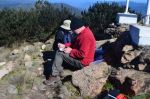
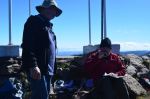
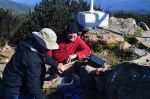
On Monday morning (11th May 2015), David VK5KC, Trevor VK5ATQ, and I were picked up outside of the motel by Andrew VK1NAM. Andrew had organised with us the day before to take us up to Mount Stromlo, VK1/ AC-043 for a SOTA activation. I was due to fly out of Canberra back to Adelaide later that afternoon.
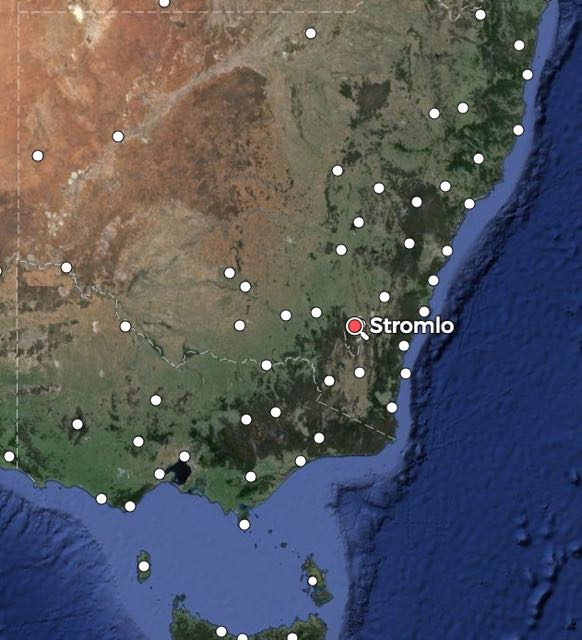
Above:- Map showing the location of Mt Stromlo. Image courtesy of mapcarta.com
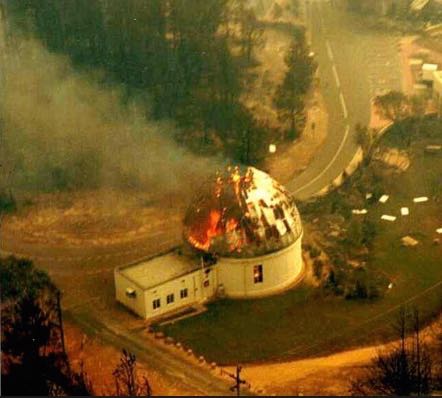
Mount Stromlo, VK1/ AC-043, is 782 metres above sea level and is worth 1 SOTA point. The summit is located just outside of Canberra and is the site of the Mount Stromlo Observatory, which is part of the Research School of Astronomy and Astrphysics at the Australian National University. The observatory was established in 1924 as the Commonwealth Solar Observatory. In January 2003, Mt Stromlo was devastated by the Canberra bushfires. The summit was surrounded by pine forest at that time, which was totally destroyed along with five telescopes, workshops, seven homes, and the heritage listed administration building. The only telescope to survive the fires was the 1886 15-centimetre Farnham telescope.
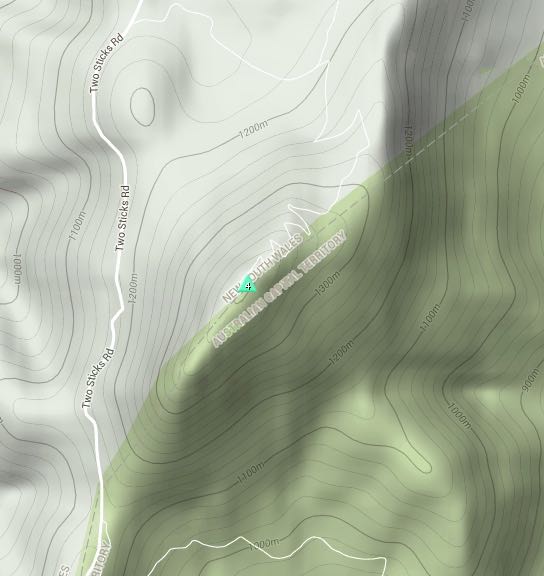
Above:- Map showing the location of Mt Stromlo. Image courtesy of sotamaps.org
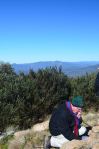
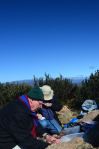
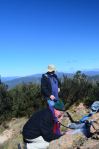
Andrew parked his car in the lower carpark, and we walked up the track to our operating spot, which was a little further on from the trig point. Andrew had warned us that operating from the trig point would end in misery, as the noise floor at that location was extremely high. So we continued on the path and set up at a high point with spectacular views in all directions.
One of the damaged buildings
Andrew VK1NAM setting up
David VK5KC started off first and he had soon bagged his 4 contacts to qualify the summit. I then got my 4 qualifying contacts consisting of Gerard VK2JNG mobile, George VK4GSF, John VK2FAD and Markus VK2SK. Trevor VK5ATQ then took control of the mic and appeared to have a lot of fun on his very first SOTA activation.
Whilst Trevor was on air, Andrew called me over for a 2m FM contact with Gerard VK2IO who was portable on SOTA peak, Mount Ainslee, VK1/ AC-040.
The four of us kept swapping the mic, and after the UTC rollover I managed another three summit to summit contacts: Gerard VK2IO/1 on Mount Ainslee on 2m FM, Onno VK6FLAB/1 on Black Mountain VK1/ AC-042, and Phil VK2JDL portable on Mount Kembla VK2/ IL-015.
This slideshow requires JavaScript.
At the conclusion of the activation we walked over to the cemetery located on the summit. A number of people are buried here including Walter Geoffrey Duffile, (1879-1929, who was the founding Director of the Commonwealth Solar Observatory.
This slideshow requires JavaScript.
We then started walking back to the car and bumped in to Andrew VK1MBE and Onno VK6FLAB who had just arrived at the summit from Black Mountain. They were in the middle of setting up.
We continued back to the car and had a quick look at some of the burnt out buildings near the carpark. We were in desperate need of a coffee, but unfortunately the cafe was closed. And we had timed the activation well, as it had just started to rain. Poor old Andrew & Onno. We did try to make contact with them via 2m once we had driven outside the activation zone, but could not get through to them.
This slideshow requires JavaScript.
After leaving Stromlo we paid a visit to one of the local cafes where we enjoyed some nice hot coffee and a bowl of soup. Fortunately there was a bottle shop next door, so I quickly rushed in there to buy a bottle of South Australian red for Andrew VK1NAM and Andrew VK1DA in recognition of their efforts in taking us out for some portable action. It was a lot of fun.
After our activation at Mount Ainslee, we ventured over to Black Mountain, VK1/ AC-042, just a short drive across Canberra from Mount Ainslee
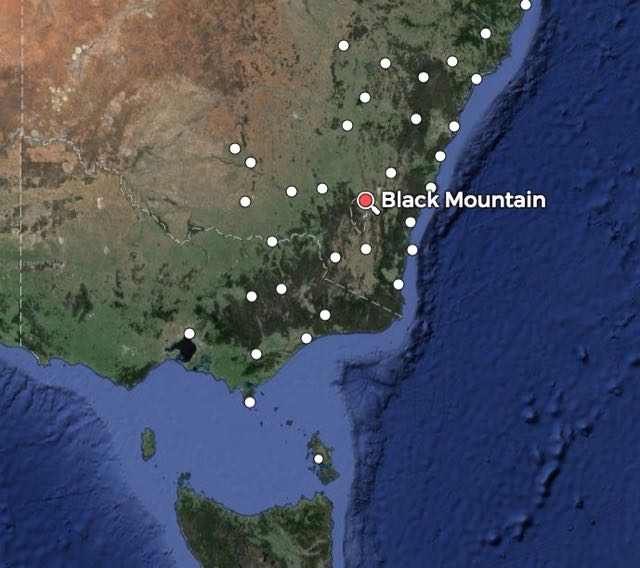
Above:- Map showing the location of Black Mountain. Image courtesy of mapcarta.com
Black Mountain is 812 metres above sea level and is worth 1 SOTA point. It is situated to the west of the Canberra CBD and is on the northern shores of Lake Burley Griffin. The summit is part of the Canberra Nature Park and is predominantly covreed in native bushland. It is a haven for native wildlife. Also on the summit is the Black Mountain Tower, a broadcasting tower rising a further 195 metres above the summit. The summit was originally known as Black Hill.
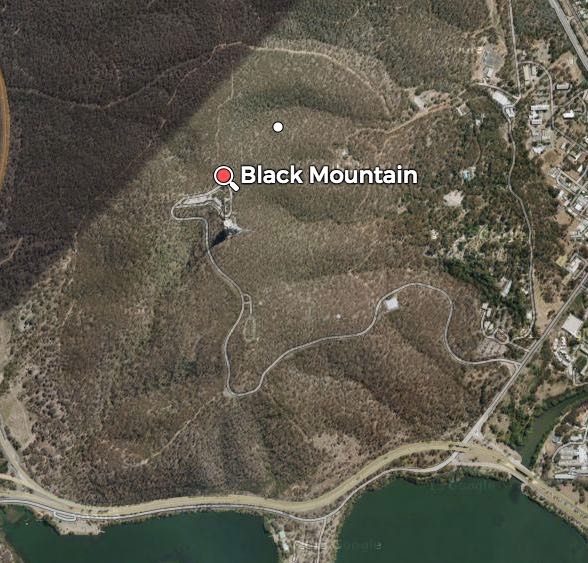
Above:- Black Mountain. Image courtesy of mapcarta.com.
It was no less cold and no less windy here on Black Mountain to that of Mount Ainslee. In fact there was a lot of banging going on from something loose on the tower. But we had dodged a bullet again, as there was no rain. As we were setting up the gear, a very suspicious car approached us slowly and then pulled up in front of us. It was Heath VK3TWO and his wife Monique.
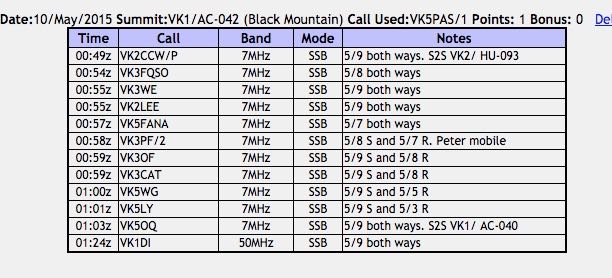
We took it in turns to operate on the radio again, with John VK5BJE firing up first with me acting as scribe as it was very windy and cold and trying to hold the mic and write at the same time was a challenge. Plus, us guys can only do one thing well at a time!
My first contact on Black Mountain, which was another unique SOTA summit for me, was Michael VK2CCW who was portable on SOTA peak, Mount Elliot, VK2/ HU-093. A nice start to the activation….a Summit to Summit contact. I worked another 9 stations and was then called by Keith VK5OQ/1 who was portable on SOTA peak, Mount AInslee, VK1/ AC-040.
This slideshow requires JavaScript.
After packing up we all ventured inside Black Mountain Tower and enjoyed a nice cup of coffee in the warmth of the cafe. This was another great activation and a lot of fun with Andrew, John, Heath & Monique.
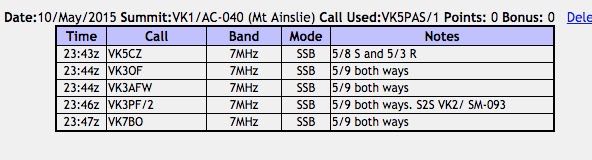
On Sunday morning (10th May 2015), Andrew VK1NAM picked up John VK5BJE and I from outside of our motel in Canberra, and took us up to the top of Mount Ainslee, VK1/ AC-040. We had arranged with Andrew the day before at the WIA AGM, to head out for a couple of SOTA activations.
I had snuck up to Mount Ainslee the night before with Peter VK3PF for a quick 2m activation, but I was looking forward to going back to Ainslee during the day for a HF activation and to enjoy the views of Canberra.
I found the photograph below which shows a panorama of the site for Canberra, taken from Mount Ainslie, c. 1910. Amazing how things have changed.
Above:- Image courtesy of wikipedia.org
The views from Ainslee were excellent, but it was blowing an absolute gale. Fortunately the rain was holding off, but it was very windy and very cold. Not as cold as Friday’s activation of Mount Ginini, but netherless it was very chilly.
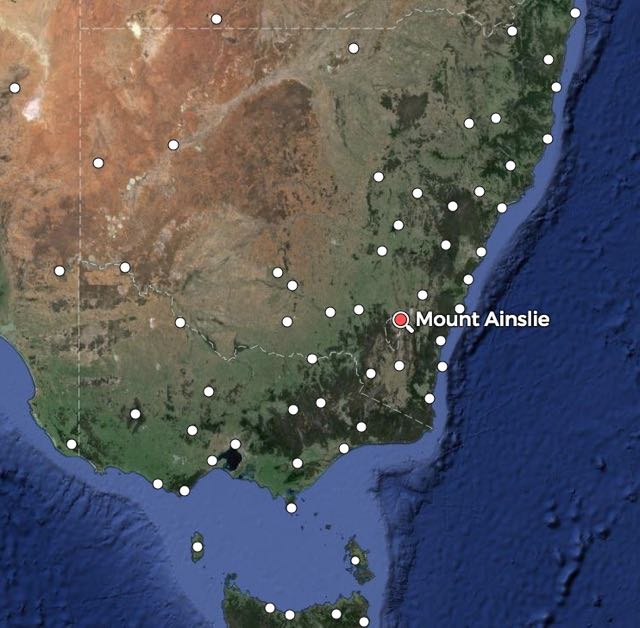
Above: – Map showing the location of Mount Ainslee. Courtesy of mapcarta.com
We had parked in the car park and walked up the steps to a walking track at the highest point of the summit. Andrew used a metal point on the summit to secure his squid pole to with the use of some octopus straps. With some difficulty due to the high winds, we raised the squid pole into place with Andrew’s home brew squid pole attached. For this activation we ran 5 watts from Andrew’s Yaesu FT-817.
John VK5BJE started off first and had quickly accrued his required 4 contacts to qualify the summit for SOTA. I then jumped into the ‘driver’s seat’ and made a quick 5 contacts on 40m, including a Summit to Summit contact with Peter VK3PF who was portable on SOTA peak, Livingstone Hill, VK2/ SM-093.
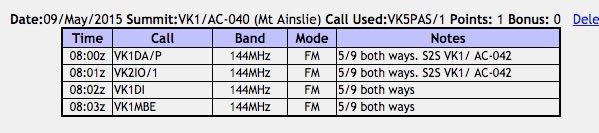
After the WIA AGM, Peter VK3PF ‘collared me’ and we headed off to Mount Ainslee, VK1/ AC-040 for a quick 2m SOTA activation on Saturday night (9th May 2015). Another couple of SOTA stalwarts, Gerard VK2IO and Andrew VK1DA were heading for Black Mountain, and we were hoping to get a summit to summit contact with those guys. This was to be a unique SOTA summit for me.
Above:- Map showing the location of Mount Ainslee. Image courtesy of mapcarta.com
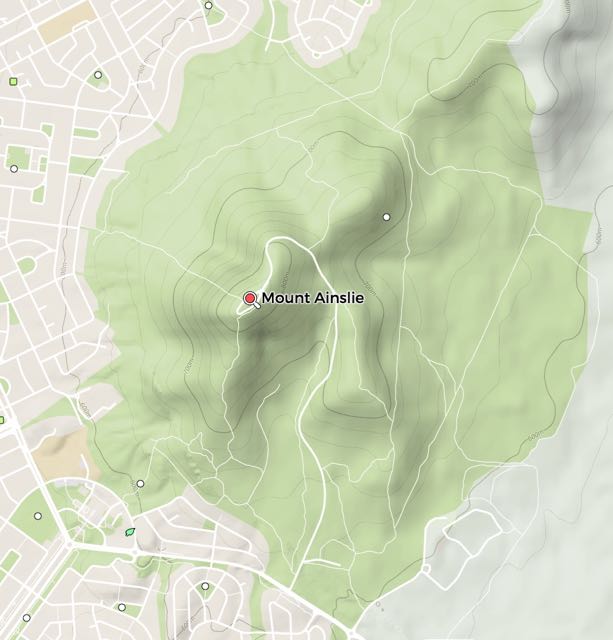
Mount Ainslee is 843 metres above sea level and is worth 1 SOTA point. It is located in the north eastern suburbs of Canberra and lies within part of the Canberra Nature Park. The summit borders on the inner Canberra suburbs of Campbell, Ainslee and Hackett. It is named in honour of James Ainslee (1787-1844), a Scottish born pastoralist who was the overseer of the large property, Duntroon. Ainslee was on the Duntroon property between 1825 to 1835 and he was in a relationship with a Ngambri aboriginal woman, Jya Ngambri. After spending 10 years at Duntroon, Ainslee returned to Scotland, where he died in 1844, aged 60 years. In fact he died at Jedburgh Castle after hanging himself while awaiting trial for a charge of assault.
There is a lot of information on the internet about James Ainslee which is well worth looking at. His life story is very interesting.
Above:- Mount Ainslee. Map courtesy of mapcarta.com
After pulling up in the carpark, we walked a short distance to our operating spot on the eastern side of the summit, overlooking Canberra at night. It was a very cold evening and quite windy on the top of Ainslee. Peter started off first and his first contact was with Ian VK1DI, followed by a summit to summit with Gerard VK2IO on Black Mountain.
After Peter had reached his required 4 contacts he handed me the HT and I had a summit to summit contact with Gerard VK2IO and Andrew VK1DA on Black Mountain. I then made contact with Ian VK1DI and then Andrew VK1MBE and with my 4 qualifying SOTA contacts, it was time to head off to the SOTA Dinner at the Hellenic Club.
On Friday evening 8th May 2015, I headed to King O’Malleys Hotel in Canberra for the first ‘informal’ gathering of the weekend for the attended the Wireless Institute of Australia (WIA) Annual General Meeting (AGM). The feed was great, the bundy was cold and it was terrific to catch up with a number of hams, including many of the VK1 locals.
John VK5BJE, myself, and Peter VK3PF
Ian VK1DI and Andrew VK1MBE
On Saturday morning 9th May 2015, I attended the WIA AGM, which was held in the Poseidon room at the Hellenic Club in Canberra. A great venue.
A number of awards and presentations were made on Saturday morning, and I was very surprised to be issued with a Presidents certificate for my involvement in the World Wide Flora Fauna (WWFF) program. It came as a great surprise.
At lunch time, Peter VK3PF displayed to a very interested crowd, one of his home brew antennas.
Peter Vk3PF with plenty of onlookers
Myself, Andrew VK1NAM & John VK5BJE
Gerard VK2IO, Andrew VK1DA, & Peter VK3PF
Following lunch, there were a number of presentations on a variety of topics. This included a presentation on the Summits on the Air (SOTA) program by Andrew VK1NAM.
After Andrew’s presentation, I delivered a quick 20 minute presentation on the World Wide Flora Fauna program. Hopefully it inspired a few more park activators and/or hunters.
The day wrapped up at about 5.30 p.m. at which time Peter VK3PF convinced me into accompanying him to Mount Ainslee for a quick 2 m SOTA activation. I will report on this in a little more detail in another post.
More information on the 2015 WIA AGM can be found on the WIA website at…..
After our quick SOTA activation, I headed back to the Hellenic Club for the WIA Annual Dinner which was held in the Poiseden Room. The meal was very nice and there was a guest speaker from the Australian Communications and Media Authority (ACMA). Towards the end of the evening, it was announced that it was proposed that the next WIA AGM would be held on Norfolk Island. This excited a lot of people, including the SOTA & parks activators and hunters present in the room. Norfolk Island has a nice SOTA peak, and the whole island is also VKFF-392.
After sharing a story or two with the guys at Bulls Head, Andrew, John, & I, hit the road again and headed for our second summit and park for the day…… Mount Ginini VK1/ AC-008, which is also located in the Namadgi National Park VKFF-377.
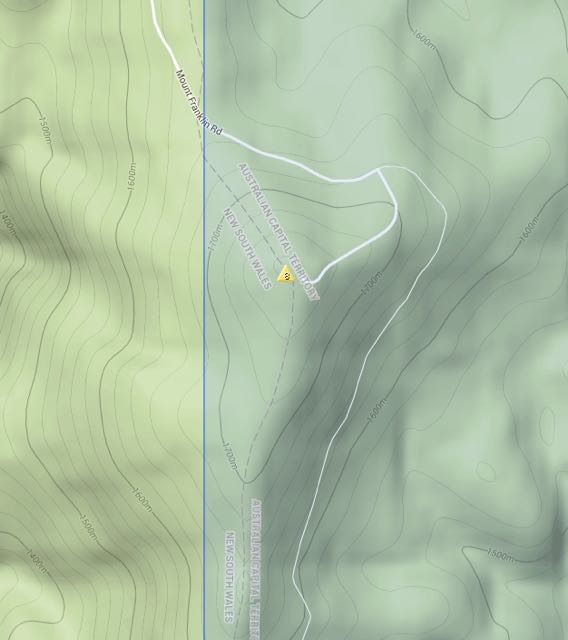
Above:- Map showing the location of Mount Ginini. Courtesy of mapcarta.com
Mount Ginini is 1,760 metres above sea level and is worth 8 points for the Summits on the Air (SOTA) program. The summit is located in the Brindabella Ranges and is located on the border between the Australian Capital Territory (ACT) and New South Wales (NSW). The summit is the eighth highest mountain in the Territory.
For this activation we drove right up to the very top of the summit and walked to our operating spot, a short distance away. Although it was a little less windy up here compared to Mount Coree, it was a lot colder. In fact very cold! Four (4) degrees celsius.
For this activation we ran QRP 5 watts into a linked dipole. John VK5BJE started off first, adopting his yoga position, and had soon racked up 10 contacts, thus qualifying the summit for Summits on the Air (SOTA) and the park for the World Wide Flora Fauna (WWFF) program. I then tried my luck on 40m and had soon also accrued 10 contacts on 40m including three summit to summit contacts: Andrew VK1NAM on Mount Stromlo VK1/ AC-043, and Onno VK6FLAB and Marc VK3OHM both portable on Mount Coree VK1/ AC-023 (the mountain we had just come from).
Andrew then asked if I would like to try 20m. I didn’t hesitate as I was hoping that I could reach 44 contacts for the Namadgi National Park. I had ten contacts from the last activation, so with the ten on 40m here on Ginini, I just needed another 24 contacts. So down came the squid pole and out came some of the links in the dipole. We tuned to 14.244 but the frequency was already in use. In fact it was Danny OT6V who was portable in a WWFF park, Mosterdpot, ONFF-447. Danny had a few European callers but I patiently waited and gave Danny a call and managed to make contact. Although Danny’s signal was not all that strong, we were able to hear each other very well (5/5 both ways). For more information on Danny’s activation, have a look at the following……
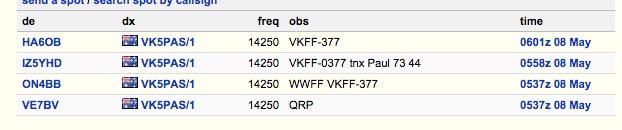
I then moved up to 14.250 and put out a number of CQ calls, and these were finally answered by Bruce VK4YS. This was followed by a call from Dwight VE7BV in Canada, who was kind enough to place me on the DX cluster. This resulted in a number of callers from Europe and North America. I would also like to thank the other 3 stations that placed me on the DX Cluster. It is a big help to drag in callers when this is done.
It was so cold on the summit that Andrew and John went back to the vehicle and the warmth of the heater, while I braved the elements, and kept on working the DX on 20m. But it became that cold that I could no longer hold the pen in my hand, so it was time to pack up and head home. I am sorry to those stations that were still calling when I went QRT. It was just way too cold.
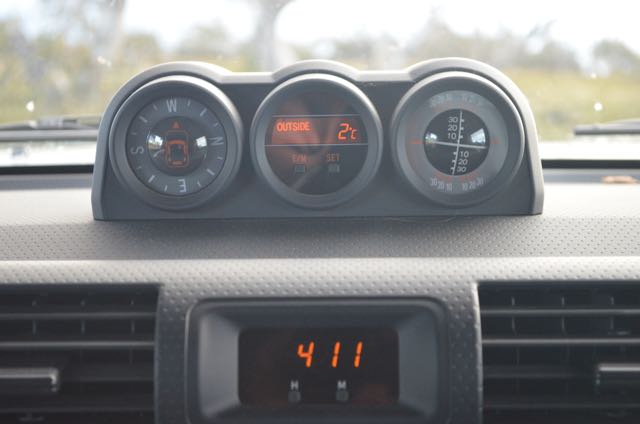
By the time we had packed up the gear and got back into the car, the temperature had gone down to 2 deg C (as can be seen in the photograph below).
I worked the following stations:-
I would like to acknowledge and thank Andrew VK1DA who kindly took John and I out for the day. It was a pleasure to meet Andrew ‘in the flesh’. I had spoken with Andrew many many times previously on air, but this was the first time we had ever met in person. Again, thanks Andrew.
On Thursday afternoon (7th May 2015) I flew over to Canberra to attend the Wireless Institute of Australia (WIA) Annual General Meeting. I spent a nice Thursday evening with John VK5BJE and a good meal and a few reds. And on Friday morning (8th May 2015), Andrew VK1DA was kind enough to pick myself and John up from our hotel, the Novotel and take us up into the mountains outside of Canberra for two activations for the Summits on the Air (SOTA) program and the World Wide Flora Fauna (WWFF) program. We were very fortunate weather wise, as although it was a very cold morning, there was no rain, and it was quite sunny. It was a beautiful drive out of Canberra up in to the Namadgi National Park.
Our first activation for the day was Mount Coree, VK1/AC-023 which is located in the Namadgi National Park, VKFF-377, about 56 km by road from Canberra. It may have only been a short distance km wise, but it took about 90 minutes to get there due to the terrain.
Above: Map showing the location of Mount Coree. Image courtesy of mapcarta.com
Mount Coree was formerly known as Pabral, and is 1,421 metres above sea level. It is with 4 points for the Summits on the Air (SOTA) program. The summit is located within the Brindabella Range on the border between the Australian Capital Territory (ACT) and New South Wales (NSW). The actual summit is located within the ACT. The mountain is situated in the Brindabella National Park on the NSW side and in the Namdgi National Park on the ACT side. Prior to European settlement, the mountain was used by local Aboriginal tribes to hunt for Bogong moths. In fact, ‘Coree’ is an aboriginal name for moth. The Bogong moth is a temperate species of night flying moth. The mountain was originally shown as ‘Pabral’ on an 1834 map of the famous explorer, Major Sir Thomas Mitchell. The Namadgi National Park was declared as a National Park in 1984 and covers an area of 106,095 hectares, almost half of the ACT. About 35 species of native mammals can be located in the park including Swamp wallabies, Eastern Grey Kangaroos, echidnas, wombats, emus, pygmy possums and numerous reptiles. There are 13 threatened species documented including the Smoky mouse, River Blackfish, and Northern Corroboree Frog.
Above:- Map showing the location of the summit on the ACT/NSW border. Image courtesy of http://www.sotamaps.org
Andrew parked his car just off the track leading up to the summit and we walked the remainder of the way, a short distance of about 300 metres.
This slideshow requires JavaScript.
This is a very exposed summit with some amazing views of the Namadgi National Park and the Brindabella National Park. The summit is right on the ACT and New South Wales border and offers spectacular views of the surrounding countryside. And because it was so exposed, it was very windy. And I mean, very windy.
This slideshow requires JavaScript.
Andrew used the trig point on the summit to secure his squid pole with his home brew linked dipole on the top. John VK5BJE, started off first, followed by myself, and then Andrew. It was very windy and cool on the summit, and after reaching 10 contacts each, John and I were very happy. We had qualified the summit for SOTA and had qualified the National Park for the WWFF program. Of my ten contacts, four were summit to summit contacts: with Peter VK3PF/1 on Bobogon Range VK1/ AC-044, Andrew VK1NAM/2 on VK2/ SM-093, Onno VK6FLAB/1 on Mount Ginini VK1/ AC-008, and Gerard VK2IO/1 on Mount Gingera VK1/ AC-002
John VK5BJE on air
Squid pole attached to the trig point
I worked the following stations:- At the bottom of the summit, we stopped for a quick photo opportunity. There was a great view back up to the trig point on the summit. It certainly highlighted the sheer cliff face of Mount Coree.
We then headed to ‘Bulls Head’ picnic/camp ground, for a quick lunch break and a catch up with some other keen amateurs that were out activating summits and parks as well. This included Onno VK6FLAB and Marc VK3OHM. These guys had just activated Mount Ginini and were heading to Mount Coree. And we had just activated Mount Coree and were heading to Mount Ginini.
After my activation of Murray Sunset National Park in north western Victoria, I headed back over the border and travelled to the Lyrup Flats section of the Murray River National Park near Renmark in South Australia. I had earlier arranged an activation at Murray River NP with Larry VK5LY, Ivan VK5HS & Peter VK5FLEX.
The Murray River National Park comprises three sections, Katarapko, Lyrup Flats and Bulyong Island. These three areas of similar habitat form an archipelago (group of islands) park and are important in conserving a number of flood plain environments.
Lyrup Flats encompasses an area along the flood plain on the northern side of the River Murray. Opposite the township of Lyrup, the park is easily reached by turning off the Sturt Highway just past Berri and continuing down to the River Murray. Lyrup Flats provides wonderful opportunities for birdwatching, fishing, camping, and bushwalking along the majestic River Murray.
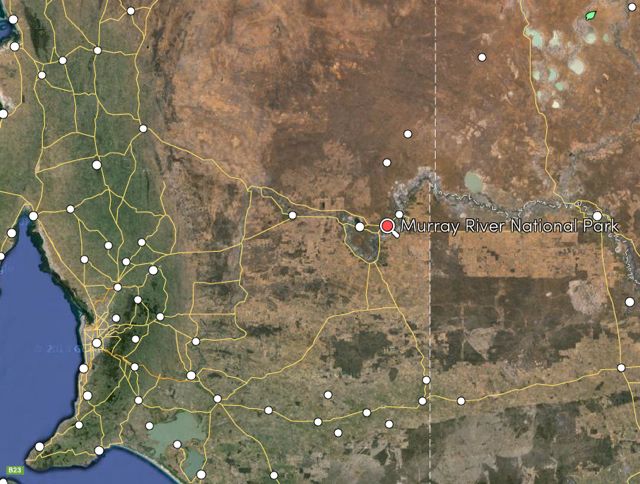
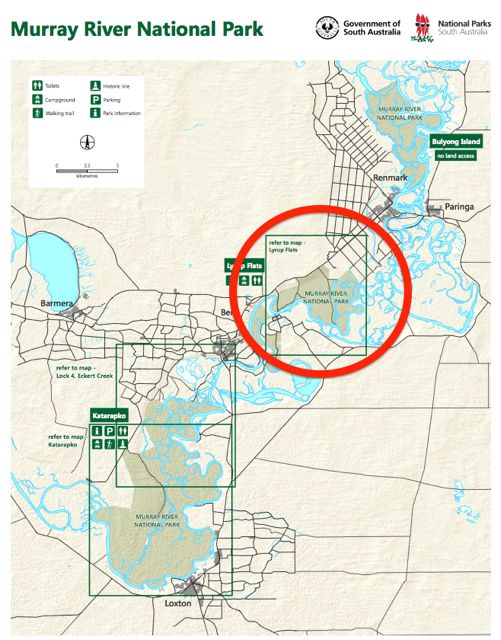
Above:- Map showing the location of the Murray River NP. Image courtesy of mapcarta.com
I accessed the park off the Sturt Highway and travelled down the dirt road into the park. The park is well sign posted on the Sturt Highway.
The sign on the Sturt Hwy
The dirt road leading into the park
As you travel along the dirt road through the park you will notice all of the dead trees. This is due to the salinity in the soil in the Flats area of the park.
I travelled down to one of the smaller dirt tracks leading off to the River itself and set up at one of the campsites. It was a real shame to see that somebody had been there before me, and had left their campfire full of broken bottles and empty food cans. Not surprising really, as I would imagine there is very little policing of the park by DEWNT due to staff shortages. A real pity!
For this activation I used the Yaesu FT-857d and the 40m/20m linked dipole on top of the 7 metre squid pole.
Despite the grubs that had left the campsite untidy, this was a very beautiful spot right alongside of the Murray River. It was a beautiful mild day with minimal breeze and the river was very still most of the time, except for the occasional boat that passed by.
This slideshow requires JavaScript.
It wasn’t long before Ivan, Larry and Peter were on scene and we were up on air. The main reason for this activation was to get Larry VK5LY out and about in his first park after a long absence due to ill health. And it wasn’t long before Larry had a pile up going on 40m. It was great to see.
Thanks to everyone that called Larry. It was extremely pleasing to see Larry back on air, with a smile on his face, operating from a park.
This slideshow requires JavaScript.
Peter VK5FLEX then worked a few stations on 40m, and when Peter had finished I jumped on to 20m and worked a total of 28 stations in Europe. But it was starting to get quite late in the afternoon and I still had a 2 & 1/2 hour drive to get home, so I had to go QRT. I am sorry to all those that were still calling.
As I mentioned earlier, the River was very still at times and presented with some excellent photo opportunities, with the River Red Gums on the other side of the river, reflecting off the water.
And as we left the park, there was plenty of wildlife to be seen, including Western Grey kangaroos and Emus.
And I was blessed with a beautiful drive home to the Adelaide Hills. The moon was coming out as the sun started to set in the west. And it was an amazing sunset.
I worked the following stations during the activation:-
VK5BJE/p (Belair National Park)
VK3ARR/p
I5FLN
S58AL
ON5SWA
IK1GPG
EA3MP
DL1EBR
UT5PI
RA3PCI
ON4ATK
OP7M
OZ5HP
IC8ATA
DL4PT
DL5WW
DJ8QP
VK6MB
ON7AB
VK4QO
VK2BSY/pedestrian mobile
F5OUD
SA5ACR
PE1DH
UR7ET
MM0GTU
F6HQP
G0RQL
M0HOO
References.
Department of Environment and Heritage, 2011, Parks of the Riverland.
My first park for Sunday (3rd May 2015) was to be the Murray Sunset National Park, which is located about 29 km down the Sturt Highway from Renmark and is just over the border in the State of Victoria.
To get to the park I travelled east on the Sturt Highway, back out towards the Pike River Conservation, where I had been on Saturday night. I stopped briefly at a lookout area to view the park during the daylight and also at a few items of interest including an old timber jinker. I continued on towards the Victorian border, and stopped very briefly at Yamba. The Yamba road block was set up in March 1957 to protect South Australia from any fruit fly outbreaks that are likely likely to occur inter State. Initially the road block operated from a caravan which was located on the Sturt Highway, at the Victorian border. Currently it operates from a permanent site located east of Renmark.
This slideshow requires JavaScript.
Murray-Sunset National Park, in Victoria’s far north-west corner, is in one of the few remaining semi-arid regions in the world where the environment is relatively untouched. This is a big park. It is 677,000 hectares in size and is Victoria’s largest National Park after a further 44,000 hectares were added to the park in 2012. It stretches from the Murray River at Lindsay Island in the north to Pink Lakes near Underbool in the south.
The park which was declared in 1991, protects 183 species of threatened plants and animals. And I certainly saw quite a bit of wildlife including Western Grey kangaroos and emus. Victoria’s largest flower, the Murray lily, the restricted Silvery Emu-bush and the rare Blue-leafed Mallee all grow within the park.
Above:- Map showing the location of Murray Sunset NP. Image courtesy of mapcarta.com
Once I crossed the Victorian border, the signs for the park were very visible either side of the Sturt Highway. I decided to take a track on the northern side of the Sturt Highway. I travelled a few km along the track until I found a nice clearing and that is there I set up. I would not recommend this track if you only have a conventional vehicle….you will get bogged.
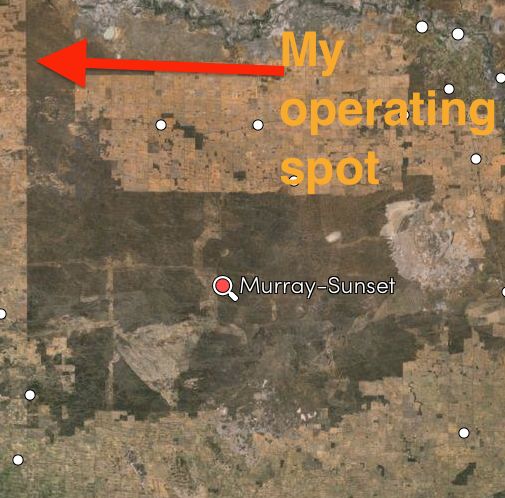
Above:- Map showing my operating spot. Image courtesy of mapcarta.com
It was quite a nice mild morning, although when I first got up it was extremely cold. The fog that I experienced as I approached the Victorian border was starting to burn off and the sun was coming in with quite a bite to it.
Above:- Map showing the park and my operating spot. Courtesy of parks Victoria.
For this activation I ran the Yaesu FT-857d, 40 watts and the 40m/20m linked dipole supported on the top of the 7m squid pole. As I was setting up I was fortunate enough to see quite a bit of the local wildlife, including Western Grey kangaroos and Emus.
I headed for 7.095 and started calling CQ there and this was immediately answered by Scott VK7NWT with a great 5/9 signal, followed by John VK5BJE who was portable in the Belair National Park, VKFF-022, in the Adelaide Hills. John was a nice 5/8. My next caller was local Renmark resident Ivan VK5HS, followed by Adrian VK5FANA over on the Yorke Peninsula, and then Richard VK5U mobile 3 near Barmah.
Quite a steady flow of callers followed from VK1, VK2, VK3, VK4, VK5, VK6. Band conditions on 40m were very good, with excellent signals from all parts of Australia.
It is always great to work the QRP stations, and this activation didn’t disapoint. My first QRP contact for the activation was with Gerard VK2JNG running 2 watts from Orange (5/7 sent and 5/9 received). This was followed by Nick VK3FNCE running 3 watts (5/9 both ways) and then Peter VK3PF running 5 watts (5/9 both ways). Regular park hunter and regular QRP operator, Amanda VK3FQSO then gave me a shout with just 500 milliwatts (5/8 sent and 5/9 received). Next up was Bill VK2YKW running 5 watts from his X1M and an inverted vee antenna from the Hunter Valley, and then George VK4GSF. George initially called on high power (5/9 both ways). He then lowered his power down to 5 watts and was 5/5 with me. And then lowered the power again to just 2 watts, and was still a good 5/4 signal. A little later I spoke with Greg VK5GJ running 4 watts from Meadows in the Adelaide Hills and my last QRP contact was with Damien VK5FDEC running 5 watts from north of Adelaide.
This slideshow requires JavaScript.
I also was fortunate to be called by two ACT Summits on the Air (SOTA) activators. The first being Andrew VK1DA portable on Mount Majura, VK1/ AC-034 (5/7 sent and 5/8 received). And then Ian VK1DI portable on Booroomba Rocks, VK1/ AC-026 (5/8 both ways).
After working a total of 46 stations on 7.095 I went for a look around the band. I found special event station, VK100ANZAC calling CQ on 7.100 and gave him a call (5/9 sent and 5/8 received).
I then went to 7.105 and again called CQ and much to my great pleasure, my old mate Larry VK5LY gave me a call from nearby Renmark. This was followed by a well known Victorian park activator, Joe VK3YSP, and then Arno VK5ZAR and another Riverland local, Peter VK5FLEX.
I worked a total of 14 stations on 7.105 and I was just about QSY to 20m when the goat bleeted on my i-phone. It was a spot for Ian VK5CZ operating portable from SOTA peak VK5/ SE-007. So I hurriedly headed to 7.112 and found Ian calling CQ, with a very nice 5/9 signal from his end fed antenna.
I then spoke with Andrew (VK1NAM) operating the special call of VI1ANZAC from SOTA peak, Orroral Hill, VK1/ AC-012, contained within the Namadgi National Park VKFF-377 (5/7 sent and 5/8 received).
After working Andrew I headed to 14.310 on 20m and started calling CQ. However, my only taker there was Barry VK5KBJ who was portable on the Fleurieu Peninsula south of Adelaide. So I headed back to 40m and worked Stef VK5HSX who was operating portable from the Hallett Cove Conservation Park south of Adelaide (5/9 both ways). My last contact in the park was with Andrew (VK1NAM) operating as VI1ANZAC on SOTA peak Orroral Hill, VK1/ AC-012 (5/9 both ways). My i-phone had bleeted again just after working Stef, so down came the squid pole and out came the links again in the dipole.
I did listen around on 20m before going QRT but I did not hear a lot of activity. I did hear OD5ZZ in Lebanon, working lots of stations in the USA. I called a number of times, but just couldn’t break through the North American pile up.
This was another very enjoyable activation with a total of 66 contacts in the log, including four SOTA contacts, 2 ACT Park contacts, and 2 South Australian park contacts.
After packing up I headed back over the Victorian/South Australia border, and on to Yamba where I stopped for a cup of coffee and a healthy hot dog with the lot. I then travelled back over the Murray River, where I stopped briefly for some more photographs of the historic Paringa lifting bridge and the mighty Murray River.
This slideshow requires JavaScript.
The following stations were worked on 40m SSB:-
VK7NWT
VK5BJE/p (Belair National Park)
VK5HS
VK5FANA
VK5UK/3
VK5FTVR
VK2JNG/p
VK5AKH
VK3FNCE
VK3PMG
VK3UP
VK5KBJ/p
VK3PF
VK3NBL
VK3FQSO
VK5WG
VK2YKW
VK3PI
VK4GSF
VK3DAC
VK5FMJC
VK5FMID
VK6MB
VK3FCAS
VI2IO
VK5EE
VK3TKK
VK1UU
VK3HK
VK5KLV
VK3SQ
VK5ZGY/m
VK3DF
VK5GJ
VK5AR/m
VK5CZ/m
VK2FMIA
VK1DA/p (SOTA VK1/ AC-034)
VK7FMPR
VK3HRA
VK1DI/p (SOTA VK1/ AC-026)
VK3FSPG
VK2FW/p
VK2QK
VK2PKT
VK5KKT
VK100ANZAC
VK5LY
VK3YSP
VK5ZAR
VK5FLEX
VK5LDM
VK5JP
VK5FDEC
VK5FTRG/m
VK5KLV
VK5NQP
VK5NAQ
VK5RZ
VK3NSC
VK5BJE/p
VK5CZ/p (SOTA VK5/ SE-007)
VI1ANZAC/p (SOTA VK1/ AC-012 and Namadgi NP VKFF-377)
VK5HSX/p (Hallett Cove Conservation Park)
The following stations were worked on 20m SSB:-
VK5KBJ/p
VI1ANZAC/p (SOTA VK1/ AC-012 and Namdgi NP VKFF-377)
Below is a short video of some of the stations that I heard, in particular Stef VK5HSX/p, John VK5BJE/p and Andrew VK1NAM/p.
Most of Saturday (2nd May 2015) I spent around the home of Ivan VK5HS at Renmark, having my new Codan 9350 antenna installed on my Toyota Hi Lux. During the morning Peter VK5FLEX called in, as did John VK5FANG. It was a long day. In fact we didn’t finish until late in the afternoon, and after a few beers I headed back to my motel room.
This slideshow requires JavaScript.
But there wasn’t a lot on the television, so I decided to head out to activate the Pike River Conservation Park, which was to be another new unique park for me as an activator. The park is just a short drive out of Renmark along the Sturt Highway towards the Victorian/South Australian border.
To get to the park, you need to cross the historic Paringa lifting bridge which I took the opportunity of stopping here for some photographs. The Paringa Bridge, which was constructed in 1927, is one of only two opening bridges in South Australia. The other is at Port Adelaide. The Paringa Bridge is technically a ‘lift span’ bridge as it has a section that lifts up to allow large vessels through.
This slideshow requires JavaScript.
The Pike River CP is about 296 hectares in size and consists of a major floodplain and a branch system of the River Murray. The park has a number of species of national significance including the Southern Bell Frog, Murray Cod, and the Regent Parrot. It also contained an additional 18 species with State Conservation significance.
Again, this park is not at all signposted. So you will need to rely upon your GPS. There is an open and unlocked gate on the western side of the Sturt Highway which takes you into the park. The track is okay, but in 2WD, you will only be able to reach a certain point. I drove all the way down to the water’s edge and set up on the edge of the track.
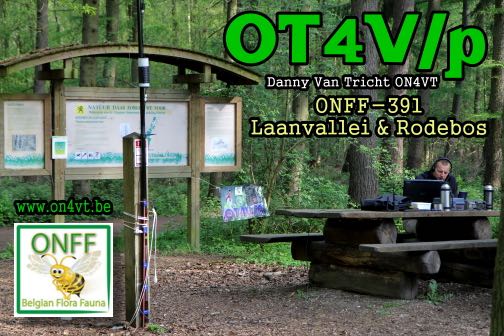
As it was quite late (4.45 p.m.) I headed straight to 20m. For this activation I ran the Yaesu Ft-857d, 70 watts and the 40m/20m linked dipole supported on the 7 metre telescopic squid pole. I called CQ only once, on 14.310, and to my surprise, my CQ call was immediately answered by ON6PV in Belgium. And I was even more surprised when my second caller was Danny OT6V who was portable in a park in Belgium, Rodebos en Laanvallei, ONFF-391 (5/3 sent and 5/5 received). Here is a link to Danny’s page about that activation…..
I was then called by Rod VK4NUM, followed by Ray VK4NH portable near Bourketown, and then Aaron AL4Y in Alaska. Aaron was a very nice 5/8 signal and he gave me a 5/6 signal report. Aaron was also kind enough to spot me on the DX cluster and this resulted in a large pile up. In fact I worked a total of 60 stations in Belgium, VK4, Alaska, Italy, VK6, Denmark, Hungary, Germany, France, Switzerland, Slovenia, Lithuania, Sweden, Azores Islands, Russia, Slovak Republic, Spain, Estonia, Portugal, Canary Islands, Ireland, Netherlands, USA, and England. And again, I spoke to my good friend Marnix, OP7M in Belgium.
Thanks to everyone that spotted me on the DX cluster.
I then moved over to 40m. It was now totally dark and the local time was 6.00 p.m. I called CQ on 7.110 and this was answered by Adam VK2YK in Newcastle, followed by John VK5NJ in Mount Gambier, and then Rex VK3OF.
I had some excellent QRP contacts on 40m whilst in the park. This included Amanda VK3FQSO running 500 milliwatts (5/7 both ways), Roald VK1FIVE running 5 watts (5/6 sent and 5/9 received), Tony VK3VTH running 500 millwatts (5/8 sent and 5/9 received), Adrian VK5FANA running 5 watts (5/9 both ways), Peter VK3PF running 5 watts (5/9 both ways), Dave VK2BDR rnning 5 watts (5/9 both ways), Steve VK2FAJF also running 5 watts (5/9 both ways), Alan VK2AJG running 5 watts (5/8 both ways); Doug VK2FMIA running 5 watts (5/8 sent and 5/9 received), and Rob VK3EY running 1.5 watts (5/7 sent and 5/9 received). Band conditions on 40m were excellent.
This slideshow requires JavaScript.
I also managed a park to park contact with newly licenced amateur, Brendon VK5FFCC who was operating portable from the Morialta Conservation Park. Brendon had a nice sounding station with his Elecraft KX3, 10 watts and end fed antenna. Not a bad effort at all Brendon. Licenced for one week, and already out in a park, and sounding like a pro. Congratulations. Below is a quick video of what Brendon sounded like to me……
I also worked Ken ZL4KD in new Zealand, who has now become a familiar caller and is a member of the VK5 Parks Yahoo group.
There was an annoying noise on 7.110 though. I am not sure what it was. I’ve attached a video below, so if anyone knows what the noise is, I would be pleased to hear from you…..
When things slowed down a little I had a tune around the band and heard NP4A calling CQ on 7.129. I patiently waited my turn and gave Pedro a call and got through on the first go. I have worked Pedro a few times before whilst I’ve been out in a park, and he always puts a great signal into Australia.
This was a very successful activation, with a total of 118 contacts in the log, including some nice DX contacts.





![[Panorama of the site for Canberra taken from Mt. Ainslie, 1910s] [picture] /](https://vk5pas.org/wp-content/uploads/2015/05/panorama-of-the-site-for-canberra-taken-from-mt-ainslie-1910s-picture1.jpg)